Last updated 2026-07-25
TL;DR
Green cover food plot seed blends usually combine brassicas (turnips, radish), clovers, cereal grains (oats, wheat), and sometimes sorghum or peas into one bag. Deer readily eat clover, oats, and turnip tops and bulbs once frost hits. Planting timing depends on your zone: spring for clover and warm-season blends, late summer (roughly 60-90 days before first frost) for brassicas and fall cereal grains.
what is a food plot, exactly?
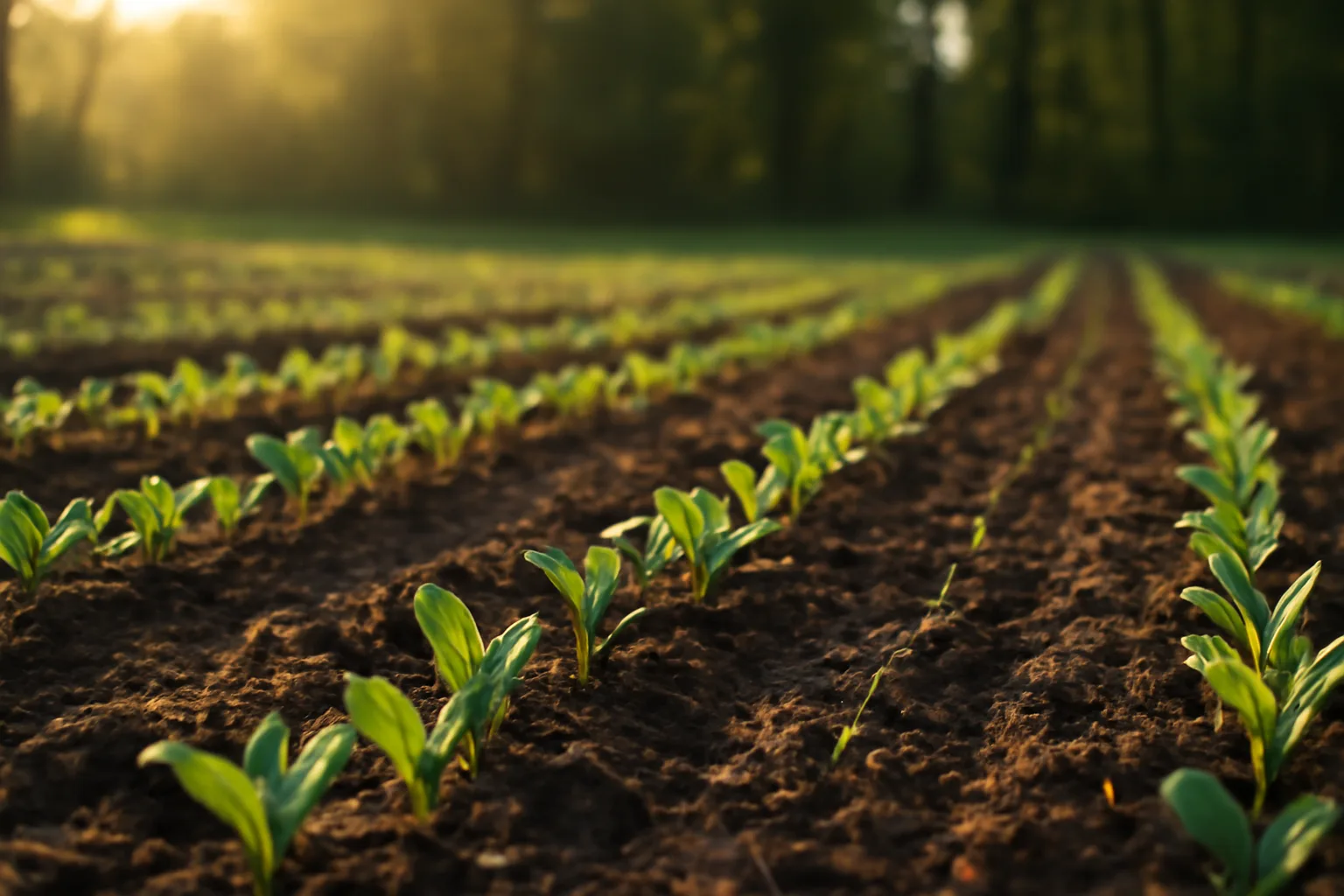
A food plot is a planted area, usually somewhere between a quarter acre and several acres, seeded specifically to attract and feed deer or other wildlife on land you own or lease. It's not the same as a crop field grown for harvest and sale. The goal is nutrition and attraction: something green and palatable when natural browse is scarce, plus a spot where you can predictably find deer during legal hunting hours. Most plots fall into one of two categories. Annual plots get replanted every year (brassicas, cereal grains, sorghum, peas). Perennial plots like clover or chicory can produce for 3 to 5 years off one planting if you manage them right, according to Penn State Extension guidance on wildlife food plots. Neither type is inherently better. It depends on your soil, your equipment, and how much time you want to spend on maintenance. Check your state wildlife agency's regulations before you plant or hunt over anything. Some states classify certain food plot practices as baiting if the plot is small, exposed, or planted a certain way relative to a stand. Rules vary a lot by state, so this isn't something to guess on. If you're building your first plot, food plot whitetail is a good starting reference for the basics of layout and species choice.
what's actually in a green cover food plot seed blend?
"Green cover" is a generic term used by several seed companies and DIY mixers to describe blends built around fast-establishing, leafy forage rather than a single grain crop. There's no single regulated formula. If you buy a bag labeled this way, read the tag. By law, seed sold in the U.S. has to carry a label disclosing species composition, purity, and germination percentage under the Federal Seed Act, enforced by USDA's Agricultural Marketing Service [1]. Typical ingredients you'll find in these blends: brassicas (forage turnips, daikon radish, rape), clovers (crimson, red, ladino/white), cereal grains (oats, winter wheat, winter rye), and sometimes forage peas or sorghum-sudangrass for summer bulk. The idea behind mixing species is succession: the cereal grain and peas green up fast and get eaten early, the brassica bulbs and tops become highly attractive after a hard frost converts starches to sugars, and the clover persists into next year if it's a perennial variety. Here's the honest catch: a bag with eight species in it sounds impressive, but if two of those species need a spring planting window and three need a late-summer window, you can't plant the whole bag at once and expect all of it to perform. Read the tag, and match the blend's planting window to what you're actually trying to accomplish this season. For seed selection specifics by species, food plot seed and deer food plot seed break down individual varieties in more depth.
do deer eat sorghum?
Yes, deer will eat sorghum, both the forage/leaf stage and the grain heads later in the season, but it's rarely their first choice when better options are available. Grain sorghum and forage sorghum (including sorghum-sudangrass hybrids) are more commonly grown as a summer screening or bulk-tonnage crop than a primary deer attractant. Extension research from Mississippi State notes that sorghum can provide standing grain into fall and winter and holds up well to drought and heat compared to corn [2]. Where sorghum earns its place in a plot rotation is as a nurse crop or screen. Plant it thick along field edges or between hunting access and open ground, and it grows tall fast, giving you cover from deer eyes while a more attractive plot (clover, brassica) grows nearby. Deer will browse sorghum leaves in summer and hit the grain heads once they mature and other food sources thin out in late fall. If your main goal is drawing deer to a stand site, sorghum shouldn't be your headline species. Use it for cover, drought tolerance, or to add tonnage to a mix, not as the reason deer show up.
do deer eat clover, and do they actually like it?
Deer eat clover heavily, and most wildlife biologists rank it among the most consistently used food plot forages available. White clover and red clover both show up repeatedly in deer diet studies across the whitetail's range, and it's a forage that stays palatable through most of the growing season, more than for a few weeks like some annuals. Why deer favor it comes down to protein and digestibility. Quality clover stands regularly test in the 25 to 30% crude protein range when actively growing and properly fertilized, which lines up well with a doe's nutritional needs during lactation in late spring and a buck's needs during antler growth in summer, per University of Tennessee Extension forage data on legume quality [3]. The tradeoff is establishment and maintenance. Clover needs a clean seedbed, correct soil pH (most extension guides target 6.0 to 6.5), and it doesn't tolerate being smothered by weeds while it's getting started. A soil test is the cheapest insurance you can buy before planting; your soil test lab is the real authority on how much lime and fertilizer your specific field needs, not a bag tag or a blog post. If you want a full rundown of clover varieties and mixing partners, deer food plots covers that ground.
when to plant food plots for deer (by region)
| Northern (MN, WI, MI, upper New England) | Mid-May to early June | Late July to mid-August | |
|---|---|---|---|
| Mid-South / Transition (KY, TN, VA, MO) | Late April to mid-May | Mid-August to early September | |
| Deep South (AL, MS, GA, LA) | Mid-March to April | Early September to early October | These are general starting points, not guarantees. Local extension frost tables and your own field history beat any national chart. |
Timing splits into two broad windows: spring plantings for warm-season annuals and perennials, and late-summer plantings for cool-season annuals and cereal grains. Which window you use depends on the species and your first-frost date, not a single calendar date that works nationwide. Spring plantings (clover, chicory, soybeans, warm-season sorghum/sudangrass) generally go in after your last frost date, once soil temps are reliably above 50 to 60 degrees F depending on species. For most of the whitetail's range that's April through early June, later in northern states, earlier in the Deep South. Late-summer/fall plantings (brassicas, oats, winter wheat, winter rye, clover overseed) are typically timed 60 to 90 days before your area's average first frost date, so the plants have time to establish before growth slows. NOAA's climate data and your state extension's frost date tables are the best source for your specific county [4]. As a rough national guide: early August in the northern tier, mid-to-late August through the transition zone, and into September in the Deep South. | Region (general) | Spring window | Fall window |
when to plant oats for deer
Oats go in during the late-summer fall planting window, typically 60 to 90 days ahead of your first expected frost, same general timing as brassicas. That usually lands in the August window across most of the whitetail range, with the Deep South pushing into September. Oats germinate fast, often showing green in 5 to 7 days under decent moisture, and they're one of the most consistently preferred fall forages available, frequently outranking wheat and rye in deer preference trials early in the season. A widely cited food plot preference study out of Mississippi State University found deer showed strong early-season preference for oats and other cereal grains among tested plot forages [5]. Oats do have a weakness: they're less cold-hardy than winter wheat or winter rye. In harsh northern winters, an oat plot can get hammered by hard freezes and stop producing green growth, while wheat and rye keep going. If you're north of the transition zone and want fall forage that lasts into late winter, blend oats with wheat or rye rather than planting oats alone.
when to plant turnips for deer
Turnips and other brassicas go in during the same late-summer window as oats, roughly 70 to 90 days before your area's first frost, because they need time to bulb up before cold weather triggers the sugar conversion that makes them attractive. Here's the part a lot of first-time planters get wrong: turnip tops are moderately palatable right away, but the bulbs and the sweetened, frost-hit foliage are what really pull deer in, and that shift happens after one or more hard frosts convert starches to sugars in the plant. That means a turnip plot planted in August often gets ignored in September and October, then gets hammered in December and January. Don't panic if deer aren't hitting it hard early; that's normal. Purdue Extension and several other land-grant programs note that brassica tonnage and bulb development benefit from adequate phosphorus and boron, both of which a soil test will tell you if you're short on [6]. Planting too early in hot, dry conditions can cause poor germination or early bolting; planting too late means the bulbs won't size up before the ground freezes. That 70 to 90 day window before frost is the tightest of any common food plot species, so don't guess on this one, check your local frost date.
what do deer like to eat most (a real ranked look)
There's no single universal "favorite," because deer diet preference shifts by season, region, and what's available naturally. That said, repeated food plot preference trials and deer diet studies point to a consistent short list of forages deer select heavily when given a choice. Clover (white and red) shows up at or near the top of nearly every preference study for the growing season, largely because of its sustained protein content and tenderness. Brassicas, once frost-sweetened, rank extremely high in late fall and winter, often becoming the most heavily used plot on a property during that stretch. Soybeans, while a plot forage rather than a green cover blend ingredient, consistently rank as one of the highest-preference summer forages in studies from the Quality Deer Management Association (now the National Deer Association) and various university trials [7]. Acorns deserve a mention even though they're not a plantable food plot seed: in years with a strong mast crop, deer will often abandon plots entirely in favor of white oak acorns, which are lower in tannins and more palatable than red oak acorns. That's a natural food source competing with your plot, and it's the single biggest reason plot activity can look completely different from one fall to the next on the same property.
do deer like honey? (a common but misplaced question)
No, honey isn't part of a deer's diet and there's no research support for using it as an attractant. Deer are herbivores built to digest plant fiber through a four-chambered rumen system; they don't seek out or benefit from concentrated sugars like honey the way, say, bears or raccoons might investigate a hive for the larvae and wax inside. The honey question usually comes from confusion with "honey hole," a hunting term for a highly productive stand location, or from marketing around sweet-smelling mineral and attractant products that use molasses or sugar-based additives to increase palatability of a mineral lick. Those products work through smell and taste appeal in small concentrated doses, not because deer are chasing sugar the way a person might. If you're looking for a genuine sweet-plant attractant, sugar beets and some brassica varieties do have naturally higher sugar content after a frost, and that's backed by actual forage quality data, not folklore.
how to build a green cover blend yourself instead of buying a bag
Buying a pre-mixed bag is convenient, but mixing your own lets you match species to your actual planting window instead of hoping a multi-species bag's average timing works for your field. A simple, honest approach: pick one cereal grain (oats or winter wheat), one brassica (forage turnip or daikon radish), and decide if you want a perennial clover in the mix or planted separately. Cereal grains and brassicas share almost the same late-summer planting window, so they combine well in one pass. Clover, if you want it long-term, often does better established alone or with a very light nurse crop of oats, rather than fighting with an aggressive brassica for light and nutrients. Seeding rates matter more than people think. Oats typically go down around 60 to 100 lbs/acre drilled or broadcast, forage turnips at 4 to 6 lbs/acre, and clover at 6 to 10 lbs/acre depending on species, per standard extension seeding rate tables [8]. Overseeding brassica thinking "more is better" just gets you a stand of skinny, undersized bulbs competing for the same nutrients. If you'd rather skip the guesswork on species mix and rates for your specific field size, soil type, and region, that's exactly the gap a $99 Custom Food Plot Plan is built to fill: general planting guidance tailored to your zone and goals, not a one-size-fits-all bag recommendation. It's not a substitute for your soil test lab's specific lime and fertilizer recommendations, but it does help you pick the right species and timing to begin with.
equipment you actually need for a green cover blend
You don't need a tractor and a no-till drill to plant most green cover blends, but the equipment you have does change which species make sense. Brassica and clover seed is tiny and needs shallow, firm seed-to-soil contact, roughly 1/4 to 1/2 inch deep; broadcasting it onto a prepared seedbed and cultipacking works fine. Cereal grains like oats and wheat can go a bit deeper, around 1 to 1.5 inches, and tolerate being drilled or lightly disked in. A basic setup that covers most green cover blends: a disk or tiller to break up sod and old growth, a broadcast spreader (even a hand-crank one for small plots), and something to firm the seedbed after broadcasting, a cultipacker, a lawn roller, or even driving an ATV over it works in a pinch. For larger acreage, a no-till drill saves time and often improves germination consistency, but it's a real investment, often several thousand dollars new, so renting or hiring the work out is common for smaller operations. For a full rundown on matching gear to plot size and species, domain food plot seed covers equipment tradeoffs across different plot types in more depth.
common mistakes with green cover blends
The biggest mistake is planting the whole bag on the same date. If your blend has both spring species and fall species mixed together, that's a marketing choice, not an agronomic recommendation. Split the bag or buy separately and plant on the correct calendar for each. The second mistake is skipping the soil test. Brassicas and clover in particular are heavy feeders and clover especially struggles below pH 6.0. A basic soil test through your county extension office or a private ag lab typically costs somewhere in the $10 to $20 range and tells you exactly what your field needs in lime and fertilizer, information no seed bag or blog post can give you because it's specific to your dirt. The third mistake is expecting immediate deer activity on a brand-new brassica plot. As covered above, that plot might get almost no pressure until the first hard frost, weeks after planting. Patience, not more seed, is usually the fix.
Frequently asked questions
Do deer eat sorghum in food plots?
Yes, deer browse sorghum leaves in summer and eat the grain heads later in fall, but it's usually a secondary choice compared to clover, soybeans, or brassicas. Sorghum's real value in a plot rotation is as a tall screening crop or drought-tolerant bulk forage, not as the main attractant species.
Do deer like clover more than other food plot forages?
Clover consistently ranks near the top of deer preference studies during the growing season, largely due to sustained 25-30% crude protein content when well fertilized. It's not a universal favorite in every season (brassicas often win in late fall after a frost), but for spring through fall, clover is one of the most reliably used plot forages.
When should I plant food plots for deer?
Spring annuals and perennials (clover, soybeans, chicory) go in after your last frost date, typically April through early June depending on region. Fall species (brassicas, oats, wheat, rye) go in 60 to 90 days before your first fall frost, usually August in most of the whitetail range, into September in the Deep South.
When is the best time to plant oats for deer?
Plant oats in the same late-summer window as brassicas, about 60 to 90 days before your area's first expected frost. That's typically an August planting in most of the country. Oats germinate fast, often within a week, but they're less cold-hardy than wheat or rye, so blend them if you need forage lasting deep into winter.
When should I plant turnips for deer food plots?
Turnips need roughly 70 to 90 days before your area's first frost to fully bulb up, so plant in mid-to-late summer depending on your region. Deer often ignore turnip plots at first; the bulbs and foliage become highly attractive only after a hard frost converts starches to sugars, usually late fall into winter.
What is a food plot exactly?
A food plot is a planted area, usually a quarter acre to several acres, seeded specifically to feed and attract deer or other wildlife on hunted land. It differs from a commercial crop field because the goal is nutrition and hunting access, not harvest for sale. Plots can be annual (replanted yearly) or perennial (lasting 3-5 years).
What are deer's favorite foods overall?
There's no single universal favorite; it shifts by season and region. Clover ranks high nearly year-round, frost-sweetened brassicas dominate in late fall and winter, and soybeans rank as one of the top summer forages in university preference trials. Acorns, especially from white oaks, often outcompete any planted plot in heavy mast years.
Do deer like honey as an attractant?
No. Deer are herbivores and honey isn't part of their natural diet or digestion. The idea likely comes from confusion with 'honey hole' (a hunting term for a productive stand site) or sugar-based mineral attractant products, which work through smell and taste appeal, not because deer seek out concentrated sugar like honey.
What's actually in a green cover food plot seed blend?
Most green cover blends mix brassicas (turnips, radish, rape), clovers, cereal grains (oats, wheat, rye), and sometimes forage peas or sorghum. There's no regulated standard formula; always read the seed tag, which is legally required to disclose species and germination rate under the Federal Seed Act.
Can I plant a green cover blend all at once, or does it need splitting up?
It depends on the blend. If the bag mixes spring species (clover, soybeans) with fall species (brassicas, oats), you generally can't plant both halves on the same date and expect good results. Read the tag, separate species by planting window, and plant each on its correct calendar.
How much does a soil test cost before planting a food plot?
A basic soil test through a county extension office or private ag lab typically runs about $10 to $20 and takes 1-2 weeks for results. It tells you your soil's pH and nutrient levels, which determines exactly how much lime and fertilizer your specific field needs, information no seed bag can provide.
Are baited food plots legal for hunting?
It depends entirely on your state. Some states regulate food plot size, visibility, or planting method relative to baiting laws, while others treat any planted, unharvested crop as legal to hunt over. Always check your state wildlife agency's current regulations before hunting a plot, since rules vary and change.
Sources
- USDA Agricultural Marketing Service, Federal Seed Act: Seed sold in the U.S. must carry a label disclosing species composition, purity, and germination percentage
- Mississippi State University Extension, Food Plot Forages: Sorghum provides standing grain into fall and winter and tolerates drought and heat better than corn
- University of Tennessee Extension, Forage Quality of Legumes: Quality clover stands can test in the 25-30% crude protein range when actively growing
- NOAA National Centers for Environmental Information, Frost/Freeze Data: First and last frost dates vary significantly by region and are tracked county by county
- Mississippi State University Extension, Deer Food Plot Preference: Deer show strong early-season preference for oats among tested cereal grain forages
- Purdue University Extension, Brassica Forage Production: Brassica bulb development benefits from adequate phosphorus and boron, confirmed through soil testing
- National Deer Association (formerly QDMA), Food Plot Research Summaries: Soybeans consistently rank as one of the top-preference summer forages in university deer diet trials
- University of Tennessee Extension, Wildlife Food Plot Seeding Rates: Standard seeding rates for oats, turnips, and clover in wildlife food plots