Last updated 2026-07-25
TL;DR
Winter food plots work best with brassicas (turnips, radishes), cereal grains (oats, wheat), and clover planted 60 to 90 days before your area's first hard frost, usually late July through September depending on latitude. Brassicas get sweeter after frost; clover holds up if seeded early enough to root before ground freezes.
what is a food plot
A food plot is a planted area of land, usually somewhere between a quarter acre and several acres, put in specifically to grow forage that deer and other wildlife will eat. It's not a garden and it's not a lawn. Most hunters plant them on field edges, old logging roads, clear-cuts, or retired agricultural ground. The purpose splits two ways. Some plots are built to hold deer on your property and give them a reliable food source through hard months. Others are built to create a hunting location, a spot where deer show up predictably enough that you can set a stand and watch it. Winter plots usually do both jobs at once, since food gets scarce and deer travel to find it. State wildlife agencies generally treat food plots differently than bait piles. A planted, standing crop is legal almost everywhere in the U.S. even in states with strict baiting laws, because the deer are foraging on a live plant, not eating from a pile someone dumped. That said, rules vary by state on things like plot size near property lines, use during specific hunting seasons, and what counts as "bait" versus "agriculture." Check your state wildlife agency's regulations before you plant anything you plan to hunt over, especially if you're near a state or public land boundary.
when to plant food plots for deer
| Northern (MN, WI, MI, ME, northern NY) | late July to mid August | mid August to early September | early August or early spring | |
|---|---|---|---|---|
| Mid-latitude (OH, PA, IA, southern NY, VA) | early to late August | late August to mid September | late August or April | |
| Southern (GA, AL, TX, FL, MS) | September | September to October | September to October | These are general windows, not guarantees. Always cross-check against your local extension office's frost date data, since a single bad drought year or early frost can wreck a plot planted right on the textbook date. |
Timing depends entirely on whether you're planting a spring/summer plot or a fall/winter plot, and winter plots get planted in late summer, not winter itself. That confuses a lot of new plotters. You're not out there in January with a seed spreader. You're planting in August or September so the crop is mature and ready by the time snow flies. As a rule of thumb, cereal grains and brassicas for winter plots go in the ground 60 to 90 days before your area's average first hard frost. In the Upper Midwest and Northeast, that often means early to mid August for brassicas and late August to mid September for cereal grains like oats and wheat. In the Southeast and mid-South, you've got more room, often through September and into early October. The Mississippi State University Extension service notes that fall food plot species should generally be planted in late summer to early fall, matched to when soil temperatures and moisture allow germination but leave enough growing season before frost [1]. Missing that window by even two or three weeks can mean the difference between a lush plot and a stand of six-inch stubble that never got the growing season it needed. Here's a rough planting calendar by region: | Region | Brassicas | Cereal grains (oats, wheat, rye) | Clover |
when to plant turnips for deer
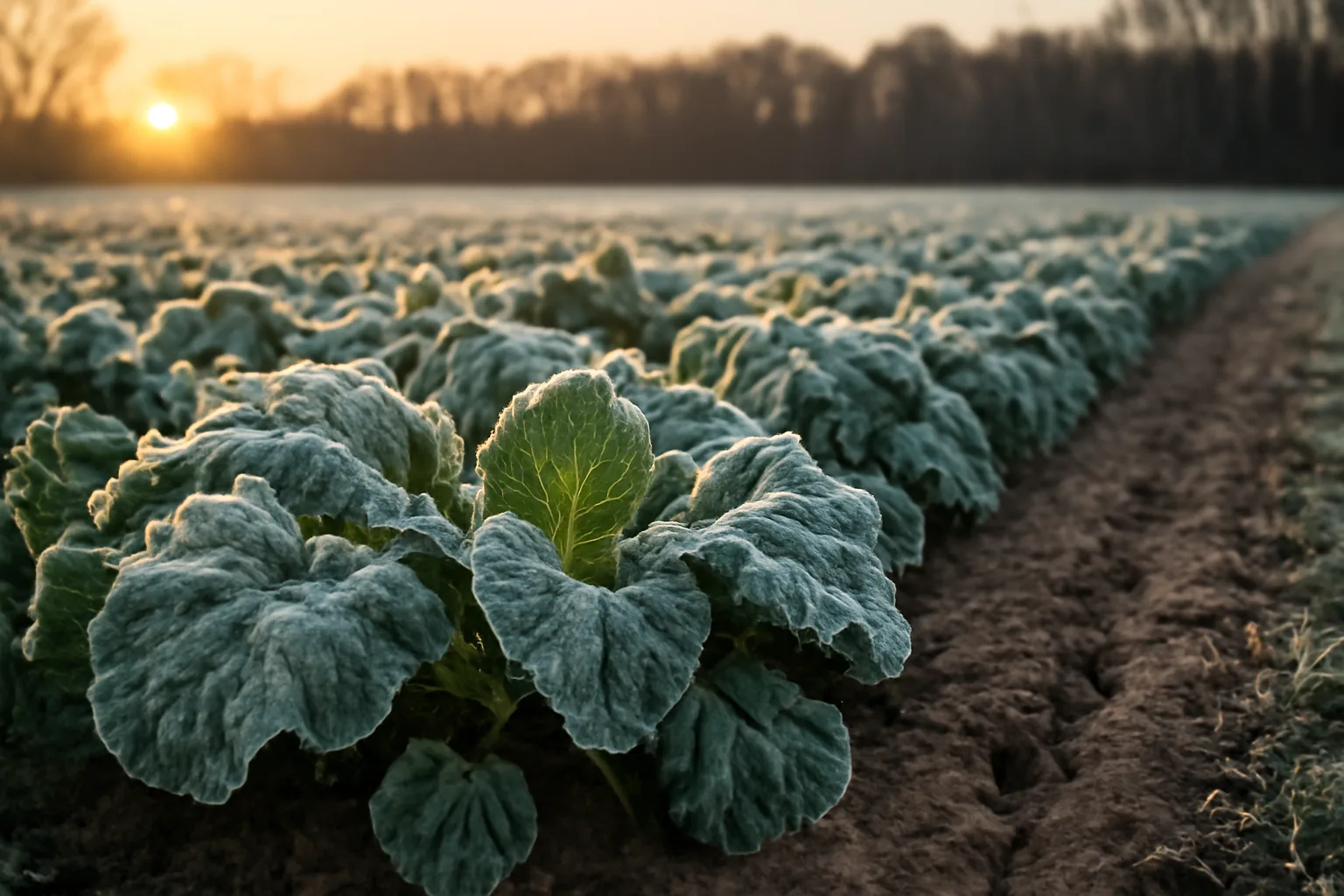
Turnips (and brassicas generally, since radishes and rape follow similar timing) need roughly 80 to 90 days from planting to full maturity, and they taste best to deer after a hard frost converts starches to sugars. That means you want them in the ground 80 to 90 days before your first expected hard frost, not right before it. In most of the whitetail's range that puts turnip planting somewhere between late July and early September. Wait too long and the plant never bulks up before cold weather stops growth. Plant too early in hot, dry August soil and you risk poor germination or flea beetle damage before the plant establishes. Purdue University's forage guidance on brassicas for wildlife notes that turnips and other brassica forages become more palatable to deer after exposure to frost, since cold temperatures trigger starch-to-sugar conversion in the plant tissue [2]. That's why deer often ignore a turnip plot in October, then hammer it in December and January once a couple of hard frosts have hit. One practical note: deer often eat the tops first in fall, then switch to digging up and eating the bulbs once the greens are gone and snow covers the ground. If you want a plot that still has food value in February, don't expect the whole plant to disappear in November. That's actually the point.
do deer like clover
Yes, and it's one of the most consistently preferred forages across whitetail range. Clover (white clover, red clover, and various blends) is a perennial legume, meaning a single planting can produce forage for three to five years if it's maintained, mowed, and limed properly. Clover isn't primarily a winter food though. It's a spring, summer, and early fall workhorse, and it goes dormant or gets buried under snow in a lot of winter climates. In the Deep South and parts of the mid-South, clover can stay green and available through much of the winter since hard freezes are shorter and less frequent. The USDA NRCS Plant Guide for white clover describes it as a high-quality forage with crude protein content commonly in the 25 to 30 percent range when actively growing, which is why deer, especially does in late gestation and bucks rebuilding body condition, key in on it hard [3]. If you're planting clover specifically to carry a plot into winter, plant it in late summer (August in northern states) so it's well established with a strong root system before the ground freezes, or plant in early spring and let it mature through the growing season into fall.
when to plant oats for deer
Oats are a fall staple because they germinate fast, grow fast, and deer eat them readily while young and tender. Plant oats 45 to 60 days before your first expected frost. That's a shorter runway than brassicas need, which is part of why oats are popular for hunters who get a late start or want a quick-turnaround plot. In northern states that generally means late August to mid September. In the South, you can push oats into October and still get a solid stand before winter dormancy or a hard freeze knocks growth back. Oats aren't as cold-hardy as winter wheat or cereal rye. A hard freeze in the teens or single digits will often kill an oat stand outright, where wheat and rye keep growing (or resume growth) after a thaw. That's why a lot of food plot mixes blend oats with wheat or rye: oats give you fast, attractive early growth, and the cereal grains carry the plot later into winter after the oats are gone. Iowa State University Extension's forage guidance recommends seeding oats in early fall for a quick-growing, high-tonnage forage crop, generally 6 to 8 weeks before a killing frost [4].
do deer eat sorghum
Yes, deer eat grain sorghum, both the standing seed heads and the leaves, though it's more commonly planted as a spring or summer plot crop, or as a standing grain crop left through fall and winter for the seed heads. Sorghum (also called milo) is drought-tolerant and does well in southern and mid-south heat where corn struggles without irrigation. For winter use, sorghum's main value is as a standing grain source: the seed heads persist into winter and provide energy (mostly starch and carbohydrate) at a time when deer need calories to maintain body condition. It's not a preferred browse the way clover or brassicas are during the growing season, but as a winter grain source, especially in areas that get snow cover over lower browse, sorghum heads sticking up above the snow line matter. One real consideration: sorghum, along with sudangrass and related species, can produce prussic acid (cyanogenic compounds) in young, stressed, or frost-damaged plant tissue, which is toxic to ruminants including deer and cattle. This is a documented forage management issue tracked by extension services, most commonly discussed in the context of cattle grazing but relevant to any ruminant browsing the plant. The University of Georgia Extension flags that sorghum species can develop dangerous prussic acid levels after a frost damages the plant, and recommends waiting several days after a killing frost before grazing animals on it [5]. If you're growing sorghum as a winter plot, that's worth knowing, though most food-plot-scale plantings and casual deer browsing don't carry the same risk profile as concentrated cattle grazing on a stressed stand.
what are deer's favorite foods
There's no single universal answer, since preference shifts by season, region, and what's locally available, but a few categories show up again and again in browse studies and hunter experience. Acorns are a heavyweight favorite in fall wherever oak trees are present, and deer will often ignore a food plot entirely during a heavy acorn drop. Beyond mast, clover, soybeans, and alfalfa rank consistently high during the growing season for their protein content. In fall and winter, brassicas (turnips, radishes, rape), cereal grains (oats, wheat, rye), and standing corn or soybeans left in a field all draw heavy use. Apples and other soft mast matter locally where orchards or wild apple trees exist. The Quality Deer Management Association (now the National Deer Association) has published browse preference research showing that deer selectivity changes dramatically by season and that no single plant holds top preference year-round. Practically, that means the best food plot strategy is diversity: a clover plot for spring and summer, a brassica or cereal grain plot for fall and winter, and awareness that a strong acorn year will pull deer off your plot no matter what you planted.
do deer like honey
Deer don't seek out honey the way people assume from casual searches; there's no wildlife research showing honey as a meaningful deer attractant or food source, and it's not something deer encounter or forage on in nature. Deer are herbivores and their digestive system (a four-chambered ruminant gut adapted to plant fiber, browse, and mast) isn't built around processing concentrated sugars like honey. Where this question usually comes from is confusion with commercial deer attractant products, some of which use sweet, sticky scents (including molasses-based or sugar-based licks and sprays) to draw deer in with smell rather than nutrition. Those products work through scent and taste curiosity, not because honey is a natural or preferred deer food. If you're trying to hold deer through winter, skip novelty attractants and put the effort into a planted food source instead. A mineral lick or scent product might pull a deer in for a sniff. A standing brassica or cereal grain plot is what actually gets an animal to bed nearby and return through January.
how do I plan a winter food plot from a soil test
Start with the soil test, because it tells you the two things that matter most before you buy a single bag of seed: pH and nutrient levels. Most food plot species, brassicas and clover especially, want soil pH in the 6.0 to 6.8 range. Below that, lime becomes non-negotiable, since acidic soil locks up phosphorus and other nutrients even if they're technically present in the ground. Your soil test lab (through your state's land-grant university extension office, in most cases) is the authority on how much lime and fertilizer your specific ground needs. General planting guides, including this one, can tell you what species like what conditions in broad terms, but the lab report gives you numbers specific to your dirt. Follow that report over generic internet advice every time. Once you know your pH and nutrient status, matching species to your window gets a lot easier. If you're short on time before frost, oats or a fast cereal grain blend buys you a full plot in 45 to 60 days. If you've got a longer runway, brassicas planted in late July or August reward you with a plot that peaks in importance during the coldest, hungriest part of winter. This is the kind of decision that benefits from a written plan matched to your zip code, soil numbers, and equipment. PlotSeason's $99 one-time Custom Food Plot Plan builds that out species by species and week by week, though your soil lab's specific lime and fertilizer recommendation always overrides general guidance, including ours, since they've tested your actual dirt.
how much acreage and seed do I need for a winter plot
Most hunting-property food plots run from a quarter acre to two or three acres, and seeding rates depend heavily on species. Brassica blends are typically seeded at 4 to 6 pounds per acre since the seed is tiny and a little goes a long way. Cereal grains like oats and wheat are seeded much heavier, often 100 to 150 pounds per acre when drilled, more if broadcast, because the seed itself is larger and germination rates in broadcast conditions are lower. Clover seeding rates run around 6 to 10 pounds per acre for most white clover blends, again a small-seeded crop that's easy to over-seed if you're not careful with a spreader. A rough planning number some land managers use: dedicate 1 to 5 percent of total huntable acreage to food plots, though this varies enormously by region, existing ag land nearby, and deer density. On a 100-acre property with no surrounding row-crop agriculture, that might mean two to five acres split across two or three plots. On a property surrounded by corn and soybean fields, a smaller total plot acreage focused on a preferred fall food (brassicas, clover) can still pull deer in during hunting season even though it's not carrying the herd nutritionally.
what equipment do you actually need to plant a winter plot
You don't need a tractor and a no-till drill to get a winter plot in the ground, though it helps. At minimum you need a way to break up existing sod or vegetation (a disk, tiller, or a herbicide burndown with an ATV sprayer), a way to spread seed (a handheld or tow-behind broadcast spreader), and a way to get seed-to-soil contact (a cultipacker, drag harrow, or even driving over the plot with an ATV and tires). Brassica and clover seed is small and needs to sit near the surface, generally a quarter inch deep or less, since planting too deep is one of the most common reasons a plot fails to germinate. Cereal grains like oats and wheat want closer to an inch of coverage. For smaller plots (under an acre), a decent ATV or UTV with a tow-behind disk and spreader combo handles almost everything. For larger acreage, a compact tractor with a box blade, disk, and drill or seeder saves a huge amount of time and gets more consistent results. Renting equipment for a weekend from a local rental center is often more cost-effective than buying gear you'll use twice a year, unless you're planting multiple plots across a large property annually.
Frequently asked questions
Do deer eat sorghum in winter?
Yes, deer eat sorghum grain heads and leaves, and standing sorghum left through winter provides a carbohydrate source above snow cover. Watch for prussic acid risk in frost-damaged sorghum tissue, a known issue tracked by extension services like University of Georgia Extension [5].
Do deer eat clover, and is it good for winter plots?
Deer strongly prefer clover, especially during the growing season when crude protein runs 25 to 30 percent [3]. It's less useful as a dedicated winter food in northern climates since it goes dormant or gets buried in snow, though it stays viable longer in southern regions.
When should I plant food plots for deer?
Fall and winter plots go in the ground 45 to 90 days before your area's first hard frost, depending on species. Spring/summer plots (clover, soybeans, alfalfa) go in after the last frost, typically April through May in most of the whitetail's range.
Do deer like clover more than other food plot species?
Clover ranks among the most consistently preferred food plot forages across most of the year, but preference shifts seasonally. During fall and winter, brassicas and cereal grains often out-draw clover since clover growth slows or stops in cold weather.
When should I plant oats for deer food plots?
Plant oats 45 to 60 days before your area's first expected killing frost, generally late August to mid September in northern states and into October in the South. Oats aren't very cold-hardy, so blend with wheat or rye if you want the plot to last deeper into winter.
When is the best time to plant turnips for deer?
Plant turnips 80 to 90 days before your first hard frost, since they need a full growing season to bulb out and become palatable. Purdue University Extension notes brassicas become sweeter to deer after frost converts starches to sugars in the plant tissue [2].
What exactly is a food plot?
A food plot is a planted area, usually a quarter acre to several acres, established specifically to grow forage for deer and other wildlife. It differs from bait in that deer are foraging on a standing, live crop rather than eating from a dumped pile, which matters under most state baiting laws.
What are deer's favorite foods overall?
Acorns top the list wherever oak trees produce mast, often pulling deer off food plots entirely during a heavy drop. Beyond mast, clover, soybeans, and alfalfa rank high in the growing season, while brassicas, cereal grains, and standing corn draw heavy use in fall and winter.
Do deer like honey as a food or attractant?
No, there's no research support for honey as a natural deer food or effective attractant. Deer are ruminant herbivores whose digestive systems aren't built around concentrated sugars, and any perceived draw from sweet-scented products comes from smell curiosity, not nutritional preference.
How late is too late to plant a winter food plot?
If you're inside 45 days of your area's first hard frost, oats or a fast cereal grain blend is about your only realistic option, since brassicas need 80 to 90 days to mature. Past that point, most extension guidance suggests waiting for a spring planting instead.
Can I plant a food plot without a soil test?
You can, but you're guessing at lime and fertilizer needs, and acidic soil below pH 6.0 will badly limit growth of clover and brassicas regardless of how good your seed is. A soil test through your local extension office costs relatively little and removes most of that guesswork.
Are food plots legal to hunt over in every state?
Standing, planted food plots are legal in nearly all states, but rules on plot size, proximity to property lines, and what counts as bait versus agriculture vary. Check your specific state wildlife agency's regulations before hunting over a plot, especially near public land boundaries.
Sources
- Mississippi State University Extension, food plot planting guidance: Fall food plot species should be planted in late summer to early fall based on regional frost timing
- Purdue University Extension, forage brassicas for wildlife: Brassica forages like turnips become more palatable to deer after frost converts starches to sugars
- USDA NRCS, White Clover Plant Guide: White clover commonly provides crude protein content in the 25 to 30 percent range during active growth
- Iowa State University Extension and Outreach, forage oats seeding guidance: Oats should be seeded roughly 6 to 8 weeks before a killing frost for fast-growing forage
- University of Georgia Extension, prussic acid poisoning in forage: Sorghum species can develop dangerous prussic acid levels after frost damages the plant
- U.S. Fish and Wildlife Service, Wildlife and Sport Fish Restoration Program: State wildlife agencies administer regulations governing hunting practices including food plot and baiting rules