Last updated 2026-07-25
TL;DR
Deer food plot seed for sale ranges from cheap annual grains like oats and sorghum to perennial clover blends that last 3-5 years. The right pick depends on your zone, soil pH, and planting window: cereal grains and brassicas go in late summer, clover and other spring plots go in April through June in most of the whitetail range.
what is a food plot, exactly?
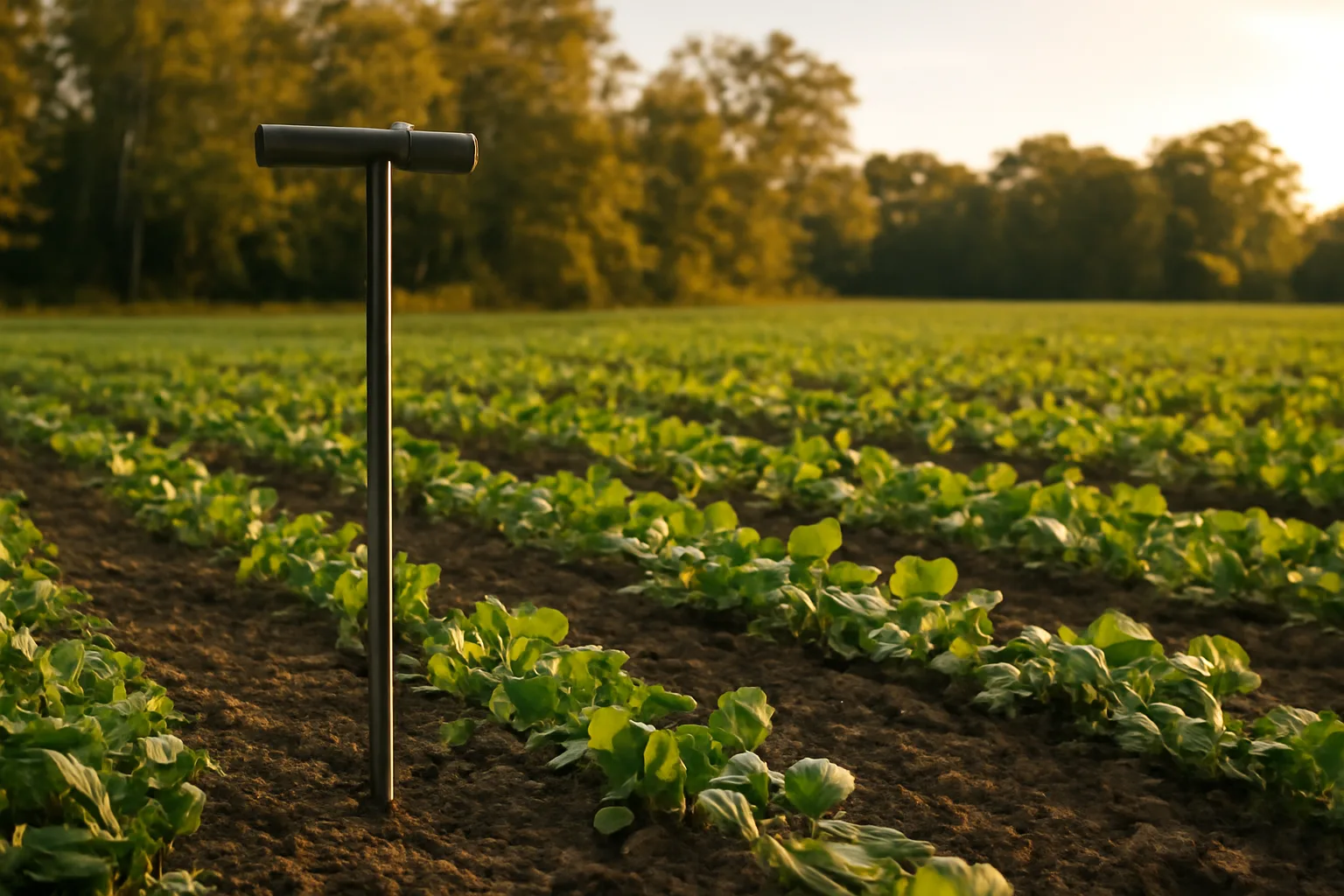
A food plot is a planted patch of ground, usually somewhere between a quarter acre and a few acres, seeded with something deer want to eat that isn't already growing wild on your property. It's not complicated. You're basically running a tiny, deer-focused farm plot inside your hunting ground. Most plots fall into two buckets: annuals (planted fresh each year, like oats, brassicas, or soybeans) and perennials (planted once and managed for multiple seasons, like clover or alfalfa). Some hunters run both, using annuals for late-season draw and perennials for spring and summer nutrition when does are nursing fawns and bucks are growing antlers. The USDA Natural Resources Conservation Service and state wildlife agencies generally treat food plots as a habitat management practice rather than baiting, as long as the seed is broadcast and grown in the ground rather than piled on the surface. But rules on baiting and supplemental feeding vary a lot by state, and some states regulate food plots differently depending on public versus private land. Check your state wildlife agency's regulations before you plant anything if you're unsure where the baiting line falls where you hunt [1]. If you want a plan built around your specific soil test, acreage, and zone instead of piecing it together from forum threads, that's the whole reason the $99 Custom Food Plot Plan exists. It's not a substitute for your soil lab's lime and fertilizer recommendation, just a planting plan layered on top of it.
what do deer actually prefer to eat?
Deer are opportunistic browsers, and their preferences shift with season, region, and what's available naturally. That said, food plot species that consistently rank high in preference and forage studies include soybeans and cowpeas in summer, clover and chicory through spring and summer, and brassicas (turnips, radishes, rape) plus cereal grains in fall and winter [2]. Whitetail deer research out of Mississippi State and other land-grant programs has shown soybeans can produce more digestible protein per acre than almost any other common plot crop, which is part of why soybean plots get hit hard in July and August when deer need protein for lactation and antler growth [2]. Clover is the closest thing to a universal favorite. It's high in protein (often 25-30% crude protein in a well-fertilized stand), it regrows after grazing, and it's available for months instead of weeks. Brassicas get a reputation as a "love it or ignore it" crop early in the season, then deer often switch on hard after a frost sweetens the leaves and bulbs through starch conversion. There's no single "favorite" that works everywhere. A plot of pure oats in Wisconsin might get hammered in October, while the same oats in south Georgia barely get touched because deer have acorns and green browse everywhere. Read your local conditions, more than what worked for a guy on a hunting forum in a different state.
do deer eat clover, and is it worth planting?
Yes, deer eat clover heavily, and it's one of the most planted food plot species in North America for good reason. White clover (Trifolium repens) and red clover (Trifolium pratense) both show up constantly in preference studies and extension forage guides, and both tolerate grazing pressure better than most alternatives. Clover is a perennial, so a good stand can produce forage for 3 to 5 years before you need to reseed, provided you maintain fertility and mow it a couple times a season to keep weeds down and encourage new growth. Per the University of Tennessee Extension, ladino (white) clover stands "can persist for several years under good management and moderate grazing pressure," which is the exact reason so many food plotters treat clover as their base perennial plot [3]. The catch: clover needs decent soil pH, generally in the 6.0 to 7.0 range, and it needs full or near-full sun. Plant it in a shaded, acidic corner of the woods and it'll struggle no matter how much seed you throw down. That's exactly what a soil test tells you before you plant, not after. Clover blends sold as food plot seed for sale usually mix ladino white clover with red clover or a small amount of chicory. Chicory adds drought tolerance and a deep taproot that pulls nutrients up from lower in the soil profile, which is handy in sandy or compacted ground.
do deer eat sorghum?
Deer will eat grain sorghum (milo), but it's not a top-tier deer food plot crop on its own. Sorghum is more commonly planted as a cover crop, a screening plant to block sightlines, or a component in a wildlife blend rather than the main draw. Deer browse the leaves some during the growing season and will eat the grain heads once they mature and dry down, especially late in the year when other food sources thin out. Where sorghum earns its keep is height and structure. A thick stand of grain sorghum can run 5 to 8 feet tall, which makes it useful for bedding cover, screening a plot from a road, or breaking up a big open field into smaller, more huntable pieces. Some hunters plant a sorghum or corn/sorghum screen strip along the edge of a clover or brassica plot just to block deer from seeing the parking area or a stand approach. If sorghum is the only thing in a bag of "deer blend" seed you're looking at buying, don't expect it to be the reason deer show up. It's a supporting player, not a headliner.
when to plant food plots for deer (by region and season)
| Deep South (zones 8-9) | March-April | September-October | |
|---|---|---|---|
| Mid-South / Transition (zones 7) | April-May | August-September | |
| Midwest / Upper South (zones 5-6) | May-June | Late July-August | |
| Northern tier (zones 3-4) | Late May-June | Late July-early August | Your county cooperative extension office publishes frost date data specific to your area, and that's a better source than a national seed bag chart. The USDA plant hardiness zone map is built for perennial survival, not planting dates, but it's a decent proxy for how early or late your season runs relative to other regions. |
Timing is the single biggest reason food plots fail, more than seed choice or even soil pH. Plant a cool-season annual too early in a hot climate and it burns up. Plant a warm-season crop too late in a cold climate and frost kills it before it produces anything. The general rule: spring/summer plots (soybeans, cowpeas, clover establishment) go in after your last frost date and while soil temps are warming, and fall/winter plots (brassicas, cereal grains, clover overseed) go in 60 to 90 days before your first hard frost so they have time to establish before growth slows. Here's a rough seasonal window by general US zone. These are starting points, not guarantees, since local microclimates and a wet or dry spring can shift things by two or three weeks in either direction. | Region (general) | Spring/summer annual planting | Fall annual planting |
when to plant oats for deer
Oats are a fall annual in most of the whitetail range. Plant them 6 to 10 weeks before your first expected frost so they get several weeks of growth before cold weather slows them down. In much of the Midwest and Upper South that lands in the last two weeks of August through mid-September. In the Deep South, growers often wait until late September or October since oats can struggle in summer heat. Oats germinate fast, usually within 5 to 10 days in warm, moist soil, and they green up quicker than most cereal grains, which is part of why they're such a common fall food plot choice. Deer tend to hit young oat shoots hard right after germination, then again after a frost converts stored starches to sugars and makes the plant taste sweeter. A light frost (upper 20s to low 30s F) usually doesn't kill oats, it just sweetens them. A hard freeze into the teens will. If you're in a zone where winter comes on fast, plant early enough that the oats get real height and root establishment before that first hard freeze, or the plot may not survive to provide late-season forage. Oats are commonly seeded at 100-120 lbs per acre broadcast, or somewhat less when drilled, and they're often mixed with a brassica or clover to extend the plot's usefulness past when the oats alone would fade [4].
when to plant turnips for deer
Turnips are a fall/winter brassica, and they go in the ground in late summer, generally 80 to 90 days before your first expected hard frost. That usually means late July through August across most of the Midwest and Upper South, and into September in warmer parts of the South. Turnips need that lead time because they're doing two things at once: growing leaf mass deer can browse in early fall, and building a bulb underground that deer often ignore until after several frosts sweeten it through starch-to-sugar conversion. Plant too late and you get leaves but no real bulb development, which cuts your plot's late-season value substantially. Deer preference for turnip bulbs specifically (versus the leafy top growth) tends to increase steadily as temperatures drop through November and December, which is why turnip plots often look untouched in October and then get hammered in January. This is a documented pattern in several state wildlife agency food plot guides, and it's one of the more consistent seasonal shifts in deer plot behavior [5]. Seeding rate for turnips alone runs 4-6 lbs per acre, which is low, since the seed is tiny and easy to overplant. Turnips are commonly blended with radishes and rape in commercial brassica bags, and that blend approach spreads out palatability across a longer window instead of betting everything on one plant's frost-sweetening schedule.
what's the difference between annual and perennial food plot seed?
Annuals live one growing season and die. Perennials come back year after year from the same root system, assuming you manage them. That single difference drives almost every other decision about cost, labor, and equipment. Annual seed (oats, wheat, brassicas, soybeans, sorghum) is cheaper per bag but needs replanting every year, which means annual soil disturbance, annual seed cost, and annual timing risk if weather doesn't cooperate. Perennial seed (clover, alfalfa, chicory blends) costs more upfront and takes longer to establish, often 60-90 days before it's really productive, but then it can produce forage for 3-5 years with mowing and fertility maintenance instead of a full replant. A lot of experienced plotters run both: a perennial clover plot as the backbone, plus one or two annual plots rotated seasonally for variety and late-season draw. That mix also spreads risk. If a drought wipes out your annual planting, the clover plot (already established) is often more drought-resilient because of its root depth. If you're shopping food plot seed or comparing deer food plot seed options, check the bag for whether it's a straight annual, straight perennial, or a blend of both, since blended bags (like a clover-chicory-brassica mix) are trying to give you multiple planting windows out of one bag, which isn't always the most efficient way to buy seed for a specific plot.
how much does deer food plot seed cost, and what's worth paying for?
Straight cereal grain seed like oats or wheat generally runs somewhere in the range of $15-$30 for enough to cover a half acre to an acre, depending on seeding rate and where you buy. Branded food plot blends in specialty bags often cost more per acre, sometimes 2-4 times the price of buying the same base species (clover, oats, brassica) individually from a farm seed dealer, because you're paying for the blend formulation and marketing, not a fundamentally different plant. That premium isn't always wasted money. A well-designed blend saves you from having to buy, calculate rates for, and mix four separate bags yourself, and it can spread germination and palatability across a longer window. But if you're comfortable doing your own math, buying base species separately from a local farm co-op is usually the cheaper route for larger acreage. What's actually worth paying for, in most cases: a real soil test (usually $10-$20 through your state land-grant university's soil testing lab) before you buy any seed at all. Planting premium seed into soil with a pH of 5.0 wastes money regardless of what's in the bag, since most food plot species (clover especially) struggle badly below pH 6.0 without lime correction. Coated clover seed (coated with lime and a rhizobium inoculant) costs more per pound than raw clover seed but is worth it in most cases, since the inoculant helps the clover fix nitrogen and the lime coating buffers soil pH right at the seed. If you buy raw, uncoated clover seed, you need to add your own inoculant, and that step gets skipped more often than it should.
do deer like honey, and is it worth using in a food plot?
This one comes up a lot in food plot forums and it's worth a straight answer: there's no real evidence deer are drawn to honey as a food source, and it's not a practical food plot input. Deer are herbivores built to digest cellulose and plant fiber through a four-chambered rumen system, not concentrated sugar sources like honey [6]. Some hunters have used honey-based scent or mineral products marketed for deer attraction, and there's a separate question of whether sweet-smelling attractant products draw deer in from scent alone, which is a different mechanism from planting something they'll actually eat and digest as forage. Even there, the actual pull is debated, and most serious food plot literature doesn't list honey or sugar products as a forage input at all. If you're weighing whether to spend money on a honey-scented mineral lick versus a soil test and clover seed, the soil test and clover win every time for actual nutritional draw and antler/body development. Save the sweet stuff for your coffee.
how do you pick the right food plot seed for your property?
Start with a soil test, not a seed catalog. Your county extension office or state land-grant university lab will test pH, phosphorus, potassium, and organic matter for a small fee, and that report tells you what your ground can actually support before you spend a dollar on seed [7]. Then match species to your plot's sun exposure, soil drainage, and your hunting goals. A half-acre plot tucked in partial shade with heavy clay isn't a good candidate for soybeans, which want full sun and well-drained ground. That same spot might do fine with a shade-tolerant clover blend or cereal rye, which tolerates a wider range of conditions. Think about season of use too. If you're building a plot specifically for late-season gun or muzzleloader hunts, brassicas and cereal grains that hold up through cold weather and get sweeter after frost make more sense than a summer soybean plot that's long gone by November. If you want spring and summer nutrition for antler growth and lactating does, clover, chicory, and soybeans do more work. Equipment matters too. Small seed like clover and chicory needs shallow planting, often just a quarter inch deep, and can be broadcast onto a properly prepared seedbed with a hand spreader or ATV spreader and lightly cultipacked. Larger seed like soybeans, corn, and sorghum needs deeper placement (0.75 to 1.5 inches typically) and does better with a drill or planter if you have access to one. Planting a small-seeded species too deep is one of the most common reasons a plot fails to germinate at all. If you want help translating your soil test and property specifics into an actual seed and rate recommendation instead of guessing, that's what the $99 Custom Food Plot Plan is built for. It's a planning tool layered on top of your soil lab's fertility recommendation, not a replacement for it, and it doesn't promise deer activity or harvest results, just a defensible plan based on your zone, acreage, and goals.
how do food plot species compare side by side?
| White/ladino clover | Perennial | Spring or late summer | 6-8 lbs/acre | Season-long protein, 3-5 yr stand life | ||||||
|---|---|---|---|---|---|---|---|---|---|---|
| Oats | Annual (cool season) | Late summer/fall | 100-120 lbs/acre | Fast fall green-up, early bow season draw | ||||||
| Turnips/brassicas | Annual (cool season) | Late summer (80-90 days pre-frost) | 4-6 lbs/acre (turnips alone) | Late-season, post-frost sweetening | Soybeans | Annual (warm season) | Late spring/early summer | 50-60 lbs/acre drilled | High-protein summer forage, antler growth | |
| Grain sorghum | Annual (warm season) | Late spring | 8-10 lbs/acre | Screening cover, minor late fall grain source | These rates are general starting points from common extension and seed industry guidance; always check the specific bag's label since blends and coated seed change the numbers [4] [5]. |
Here's a quick-reference comparison across the species covered in this article, useful when you're standing in front of a seed rack trying to decide what to buy. | Species | Type | Planting season | Seeding rate (broadcast) | Best for |
Frequently asked questions
Do deer eat sorghum?
Yes, but it's a secondary food source. Deer browse sorghum leaves during the growing season and eat mature grain heads late in fall, but sorghum is more valuable as screening cover or a blend component than as a primary food plot draw.
Do deer eat clover?
Yes, clover is one of the most consistently preferred food plot forages available, ranking high in preference studies due to its 25-30% crude protein content and long growing season. A well-maintained clover stand can produce forage for 3-5 years.
When should you plant deer food plots?
Cool-season annuals and clover establishment generally go in 60-90 days before your first fall frost. Warm-season crops like soybeans go in after your last spring frost. Exact dates shift by 2-4 weeks depending on your region, so check your county extension office's local frost dates.
Do deer like clover more than other plot options?
Clover regularly ranks among the top preferred food plot forages in extension and wildlife agency studies, largely because of its high protein content and long availability window compared to annuals that only produce forage for a few weeks or months.
When should you plant oats for deer?
Plant oats 6-10 weeks before your area's first expected frost, generally late August through mid-September in the Midwest and Upper South, and later (late September-October) in the Deep South. Oats germinate in 5-10 days and get sweeter after a light frost.
When is the best time to plant food plots for deer overall?
There's no single date; it depends on species and zone. Fall/winter plots (brassicas, cereal grains) go in 60-90 days before first frost. Spring/summer plots (soybeans, clover establishment) go in after your last frost date once soil is warming.
When should turnips be planted for deer?
Plant turnips 80-90 days before your first expected hard frost, generally late July through August in most of the whitetail range. This gives the bulb time to develop before deer preference shifts toward it after repeated frosts sweeten it.
What exactly is a food plot?
A food plot is a planted area, often a quarter acre to several acres, seeded with forage deer prefer that isn't naturally abundant on the property. Plots are either annual (replanted each year) or perennial (managed for multiple seasons) and are generally treated as habitat management, not baiting, in most states.
What are deer's favorite foods in food plots?
Soybeans and cowpeas rank high in summer, clover and chicory perform well spring through fall, and brassicas plus cereal grains lead in late fall and winter, especially after frost sweetens brassica bulbs. Preference shifts by season and by what's naturally available nearby.
Do deer like honey?
There's no real evidence deer are drawn to honey as forage. Deer are herbivores adapted to digest plant fiber, not concentrated sugars. Money is better spent on a soil test and proven forage seed like clover than on honey-based attractant products.
How deep should food plot seed be planted?
Small seed like clover and chicory needs shallow planting, about a quarter inch deep, often just broadcast and cultipacked. Larger seed like soybeans, corn, and sorghum needs 0.75 to 1.5 inches of soil coverage, usually with a drill or planter for consistent depth.
Is baiting the same thing as a food plot in most states?
No, most states distinguish between baiting (piling feed on the ground) and food plots (seed planted and grown in soil), treating plots as habitat management rather than baiting. Rules vary significantly by state and sometimes by land type, so check your state wildlife agency's current regulations before planting or hunting over a plot.
How much does deer food plot seed cost per acre?
Straight cereal grain seed like oats often runs $15-$30 for a half acre to an acre. Branded blends in specialty bags typically cost more, sometimes several times the price of buying base species separately from a farm seed dealer, because you're paying for formulation and packaging.
Sources
- USDA Natural Resources Conservation Service, Wildlife Habitat Management: Food plots are generally treated as a habitat management practice by federal and state conservation guidance
- Mississippi State University Extension, Deer Food Plot Establishment: Species preference in food plots shifts by season, with soybeans, clover, chicory, and brassicas ranking consistently high
- University of Tennessee Extension, Establishing Wildlife Food Plots: Ladino white clover stands can persist for several years under good management and moderate grazing pressure
- Iowa State University Extension, Small Grain Seeding Rates: Oats are commonly seeded at approximately 100-120 lbs per acre when broadcast
- Virginia Department of Wildlife Resources, Food Plot Guide: Deer preference for brassica bulbs increases after repeated frosts convert starches to sugars
- USDA Forest Service, White-tailed Deer Ecology: Deer are ruminant herbivores adapted to digest plant fiber, not concentrated sugar sources
- Auburn University Extension, Soil Testing Program: Land-grant university soil testing labs analyze pH, phosphorus, potassium, and organic matter for a small fee