Last updated 2026-07-26
TL;DR
Plant a mix: clover or alfalfa as a perennial base, brassicas (turnips, radish) or oats for fall tonnage, and grain sorghum or corn if you want winter standing cover. Timing depends on your zone: spring for clover and warm-season annuals, late summer (mid-July to early September) for brassicas and oats. Soil test first; deer use follows food quality more than species choice.
What is a food plot, exactly?
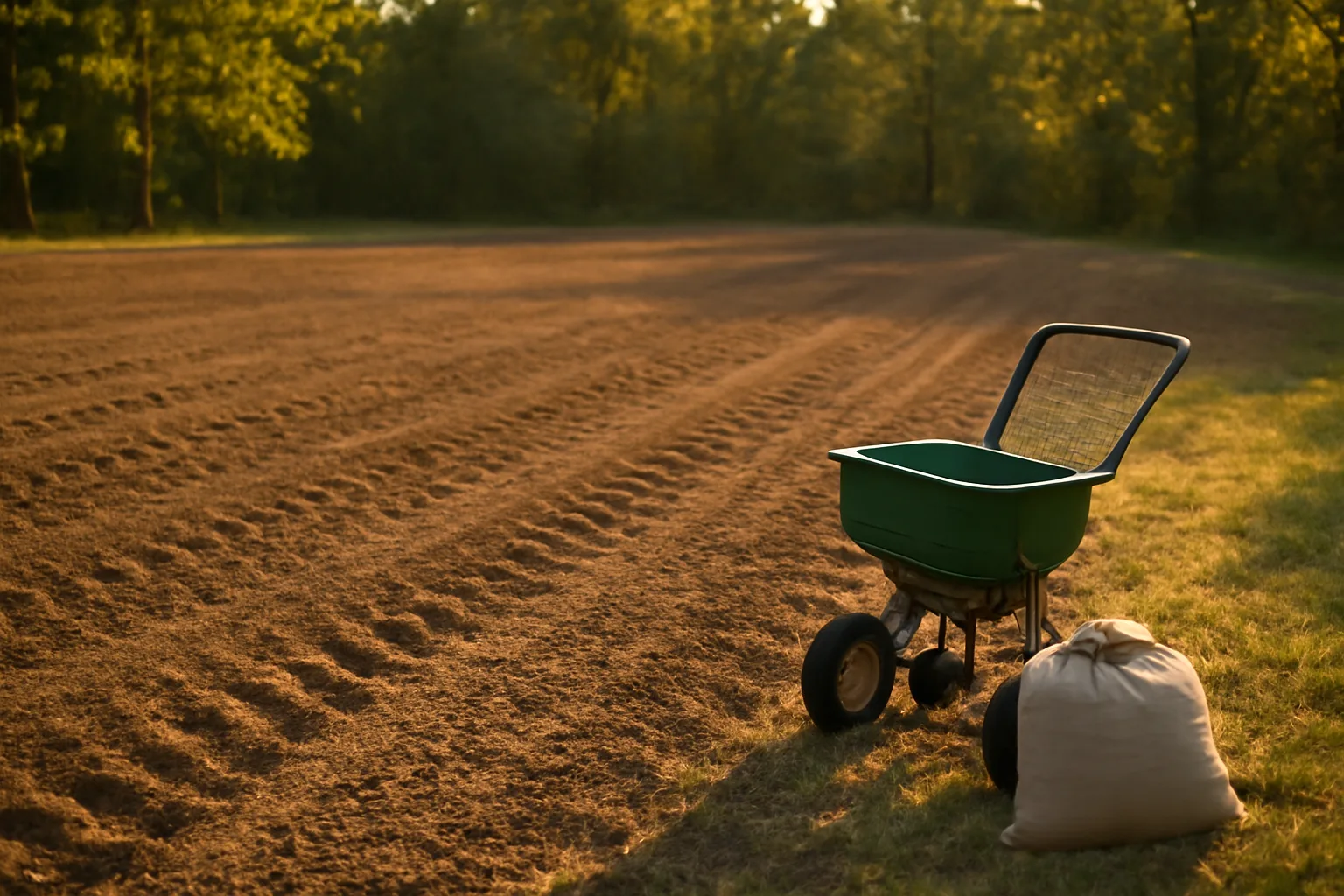
A food plot is a planted patch of forage, on land you own or lease, meant to feed deer and hold them nearby during hunting season. It's not the same as agricultural farming for yield, though the agronomy is similar. Most plots run from a quarter acre tucked in timber to several acres of open field. The goal shifts by plot type. A small kill plot near a stand exists to bring deer into range at the right hour. A larger destination or food plot might exist to carry a herd through late winter when browse is thin. The USDA Natural Resources Conservation Service treats food plots as a wildlife habitat practice, and cost-share programs in some states will help fund them under wildlife food plot standards [1]. What a food plot is not: a guarantee. Weather, soil, deer density, and surrounding ag all push and pull on whether deer show up on your camera. Plenty of plots planted with the wrong seed for the ground still grow something. They just don't grow something deer want to eat over the neighbor's soybeans. If you're brand new to this, start by reading up on food plot whitetail basics before you buy a single bag of seed.
What are deer's favorite foods, actually?
Deer are opportunistic browsers, and their favorites shift with season and what's available. In spring and summer, they lean on high-protein forbs, soft mast, and agricultural crops like soybeans. In fall, acorns and other hard mast often beat any food plot on the property when there's a good mast year. In late winter, deer will eat almost anything with calories left, including woody browse. Among planted forages, whitetail research and decades of extension trial data point to a short list of proven favorites: soybeans, clover, cowpeas, and lablab in the growing season; brassicas (turnips, radish, kale) and cereal grains (oats, wheat, rye) in fall. Alabama Cooperative Extension notes clover is one of the most consistently used food plot forages across the Southeast because of its high protein content, often 25 to 30 percent crude protein in vegetative clover [2]. There's no single universal favorite. A plot of standing soybeans in August will get hit hard almost anywhere deer range, but by December, that same field is a stalk skeleton and the deer have moved to browse or the neighbor's picked corn. Match the forage to the season you're trying to influence. See our full breakdown of deer for food preferences by season if you want more specifics.
Do deer eat clover, and do they actually like it?
Yes. Clover is one of the most reliable food plot plantings in the country, and deer use it heavily from spring green-up through fall, and again in early spring the following year if it's a perennial stand. White clover (Ladino types) and red clover both work, with white clover generally more shade-tolerant and longer-lived, and red clover establishing faster and tolerating heavier soils. University of Tennessee Extension lists clover among the top perennial food plot species for whitetail, citing its ability to regrow after grazing pressure and its protein value during antler growth and lactation, the two periods when doe and buck nutritional needs peak [3]. A well-maintained clover plot can persist three to five years before it needs reseeding, assuming you mow it a couple times a season and keep competing grasses down. The catch: clover needs decent soil pH, generally 6.0 to 7.0, and it will not tolerate standing water or heavy shade. If your soil test comes back at pH 5.2, don't plant clover until you've limed. It'll struggle and get out-competed by weeds within a season. Check out deer food plot seed options if you're comparing clover blends against other perennials.
Do deer eat sorghum?
Yes, deer will eat grain sorghum (milo), both the leaves during the growing season and the grain heads once they mature and dry down. It's more commonly planted as a standing winter food source and cover crop than as a primary summer attractant, because deer generally prefer soybeans or cowpeas over sorghum when both are available. Sorghum earns its place in a plot for a different reason: it stands up through snow and wind far better than corn, and it doesn't need the fertility investment corn does. Kansas State University Research and Extension notes grain sorghum is more drought-tolerant than corn and requires less nitrogen to produce a similar yield, making it a practical choice on marginal upland food plot ground [4]. If you're planting sorghum specifically for deer, plant it in blocks or strips rather than thin rows, both for cover and so the seed heads aren't just eaten by turkeys and songbirds before deer season even opens. Expect deer use to ramp up in late fall and winter as other food sources dry up or get buried in snow. Don't count on sorghum alone to hold deer in October. It shines as a late-season standing crop, not a September attractant.
When should I plant food plots for deer?
| Deep South (Zone 8-9) | March - April | Late Aug - Oct | |
|---|---|---|---|
| Mid-South / Transition (Zone 7) | April - May | Late Aug - Sept | |
| Midwest / Upper South (Zone 6) | Mid-April - May | Aug - early Sept | |
| Northern tier (Zone 4-5) | May - June | Late July - Aug | If you want a planting calendar built around your exact coordinates instead of a rough zone chart, that's the kind of detail a Custom Food Plot Plan is built to nail down for a flat $99, one time. You don't need it to grow a plot. You might want it if you've got several fields and different soil types across your ground. |
Timing depends entirely on what you're planting and where you live, but the two big windows are spring (April through June) for perennials and warm-season annuals, and late summer (mid-July through early September) for fall annuals like brassicas, oats, and cereal grains. Spring plantings: clover, alfalfa, chicory, soybeans, cowpeas, lablab, and corn all go in after your last frost date and once soil temps hit the mid-50s (Fahrenheit) or warmer. Check your local frost dates through your state's cooperative extension office; they vary by three to four weeks across a single state in hilly or northern regions. Late-summer plantings: brassicas, oats, wheat, and rye need roughly 45 to 90 days of growing time before a hard frost, depending on the species, so back-plan from your area's first frost date. Penn State Extension recommends planting brassica food plots six to ten weeks before the first killing frost so plants have time to bulb and build sugar reserves that make them more palatable after frost hits. General zone guide (not exact, use your local frost dates): | Zone / region | Spring planting window | Fall planting window |
When should I plant turnips for deer?
Plant turnips 60 to 90 days before your first expected fall frost, which for most of the whitetail range falls between mid-July and early September. Turnips need that runway to bulb properly and to build the sugar content that makes them attractive after a frost or two. Here's the part people miss: turnips are barely touched by deer in September and October. The leaves get some browsing, but the bulbs stay ignored until repeated frosts convert starches to sugars, which usually doesn't happen until November or December in most of the Midwest and mid-South. South Dakota State University Extension explains that brassica forage quality and palatability improve significantly after a hard frost because cold temperatures trigger starch-to-sugar conversion in the plant. If you're hunting an early bow season and expecting turnips to pull deer, you'll likely be disappointed; they're a late-season tool, not an October one. Plant into a firm, fine seedbed, broadcast at roughly 4 to 6 pounds per acre if planted alone, and press or lightly cover the seed. Turnips need a pH near 6.0 to 6.5 and enough phosphorus to support root development, so a fresh soil test before planting is worth the twenty-some dollars it usually costs through your local extension lab.
When should I plant oats for deer?
Plant oats in late summer, generally six to eight weeks before your first fall frost, so most of the country is looking at a window between mid-July (far north) and early September (mid-South). Oats germinate fast, often within a week under good moisture, and they can be grazed by deer within three to four weeks of planting. Oats also work as a spring planting in northern climates where a short-season oat crop is grazed off before frost never becomes an issue, but the far more common use in whitetail management is a fall forage plot, often blended with a legume like clover or a brassica like turnips for a mixed-species plot. University of Kentucky Cooperative Extension lists oats among their top recommended fall annual food plot species due to fast establishment and high early palatability compared to wheat or rye. One caveat: oats are the least cold-hardy of the common cereal grains. A hard freeze in the teens will often kill oats outright, while wheat and rye keep growing through much colder temps and even regrow in spring. If you're in a northern zone and want food into January, pair oats with wheat or rye rather than planting oats alone.
Corn, soybeans, and other row-crop style options: worth it in a plot?
Corn and soybeans work in food plots, but they take more ground, more fertility, and more equipment than most weekend plotters have. Corn especially is a heavy nitrogen feeder, commonly needing 150 to 200 pounds of actual nitrogen per acre for a full-season crop according to land-grant agronomy guides, split across pre-plant and side-dress applications [5]. On a half-acre plot, that's not a huge total cost, but on three or four acres it adds up fast, and undernourished corn just doesn't yield much standing grain by December. Soybeans are a different story. Deer love them in the vegetative stage, sometimes so much that a small plot gets grazed to nothing before it ever produces a pod. If you want soybeans to survive to maturity and give you standing grain into winter, you generally need three or more acres, or a deer-resistant forage soybean variety, or an electric fence around the plot until the plants outgrow browsing pressure. For most plots under two acres, cowpeas or lablab give you the same warm-season attraction as soybeans with less risk of total plot failure from over-browsing, because they tend to regrow from grazing better than soybeans do. Browse our deer food plots comparison guide if you're trying to decide between row crops and simpler annual blends for a small acreage.
Do deer like honey, and does that mean anything for food plots?
Deer are not drawn to honey itself in any meaningful way that matters for food plot planning; they're browsers and grazers, not foragers for sugar in the way bears or raccoons might raid a hive. Any anecdotal reports of deer near hives are usually about the plants around the apiary, not the honey. Where honey does come up: some hunters use honey or molasses-based mineral and attractant products, sold as supplements rather than plantings, often marketed toward deer. These are separate from food plots entirely, and many states regulate or outright ban baiting and supplemental feeding, including sweetened attractants, during hunting season. Michigan's DNR, for example, defines bait broadly and restricts its use in specific parts of the state due to chronic wasting disease concerns [6]. Check your state wildlife agency's current baiting and feeding regulations before using any mineral, salt, or scent-based product, since rules vary widely and change year to year. Bottom line: skip the honey question when you're planning what to plant. It's not a food plot input, and mixing it into ground bait is a legal gray area or outright violation depending on your state.
How do I pick the right species mix for my specific plot?
Start with three questions: how much sun does the plot get, what does your soil test say about pH and fertility, and what time of year do you most want deer using it. Those three answers narrow the list fast. Full sun, decent soil, and a spring planting window points toward clover, chicory, or soybeans. Partial shade or poor drainage rules out most legumes and points toward cereal grains, which tolerate rougher conditions better. A plot you want producing in November and December points toward brassicas or standing sorghum and corn, not spring clover that's already been grazed down all summer. Most experienced plotters run a blend rather than a monoculture. A common fall mix is oats, winter wheat or rye, and a brassica like turnips or radish, planted together so you get fast early growth from the oats, cold tolerance from the wheat or rye carrying into winter, and a late-season sugar bomb from the frosted brassica bulbs. A common perennial mix is clover with a little chicory mixed in, since chicory's taproot pulls nutrients from deeper soil and keeps producing through summer dry spells when clover alone might slow down. Soil test results matter more than seed selection in a lot of cases. A perfect clover blend planted at pH 5.0 with no lime applied will underperform a mediocre blend planted at pH 6.5. Your soil test lab, not a seed bag label, is the real authority on what lime and fertilizer your specific dirt needs. If you'd rather have someone else run the numbers on species, timing, and rates for your exact soil and coordinates, a Custom Food Plot Plan does that for $99, a one-time cost, no subscription. It's built as general regional guidance, not a substitute for your soil test lab's specific lime and fertilizer recommendations, but it saves the guesswork of matching species to your frost dates and soil type.
How much seed and fertilizer do I actually need?
| White clover | 6-8 lbs/acre | Needs firm seedbed, shallow cover | |
|---|---|---|---|
| Oats | 2-3 bushels/acre (~96-144 lbs) | Fast germination | |
| Winter wheat or rye | 90-120 lbs/acre | More cold hardy than oats | |
| Turnips/brassica blend | 4-6 lbs/acre | Fine seed, don't bury deep | |
| Grain sorghum | 6-10 lbs/acre | Drill preferred over broadcast | |
| Soybeans (forage type) | 50-60 lbs/acre | Needs 3+ acres to survive browsing typically | For fertility, skip the guessing and pull a soil sample. Most state extension labs charge somewhere in the $10 to $20 range per sample and turn results around in one to two weeks. The report will tell you pounds of lime per acre needed to hit your target pH, and pounds of nitrogen, phosphorus, and potassium (N-P-K) needed for your specific species. Clemson Cooperative Extension notes that lime takes several months to fully react with soil, so testing and liming in fall for a spring planting (or vice versa) gives better results than liming right before you plant [7]. See food plot seed and domain food plot seed for blend-specific rate charts if you're comparing bagged mixes. |
Seeding rates vary a lot by species and whether you're planting alone or in a blend, so always check the specific bag or blend label first; rates below are typical ranges from extension publications, not universal rules. | Species | Typical seeding rate (broadcast, alone) | Notes |
What equipment do I need to get seed in the ground?
At minimum, you need a way to clear existing vegetation, a way to work or expose soil, a way to spread seed, and a way to press or lightly cover it. That can be as simple as a hand sprayer, a hand tool, a bag broadcaster, and your boots dragging a piece of chain-link over the plot. For plots under an acre, a UTV or small tractor with a disc, a broadcast spreader (even a hand-crank one), and a cultipacker or drag covers most of what you need. For plots over an acre or on tougher ground, a no-till drill saves a huge amount of labor because it cuts through thatch, places seed at the right depth, and packs the row in one pass, which matters a lot for small seeds like clover and brassicas that fail if planted too deep. Herbicide is worth the money on most sites. A glyphosate burndown two to three weeks before planting knocks back existing weeds and grass competition, giving your new planting a real head start instead of fighting established growth from day one.
Frequently asked questions
Do deer eat sorghum in food plots?
Yes, deer eat both the leaves and mature grain heads of sorghum, though they typically prefer soybeans or cowpeas when both are available. Sorghum's real value is as a standing winter food source and cover crop, since it tolerates drought and low fertility better than corn, according to Kansas State Extension guidance on grain sorghum production [4].
Do deer eat clover, and is it a good food plot choice?
Yes. Clover is one of the most widely recommended perennial food plot species, offering 25 to 30 percent crude protein in vegetative growth stages and regrowing well after grazing, per Alabama Cooperative Extension [2]. It needs pH between 6.0 and 7.0 and full sun to perform well.
When should I plant food plots for deer?
Spring plantings (clover, soybeans, corn) go in after your last frost, typically April through June depending on zone. Fall plantings (brassicas, oats, wheat) go in 45 to 90 days before your first fall frost, usually mid-July through early September. Exact timing depends on your local frost dates from your state extension office.
When is the best time to plant turnips for deer?
Plant turnips 60 to 90 days before your area's first expected fall frost, generally mid-July through early September for most of the whitetail range. Deer largely ignore turnip bulbs until after a hard frost converts starches to sugars, per South Dakota State University Extension, so they're a late-season food, not an early-fall attractant [6].
When should I plant oats for deer food plots?
Plant oats six to eight weeks before your first fall frost, generally mid-July in northern zones through early September in the mid-South. Oats germinate quickly and can be grazed within three to four weeks, but they're the least cold-hardy cereal grain, so pair with wheat or rye if you need food into deep winter.
What exactly is a food plot?
A food plot is a planted area of forage on hunted land intended to feed deer and other wildlife and to draw or hold them nearby during season. The USDA NRCS recognizes food plots as a wildlife habitat practice eligible for cost-share funding in some states under wildlife food plot standards [1].
What are deer's favorite foods overall?
Deer favor soybeans, clover, cowpeas, and lablab during the growing season, and brassicas and cereal grains like oats and wheat in fall. Acorns and other hard mast often outcompete any planted food plot in a good mast year. There's no single favorite; preference shifts hard by season and local food availability.
Do deer like clover more than other plot species?
Deer show strong, consistent use of clover across most regions because of its high protein content and long growing season, but preference shifts seasonally. In fall and winter, deer often favor brassicas or standing grain over clover, which slows growth in cold weather unless it's a cold-tolerant variety.
Do deer like honey or honey-based products?
Deer show no meaningful natural attraction to honey itself; they're browsers, not sugar foragers. Some molasses or honey-based mineral and attractant products are marketed to hunters, but these aren't food plot plantings, and many states restrict baiting or supplemental feeding, so check your state wildlife agency's current rules before using any.
How big should a deer food plot be?
Kill plots near a stand often run a quarter acre to half an acre, meant for close shots at specific hours. Destination or feeding plots meant to carry deer through a season commonly run one to five acres or more. Size depends on your goal, your available open ground, and equipment access.
Can I plant a food plot without a soil test?
You can, but you're guessing on lime and fertilizer needs, which are usually the biggest limiting factor in plot performance. A soil test through your state extension lab typically costs $10 to $20 and takes one to two weeks, and it tells you exact lime and N-P-K rates instead of a generic bag rate.
What's the easiest food plot to grow for a beginner?
A cereal grain and brassica blend (oats, winter wheat, and turnips or radish) is one of the more forgiving fall options, tolerating a range of soil types and giving fast early growth plus late-season food. Clover is a solid perennial choice too, but it demands closer attention to soil pH and mowing.
Do I need special equipment to plant a food plot?
No. A hand broadcaster, a rake or drag, and a hand sprayer for herbicide can plant a small plot. Larger plots benefit from a UTV or tractor with a disc, a broadcast spreader, and a cultipacker, or ideally a no-till drill, which places seed at consistent depth and saves labor on tougher ground.
Sources
- USDA Natural Resources Conservation Service, Wildlife Habitat Planting practice standards: Food plots are recognized as a wildlife habitat conservation practice eligible for cost-share support
- Alabama Cooperative Extension System, Food Plots for White-tailed Deer: Clover offers roughly 25-30 percent crude protein and is a top recommended food plot forage in the Southeast
- University of Tennessee Extension, Establishing Food Plots for Deer: Clover is listed among top perennial food plot species valuable during antler growth and lactation periods
- Kansas State University Research and Extension, Grain Sorghum Production Handbook: Grain sorghum is more drought-tolerant and requires less nitrogen than corn for comparable yield
- Iowa State University Extension and Outreach, Corn Nitrogen Rate Calculator guidance: Full-season corn commonly requires 150-200 pounds of actual nitrogen per acre
- Michigan Department of Natural Resources, Baiting and Feeding Regulations: Michigan restricts baiting and feeding in specific parts of the state due to chronic wasting disease concerns
- Clemson Cooperative Extension, Liming and Fertilizing Home Gardens and Food Plots: Lime takes several months to fully react with soil, so testing and liming ahead of the planting season improves results