Last updated 2026-07-25
TL;DR
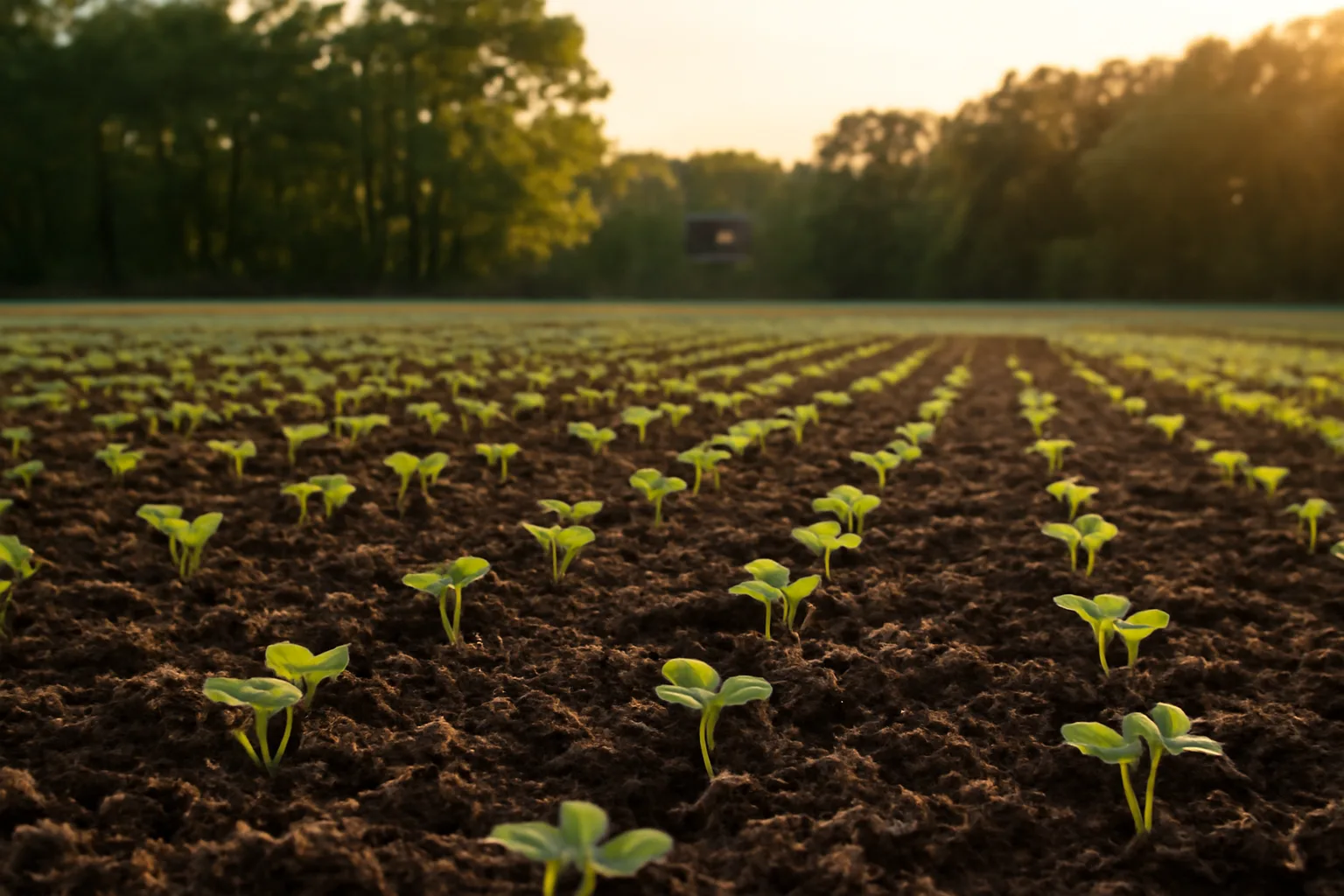
Buckwheat is a fast, cheap summer annual (70-90 days to maturity) that deer will nibble but rarely prefer over clover or brassicas. Its real value is as a soil-building nurse crop or quick cover between plantings, not as your primary fall food plot. Plant it after soil temps hit 60°F.
what is a food plot, and where does buckwheat fit in?
A food plot is a planted area, usually a fraction of an acre up to several acres, seeded specifically to feed and hold deer or other wildlife on a property. Most hunters plant them to concentrate deer activity, improve nutrition through the stress periods of late summer and winter, and create predictable spots to hunt near. The USDA Natural Resources Conservation Service treats wildlife habitat plantings, including food plots, as a supportable conservation practice under programs like EQIP [1]. Buckwheat (Fagopyrum esculentum) is a broadleaf summer annual, not a grain despite the name. It grows fast, tolerates poor soil, and is often used by farmers as a cover crop to smother weeds and add organic matter. In the food plot world, it plays a support role. Deer will eat the leaves. The small triangular seeds do drop and get scratched up by turkeys and other wildlife. But buckwheat isn't a primary deer attractant the way clover, soybeans, or brassicas are. Most serious plot managers use buckwheat as a nurse crop, planting it alongside slower-establishing perennials like clover to shade out weeds while the clover gets going. It's also popular as a quick, cheap soil conditioner on compacted or poor ground before a fall planting. If you're building a whole-property plan, buckwheat rarely stands alone; it fits into rotations. For a broader look at species selection, see food plot whitetail and deer food plot seed.
do deer actually eat buckwheat?
Yes, deer eat buckwheat, but it's not a preferred forage compared to legumes or brassicas. Deer will browse the young leaves and stems, and they'll pick at the seed once it matures and shatters onto the ground. North Dakota State University Extension's buckwheat production guidance describes the crop primarily in agronomic terms: fast establishment, weed suppression, and soil conditioning, with wildlife use treated as a secondary benefit rather than the main selling point [2]. In practice, most plot managers who've run side-by-side plantings report deer hit clover, soybeans, and brassica plots harder once those options are available. Buckwheat tends to get more attention early in its life cycle, when it's the only green thing growing, and less once it matures and the leaves toughen up. If your goal is maximum tonnage of preferred forage, buckwheat isn't the crop to build a plan around. If your goal is fast cover, erosion control, or a soil-building step before a fall perennial planting, it earns its place.
do deer eat sorghum?
Yes, deer eat sorghum, particularly the grain heads once they mature and dry down in late summer and fall. Grain sorghum (milo) is used in some food plot mixes as a fall and winter food source, and it also provides standing cover that holds up better than corn in areas with less growing degree days. Deer browse the leaves some when young, but the real draw is the grain head later in the season. Sorghum is more drought-tolerant than corn and needs less fertility, which is part of why it shows up in mixes for poorer soils or shorter growing seasons. It's not typically planted alone for deer; it's more often a component of a fall/winter blend alongside beans or brassicas, similar to how buckwheat plays a supporting role rather than a lead role.
do deer like clover, and how does it compare to buckwheat?
| Plant type | Annual | Perennial (3-5 yr stand life) | |
|---|---|---|---|
| Days to maturity | 70-90 days [2] | Establishes in 60-90 days, then persists | |
| Deer preference | Moderate, mostly early growth | High, season-long | |
| Soil building | Excellent (scavenges phosphorus, breaks compaction) | Good (fixes nitrogen) | |
| Best use | Nurse crop, soil conditioner, summer filler | Primary spring/summer/fall food source | If you can only plant one thing, plant clover. Use buckwheat when you need a fast cover crop or you're prepping ground for clover next season. For species comparisons across your whole plot rotation, check deer food plots. |
Deer strongly prefer clover over buckwheat in nearly every study and field observation available. Clover, particularly white clover and red clover, is a perennial legume that regrows after grazing, fixes nitrogen in the soil, and stays palatable through most of the growing season. It's consistently ranked among the top food plot choices by university extension programs because of its protein content and its ability to persist for multiple years with good management. University of Tennessee Extension's forage guidance on white clover notes crude protein in vegetative growth commonly runs in the 25-30% range, well above most other plot options [3]. Buckwheat, by contrast, is an annual that completes its life cycle in 70 to 90 days and dies with the first hard frost. It doesn't offer season-long grazing pressure tolerance the way clover does, and its protein content, while decent in young growth, drops off as the plant matures and gets woody. Here's a rough comparison: | Trait | Buckwheat | Clover |
when to plant food plots for deer?
Timing depends on what you're planting and your USDA hardiness zone, but the general rule is: spring/summer annuals go in after your last frost date, and fall annuals go in 60-90 days before your first fall frost so they mature ahead of hunting season. NOAA's climate normals data tracks 30-year average frost and freeze dates by station, and that's a more reliable source than a broad regional rule since frost dates vary by weeks even within one state [4]. For warm-season plots like buckwheat, soybeans, and sorghum, most of the Midwest and Upper South plants in May or June once soil temperatures are consistently above 60°F. For fall plots like brassicas, cereal grains, and clover, the window is typically late July through early September, timed so the plants have 60-90 days of growth before the first hard frost locks things down. A quick zone guide: - Zone 3-4 (Upper Midwest, northern New England): buckwheat and summer annuals late May to mid-June; fall plots by early August
- Zone 5-6 (Mid-Atlantic, Ohio Valley, Central Plains): buckwheat late May to July; fall plots mid-August to early September
- Zone 7-8 (Deep South, Mid-South): buckwheat can go in through July; fall plots September into early October These are general windows, not guarantees. Always check your soil temperature and local extension frost data before planting.
when to plant oats for deer?
Oats are a cool-season cereal grain, best planted in late summer to early fall, generally 6 to 10 weeks before your first expected frost. That timing lets the oats establish a good root system and put on leafy growth before cold weather slows them down. In most of the whitetail range, that means a planting window from mid-August through mid-September, though southern states can push into October. Oats are one of the most attractive fall annuals available; deer often hit a fresh oat plot harder than almost anything else on the property in September and October, before the leaves get tough. They don't tolerate deep cold as well as wheat or rye, so in far northern zones oats may die back earlier in winter, while wheat and rye persist and offer late winter grazing. Some plot managers mix oats with brassicas or clover, using the oats as a fast-growing nurse crop, which is the same logic behind pairing buckwheat with clover in warm-season plantings.
when to plant turnips for deer?
Turnips, like other brassicas, go in the ground in mid-summer to late summer, roughly 90 to 100 days before your first hard frost, so the bulbs and leaves have time to fully mature before deer start hammering them once cold weather sweetens the plant's sugars. In most of the whitetail's range that puts planting somewhere between late July and mid-August. The timing matters more with turnips than with a lot of other plot crops because the attraction really kicks in after a few hard frosts convert starches to sugars, making the bulbs and leaves noticeably sweeter. Plant too late and you get small bulbs and thin leaf growth. Plant too early in still-hot weather and you risk poor germination or disease pressure. Land-grant extension programs generally recommend brassica plantings 60-90 days ahead of the killing frost, with turnips leaning toward the longer end of that range since bulb development takes time.
how do you plant a buckwheat food plot, step by step?
Start with a soil test. Buckwheat tolerates poor, acidic soil better than almost any other food plot crop, which is exactly why it's used to condition rough ground, but it still responds to basic fertility. Your soil test lab is the real authority here on exact lime and fertilizer rates for your dirt; a generic recommendation can't replace a report pulled from your actual field. Prep the seedbed by disking or lightly tilling to break up existing vegetation, then broadcast buckwheat seed at roughly 50-60 lbs per acre if drilled, or up to 96 lbs per acre if broadcast, according to agronomic seeding rate guidance from University of Kentucky Extension's buckwheat crop guide [5]. Seed should go no deeper than half an inch to one inch; buckwheat germinates and emerges fast, often within 3-5 days in warm soil. Buckwheat needs almost no nitrogen since it scavenges phosphorus efficiently from the soil, but a light application of a balanced fertilizer won't hurt on truly depleted ground. Skip heavy nitrogen; it just pushes leafy growth at the expense of the soil-conditioning root activity you're planting it for in the first place. Mow or disk it under 4-6 weeks after planting, before it fully sets seed, if your goal is soil building and you plan to follow with clover or a fall blend. If you want some seed drop for wildlife, let a portion go to maturity, which takes 70-90 days from planting to seed set [2]. If you'd rather skip the guesswork on rates and timing for your specific property, a Custom Food Plot Plan from PlotSeason runs a one-time $99 and gives you a planting calendar and seed mix built around your zone and soil test. The fundamentals above will get you most of the way there on your own.
what are deer's favorite foods, and where does buckwheat rank?
Deer preference studies and state agency forage guides consistently point to a handful of top choices: white clover, soybeans, chicory, and, in fall, brassicas like turnips and radishes once cold weather sweetens them. Acorns, when available, often outcompete anything you plant, since deer prioritize high-fat mast in the fall when they're building reserves for winter. Buckwheat doesn't crack most top-tier lists. It's palatable, deer will eat it, but it's rarely the plant deer walk past a clover field to get to. Its strength is agronomic, not nutritional or attraction-based: fast growth, weed suppression, soil conditioning, and low input cost. If you're ranking by real-world preference, most experienced plot managers and extension forage guides put the order roughly as: soybeans and clover at the top for season-long draw, brassicas surging in late fall, and buckwheat, oats, and sorghum filling supporting roles depending on the season and soil conditions.
do deer like honey, and does it matter for food plots?
There's no real evidence deer seek out honey as a food source, and it's not something used in legitimate food plot management. Deer are herbivores built to digest plant fiber through a four-chambered rumen; honey isn't part of their natural diet or foraging behavior. Some commercial deer attractant products use sugar-based scents or minerals, but that's a different category entirely from food plot planting. More relevant: many states regulate or outright ban baiting, which can include placing food substances like corn, salt, or sugary attractants to draw deer for hunting purposes, as distinct from a planted food plot. Rules vary a lot by state. Some allow baiting with restrictions, others ban it outright, and some treat food plots differently from bait piles under the law. Check your state wildlife agency's current regulations before using any attractant, planted or otherwise, since violating baiting rules can mean a real citation regardless of intent.
can buckwheat work as a summer plot on its own?
It can, but it's a short-term fix, not a season-long solution. Buckwheat's whole life cycle wraps up in about 70-90 days [2], so a pure buckwheat plot planted in June is finished by August or September, right when deer nutritional needs are ramping up for fall. That timing gap is the main reason experienced plot managers don't rely on it alone. Where buckwheat does work solo is as a quick green-up on new ground you haven't had time to properly prep, or as erosion control on a slope you're trying to stabilize before a real planting. It's also a reasonable choice if you're short on time and need something growing fast between a spring planting failure and a fall do-over. For a plot that actually carries deer through summer stress and into fall, most managers lean on soybeans, cowpeas, or a clover base instead, saving buckwheat for the in-between jobs. See food plot seed and deer for food for broader planting options by season.
Frequently asked questions
Do deer eat buckwheat in food plots?
Yes, deer browse buckwheat leaves and will pick at the seed once it matures, but it's a moderate attractant compared to clover or soybeans. Most managers plant it for its soil-building and fast-cover benefits rather than as a top-tier food source, then follow it with a stronger fall planting.
Do deer eat sorghum?
Yes, deer eat sorghum, mainly the grain heads once they mature in late summer and fall, along with some early browsing of the leaves. It's drought-tolerant and often used in fall/winter blends alongside soybeans or brassicas rather than planted as a standalone plot.
Do deer like clover?
Deer strongly prefer clover over most other food plot options. White and red clover offer 25-30% crude protein in vegetative growth, regrow after grazing, and persist as a perennial stand for three to five years, making clover one of the highest-value plantings you can put in the ground.
When should you plant food plots for deer?
Warm-season annuals like buckwheat and soybeans go in after your last spring frost, typically May-June depending on zone. Fall annuals like brassicas, oats, and clover go in 60-90 days before your first fall frost, usually mid-August through September in most of the whitetail range. Check your local extension office for exact frost dates.
When should you plant oats for deer?
Plant oats 6-10 weeks before your first expected fall frost, generally mid-August through mid-September in most whitetail range, later in the Deep South. Oats grow fast, offer strong early fall attraction, but don't tolerate deep winter cold as well as wheat or rye.
When should you plant turnips for deer?
Plant turnips 90-100 days before your first hard frost, typically late July to mid-August in most regions. That timing lets the bulbs fully develop before frost sweetens them through starch-to-sugar conversion, which is when deer attraction really increases.
What is a food plot?
A food plot is a planted area, from a fraction of an acre to several acres, seeded specifically to provide supplemental forage for deer or other wildlife. Hunters use them to improve nutrition, concentrate deer activity in predictable spots, and create huntable locations near bedding and travel routes.
What are deer's favorite foods?
Acorns and other mast often top the list when available, since deer prioritize fat reserves before winter. Among planted crops, white clover, soybeans, chicory, and cold-sweetened brassicas like turnips consistently rank highest for preference and season-long use, ahead of buckwheat, oats, or sorghum.
Do deer like honey?
No solid evidence supports deer seeking out honey; it isn't part of their natural forage or digestive pattern as ruminant herbivores. Some commercial attractants use sugar-based scents, but that's separate from legitimate food plot planting, and many states regulate or ban sugar-based baiting outright, so check local rules first.
How long does buckwheat take to mature as a food plot?
Buckwheat typically matures in 70 to 90 days from planting to seed set, one of the fastest cycles of any common food plot crop. That speed makes it useful as a quick cover crop or soil conditioner, but it also means a pure buckwheat plot won't carry deer through a full season.
What seeding rate should you use for buckwheat food plots?
Agronomic guidance generally recommends 50-60 lbs per acre if drilled, or up to about 96 lbs per acre if broadcast, seeded no deeper than half an inch to one inch. Buckwheat germinates fast in warm soil, often emerging within 3-5 days.
Is buckwheat good for improving soil before a fall food plot?
Yes, buckwheat is widely used as a soil conditioner because it scavenges phosphorus efficiently, breaks up light compaction with its root system, and suppresses weeds through fast canopy closure. Many plot managers plant it in early summer, then mow or disk it under 4-6 weeks later before seeding a fall blend.
Sources
- USDA Natural Resources Conservation Service, Environmental Quality Incentives Program: Food plots are treated as a wildlife habitat practice supported through USDA conservation programs
- North Dakota State University Extension, Buckwheat production: Buckwheat is used for quick cover, weed suppression, and soil benefits in plantings
- University of Tennessee Extension, White Clover: White clover offers high crude protein content and persists as a productive perennial stand for multiple years
- NOAA National Centers for Environmental Information, US Climate Normals: Frost dates vary significantly by location and are tracked locally rather than by broad regional rule
- University of Kentucky Extension, Buckwheat crop guide: Recommended buckwheat seeding rates range from roughly 50-60 lbs/acre drilled up to 96 lbs/acre broadcast