Last updated 2026-07-26
TL;DR
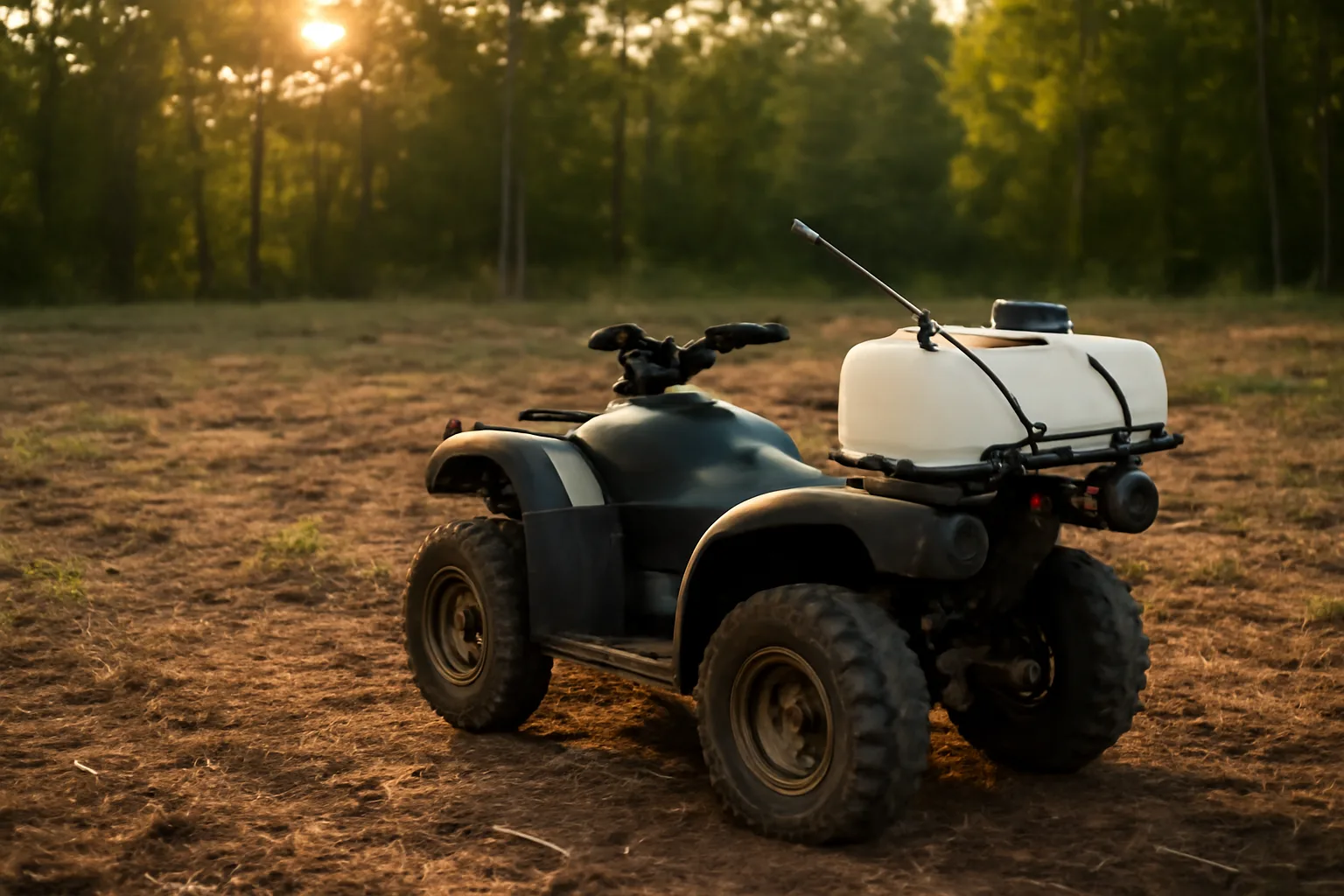
For most food plot hunters, a 15 to 25 gallon ATV sprayer with a boomless nozzle and a 12-volt pump rated 1.8 to 2.2 GPM covers 1 to 3 acre plots efficiently. Match tank size to plot acreage, calibrate before every use, and always check the herbicide label's water volume and PSI requirements before spraying.
What is a food plot, and why does sprayer choice matter?
A food plot is a planted opening on hunting land, usually somewhere between a quarter acre and 5 acres, put in specifically to feed and hold deer or other game through part of the year. Most plots run a rotation of annual grains, brassicas, or clover, and nearly every one of them needs some kind of herbicide application before or after planting to control weeds and grass competition. The sprayer is the piece of equipment that decides whether your plot gets an even, effective kill on weeds or a streaky mess with skipped patches and double-dosed strips. A cheap sprayer with a worn nozzle or a leaky hose can waste half a bottle of glyphosate and still leave you with foxtail choking out your clover by August. If you're mapping out species and rotations for the season, our guide on food plot whitetail planning walks through how sprayer timing lines up with planting windows. This article focuses just on the machine: tank size, pump specs, boom style, and what's actually worth spending money on.
What size ATV sprayer do I need for my food plot acreage?
| Under 1 acre | 15 gallon | 0 to 1 | |
|---|---|---|---|
| 1 to 2 acres | 15 to 25 gallon | 1 to 2 | |
| 2 to 4 acres | 25 to 40 gallon | 1 to 2 | |
| 4 to 8 acres | 40 to 60 gallon or trailer unit | 2 to 3 | Don't oversize just because a bigger tank seems safer. A 60-gallon tank full of water weighs about 500 pounds (water is roughly 8.34 lbs per gallon), and that much dead weight on the back rack of a mid-size ATV changes handling fast, especially on hillside plots or wet clay. If you're regularly covering more than 5 acres, a small trailer-mounted sprayer towed behind the ATV, or a UTV-mounted unit, usually beats piling weight directly on the ATV rack. |
Tank size should scale with your total plot acreage and how often you're willing to stop and refill. A rough rule: figure 20 to 40 gallons of finished spray mix per acre for broadcast herbicide work, depending on nozzle output and travel speed, per University of Missouri Extension sprayer calibration guidance [1]. For a single half-acre to 1-acre plot, a 15-gallon tank sprayer is plenty and keeps the ATV lighter, which matters on soft spring ground. For 2 to 5 acres split across a few plots, step up to a 25 to 40 gallon tank so you're not making multiple trips back to the truck for water. Here's a simple sizing table based on typical broadcast rates: | Total plot acreage | Recommended tank size | Approx. refills needed |
Boom vs. boomless nozzles: which is better for food plots?
Boomless nozzles are the better choice for most food plot work because plots are irregular, often have stumps or downed logs, and don't need the row-crop precision a boom is built for. A boomless nozzle mounts as a single unit and throws a fan pattern anywhere from 10 to 20 feet wide depending on pressure and nozzle model, letting you spray uneven ground without snagging a boom arm on brush. Boom sprayers with multiple nozzles on a horizontal bar give more uniform coverage and are the standard for row-crop agriculture, but they need flat, obstruction-free ground to work right. Most hunting land plots carved out of timber don't offer that. A boom arm that clips a stump or blowdown mid-pass is a quick way to end up buying replacement nozzle tips. The tradeoff: boomless nozzles apply less evenly at the outer edges of the spray pattern than a true boom, so overlap your passes by about 10 to 15 percent to avoid skips. For small, irregular plots under 3 acres, that tradeoff is worth it. If you've got a big, flat plot with row-crop-style planting, a 5 to 7 foot boom can actually save you chemical by giving tighter, more even coverage.
What pump size (GPM) and PSI do I actually need?
Look for a 12-volt pump rated between 1.8 and 2.2 GPM (gallons per minute) with adjustable pressure up to 40 to 60 PSI. That range covers almost every common food plot herbicide label, since most glyphosate and broadleaf herbicide labels call for 20 to 40 PSI at the nozzle for even droplet size, per label instructions and university calibration sheets [1]. Higher PSI isn't automatically better. Spraying above the label's recommended PSI creates smaller droplets that drift more in wind, which wastes product and risks hitting nearby trees or crops you didn't mean to treat. Many state extension calibration guides recommend spraying in wind under 10 mph and at the low end of the labeled pressure range to control drift. A pump under 1.5 GPM will leave you creeping along in low gear to get adequate coverage, which gets tedious on anything over an acre. A pump much above 2.5 GPM without a corresponding boomless nozzle rated for that flow just overshoots your tank volume, meaning you're refilling constantly. The sweet spot for most 15 to 25 gallon ATV sprayers is that 1.8 to 2.2 GPM pump paired with a boomless nozzle.
How much does an ATV food plot sprayer cost?
Realistic budget ranges run from about $150 for a basic 15-gallon tow-behind or rack-mount unit with a hand wand, up to $500 to $900 for a 25 to 40 gallon unit with a 12-volt pump, boomless nozzle, and a spray wand on a hose. These are street prices from major farm and outdoor retailers as of 2024 to 2025 and will shift with inflation and retailer sales. What's worth paying more for: a brass or stainless nozzle instead of plastic (plastic nozzles wear out and change spray pattern within a season or two of regular use), a pump with a bypass/agitation return line to keep chemical mixed, and a tank with a built-in strainer basket at the fill opening. What's not worth paying extra for: electronic boom shutoff systems and multi-zone controllers built for row-crop rigs. That's engineering for a problem food plot hunters don't have. If you're just spot-treating small plots or doing a single herbicide pass a year on under an acre, a backpack sprayer ($40 to $100) might genuinely be all you need, and you can skip the ATV mount entirely.
When should I spray and plant my food plots?
Timing depends heavily on your USDA plant hardiness zone and what you're planting. As a general framework, spring/summer plantings (soybeans, corn, some clover establishment) go in after your last frost date, while fall plantings (brassicas, cereal grains, most clover) go in 60 to 90 days before your average first fall frost, so plants have time to establish before the ground freezes. Check your zone against the USDA Plant Hardiness Zone Map and cross-reference your local land-grant extension office's planting calendar, since frost dates vary widely even within a state. A hunter in northern Minnesota (zone 3-4) needs to plant brassicas by early to mid-August, while someone in central Tennessee (zone 7) has until early September. Spray timing for burndown herbicide (killing existing vegetation before planting) should happen 7 to 14 days before you plant, giving the herbicide time to translocate and kill weeds and grass roots, per most glyphosate product labels and extension weed control guides [2]. Spraying and planting the same day defeats the purpose. If you're building out a full-season plan, our food plot seed guide breaks down species-specific windows in more detail.
When should I plant oats for deer?
Oats are typically planted in early fall, about 6 to 8 weeks before your first expected frost, so they can establish before the first hard freeze slows growth. In most of the whitetail range that lands somewhere between mid-August and mid-September, per state extension forage planting guides [3]. Oats can also be planted in early spring in some regions as a quick, cheap cover crop or spring green-up plot, but fall is the more common food plot use since oats offer good tonnage and palatability right when deer are keying in on high-carb food sources ahead of winter. Oats winterkill in most northern zones, meaning they die back with hard frost rather than surviving to spring, so they work well as an annual, single-season planting rather than something you count on for year two.
When should I plant turnips for deer?
Turnips go in the ground 80 to 90 days before your first fall frost date, which for most of the whitetail range means a planting window from mid-July through mid-August. Turnip bulbs and greens actually taste sweeter to deer after a hard frost converts starches to sugars, which is exactly why hunters plant them for fall and winter, not summer, browsing. A common mistake is planting turnips too late, thinking a shorter season is fine since deer will eat the tops either way. But undersized bulbs and thin tonnage from a late planting mean a lot less food available by December. Get your soil test back and confirm your pH and phosphorus levels before you plant. Turnips and other brassicas want a pH close to 6.0 to 6.5 and respond strongly to phosphorus for bulb development, according to university brassica variety trial guidance.
Do deer eat sorghum, and is it worth planting?
Yes, deer will eat sorghum, both the grain heads and the young leaves, but it's not typically a first-choice food plot species on its own. Sorghum (including grain sorghum and forage sorghum types) is more commonly used as a screening plant, a drought-tolerant summer filler, or a component in a mixed plot blend rather than a standalone deer attractant. Whitetail deer diet research consistently shows deer prefer forbs, browse, and softer, more digestible forage over grain crops when both are available, and sorghum's stiff stalks and lower digestibility put it lower on the preference list compared to clover, soybeans, or brassicas. Where sorghum earns its keep is as a tall summer screen that also puts some grain on the ground for fall, or as part of a diverse blend where deer have options.
Do deer like clover, and do they eat it regularly?
Yes, clover is one of the most consistently preferred food plot forages for whitetail deer, and it's a staple recommendation across nearly every state wildlife agency and extension food plot publication. Deer browse clover through spring, summer, and fall in most regions, since it stays palatable and high in protein (often 20 to 30 percent crude protein in good stands) across a long growing window, per extension forage quality data [4]. Clover's real advantage over annual grains is that a well-maintained stand of perennial clover (like white clover or red clover) can produce for 3 to 5 years before needing to be replanted, versus annual replanting for brassicas or cereal grains. That said, clover does need mowing a few times a season to control weed competition and keep growth in the vegetative stage deer prefer, plus a nitrogen-free fertilizer program since clover fixes its own nitrogen through root nodules. If you want a deeper comparison of clover against other perennial and annual options for your region, check out deer food plot seed for species-by-species breakdowns.
What are deer's favorite foods, and does honey factor in at all?
Deer preference shifts by season and region, but research and field data point consistently to a short list: acorns and other hard mast, soybeans, clover, and native forbs top most whitetail diet studies. A widely cited whitetail nutrition study from Mississippi State University's Deer Lab found that natural forbs and browse make up the bulk of a deer's diet even where food plots are available, with food plots supplementing rather than replacing natural forage. As for honey: no, honey isn't part of a natural deer diet, and there's no research or extension guidance suggesting deer seek it out or that it has any use in food plot planning. It occasionally comes up online as a myth or a mineral-lick additive claim, but it's not backed by any wildlife agency or university source, and it's not something worth your money or time. Deer are drawn to sugar and salt, which is part of why molasses-based mineral products and sugar beets do show up in legitimate attractant research, but honey specifically isn't documented as a meaningful deer attractant. One more thing worth flagging here: before you add any mineral, salt, or supplemental feed product to a plot setup, check your state wildlife agency's baiting and feeding regulations. Some states restrict or ban baiting and supplemental feeding outright, and rules vary by county in a few states due to chronic wasting disease management zones, so a call or check of your state agency's regulations page before hunting season matters more than any attractant product choice.
How do I calibrate my ATV sprayer before spraying a plot?
Calibration means confirming your actual output in gallons per acre matches what your herbicide label calls for, and it takes about 10 minutes. Fill the tank with plain water, drive a measured 100-foot test strip at your normal spraying speed and pressure, and measure how many ounces came out of the nozzle during that pass. Extension calibration worksheets [1] walk through the exact math, but the short version: multiply your nozzle's output rate by 43,560 (square feet per acre) divided by your effective spray width and speed, to land on gallons per acre. Skipping calibration is the single most common mistake first-time plot sprayers make. Guessing at ground speed or nozzle pressure means you're either wasting expensive herbicide through overapplication or leaving weeds alive through underapplication, and either mistake costs you more in wasted product and a second herbicide pass than the 10 minutes calibration takes. If building out your full plot plan (soil test interpretation, seed selection, spray and planting calendar) feels like more than you want to figure out alone, PlotSeason's $99 one-time Custom Food Plot Plan at /plot-plan-builder pulls your zone, soil test results, and species choices into one seasonal plan. Your soil test lab is still the authority on exact lime and fertilizer rates for your dirt; the plan gives you the planting and spraying calendar built around that data.
What ATV sprayer features are actually worth paying for?
A pressure gauge mounted where you can see it while driving is worth the extra $20 to $30 over a no-gauge unit, since it lets you confirm you're staying in the label's PSI range without stopping. An in-tank agitator, either mechanical or a bypass-line jet agitator, keeps wettable powder herbicides and some tank-mixed fertilizers from settling out mid-application, which matters if you're mixing anything beyond straight glyphosate. A long spray wand on a hose (versus a fixed boomless nozzle only) gives you the option to hand-spray spot patches, fence lines, or trail edges without unhooking the whole rig. It's a small add that pays off more than people expect. Skip electronic rate controllers and GPS-guided boom sections. Those solve row-crop-scale problems (hundreds of acres, multiple operators, strict input cost tracking) that don't apply to a 1 to 5 acre hunting plot. Spend that money on a better nozzle and a spare pump instead; pumps are the part most likely to fail mid-season, and having a spare on hand during your fall planting window beats a mid-project trip to town.
Frequently asked questions
Do deer eat sorghum?
Yes, deer eat both the grain and young leaves of sorghum, but it's usually secondary to clover, soybeans, and brassicas in preference studies. It works best as a drought-tolerant summer filler or screening plant in a mixed blend rather than a standalone attractant crop for a dedicated food plot.
Do deer like clover?
Yes, clover is one of the most preferred food plot forages for whitetail deer, staying palatable through spring, summer, and fall with crude protein often in the 20 to 30 percent range in healthy stands, according to university forage quality data. A good perennial clover stand can last 3 to 5 years before replanting.
When should I plant food plots for deer?
Fall plots (brassicas, cereal grains, clover) go in 60 to 90 days before your area's average first frost date. Spring/summer plots go in after your last frost. Exact dates depend on your USDA hardiness zone, so check the USDA Plant Hardiness Zone Map and your local extension office's planting calendar.
When should I plant turnips for deer?
Plant turnips 80 to 90 days before your first fall frost, typically mid-July through mid-August across most of the whitetail range. Turnip bulbs and tops get sweeter after a frost converts starches to sugar, so a fall harvest timing (not summer) is when deer key in hardest on turnip plots.
When should I plant oats for deer?
Plant oats 6 to 8 weeks before your first expected fall frost, generally mid-August to mid-September in most whitetail range states. Oats winterkill in northern zones, making them a one-season annual planting rather than something that survives to a second year.
What is a food plot?
A food plot is a planted area on hunting land, usually a quarter acre to several acres, established specifically to provide supplemental forage that attracts and helps sustain deer or other game. Plots typically rotate annual grains, brassicas, legumes, or clover depending on season and region.
What are deer's favorite foods?
Whitetail research consistently shows acorns and other hard mast, soybeans, clover, and native forbs top the preference list, with natural forage making up the majority of a deer's diet even on land with food plots, per Mississippi State University Deer Lab research. Preference shifts seasonally and by region.
Do deer like honey?
No, there's no research or extension evidence that deer seek out honey, and it's not part of a natural whitetail diet. It shows up occasionally as an internet myth, but no wildlife agency or university source backs it as a real attractant. Skip it.
What size ATV sprayer do I need for a small food plot?
For a single half-acre to 1-acre plot, a 15-gallon tank sprayer is enough. For 2 to 5 acres across multiple plots, size up to 25 to 40 gallons so you're not making constant refill trips. Match tank size to total acreage, more than your biggest single plot.
Is a boomless nozzle better than a boom for food plots?
For most food plot ground, yes. Boomless nozzles handle uneven terrain, stumps, and brush better than a rigid boom arm, which needs flat, obstruction-free ground to work properly. Overlap boomless passes by 10 to 15 percent since coverage is less even at the pattern's edges than a true boom.
How much does an ATV sprayer for food plots cost?
Basic 15-gallon rack-mount units with a hand wand start around $150. A 25 to 40 gallon unit with a 12-volt pump and boomless nozzle typically runs $500 to $900. Prioritize a brass or stainless nozzle and an agitation return line over electronic add-ons.
What PSI should I spray food plot herbicide at?
Most common food plot herbicide labels call for 20 to 40 PSI at the nozzle for proper droplet size and coverage. Spraying above the labeled range creates smaller droplets that drift more in wind and waste product; stay at the low end of the label's range in any wind over a few mph.
How far before planting should I spray for burndown?
Spray burndown herbicide 7 to 14 days before planting so the chemical has time to translocate through existing weeds and grass roots and fully kill the competition. Spraying and planting the same day doesn't give the herbicide time to work and wastes the application.
Sources
- University of Missouri Extension, Calibrating and Using Boom Sprayers: Broadcast herbicide applications typically use 20 to 40 gallons of finished spray mix per acre, and calibration math for sprayer output
- University of Georgia Extension, Weed Control in Wildlife Food Plots: Burndown herbicide should be applied 7 to 14 days before planting to allow translocation and effective kill
- University of Kentucky Extension, Clover for Wildlife Food Plots: Well-managed clover stands can provide 20 to 30 percent crude protein forage and persist 3 to 5 years
- Oklahoma State University Extension: Explains step-by-step calibration procedures for boom sprayers, relevant to calibrating an ATV sprayer before spraying a food plot
- University of Georgia Extension: Provides guidance on herbicide application timing and rates for food plot establishment