Last updated 2026-07-26
TL;DR
There's no universal best seed. Clover is the top all-around perennial forage, brassicas like turnips draw deer hard in fall and winter, and oats/cereal grains give fast fall attraction. The right pick depends on your soil test, region, and whether you want spring, fall, or year-round forage.
What is a food plot, exactly
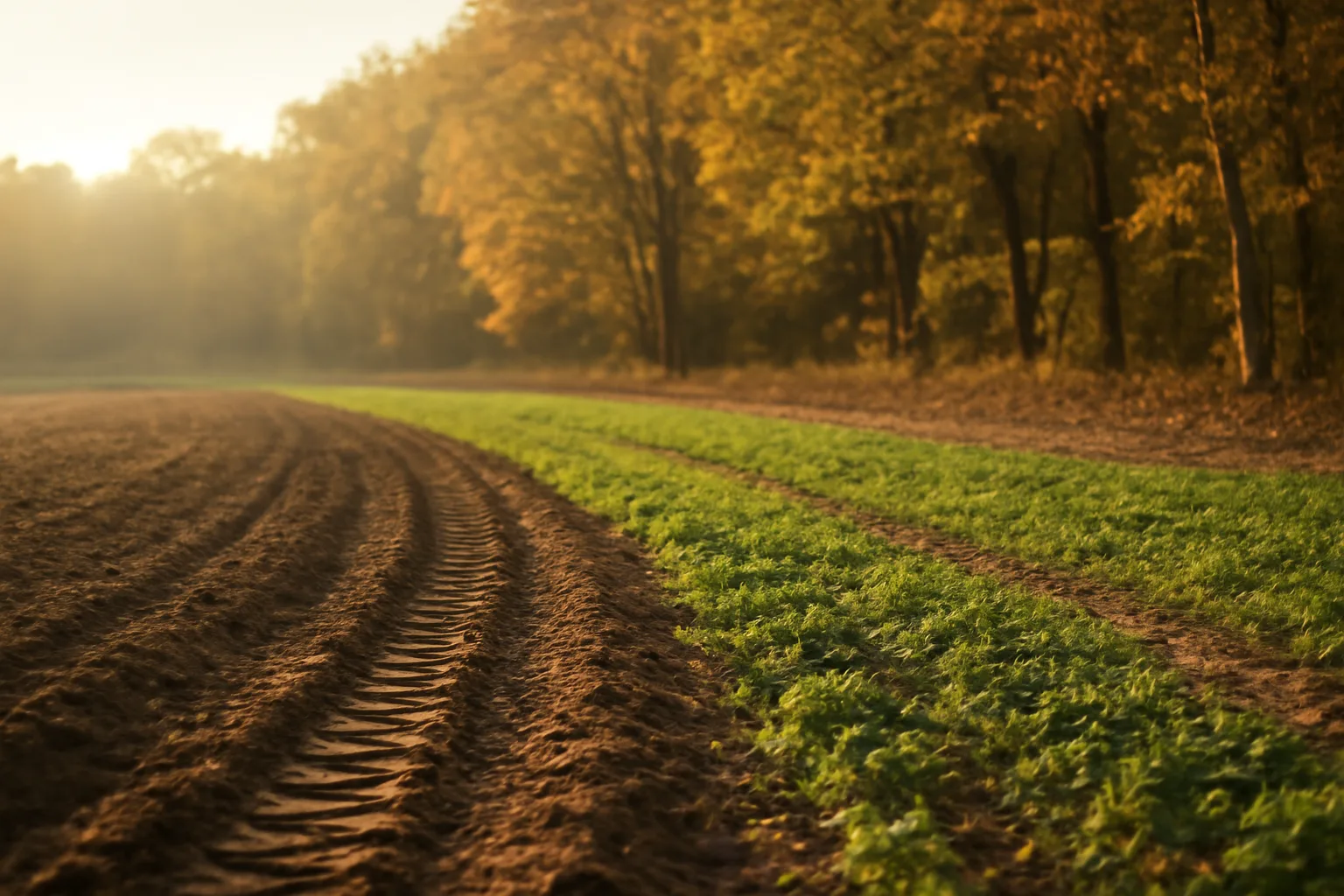
A food plot is a planted area, usually somewhere between a quarter acre and a few acres, that's managed to grow forage deer will eat. It's not a garden and it's not lawn care. Most plots go in on farm ground, cleared timber openings, or old logging roads, and they're planted with annual or perennial forage crops picked to match soil, sunlight, and hunting goals. The USDA Natural Resources Conservation Service treats food plots as a wildlife habitat practice (their term is "Wildlife Food Plot," Practice Code 645), used to supplement natural forage and improve nutrition during specific seasons. That's the honest framing. A plot supplements what's already on the landscape. It doesn't replace natural browse, and it won't single-handedly build antler mass or bring deer running on command. Most hunters run two kinds: annual plots (replanted every year, fast growing, often brassicas or cereal grains) and perennial plots (clover or alfalfa stands that can produce for 3 to 5 years with the right maintenance). Which one is "best" depends entirely on your goals, your soil, and how much time you want to spend in the tractor seat. For a broader rundown on how these categories differ, see food plot whitetail.
So what is the best seed for deer food plots overall
If you can only plant one thing, most extension agronomists and wildlife biologists point to clover. It's a perennial, it fixes its own nitrogen, it tolerates repeated grazing pressure better than almost anything else you can plant, and deer hit it hard from spring green-up through fall. But "best" is really a three-way tie depending on what you need the plot to do: - Best all-around perennial: white clover (Trifolium repens) or red clover, because it produces season-long and rebuilds its own soil nitrogen.
- Best fall/winter annual: brassicas (turnips, radishes, rape) because they hold up to frost and deer preference for them actually increases after a hard freeze converts starches to sugars.
- Best fast, cheap fall attraction: oats or a cereal grain blend, because they germinate in days and deer will hit young oat shoots almost immediately. There's no seed that dominates in every region and every soil type. A clover stand that thrives in Missouri clay loam can struggle in sandy Michigan ground without irrigation or serious lime work. This is exactly why a one-size answer online is usually wrong for your specific 40 acres. A $99 Custom Food Plot Plan exists for this reason, it takes your soil test and location and gives you a species mix and planting window that actually matches your dirt, rather than a generic bag recommendation. Your soil test lab is still the final word on lime and fertilizer rates; a plan builds the species and timing around what your soil test says.
Do deer like clover, and is it worth the trouble
Yes. Clover is consistently ranked among the most preferred and most planted food plot forages in whitetail research and extension literature. Deer preference research on white-tailed deer forage selection has repeatedly found clover species among the most selected legume forages available to deer [1]. Clover's real advantage isn't just palatability, it's protein. Good clover stands can run 25 to 30 percent crude protein during active growth, which rivals or beats most other plantable forages [2]. That protein matters most in late spring through summer, when does are lactating and bucks are growing antler. The catch: clover needs decent soil pH (most extension guides recommend 6.0 to 6.5) and it needs mowing or bush-hogging two or three times a season to keep weeds down and keep the plant from going to seed and getting stemmy. A neglected clover plot turns into a weed patch by year two. If you're not willing to mow, clover isn't your seed.
Do deer eat sorghum, and where does it fit
Deer will eat sorghum, but it's not a top-tier deer forage on its own. Grain sorghum is planted far more often as a dove field or turkey/wildlife grain crop, and as a screening or standing-grain option for winter cover, than as a primary deer attractant. Deer will browse young sorghum shoots and will eat the grain heads once they mature and lodge over, but sorghum generally ranks below soybeans, clover, and brassicas in preference and protein for deer specifically. Where sorghum earns its place is in mixed plantings for cover and as a late-winter standing grain source in states where standing crops are legal to hunt over (always check state baiting and feeding regulations before hunting a standing grain field, since rules on what counts as "bait" versus a planted crop vary by state and are addressed at the federal level for public lands under 36 CFR 13.42 [3]). If your main goal is deer nutrition and attraction, sorghum is a supporting player, not a headliner.
What are deer's favorite foods, really
| Soybeans (forage type) | 30-38% | Very high | Summer | |
|---|---|---|---|---|
| White/red clover | 25-30% | Very high | Spring-fall | |
| Brassicas (turnips, radish) | 15-25% (leaves), high sugar (bulbs after frost) | High, especially post-frost | Fall-winter | |
| Cereal rye/oats/wheat | 12-20% | Moderate-high early, drops with maturity | Fall-early winter | |
| Chicory | 20-28% | High | Spring-fall | |
| Acorns (white oak) | ~4-8%, high fat | Very high in season | Fall | |
| Grain sorghum | ~9-13% | Moderate | Fall-winter | Protein and preference figures pulled from extension forage guides [2]. Note that acorns, especially white oak acorns, often out-compete every planted forage the moment they start dropping, because of their fat and carbohydrate content and low tannin levels compared to red oak acorns. No food plot seed beats a good acorn drop for a few weeks in October. That's just biology, not a planting failure on your part. For species-specific breakdowns and how to build a seed mix around your goals, deer food plot seed and food plot seed go deeper into blend options. |
Deer are opportunistic browsers, and their actual diet shifts constantly by season and region, but a few patterns show up again and again in browse studies and extension surveys. Here's how common food plot options and natural forages generally stack up in preference research: | Forage | Typical crude protein | Deer preference ranking | Best season |
Do deer like honey, and does it belong in a food plot
Deer aren't drawn to honey the way people assume from social media videos. There's no wildlife research or extension guidance recommending honey as a deer attractant, and it's not a food plot input at all, it's not a seed, a soil amendment, or a forage. Any effectiveness claimed for honey-based sprays is anecdotal, and in most states pouring feed-type attractants (including sugary liquids) over a hunting area may legally qualify as baiting, which is prohibited in many states during hunting season. On National Park Service lands, for example, federal rule 36 CFR 13.42 addresses baiting of fish and wildlife directly [3]. Rules vary a lot by state, so check your state wildlife agency's regulations before using any poured attractant near a stand. If you want a sugar/energy draw for deer, a properly planted brassica plot post-frost does that job legitimately, through actual plant sugar conversion, not a poured attractant.
When to plant food plots for deer, by region
| North (zones 3-4) | Mid-May to early June | Mid-August to early Sept | |
|---|---|---|---|
| Mid-South (zones 5-6) | Late April to mid-May | Late August to mid-Sept | |
| Deep South (zones 7-8) | Late March to April | Mid-September to mid-Oct | The rule extension agronomists give most often: fall plantings need roughly 6 to 8 weeks of growing time before your area's first hard killing frost, so back-plan from your average first frost date . Planting brassicas or clover too late means you get a thin, stunted stand right when deer need it most. For a full month-by-month breakdown by zone, deer food plots covers regional calendars in more detail. |
Timing is the single biggest factor separating a plot that gets hammered and a plot that never comes up. Two windows matter most: spring/summer plantings (soybeans, clover, chicory) and late summer/fall plantings (brassicas, cereal grains, clover overseed). General USDA plant hardiness zone guidance and land-grant extension planting calendars put spring plantings between April and early June depending on latitude, and fall plantings between mid-August and early October . Rough regional windows (always confirm against your local extension office, since frost dates vary year to year): | Region (USDA zones) | Spring planting window | Fall planting window |
When to plant oats for deer
Oats are one of the fastest-germinating, cheapest fall annuals available, and they're best planted in late summer to early fall, generally 6 to 10 weeks before your first expected hard frost. That puts most of the country planting oats sometime between mid-August and mid-September . Oats can also go in as a spring planting in northern climates as a quick cover/nurse crop, but their real strength is fall. Deer hit tender young oat shoots almost as soon as they emerge, often within 2 to 3 weeks of a good rain. Oats don't tolerate hard freezes as well as wheat or triticale, though, they'll brown out and die back once temperatures consistently drop into the low 20s (Fahrenheit), so in far-northern zones a lot of hunters blend oats with winter wheat or cereal rye to extend the plot's usefulness into December and January . Soil pH matters here too. Oats tolerate a slightly wider pH range than clover, generally doing fine down to about 5.5, but extension guides still recommend testing and amending toward 6.0 to 6.5 for the best yield.
When to plant turnips for deer (and other brassicas)
Turnips and other brassicas (radish, rape, kale) are planted in late summer, typically 60 to 90 days before your area's first hard killing frost, which for most of the whitetail range lands somewhere between late July and early September . The biology behind brassica timing is specific and worth understanding: the plant needs time to bulb out and build up starch reserves before frost hits. Once a hard freeze arrives, the plant converts stored starches to sugars as a natural antifreeze response, and that's when deer preference for turnip bulbs and tops spikes noticeably. Plant brassicas too early and they bolt or get overgrown with weeds before frost triggers the sugar conversion. Plant them too late and they never bulb properly, you end up with skinny plants and thin tonnage. Most brassica planting guides recommend seeding rates around 4 to 6 pounds per acre for turnips broadcast and covered lightly, no more than a half inch of soil depth, because brassica seed is tiny and germination drops fast if buried too deep.
What soil and equipment do you actually need before you plant
Every seed choice on this list depends on getting the dirt right first, and that starts with a soil test, not a guess. Most state land-grant universities run soil testing labs for anywhere from about $7 to $20 per sample, and results typically include pH, phosphorus, potassium, and lime/fertilizer recommendations specific to the crop you tell them you're planting . Your soil test lab's recommendation is the actual authority here, not a blog post, not a bag of seed's back-panel suggestion. If your test comes back at pH 5.2 and calls for 2 tons of lime per acre, that's the number to use, full stop. Clover in particular struggles hard below pH 6.0, seed catalogs will tell you clover "tolerates" lower pH but yield and stand longevity both drop noticeably in acidic soil. On equipment: you don't need a full tractor setup to plant well, though it helps for larger plots. A disc or tiller for seedbed prep, a cultipacker or drag for seed-to-soil contact, and a broadcast spreader (handheld for small plots, ATV-mounted or tractor PTO for bigger ones) cover almost every planting scenario in this article. Brassica and clover seed especially need shallow planting and firm seed-to-soil contact, a cultipacker pass after broadcasting makes a measurable difference in germination rate. For a rundown on matching gear to acreage and budget, deer for food and domain food plot seed cover common setups.
How do I pick between clover, brassicas, and cereal grains for my plot
Match the seed to the season you're hunting and the amount of upkeep you're willing to do, not to whatever looks best on a bag at the farm store. If you want a plot that produces spring through fall with minimal replanting, and you don't mind mowing two or three times a summer, clover or a clover/chicory blend is the right call. If you're building strictly a fall-and-winter hunting plot and want maximum draw once temperatures drop, brassicas (turnips, radish) planted on the right late-summer schedule are hard to beat. If you want something fast, cheap, and forgiving that gets green in under three weeks, oats or a cereal rye blend does that job, though it won't carry the plot as long into winter on its own in northern climates. A lot of experienced plotters run both: a perennial clover field for spring/summer nutrition and a rotated annual brassica/cereal grain field for fall hunting. That split covers more of the calendar than any single seed can.
Frequently asked questions
Do deer eat sorghum?
Yes, deer will browse young sorghum shoots and eat mature grain heads, but it's a lower preference forage compared to soybeans, clover, or brassicas. It's more commonly planted for dove fields, turkey, and winter standing cover than as a primary deer food plot seed.
Do deer like clover?
Yes, clover is one of the most preferred food plot forages in whitetail research, ranked consistently high among planted legumes. It offers 25-30% crude protein during active growth and produces from spring through fall, which is why it's the most planted perennial food plot seed in the country.
When should I plant food plots for deer?
Spring plantings (soybeans, clover, chicory) generally go in April through early June depending on latitude. Fall plantings (brassicas, cereal grains) go in mid-August through early October, timed 6 to 10 weeks before your area's first hard killing frost. Check your local extension office for exact dates.
When should I plant oats for deer?
Plant oats 6 to 10 weeks before your area's first hard killing frost, generally mid-August through mid-September for most of the whitetail range. Oats germinate fast, often visible growth within 2 to 3 weeks, but they die back hard once temperatures drop into the low 20s Fahrenheit.
When should I plant turnips for deer?
Plant turnips 60 to 90 days before your area's first hard killing frost, typically late July through early September. The plant needs that time to bulb out before frost triggers a starch-to-sugar conversion that makes turnip bulbs and tops noticeably more attractive to deer.
What is a food plot?
A food plot is a planted area of forage crops, typically a quarter acre to several acres, managed specifically to supplement natural deer browse. The USDA classifies it as a wildlife habitat practice (Practice Code 645) meant to improve seasonal nutrition, not replace natural forage entirely.
What is the best all-around food plot seed?
Most wildlife biologists and extension agronomists point to clover as the best single all-around perennial seed, since it produces season-long, fixes its own nitrogen, and handles grazing pressure well. For fall-specific attraction, brassicas or cereal grains often outperform clover.
What are deer's favorite foods?
Deer preference research consistently ranks soybeans, clover, and brassicas (post-frost) at the top of planted forages, with white oak acorns often outcompeting every planted crop during a fall mast drop. Preference shifts by season, protein needs, and regional food availability.
Do deer like honey?
There's no wildlife research supporting honey as a deer attractant, and it isn't a food plot input, it's not a seed or soil amendment. Pouring sugary liquid attractants like honey over a hunting area may also violate state baiting laws, which vary and should be checked before use.
How do I know what seed is right for my soil?
Start with a soil test from your state's land-grant extension lab, usually $7 to $20 per sample, which gives you pH, nutrient levels, and lime recommendations. Your soil test lab is the authority on amendments; match your seed choice to what the test says your ground can actually support.
Can I plant clover and brassicas together?
Not usually as a mixed stand long-term, since clover is a perennial that needs mowing and brassicas are annuals reseeded yearly, but many hunters run separate plots side by side, clover for spring/summer and brassicas for fall/winter, to cover more of the calendar.
Is soybean or clover better for a summer food plot?
Both work well; forage soybeans often edge out clover in raw tonnage and protein (30-38% crude protein) but require more acreage and deer pressure management since deer can wipe out young soybean plots fast. Clover is more forgiving under heavy browse pressure and lasts multiple years without replanting.
Sources
- 36 CFR 13.42, Baiting of fish and wildlife (National Park Service hunting regulations): Baiting and feeding regulations for hunting over supplemental attractants vary by jurisdiction
- Purdue University Extension, "Forage Brassicas for Grazing," AY-353-W: Brassica seeding rates and general forage protein levels for planted brassica crops
- University of Georgia Extension, "Fall Food Plots for Deer," Bulletin 1347: Fall food plot plantings need 6 to 8 weeks of growth before the first hard killing frost
- Purdue University Extension, "Testing Your Soil: Why and How to Take a Soil-Test Sample," AY-368-W: Land-grant university soil testing labs typically charge a modest per-sample fee for pH and nutrient analysis
- University of Georgia Extension: Regional planting dates for cool-season food plot forages like oats and clover
- Purdue University Extension: Comparison of brassicas, clover, and cereal grains for deer food plot selection