Last updated 2026-07-25
TL;DR
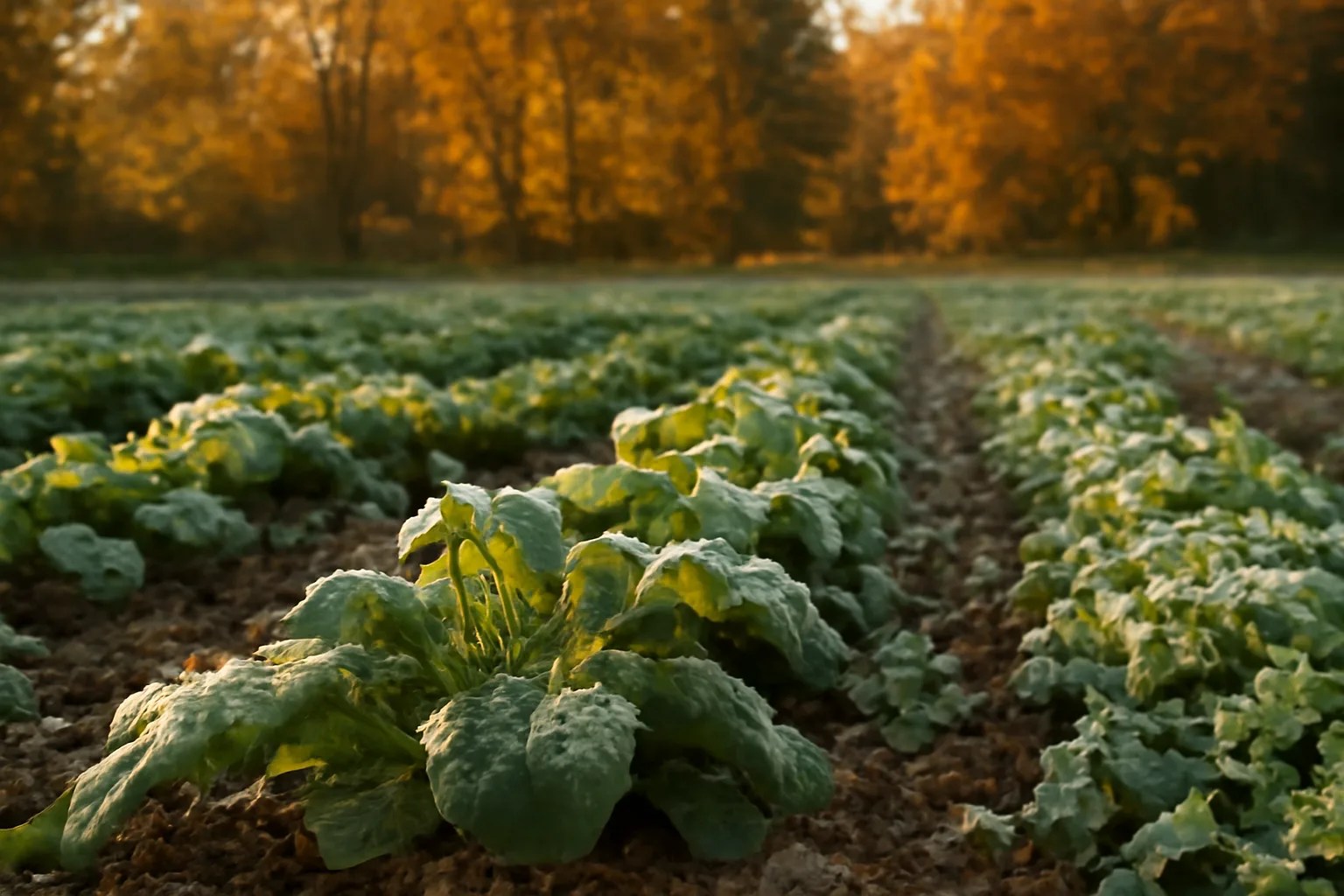
Plot Max is Antler King's brassica-based fall blend (turnips, rape, clover, chicory in most versions). It's planted 60 to 90 days before your first hard frost, generally late July through early September depending on zone, and works best on soil pulled to pH 6.0-6.5 with fertility set from an actual soil test rather than guesswork.
What is Antler King Plot Max, exactly?
Plot Max is one of Antler King's branded fall food plot mixes, built around brassicas (usually a turnip and/or rape component) with clover and chicory mixed in depending on the bag and region. It's sold as a perennial/annual combo blend, meaning part of what you plant dies back or gets grazed down by winter (the brassicas) while the clover and chicory persist into following seasons if the stand survives and you maintain it. Antler King doesn't publish a single fixed seed tag percentage breakdown across all its product lines the way a university variety trial does, so treat any specific ratio you read online with some skepticism unless it comes off your own bag label. What you can count on is the general design intent: a brassica-heavy fall attractant with some perennial legume and forb backup. This matters because a food plot whitetail planted with a blend like this behaves differently than a single-species plot. Brassicas need a hard frost or two to convert starches to sugars and become genuinely palatable, so a Plot Max stand often gets ignored in September and hammered in November and December once temperatures drop and leaves sweeten up. If you want the deep detail on tonnage, seeding rates, and species mixes generally (not brand-specific), our deer food plot seed piece breaks down brassica and clover performance side by side.
What is a food plot?
A food plot is a planted area, typically a half acre to several acres, seeded with forage crops to supplement natural deer browse and hold or attract deer to a property. It's not a natural food source; it's agriculture, just done for wildlife instead of livestock or grain markets. Most state wildlife agencies treat food plots as a legal form of habitat management distinct from baiting, since the crop is left standing and rooted rather than piled or spread loose. Rules vary a lot by state though. Michigan's DNR, for example, defines baiting separately from standing food plots and restricts baiting in parts of the state due to chronic wasting disease concerns [1]. Always check your state wildlife agency's current baiting and feeding regulations before you plant anything you're unsure about, because "food plot" and "bait pile" aren't always treated the same way legally. Agronomically, a food plot is just a small farm field. You still need a soil test, a fertility plan, weed control, and the right planting window for your zone. Skip any of those and you'll get a thin, weedy stand no matter how good the seed bag is. For a broader look at plot design and species choice, see food plot seed and deer food plots.
When to plant food plots for deer?
| Northern (MN, WI, ND, upper MI) | mid-Sept | late July to mid-Aug | |
|---|---|---|---|
| Central (IA, IL, IN, OH, KS) | early-mid Oct | mid-Aug to early Sept | |
| Southern (KY, TN, AR, GA, NC) | late Oct to early Nov | late Aug to mid-Sept | These are generalized ranges. Your county extension office or the USDA plant hardiness zone map is the better source for your specific first frost date, and it's worth pulling before you buy seed. |
Timing splits into two windows: spring/summer plots (clover, chicory, soybeans, cowpeas) and late-summer fall plots (brassicas, cereal grains, brassica-clover blends like Plot Max). Which window you're in depends on what you're planting, not a single calendar date. Cool-season perennials like clover go in either early spring (as soon as soil is workable, often March through May depending on zone) or late summer alongside your fall brassica planting. Warm-season annuals like soybeans and cowpeas need soil temps above roughly 60°F and go in after your last frost date, typically May into June across most whitetail range. Fall blends built around brassicas need to hit the ground 60 to 90 days before your area's average first hard frost, per most land-grant extension brassica guidance [2]. That means late July in the northern Midwest and Canada border states, August across the central belt, and into early September in the mid-South. Wait too long and your turnips and rape never bulb out or build leaf mass before growth stops. A rough planting window by zone: | Zone (general) | First frost (avg) | Brassica/blend planting window |
When to plant turnips for deer?
Turnips are planted 80 to 90 days before your first killing frost, which is a slightly longer runway than some other brassicas because the bulb needs time to size up underground before frost sweetens the greens. Purdue Extension and other land-grant sources on brassica forage generally recommend this same 60-90 day window for the brassica family as a whole [2]. In practice that means most of the country is planting turnips somewhere between late July and early September. Plant into a firm, weed-free seedbed no deeper than a quarter to half inch; turnip seed is tiny and easily planted too deep, which is one of the most common food plot failures people run into. Deer often ignore turnip tops and bulbs for the first month or two after emergence, then switch hard once frost hits and starches convert to sugar. If your plot looks untouched in September, that's normal, not a failure. The real test comes after your first couple of hard frosts.
When to plant oats for deer?
Oats are a fall cereal grain planted 45 to 60 days before first frost, which puts most plantings in August through mid-September depending on zone, a bit later than the brassica window since oats grow faster and don't need as long to establish leaf mass. Oats are attractive to deer almost immediately after emergence, unlike brassicas which need frost to become palatable. That makes oats a good complement in a mixed plot: something green and eaten right away (oats) paired with something that peaks later in the season (turnips, rape). Oats also winterkill in most of the northern half of the country once temps drop into the teens and below, so don't expect them to carry a plot past early winter in colder zones. Farther south they can persist and even be grazed through much of winter.
Do deer eat clover, and do deer like clover?
Yes, and it's one of the most consistently preferred forages across food plot research. Clover (white clover, red clover, and blends of the two) is a perennial legume that's high in protein, generally in the 25-30% crude protein range for actively growing clover according to forage testing summarized by university extension programs [3], and deer use it heavily spring through fall. White clover (Ladino types especially) tolerates grazing pressure better than red clover and is the more common food plot choice for that reason. It persists for 3 to 5 years with good management (mowing, occasional herbicide for grass competition, and fertility maintenance) before stands typically need renovation. Clover's one real weakness is summer drought stress and its total dormancy in winter in colder zones, which is exactly why blends like Plot Max pair it with fall brassicas: the clover carries spring and summer traffic, the brassicas carry the late fall push.
Do deer eat sorghum?
Yes, deer will eat grain sorghum (milo) and browse the leaves of forage sorghum, but it's a minor player in most whitetail food plot programs compared to soybeans, clover, or brassicas. Sorghum is more commonly planted as a screening/cover crop or a dove field component than a primary deer attractant. Where sorghum earns its place is as a tall-growing summer annual that doubles as bedding cover or a visual screen along property lines and access trails, with deer picking at the grain heads and leaves as a secondary benefit. If your goal is maximum deer nutrition or attraction, soybeans and cowpeas out-produce sorghum in both tonnage deer will actually eat and protein content.
What are deer's favorite foods?
There's no single universal answer here because preference shifts by season, region, and what's naturally available, but food plot and wildlife research consistently ranks a handful of crops at the top: soybeans and cowpeas in summer, clover nearly year-round in its growing window, and brassicas (turnips, rape) plus acorns in fall and winter. Acorns deserve a mention because in years with a good mast crop, deer will often ignore planted plots entirely in favor of white oak and red oak acorns, which are higher in fat and more efficient calorically. This is one of the most common reasons a food plot that got hammered last year looks untouched this year, and it's not the seed's fault. Soybeans, in university deer nutrition trials, are frequently cited as one of the highest-preference summer forages available to plant, both for pod/bean protein content and leaf browse before pods set [3]. If you're planting for maximum attraction rather than habitat diversity, a soybean or soybean-cowpea mix in summer paired with a brassica-clover fall blend like Plot Max covers most of the calendar.
Do deer like honey?
There's no real research or wildlife agency guidance suggesting deer have a natural preference for honey, and it's not a component in any legitimate food plot seed blend, including Antler King's lineup. This question shows up online mostly from confusion with "honey hole" hunting slang or scent/attractant products marketed with honey or sugar-based ingredients, not planted forage. If you're seeing honey mentioned in a food plot context, it's likely a mineral lick or spray attractant product using sugar as a carrier, not something you'd plant. Deer are drawn to sugar and salt generally (hence mineral sites and molasses-based attractants), but that's a different category from seeded food plots.
How do you get Plot Max, or any brassica blend, to actually produce?
Soil pH is the first gate. Brassicas and clover both want pH in the 6.0 to 6.5 range, and most extension soil fertility guides note that nutrient availability, particularly phosphorus, drops sharply below pH 5.5 regardless of how much fertilizer you put down. If your soil test comes back at 5.2, adding more fertilizer without lime first is close to wasting money. A basic soil test costs $10 to $20 through most state land-grant labs and tells you pH, phosphorus, potassium, and often organic matter. This is the single best $15 you can spend on a food plot before buying any seed bag. Lime takes months to fully react in the soil, so fall-planted brassica plots often need lime applied the spring or even the prior fall before planting for full benefit; don't expect an application two weeks before seeding to fix a pH problem in time. Beyond pH, brassicas are heavy nitrogen feeders. A general fertility target discussed in Extension brassica forage guides is somewhere around 40-60 lbs of actual nitrogen per acre split between planting and a later application, though your soil test and local extension recommendation should set the actual number since organic matter and prior cropping history change what's needed [2]. Your soil test lab is the authority here, not a seed bag label; treat any blanket fertilizer rate on packaging as a starting point, not a prescription for your dirt.
What equipment do you actually need to plant a blend like this?
For a small plot (under 2 acres), a decent setup is a tow-behind or 3-point disc or tiller for seedbed prep, a broadcast spreader (hand-crank for under an acre, ATV-mounted for bigger plots), and a cultipacker or drag to press seed into contact with soil. Brassica and clover seed is small and needs shallow, firm seed-to-soil contact; broadcasting onto loose, fluffy soil and walking away is one of the top reasons plots fail to establish. No-till drills work well if you have access to one, especially into standing residue, but they're a bigger investment ($3,000 to $15,000+ used, more new) that usually only makes sense if you're planting multiple plots a year or have heavy clay or residue to punch through. For a single half-acre plot, renting or borrowing beats buying. A soil test kit and a pH meter or send-away lab test round out the list. Skip the guesswork fertilizer bag at the farm store labeled "food plot blend" unless it matches numbers your actual soil test called for.
How does Plot Max compare to planting straight clover or straight brassicas?
A blend like Plot Max trades some peak performance in any one category for season-long coverage. A pure turnip/rape plot will generally out-produce a blend's brassica component in raw tonnage of bulb and leaf, because 100% of the seed and nutrients go to one crop instead of being split three or four ways. Same logic applies to a dedicated clover plot versus a blend with clover as one ingredient among several. What you gain with a blend is redundancy. If brassicas get hammered early by flea beetles or deer browse before frost sweetens them, the clover and chicory are still there doing something. If the clover struggles in a droughty summer, the fall brassica flush picks up the slack later. For a hunter planting one plot on limited acreage who wants "good enough at everything" rather than "best at one thing," a blend approach makes sense. For someone running multiple plots across a property, splitting acreage into a dedicated clover plot, a dedicated brassica plot, and a summer soybean plot generally produces more total tonnage and a longer usable season than putting everything into one blended bag. Our domain food plot seed comparison covers how other blended products stack up against single-species plantings if you're weighing that decision.
Where does a Custom Food Plot Plan fit into this?
If you've got a soil test back and a rough idea of your acreage and zone but aren't sure whether a blend, a straight brassica plot, or a split rotation makes more sense for your specific ground, that's exactly the kind of decision a one-time plan can shortcut. PlotSeason's $99 Custom Food Plot Plan takes your soil test numbers, zone, and plot goals and returns species and timing recommendations tailored to your dirt rather than a generic bag label. It's general planning guidance built from your inputs, not site-visited agronomy, and your soil test lab's specific lime and fertilizer recommendations still take priority over any general plan. Start one at /plot-plan-builder.
What's the realistic bottom line on Plot Max and blends like it?
Blends like Plot Max are a reasonable choice if you want one bag that covers brassica, legume, and forb bases without building your own mix from separate species. They're not magic and they're not going to outperform a well-fertilized, properly-timed single-species plot planted on soil that's actually been tested and limed. The two things that matter more than which bag you buy are pH (get it to 6.0-6.5 before you plant anything) and timing (60-90 days before frost for brassica components, per most land-grant guidance [2]). Get those two right and most reputable blends, branded or not, will perform reasonably well. Get them wrong and no seed bag fixes it. For more on species selection generally, see deer for food and our broader deer food plots overview.
Frequently asked questions
Do deer eat sorghum?
Yes, deer browse sorghum leaves and eat grain sorghum heads, but it's a minor food plot crop compared to soybeans or clover. It's more often planted for cover/screening or dove fields than as a primary deer attractant.
Do deer eat clover?
Yes, clover is one of the most heavily used food plot forages available, with actively growing clover running roughly 25-30% crude protein according to university forage testing. Deer use it spring through fall wherever it's available.
When should you plant food plots for deer?
Spring/summer annuals (soybeans, cowpeas) go in after your last frost, typically May-June. Fall blends with brassicas need 60-90 days before your area's first hard frost, generally late July (north) through early September (south).
Do deer like clover?
Yes, white and red clover rank among the top-preference food plot forages in university deer research, largely due to high protein content and long growing season compared to annual crops.
When do you plant oats for deer?
Oats go in 45-60 days before first frost, typically August through mid-September depending on zone. They're eaten almost immediately after emergence, unlike brassicas which need a frost to sweeten up.
When do you plant turnips for deer?
Turnips need 80-90 days before first frost, generally late July through early September depending on zone. Plant seed shallow (1/4 to 1/2 inch); deer typically ignore tops and bulbs until after the first hard frosts.
What is a food plot?
A food plot is a planted field, usually a fraction of an acre to several acres, seeded with forage crops to supplement deer nutrition and hold or attract deer to a property. It's agriculture done for wildlife rather than commercial harvest.
What are deer's favorite foods?
Preference shifts by season: soybeans and cowpeas top summer choices, clover is used nearly year-round in its growing window, and brassicas plus acorns dominate fall/winter. In big acorn years, deer often ignore plots for mast entirely.
Do deer like honey?
There's no research or wildlife agency guidance showing deer prefer honey, and it's not an ingredient in legitimate food plot seed. Confusion usually stems from mineral/scent attractant products using sugar, not planted forage.
What is in Antler King Plot Max?
Plot Max is a brassica-based fall blend, generally combining turnips and/or rape with clover and chicory depending on the specific bag and region. Check your bag's seed tag for the exact percentages since blends can vary by production run.
Is Plot Max better than planting straight brassicas or straight clover?
A dedicated single-species plot usually out-produces any one component of a blend in raw tonnage, since all resources go to one crop. Blends trade some peak performance for season-long redundancy, which suits a single-plot property better than a multi-plot operation.
What soil pH does a brassica-clover blend need?
Target 6.0 to 6.5 pH for both brassicas and clover. Below pH 5.5, phosphorus availability drops sharply regardless of fertilizer applied, so lime based on your soil test before adding fertilizer, not instead of it.
Is it legal to plant a food plot in every state?
Food plots are legal nationwide as planted, standing crops, but baiting rules (piling or spreading loose feed) vary significantly by state and sometimes by region within a state due to chronic wasting disease concerns. Check your state wildlife agency's current regulations before assuming a practice is allowed.
How much does a soil test cost before planting a food plot?
Most state land-grant extension labs charge $10-20 per basic soil test covering pH, phosphorus, potassium, and organic matter. It's the cheapest and most impactful investment you can make before buying any seed.
Sources
- Michigan DNR, Baiting and Feeding Regulations: State agencies distinguish standing food plots from baiting/feeding regulations, which vary by state and CWD zone
- Purdue University Extension, Brassica Forage for Deer: Brassica forages should be planted 60-90 days before first killing frost
- University of Tennessee Extension, Wildlife Food Plots: Clover and soybeans rank among the highest crude protein and preference forages in food plot research
- University of Georgia Extension: Recommendations on planting dates and species selection for wildlife food plots in the Southeast, including clover and brassicas.
- University of Missouri Extension: Detailed information on establishing and fertilizing food plots for deer, including brassica blends like those in Plot Max.