Last updated 2026-07-26
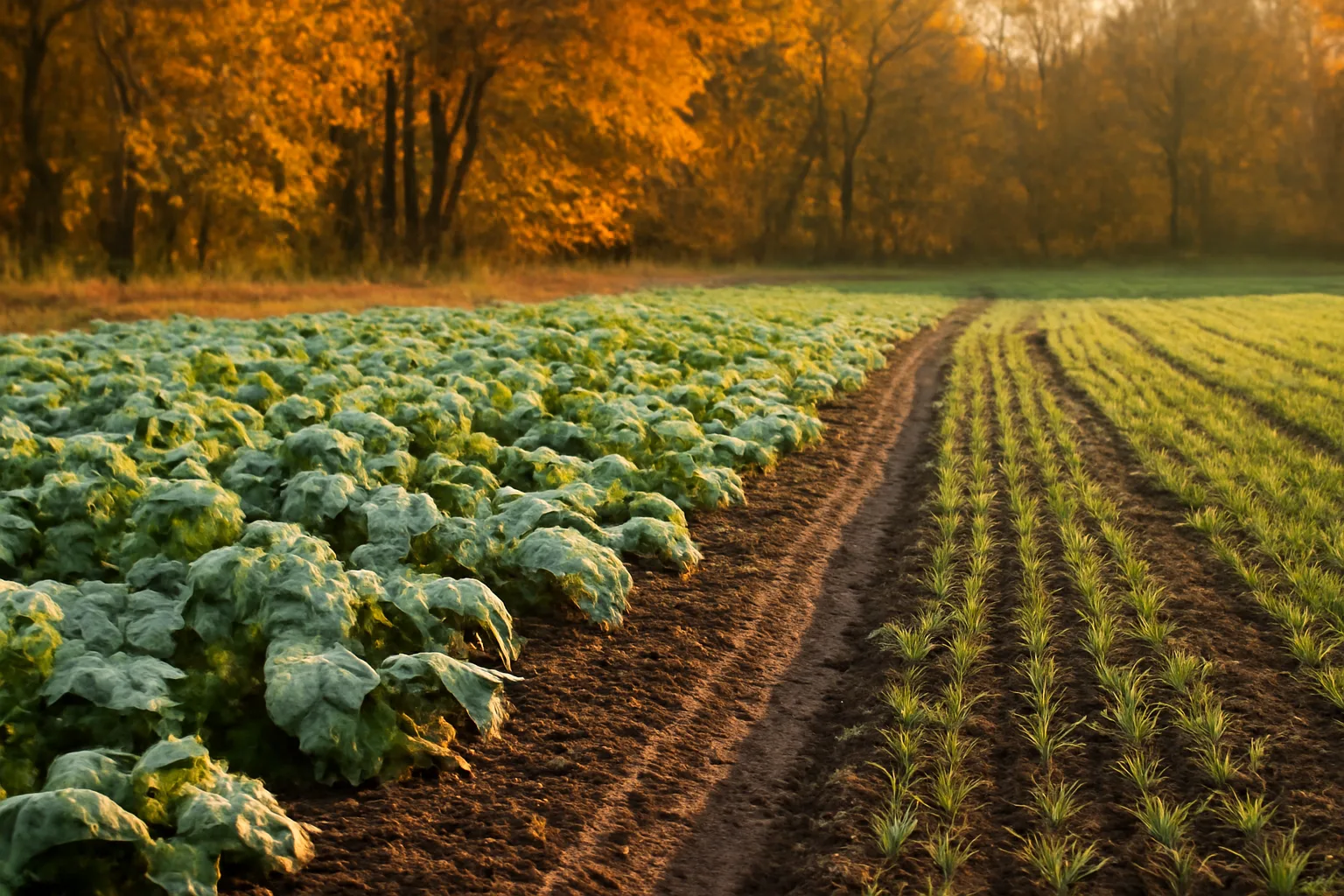
TL;DR
The best fall deer food plot pairs a brassica (turnips or a blend) with a cereal grain like oats or winter wheat, planted 60 to 90 days before your first killing frost. Clover works too but establishes slower. Match species to your soil test, your zone's frost date, and how much browse pressure your property carries.
what is a food plot, exactly
A food plot is a planted patch of forage or grain on hunting ground, built to draw deer, hold them longer, and put groceries in front of them when native browse thins out. It's not a garden and it's not a lawn. Most plots run from a quarter acre to a few acres, tucked into a field edge, a clear-cut, or a strip cut out of timber. The two broad jobs a plot can do are feeding and hunting. A feeding plot is big, often planted in perennials like clover or alfalfa, meant to carry deer through spring and summer growth. A hunting plot is usually smaller, planted with something deer prefer late in the season (brassicas, cereal grains), and positioned so you can get in and out without blowing your cover. Plenty of properties run both. State wildlife agencies regulate food plots differently than bait piles. In most states a food plot is legal to hunt over because it's a growing crop, not a pile of feed dumped on the ground, but the line between the two varies by state and sometimes by county. Michigan's rules are a good example of how specific this gets: the Michigan Department of Natural Resources treats a planted, standing agricultural crop differently from bait or feed placed on the ground, and its baiting and feeding regulations spell out that distinction each year for the current hunting season [1]. Always check your state agency's current baiting and feeding regulations before you plant or hunt a plot, because the rules change almost every year in some states. For a broader rundown of plot types and how to pick one for your ground, see food plot whitetail.
when to plant food plots for deer
| Upper Midwest, Northeast (Zones 3-4) | Mid-September to early October | Late July to mid-August | |
|---|---|---|---|
| Transition zone, Mid-Atlantic (Zones 5-6) | Early to mid-October | Mid-August to early September | |
| Southeast, lower Midwest (Zones 7-8) | Late October to mid-November | Early September to early October | |
| Deep South, Gulf Coast (Zone 9) | Late November to December | Late September to late October | These are starting points, not gospel. Pull your county's actual frost data from your state's land-grant extension service before you lock in a date. For a season-by-season breakdown of every plot window, more than fall, our seasonal calendars content covers spring and summer plantings too. |
Timing is the single biggest variable that separates a plot deer hammer in November from one that never gets touched. Fall plots need to go in early enough that seedlings establish before frost stops growth, but late enough that weeds and summer heat don't smother them first. As a rule of thumb, aim to plant fall brassicas and cereal grains 60 to 90 days before your area's average first fall frost date. That gives brassicas time to bulb out and cereal grains time to tiller before growth slows. Clover and other perennials are more flexible; you can frost-seed them in late winter or plant them in late summer alongside a nurse crop of oats. USDA hardiness zone maps and your local extension office's frost date charts are the two references worth trusting over generic online planting calendars, because both account for elevation and regional microclimates that a national map misses. Here's a rough planting window by region, using average first frost dates as the anchor: | Zone / region | Typical first frost | Fall plot planting window |
do deer eat sorghum
Yes, deer eat grain sorghum, but it's more of a fall and winter standing-grain food source than a preferred browse. Whitetails will hit sorghum heads once they dry down and the plant matures, and it holds up well as a winter food source because the standing stalks push through snow better than most alternatives. Sorghum is more common as a screening or bedding cover crop paired with a food plot than as the primary attractant. Deer typically rank it behind brassicas, soybeans, and corn in preference studies and observed browse pressure, but in a pinch, especially in areas with heavy snow, sorghum heads become an important late-season calorie source. If you're set on grain sorghum, plant it in late spring through early summer since it needs a long, warm growing season, and let it stand into fall and winter rather than expecting deer to hit it hard the day it's planted.
do deer eat clover, and do deer like clover
Deer eat clover heavily and it's one of the most consistent, highest-preference forages you can plant on a whitetail property. Clover is a legume, meaning it fixes nitrogen from the air with the help of soil bacteria, which keeps fertilizer costs down once it's established and keeps crude protein content high, often in the 25 to 30 percent range for quality perennial clover stands [2]. Do deer like clover? Yes, and it shows in browse studies and in how quickly a healthy clover plot gets hit compared to grasses or standing corn. It's especially important in spring and summer when does are lactating and bucks are growing antlers, both periods that demand high protein intake. That's also why clover isn't usually the star of a fall plot. By late fall, clover growth slows with cooler temperatures and shorter days, and deer often shift preference toward higher-carbohydrate foods like brassicas and grain as they build fat reserves for winter. The practical fall move: keep an existing clover stand mowed and weed-free heading into fall so it stays palatable and keeps producing into the cooler months, but don't count on new clover plantings to be your primary fall draw. Pair it with a fall annual planted in an adjacent plot or the same plot as a companion crop. Ladino and white clover varieties are among the most commonly recommended perennial clovers for whitetail plots across university extension guidance, with mixes typically lasting 3 to 5 years before needing renovation [2].
when to plant turnips for deer
Plant turnips for deer 80 to 90 days before your first expected fall frost, which for most of the whitetail range lands somewhere between late July and early September depending on latitude. Turnips need that runway to grow leaf mass, then bulb, then get sweetened by a couple of frosts, which converts starches to sugars and is exactly when deer preference for them spikes. This is the most common mistake in brassica plots: planting too late. If you plant turnips in September in a zone with an early October frost, you'll get leafy tops but small or no bulbs, and deer will hammer the tops early, leaving nothing for the late-season draw you actually wanted. Seeding rate for turnips alone typically runs 2 to 4 pounds per acre, and most commercial brassica blends combine turnips with radishes, rape, or kale to extend the palatability window, since deer often hit the tops first in early fall and the bulbs later after frost sweetens them. Soil pH matters here too. Brassicas prefer a pH in the 6.0 to 6.8 range, and your soil test report is the actual authority on how much lime and fertilizer your specific field needs, not a generic bag recommendation. For seed selection across brassica blends and other fall options, deer food plot seed breaks down what's in most bagged mixes.
when to plant oats for deer
Plant oats for fall deer plots about 45 to 60 days before your first killing frost, which is a shorter runway than brassicas need because oats grow fast and get grazed almost as soon as they emerge. In much of the whitetail range that's a window from mid-August through mid-September. Oats are a cereal grain, cheap, fast to establish, and deer usually hit them within a couple of weeks of emergence, which makes them a good early-season fall draw while your brassicas are still bulbing up. They also work well as a nurse crop for clover, shading out weeds while the clover gets established underneath. One caution: oats aren't very cold-hardy compared to winter wheat or cereal rye. A hard freeze will kill oats back, so in northern zones they're really an early-to-mid fall food, not a food source that carries into January the way winter wheat or rye can. If you want grain that survives into late winter, winter wheat or cereal rye planted in the same window is the better bet for the tail end of the season.
what's the best fall food plot mix, and does one species beat all the others
| Brassicas (turnips, rape) | 80-90 days | 15-25% (bulb varies) | Very high after frost sweetening | Late-season hunting plot | |
|---|---|---|---|---|---|
| Oats | 45-60 days | 12-20% | Low, killed by hard freeze | Early fall draw, nurse crop | |
| Winter wheat / cereal rye | 45-60 days | 15-20% | Very high, survives winter | Late-season standing forage | |
| Clover (established) | N/A, perennial | 25-30% | High if dormant, low new growth | Spring/summer plot, fall holdover | |
| Grain sorghum | Spring planted, standing into fall | 8-11% | Moderate, stalks stand through snow | Winter standing grain, screening | For a build-out on which of these to combine on a small property versus a large one, deer food plots covers layout and acreage tradeoffs in more depth. |
There's no single best species, and any article claiming otherwise is selling something. The best fall plot for your ground depends on your soil, your frost date, how much deer pressure you're carrying, and whether you're feeding deer through fall or setting up a stand-specific hunting plot for late season. That said, a few combinations show up again and again in extension guidance and among experienced plot managers because they cover multiple bases: Brassica blend (turnips, radish, rape) plus a cereal grain (oats or winter wheat) planted together gives you an early fall draw from the oats and a late-season, post-frost draw from the sweetened brassica bulbs. This is probably the single most common fall plot recipe in the whitetail world for good reason: it staggers palatability across the whole season instead of peaking once and fading. Winter wheat or cereal rye alone is the low-maintenance, high-tonnage option. It's cheap per acre, tolerates poor soil and late planting better than most brassicas, and stays green and available well into winter, sometimes even under snow cover. Clover, if you already have an established stand, doesn't need fall replanting. Just keep it mowed and weed-free so it stays in the rotation as deer preference shifts seasonally. Here's how the major fall options stack up: | Species | Planting window before frost | Crude protein (approx.) | Cold tolerance | Best role |
what are deer's favorite foods, more than in food plots
Deer preference shifts by season, region, and what's available, so there's no fixed ranked list that holds everywhere. But across browse studies and extension forage guides, a few patterns repeat consistently. Acorns, particularly white oak acorns, are often the single most preferred natural fall food across most of the whitetail range, because they're lower in tannins and higher in fat than red oak acorns. When a good white oak mast year lines up with your plot planting, don't be surprised if deer pass your plot for the woods for a few weeks. Soybeans, standing or as a food plot crop, rank extremely high in preference during the growing season and again once pods mature in fall. A widely cited whitetail feeding-ecology chapter by Larry Marchinton and David Hirth found soybeans and other agricultural crops among the most heavily used foods where available, largely because of their carbohydrate and fat density heading into winter [3]. Clover and other legumes dominate spring and summer preference thanks to protein content, as covered above. Brassicas and cereal grains take over as fall favorites once frost sweetens the brassica bulbs and cereal grains provide easy carbohydrates. Woody browse, forbs, and mast (acorns, apples, persimmons) fill the gaps everywhere else, and in a lot of areas make up the majority of a deer's actual diet by volume, even on properties with food plots. A plot supplements natural forage; it rarely replaces it, and deer will use both.
do deer like honey, and does that matter for food plots
There's no real body of research or field evidence suggesting whitetail deer specifically seek out honey, and it's not a practical food plot or attractant ingredient. Deer are herbivores built around browsing plants, not foraging for sugars from beehives, and honey isn't something that occurs naturally in a deer's environment in any quantity they'd encounter or exploit. Some commercial deer attractant sprays and mineral products include sugar-based or molasses-based ingredients, and there's anecdotal belief among hunters that sweet scents draw deer in. But that's a different question from whether deer eat honey in the wild or whether it belongs in a food plot mix. It doesn't, and no university extension forage guide lists it as a planted or supplemental deer food. If you're chasing sweetness as an attractant, brassica bulbs sweetened by frost do that job legitimately and put actual browse in front of deer, more than a scent.
how much does a fall food plot cost per acre
Costs vary a lot based on whether you're starting from bare dirt or renovating an existing plot, and whether you already own equipment. As a rough range, seed alone for a fall brassica or cereal grain blend runs somewhere between $15 and $50 per acre depending on the blend and whether it's a proprietary bagged mix or a straight commodity seed bought from a farm co-op. Lime and fertilizer, if your soil test calls for it, can add another $50 to $150 per acre, and lime in particular is often the single most underused input on hunting land because it's not glamorous, it just makes everything else work better. Your soil test is the only reliable guide for how much lime and fertilizer your specific field needs. A soil test from your state land-grant lab (most run $10 to $20 per sample) will tell you your current pH and nutrient levels, and that report, not a bag label or a blog post, should drive your lime and fertilizer decisions. If the planning side of this feels like more guesswork than you want to deal with, a $99 one-time Custom Food Plot Plan from PlotSeason takes your soil test results, zone, and property details and turns them into a specific planting plan, species picks, and timing rather than a generic calendar. It's general guidance built for your inputs, not a replacement for what your soil lab tells you about lime and fertilizer rates on that particular field.
what equipment do you actually need for a fall plot
You don't need a tractor to grow a good fall plot, but you do need a way to kill existing vegetation, work the seedbed, and get seed-to-soil contact. For small plots (under an acre), an ATV or UTV with a small disc, a cultipacker, and a broadcast spreader covers most of what you need. Herbicide (glyphosate is the standard burn-down option) to knock back existing growth before planting saves a lot of frustration compared to trying to till through established sod. Brassica and clover seed is small and needs to be planted shallow, roughly a quarter inch deep or even just pressed into the surface, while cereal grains like oats and wheat want closer to an inch of coverage. A cultipacker or drag harrow after broadcasting handles both jobs reasonably well if you don't own a seed drill. For a full rundown of what gear actually earns its keep on food plot ground versus what's marketing, that's worth a dedicated read on its own; check our equipment and methods coverage before you buy anything expensive.
Frequently asked questions
Do deer eat sorghum in food plots?
Yes, though sorghum ranks below brassicas and soybeans in most preference observations. Deer eat the mature grain heads in fall and winter, and the standing stalks hold up well through snow, making sorghum more useful as a winter standing-grain source or a screening crop than a primary fall attractant.
Do deer eat clover and do deer actually like it?
Deer eat clover heavily and consistently rank it as a top forage, especially in spring and summer when protein demand is highest. Quality clover stands run 25 to 30 percent crude protein. Growth slows in cold fall weather, so established stands still get browsed, but new clover plantings aren't a strong fall-specific draw.
When should you plant food plots for deer in fall?
Plant fall brassicas 80 to 90 days before your area's first frost and cereal grains like oats 45 to 60 days before frost. Exact dates depend on your zone; check your state land-grant extension's frost date charts rather than a generic national calendar.
When is the best time to plant turnips for deer?
Plant turnips 80 to 90 days ahead of your expected first frost, generally late July through early September depending on latitude. This timing lets bulbs form before frost sweetens them, which is when deer preference for turnip bulbs spikes.
When should you plant oats for a deer food plot?
Plant oats 45 to 60 days before your first fall frost. Oats establish fast and deer often browse them within two weeks of emergence, but a hard freeze kills oats back, so they're an early-to-mid fall food rather than a food that carries into winter.
What exactly is a food plot?
A food plot is a planted area of forage or grain crops on hunting land, meant to attract and hold deer and supplement natural browse. Plots range from a quarter acre to several acres and can be planted with annuals like brassicas and grains or perennials like clover, depending on the goal.
What are deer's favorite foods in general?
White oak acorns often top natural food preference in fall due to low tannins and high fat. Soybeans and corn rank high during growing season and after pod/kernel maturity. Clover leads spring and summer preference. Brassicas and cereal grains take over as fall favorites once frost sweetens brassica bulbs.
Do deer like honey or sugar-based attractants?
There's no real evidence deer seek out honey specifically; it isn't part of a natural deer diet and no extension forage guide lists it as a food plot ingredient. Some commercial attractants use sugar or molasses scents, but that's a different question from honey being a real deer food.
Is a food plot legal to hunt over, or does it count as baiting?
In most states, a growing planted crop is treated differently from a bait pile and is legal to hunt over, but rules vary by state and sometimes by county, and some states regulate distance or disturbance of the standing crop. Check your state wildlife agency's current baiting and feeding regulations before hunting a plot.
How big should a fall food plot be?
There's no fixed right size. Hunting-specific plots meant to draw deer past a stand often run a quarter acre to one acre. Larger feeding plots meant to carry deer through a season can run several acres or more. Size should match your acreage, deer density, and hunting pressure, not a rule of thumb.
What's the difference between a fall hunting plot and a feeding plot?
A hunting plot is usually small, planted with a preferred late-season food like brassicas, and positioned for a specific stand setup with clean access. A feeding plot is larger, often perennial (clover, alfalfa), and meant to support deer through spring and summer growth rather than concentrate them for a single hunt.
Should I plant clover or brassicas for fall?
If you already have an established clover stand, keep mowing it; it'll still get browsed into fall. For a new fall-specific plot meant to peak in late season, brassicas paired with a cereal grain like oats or wheat generally outperform new clover plantings, since clover growth slows as fall temperatures drop.
Sources
- Michigan Department of Natural Resources, Baiting and Feeding Regulations for Deer: States regulate baiting and feeding of deer distinctly from planted food plot crops, with specific rules varying by state
- University of Wisconsin-Madison, Team Forage, "Clovers for Wisconsin" (A2353): Ladino and white clover are commonly recommended perennial clovers for whitetail food plots, with crude protein around 25-30 percent and stand life of 3-5 years
- Marchinton, R.L. and Hirth, D.H., "Behavior", Chapter in White-tailed Deer: Ecology and Management, Wildlife Management Institute, 1984, cited in USDA Forest Service Southern Research Station bibliography: Agricultural crops like soybeans and corn rank among the highest preference foods for whitetail deer due to carbohydrate and fat content
- University of Georgia Extension: recommendations on clover and turnip planting dates for deer food plots
- USDA Forest Service: research on deer diet preferences and natural forage compared to planted food plots