Last updated 2026-07-25
TL;DR
Most deer food plots rely on rainfall, not irrigation. Watering helps most right after planting, when seed needs consistent moisture to germinate. If you must water, use a sprinkler or drip line to keep the top inch of soil damp for 7 to 14 days after seeding, then let nature take over. Timing your planting to local rain patterns beats any hose setup.
do you actually need to water a food plot
For almost every hunter reading this, no. Food plots are built to run on rainfall, and most state wildlife agencies and university extension programs design their planting recommendations around normal seasonal precipitation, not supplemental irrigation [1]. The exception is the germination window. Seed needs consistent moisture for the first one to three weeks after it goes in the ground, especially small-seeded species like clover and brassicas that get planted shallow (1/4 inch or less). If you drop seed and then a two-week dry spell hits, you can lose a big chunk of the stand before it ever gets going. That's the one spot where a little water, even a garden hose and sprinkler, changes the outcome. Beyond germination, established food plots (clover, chicory, alfalfa) have root systems that reach several feet down once mature and handle dry spells fine. Annual grains like oats, wheat, and sorghum are also drought-tolerant once rooted. Watering a mature plot is mostly wasted effort and wasted money unless you're dealing with an actual drought declared by your state climatologist or ag extension office. If you're planning a plot from scratch and want a layout built around your soil test and region instead of guesswork, that's exactly what a food plot whitetail plan is for.
when is watering a food plot worth the effort
Watering earns its keep in three situations: right after planting in a dry stretch, on small high-value plots you can reach with a hose, and on sandy or shallow soils that drain fast and hold almost no moisture. Outside those, skip it. The most common mistake is planting on a forecast that changes. A lot of hunters time seeding to a rain event, the rain misses, and now bare seed sits exposed to sun and wind. If you catch it within the first 48 to 72 hours, light watering (enough to wet the top half inch of soil, not flood it) can save the planting. Wait a week and it's often too late; the seed has already dried out and died or been eaten by birds and rodents. Small plots, think quarter acre kill plots tucked in timber, are the best candidates for actual irrigation. A 200 gallon tote, a gravity-fed drip line, or even a sprinkler on a timer hooked to a rain barrel can keep a small plot alive through a dry spring. Trying to irrigate a 3 to 5 acre field plot is a different math problem entirely, and most hunters don't have the water source or budget for it. A gas-powered trash pump moving water from a pond can push a few hundred gallons an hour, but that's still a rounding error against what an acre of soil needs during a true dry spell (roughly 27,000 gallons per acre per inch of rain, per NOAA's precipitation conversion figures [2]).
what's the best way to water a newly planted food plot
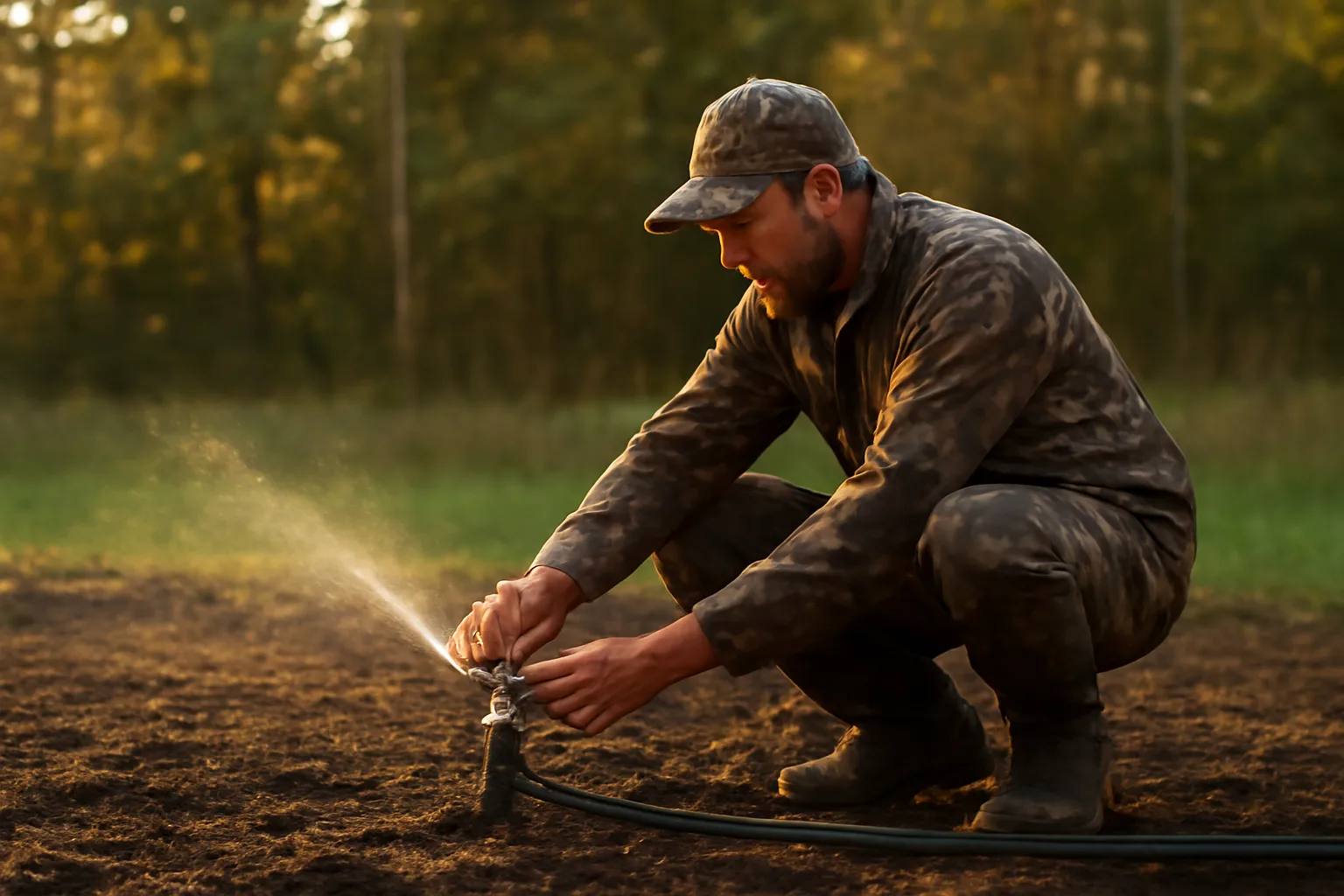
Light, frequent watering beats one heavy soaking. Seed at or near the surface dries out fast, and a single deep watering can also wash small seed downhill or crust the soil surface, which blocks emergence. For small plots, a sprinkler on a hose timer set for 15 to 20 minutes, twice a day (early morning and early evening) keeps the surface consistently damp without waterlogging it. For anything without electricity or a spigot nearby, a battery-powered hose timer attached to a gravity tank works fine and only needs refilling every few days. Drip tape or soaker hoses use less water and reduce runoff, but they take more setup time and aren't practical for irregular field shapes. They make more sense for a small, square kill plot than a winding field-edge strip. Once seedlings show their second or third leaf, usually 10 to 14 days after emergence for clover and brassicas, you can start stretching out the watering schedule and eventually stop unless a genuine drought sets in. At that point the plant's root system is doing the work.
when to plant food plots for deer
| Deep South (zones 8-9) | Late September to October | April to May | |
|---|---|---|---|
| Mid-South / Transition (zones 7) | Late August to mid-September | Late April to May | |
| Midwest / Upper South (zones 6) | Mid-August to early September | May | |
| Northern tier (zones 3-5) | Late July to mid-August | Late May to early June | If you want a planting calendar built around your zip code instead of a national average, that's the core of our $99 Custom Food Plot Plan, a one-time build using your soil test and location rather than generic dates. |
Timing depends on species and your USDA Plant Hardiness Zone, but the two big windows are spring (April through June) for warm-season annuals and perennials, and late summer to early fall (August through September) for cool-season annuals like brassicas, clover, and cereal grains. Cool-season plots (clover, oats, wheat, brassicas) generally go in 4 to 8 weeks before your area's average first frost date, so the plants establish before cold slows growth but still hit peak attraction during hunting season. Cooperative extension frost date tools, like those run by NOAA and land-grant universities, are the most reliable way to nail this window for your specific county [3]. Warm-season plots (soybeans, corn, sorghum, cowpeas) go in after your last spring frost, once soil temperatures hit the mid-50s Fahrenheit or warmer, similar timing to row-crop planting in your region. Here's a rough national planting window by region and species. Always check your local extension office for exact dates since a single state can span two or three zones. | Region | Cool-season plots (clover, brassicas, cereal grains) | Warm-season plots (soybeans, sorghum, cowpeas) |
when to plant oats for deer
Oats go in as a cool-season planting, typically 6 to 8 weeks before first frost, so late August through September across most of the whitetail range. Oats germinate fast, often within 5 to 10 days given decent soil moisture, and they green up quickly, which makes them a good nurse crop mixed with slower-establishing clover. Oats are also one of the more forgiving species if rain is inconsistent. They tolerate a wider moisture range than clover during germination, but they still benefit from the same watering approach described above if you're planting into dry soil. One caveat: oats winterkill in harsher climates once temperatures drop into the low teens or single digits for extended periods, so in zones 3 to 5 they function as a fall attractant rather than a plant that carries deer through a hard winter. Further south, oats can persist much longer into winter.
when to plant turnips for deer
Turnips, like other brassicas, go in the ground 60 to 90 days before your first fall frost, which usually lands in late July through August depending on your zone. Turnips need that full window to bulb up properly; the sugars that make the bulbs attractive to deer develop late in the season, often after the first hard frost converts starches to sugar. Seeding depth matters a lot with turnips because the seed is tiny, roughly 1/4 inch deep or less, sometimes just pressed into the surface with a cultipacker. That shallow seed depth is exactly why turnip plots are among the most vulnerable to a dry planting window and one of the better candidates for a few days of light watering right after seeding. Deer often ignore turnip tops and bulbs early in the season and hit them hard in late fall and winter once other food sources thin out and a frost sweetens the plant. If your goal is a late-season draw, don't judge the plot's success in October; give it until December.
do deer eat clover, and is it worth planting
do deer eat clover and is it worth planting
Yes, clover is one of the most consistently preferred food plot species for whitetail deer, and it's also one of the most forgiving to grow. Extension research on deer forage lists clover among the top perennial choices because of its high protein content, often 25 to 30 percent crude protein in vegetative growth, and its ability to regrow after grazing [4]. Clover plots typically last 3 to 5 years before needing to be reseeded or renovated, much longer than annual plantings like brassicas or cereal grains that need replanting every year. That makes clover a good foundation plot even though it costs more upfront in lime and fertilizer to get soil pH and nutrient levels right. The tradeoff is establishment. Clover seed is small, shallow-planted, and slow to get going compared to oats or wheat, which means it's the species most likely to benefit from supplemental watering during that first 2 to 3 week window if rain doesn't cooperate. If you're weighing clover against other perennial and annual options for your specific soil and region, deer food plot seed breaks down how species selection changes with soil type and climate.
do deer eat sorghum
Yes, deer eat sorghum, both the grain heads and the plant itself in earlier growth stages, though it's usually planted more as a warm-season screen and summer forage crop than a primary attractant. Extension forage guides classify grain sorghum as a solid warm-season option, particularly in areas prone to drought, since sorghum has better drought tolerance than corn [5]. Sorghum makes more sense as part of a mixed warm-season blend, alongside cowpeas or soybeans, than as a standalone plot, because deer preference for sorghum alone is moderate rather than a top choice. Its bigger value on a lot of properties is cover: tall stalks that hold up through late summer and give deer a place to bed or travel that a bare field doesn't offer. Because sorghum is planted after last frost when soil is warming, watering right after seeding matters less than it does for fall brassica or clover plantings; late spring rain is usually more reliable in most of the whitetail range.
what are deer's favorite foods
There's no single universal answer here because deer preference shifts by season, region, and what's available naturally, but extension and wildlife agency research consistently points to a short list: soybeans, clover, chicory, corn, acorns, and brassicas rank among the most preferred food plot and natural forage options across most of the whitetail range [4]. Acorns deserve special mention. Multiple state wildlife agency studies show deer will choose acorns over almost any planted food plot option when a good mast year hits, because of the fat content, which is far higher than most planted forages [6]. That's a big reason plots near oak stands sometimes see less pressure in high-mast years and heavier pressure in years the oaks fail. Soybeans stand out for protein content during summer growth, often cited around 30 to 40 percent crude protein in the leaf stage, which matters most during antler growth and lactation in early summer [4]. Clover and chicory offer nearly year-round forage in the right climate since both regrow after grazing and tolerate moderate frost. If you're building a property plan around what deer actually prefer in your area rather than a national list, deer for food covers how to rank species by season.
do deer like honey (and does it matter for food plots)
Deer aren't drawn to honey the way common hunting folklore suggests, and there's no wildlife agency or extension research supporting honey as a meaningful deer attractant on its own. What deer do respond to is sugar content in general, which is exactly why brassicas and turnips get sweeter and more attractive after a frost converts starches to sugars. Some commercial deer attractant products include sugar or molasses-based scents, but that's a different category from food plot planning entirely, and most state wildlife agencies regulate or ban supplemental feeding and baiting, which can include some attractant products depending on how your state defines bait. Rules vary a lot: some states only restrict bait during certain seasons or within a certain distance of a stand, others ban it outright statewide. Check your state wildlife agency's current regulations before using any mineral, feed, or attractant product, since violating baiting rules can turn a legal hunt into an illegal one fast [7]. Food plots themselves are almost universally treated differently from bait piles in state law, since they're a planted, in-ground crop rather than a placed feed source, but the legal line differs by state and it's worth five minutes on your state agency's website to confirm.
what is a food plot, exactly
A food plot is a planted area, usually somewhere between a quarter acre and several acres, seeded with forage crops specifically to attract and hold deer or other wildlife on a property. Unlike a bait pile, it's an actual growing crop in the ground, which is why most states regulate it separately from supplemental feeding [7]. Food plots serve two main jobs: nutrition (helping deer hit better body weight, antler growth, and fawn survival) and hunting access (giving hunters a predictable spot deer visit during shooting hours). Species selection usually splits into perennials (clover, chicory, alfalfa) that last multiple years, and annuals (brassicas, cereal grains, soybeans, sorghum) that get replanted each season. A good plot starts with a soil test, not seed selection. Pulling a soil sample and sending it to your state land-grant university's soil testing lab (most run $10 to $20 per sample) tells you your existing pH and nutrient levels, and that result is the actual authority on how much lime and fertilizer your specific ground needs, more reliable than any general planting guide including this one. If you've got a soil test back and want a plan built around those numbers plus your region and goals, that's the whole point of the Custom Food Plot Plan: a one-time $99 build using your actual dirt instead of a one-size-fits-all seed bag label. For species options once you know your soil, food plot seed and deer food plots both break down what grows well in different soil and moisture conditions.
Frequently asked questions
How much water does a food plot actually need after planting?
Enough to keep the top half inch to inch of soil consistently damp, not soaked, for 7 to 14 days after seeding. That's roughly 1 inch of water per week if rainfall isn't providing it, similar to lawn establishment guidance from most land-grant extension programs. After germination, established plots rely on normal rainfall.
Can I use a pond or creek to water a food plot?
Yes, with a gas or electric trash pump and hose, this works for small plots near a water source. Check your state's water rights rules first; some states regulate surface water withdrawal even for small agricultural use, so a quick call to your state department of natural resources avoids a legal headache.
Do deer eat sorghum or prefer other grains more?
Deer do eat sorghum, both the plant and grain head, but it's usually a moderate preference compared to soybeans or corn. Extension forage guides list it as a solid drought-tolerant warm-season option, often better used in a mixed blend than as a standalone attractant plot.
Do deer like clover better than other food plot options?
Clover ranks among the top preferred food plot species in extension research, largely because of its high crude protein content (often 25 to 30 percent) and its ability to regrow after grazing. It's not universally deer's single favorite food, but it's one of the most reliable, long-lasting options available.
When should I plant food plots for deer in my area?
Cool-season plots (clover, brassicas, cereal grains) generally go in 4 to 8 weeks before your area's average first frost date. Warm-season plots (soybeans, sorghum, cowpeas) go in after your last spring frost. Exact dates shift by USDA hardiness zone, so check your local cooperative extension frost date tool.
When is the best time to plant oats for deer?
Oats go in 6 to 8 weeks before first frost, which lands in late August through September across most of the whitetail range. They germinate fast (5 to 10 days with decent moisture) and work well mixed with slower clover as a nurse crop.
When should turnips go in the ground for a deer food plot?
Turnips need 60 to 90 days before first frost, usually late July through August depending on zone. They need that full window to bulb up, and the sugars that make them attractive to deer develop late, often after a hard frost, so don't judge the plot until December.
What is a food plot, in simple terms?
A food plot is a planted area of forage crops, usually a quarter acre to several acres, seeded specifically to attract and feed deer or other wildlife on a property. It's a growing crop in the ground, which most states treat differently under law than a placed bait pile.
What are deer's favorite foods overall?
Preference shifts by season and region, but soybeans, clover, chicory, acorns, corn, and brassicas rank consistently high across extension and wildlife agency research. Acorns often win out over planted forage in a heavy mast year because of their much higher fat content.
Do deer like honey, and should I use it as an attractant?
No solid wildlife research supports honey as a meaningful deer attractant. Deer do respond to sugar content generally, which is why frost-sweetened brassicas and turnips draw them in late season. Check your state's baiting rules before using any commercial attractant product, since some states classify sugar or scent-based products as bait.
Do I need to water an established clover or alfalfa food plot?
Almost never. Mature clover and alfalfa develop deep root systems that handle normal dry spells fine. Watering only earns its keep during the first few weeks after initial planting or reseeding, when shallow seed and young roots are vulnerable to drying out.
Is it legal to water a food plot near a hunting stand?
Watering itself isn't regulated, but some states have rules about supplemental feeding or attractant use near a stand that could apply if you're adding anything beyond plain water. Food plots as planted crops are generally treated separately from bait, but confirm with your state wildlife agency since rules vary widely.
Sources
- USDA NRCS, Plant Materials Program conservation planting guidance: Food plot and conservation planting recommendations are generally built around normal regional rainfall rather than irrigation
- NOAA National Weather Service, precipitation measurement conversion: One inch of rainfall over one acre equals roughly 27,000 gallons of water
- NOAA National Centers for Environmental Information, freeze/frost data: Local average first and last frost dates used to time cool-season and warm-season plantings
- Mississippi State University Extension, food plot forage nutrition publication: Clover and soybean forage crude protein levels commonly range from 25 to 40 percent depending on growth stage
- University of Georgia Extension, grain sorghum production guide: Grain sorghum has better drought tolerance than corn and is commonly grown as a warm-season forage and grain option
- University of Tennessee Extension, white-tailed deer and mast production research: Acorns provide substantially higher fat content than most planted forages and are heavily preferred in strong mast years
- example state wildlife agency baiting regulation reference (verify current state rule before hunting): State wildlife agencies regulate or restrict supplemental feeding and baiting for deer, with rules varying significantly by state