Last updated 2026-07-25
TL;DR
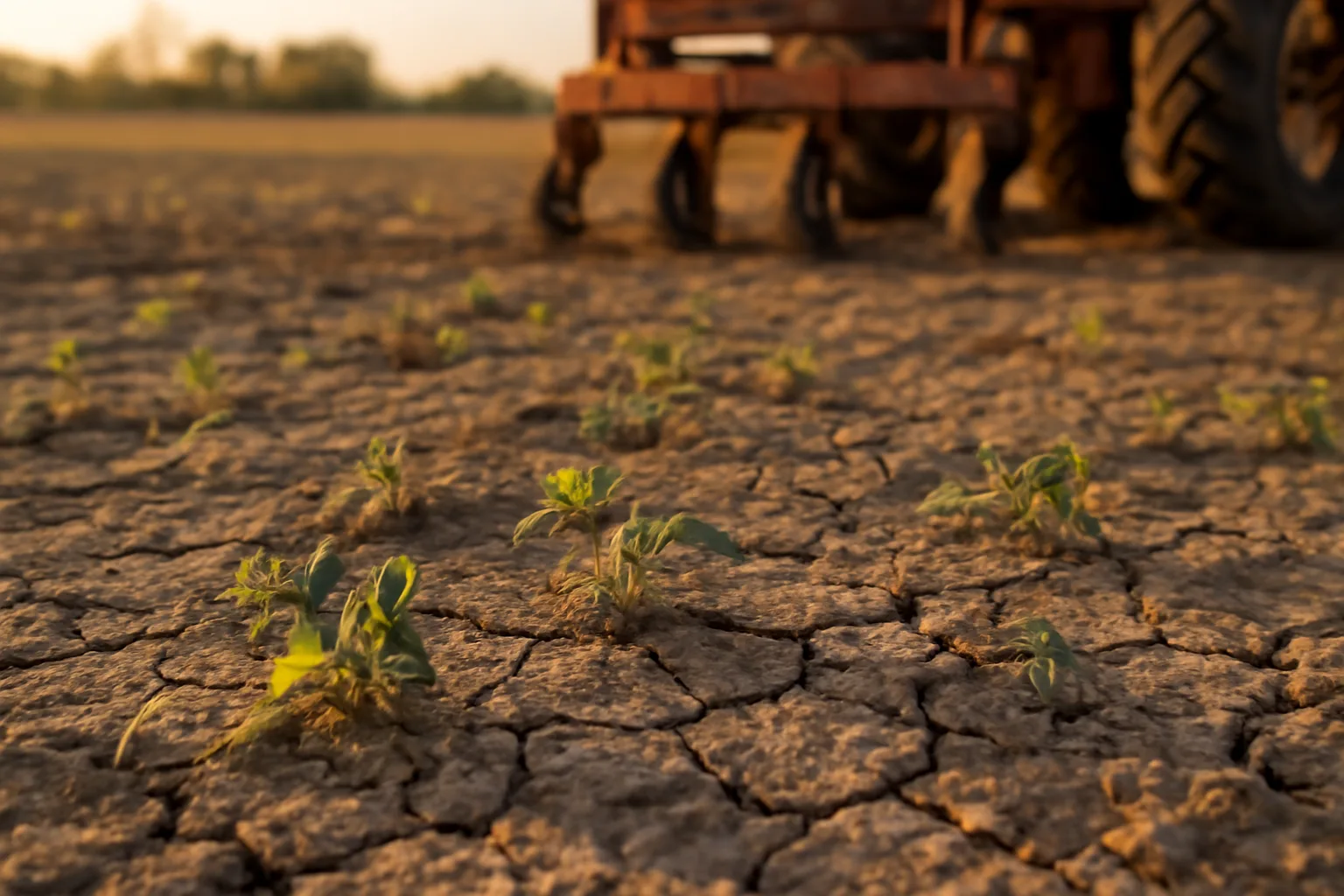
You can't realistically irrigate a multi-acre food plot without rain, so the fix is drought-proofing: plant deep-rooted, drought-tolerant species (clover, chicory, sorghum, brassicas), fix soil compaction and pH so roots can chase moisture, mulch with a nurse crop, and time planting to your region's rainfall pattern instead of fighting it after the fact.
Can you actually water a food plot with no rain?
For anything under about a quarter acre, yes, with a water tank, a trailer sprayer, or a gravity-fed drip line off a pond. For anything bigger, realistically no. A single acre of growing crop can use somewhere around 1,000 to 27,000 gallons of water per inch of rainfall depending on soil type and canopy, and most extension irrigation guides for row crops assume access to a well, pond, or municipal line plus pump infrastructure most hunters don't have sitting in the woods [1]. So the honest answer is: you're not going to haul enough water to replace an inch of rain on a 2 acre plot. You might keep a small brassica plot or a food plot garden bed alive with a 300 gallon tote and a garden hose, and that's worth doing if you've got road access. For the rest of your acreage, the real gains come from soil, timing, and species selection, not water trucks. If you do have pond or well access and want to try supplemental watering on a small plot, a soaker hose or drip tape laid under the row at planting time beats overhead sprinkling. Overhead watering during hot afternoons loses a lot to evaporation and can actually promote foliar disease on clover and brassicas.
What actually helps a food plot survive a dry spell
Four things matter more than water you haul in: soil structure, organic matter, seed-to-soil contact, and species choice. Compacted soil sheds rain instead of absorbing it, so a soil test and a pass with a subsoiler or chisel plow before planting does more for drought survival than anything you can do after the plants are up. Organic matter holds water like a sponge. Building it up over seasons through cover crops, crop residue left on the surface, and reduced tillage where you can manage it all helps soil hang onto moisture longer between rain events, though the exact water-holding gain varies by soil texture, so don't treat any single figure as gospel for your dirt. Seed-to-soil contact matters because a seed sitting on top of dry, loose dirt dies fast. Drilling or cultipacking after broadcast seeding presses seed into moisture that's still there even when the surface looks bone dry. This is one of the cheapest drought insurance moves available and it costs you a rental fee on a cultipacker, not a new water system. Finally, pick species built for dry stretches. More on that below, but chicory, certain clover varieties, and grain sorghum all handle moisture stress far better than corn or soybeans do.
What are the most drought-tolerant food plot species?
| Grain sorghum | High | Germination (needs warm, moist soil) | |
|---|---|---|---|
| Chicory | High | First season establishment | |
| Red/white clover | Moderate to high | Seedling stage, first 60 days | |
| Turnips/brassicas | Moderate | Germination through 4 leaf stage | |
| Corn | Low to moderate | Silking/pollination | |
| Soybeans | Low to moderate | Pod fill | For a plot built around drought resilience, pairing chicory with clover in a perennial mix, or leaning on deer food plot seed blends designed for your region, spreads your risk across species with different root depths and growth timing. |
Grain sorghum, sunn hemp, chicory, and most clovers (once established) handle dry soil better than corn, soybeans, or brassicas planted late into a hot summer. Deep taproots are the common thread: chicory and clover both send roots down 2 to 3 feet or more once mature, well past the top few inches that dry out first. Sorghum is a standout for pure drought tolerance. It's grown across the drier parts of the Great Plains specifically because it out-yields corn under moisture stress, using less water per unit of biomass thanks to a more efficient root system and waxy leaf coating that reduces water loss [2]. Brassicas (turnips, radishes, rape) are moisture-hungry at germination but surprisingly tough once established, since their bulbs store some reserve. The risk window is the first 3 to 4 weeks after planting. If you're planting turnips into a dry August, you're gambling on a rain window to get germination going, and that's the single biggest cause of brassica plot failure. A table of relative drought tolerance, based on general extension forage guidance rather than one single study: | Species | Drought tolerance once established | Riskiest growth stage |
Do deer eat sorghum?
Yes, deer eat grain sorghum, both the standing grain heads and the young forage, and it's a common component in food plot mixes marketed for drought-prone regions or as a screening/cover crop [2]. It's not usually a deer's first choice compared to soybeans or corn when all three are available, but it holds up in heat and dry soil far better than either, which makes it a solid insurance crop for late summer plots in the Southeast and southern Midwest. Sorghum also works well as a nurse crop, shading out weeds and holding soil moisture for a slower-establishing perennial planted alongside it, like clover or chicory.
Do deer eat clover, and do deer like clover?
Yes, deer readily eat clover, and most whitetail managers rank it among the top food plot forages for both spring and summer use. Clover is a perennial legume, meaning it fixes its own nitrogen and comes back year after year with proper mowing and weed control, which makes it one of the most cost-effective plantings over a 3 to 5 year stand life [3]. White clover (including Ladino types) and red clover both show up constantly in food plot mixes because they tolerate moderate drought once the root system is established, and they recover fast after a rain even if leaves wilt hard during a dry stretch. That wilt-and-recover pattern is normal clover behavior, not a sign the stand is dying, so don't panic and till it under after one hot week. If you're planning a plot specifically to survive dry summers, clover paired with chicory is about as reliable a perennial combination as exists in the food plot world, according to extension forage variety guides that consistently list both as moderate to high drought tolerant once established.
When should you plant food plots for deer?
Timing depends entirely on your region and whether you're planting a spring/summer plot or a fall plot, and this is where a lot of drought problems actually start, since planting into the wrong seasonal moisture window sets you up to fail before the first dry week even hits. Cooperative extension planting date guides, built around your local frost dates, are the best free resource for this and beat any generic national calendar [4]. General pattern across most of whitetail range: spring/summer plots (clover, chicory, soybeans, sunflowers) go in after your last frost date, typically April through May in the North and March through April in the South. Fall plots (brassicas, cereal grains, winter peas) go in 60 to 90 days before your first fall frost so they have time to establish before growth slows. The drought angle matters here because planting a fall brassica plot too early, into the hottest, driest stretch of August, is asking for trouble in a lot of the country. Match your planting window to the point where your area's typical late-summer rainfall picks back up, using NOAA's long-term climate normals for your county rather than a fixed calendar date [4].
When should you plant oats for deer?
Oats are typically planted in late summer to early fall for a fall/winter deer plot, generally 6 to 8 weeks before your first expected frost, so the plant establishes cool-season growth before winter dormancy. In much of the whitetail's range that lands somewhere between late August and mid-September, though the Deep South can push into October. Oats germinate fast and tolerate cooler soil better than warm-season grains, but like anything else they need soil moisture to sprout. If you're planting oats into dry August dirt, drill them deeper than you would in moist conditions (closer to 1.5 to 2 inches) to reach residual subsoil moisture, and consider waiting for a real rain forecast rather than planting on the calendar date alone. Oats also work as a nurse crop for a fall clover or perennial mix, germinating quickly to hold soil and suppress weeds while the slower clover gets going underneath.
When should you plant turnips for deer, and do deer like turnips?
Turnips are typically planted 60 to 90 days before your first fall frost, similar timing to other brassicas, so the bulb has time to size up before deer start hammering the tops and roots in late fall and winter. Deer often ignore turnip bulbs early in the season and switch to them hard after a few frosts convert starches to sugars, a well-documented feeding pattern in brassica forage research. The biggest turnip failure mode tied to dry weather is germination. Turnip seed is tiny and needs to stay moist for 4 to 7 days to sprout reliably. Planting into dust and hoping for rain later in the week is the single most common reason turnip plots come up patchy or fail outright. If the extended forecast shows nothing for two weeks, it's often smarter to hold the seed than plant into a dry seedbed and burn your window. Once established, turnip plants handle moderate drought reasonably well because the bulb stores some water and energy reserve, but a young turnip stand under 3 inches tall has almost no drought buffer at all.
What is a food plot, exactly?
A food plot is a planted area, usually somewhere between a quarter acre and several acres, seeded with forage crops specifically to attract and nutritionally support deer or other wildlife on a property. Food plots generally fall into two categories: annual plots (replanted each year, often brassicas, cereal grains, soybeans, or sunflowers) and perennial plots (clover, chicory, or alfalfa stands that persist for multiple years with mowing and occasional overseeding). Most well-planned properties run both, with perennials as the reliable base and annuals rotated in for seasonal attraction around hunting season. A properly built plot starts with a soil test, not seed selection. Lime and fertilizer decisions made from an actual soil test outperform guesswork every time, and most land-grant university extension soil labs will run a plot sample for somewhere between $10 and $20. If you want a starting point built around your specific region and goals, a Custom Food Plot Plan from PlotSeason runs $99 one time and gives you a species and timing framework to work from, though your soil test lab is still the final word on lime and fertilizer rates for your actual dirt.
What are deer's favorite foods, and do deer like honey?
Deer preference shifts by season and region, but extension deer diet studies consistently show acorns, soybeans, clover, and browse from woody plants like greenbrier and honeysuckle rank near the top depending on time of year [5]. In fall, acorns often dominate deer diets in oak-heavy areas because of the fat and carbohydrate content, sometimes making planted food plots less attractive during a heavy mast year, which is a real frustration for plot owners who see empty cameras in October. As for honey: deer don't seek out honey in the wild in any meaningful way, and there's no credible wildlife research showing honey as a deer attractant. Deer are almost entirely herbivores browsing on plants, forbs, mast, and agricultural crops. Some hunters use scent products marketed with honey or sweet smells as cover or curiosity scents, but that's a scent-lure claim, not a documented dietary preference, and it's a different category from actual food plot forage. If you're building a property-wide feeding plan rather than a single plot, check your state's rules first. Baiting and supplemental feeding regulations vary widely by state, with some states banning bait entirely for deer hunting and others allowing it with restrictions, so confirm current rules with your state wildlife agency before setting anything out.
How do you drought-proof a food plot before you even plant?
Start with the soil test, because pH sitting below 6.0 locks up nutrients regardless of moisture, and a plant fighting nutrient deficiency has less energy to push roots deep looking for water. Lime takes months to fully react in the soil, so this step needs to happen well ahead of planting season, not the week before. Next, break up compaction. A hardpan a few inches down stops roots cold and forces them to stay shallow, exactly where soil dries out first. A subsoiler shank pulled through the plot, even just once, opens channels for both roots and water infiltration. Third, choose a planting date tied to your actual regional rainfall pattern, not a generic calendar. NOAA's climate normals data shows typical rainfall timing by region, and matching your planting window to when rain historically shows up beats planting on a fixed date and hoping [4]. Fourth, consider a no-till or minimum-till approach where your equipment allows it. Undisturbed soil retains moisture better than freshly turned dirt, which loses water to evaporation fast in the first few days after tillage. If you're deciding between a full disk-and-till setup and a no-till drill, that decision alone can be the difference between a plot that survives a dry August and one that doesn't. For a full rundown of seed options built around these principles, deer food plots and food plot seed resources cover species selection in more depth, and pairing the right food plot whitetail mix to your region cuts your drought risk more than any single input you buy after planting.
What if the plot is already planted and it's not raining?
At that point your options narrow fast, and the honest answer is you can't fix a moisture problem after germination the way you could before planting. If it's a small plot with truck or ATV access, hauling water in a tank sprayer and running it slow along the row, not overhead in midday heat, is worth the labor for a quarter acre or less. For anything bigger, the best move is often patience plus mowing management. Clover and chicory that look wilted and stressed in a drought often aren't dead, they're just conserving water, and a hard mow to remove seed heads and weed competition can help the stand recover faster once rain does return. Don't till under a struggling perennial stand just because it looks rough in August; give it through one good rain event before making that call. For annuals like brassicas or oats that never germinated because the seedbed stayed dry, the realistic option is often to wait for a real rain forecast and replant into moisture rather than throwing more seed onto dry dirt. Most agronomists advise against replanting into a seedbed with no moisture in the 5 to 7 day forecast, since you're just burning seed cost for the same failure risk.
Frequently asked questions
Do deer eat sorghum?
Yes. Deer eat both the grain heads and young forage growth of grain sorghum, and it's commonly planted as a drought-tolerant option in food plot mixes for hot, dry regions. It's usually not their top preference next to soybeans or corn, but it holds up far better in heat and dry soil, making it a solid insurance crop.
Do deer eat clover, and do deer like clover?
Yes, clover is one of the most consistently preferred food plot forages for whitetail deer. Both white and red clover show up in most food plot mixes, and once established, clover tolerates moderate drought reasonably well, recovering quickly after rain even if it wilts hard during hot, dry stretches.
When should you plant food plots for deer?
Spring/summer plots go in after your last frost date, typically March through May depending on region. Fall plots (brassicas, cereal grains) go in 60 to 90 days before your first fall frost. Exact dates vary by state, so check your local cooperative extension planting date guide rather than using a fixed national calendar.
When should you plant oats for deer?
Plant oats roughly 6 to 8 weeks before your area's first expected fall frost, often late August through mid-September in much of whitetail range, later in the Deep South. Oats germinate fast in cool soil but still need moisture to sprout, so drill a bit deeper if planting into dry conditions.
When should you plant turnips for deer?
Plant turnips 60 to 90 days before your first fall frost so bulbs size up before deer start hitting them hard in late fall and winter. Turnip seed needs consistent moisture for 4 to 7 days to germinate, so avoid planting into dry, dusty soil with no rain in the forecast.
What is a food plot?
A food plot is a planted area, usually a quarter acre to several acres, seeded with forage crops to attract and nutritionally support deer or other wildlife on a property. It differs from commercial row cropping because the goal is wildlife nutrition and hunting opportunity, not crop yield for sale.
What are deer's favorite foods?
Preference shifts by season and region, but extension deer diet research consistently ranks acorns, soybeans, clover, and woody browse like greenbrier and honeysuckle near the top. In heavy acorn years, deer often favor mast over planted food plots, which can make plots look ignored during fall hunting season.
Do deer like honey?
No credible wildlife research shows honey as a natural deer food or attractant. Deer are herbivores that browse plants, forbs, mast, and crops. Some hunting scent products use honey-based smells as cover or curiosity scents, but that's a scent-lure marketing claim, not a documented dietary preference.
Can you water a food plot without rain using a water truck or tank?
Only realistically for small plots under about a quarter acre with road or trail access. Larger plots need thousands of gallons per inch of rainfall equivalent, which isn't practical to haul. For anything more than a small garden-sized plot, soil prep and drought-tolerant species selection matter far more than supplemental watering.
What's the most drought-tolerant food plot seed?
Grain sorghum and chicory generally rank highest for drought tolerance once established, followed by clover. Brassicas are moisture-hungry at germination but reasonably tough afterward. Corn and soybeans are the least drought-tolerant common food plot options, especially during pollination and pod fill.
Should I till my food plot before a dry summer?
Minimum-till or no-till often works better in drought-prone conditions because undisturbed soil retains moisture better than freshly tilled ground, which loses water fast to evaporation. If compaction is the real problem, a single pass with a subsoiler to break the hardpan does more good than repeated full tillage.
Is it legal to bait or supplement feed deer near a food plot?
It depends entirely on your state. Some states ban baiting and supplemental feeding for deer hunting outright, others allow it with distance or timing restrictions, and rules can differ for public versus private land. Check your state wildlife agency's current regulations before setting out any feed or bait.
Sources
- USDA NRCS, National Engineering Handbook, Part 623 Irrigation: Crop irrigation water requirements per acre-inch and typical infrastructure needs
- University of Missouri Extension, Soil Testing (G9110): Soil test based lime and fertilizer decisions outperform guesswork for plot establishment
- USDA NRCS, Soil Health Key Points: Soil Organic Matter: Raising soil organic matter increases water holding capacity
- Oklahoma State University Extension, Forage Chicory (PSS-2590): Clover and chicory root depth and moderate to high drought tolerance once established
- Kansas State University Research and Extension, Grain Sorghum Production Handbook (C-687): Grain sorghum drought tolerance and water use efficiency relative to corn
- University of Georgia Extension, Establishing and Managing Clover for Wildlife (B1310): Clover stand life and cost-effectiveness as a perennial food plot forage
- NOAA National Centers for Environmental Information, U.S. Climate Normals: Regional rainfall pattern data used to time plantings around historical moisture
- Alabama Cooperative Extension System, White-tailed Deer Food Habits (ANR-0947): Seasonal deer diet preferences including acorns, soybeans, clover, and woody browse
- National Deer Association, 2023 Whitetail Report (baiting regulation summary): Baiting and supplemental feeding regulations vary significantly by state