Last updated 2026-07-26
TL;DR
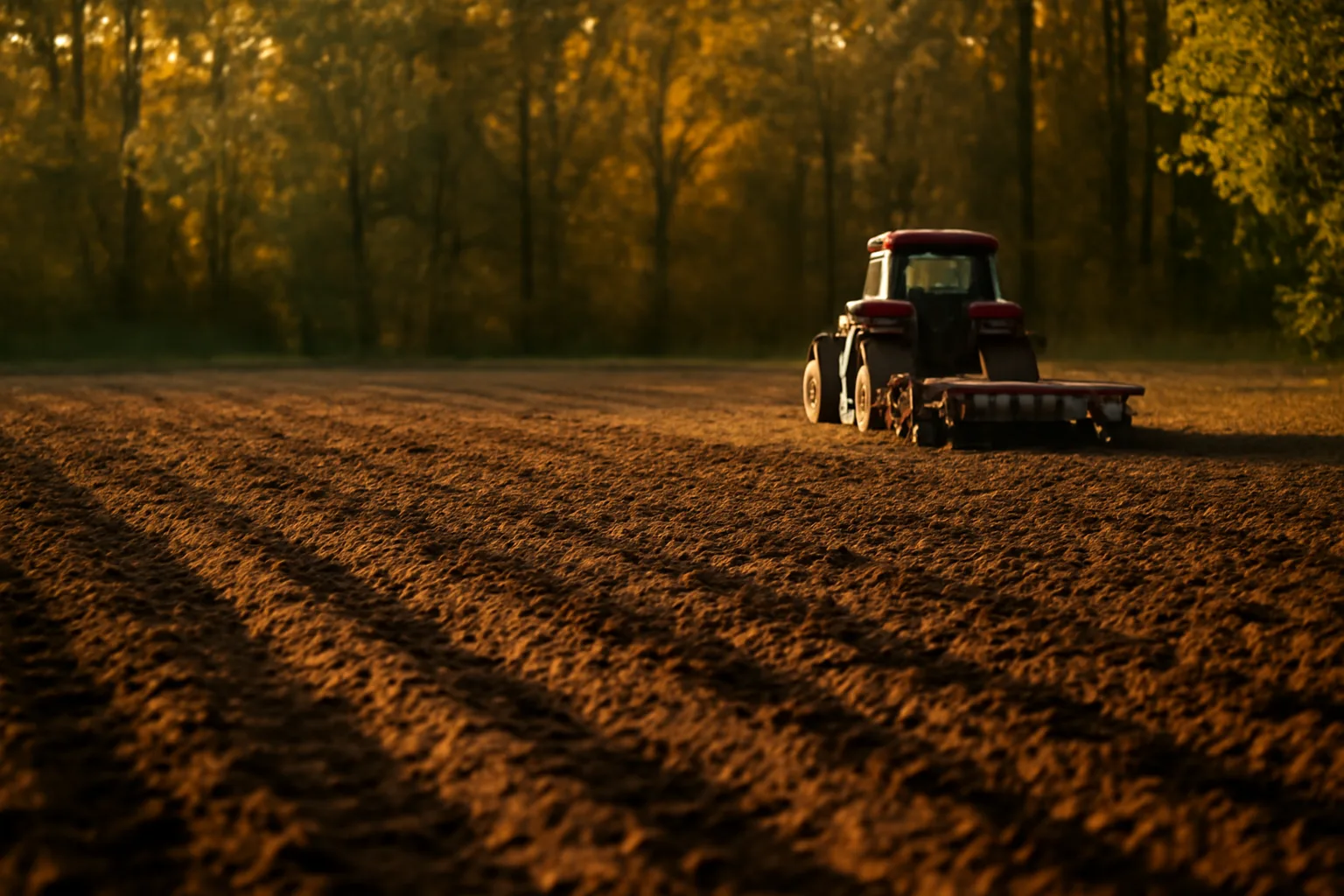
Tilling a food plot means breaking up soil to bury lime and fertilizer, kill existing vegetation, and create loose dirt for seed-to-soil contact. Work the ground 2-3 weeks before planting, till only 3-4 inches deep, and match your seed's depth requirement (clover needs 1/4 inch, oats and sorghum can go 1-2 inches). Test soil first; tilling won't fix pH.
what is a food plot and why does tilling matter
A food plot is a planted patch of ground, usually somewhere between a quarter acre and a few acres, put in specifically to attract and feed deer. It's not a garden and it's not a lawn. Most plots run clover, brassicas like turnips, cereal grains like oats, or annual mixes with sorghum or beans, depending on the season and what a hunter wants deer doing on that property. Tilling is just one way to prepare the seedbed. It breaks up compacted soil, buries old plant residue, and mixes in lime or fertilizer so it's not sitting uselessly on the surface. Conventional tillage speeds the breakdown of organic matter and can improve short-term seedbed conditions, but it also raises erosion risk and burns through soil organic carbon faster than reduced-till or no-till systems. USDA's Natural Resources Conservation Service puts it plainly: healthy soil management principles call for minimizing disturbance because tillage "breaks up soil aggregates" and accelerates the loss of organic matter over time [1]. Here's the honest tradeoff. Tilling gives you a clean, loose seedbed that's easy to plant into, especially if you're converting a weedy field or hard pasture ground. But it also brings weed seeds to the surface where they can germinate right alongside your plot, and on sloped ground it can wash soil (and the fertilizer you just paid for) downhill after a hard rain. If your plot is flat, has decent existing soil structure, and you're not fighting sod, no-till drilling or just broadcasting into a sprayed field often works as well or better.
when should you till a food plot
Till 2 to 3 weeks before your planting date, not the same day. That gap lets the soil settle, lets any turned-up weed seeds germinate so you can spray or till them again, and keeps you from planting into a loose, fluffy seedbed that dries out too fast. Timing also depends on what and when you're planting. For fall plots (clover, brassicas, cereal grains), most of the Midwest and Southeast wants seed in the ground from late July through September, with turnips specifically going in 60 to 90 days before your first hard frost since they need that window to bulb up. For spring/summer plots (soybeans, sorghum, cowpeas), tillage timing shifts to April through June depending on your last frost date. A practical rule: till when soil is moist enough to break apart but not so wet it clumps into bricks. Tilling wet clay soil is one of the fastest ways to ruin a seedbed for the whole season, because those compacted clods don't break back down without more rain and more passes.
how deep should you till a food plot
3 to 4 inches is the sweet spot for most food plot ground. Going deeper doesn't help most seed and actually works against you. It buries small seeds too deep to emerge and dries out the seedbed faster because you've exposed more soil surface to air. Small-seeded species like clover and brassicas want a shallow, firm seedbed and should be planted at 1/4 to 1/2 inch deep, which means light tillage (or none) followed by cultipacking, not deep plowing [2]. Larger seeds like oats, soybeans, and sorghum can handle 1 to 2 inches of planting depth and tolerate slightly deeper tillage. If you're breaking new ground, sod, or heavily compacted soil for the first time, you may need one deeper pass (5-6 inches) with a disc or chisel plow just to get things broken up, followed by a shallower finishing pass before you plant. After that first year, most plots only need surface-level tillage, 2-3 inches, to prep for reseeding.
what equipment do you actually need to till a food plot
For plots under an acre, a tractor in the 25-45 horsepower range with a disc harrow or box blade handles most tilling jobs, plus a cultipacker or drag harrow to smooth and firm the seedbed afterward. ATV/UTV owners can till smaller plots (under a half acre) with pull-behind disc harrows or tiller attachments, though it takes more passes and more patience. A rotary tiller (PTO-driven or ATV-mounted) chops soil finer than a disc and is better for small, weedy plots where you want thorough residue breakdown. A disc harrow is faster for larger acreage and doesn't clog as easily in heavier vegetation, but it leaves a rougher finish that needs a cultipacker pass before planting fine seed. Don't skip the cultipacker or a drag harrow. Loose, fluffy tilled soil that isn't firmed back down loses seed-to-soil contact, which is the single biggest reason food plot seed fails to germinate even when everything else was done right. If you're weighing equipment costs against a no-till approach, it's worth reading up on food plot seed options bred for no-till drilling versus conventional tillage, since some blends perform noticeably better one way or the other.
do you need to till every year
No, and for most established plots you shouldn't. Annual full tillage on the same ground accelerates erosion and organic matter loss, especially on any kind of slope. Reducing tillage frequency and depth is a standard recommendation for protecting soil structure and cutting runoff on cropland, including small-acreage plantings like food plots [1]. A lot of experienced plot managers till heavy the first year to break ground, then shift to light disking or no-till drilling in following years, just enough to knock down old growth and open a seedbed for new seed. Clover plots in particular don't need re-tilling each year at all. Mow them, spray for grass competition, maybe frost-seed more clover into thin spots, and leave the soil structure alone. If your soil test shows you need lime, that's really the only case where a deeper till makes sense repeatedly, since lime needs to be mixed into the top 4-6 inches of soil to correct pH effectively, and surface-applied lime moves down very slowly on its own, often taking a year or more per inch of depth [3].
when to plant food plots for deer
Split it into two seasons. Spring/summer plots (soybeans, sorghum, cowpeas, sunflowers) go in after your last frost date, typically April through June depending on latitude. Fall plots (clover, brassicas, cereal grains, oats) go in from late summer through early fall, generally late July through September across most whitetail range, timed so plants establish before the first killing frost. Your state's cooperative extension office publishes frost date maps and planting windows specific to your county, and that's a far better source than a generic national calendar. When to plant oats for deer follows the same fall logic: 6 to 8 weeks before your first frost, which lands most oats plantings in the August-to-mid-September window depending on region. Oats are a fast grower and heavy fall attractant, but they winterkill in most northern climates once temperatures drop into the teens, so don't expect them to hold through deep winter the way wheat or rye will. When to plant turnips for deer: same fall window as brassicas generally, 60 to 90 days ahead of your first hard frost, because turnips need that time to bulb before deer start hitting them hard once frost sweetens the greens and roots.
what do deer actually prefer to eat in a food plot
Deer's actual favorite foods, according to most whitetail research, aren't food plot crops at all. Natural browse, acorns, and native forbs make up the bulk of a wild deer's diet across most of the year, with agricultural crops and plantings functioning as supplemental or seasonal draws rather than a primary food source. That said, within planted food plots, deer show strong, consistent preference for a handful of species. Do deer eat clover? Yes, heavily. Clover is one of the most consistently preferred food plot forages across whitetail range, valued for its protein content (often 20-30% crude protein in good stands) and long growing season. Do deer like clover compared to other plot options? In most studies and most hunters' practical experience, clover ranks at or near the top, especially during spring and summer when deer need protein for antler growth and lactation. Do deer eat sorghum? Yes, though it's more of a late-season and cover-value crop than a preferred forage. Grain sorghum heads get hit hard once they mature and dry down, and standing sorghum also doubles as thermal and visual cover, which is a real reason people plant it beyond the food value alone. Do deer like honey? This isn't a real food plot question in any agronomic sense. Deer aren't drawn to honey as a forage or attractant, and there's no wildlife research supporting it as a food source. If you've seen this searched, it's likely confusion with mineral or salt-based attractants, which raises its own legal issue: check your state wildlife agency's baiting and feeding regulations before using any mineral, salt, or scent-based attractant, since many states restrict or ban baiting for hunting purposes and rules vary significantly by state.
do you need a soil test before tilling
Yes, every time, before you till or plant anything. Tilling doesn't fix soil pH or nutrient deficiency; it just mixes whatever you add into the soil more evenly. If your soil is too acidic, and a huge share of food plot ground is, tilling in fertilizer without correcting pH first wastes a meaningful chunk of that fertilizer's value, because nutrient availability drops sharply outside the optimal pH range for most food plot crops (roughly 6.0 to 7.0 for clover and brassicas) [2]. A basic soil test through your state land-grant university extension office typically costs $10 to $20 and tells you exact lime and fertilizer recommendations for the crop you're planting, more than a general guess. Your soil test lab is the actual authority here; follow their lime and fertilizer numbers over any generic online recommendation, since local soil chemistry varies a lot even within the same county. If you want a starting point for matching species to your ground and season before you ever fire up the tractor, a Custom Food Plot Plan ($99 one-time) can build out a planting calendar and species mix based on your soil test results, region, and goals, though it's general planning guidance, not a substitute for your soil lab's specific agronomic recommendations.
how do you prep a seedbed after tilling
After tilling, the seedbed needs to be firm, level, and free of big clods before you plant. Skipping this step is where a lot of otherwise good tillage work gets wasted. Run a cultipacker or drag harrow over the tilled ground to break up clods and firm the surface. A good test: walk across the plot and your boot print should sink maybe a half inch, not two inches. If it's still soft and loose, pack it again. Broadcast small seed (clover, brassicas) onto the firmed surface and cultipack again afterward, since these seeds need to sit at or near the surface, not buried. Drill or lightly disc in larger seed (oats, beans, sorghum) to your target depth, then firm the soil over it. Don't fertilize and till on the same day you plant if you can help it. Give it that 2-3 week gap mentioned earlier so the ground settles and any surface-germinated weeds get a chance to show themselves before your crop goes in.
is no-till a better option than tilling for food plots
For a lot of established plots, yes. No-till drilling into existing sod or a sprayed-out field skips the erosion risk, preserves soil structure and organic matter, and often costs less in fuel and equipment wear since you're making one pass instead of two or three tillage passes plus packing. The tradeoff is upfront cost. A no-till drill is a bigger equipment investment than a disc harrow, and renting one isn't available everywhere. For small plots, some hunters skip both tilling and drilling entirely and just spray existing vegetation, broadcast seed, and drag a chain or light harrow over it, which works reasonably well for tougher, larger-seeded species but less reliably for fine seed needing tight soil contact. Reduced and no-till systems generally reduce erosion and improve water infiltration compared to repeated conventional tillage passes, which matters most once you're managing the same acreage year after year [1]. If your plot ground is on any real slope, that erosion risk alone is a strong argument for minimizing how often and how deep you till. For a broader look at how tillage choice fits into overall plot strategy, food plot whitetail planning and deer food plots basics both cover species selection alongside ground prep decisions.
Frequently asked questions
Do deer eat sorghum in food plots?
Yes. Deer eat mature sorghum grain heads, especially in late season once the seed dries down. Standing sorghum also provides thermal and visual cover, which is often as valuable as its food value, especially in open agricultural areas lacking other winter cover.
Do deer eat clover, and is it worth planting?
Yes, clover is one of the most consistently preferred food plot forages for whitetail deer, offering 20-30% crude protein in a good stand and a long growing season from spring through fall. It's widely considered a top perennial choice for food plot managers.
When should you plant deer food plots?
Spring/summer plots (soybeans, sorghum, cowpeas) go in after your last frost, typically April through June. Fall plots (clover, brassicas, oats) go in late July through September, timed so plants establish before your area's first hard frost. Check your state extension office for local dates.
Do deer like clover more than other food plot crops?
In most research and field observation, yes, clover ranks at or near the top of preferred food plot forages, particularly during spring and summer when deer need protein for antler growth and lactation. Preference can shift seasonally toward brassicas or grain once frost hits.
When should you plant oats for deer food plots?
Plant oats 6 to 8 weeks before your area's first fall frost, generally landing in the August to mid-September window across most whitetail range. Oats grow fast and draw deer hard in early fall but usually winterkill once temperatures drop into the teens.
When is the best time to plant food plots for deer overall?
There are two windows: spring (April-June, after last frost) for warm-season crops like beans and sorghum, and late summer to early fall (late July-September) for cool-season crops like clover, brassicas, and oats. Your local extension office frost date map is the most reliable source for exact timing.
When should turnips be planted for deer?
Plant turnips 60 to 90 days before your area's first hard frost. This gives the plant enough time to bulb properly before deer start feeding heavily on the sweetened greens and roots that frost triggers.
What exactly is a food plot?
A food plot is a planted area, usually a quarter acre to several acres, established specifically to attract and provide supplemental nutrition for deer or other wildlife. Common plantings include clover, brassicas, cereal grains, soybeans, and sorghum, chosen based on season and region.
What are deer's favorite foods overall?
Wild deer diets are dominated by natural browse, acorns, and native forbs across most of the year, not planted crops. Within food plots specifically, clover, brassicas, and soybeans rank among the most consistently preferred plantings, especially during their peak growth periods.
Do deer like honey as an attractant?
No, this isn't a real food plot or forage question; there's no wildlife research showing deer are drawn to honey. It may be confused with mineral or salt attractants, which are restricted or banned in some states, so check your state wildlife agency's baiting rules before using any attractant.
How deep should you till before planting a food plot?
Till 3 to 4 inches deep for most food plot ground. Small seed like clover and brassicas needs a shallow, firm seedbed (1/4 to 1/2 inch planting depth), while larger seed like oats and beans tolerates deeper tillage and 1-2 inch planting depth.
Do you need to till a food plot every year?
No. Repeated annual tillage increases erosion and organic matter loss. Most plot managers till heavy the first year to break ground, then shift to light disking or no-till drilling in later years, especially for perennial plots like clover that don't need full reseeding.
What's the difference between tilling and no-till for food plots?
Tilling breaks up soil mechanically to bury lime, fertilizer, and old vegetation, creating a loose seedbed. No-till drills seed directly into existing ground with minimal disturbance, reducing erosion and preserving soil structure, though it requires different (often pricier) equipment.
Sources
- USDA Natural Resources Conservation Service, "Soil Health Principles and Practices": Tillage breaks up soil aggregates and accelerates loss of organic matter compared to reduced or no-till systems
- Mississippi State University Extension, Publication 2111, "Establishing and Managing Wildlife Food Plots": Optimal soil pH for clover and brassica food plots is roughly 6.0 to 7.0, and small seed needs shallow planting depth of 1/4 to 1/2 inch
- University of Missouri Extension, Publication G9101, "Soil Acidity and Liming": Surface-applied lime moves down slowly through soil and lime needs incorporation into the top several inches to correct pH effectively
- Michigan State University Extension, "Understanding White-tailed Deer Nutrition and Food Plots": Natural browse and native forage make up the majority of a wild deer's diet across most of the year, with food plots serving as supplemental or seasonal draws
- USDA Natural Resources Conservation Service, "Crop Rotation and Cover Crop Effects on Soil Erosion": Reduced and no-till systems lower erosion risk and improve water infiltration compared to repeated conventional tillage