Last updated 2026-07-25
TL;DR
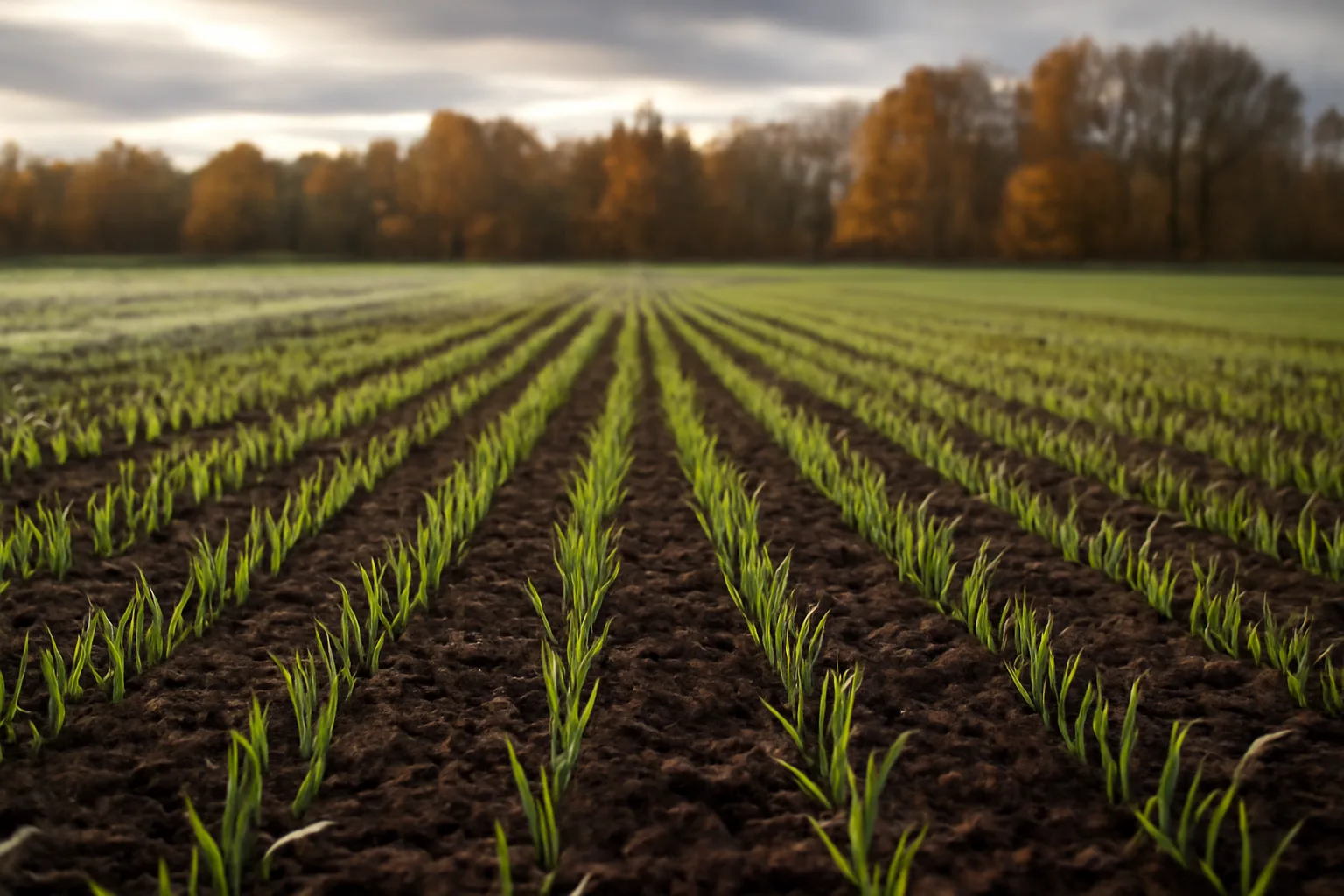
Winter rye (cereal rye) is the most cold-tolerant, easiest food plot seed to grow. Plant 50-120 lbs per acre from late August through October depending on your zone, at pH 5.0-7.0. It germinates fast, feeds deer through winter, and holds soil better than almost anything else you can plant.
what is winter rye food plot seed exactly
Winter rye, also called cereal rye (Secale cereale), is a cool-season grain grass. It is not the same plant as ryegrass (Lolium species), and that mix-up causes a lot of bad plots. Cereal rye grows taller, tolerates colder soil, and germinates at lower temperatures than annual or perennial ryegrass. Farmers have used cereal rye as a cover crop for generations because it grows fast, holds soil through winter, and scavenges leftover nitrogen. Food plotters caught on because it does the same job for deer: quick green-up in fall, tolerance for lousy soil, and forage that stays available even after a hard freeze kills off beans, brassicas leaves, or clover top growth. USDA's plant guide describes cereal rye as "the most winter-hardy of the small grains" and notes it will germinate at soil temperatures as low as 33 to 34 degrees F [1]. That's the whole appeal in one sentence. When oats and other grains give up, rye keeps growing. If you want the bigger picture on where rye fits against clover, brassicas, and blends, the food plot seed overview breaks down the tradeoffs by species.
do deer eat sorghum
Yes, deer eat sorghum, particularly the grain heads once they mature and dry down in fall. Sorghum (grain sorghum or milo) is more commonly planted as a summer annual or as a standing grain crop for late-season cover and food, not as a fall-seeded companion to rye. Deer use sorghum less consistently than corn or soybeans in most regional studies, and preference varies a lot by what else is available on the landscape. It works better as a screening and thermal cover crop with some food value than as a primary attractant. If your main goal is a fall-through-winter forage plot, winter rye or a rye/clover mix does more consistent work than sorghum, which is really a different season, different purpose crop.
do deer eat clover and do deer like clover
Yes, deer eat clover heavily, and most wildlife biologists rank it among the top preferred forages available to food plotters. Clover offers 20-25% crude protein during active growth, which matters most in spring and summer when does are lactating and bucks are growing antlers [2]. The catch: clover goes semi-dormant in cold weather and produces little new growth once temperatures drop into the 40s. That's exactly where rye earns its keep. A lot of experienced plotters overseed a thin or aging clover stand with rye in early fall. The rye germinates fast, gives green forage through the cold months, and the clover comes roaring back in spring after the rye is grazed down or terminated. Land-grant extension research consistently lists white clover and red clover among the highest-preference forages tested in regional deer diet studies [3]. If clover is your long-season base, rye is the fall insurance policy layered on top.
when to plant food plots for deer, generally
| Upper Midwest/Northeast (Zone 3-5) | Late August to mid-September | |
|---|---|---|
| Mid-South/Mid-Atlantic (Zone 6-7) | Mid-September to mid-October | |
| Deep South (Zone 8-9) | October to early November | These are general windows, not guarantees, and local frost dates shift year to year. Check your state extension's planting calendar or the USDA Plant Hardiness Zone Map to nail down your zone before you buy seed. For a full month-by-month breakdown across regions, the deer food plots guide lays out a broader calendar approach. |
Timing depends entirely on what you're planting and where you live. Cool-season plots (rye, oats, clover, brassicas) go in late summer to early fall. Warm-season plots (soybeans, corn, sunn hemp) go in spring after your last frost date. For winter rye specifically, most extension guidance recommends planting 4 to 8 weeks before your area's average first hard frost, so the plant has time to establish a root system and 4-6 inches of top growth before winter dormancy sets in. That translates to roughly: | Region | Winter rye planting window |
how much winter rye seed per acre, and what rate should I use
Broadcast rate for winter rye in food plots typically runs 100-120 lbs per acre if you're broadcasting on prepared, worked ground. Drilled rye can drop to 60-90 lbs per acre because seed-to-soil contact is far better with a drill. Agronomic cover-crop guidance recommends a drilled rate of 1 to 2 bushels per acre (roughly 56-112 lbs, since a bushel of rye weighs 56 lbs) for standard cover crop use [4]. Food plotters broadcasting into rough or unprepped ground often push toward the higher end of that range, or beyond it, to compensate for seed that never makes soil contact and germinates poorly. A rough rule that works in practice: broadcast at 100 lbs/acre if you're not covering seed with a drag or light disking pass, and drill or drop to 70-80 lbs/acre if you're using a no-till drill or covering seed mechanically. Rye is cheap. Usually $15-25 per 50 lb bag depending on the season and your region, so erring a little heavy costs little and buys insurance against a spotty stand.
when to plant oats for deer, and how does that compare to rye
Oats go in the ground on roughly the same fall schedule as rye, generally 45-60 days before your first expected frost, so late August through September in most whitetail range. The difference is winter survival, not planting timing. Oats are less cold-hardy than cereal rye. A hard freeze in the teens or lower will usually kill oat plants outright, while rye keeps growing and will often green back up after a thaw. That's why a lot of plotters blend the two: oats give an early, highly palatable forage that deer often prefer in September and October, and rye takes over as the temperature drops and keeps producing forage into December, January, or later depending on your zone. One caution worth repeating: don't confuse annual ryegrass with cereal rye when you're buying seed. They're sold under similar names, they behave very differently in cold soil, and picking the wrong bag is the single most common rye-related mistake plotters make.
when to plant turnips for deer
Turnips, like other brassicas, are planted in mid to late summer, typically 80-90 days before your first expected killing frost, since they need that lead time to bulb out and reach full size. That usually means late July through August in most of the whitetail's range, earlier than rye and oats. Turnip leaves are palatable from germination on, and deer often hit the foliage hard in early fall. The bulbs themselves become more attractive after a couple of hard frosts convert starches to sugars, which is why brassica plots often get ignored in October and then hammered in December. If you want a plot that layers foliage attraction, cold-hardened bulb attraction, and a cereal grain backbone all in one field, a rye/oat/brassica blend spread across a planting window from late July through September is a common and effective approach. The main risk with turnips and other brassicas is soil pH. Most extension guidance puts optimum brassica pH at 6.0-7.5, and yields drop hard below pH 5.5 [5]. Get a soil test before you commit turnip seed to a field.
what is a food plot, in plain terms
A food plot is a planted area, usually somewhere between a quarter-acre and several acres, seeded specifically to attract and feed deer or other wildlife. It's not a lawn, and it's not farming for profit. The goal is forage value, timing, and placement relative to bedding and travel corridors. Food plots generally fall into two buckets: annual plots replanted every year (brassicas, cereal grains, warm-season annuals like beans and peas) and perennial plots that persist for 3-5 years with maintenance (clover, chicory, alfalfa). Most serious plot programs run both, using perennials as a stable base and annuals like rye to fill seasonal gaps or refresh worn-out ground. State wildlife agencies regulate food plots differently depending on whether they're considered supplemental feeding or agricultural planting. Some states treat planted food plots as legal hunting-adjacent land use with no restriction, while others draw lines around proximity to stands, timing, or whether the plot counts as "baiting" under state law. Always check your state wildlife agency's regulations before you plant near a stand, because rules genuinely vary and violating a baiting statute can cost you a season or worse.
what are deer's favorite foods, ranked by real preference data
| Early fall | Oats, soybean leaves, brassica tops | |
|---|---|---|
| Late fall/frost | Turnip/radish bulbs, rye, wheat | |
| Winter | Standing corn, rye, chicory (where it survives) | |
| Spring/summer | Clover, alfalfa, chicory | This isn't gospel. Local ag fields, mast crops, and hunting pressure all shift what deer actually choose on your ground in a given year. |
Deer preference isn't static. It shifts by season, region, and what's locally available, but extension-run preference trials give us decent ranking data to work from. White clover, soybeans (as a growing forage), and cool-season brassicas consistently rank near the top of regional food plot preference studies [3]. Acorns, when available, often outcompete planted forage entirely; deer are opportunistic and will hit a good mast year over almost any food plot. Among planted small grains, oats generally beat wheat and rye in raw palatability tests, though rye's cold tolerance often wins the season-long argument even if deer prefer oats on any single day both are available [4]. Here's a rough seasonal ranking most plot managers work from: | Season | Typically most attractive |
do deer like honey, and does it belong in a food plot conversation
Deer don't naturally seek out honey in the wild, and there's no credible wildlife research suggesting honey is a meaningful deer attractant or forage source. Deer are herbivores built around a rumen system for digesting plant material, not for processing concentrated sugars like honey. Some commercial attractant products use sweet scents or syrups (including honey-based or molasses-based mixes) as scent-based lures rather than nutritional forage, and anecdotal reports of deer licking or investigating sweet residues exist. That's a scent-curiosity behavior, not evidence deer seek out honey as food. If your goal is nutrition and consistent attraction across a season, real forage crops (rye, clover, brassicas, beans) do far more work than any sweetener product, and they don't run into the baiting-law gray area that scent and feed attractants sometimes do in states with strict supplemental feeding rules.
how do I prep soil and fertilize a winter rye plot
Rye is famously forgiving. It's one of the few food plot species that will produce a usable stand on poor, acidic, or compacted soil where clover or alfalfa would fail outright. That doesn't mean skip the soil test, it means rye gives you more margin for error while you're building better ground. Rye tolerates soil pH as low as 5.0, though it performs best in the 6.0-7.0 range like most food plot species [1] [5]. If your soil test comes back low, lime takes months to fully react in the soil, so apply it as early as you can, ideally a full season ahead if you're working toward a long-term perennial plot later. Nitrogen is where rye actually rewards fertilizer investment. Extension nitrogen guidance for fall-seeded cereal rye grain crops generally runs 20-30 lbs of actual nitrogen per acre at planting, with additional nitrogen in spring for grain production goals (food plots usually skip the spring application since you're terminating or letting deer graze it down before then) [4]. A simple starter fertilizer blend, something like 19-19-19 or a soil-test-matched blend at 200-300 lbs per acre, covers most food-plot-scale rye plantings reasonably well. Your soil test lab is the real authority here, not a blanket internet number. Follow their specific lime and fertilizer recommendation over any general rate listed in an article, this one included.
can I mix winter rye with other seeds, and should I
Yes, and most experienced plotters do exactly this rather than planting rye alone. Rye's biggest limitation as a solo planting is protein: it runs 12-15% crude protein at best, well below clover's 20-25%, and deer that rely on it alone through a hard winter aren't getting an ideal diet [2] [3]. Common, well-tested combinations: Rye plus clover: rye nurses the clover through its first fall, protecting young clover seedlings from erosion and weed pressure, then gets grazed or mowed down as clover takes over in spring. Rye plus oats plus brassicas: staggers attraction across the whole fall/winter window, oats first, brassica bulbs after frost, rye carrying the plot through the coldest stretch. Rye plus winter peas or crimson clover: bumps protein content significantly since legumes fix their own nitrogen and add real crude protein to the blend. The deer food plot seed resource covers blend ratios and seeding rates in more depth if you're building a custom mix rather than buying a bagged blend.
common mistakes with winter rye food plots
The single biggest mistake is buying annual ryegrass by accident. It's sold in similar bags, sometimes at similar prices, and it behaves nothing like cereal rye in cold soil. Read the bag. It should say cereal rye, winter rye, or Secale cereale, not ryegrass or Lolium. Second mistake: planting too late. Rye germinates in cold soil, but it still needs a few weeks of real growing time before hard winter to build a root system worth anything. Planting into late October in a Zone 5 climate leaves you with a thin, weak stand that struggles through winter instead of thriving in it. Third: skipping the soil test because "rye grows anywhere." It does grow on poor soil, but it grows a lot better on decent soil, and a soil test costs $10-20 through most state extension labs, cheap insurance against wasting a bag of seed on ground that needed lime six months ago. If you want a plan built around your specific zone, soil test results, and acreage instead of general rules of thumb, that's exactly what the $99 Custom Food Plot Plan is built to do, one-time cost, no subscription, built off the numbers you already have in hand from your soil test and your property.
winter rye vs oats vs clover: quick comparison
| Trait | Winter rye | Oats | White clover | |
|---|---|---|---|---|
| Cold tolerance | Excellent, survives well below 0F | Poor, killed by hard freeze | Semi-dormant in cold, survives | |
| Crude protein | 12-15% | 12-16% early growth | 20-25% | |
| Planting window | Late Aug-Oct (zone dependent) | Late Aug-Sept | Spring or late summer | |
| Soil pH tolerance | Down to 5.0 | Similar, prefers 6.0+ | Needs 6.0-7.0 for best stands | |
| Typical seeding rate | 60-120 lbs/acre | 80-100 lbs/acre | 6-10 lbs/acre | |
| Lifecycle | Annual | Annual | Perennial, 3-5 years | Rye wins on toughness and simplicity. Clover wins on nutrition and season length. Oats sit in between, more palatable early, less durable late. Most solid plot programs use all three in some combination rather than picking one and calling it done. For a wider comparison across every major species, the domain food plot seed guide runs the full lineup side by side. |
Frequently asked questions
Do deer eat sorghum?
Yes, deer eat sorghum grain once it matures and dries in fall, though it's used less often as a primary fall food plot crop than corn or soybeans. It works best as a summer-planted standing grain and cover crop rather than a fall forage substitute for rye or clover.
Do deer eat clover, and do deer actually like it?
Yes, clover ranks among the highest-preference forages in regional wildlife studies, running 20-25% crude protein during active growth. Deer favor it heavily in spring and summer. It slows or goes semi-dormant in cold weather, which is why many plotters overseed clover stands with winter rye for fall and winter coverage.
When should I plant food plots for deer?
Cool-season plots (rye, oats, clover, brassicas) go in from late summer through mid-fall depending on your zone, generally 45-90 days before your first frost. Warm-season plots (soybeans, corn) go in spring after your last frost. Check your state extension's local planting calendar since frost dates shift by region and year.
When should I plant oats for deer?
Plant oats roughly 45-60 days before your area's first expected frost, generally late August through September in most whitetail range. Oats are less cold-hardy than winter rye and typically die back after a hard freeze, so many plotters pair them with rye for season-long coverage.
When should I plant turnips for deer food plots?
Plant turnips 80-90 days before your first expected killing frost, usually late July through August. They need that lead time to bulb properly. Leaves attract deer from germination, and bulbs become more palatable after a couple hard frosts convert starches to sugars.
What is a food plot exactly?
A food plot is a planted area, from a quarter-acre to several acres, seeded specifically to attract and feed deer through targeted forage. It falls into annual plots (replanted yearly, like rye or brassicas) and perennial plots (lasting 3-5 years, like clover), often used together in one property plan.
What are deer's favorite foods overall?
Acorns typically beat any planted forage when available in a good mast year. Among planted crops, white clover, soybean forage, and cool-season brassicas rank highest in regional preference studies. Preference shifts by season: oats and beans lead early fall, frosted brassica bulbs and rye lead late fall and winter.
Do deer like honey?
No credible wildlife research shows deer seek out honey as forage. Deer are herbivores built to digest plant fiber, not concentrated sugar. Some scent-based attractant products use honey or molasses as a lure scent, but that's curiosity behavior, not nutritional preference, and it doesn't replace real forage crops.
How much winter rye seed do I need per acre?
Broadcast winter rye at 100-120 lbs per acre on prepared ground. If you're drilling it, 60-90 lbs per acre is enough since seed-to-soil contact is much better. Standard agronomic guidance recommends 1-2 bushels per acre for drilled cereal rye, and a bushel weighs 56 lbs.
What's the difference between winter rye and ryegrass for food plots?
Winter rye (cereal rye, Secale cereale) is a cold-hardy grain that germinates in soil as cold as 33-34F and survives hard winters. Ryegrass (Lolium species) is a different, less cold-tolerant turf and forage grass often confused with it on seed bags. Buying the wrong one is the most common food plot mistake.
Can winter rye grow in poor or acidic soil?
Yes, better than almost any other food plot species. Cereal rye tolerates soil pH as low as 5.0, though it performs best between 6.0 and 7.0. It's still worth soil testing and liming toward that optimal range, since rye yields and tonnage improve substantially on corrected soil even though it will survive on poor ground.
Should I mix winter rye with clover or plant them separately?
Mixing works well. Rye protects young clover seedlings from erosion and weed competition through fall and winter, then gets grazed down or mowed in spring as the clover stand matures. This is a common, well-tested combination rather than a fringe technique.
Sources
- USDA NRCS Plant Guide: Cereal Rye: Cereal rye is the most winter-hardy small grain and germinates at soil temperatures as low as 33-34F
- USDA NRCS Plant Guide: White Clover: White clover provides high crude protein forage during active growth
- Oklahoma State University Extension, Food Plots for White-tailed Deer (NREM-9008): White clover and other legumes rank among the highest-preference deer forages in regional studies
- USDA NRCS Cover Crop Chart, Cereal Rye: Recommended seeding rates and nitrogen guidance for cereal rye as a cover crop
- University of Georgia Extension, Brassica Forage Production: Brassicas need soil pH 6.0-7.5 for optimum yield and decline sharply below pH 5.5