Last updated 2026-07-25
TL;DR
Walmart carries some usable food plot seed (Whitetail Institute, Mossy Oak BioLogic bags, plain oats and clover) alongside garden-variety seed that isn't bred for deer ground. Check the tag for species, purity, and germ date before buying. It can work fine for a budget plot if you match seed to your soil and planting window, but it won't fix bad soil pH or a bad site.
Does Walmart actually sell real food plot seed?
Yes, though the selection varies a lot by store and by season. Most Walmart garden centers stock a handful of bagged food plot products from Whitetail Institute or Mossy Oak BioLogic, usually clover, chicory, or brassica blends in 4 to 10 pound bags. Alongside those you'll find plain agricultural seed: winter wheat, oats, annual ryegrass, and sometimes crimson clover or turnip seed sold as garden or pasture stock rather than a branded "food plot" product. The branded bags cost more per pound but come with a species list and a planting rate on the tag. The plain ag seed is cheaper but you're on your own for rates and timing. Neither is inherently better agronomically. A pound of Austrian winter pea is the same plant whether it's in a $40 blend bag or a $12 farm store bag with a pea on the label. What you won't reliably find at Walmart is site-specific seed selection for your exact soil type, or fresh inventory turned over fast. Big box garden centers get seasonal seed shipments and then sit on leftover inventory. Check the germination test date on the tag. Cool-season legume and brassica seed loses germ rate fast once it's a year or two old and stored in a warm store.
What is a food plot, exactly?
A food plot is a planted area on hunting land, usually a half acre to a few acres, seeded with forage that deer and other wildlife will eat and that also draws them into range or holds them on the property longer. It's part agriculture and part habitat management. Most plots fall into two categories: annuals you replant every year (oats, brassicas, cereal grains) and perennials that come back for 3 to 5 years with mowing and fertilizer (clover, alfalfa, chicory blends). A lot of hunters run both, a perennial clover plot for spring and summer, and an annual brassica or cereal grain plot timed to peak right before gun season. A plot only works as well as the ground under it. State extension programs that run food plot demonstration work, like Mississippi State's deer program, consistently point back to soil testing and liming as the step that determines whether the rest of the plan pays off [1]. Buying good seed and skipping the soil test is the most common way hunters waste money on a plot.
When should you plant food plots for deer?
Timing splits into two windows almost everywhere in whitetail country: a spring/summer window for perennials and warm-season annuals, and a late summer/early fall window for cool-season annuals like brassicas, cereal grains, and clover overseeding. Spring plots (clover, chicory, soybeans, cowpeas) generally go in after your last frost date, which ranges from early April in the Deep South to late May or early June in the northern tier and Canada border states. Fall plots (brassicas, wheat, oats, winter peas) go in 60 to 90 days before your average first killing frost, timed so the plants mature right as hunting season opens. Your state's cooperative extension frost date tables or the Whitetail Institute planting date charts by region are the fastest way to nail down your specific window, since a single national date is close to useless when you compare zone 4 in Minnesota to zone 8 in Georgia. If you want a planting calendar built around your actual zip code and soil test, that's exactly what a food plot whitetail planning approach is built to solve rather than guessing off a bag tag written for the whole country.
When should you plant oats for deer food plots?
Oats go in the ground in late summer to early fall in most whitetail range, roughly 6 to 8 weeks before your first frost, so the plants get real leaf growth before cold slows them down. In the North (zones 3-4) that's often mid-August through early September. In the transition zone (zones 5-6) it's early to mid-September. In the Deep South (zones 7-8) growers often wait until late September or October since summer heat will burn young oats. Oats are a cool-season annual grass. They germinate fast, usually within 5 to 10 days in warm soil, and deer hit them hard in the first 6 to 8 weeks after emergence while the leaves are still tender. They winterkill in most of the northern half of the country once temps drop into the low teens or single digits, so oats are really an early-to-mid season food source, not a plot that carries deer through January in cold climates. A lot of hunters mix oats with a brassica like forage rape or a cereal grain like winter wheat in the same planting. The oats give you fast tonnage and early attraction, the wheat or brassica carries the plot later into the season after the oats die back.
When should you plant turnips for deer?
Turnips go in 80 to 100 days before your first expected frost, which for most of the whitetail's range lands somewhere between late July and early September. Plant too early and the heat and weeds choke them out before they bulb. Plant too late and they won't build a root before cold shuts down growth. Turnips are a brassica, and the plant does something useful for a fall/winter plot: deer often ignore the leaves early in the season and then switch hard to eating both the leaves and the root bulb after a few frosts convert starches to sugars, making the plant taste sweeter. That's why turnip plots often look untouched in October and get hammered in December. Seeding rate matters more than people think. Most turnip blends call for 4 to 6 pounds per acre broadcast, and going heavier doesn't help; overcrowded turnips make small, skinny roots. Turnips also need a fairly fine, firm seedbed since the seed is tiny (roughly 150,000 seeds per pound) and can't push through clods or thick residue.
Do deer eat sorghum?
Yes, deer will eat sorghum, particularly the grain heads once they mature, and sorghum is planted in some regions as both a food source and a screening/cover crop. But it's not a top-tier attractant compared to soybeans, clover, or brassicas, and most food plot programs use it more for its standing cover and drought tolerance than as the main draw. Grain sorghum and forage sorghum are both warm-season crops planted after soil temps hit 60-65°F, similar timing to corn. Deer browse the young leaves some, but the real value shows up late in the season when the grain heads dry down and other food sources have played out, similar to how deer use standing corn. If your goal is maximum deer attraction on a small acreage, sorghum usually isn't the first choice. If you're working larger acreage and want a food source that also blocks wind and sightlines for a bedding area, sorghum earns its place in the mix. It's drought-tough too, which matters in dry years when clover and beans struggle.
Do deer eat and like clover?
Yes, clover is one of the most consistently preferred food plot forages for whitetail deer across nearly every region of the country, and it's the single most planted perennial food plot species in the U.S [2]. Both white clover (Dutch white, ladino) and red clover work, with white clover generally more heavily grazed and more grazing-tolerant, meaning it holds up better under constant deer pressure. Clover's appeal comes down to protein and digestibility. Good clover stands run 20-30% crude protein during active growth, comparable to a lot of commercial deer feed formulations, and deer will use a healthy clover plot from spring green-up through fall, with usage dropping off once a hard frost knocks growth back for the season. The catch with clover is that it's a perennial that needs decent soil pH (most extension guidance calls for 6.0-6.5 for clover to thrive) and it can't compete with weeds if you skip mowing and don't control grass encroachment. A poorly maintained clover plot turns into a fescue and broadleaf weed patch within two seasons. If you're deciding between clover and an annual blend for your first plot, this is the tradeoff: clover is more work up front (soil prep, lime, inoculated seed) but costs less per year over a 3 to 5 year stand life once it's established. For species comparisons across clover, brassicas, and grain options, see deer food plot seed.
What are deer's overall favorite food plot foods?
| Soybeans (forage type) | Summer | 25-30% | |
|---|---|---|---|
| White clover | Spring-fall | 20-30% | |
| Brassicas (turnip, rape) | Late fall-winter | 15-20% (bulb lower) | |
| Cereal grains (oats, wheat) | Early fall | 12-20% | |
| Corn/grain sorghum | Winter (standing grain) | 8-10% | Protein numbers vary with soil fertility and plant maturity, so treat these as ranges, not guarantees for your specific plot. |
There's no single universal favorite, deer preference shifts by region, season, and what's already growing wild nearby, but soybeans, clover, and brassicas consistently rank at the top of preference studies and extension forage trials. Acorns beat almost any planted food plot crop when they're dropping heavy, which is why plots tend to get hit hardest in years with a poor acorn crop. A widely cited forage preference trial from the Noble Research Institute and various university deer programs ranks soybeans and cowpeas among the highest-preference summer forages, with whole clover blends close behind, and brassicas taking over as the top preference once cold weather sweetens them [3]. Corn and grain sorghum rank lower for direct browse preference but score high for late-season standing food value. Here's a rough breakdown of what shows up most often in preference research and extension trial data: | Forage type | Season of peak use | Typical crude protein |
Do deer like honey, and does it matter for food plots?
No, deer don't naturally forage for honey and it has no real place in food plot planning. Deer are herbivores; they eat browse, forbs, grasses, and mast, not insect products. Honey shows up in hunting forums mostly tied to homemade mineral licks or scent/attractant mixes, not planted forage. If you've seen "honey" mentioned near deer hunting content, it's almost always in the context of commercial mineral or attractant products that include sugar or molasses, not an actual food plot input. Molasses and sugar-based attractants raise a separate issue: many states classify placing feed, minerals, or attractants on the ground as baiting, and it's regulated or banned outright during hunting season in a lot of jurisdictions. Check your state wildlife agency's baiting and feeding regulations before using any mineral, salt, or sweetened attractant product near a stand or plot. Rules vary heavily. Some states ban baiting for deer entirely (Ohio prohibits hunting over bait, per the Ohio Department of Natural Resources hunting regulations [4]), others allow it with restrictions on distance and visibility, and a growing number restrict mineral/feed sites due to Chronic Wasting Disease transmission concerns, since concentrating deer at a feed or mineral site increases nose-to-nose contact [5].
Walmart seed versus farm store versus food plot brands: what's the real difference?
| Walmart garden center | Small budget plots, quick pickup, oats/wheat/plain clover | Old stock, thin species selection, no rate guidance on plain seed | |
|---|---|---|---|
| Farm/co-op store | Buying in bulk, straight ag seed, building custom blends | Need to know your own rates and inoculant needs | |
| Specialty food plot brands | Pre-inoculated blends, regionally formulated mixes, clear rate charts | Higher cost per pound | If you're building a full plot plan and want the blend, rate, and timing matched to your zip code and soil test rather than picking off a shelf tag, that's the kind of legwork a $99 Custom Food Plot Plan is built to do, species selection and calendar dialed to your specific ground instead of a national-average bag label. |
The practical differences come down to species purity, seed treatment, and freshness, not some hidden quality gap in the seed itself. A pound of ladino clover germinates the same whether it came from a big box store, a farm co-op, or a specialty food plot seed company, as long as the seed is viable and the bag is accurately labeled. Where the brands earn their markup: pre-mixed blends save you from buying five separate species and calculating your own seeding rate, some blends include a seed coating or inoculant already applied (legumes need rhizobium inoculant to fix nitrogen, and pre-inoculated seed is genuinely a time-saver), and specialty brands tend to test and rotate stock faster so you're less likely to get 3-year-old seed with a dead germ rate. Farm and co-op stores usually sell straight agricultural seed, which is often the best value per pound if you know your rates and are comfortable building your own blend or buying inoculant separately. The USDA's seed certification and labeling standards require that bags disclose the crop name, purity percentage, and germination percentage on the tag, so you can compare any bag against any other bag using the same numbers regardless of brand [6]. Here's the honest breakdown for someone standing in an aisle deciding what to grab: | Source | Best for | Watch for |
Can Walmart seed work if your soil hasn't been tested?
It can grow something, but you're gambling on pH and fertility you don't actually know. Skipping a soil test is the single biggest reason food plots underperform regardless of what seed bag it came from. Clover and brassicas both want soil pH in the 6.0-6.5 range for good nutrient uptake; below pH 5.5, phosphorus and other nutrients get locked up in the soil and become unavailable to the plant no matter how much fertilizer you spread [7]. A basic soil test through your state land-grant extension office (most run $10-20 per sample) tells you your current pH, phosphorus, potassium, and organic matter, and gives you a lime and fertilizer recommendation specific to your dirt. Your soil test lab is the actual authority here, not a bag tag or a blog post; follow their lime and fertilizer numbers over generic rate charts. If you plant Walmart clover seed into soil sitting at pH 5.0 with no lime applied, don't expect the stand to thrive even if the seed itself was perfectly good. Lime takes months to fully react in soil too, so testing in late winter or early spring ahead of a fall planting gives lime time to work before seed goes in the ground.
What equipment do you actually need to plant a Walmart seed food plot?
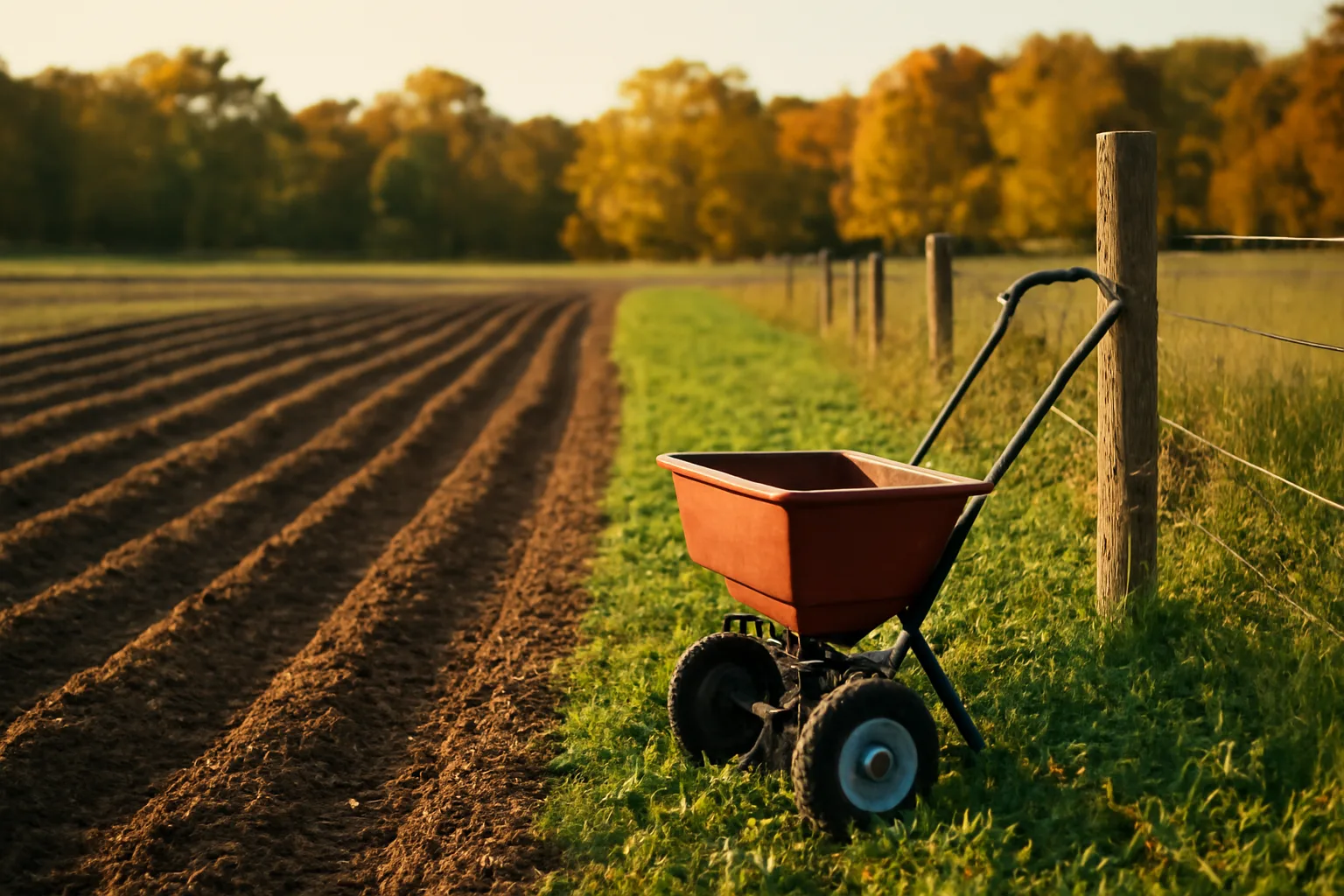
For a small plot (under an acre), you can get by with a hand or tow-behind broadcast spreader, a rake or drag harrow to work seed into loosened soil, and a way to mow or spray existing vegetation before planting. None of that requires a tractor. For brassicas and clover, seed-to-soil contact matters more than depth; both are tiny seeds that should sit at or near the surface and get lightly covered or cultipacked, not buried an inch deep. Oats and cereal grains want slightly more depth, roughly 1 to 1.5 inches, and do better drilled or disked in than just broadcast on bare ground. A lot of small-plot hunters run a UTV or ATV with a tow-behind disc and a broadcast spreader, which handles up to a few acres fine. If you're working larger acreage or heavier ground, a tractor with a disc, cultipacker, and drill starts paying for itself. Equipment choice matters less than most people think though; a $40 hand spreader and a rake, used correctly on well-prepped ground with the right seed and timing, will outperform a full tractor setup on a badly timed, unlimed plot every time.
How do you pick between clover, oats, brassicas, or a blend for your first plot?
Start with your hunting calendar and your soil test, not the prettiest bag on the shelf. If you want a food source that's productive from spring through fall and you're willing to maintain it for several years, clover is the strongest perennial choice and the most forgiving once established. If you want a plot timed to peak right as gun season opens and you're fine replanting every year, an oats/brassica blend planted in the 80-100 day-before-frost window is the standard play. If you're brand new to plots and unsure what your ground can support, a simple two-plot strategy covers most bases: a perennial clover plot for spring/summer plus mineral-site legality checks in your state, and an annual brassica/cereal grain plot for fall. That combination shows up across most university extension food plot guides for a reason, it spreads your food availability across the calendar instead of betting everything on one window [1]. For a deeper species-by-species comparison including seeding rates and regional notes, deer food plots and food plot seed both break down blend options by zone. And if you'd rather skip the guesswork entirely, a soil-test-based plan (like the $99 build at /plot-plan-builder) matches species and planting dates to your specific property instead of a generic bag label.
Frequently asked questions
Do deer eat sorghum planted in food plots?
Yes. Deer browse young sorghum leaves some and eat the mature grain heads heavily late in the season, similar to standing corn. It's not a top attractant compared to soybeans or clover, but it's drought-tolerant and doubles as screening cover, which makes it useful on larger acreage plots.
Do deer eat and prefer clover over other food plot crops?
Deer strongly prefer clover, and it's the most widely planted perennial food plot forage in the U.S. White clover (ladino, Dutch white) generally holds up to grazing pressure better than red clover. Good stands run 20-30% crude protein, which is why deer return to healthy clover plots from spring through fall.
When is the best time to plant food plots for deer?
Perennials and warm-season annuals go in after your last spring frost (April in the South, late May to June in northern states). Fall annuals like brassicas, oats, and wheat go in 60-100 days before your first fall frost so they mature right as hunting season starts. Exact dates depend on your USDA hardiness zone.
When should you plant oats for a deer food plot?
Plant oats 6 to 8 weeks before your first fall frost, roughly mid-August in northern states, early-to-mid September in the transition zone, and late September to October in the Deep South. Oats germinate in 5-10 days and give fast early-season tonnage but typically winterkill once hard freezes set in.
When should turnips go in the ground for deer plots?
Plant turnips 80-100 days before your expected first frost, generally late July through early September depending on your region. Turnips need that lead time to build a bulb before cold weather. Deer often ignore the leaves early and switch to eating both leaves and roots after a few frosts sweeten the plant.
What is a food plot, in simple terms?
A food plot is a planted area, often a half acre to a few acres, seeded with forage deer will eat, used to attract and hold deer on hunting property. Plots are either annuals replanted yearly (oats, brassicas) or perennials that persist 3-5 years with maintenance (clover, chicory blends).
What is deer's overall favorite food plot forage?
There's no single universal favorite; preference shifts by season and region. Soybeans and cowpeas rank highest in summer forage trials, clover stays a top pick spring through fall, and brassicas take over as the top preference in late fall and winter once frost sweetens them. Acorns beat any planted crop when they're falling heavy.
Do deer like honey or sweetened attractants?
Deer don't naturally forage for honey; it has no real role in food plot planning since deer eat plant material, not insect products. Sweetened mineral or attractant products (often molasses-based) are a separate category from planted forage, and many states regulate or ban placing them as illegal baiting during hunting season.
Is Walmart food plot seed actually good enough to use?
It can work fine for budget plots, especially the branded Whitetail Institute or BioLogic bags Walmart carries. Check the tag's germination test date since garden center stock can sit for a season or two. Plain agricultural oats, wheat, and clover sold there are the same species you'd buy at a farm store, just without rate guidance.
Do I need a soil test before planting Walmart seed?
Yes, strongly recommended. Clover and brassicas need soil pH around 6.0-6.5 to use fertilizer efficiently; below pH 5.5, phosphorus becomes locked up and unavailable regardless of seed quality. A basic land-grant extension soil test runs $10-20 and gives you a lime and fertilizer recommendation specific to your ground.
What's the difference between Walmart seed and specialty food plot brands?
Mostly blend convenience and freshness, not seed quality itself. Specialty brands pre-mix species, apply legume inoculant, and rotate stock faster. Plain seed from Walmart or a farm store is often cheaper per pound if you're comfortable calculating your own seeding rates and buying inoculant separately for legumes.
Can I plant a food plot with just a hand spreader and no tractor?
Yes, for plots under an acre. A hand or tow-behind broadcast spreader, a rake or light harrow for seed-to-soil contact, and a way to knock down existing vegetation first will get a small clover, oat, or brassica plot in the ground. Larger acreage benefits from a disc, cultipacker, and drill.
Sources
- Mississippi State University Extension, Deer Management Program food plot guidance: Soil testing and liming determine whether food plot planting pays off
- Purdue University Extension, Forages for Wildlife Food Plots: Clover is among the most widely planted and preferred food plot forages
- Noble Research Institute, Food Plots for White-tailed Deer: Soybeans, cowpeas, clover, and brassicas rank among top forage preferences by season
- Ohio Department of Natural Resources, Hunting Regulations: Ohio prohibits hunting deer over bait
- USDA Animal and Plant Health Inspection Service, Chronic Wasting Disease: Concentrating deer at feed or mineral sites increases disease transmission risk
- USDA Agricultural Marketing Service, Federal Seed Act regulations: Federal seed labeling standards require disclosure of purity and germination percentage on seed bag tags
- University of Georgia Extension, Soil Testing for Wildlife Food Plots: Soil pH below 5.5 locks up phosphorus and limits nutrient availability for food plot crops