Last updated 2026-07-25
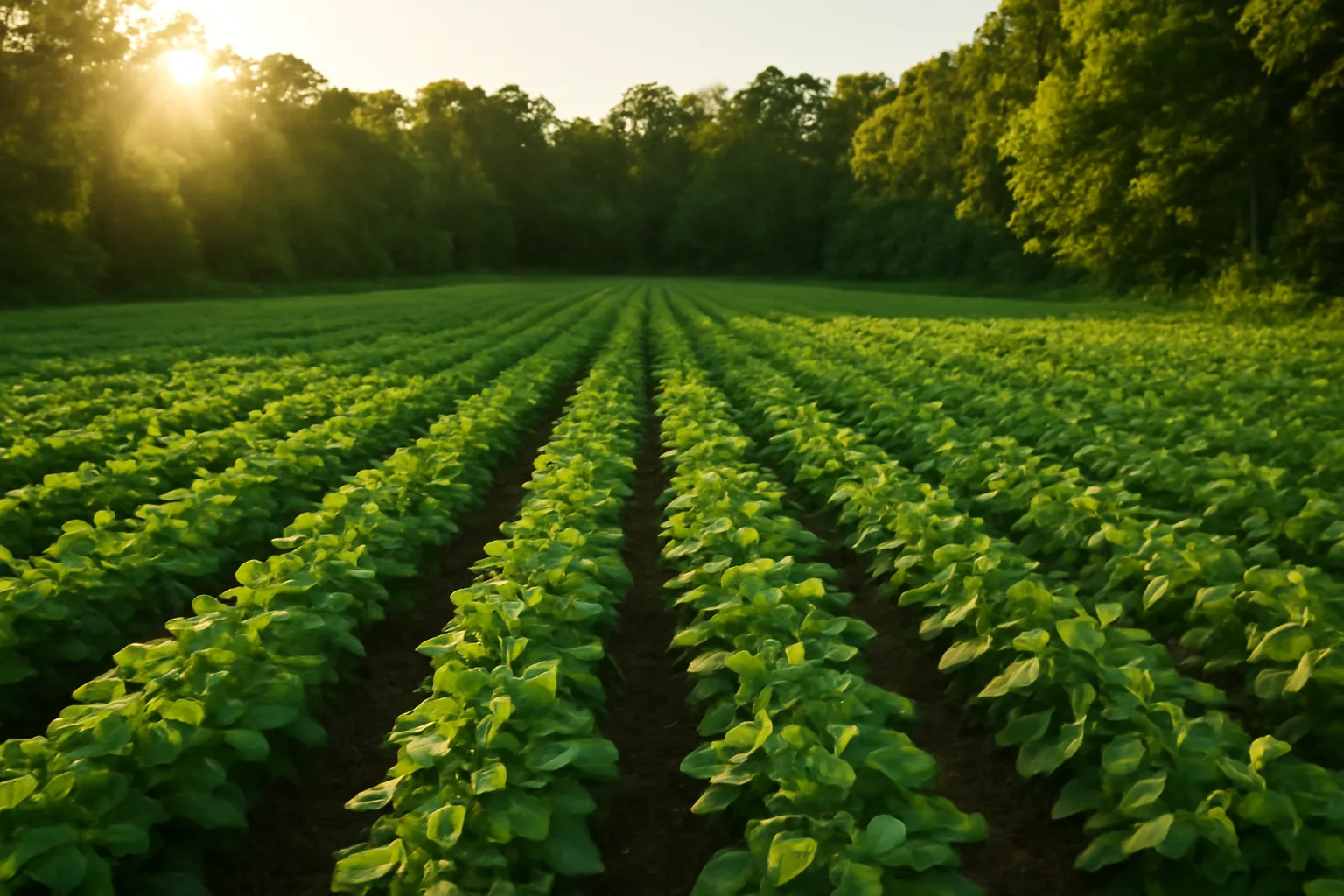
TL;DR
The best summer deer food plots center on high-protein annuals like forage soybeans, iron clay cowpeas, and lablab, planted after soil temps hit 65°F, alongside perennial clover that's already up and growing. These give deer the protein they need for antler growth and lactation when natural browse is thin and hot.
what is a food plot, exactly
A food plot is a planted patch of forage on your land, usually somewhere between a quarter acre and several acres, grown specifically to feed deer and other wildlife rather than to harvest for market. It's agriculture, just with a different customer. Most hunters run two kinds side by side. Perennial plots (clover, chicory, alfalfa) come back for two to five years off one planting and handle mowing and light traffic well. Annual plots (soybeans, cowpeas, brassicas, cereal grains) get replanted every year but let you tailor the seed to the season, whether that's high-protein summer forage or a sugar-loaded fall attractant. Soil, sunlight, and rainfall decide whether a plot produces anything worth eating. A five-acre plot on gravel with a 5.5 pH will lose to a half-acre plot on good ground with lime and fertilizer applied on schedule, every time. That's not a marketing line, it's just how agronomy works whether the crop is soybeans for a grain elevator or soybeans for a deer herd. Before you plant anything, check your state's baiting and feeding rules. Standing food plots are legal nearly everywhere, but some states draw a hard line between a growing crop and piled or broadcast feed, and the definitions vary by state wildlife agency. Michigan, for example, regulates baiting and feeding of deer under its own wildlife conservation order, separate from ordinary farming and food plot activity [1]. Read your state's current regulation before you plant near a stand or add any supplemental feed.
why plant a food plot in summer at all
Summer is the nutritional low point of the year for whitetails in a lot of the country, even though the woods look green. Native browse is often low in protein by mid-summer, and does are lactating while bucks are pushing antler growth, both of which cost real protein. Research on white-tailed deer nutrition has generally found that bucks need forage in the range of 16 percent crude protein or higher during the antler-growing months to approach their genetic potential, and lactating does have similarly high protein demands during summer [2]. Native forbs and browse frequently fall short of that number by July and August, especially on land that's been hammered by drought or heavy deer density. A well-timed summer plot doesn't guarantee bigger antlers or more fawns. Genetics, age, and rainfall matter more than any single planting decision. But a summer legume plot gives deer a reliable, high-protein option when the rest of the property is running lean, and that's the honest case for planting one.
when to plant food plots for deer, by season
| Deep South (zone 8-9) | Apr-May | Feb-Mar or Sep-Oct | Aug-Sep | Sep-Oct | |
|---|---|---|---|---|---|
| Mid-South/Transition | Apr-May | Mar-Apr or Aug-Sep | Jul-Aug | Aug-Sep | |
| Midwest/Northeast | May-Jun | Apr-May or Aug | Jul-Aug | Aug-Sep | |
| Upper Midwest/North | Late May-Jun | Apr-May or late Jul-Aug | Mid-Jul-early Aug | Aug | If you want a planting calendar built around your actual zip code and soil test instead of a regional table, that's the whole point of a food plot whitetail plan built for your specific dirt. |
Timing is soil temperature and frost date driven, not calendar driven, so your actual planting window depends on where you sit on the map. Spring/summer annuals (soybeans, cowpeas, lablab, sorghum): plant after your last frost date, once soil temps are consistently above 65°F. In the Midwest and Northeast that's typically mid-May through early June. In the Deep South it can be as early as April. NOAA's climate normals and local extension frost date tools are the fastest way to nail this down for your zip code. Perennial clover and chicory: plant in early spring (as soon as ground can be worked) or late summer to early fall. Spring seedings compete with weeds more; late-summer seedings into cooler, wetter soil often establish cleaner. Fall annuals (brassicas, cereal grains, winter peas): work backward from your first fall frost. Turnips and other brassicas need 80 to 100 days to bulb up, so most of the Midwest and Northeast plants them from mid-July through mid-August. Cereal grains like oats and wheat go in a bit later, roughly 60 to 90 days before your average first frost. Here's a rough national planting window. Always confirm against your state extension's local frost data, because a Georgia date and a Minnesota date can be six weeks apart for the same species. | Region | Spring/summer annuals | Perennial clover | Fall brassicas/turnips | Oats/cereal grains |
what are deer's favorite foods, and does that change by season
Deer preference shifts hard with the seasons because what they need shifts hard with the seasons. There's no single favorite food, but there are consistent patterns backed by browse studies and hunter observation across decades. In spring and summer, deer favor tender, high-protein forbs and legumes: clover, soybean leaves, cowpea vines, native forbs, and fresh browse tips. In fall, the preference shifts toward energy-dense, high-carb foods to build fat reserves for winter and the rut: acorns, standing corn, soybeans left to mature, and brassicas after a frost sweetens them. In winter, deer will hit whatever calories are left standing, including browse, woody stems, and any leftover brassica or grain plots. Acorns are the wildcard every season. In a heavy mast year, deer will walk past a planted plot to hit a white oak flat, and there's not much you can do to compete with free, high-fat food falling from the sky. That's not a planting failure, that's just deer being efficient. Soybeans consistently rank among the most preferred plantings where deer density allows them to survive to maturity, which is also why soybean plots frequently get grazed to nubs in July on high-density ground before they ever get the chance to pod out.
do deer eat sorghum
Yes, deer eat grain sorghum (milo), both the standing plant and the seed heads, but it's not a preferred food and it's rarely planted as a primary attractant. Deer will browse young sorghum shoots some, and they'll eat the grain heads in fall and winter once the plant matures and dries down, especially when other food is scarce. Sorghum shows up more often as a cover crop or a screening/security plant than as a deer food plot centerpiece. It grows tall, tolerates heat and drought better than corn, and gives turkeys and other wildlife grain too. If your goal is a dedicated summer attractant, a legume like cowpeas or soybeans will out-produce sorghum on protein and palatability. If your goal is standing cover along a plot edge or a screen to break sightlines, sorghum earns its spot.
do deer eat clover, and do they actually like it
Yes, deer eat clover heavily, and it's one of the most consistently preferred forages you can plant. White clover (Ladino and other varieties) and red clover both show up as top choices in browse preference studies and in decades of food plot use across the whitetail's range. Clover earns its reputation for a few real reasons. It's high in protein, often 20 to 25 percent crude protein in good growing conditions, it regrows fast after grazing, and it's available across a long season, spring through fall in most climates, rather than just a few weeks. A properly maintained clover stand can last three to five years off one seeding, which makes it the closest thing to a set-and-forget plot in the perennial category. The catch is that clover needs decent soil pH (most varieties want 6.0 to 6.5) and it will get hammered flat by heavy deer pressure on small acreage, especially right after spring green-up when it's the only green thing around. If you're only planting a half acre of clover on a property with a lot of deer, don't be surprised if it never gets tall enough to bloom. That's a browse pressure problem, not a seed problem, and it usually means you need more total plot acreage or a sacrifice plot to spread pressure around.
when to plant oats for deer
Plant oats in late summer to early fall for a fall/winter plot, roughly 60 to 90 days before your first expected frost, so most of the whitetail range plants oats from mid-August through September. Oats can also go in as a spring cover crop or nurse crop, but as a dedicated deer attractant they shine as a cool-season fall planting. Oats germinate fast, often in 5 to 7 days with decent moisture, and they green up quickly, which makes them a good partner planted alongside slower brassicas or clover in a blend. Deer will hit young oat shoots hard in the fall, and oats handle a light frost fine, though a hard freeze will eventually kill the plant back in colder zones. In the Deep South, fall-planted oats can actually carry a plot most of the winter since the plant doesn't die back like it would in Minnesota. In northern climates, treat oats as a fall/early-winter forage window rather than a plant that survives to spring.
when to plant turnips for deer
Plant turnips 80 to 100 days before your first expected fall frost so the bulbs have time to size up before deer start eating them. For most of the Midwest and Northeast that lands from mid-July through mid-August; in the Deep South you can push into late August or early September. Turnips are a classic late-season plant because the plant itself changes after a hard frost. Cold temperatures trigger starches in the bulb and leaves to convert to sugars, which is why deer often ignore turnip plots in October and then hammer them in December, once a few frosts have hit. The USDA NRCS plant guide for forage turnip notes the crop is grown for both livestock and wildlife forage and is commonly used in cool-season plantings for this reason . That flip in timing surprises first-time planters every year, and it's not a failed plot, it's just biology working on schedule. Turnips also need reasonably fertile soil and won't tolerate deep shade or standing water. A soil test matters here more than most annuals, because brassicas are heavier nitrogen feeders, and your soil test lab's fertilizer recommendation should be the final word on rates, not a generic bag rate on the seed tag.
what's the best summer food plot mix for whitetails
For a true summer plot, the honest short list is forage soybeans, iron clay cowpeas, lablab, and a perennial clover base, either alone or blended together. Each has tradeoffs worth knowing before you buy seed. Forage soybeans (different from grain soybeans) are bred with more branching and better regrowth after grazing, and they can hit 30 percent-plus crude protein in vegetative growth. They're also a favorite of deer, which is the problem: on high-density ground, young soybeans get grazed down before they establish, and you can lose the whole plot to browse pressure in the first few weeks. A cage test (a small fenced-off section) will tell you fast whether your deer density is outrunning what the plot can produce. Iron clay cowpeas handle heat, drought, and poor soil better than soybeans and still deliver strong protein numbers, generally in the 20-25 percent range depending on growth stage. The USDA NRCS plant guide for iron clay cowpea notes it is well suited to poor, droughty soils where many other forage legumes struggle . They're a good call on marginal ground or in the Deep South where summer heat punishes soybeans. Lablab (hyacinth bean) is a vining legume that's drought tolerant and keeps producing through the hottest part of summer, often outlasting soybeans into September. It's a common choice in blends because it fills in as other components get grazed down. Clover is the perennial anchor. It's already established by summer if you planted it the prior fall or spring, it doesn't need replanting every year, and it provides a steady baseline while your annual legumes establish. A lot of experienced planters run clover as the permanent plot and cowpeas or soybeans as the annual rotation on a different field, which spreads risk if one crop fails to a drought or a grazing wipeout. A blend of two or three of these, rather than a single species monoculture, tends to be more forgiving. If deer hammer the soybeans early, the cowpeas and lablab carry the plot through August.
do deer like honey, and does it belong in a food plot
There's no real research or wildlife agency guidance treating honey as a deer attractant, and it's not something you plant, obviously, so this one's more of an internet myth question than a food plot question. Deer aren't drawn to honey the way they are to salt, sugar in browse, or high-protein forage. What likely fuels the question is confusion with commercial mineral or sugar-based attractant products, some of which use molasses or other sweeteners, not honey, to boost palatability. Those products are separate from a planted food plot and, depending on your state, may fall under baiting or supplemental feeding rules rather than food plot rules. Check your state wildlife agency's current regulation before using any liquid, granular, or block attractant, since the line between a legal mineral supplement and illegal baiting varies a lot state to state [1].
how do i pick the right species mix for my land instead of guessing
Everything above is a starting point, not a prescription. Your actual best mix depends on your soil test results, your rainfall pattern, your deer density, and how much shade your plot gets, and none of those show up in a generic species list. A soil test is the one step that changes every other decision. It tells you your current pH, your phosphorus and potassium levels, and it drives the lime and fertilizer recommendation that determines whether clover thrives or dies at 5.4 pH. Your soil test lab, whether that's your state land-grant university's extension soil lab or a private ag lab, is the authority on those numbers for your specific field. Follow their lime and fertilizer recommendation over any generic rate printed on a seed bag. Once you know your soil numbers, matching species, seeding rates, and a planting calendar to your specific zip code and field conditions is exactly what a $99 one-time Custom Food Plot Plan is built to do. It's general planning guidance based on your inputs, not a site visit or a substitute for your soil lab's specific lime and fertilizer numbers, but it turns a soil test and a rough acreage into an actual planting plan instead of a guess. If you'd rather build the plan yourself, start with a current soil test, pick two or three species suited to your region and soil drainage, and check seeding rates against your state extension's wildlife food plot guide before you buy seed. For deeper species comparisons, see deer food plot seed and food plot seed.
summer plot mistakes worth avoiding
The single most common failure on summer plots is planting a browse-sensitive legume like soybeans on a small plot with high deer density and no protection. Deer eat the seedlings faster than the plant can grow, and by July there's nothing left but stems. If you've got more deer than acres, either go bigger, add a temporary electric exclusion fence for the first 3 to 4 weeks, or switch to a tougher, less-preferred filler like cowpeas or sorghum mixed in. The second most common mistake is skipping the soil test and planting on ground that's too acidic. Most food plot legumes and brassicas want a pH between 6.0 and 6.8. Below 5.5, nitrogen-fixing bacteria on legume roots struggle, phosphorus gets locked up in the soil, and no amount of fertilizer fixes what lime should have fixed months earlier. Lime takes time to react in the soil, often 3 to 6 months for a meaningful pH shift, so testing in spring for a summer plot is already tight; testing the previous fall is better. The third mistake is planting too early or too late relative to your local frost and soil temperature window. Soybeans planted into 55°F soil sit and rot instead of germinating. Turnips planted 130 days before frost bolt to seed and skip the bulb stage. The regional calendar earlier in this article is a starting point; your local NOAA climate data and extension office's current-year frost date information are the tiebreaker.
Frequently asked questions
Do deer eat sorghum?
Yes. Deer browse young sorghum shoots and eat the mature grain heads, especially in fall and winter, but it's not a top preference food. It's more commonly planted as a heat and drought-tolerant cover or screening crop than as a primary summer attractant, since legumes like soybeans and cowpeas outperform it on protein and palatability.
Do deer eat clover?
Yes, heavily. Clover is one of the most consistently preferred deer forages, often running 20 to 25 percent crude protein in good conditions, and it's available across a long spring-through-fall window. It needs soil pH around 6.0 to 6.5 and can get grazed flat on small plots with high deer density.
When should I plant food plots for deer?
It depends on the species and season. Spring/summer legumes like soybeans and cowpeas go in after your last frost once soil hits 65°F. Perennial clover goes in early spring or late summer. Fall brassicas need 80 to 100 days before first frost, and cereal grains like oats go in 60 to 90 days before frost.
Do deer like clover more than other food plot options?
Clover consistently ranks as a top preference in browse studies and hunter experience, largely because of its high protein content and long availability window. Soybeans and cowpeas can rival or beat it during their peak summer growth, but clover's advantage is that it's already established and producing before annuals even get planted.
When should I plant oats for deer?
Plant oats roughly 60 to 90 days before your area's first expected fall frost, which lands most of the whitetail range in the mid-August to September window. Oats germinate fast, often within 5 to 7 days, and green up quickly, making them a solid partner in a fall blend with slower brassicas or clover.
When is the best time to plant food plots for deer overall?
There's no single best date nationally; it's tied to frost dates and soil temperature for your specific region. Summer annuals need soil above 65°F after last frost. Fall brassicas and grains are timed backward from first frost. Check NOAA's climate normals or your state land-grant extension's frost date tool for your zip code before committing to a date.
When should I plant turnips for deer?
Plant turnips 80 to 100 days before your first fall frost so bulbs have time to size up, generally mid-July through mid-August in the Midwest and Northeast, later in the Deep South. Deer often ignore turnips until after a few hard frosts convert the plant's starches to sugar.
What exactly is a food plot?
A food plot is a planted area of forage, typically a quarter acre to several acres, grown specifically to feed deer and other wildlife rather than for market sale. It uses the same agronomy as farming, soil tests, lime, fertilizer, and planting windows, but the goal is nutrition and attraction for hunting and herd health, not yield for sale.
What are deer's favorite foods?
There's no single favorite; preference shifts by season. In spring and summer deer favor clover, soybean and cowpea foliage, and tender forbs. In fall they shift to energy-dense foods like acorns, mature soybeans, corn, and frost-sweetened brassicas. Acorns in a heavy mast year will often out-compete any planted food plot.
Do deer like honey?
There's no real evidence or wildlife agency data showing deer are attracted to honey specifically. This question likely stems from confusion with commercial mineral or molasses-based attractant products, which are separate from planted food plots and may fall under your state's baiting or feeding regulations.
What's the best summer food plot for whitetail deer?
A blend of forage soybeans, iron clay cowpeas, and lablab, paired with an established clover base, covers most summer situations. Cowpeas and lablab handle heat, drought, and grazing pressure better than soybeans alone, which makes a blend more forgiving than a single-species plot if deer density or dry weather hits hard.
Can I plant a summer food plot without a soil test?
You can, but you're guessing on lime and fertilizer, which are the two biggest levers on whether legumes and brassicas actually thrive. A soil test through your state extension or a private ag lab usually costs somewhere in the $10 to $20 range and tells you the exact pH and nutrient corrections needed before you spend money on seed.
Are food plots legal, or do baiting rules apply?
Standing planted food plots are legal in all states, but baiting and supplemental feeding rules (piled grain, feeders, mineral blocks) vary significantly by state and sometimes by county. Check your state wildlife agency's current baiting and feeding regulation before adding any non-planted attractant near your plot or stand.
Sources
- USDA Natural Resources Conservation Service, Plant Fact Sheet: Clover: Food plot forage establishment and productivity depend on site conditions like soil fertility, pH, and moisture
- NOAA National Centers for Environmental Information, U.S. Climate Normals: Regional frost and freeze dates vary widely and should be checked locally before timing plantings
- Oklahoma State University Extension, "Soil pH and Plant Nutrient Availability" PSS-2207: Recommended soil pH range for legume and brassica forage establishment and nutrient availability
- USDA NRCS Plant Guide, Forage Turnip / Brassica rapa: Turnip and other brassica crops are grown as cool-season forage for livestock and wildlife, commonly planted for fall and winter use
- USDA NRCS Plant Guide, Iron Clay Cowpea (Vigna unguiculata): Iron clay cowpea tolerates heat, drought, and poor soils better than soybeans while providing high forage protein