Last updated 2026-07-25
TL;DR
For most of the whitetail range, a perennial clover blend is the best spring food plot: it's cheap per acre, feeds deer through summer stress, and rebuilds soil nitrogen. Plant clover once soil temps hit the mid-50s, usually April in the North and March in the South, after a soil test sets your lime and fertilizer rate.
What is a food plot, exactly
A food plot is a planted area on hunting land, usually a half-acre to five acres, seeded with forage that deer prefer over what's naturally available nearby. It's not bait. Bait is loose feed, minerals, or piles placed to attract animals directly, and a lot of states regulate or ban that practice for deer hunting. A food plot is agriculture: you till or no-till the ground, apply lime and fertilizer based on a soil test, and plant a crop like clover, chicory, or brassicas that grows in place. The legal line matters. Some states classify food plots as normal farming practice with no restrictions, while others limit hunting distance from any supplemental feed or attractant, plot or otherwise. Michigan, for example, bans baiting and feeding of deer in the Lower Peninsula in most circumstances but treats food plots differently since the forage is planted, not placed [1]. Always check your state wildlife agency's current baiting and feeding regulation page before you plant or hunt over anything, because rules change by state and sometimes by county. A good plot does two jobs. It feeds deer through nutritional stress windows (late gestation and lactation in spring, antler growth in summer, pre-rut fat storage in fall), and it concentrates deer activity somewhere you can hunt or observe them. Spring plots lean hard into the first job. See our full breakdown of food plot whitetail basics if you're starting from zero on plot concepts.
When to plant food plots for deer
| Deep South (zone 8-9) | Late Feb to March | Feb to March | |
|---|---|---|---|
| Mid-South / transition (zone 7) | March to April | March | |
| Midwest (zone 5-6) | April to May | March to April | |
| Upper Midwest / North (zone 3-4) | May to early June | April to May | These windows come from general land-grant extension planting calendars for forage legumes and small grains, not from a food-plot company, so cross-check against your own county extension office, since local frost dates shift the window by two to three weeks even within a state. If you want zone-specific dates dialed to your county rather than a wide region, that's the kind of thing a soil test and a written plan solve. Our Custom Food Plot Plan is a $99 one-time report that takes your soil test results and location and hands back specific species and windows for your ground; it's general guidance built for your zone, not site-specific agronomy, so your soil test lab is still the final word on lime and fertilizer rates. |
Timing depends more on soil temperature and your last frost date than on the calendar month. As a rule, perennial clover and chicory go in as soil temps reach the mid-50s Fahrenheit, which is roughly March in the Deep South, April through early May in the Midwest and mid-South, and mid-May into June in the northern tier and Canada-adjacent states. Spring plantings target three things: perennial clover and alfalfa establishment, spring oats or peas as a quick annual, and brassica seedbeds that won't actually mature until fall (more on that below). Summer annuals like soybeans, cowpeas, and sorghum go in after your last frost date, typically May in the North and April in the transition zone, per state extension planting guides. A rough planting window by region: | Region | Clover/chicory planting window | Spring oats window |
Do deer like clover, and is it really the best spring option
Yes. Clover is consistently one of the most preferred and most planted food plot forages in the whitetail world, and it's the closest thing to a default answer for spring planting. White clover species (ladino and intermediate types) and red clover both hold up to grazing pressure and regrow quickly, which matters because deer will hit a new clover plot hard. Agronomically, clover is a legume, so it fixes nitrogen in the soil through bacteria in its root nodules, which means lower fertilizer costs over time and better soil for whatever you plant after it [2]. It also persists two to five years per planting depending on stand health and weed pressure, so it's not an annual re-buy like corn or soybeans. The tradeoff: clover needs decent drainage and a soil pH close to 6.0 to 6.5 to really perform, and it struggles in standing water or heavy shade. If your soil test comes back below pH 6.0, expect to add lime, and know that ag lime takes months to fully react with the soil, so fall liming for a spring planting works better than lime applied the same week you seed. For a deeper look at clover varieties and blend ratios, check deer food plot seed and food plot seed options built around clover-heavy mixes.
When to plant oats for deer
Oats are a cool-season annual grain, and they work as either a spring or fall planting depending on your goal. For spring, oats planted in March or April (depending on region, see table above) give deer a fast-growing, easily digestible forage within three to four weeks of emergence, and they're often mixed with peas or clover as a nurse crop that shades out weeds while the clover establishes underneath. Oats won't survive a hard summer in southern climates; they're a cool-season grass and they'll bolt to seed head and lose palatability once temperatures push into the 80s consistently. That's fine if you're using them as a spring nurse crop for a perennial clover stand, because the clover just keeps going after the oats fade. Most hunters actually plant more oats in fall (August to September) as a standalone attractant plot, since fall oats hold green forage right through the early season and into cold weather in many regions. If your main goal is fall hunting, oats belong in your fall calendar, not spring. If your goal is spring/summer nutrition and plot establishment, plant them now as a nurse crop only.
When to plant turnips for deer, and do they belong in a spring plot
Turnips are a fall food plot crop, not a spring one, and this trips up a lot of first-year planters. Brassicas (turnips, radishes, rape, kale) need 90 to 120 frost-free days to bulb and sweeten before hunting season, and they're planted in mid-summer, typically late July through August depending on latitude, so they mature right as the first frosts hit [3]. Frost is what makes turnips palatable. Cold temperatures convert starches to sugars in the bulb and leaves, which is why deer often ignore a turnip plot in September and hammer it in November. Planting turnips in spring wastes the seed: they'll bulb out and go to seed or rot in summer heat with none of the frost-sweetening that makes them attractive. If you want brassicas in your rotation, plan the seed purchase now but hold the planting date for mid-to-late summer. Use spring for clover, chicory, and cool-season grain establishment instead.
Do deer eat sorghum
Yes, deer eat sorghum, particularly the grain heads once they mature, and sorghum (grain sorghum or forage sorghum types) works as a summer standing crop in warmer regions. It's more drought-tolerant than corn, which is why it shows up in food plot mixes for the southern Plains and parts of the Southeast where summer heat and dry spells punish corn yields. That said, sorghum is a summer annual, planted after soil temps hit around 60 to 65 degrees and after your last frost date, so it's a late spring or early summer planting, not an early spring one. It's also more of a fall/winter standing grain source (deer and turkey both use it once it dries down) than a spring green-forage plot. If your priority is spring nutrition for does in late gestation, clover and oats do more work than sorghum will. Whitetail deer are also opportunistic browsers of wild sorghum and Johnsongrass where it grows naturally, so its presence on the landscape already shapes deer movement in sorghum country even without a dedicated plot.
What are deer's favorite foods overall
There's no single universal answer, because preference shifts by season, region, and what's already available on the landscape, but research and long-term browse studies point to a consistent short list: acorns (especially white oak group acorns, which are lower in tannins and more palatable than red oak group), soybeans, clover, and native forbs during the growing season. Acorns are often called the most important natural whitetail food in the fall because of their fat content, and mast crop failure years measurably shift deer body condition and movement patterns, something state wildlife agencies track through mast surveys. Missouri Department of Conservation and other state agencies run annual mast surveys precisely because acorn availability swings deer behavior that much [4]. In a planted-forage context, soybeans and clover repeatedly test as top preference in cafeteria-style trials (plots where multiple forages are planted side by side and deer choose freely), with soybeans often winning in summer when protein demand for antler growth and lactation peaks, and clover winning in spring and again in fall regrowth. Corn is a favorite too but mostly as a fall/winter energy source, not a spring green-forage source. Bottom line: there is no one best food on paper, there's a best food for your season and region. Spring favors clover, chicory, and early legumes. Late summer and fall favor soybeans, standing corn, and brassicas.
Do deer eat clover more than other plot options, and why does it dominate spring plantings
In direct preference comparisons, clover consistently ranks at or near the top of what deer choose when given options, and it has a practical edge spring plantings need: it's already established and growing green well before summer annuals like beans and sorghum even get planted. A new clover seeding needs about 60 to 90 days to fully establish a strong stand, so a spring-planted clover plot is often just hitting its stride in early summer, exactly when lactating does need protein and bucks are starting antler growth, both high-demand nutritional windows [5]. That timing lines up almost perfectly with the biological need, which is a big part of why extension publications and wildlife biologists point hunters toward clover as a foundational perennial plot. The practical downside is weed competition in year one. A fresh clover seeding is slow enough out of the ground that grasses and broadleaf weeds can choke it if you don't mow (clip) the plot two to three times during the first growing season, keeping weeds from shading out the clover seedlings, per standard forage extension guidance [6].
Do deer like honey, and does it belong in a food plot conversation
Deer aren't drawn to honey the way they are to sugar-rich browse, and there's no legitimate agricultural or wildlife research supporting honey as a deer attractant or food plot additive. This question shows up online mostly connected to commercial deer lure and scent products that use honey or molasses-based syrups as a mineral lick additive or scent carrier, not as a planted food source. If you're trying to add sweetness or palatability to a plot, that's really what brassicas after frost already do naturally (starches convert to sugars), and it's what mineral and molasses-based supplement blocks are marketed to do artificially. Check your state's regulations first, because many states classify molasses blocks, syrup-soaked feed, and mineral licks the same way they classify bait, meaning hunting over them within a set distance or timeframe can be illegal even where food plots are allowed [7]. Michigan's baiting and feeding rule, for instance, specifically restricts placement of feed and minerals but treats standing planted crops differently [1]. For spring plot planning, skip honey and syrup products entirely and put that budget into lime, seed, or a soil test.
How do I pick between clover, oats, brassicas, and other spring options
Start with your goal, then your soil test, in that order. If you want a low-maintenance, multi-year plot that feeds deer from spring through fall regrowth and rebuilds soil nitrogen for free, plant a perennial clover/chicory blend. This is the right call for most first-time plotters with limited equipment, since clover tolerates a basic disc-and-drag planting method and doesn't need annual reseeding. If you're establishing a new plot on rough or weedy ground, plant spring oats or oats/pea mix as a nurse crop with clover seeded underneath; the oats grow fast, suppress weeds, and die back naturally by summer, leaving a cleaner clover stand. If your ground is in a warmer zone and you want a summer standing crop after your spring clover is established, sorghum or soybeans planted after last frost round out the rotation. Save brassica seed for a mid-to-late summer planting date targeting fall frost, not spring. Run a soil test through your state land-grant university extension office before buying seed. Tests generally cost 10 to 20 dollars and take two to three weeks for results, and the report tells you your exact pH and phosphorus/potassium levels, which determines your lime and fertilizer rate far better than any generic bag-label recommendation. Your soil test lab's recommendation is the final word on your specific lime and fertilizer rate; a general plan or article can only give you the regional starting point. Browse deer food plots and deer for food for broader species comparisons once you've settled on a plot type.
What equipment do I actually need for a spring plot
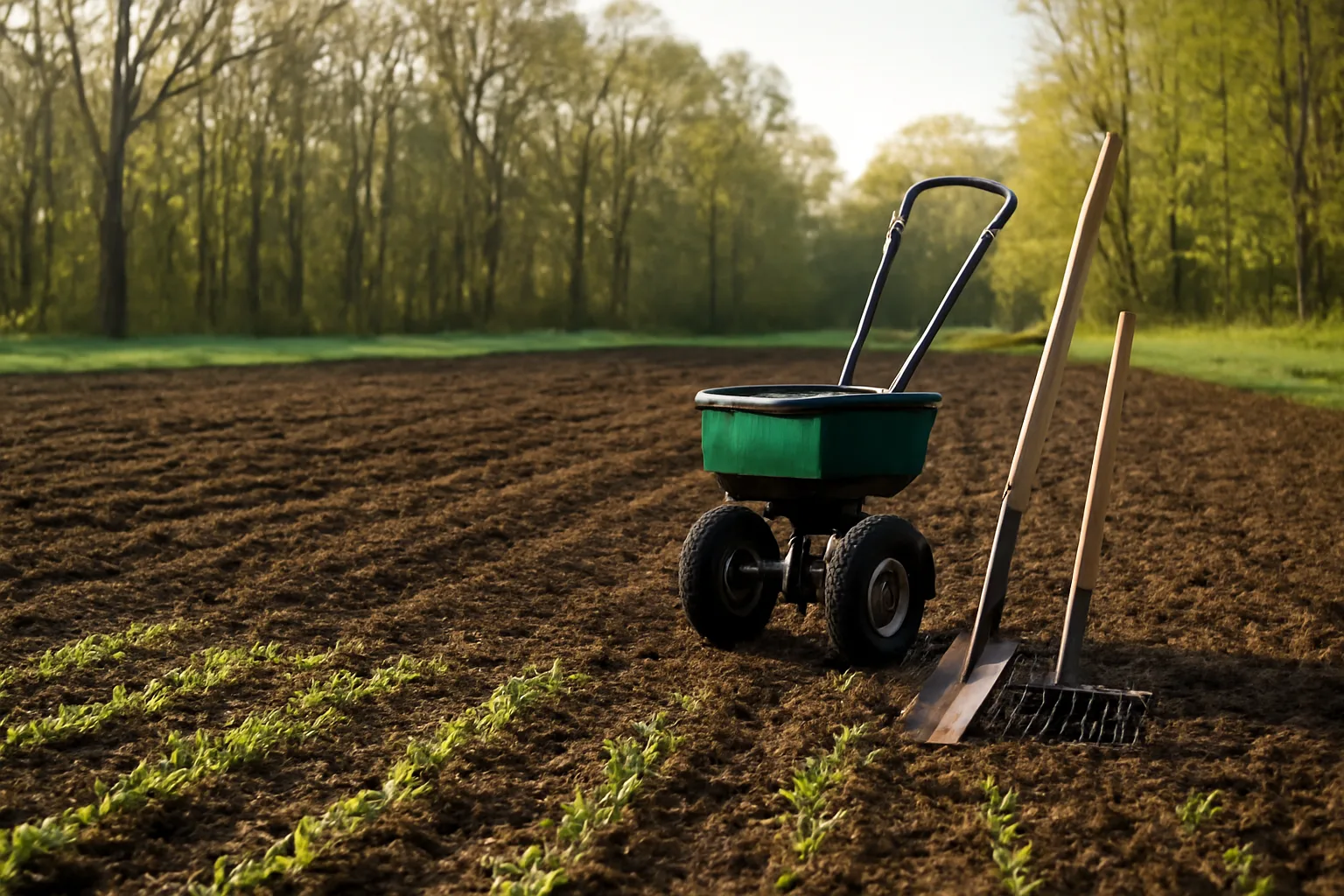
You don't need a tractor to plant a good clover plot, though it helps on ground over an acre or two. Minimum viable setup: a soil test kit or mail-in test, a hand or tow-behind broadcast spreader, a way to disturb the soil surface (disc, tiller, or even a hard rake and boots on small plots), lime and fertilizer per your soil test, and a cultipacker or roller (even a lawn roller or driving over the seed with an ATV tire works) to press small seed like clover into good soil contact. ATV or UTV owners can run a small disc, cultipacker, and broadcast spreader behind the machine and handle plots up to a couple acres without a tractor at all. Larger operations (3+ acres, multiple plots) start to justify a compact tractor with a disc, box blade, and PTO spreader, which is a real cost jump, often 15,000 to 25,000 dollars for a used compact tractor setup, so most hunters on smaller leases rent or borrow rather than buy. See domain-food-plot-seed for seed selection details that pair with whatever equipment tier you're working with.
Frequently asked questions
Do deer eat sorghum?
Yes. Deer readily eat sorghum grain and forage, especially once heads mature and dry down in late summer and fall. It's more drought-tolerant than corn, making it common in southern Plains and Southeast food plots, but it's a summer-planted crop, not a spring green-forage option.
Do deer eat clover?
Yes, clover is one of deer's most preferred food plot forages across nearly every region of the whitetail range. It ranks consistently at or near the top in preference trials and provides high-protein forage through spring, summer, and fall regrowth once established.
When should I plant food plots for deer?
Timing follows soil temperature and frost dates, not a fixed calendar date. Perennial clover and oats go in as soils warm into the mid-50s Fahrenheit: February to March in the Deep South, April in the Midwest, and May into June in the far North. Summer annuals wait until after last frost.
Do deer like clover more than other spring plot options?
In direct preference comparisons, clover consistently ranks among the top choices deer select when given multiple forage options. It also establishes early enough in spring to meet the protein demands of late gestation and lactation, which is why it's the default spring plot recommendation.
When should I plant oats for deer?
Oats go in as a spring annual (March to April depending on region) as a fast-growing nurse crop, often mixed with peas or clover, or as a fall planting (August to September) for a standalone cool-season attractant plot that holds through early hunting season.
When should I plant turnips for deer?
Plant turnips and other brassicas in mid-to-late summer, typically late July through August, so they mature and bulb right around the first frost. Frost converts starches to sugars in the bulb and leaves, which is what makes turnips attractive to deer; spring planting skips that entirely.
What is a food plot?
A food plot is a planted area of forage crop on hunting land, distinct from bait or loose feed because it's grown in place through normal tillage, liming, fertilizing, and seeding. Legal treatment varies by state; some states regulate baiting and feeding separately from planted food plots.
What are deer's favorite foods?
It depends on season and region, but white oak group acorns, soybeans, clover, and native forbs consistently rank highest across preference studies and mast surveys. Spring favors clover and legumes; fall favors acorns, standing corn, and brassicas after frost.
Do deer like honey?
There's no research support for honey as a deer food or attractant. It shows up mainly in commercial mineral and scent products using honey or molasses as a carrier, not as a planted crop, and many states restrict hunting over molasses or mineral supplements the same way they restrict bait.
What's the best single spring food plot for deer if I can only plant one thing?
A perennial white or red clover blend, ideally with chicory mixed in. It establishes with basic equipment, feeds deer from spring through fall regrowth, fixes nitrogen for the soil, and persists two to five years per planting rather than needing annual reseeding like most summer annuals.
How long does it take a spring clover plot to establish?
Expect roughly 60 to 90 days for a new clover seeding to form a solid, weed-competitive stand. Mowing the plot two to three times during the first growing season keeps weeds from shading out young clover seedlings while the stand fills in.
Is planting a food plot the same as baiting deer?
No, but state rules vary and some blur the line for hunting purposes. A food plot is a grown crop, while bait is loose feed, mineral, or attractant placed directly. Check your state wildlife agency's current baiting and feeding regulations before you plant or hunt, since definitions and hunting-distance restrictions differ by state.
Sources
- Michigan DNR, Baiting and Feeding Regulations: Michigan restricts baiting and feeding of deer in the Lower Peninsula, treating it differently from planted food plots
- University of Tennessee Extension, Clover as a Forage and Wildlife Crop: Clover fixes nitrogen through root nodule bacteria, reducing fertilizer needs and improving soil for subsequent crops
- Mississippi State University Extension, Brassicas for Deer Food Plots: Brassicas like turnips need 90 to 120 frost-free days and are planted mid-to-late summer to mature around first frost
- Missouri Department of Conservation, Annual Mast Survey: State agencies track annual acorn (mast) production because it measurably affects deer body condition and movement
- University of Georgia Extension, Warnell School, Food Plots for Deer: Clover establishment timing lines up with high-protein nutritional demand during late gestation and lactation
- Auburn University Extension, Establishing Wildlife Food Plots: Mowing a new clover stand two to three times in the first season controls weed competition during establishment
- Pennsylvania Game Commission, Baiting Regulations Summary: Some states regulate mineral licks and supplement blocks under the same rules as bait for hunting purposes