Last updated 2026-07-26
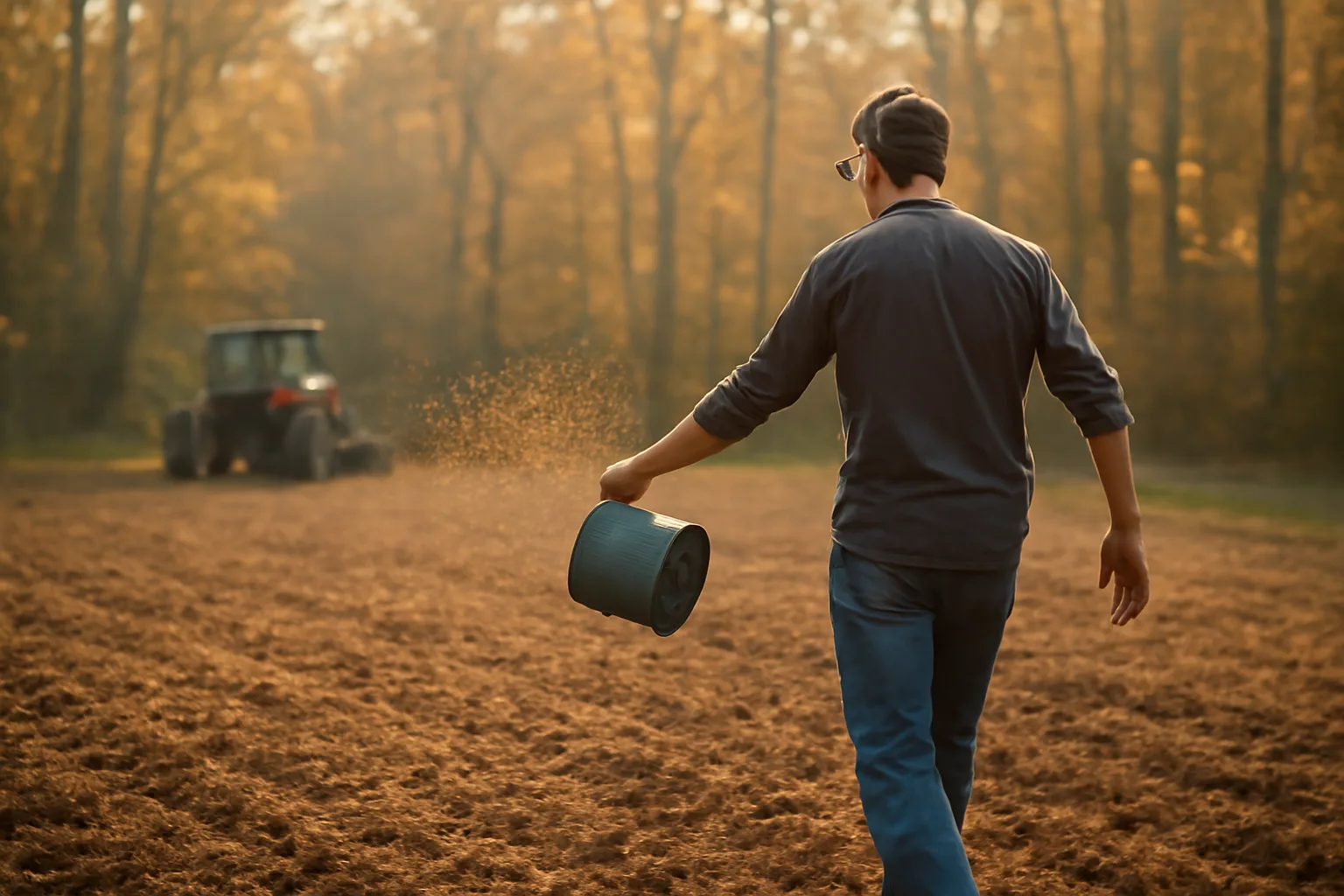
TL;DR
Plant clover food plots in late summer to early fall (August to September in the North, September to October in the South) or early spring once soil hits 50-55°F. Test soil first, clover needs pH 6.0-7.0. Deer do eat clover, and it's one of the highest-preference forages available, ranking above most brassicas in regional browse studies.
what is a food plot, exactly?
A food plot is a planted area, usually somewhere between a quarter acre and several acres, seeded with forage crops to feed and attract deer or other wildlife on land you own or lease. It's not the same as baiting. A food plot is an agricultural planting, managed with tillage, fertility, and seed like any small farm field, and most states treat it differently under law than piles of corn or mineral blocks. That legal distinction matters. Baiting rules vary a lot by state, and some states that ban baiting for hunting still allow food plots because the crop is rooted and growing rather than placed loose on the ground. Michigan's Wildlife Conservation Order defines baiting and feeding of deer and elk, and the state treats planted, growing crops differently from placed feed under that order; you can review the current order text through the Michigan DNR's wildlife regulations page [1]. Always check your state wildlife agency's current regulations before you plant or hunt over anything, because definitions and exceptions change. Most food plot programs mix a few plot types: perennial clover or alfalfa plots that stay in the ground for years, annual grain plots like corn or oats replanted each season, and brassica plots (turnips, radish, rape) planted in late summer for fall and winter browse. Clover fits the perennial category and usually anchors a plot rotation because it's cheap per pound, comes back year after year if maintained, and deer hit it hard almost year round. For a broader look at how different plot types fit together, see food plot whitetail.
do deer like clover, and do they actually eat it?
Yes. Clover is consistently one of the top forage choices whitetails select when it's available, and it shows up near the top of nearly every regional deer food preference list published by state agencies and universities. It's soft, high in protein (often 20-25% crude protein in vegetative growth stages), and digestible, which is why deer return to a clover plot repeatedly through spring and summer rather than treating it as an occasional stop. Clover also holds up under repeated grazing better than most annuals, since it regrows from a crown rather than needing to be reseeded after every browse event. That's part of why hunters see the same plot get hit hard through an entire growing season without disappearing. The USDA NRCS plant guide for white clover notes that it is widely used in wildlife plantings and pastures because of its palatability and nutritional quality, and that it depends on rhizobium bacteria in the soil to fix nitrogen for its own growth [2]. Compared to brassicas or grains, clover's advantage is consistency. Turnips and other brassicas get most of their attention after a hard frost sweetens the leaves and bulbs, but clover is useful from spring green-up straight through summer stress and into fall. If you're deciding what species mix to run, deer food plot seed breaks down blends by season and region.
when should you plant clover food plots?
| North (3-5) | Mid-Aug to mid-Sept | Late April to May | |
|---|---|---|---|
| Transition (5-6) | Late Aug to late Sept | Mid to late April | |
| South (7+) | Late Sept to Oct | March to early April | These are starting points, not guarantees. Local frost dates and rainfall patterns shift year to year, and your county extension office will have the most accurate local planting calendar. |
Clover can go in at two windows: late summer into early fall, or early spring, depending on your zone and your soil moisture situation. Most experienced plotters lean toward late summer/fall planting because it lets clover establish before winter dormancy and gives you a plot that's ready to hammer by the following spring, with far less weed pressure than a spring planting fights through. In northern zones (roughly USDA hardiness zones 3-5), the fall window runs mid-August through mid-September, timed so clover gets 45-60 days of growth before a hard freeze. In transition zones (5-6), aim for late August through late September. In southern zones (7 and warmer), you've got more flexibility, late September through October works, and some southern growers plant clover alongside a fall grain mix. Spring planting is the fallback if you missed the fall window or you're in a region where winterkill risk on new seedlings is high. Plant as soon as soil temperature holds at 50-55°F and the ground is workable, typically March through May moving north to south. University of Tennessee Extension's food plot publication, PB1769, recommends spring clover seeding from March 1 to April 15, with fall seeding from September 1 to October 15 listed as the preferred option in much of the state [3]. Here's a rough breakdown by zone: | Zone (approx.) | Fall planting window | Spring planting window |
when to plant food plots for deer in general (more than clover)?
The honest answer is it depends entirely on what you're planting, so there's no single date that works for every seed type. Perennials like clover and chicory go in late summer to early fall in most regions, or early spring as a backup. Cool-season annuals (oats, wheat, brassicas) go in late summer through early fall so they mature right as hunting season opens. Warm-season annuals (corn, soybeans, sorghum) go in spring after your last frost date, same as row-crop agriculture. A simple way to think about it: if the plant needs to survive winter and come back, plant it in fall so it's rooted before cold weather. If the plant needs to be lush and green during hunting season, work backward from your archery opener and count back the days-to-maturity listed on the seed bag. Oats, for instance, mature in about 60-90 days, so a September 1 opener means planting by late June to early July for oats if you want peak green-up right at season start, though many hunters plant oats in August specifically to have tender new growth in October. Soil prep timing matters just as much as calendar timing. You want to work ground when it's dry enough to till without clodding, and you want at least a light rain in the forecast within a week or two of seeding so the seed doesn't sit dry on top of the soil for weeks. For a full rundown on matching species to your specific season, deer food plots covers plot planning by month.
when to plant oats for deer?
Plant oats in late summer, typically August through mid-September in most whitetail range, so they're actively growing and tender during archery and early gun season. Oats are a cool-season annual grass, and deer prefer them young and leafy rather than mature, which is why the late-summer planting window lines up so well with fall hunting. Oats germinate fast, often in 7-10 days under good moisture, and can be browsed within a few weeks of emergence. Some hunters in the Midwest and South also do a spring oat planting (March to April) as a quick cover crop or early green forage, but the fall planting is far more common for hunting-specific plots because it times the tender growth stage to overlap with the season. Oats don't survive hard winters in most of the whitetail's range. They typically die back once temperatures drop into the teens for extended periods, so don't count on an oat plot to carry deer through January in northern states. Pair oats with a brassica or clover in the same plot if you want late-season coverage too.
when to plant turnips for deer?
Plant turnips in mid to late summer, generally late July through August depending on zone, so they have 80-90 days to mature before your first hard frost. Turnips are a brassica, and deer usually ignore the bulbs and even the leaves early on, then switch hard to them after a few frosts convert starches to sugars and make the plant taste sweeter. That frost-triggered palatability shift is the whole reason turnip plots are planted for late season rather than early bow season. If you plant too late and frost hits before the plant reaches maturity, you get small bulbs and less tonnage. Plant too early in hot weather and you risk poor germination or bolting. The sweet spot most extension guides recommend is 80-100 days before your average first killing frost date, which for most of the Midwest and Northeast lands right in late July to mid-August. Turnips work well in a mix with clover, since turnips give you a late-season carbohydrate push right as clover growth slows with cold weather.
do deer eat sorghum?
Yes, deer eat sorghum, though it's usually a secondary or supplemental plot component rather than a primary attractant crop. Grain sorghum (milo) produces a seed head deer will browse, and the standing plant also gives cover, which is part of why it's often planted as a screen or a mixed-plot component rather than a stand-alone deer food. Sorghum is a warm-season crop, planted in late spring after soil warms above 60-65°F, similar timing to corn. It's more drought tolerant than corn, which makes it a reasonable choice in the southern Plains and parts of the Southeast where summer heat and dry spells stress other warm-season grains. Deer will hit the seed heads once they mature and dry down in fall, and turkeys and other wildlife use it too. It's worth being honest that sorghum isn't a top preference food the way clover or soybeans are. It's a fine mixed-plot or screening crop, but if attraction and nutrition are your main goals, sorghum shouldn't be your only planting.
do deer like honey (honey locust, honey brome, or actual honey)?
If the question is about actual honey (the bee product), there's no meaningful evidence deer are drawn to it in a food plot or hunting context, and it's not a practical deer attractant, plus it's sticky and impractical to deploy outdoors. Deer are herbivores built around browsing forbs, browse, mast, and grasses. Sugar-based attractants marketed for deer are usually corn syrup, molasses, or apple-based scents rather than honey specifically. If the question is really about honey locust trees, that's a different story. Honey locust pods are a genuine, well-documented deer food. The sweet pulp inside the pods is high in sugar, and deer, along with other wildlife, actively seek out dropped pods in fall. Some food plot managers plant or preserve honey locust trees along plot edges specifically because of this. If you're asking about honeysuckle, deer do browse many honeysuckle species too, particularly Japanese honeysuckle, which is invasive in much of the eastern U.S. but heavily browsed where it grows. Bottom line: skip literal honey as an attractant strategy. If you've got mature honey locust trees on your property, they're doing real work for you already.
what are deer's favorite foods overall?
There's no single universal answer because preference shifts by season, region, and what's locally available, but agricultural soybeans, clover, and acorns consistently rank at or near the top across most regional studies and extension surveys. Acorns, particularly from white oak group trees, are often preferred over almost any planted food plot crop when they're on the ground, because of their high fat content going into winter. During the growing season, soybeans and clover top most preference lists for planted forages, with alfalfa, cowpeas, and lablab close behind. In late summer and fall, standing corn and soybeans left in the field pull deer hard, and once frost hits, brassicas like turnips and radishes move up the list. Regional mast crops matter more than people expect. In years with a heavy acorn crop, deer will often walk past a decent food plot to hit the timber, which is part of why experienced managers plant multiple plot types rather than betting everything on one crop. For seed options across the preference spectrum, food plot seed and domain food plot seed both cover blend options by region.
how do you prepare soil for a clover food plot?
Start with a soil test, that's the single most important step and the one most new plotters skip. Clover needs a pH between 6.0 and 7.0 to fix nitrogen properly and grow well; below 6.0, clover struggles even with good fertility, because acidic soil ties up nutrients and limits the rhizobia bacteria clover depends on for nitrogen fixation. Your soil test lab is the real authority here on exactly how much lime and fertilizer your specific field needs, since soil chemistry varies a lot even across one property. General steps: pull soil samples 4-6 inches deep from several spots in the plot, mix them, and send to your state land-grant university's soil testing lab or a private ag lab. Results usually come back with pH, and recommended lime, phosphorus, and potassium rates. Apply lime as early as possible before planting, ideally months ahead, since lime takes time to move through the soil profile and adjust pH. Penn State Extension's forage legume establishment guidance notes that a firm, well-prepared seedbed and correct planting depth are among the most critical factors in successful clover stand establishment [4]. Once pH and fertility are addressed, till or disk the plot to break up existing sod and weeds, then firm the seedbed (a cultipacker or even driving over it with a light vehicle works) since clover seed is tiny and needs good seed-to-soil contact, planted no deeper than 1/4 to 1/2 inch. Broadcasting on a firm, prepared seedbed and rolling it in works better than drilling clover too deep.
what seeding rate and inoculant should you use for clover?
Broadcast rates for common food plot clovers run roughly 6-10 lbs per acre for white clover (ladino types) and 8-12 lbs per acre for red clover, though rates vary by seed blend and whether it's a pure stand or mixed with chicory or grain nurse crops. Always check the specific bag's recommended rate since seed size and germination percentage differ by variety. Use a fresh, viable rhizobium inoculant specific to clover (not the alfalfa strain, they're different bacteria) unless your bag comes pre-inoculated. Inoculant helps clover roots form the nodules that fix atmospheric nitrogen, which is a big part of why established clover needs so little added nitrogen fertilizer compared to grain plots. The USDA NRCS plant guide for white clover confirms the species relies on rhizobial symbiosis for nitrogen fixation rather than soil nitrogen alone [2]. If you're seeding into ground that's grown clover successfully before, native rhizobium bacteria may already be present in decent numbers, but inoculating fresh seed is cheap insurance and most experienced growers do it every time. A light nurse crop of oats (10-15 lbs/acre) mixed into a fall clover planting can help hold soil, suppress weeds, and give deer something to browse the first few weeks while clover establishes, though too heavy a nurse crop rate will shade out young clover seedlings.
how do you maintain a clover plot once it's established?
Mow it 2-4 times during the growing season, keeping it to 4-6 inches, to knock back weeds and keep clover in a vegetative, high-protein growth stage rather than letting it go to seed and get stemmy. Mowing timing depends on weed pressure and rainfall, but a good rule is mowing whenever weeds start to outcompete the clover canopy or clover starts flowering heavily. Spray for grass weeds with a grass-selective herbicide (clethodim or sethoxydim based products) if grasses start choking out the stand; these won't harm the clover since they're grass-specific. Broadleaf weeds are trickier in a clover plot since most broadleaf herbicides will kill clover too, so mowing and good stand density are usually your main broadleaf weed control tools in a pure clover plot. Retest soil every 2-3 years and reapply lime or potash as recommended, since clover pulls potassium out of the soil at a decent clip and pH drifts downward over time in most regions due to rainfall and nitrogen cycling. A well-maintained clover stand can last 3-5 years or longer before it thins out enough to need renovation or reseeding, which makes it one of the better cost-per-year investments in a plot program even though the upfront prep work is more involved than tossing out an annual blend.
clover versus other common food plot crops: which should you plant?
| Clover | Late summer/fall or spring | Spring through fall, consistent | 3-5 years | |
|---|---|---|---|---|
| Oats | Late summer | Early to mid fall | Annual | |
| Turnips/brassicas | Mid to late summer | Late fall/winter, after frost | Annual | |
| Sorghum | Late spring | Fall, once seed heads mature | Annual | If you're only planting one plot this year, clover is the safest bet for overall attraction and return on cost. If you've got the acreage, split it: clover for the perennial base, and a rotating annual (oats plus a brassica) for season-specific timing. Figuring out the right mix for your specific acreage, soil, and region is exactly the kind of decision a $99 Custom Food Plot Plan is built around; it takes your soil test and property details and lays out a planting plan without you having to guess at species and timing on your own. You can start one at /plot-plan-builder. |
None of these crops is strictly better, they solve different problems, and most serious plot programs run two or three types rather than betting on one. Clover's strength is longevity and season-long protein; it's there in spring when deer need it most after winter, and it's still green in summer when a lot of other plants are stressed by heat. Oats and other cool-season grains give you fast, cheap tonnage timed right to hunting season, but they're annual, meaning you're replanting every year and they don't provide the spring nutritional boost clover does. Turnips and brassicas shine specifically in the late season after frost, but deer often ignore them early in the fall, so they're a poor choice if you're hunting opening week. Here's a rough comparison: | Crop | Plant timing | Deer preference timing | Lifespan |
putting together a full-season plot plan
The best plot programs think in terms of a rotation, not a single planting. A common setup: a perennial clover plot as your anchor (30-50% of your total plot acreage), a fall annual mix of oats and brassicas planted in late summer for hunting-season timing, and maybe a warm-season plot of soybeans or corn if you've got the acreage and equipment for it. Equipment needs scale with ambition. A small clover plot (under an acre) can be worked with a hand seeder, a lawn mower, and a rented or borrowed disk. Larger operations benefit from a tractor with a disk, cultipacker, and broadcast spreader, though plenty of hunters run successful multi-acre programs with an ATV and a pull-behind implement set. Whatever mix you land on, get your soil test done first, before you buy seed. It's the cheapest step in the whole process and the one that determines whether everything else you spend money on actually works. For a deeper look at matching plot types to your land and goals, food plot whitetail and deer for food are good next reads, and if you want a starting point built around your specific soil test and acreage, the Custom Food Plot Plan at /plot-plan-builder is a one-time $99 option built for exactly that.
Frequently asked questions
Do deer eat sorghum?
Yes. Deer browse grain sorghum (milo) seed heads once they mature and dry in fall, but sorghum isn't a top preference food the way soybeans or clover are. It's a reasonable warm-season, drought-tolerant mixed-plot or screening crop rather than a stand-alone attractant.
Do deer eat clover?
Yes, and clover is one of the highest-preference foods available to whitetails. It's soft, high in protein (often 20-25% crude protein), and regrows after grazing, which is why established clover plots get hit repeatedly through an entire growing season rather than just once.
When should you plant deer food plots?
It depends on the crop. Perennials like clover go in late summer/early fall or early spring. Cool-season annuals (oats, brassicas) go in late summer for fall hunting season timing. Warm-season annuals (corn, soybeans, sorghum) go in spring after your last frost date.
Do deer like clover more than other food plot crops?
Clover consistently ranks at or near the top of regional deer forage preference studies, often alongside soybeans. Its advantage over annuals is season-long availability; it's palatable from spring green-up through summer, while brassicas and grains are only attractive during narrower windows.
When should you plant oats for deer?
Plant oats in late summer, roughly August through mid-September in most whitetail range, so they're tender and actively growing during archery and early gun season. Oats germinate in about 7-10 days and typically die back once winter temperatures drop into the teens for extended periods.
When is the best time to plant food plots for deer overall?
There's no single date. Work backward from what the crop needs: perennials need fall or early spring establishment, cool-season annuals need late-summer planting to be ready for hunting season, and warm-season crops need spring planting after frost risk passes.
When should turnips be planted for deer?
Plant turnips in late July through August, roughly 80-100 days before your area's average first killing frost. Deer typically ignore turnip bulbs and leaves early on, then switch to heavy browsing after a few hard frosts sweeten the plant.
What exactly is a food plot?
A food plot is a planted, cultivated area seeded with forage crops to feed wildlife, distinct from baiting because it's a growing crop rather than distributed loose feed. Many states legally treat food plots differently from bait piles; always confirm current rules with your state wildlife agency.
What are deer's favorite foods in general?
Acorns (especially white oak group), soybeans, and clover consistently top regional preference studies. Preference shifts by season: clover and soybeans dominate spring through fall, while acorns and frost-sweetened brassicas take over once they're available in late fall and winter.
Do deer like honey?
Actual honey isn't a practical or evidenced deer attractant since deer are browsers, not honey-seekers. If the question means honey locust trees, though, deer heavily seek out the sweet pods that drop in fall, which makes honey locust a genuine natural food source worth protecting on a property.
What soil pH does clover need for a food plot?
Clover grows best with soil pH between 6.0 and 7.0. Below 6.0, clover struggles to fix nitrogen properly because acidic soil limits the rhizobium bacteria clover depends on. A soil test from your local extension lab will tell you exactly how much lime your field needs.
How long does a clover food plot last before it needs replanting?
A well-maintained clover stand, mowed regularly and retested for soil fertility every 2-3 years, can last 3-5 years or longer before thinning enough to need renovation. That longevity is a big part of why clover is often the anchor of a multi-plot rotation.
Can you plant clover and oats together in the same plot?
Yes. A light oat nurse crop, around 10-15 lbs per acre, is commonly mixed into fall clover plantings. It helps hold soil, suppresses weeds, and gives deer early browse while the clover establishes, as long as the oat rate isn't heavy enough to shade out clover seedlings.
Do you need to inoculate clover seed before planting?
Yes, unless the bag comes pre-inoculated. A clover-specific rhizobium inoculant helps roots form nodules that fix atmospheric nitrogen, which is why established clover needs so little added nitrogen fertilizer. It's a cheap step and most experienced growers do it every planting.
Sources
- Michigan Department of Natural Resources, Wildlife Conservation Order (Baiting and Feeding of Deer and Elk): Michigan treats food plots separately from its baiting and feeding prohibition because the crop is planted and grown in place rather than scattered
- Mississippi State University Extension, Publication 2111: Nutrition and Fertilization of Wildlife Food Plots: White clover and red clover rank among the legume forages most preferred by white-tailed deer for their crude protein content
- University of Tennessee Extension, PB1769: Establishing and Managing Wildlife Food Plots: Recommended clover seeding dates of March 1-April 15 for spring and September 1-October 15 for fall in Tennessee
- Purdue University Forestry and Natural Resources Extension, FNR-428-W: Improving Wildlife Habitat with Food Plots: Brassicas like turnips are best planted in July and August in Indiana for fall/winter forage
- Penn State Extension, Agronomy Guide: Forage Legume Establishment: A firm seedbed and shallow seeding depth are critical for successful clover establishment
- USDA Natural Resources Conservation Service, Plant Guide: White Clover (Trifolium repens L.): White clover requires well-drained soils with pH near neutral and depends on rhizobium bacteria for nitrogen fixation