Last updated 2026-07-25
TL;DR
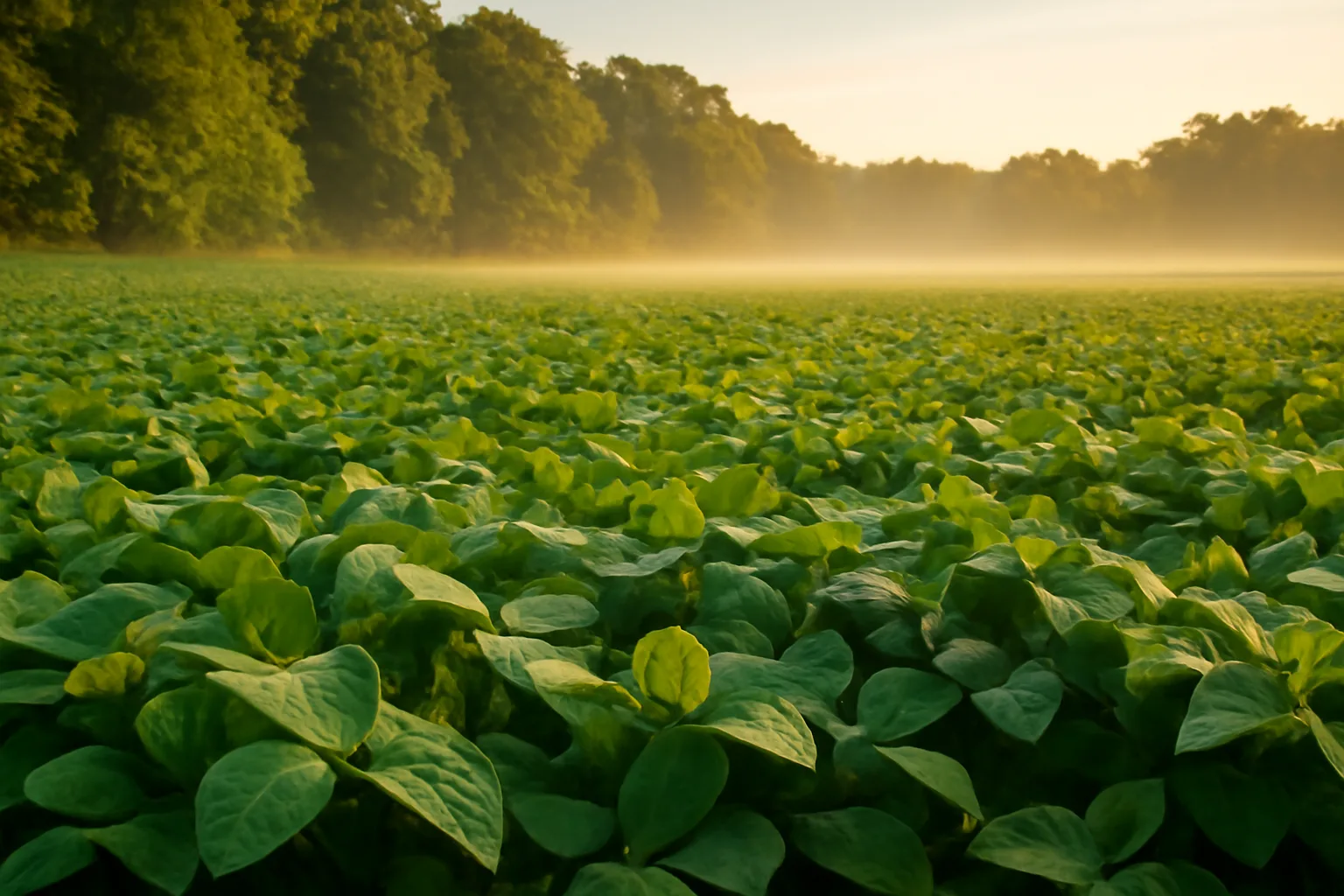
The best summer food plots for deer use warm-season legumes like soybeans, cowpeas, and lablab, plus perennial clover as a base. Plant after soil hits 65°F, typically late April through June depending on latitude. These species handle heat, drought, and heavy browsing better than cool-season crops, and they pack 20-30% protein for antler growth and lactation.
What is a food plot, and why does summer planting matter?
A food plot is a planted area on hunting or wildlife land, usually somewhere between a quarter acre and several acres, grown specifically to feed deer and other wildlife rather than to harvest for market. Think of it as targeted agriculture with one customer: the deer herd on your property. Summer plots do a different job than fall plots. Fall plots (brassicas, cereal grains) exist mostly to pull deer into range during hunting season. Summer plots exist to grow deer. Does are lactating, bucks are pushing antler growth, and both need protein, more than carbs. Research on deer nutrition published in the Journal of Wildlife Management points to sustained dietary crude protein around 16% or higher as necessary for maximizing antler growth in whitetail bucks, a level most native browse in a stressed habitat can't reliably deliver [1]. If your property is short on natural food from July through early September, a warm-season plot fills that gap. It's not about drawing deer for opening day. It's about body condition and antler potential that pays off months later.
When to plant food plots for deer (by season)
| Zone 3-4 | Northern Midwest, New England | Late May to mid-June | |
|---|---|---|---|
| Zone 5-6 | Mid-Atlantic, Ohio Valley, Kansas | Early May to mid-June | |
| Zone 7-8 | Southeast, Mid-South | Mid-April to late May | |
| Zone 9 | Deep South, Gulf Coast | Late March to April | These are general starting points, not guarantees. Local frost dates and rainfall patterns shift things year to year, and a late cold snap can wreck an early planting. Check your local NOAA frost date data or your state extension office before committing seed to the ground. |
Timing splits into two windows: cool-season (fall plots, planted July through September depending on zone and species) and warm-season (summer plots, planted spring after last frost through early summer). This article is about the second window. For warm-season legumes and forages, soil temperature matters more than the calendar date. Most warm-season plot species germinate poorly below 60°F soil temp and thrive once soil hits 65-75°F. Iowa State University Extension guidance on soybean planting notes that soil temperatures should be at least 50°F for germination but that warmer soil, above 60-65°F, brings faster, more even emergence and less risk of seed rot [2]. Rough planting windows by zone: | Zone | Region example | Warm-season plot window |
What are the best summer food plot species for deer?
The short list that actually performs: soybeans, cowpeas (iron and clay varieties), lablab, and sunn hemp. All four are warm-season legumes, all fix nitrogen, and all can handle real heat and moderate drought once established. Soybeans are the gold standard where deer density is low to moderate. Forage soybean varieties (not grain soybeans) are bred to regrow after browsing and can run high in crude protein in the leaf tissue during vegetative growth, with whole-plant forage soybean typically analyzed in the 15-20% crude protein range at good cutting stages and higher in the leaf fraction specifically [3]. The catch: soybeans are extremely vulnerable to overbrowsing in the first 4-6 weeks. On high-density deer ground, deer can wipe out a soybean plot before it ever reaches maturity. Cowpeas (like iron and clay) tolerate browsing pressure better than soybeans and still deliver strong protein, often cited around 20-25% crude protein in forage tissue. They're also more drought-tolerant, which matters if your plot doesn't get supplemental water. Lablab is a vining legume that takes longer to establish but produces a huge amount of biomass late in summer and often holds up into early fall. It's a good complement to soybeans, covering the gap after beans get hammered. Sunn hemp isn't as commonly planted for deer specifically, but it's an aggressive nitrogen fixer and can be mixed in as a nurse crop or soil builder alongside the legumes above. Perennial white clover deserves a mention here too, even though it's technically planted in spring or fall. Once established, clover keeps producing through summer in most zones with adequate moisture, and it's lower-maintenance than annual warm-season plantings. More on clover specifically below.
Do deer like clover, and do deer eat clover?
Yes, deer eat clover readily, and most wildlife biologists rank it among the most consistently used food plot forages across the whitetail's range. White clover (Trifolium repens) and red clover are the two most planted types for deer. Clover's advantage is longevity. A well-maintained white clover stand can produce quality forage for several years before needing to be replanted, and Penn State Extension guidance on establishing forage legumes notes that white clover stands are typically productive for 2-3 years, sometimes longer under good management and soil fertility. That's a real cost advantage over annual replanting every single season. Clover crude protein content typically runs 25-30% in actively growing stands, which is right in the range deer need for antler growth and lactation. The tradeoff is that clover needs decent soil moisture and doesn't tolerate drought as well as cowpeas or lablab. In a dry July, clover can go dormant and stop producing, right when deer need it most. Most experienced plot managers treat clover as the perennial backbone of a program and warm-season annuals as the summer-specific supplement layered in on different acreage.
Do deer eat sorghum, and does it belong in a summer plot?
Deer will eat sorghum, particularly grain sorghum heads once they mature, but sorghum isn't a primary forage choice for a dedicated summer deer plot. It's more commonly planted as a screening or standing-crop option, or mixed into dove field plantings, than as a deer-attraction annual. The issue is timing and nutrition. Sorghum's protein content in the grain is modest compared to legumes, and deer mostly use it opportunistically rather than seeking it out the way they do soybeans or clover. If you already have sorghum on the property for screening cover or turkey/dove use, deer will browse the young shoots and eventually hit the grain heads in fall. But if you're planning a plot specifically to grow deer through summer, sorghum shouldn't be your first, second, or third choice. Put your acreage into legumes instead.
Do deer like honey, and does it matter for food plots?
No, this isn't really a food plot question. Deer don't seek out honey in the wild and it has no role in food plot planning. Deer are herbivores built around a rumen designed to digest plant fiber, browse, and forbs, not concentrated sugars from a beehive. If you've seen this question paired with food plot searches, it's likely confused with mineral or attractant products that sometimes use molasses or sweeteners as a carrier, not actual honey. Skip it. Focus plot dollars on legumes and clover instead.
When to plant turnips for deer, and are they a summer crop?
Turnips are a fall/cool-season crop, not a summer plot species. Most extension guidance recommends planting brassicas like turnips 60-90 days before your area's first hard frost, which typically lands in late July through early August across most whitetail range [4]. Planting turnips in summer heat (June, early July in the North) usually fails because brassica seedlings are sensitive to high soil temperatures and can bolt or die before establishing a root. The reason turnips get lumped into food plot conversations year-round is that they're one of the most popular fall/winter plot options, and hunters planning their whole-year plot calendar often research turnips at the same time they're researching summer plantings. If you're building a two-season program, plant your summer legume plot now and circle back to turnips in mid-to-late summer for a fall planting.
When to plant oats for deer?
Oats are also a cool-season crop, best planted in late summer to early fall, generally August through September depending on zone, so deer have fresh oat forage through fall and into early winter before hard freezes shut growth down. Oats are not a summer plot option. Like turnips, they show up in the same searches because hunters are often planning both halves of the year at once. Oats are one of the most consistently attractive cool-season annual grains for deer, and under good moisture and temperature conditions cereal grains like oats typically emerge within about 7-10 days of planting, per Kansas State University Research and Extension guidance on small grain establishment [5]. Keep oats on your fall calendar, not your summer one.
What are deer's favorite foods overall?
Deer preference shifts by season, region, and what's locally available, so there's no single universal answer, but research and field observation point to a consistent short list: acorns (especially white oak family acorns, which are lower in tannins and more palatable than red oak acorns), soybeans, clover, and native forbs. Acorns are often called the single most important natural whitetail food where oaks are present, because of their high fat content, useful for building fat reserves before winter [6]. But acorn production is unpredictable year to year (a mast failure can mean almost zero acorns in a given fall), which is exactly why planted food plots matter as a buffer. In planted food plot species specifically, soybeans and clover consistently top preference studies and hunter-reported use, along with cowpeas and lablab in warm-season plantings and brassicas/cereal grains in cool-season plantings. Deer are also highly adaptable browsers, and in any given week they're mixing planted forage with native browse, forbs, and whatever mast is on the ground.
How much should you plant, and what does it cost?
For a summer legume plot, seeding rates vary by species. Forage soybeans typically go in at 50-100 lbs per acre depending on row spacing and drill vs. broadcast method, cowpeas around 60-90 lbs per acre, and lablab often lower, in the 20-30 lbs per acre range because seed size and vigor differ [3]. Always check the specific seed tag for the variety you buy, since rates vary by brand and by whether you're broadcasting or drilling. Cost runs widely depending on seed source and whether you buy a blend or straight species. Budget roughly $40-$100+ per acre for warm-season legume seed alone, before soil amendments. That's before lime or fertilizer, and a soil test is the only way to know what your ground actually needs. Skipping the soil test is the single most common way hunters waste money on a plot that never performs, because pH below 6.0 locks up nutrients no matter how much fertilizer you dump on top. If you want a structured plan built around your specific soil test results, zone, and acreage instead of guessing at species and rates, that's exactly what a Custom Food Plot Plan is for. It's a one-time $99 plan, not a subscription, and it turns your soil test numbers into a real seed and fertilizer plan instead of a generic bag recommendation off a shelf.
How do you protect a summer plot from getting wiped out by deer?
This is the number one failure point for summer plots, especially soybeans. Young legume seedlings are candy to deer, and on high-density ground, deer can browse a plot down to bare dirt before it ever establishes a root system strong enough to regrow. A few practical fixes: plant more acreage than you think you need, so browsing pressure gets diluted across more plants. Use a mix of species (cowpeas alongside soybeans) since cowpeas tolerate browsing better and can carry the plot while soybeans recover. Temporary electric fencing around a new planting for the first 4-6 weeks is one of the most effective, if labor-intensive, options extension agronomists recommend for high-pressure areas [2]. Some hunters also stagger plantings across multiple small plots instead of one big one, so deer can't concentrate pressure on a single planting at the exact vulnerable stage. Check your food plot whitetail planning basics and consider pairing a summer legume plot with a nearby deer food plot seed blend that includes a nurse crop, which can reduce erosion and give some early cover while the legumes establish.
Summer plot species comparison
| Species | Crude protein (approx.) | Drought tolerance | Browse tolerance | Best use | |
|---|---|---|---|---|---|
| Forage soybeans | 25-30%+ [3] | Moderate | Low (needs protection early) | Low-to-moderate deer density | |
| Iron & clay cowpeas | 20-25% | Good | Good | High-pressure ground | |
| Lablab | 20-28% | Good | Moderate | Late-summer biomass | |
| White clover | 25-30% | Fair (needs moisture) | Good, perennial | Multi-year base plot | |
| Sorghum | Lower (grain-based) | Good | N/A (screening/grain use) | Cover or dove/turkey field | Use this table as a starting filter, not a final answer. Your zone, rainfall, deer density, and soil test results all shift which species make sense on your specific acres. That's the whole reason a generic "best food plot" list only gets you partway there. |
Frequently asked questions
Do deer eat sorghum?
Yes, deer eat sorghum, especially the grain heads once mature and young shoots earlier in the season. But it's a secondary, opportunistic food, not a primary attractant like soybeans or clover. Most plot managers use sorghum for screening cover or dove/turkey plantings rather than as a dedicated summer deer forage crop.
Do deer like clover?
Yes, clover is one of the most consistently used food plot forages for whitetail deer across their range. White and red clover run 25-30% crude protein when actively growing and can persist multiple years once established, per Penn State Extension guidance on forage legumes, making it a strong perennial base for a plot program.
When should you plant food plots for deer?
It depends on the plot type. Warm-season plots (soybeans, cowpeas, lablab) go in after soil hits 65°F, generally April to June depending on latitude. Cool-season plots (oats, turnips, clover) go in 60-90 days before your area's first hard frost, typically August into September for most whitetail range.
When should you plant oats for deer?
Oats are a cool-season crop, best planted in late summer to early fall, roughly August through September depending on zone, so they mature into fresh forage through fall and early winter. Oats aren't a summer planting; they're one half of a two-season plot calendar most hunters run alongside spring/summer legumes.
When should you plant turnips for deer?
Turnips should go in 60-90 days before your area's first hard frost, which lands roughly late July through early August across most whitetail range. Turnips are a brassica and a cool-season crop; planting them in early summer heat usually fails because seedlings struggle in high soil temperatures.
What exactly is a food plot?
A food plot is a planted area, often a quarter acre to several acres, established specifically to grow forage for deer and other wildlife rather than for commercial harvest. It supplements natural browse and mast, filling seasonal nutrition gaps like summer protein needs or fall/winter energy needs before hunting season.
What are deer's favorite foods?
It shifts by season and region, but consistent favorites include white oak family acorns (high fat, low tannin), soybeans, clover, and native forbs. Acorn availability swings year to year with mast crop failures, which is one reason planted food plots matter as a reliable, repeatable food source.
Do deer like honey?
No, honey isn't relevant to deer food plots. Deer are herbivores that browse plants, forbs, and mast, not concentrated sugars from a hive. This question sometimes gets confused with molasses-based mineral or attractant products, but honey itself has no role in food plot species selection or planning.
What's the best summer food plot for deer if I only have one field?
A blend of forage soybeans and iron-clay cowpeas is the most common single-field choice. Cowpeas tolerate browsing pressure and buy time while soybeans establish. If deer density is very high, weight the mix toward cowpeas and lablab, since soybeans alone can get wiped out before they mature.
How big should a summer deer food plot be?
There's no fixed rule, but half an acre to two acres per plot is a common practical range for hunting properties, with multiple smaller plots often outperforming one large plot under heavy browsing pressure. Bigger acreage dilutes browse pressure per plant, which matters most in the first 4-6 weeks after planting.
Do I need a soil test before planting a summer food plot?
Yes. Soil pH below roughly 6.0 locks up nutrients regardless of fertilizer applied, so a soil test is the only reliable way to know your lime and fertilizer needs. Your soil test lab's recommendations are the final authority on amendments; treat any generic plot guide, including this one, as a starting point only.
Can I plant clover and warm-season legumes in the same plot?
It's possible but not ideal in the same exact spot, since clover is a perennial and annual legumes get replanted or interplanted differently. Many plot managers run clover as one standing plot for multi-year use and rotate soybeans, cowpeas, or lablab in separate plots or fields nearby.
Sources
- Journal of Wildlife Management, dietary protein and antler development in white-tailed deer: Antler growth requires sustained dietary protein, generally cited around 16% crude protein or higher
- Iowa State University Extension and Outreach, PM 1885: Soybean Planting Date, Seeding Rate, and Row Spacing: Warm-season legume seeding recommendations wait for adequate soil temperature and note that faster, more even emergence occurs above roughly 60-65°F
- Mississippi State University Extension Publication P2846, Feeding and Nutrition of White-tailed Deer: Forage soybean and cowpea crude protein ranges and typical seeding rates
- NOAA Climate.gov, First Fall Freeze Dates dataset (1981-2010 Normals): First hard frost timing across most whitetail range, used to time 60-90 day pre-frost brassica planting
- Kansas State University Research and Extension, MF3208: Small Grains Forage Production: Cereal grains like oats establish quickly, often showing green growth within about 7-10 days under good conditions
- USDA Forest Service, Fire Effects Information System species review, Quercus alba (white oak): White oak family acorns are lower in tannins and more palatable to deer than red oak acorns, with high fat content valuable before winter