Last updated 2026-07-26
TL;DR
In Alabama, plant warm-season plots (soybeans, sorghum, cowpeas) from mid-April through early June once soil hits 65°F. Plant cool-season plots (clover, oats, brassicas) from mid-September through late October, timed 4-6 weeks before your first hard frost, which runs from mid-October in north Alabama to mid-November on the Gulf Coast.
When should you plant food plots in Alabama?
Alabama splits into two planting windows because the state runs almost 350 miles from the Tennessee border to the Gulf, and that distance matters a lot for frost dates and soil temps. Cool-season plots (clover, oats, wheat, brassicas) go in the ground from mid-September through the end of October. Warm-season plots (soybeans, cowpeas, grain sorghum, corn) go in from early April through mid-June. The simplest way to think about it: plant warm-season annuals after your last frost risk passes and soil has warmed, and plant cool-season annuals and perennials 4 to 6 weeks before your first fall frost so plants establish before cold weather stalls growth. Alabama Cooperative Extension System recommends this same split-window approach for wildlife plantings across the state's varied climate zones [1]. North Alabama (Huntsville, Muscle Shoals, the Tennessee Valley counties) sits in a different frost regime than the Wiregrass region down by Dothan. Your county's average first and last frost dates should drive the exact week you plant, not a statewide calendar. Alabama also spans three USDA Plant Hardiness Zones, roughly 7b in the far north to 9a along the coast, which is another reason a blanket date doesn't work well here.
What is a food plot?
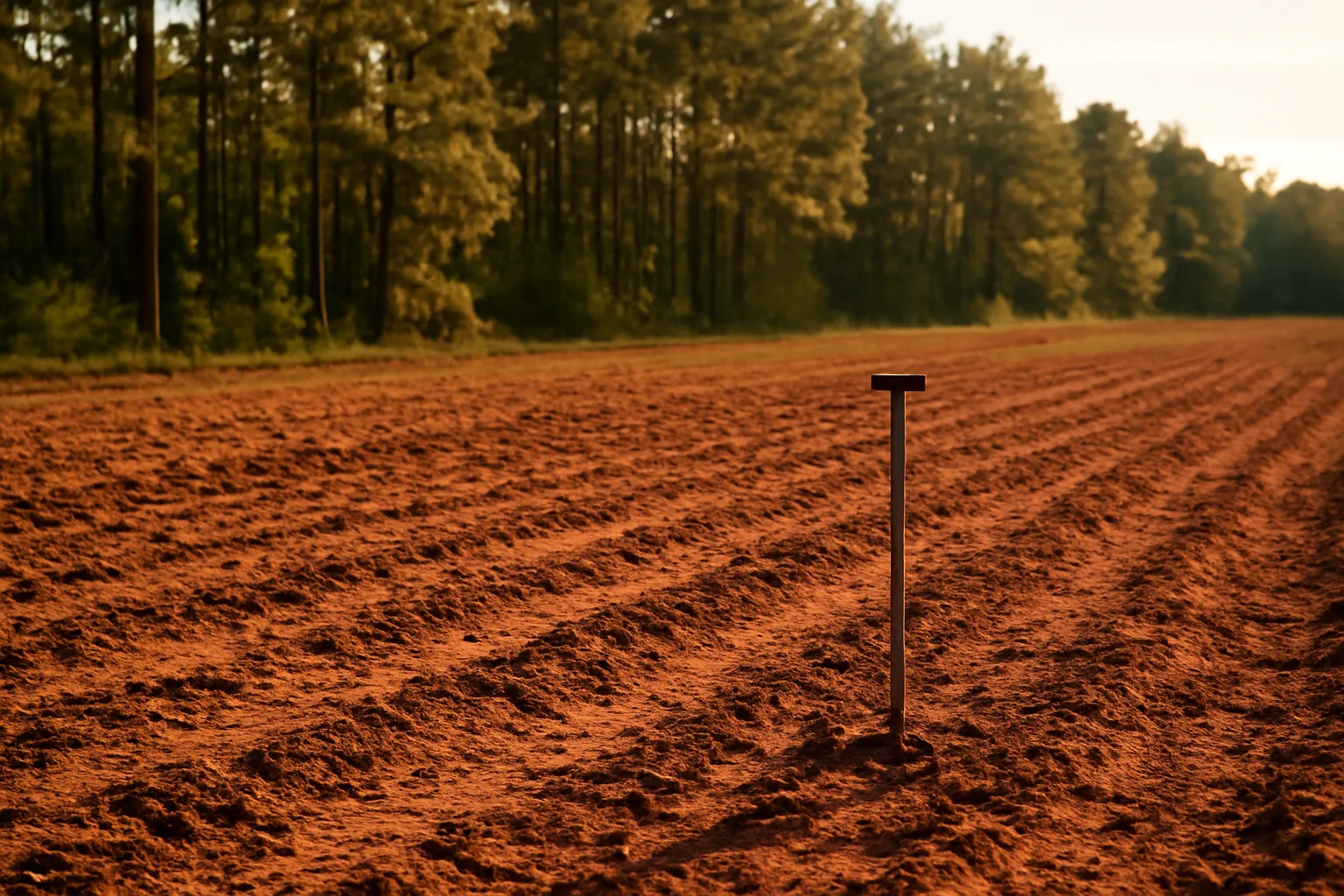
A food plot is a planted area, usually somewhere between a quarter acre and several acres, established specifically to grow forage that attracts and feeds deer and other wildlife. It's not a crop field meant for harvest and sale. It's a management tool. Most hunters plant food plots for one of two reasons: to supplement natural deer nutrition through stress periods (late summer drought, deep winter), or to create a hunting location with predictable deer traffic. Good plots do both. A well-placed clover plot feeds deer from spring through fall and gives you a place to sit a stand in October. Food plots range from small, hidden "kill plots" tucked into timber (a quarter acre or less) to large "destination" fields of 3 to 5 acres meant to hold deer on the property. Neither size is automatically better. It depends on your acreage, your hunting pressure, and what your neighbors are planting. If you're new to this and want a rundown on plot styles and how to pick one for your ground, the food plot whitetail guide breaks down the main categories.
When to plant food plots for deer in Alabama, by region
| North Alabama (Tennessee Valley) | Sept 15 - Oct 15 | April 15 - June 1 | Oct 20 - Nov 1 | |
|---|---|---|---|---|
| Central Alabama (Black Belt) | Sept 20 - Oct 25 | April 5 - June 10 | Oct 25 - Nov 10 | |
| South Alabama / Wiregrass / Coastal | Oct 1 - Nov 5 | March 25 - June 15 | Nov 5 - Nov 20 | These dates come from typical frost patterns tracked by NOAA climate normals and echoed in Alabama Extension planting guidance for forage and wildlife plantings [1] [2]. If you're in the Tennessee Valley counties (Madison, Limestone, Lauderdale), don't wait until November to get clover or wheat in. You'll lose fall growth and the plants won't have enough root development to survive a hard winter. If you're near Mobile or Baldwin County, you actually have more flexibility in the fall since frost comes later, but you also deal with more soil moisture issues and sandier ground in spots, which changes your fertility plan more than your calendar. |
Alabama Extension divides the state into planting zones based on frost dates, and your local county Extension office can give you the exact averages, but here's the general breakdown hunters use. | Region | Cool-season planting window | Warm-season planting window | First frost (avg) |
When to plant oats for deer in Alabama
Plant oats in Alabama from mid-September through late October, with north Alabama planting earlier in that window and south Alabama planting into early November. Oats are one of the most reliable cool-season cereal grains for deer plots because they establish fast and deer hit them hard as soon as they emerge. Oats want soil temps in the 45 to 75°F range to germinate well, and they'll winterkill in the coldest parts of north Alabama if planted too late and hit by a hard freeze before reaching 3-4 inches of growth. That's why the Sept 15 to Oct 15 window matters more in the Tennessee Valley than it does near Dothan. A lot of hunters blend oats with wheat, crimson clover, and a brassica like turnips in one fall planting. The oats give you fast early growth and tonnage, the clover and brassicas carry the plot through winter and into spring. One practical note: oats are less cold-tolerant than wheat or rye. If you're planting late (after October 20 in north Alabama) and worried about an early freeze, wheat is the safer bet.
When to plant turnips for deer in Alabama
Plant turnips for deer in Alabama between late August and mid-September in north Alabama, and mid-September through early October in central and south Alabama. Turnips need a longer growing period before frost than oats or clover, typically 80 to 90 days to reach full bulb size, so they go in the ground earlier than most other fall plot components. Here's the catch that trips up a lot of first-time planters: deer often ignore turnip bulbs and tops until after the first hard frost converts starches to sugars, making them sweeter and more palatable. That means a turnip plot planted in early September might sit mostly untouched until late November or December, then get hammered through late winter when deer need it most. If your goal is late-season hunting over a brassica plot, plant early enough to hit that 80-90 day maturity window before your average first frost, then be patient. Deer will find it. Mix turnips with a cereal grain like oats or wheat for the best results. The grain gives you early-season attraction and tonnage while the turnips mature and sweeten for late season.
Do deer eat clover, and when do you plant it in Alabama?
Yes, deer eat clover readily, and it's one of the most consistently preferred forages in whitetail diet studies across the Southeast. Clover also happens to be one of the most forgiving plants for a first-time plot manager because it's a perennial. Plant it once, maintain it, and it can produce for 3 to 5 years. In Alabama, plant clover in the fall window (mid-September through October) so it establishes before winter, or in very early spring (late February through March) if you missed the fall window. Fall planting is strongly preferred because clover seeded in fall gets a full growing season before summer heat and competition from weeds becomes a problem. White clover (Ladino types) and red clover are the two most common choices. Ladino tends to handle Alabama's clay soils and moderate winters well, and it's more shade tolerant than most other plot forages, which matters if your plot backs up to timber. Clover also needs decent soil pH, generally 6.0 to 6.5, and adequate phosphorus and potassium to persist. This is where a soil test earns its keep. Your Extension soil test report (through Alabama's Auburn University soil testing lab, for instance) will tell you exactly how much lime and fertilizer your specific field needs, and that report is the real authority here, not a general guide like this one [3].
Do deer like clover more than other forages?
Clover consistently ranks as one of the most preferred forages for whitetails, but "favorite" depends heavily on season, availability, and what else is growing nearby. Deer are selective, opportunistic browsers, and their preferences shift throughout the year based on nutritional needs and what natural forage is available. During spring and summer, deer favor high-protein plants like clover, soybeans, and cowpeas because does are lactating and bucks are growing antlers, both processes demanding heavy protein intake. In fall and winter, energy-dense foods (acorns, corn, grain sorghum, brassica bulbs) move up in priority as deer need calories to handle cold and the rut. So clover is close to a year-round favorite in terms of palatability, but it's not the only thing deer key on, and a plot planted with a single species will get hit hard for a few weeks and then see less traffic once deer move to whatever's next in their seasonal rotation. That's the real argument for diversifying what you plant across a property and across seasons.
What are deer's favorite foods overall?
There's no single universal answer because it changes by region, season, and what's locally available, but research and Extension data point to a consistent short list: acorns, soybeans, clover, honeysuckle, and agricultural grains like corn and grain sorghum rank among the most preferred whitetail foods across the Southeast. Acorns are often the single most preferred natural food in fall when they're dropping, largely because of their fat content, which helps deer build fat reserves before winter. In managed food plots, soybeans and cowpeas are top performers during the growing season, and brassicas and cereal grains take over as the preferred late-season foods once frost sweetens them. The honest answer for a landowner: don't chase a single magic species. Deer preference studies from state wildlife agencies and university researchers consistently show diet is driven by availability and season more than a fixed ranking of favorites. Plant a mix that covers spring, summer, and fall, and you'll cover more of a deer's actual diet than any single "best" plant will.
Do deer eat sorghum?
Yes, deer eat grain sorghum, both the standing grain heads and the young foliage, and it's a solid warm-season plot component in Alabama, especially in the Black Belt and south Alabama where summer heat and drought stress knock out less hardy plants. Grain sorghum is more drought-tolerant than corn and needs less nitrogen to produce a decent yield, which makes it a cheaper option for hunters on a budget [4]. Plant grain sorghum in Alabama from late April through June once soil temps are reliably above 65°F. It matures in around 90 to 120 days depending on variety, so a late April planting gives you standing grain by late summer into fall, right when deer (and turkey, and dove, if you're managing for multiple species) start keying on it heavily. One thing to know: sorghum alone isn't a great season-long attractant. It's mostly valuable once the heads mature and dry down. Pair it with cowpeas or soybeans in the same field for earlier-season browse while the sorghum finishes out.
Do deer like honey?
Deer don't naturally forage for honey in the wild and it's not part of their diet or a food plot ingredient in any meaningful sense. Some commercial deer attractant products use molasses, sugar, or scent additives (sometimes marketed loosely with "honey" or sweet branding) to add scent and sweetness that deer key on, but that's a supplemental attractant product, not a food source and not something you plant. Worth knowing: many states restrict or fully ban baiting and using scent attractants for deer hunting, and Alabama has its own rules on baiting that differ from feeding for general wildlife management. Check Alabama's current hunting regulations before using any bait or attractant product near a stand, since rules on bait placement, distance from stands, and what counts as "baiting" versus a food plot can carry real penalties.
How does soil prep timing affect when you plant?
Your planting date on a calendar means nothing if your soil isn't ready. Alabama clay soils, especially in the Black Belt and Piedmont regions, need lime applied weeks to months before planting because lime takes time to raise pH, it doesn't work instantly. If your soil test comes back needing lime (and a lot of Alabama ground does, since native pH often runs acidic in the 5.0 to 5.5 range), apply it at least 60 to 90 days before your planting date whenever possible. Fall plots planted in September need lime applied by July if you're starting from scratch. Spring plots planted in April need lime down by January or February. Auburn University's soil testing lab is the standard resource Alabama landowners use, and your specific report, not a generic guide, should set your lime and fertilizer rates. Every field is different, and guessing at rates wastes money and can actually hurt establishment if you overapply nitrogen on a legume plot or underapply potassium on a heavy clover stand [3]. If you want help translating a soil test into an actual planting plan for your property, that's exactly the gap a custom plan fills. PlotSeason's $99 Custom Food Plot Plan takes your soil test results, your region, and your goals and turns them into a specific seed mix and timing plan rather than a generic calendar. Start one at /plot-plan-builder.
What equipment do you need and does it change your timing?
Equipment access can shift your planting window by a couple of weeks in either direction, and that's worth planning around rather than fighting. If you're broadcasting seed with a hand spreader or ATV spreader and no-till drilling isn't an option, you want soil moisture right after prep, which sometimes means waiting a few extra days for rain rather than planting into bone-dry dirt. Broadcast clover and brassica seed especially need good seed-to-soil contact, so timing around a rain event often matters more than hitting an exact calendar date. If you have access to a no-till drill, you get more flexibility, since drilled seed germinates more reliably in marginal moisture than broadcast seed. Renting or borrowing a drill through an Extension equipment program or local co-op is common in Alabama, and it's worth checking your county Extension office for what's available before assuming you need to buy gear. For a rundown on which tools actually matter for a given plot size and budget, deer food plots covers the setup side in more depth.
What seed mixes work best for Alabama's climate?
Alabama's humidity, clay soils, and long growing season favor certain species over others compared to, say, the upper Midwest. For fall plots: a blend of cereal grain (wheat or oats), a legume (crimson or arrowleaf clover), and a brassica (turnips or radish) covers early attraction, winter persistence, and late-season sweetness in one planting. This three-way mix is one of the most common recommendations from Southeastern Extension wildlife programs because each component covers a gap the others leave [1]. For spring/summer plots: soybeans or cowpeas for protein during antler growth and lactation, paired with grain sorghum for drought tolerance and late-summer standing forage, handles Alabama's heat and occasional dry spells better than corn alone, which is thirstier and more fertilizer-hungry. If you're picking seed for the first time and want species-specific guidance rather than a general list, deer food plot seed and food plot seed both go deeper on variety selection for different soil and rainfall conditions.
What mistakes cost people their planting window?
The single biggest mistake: waiting on a soil test result to start prep, then planting too late once it finally arrives. Send your soil sample 4 to 6 weeks before you intend to plant, not the week before. Auburn's soil lab and most Extension labs have turnaround times that can run 1 to 3 weeks depending on season volume, longer during spring and fall rush periods [3]. Second mistake: planting brassicas too late for their maturity window. If turnips need 80-90 days and you plant them 60 days before your average first frost, you'll get thin, immature bulbs deer show little interest in. Third: ignoring your specific county's frost data and using a statewide average. A hunter in Huntsville and a hunter in Foley are working with roughly a three-week difference in both spring and fall planting windows. Pull your county's actual frost dates from NOAA climate data or your county Extension office rather than assuming the whole state moves together [2]. Fourth: skipping herbicide burn-down or tillage prep because you're in a hurry to hit a date. A perfectly timed planting into a field full of existing weed competition still underperforms a slightly later planting into clean, prepped ground.
Frequently asked questions
When to plant food plots for deer in Alabama?
Cool-season plots (clover, oats, brassicas) go in mid-September through late October, earlier in north Alabama and later on the coast. Warm-season plots (soybeans, cowpeas, sorghum) go in April through mid-June once soil is reliably above 65°F. Your exact date depends on your county's average frost dates.
Do deer eat sorghum?
Yes. Deer eat grain sorghum foliage and grain heads, and it's a drought-tolerant warm-season option for Alabama plots, especially in the Black Belt and south Alabama. It's most attractive once heads mature in late summer, so pair it with cowpeas or soybeans for earlier-season browse in the same field.
Do deer eat clover?
Yes, clover is one of the most consistently preferred whitetail forages across the Southeast. It's high in protein, palatable nearly year-round, and as a perennial it can produce for 3 to 5 years once established, making it a strong first choice for new plot managers.
When to plant oats for deer?
Plant oats in Alabama mid-September through late October, earlier in north Alabama (by Oct 15) to avoid winterkill from early hard frosts, later in south Alabama where frost comes weeks later. Oats germinate well in 45-75°F soil and give fast early growth in a fall plot blend.
When to plant food plots for deer in Alabama?
There are two windows: fall/cool-season (mid-September to late October, moving later as you go south) and spring/warm-season (April through mid-June). Which one you use depends on what you're planting, clover and brassicas in fall, soybeans and sorghum in spring.
Do deer like clover?
Yes, clover ranks among the top preferred forages for whitetails in university and Extension research across the Southeast. It's high-protein and palatable through most of the year, though deer preference does shift seasonally toward energy-dense foods like acorns and grain in fall and winter.
When to plant turnips for deer?
Plant turnips in north Alabama by late August to mid-September, and in central/south Alabama mid-September through early October. Turnips need 80-90 days to mature before frost, and deer often ignore the bulbs until after a hard freeze sweetens them.
What is a food plot?
A food plot is a planted area, usually a quarter acre to several acres, established to feed and attract deer and other wildlife rather than for crop harvest. It's a management tool used to supplement nutrition during stress periods and to create predictable hunting locations.
What are deer's favorite foods?
There's no fixed universal favorite. Acorns, soybeans, clover, and agricultural grains like corn and sorghum consistently rank high in Southeastern whitetail diet studies, but preference shifts by season and what's locally available. Diversifying species across a property covers more of a deer's actual seasonal diet than any single plant.
Do deer like honey?
Deer don't naturally eat honey and it's not a food plot ingredient. Some commercial attractant products use sugar or molasses additives loosely marketed with sweet branding, but that's a supplemental attractant, not a planted food source, and its use may be restricted under state baiting rules.
What's the best month to plant food plots in Alabama?
For most of the state, mid-September to early October is the best window for fall plots (clover, oats, brassicas), and late April to May is best for spring plots (soybeans, sorghum, cowpeas). North Alabama should lean toward the earlier side of both windows.
Do I need a soil test before planting a food plot in Alabama?
Yes, strongly recommended. Alabama soils, especially clay-heavy Black Belt and Piedmont ground, often run acidic and need lime applied 60-90 days before planting. Auburn University's soil testing lab or your county Extension office can process a sample and give you site-specific lime and fertilizer rates.
Sources
- Alabama Cooperative Extension System, ANR-0879, "Establishing and Managing Wildlife Food Plots": Recommended split cool-season/warm-season planting approach for Alabama wildlife food plots
- NOAA National Centers for Environmental Information, Climate Normals: County-level average first and last frost dates used for regional Alabama planting windows
- Auburn University, Soil, Forage and Water Testing Laboratory, Soil Test Report Guide: Auburn's soil testing lab provides site-specific lime and fertilizer recommendations for Alabama landowners
- University of Georgia Extension, Bulletin 1287, "Grain Sorghum Production Guide": Grain sorghum is more drought-tolerant and requires less nitrogen than corn
- Code of Alabama 1975, Section 9-11-244, feeding of game animals: Alabama regulates baiting and feeding practices separately from food plot management