Last updated 2026-07-24
TL;DR
There's no established "7 card stud" food plot product or blend in the ag or wildlife literature. It's most likely a mix-up with a poker term or a regional nickname for a multi-species blend. What matters more: deer favor clover, brassicas, and cereal grains, and a good plot mixes 2 to 4 species timed to your region's frost dates and your soil test results.
what is a 7 card stud food plot, exactly
Straight answer: there's no widely recognized commercial seed product, university trial, or extension publication called "7 card stud" for deer food plots. If you saw the term somewhere, it's likely a private label name a local seed dealer slapped on a multi-species blend, a nickname someone coined for a 7-way mix, or a mishearing of another product name entirely. That's not a knock on you for searching it. Food plot marketing is full of cute names (Whitetail Institute has "Imperial," BioLogic has "Maximum," and plenty of small mills sell house blends with names like "Deer Draw" or "Rack Attack"). None of that naming is regulated, so there's no way to know what's actually in a bag called "7 card stud" without reading the label yourself. What we can tell you, with real data behind it: what deer actually prefer to eat, which species reliably perform in food plots across different U.S. regions, and how to build your own multi-species mix (a "stud" blend, if you want to keep calling it that) using species backed by decades of extension research. That's the useful version of this question, and it's what the rest of this article covers. If you want a plot plan built around your specific dirt instead of guessing at what's in an unlabeled bag, that's exactly the kind of thing a food plot whitetail planning process is built for.
what is a food plot, and why does species choice matter so much
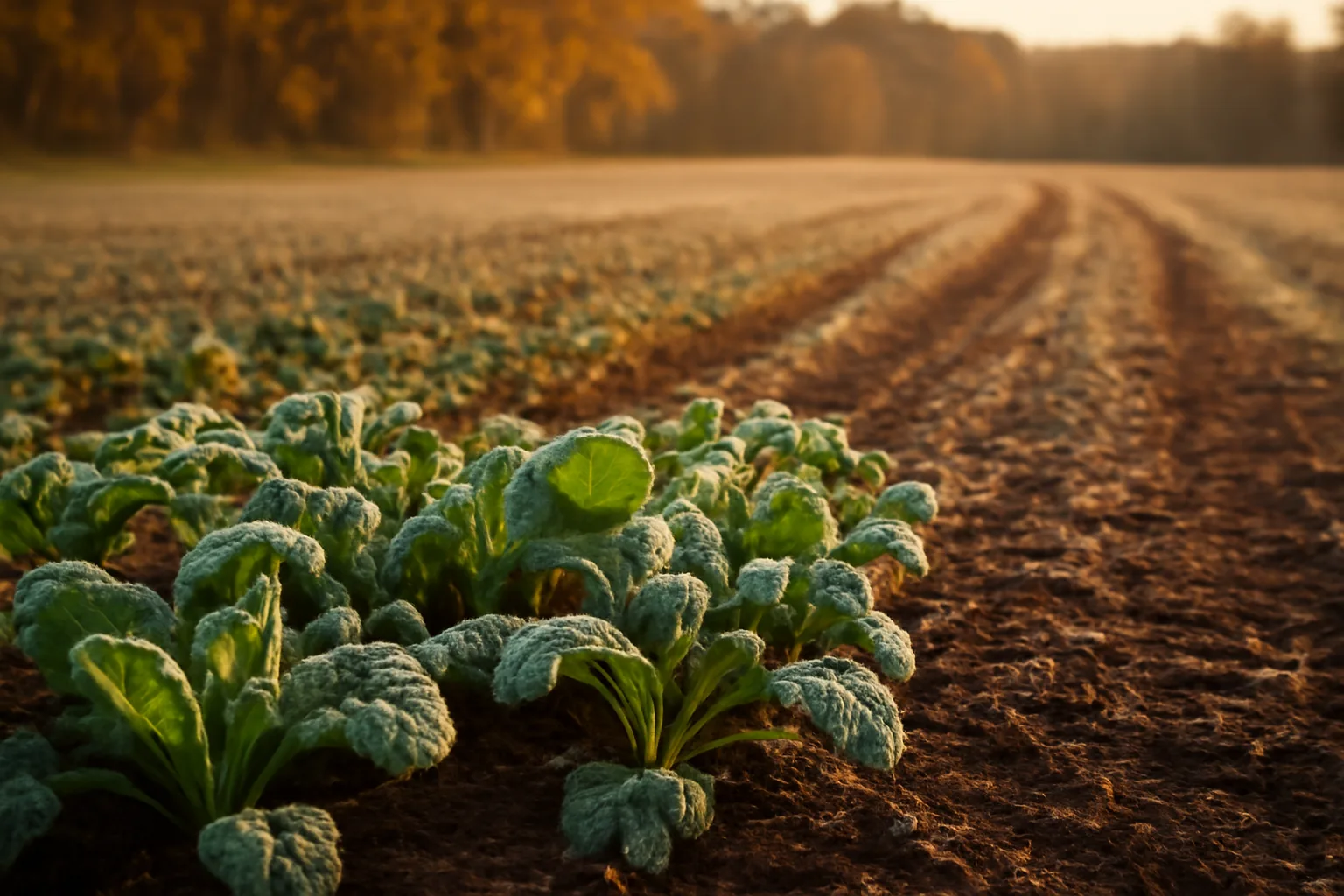
A food plot is a planted area, usually somewhere between a quarter acre and several acres, established specifically to attract and feed deer (and often other wildlife like turkey, rabbits, or dove). Food plots supplement natural browse, they don't replace it, and state wildlife agencies generally treat plots as habitat management rather than baiting, as long as the planting is done in the ground and more than scattered on the surface. Rules on this vary a lot by state, so check with your state wildlife agency before you plant anything close to a stand or blind, especially in states with strict baiting definitions. Species choice is the single biggest lever you control. Plant the wrong species for your region's frost window and you get a thin, unproductive stand. Plant the wrong species for your soil pH and fertility, and even perfect seed dies in the ground. Land-grant extension programs across whitetail country (Mississippi State, Penn State, University of Tennessee, and others) have run food plot species trials for decades, and the same handful of species keep winning: clover, brassicas (turnips, radishes, rape), cereal grains (oats, wheat, rye), and in the South, soybeans and cowpeas for warm-season protein [1]. A well-built plot mixes a legume (for protein and soil nitrogen), a brassica or cereal grain (for tonnage and cold-season palatability), and sometimes a warm-season row crop if you have the acreage and the fence to protect it from browse pressure early on.
do deer eat clover, and is it worth planting
Yes. Clover is one of the most consistently preferred food plot species across whitetail research, and it's the backbone planting for most perennial food plot programs. White clover (Trifolium repens) varieties like Durana and Ladino, along with red clover, show up in nearly every extension food plot guide as a top pick because they're high in protein (often 25 to 30 percent crude protein in vegetative growth), they're palatable through spring, summer, and fall, and a well-maintained stand can persist for 3 to 5 years before you need to reseed. Clover's biggest advantage is that it keeps producing new, tender growth all season if you mow it a few times to knock back weed competition and force regrowth. The downside is establishment. Clover seed is small, it needs good seed-to-soil contact (no more than a quarter inch deep), and it's slow to get going the first few months. It also needs soil pH in the 6.0 to 7.0 range to really thrive, which means lime is often non-negotiable on acidic soils, and only your soil test can tell you how much. Mississippi State University Extension lists white clover among the top perennial choices for whitetail plots specifically because of its combination of tonnage, protein, and regrowth after grazing [1]. If you're planting one thing and want it to work for years, more than one season, clover is usually the safest bet.
what are deer's favorite foods, ranked by what the research shows
| White clover | 25-30% | Spring-fall (perennial) | Consistently high all season | |
|---|---|---|---|---|
| Soybeans (forage type) | 20-30% | Summer | High, especially before pod stage | |
| Brassicas (turnips/radish) | 15-20% (bulb lower) | Late fall-winter | Low until frost, then very high | |
| Oats | 12-16% | Fall-early winter | High immediately after planting | |
| Winter wheat/rye | 15-20% | Fall-spring | Moderate to high, especially late winter | |
| Cowpeas | 20-25% | Summer | High in the South | Protein percentages are approximate ranges reported across multiple extension forage guides and vary with growth stage, soil fertility, and maturity at the time deer browse them. |
Deer preference isn't fixed. It shifts by season, region, and what's available naturally, so "favorite food" is really "most preferred food relative to what else is on the landscape right now." That said, a few patterns hold up across most whitetail research and extension trial data. In late summer and fall, acorns are usually deer's top preference where oaks are present, because of their high fat content, and deer will often abandon food plots entirely during a heavy acorn drop. Among planted food plot species, clover and soybeans rank at or near the top for palatability and protein content through most of the growing season. Brassicas (turnips, radishes, rape) become highly preferred after the first hard frost, because freezing temperatures convert starches to sugars and make the leaves and bulbs much sweeter, often turning a plot that deer ignored in October into one they hammer in December. Here's a rough comparison of common food plot species by role and preference pattern: | Species | Typical crude protein | Best season | Deer preference pattern |
do deer eat sorghum
Yes, deer eat sorghum, but it's a secondary food plot species rather than a first choice. Grain sorghum (milo) produces a seed head deer will readily eat once it matures, and it's more drought tolerant than corn, which makes it a decent choice in the Great Plains and parts of the Southeast where rainfall is inconsistent. Some food plot mixes include forage sorghum or sorghum-sudangrass as a nurse crop or screening cover rather than a primary attractant, because the tall growth also gives deer bedding cover and visual security. Sorghum isn't as preferred as soybeans, clover, or corn where those are available, and it's rarely the anchor species in a whitetail plot plan. If you're choosing between sorghum and corn on similar ground, corn generally wins on deer preference and total tonnage, but corn also costs more per acre in seed and fertility inputs and is more susceptible to drought stress in some regions. Sorghum's real value in a plot is often as cover and a fallback food source late in the season after preferred plants are gone.
do deer like clover more than other plants (and is honey ever part of it)
Clover ranks near the top of preferred food plot species almost everywhere it's studied, largely because of its protein content and long growing window compared to annuals that mature and decline. Deer are ruminants with a preference for high-protein, digestible forage, and clover checks both boxes for most of the year. On the honey question: no, deer don't eat honey in any meaningful, food-plot-relevant sense. Deer are herbivores. They don't raid hives or seek out honey the way bears do. If you've seen this question paired with food plots, it's probably a mix-up with bear attractants (where honey and honey-based baits are common, and heavily regulated or banned in a lot of states) or it's an unrelated internet rabbit hole. There's no legitimate food plot use for honey, and no wildlife agency or extension program lists it as a deer attractant. What deer actually respond to as "sweet" attractants in a legitimate plot context is the sugar conversion that happens in brassicas and some grains after a hard frost, which is a real, documented physiological response in the plant, not an added ingredient.
when to plant food plots for deer, by region
Timing depends entirely on whether you're planting a warm-season (spring/summer) or cool-season (late summer/fall) plot, and both depend on your local frost dates. There's no single national planting date, and any calendar that gives you one without asking your zip code is guessing. As a general framework: spring plots (soybeans, cowpeas, clover establishment) go in after your last frost date, typically April through June depending on latitude. Fall plots (brassicas, cereal grains, clover overseed) go in 60 to 90 days before your first fall frost, so the plot has time to establish before growth slows. In the Upper Midwest and Northeast, that often means late July through August. In the Mid-South and Southeast, September planting windows are common. The USDA plant hardiness zone map and your local NOAA frost date data are the actual tools to use here, and your state extension office publishes zone-specific planting calendars built on that data [2]. A simple rule that holds up regionally: brassicas need roughly 90 days to reach full maturity, and you want that maturity to land right around your first hard frost, not before it and not long after. Work backward from your average first frost date to set your planting window.
when to plant oats for deer
Plant oats 60 to 75 days before your area's first killing frost, which for most of the whitetail range means a window from late August through mid-September. Oats are a fast-germinating, cool-season cereal grain that deer often hit hard within the first few weeks of emergence, before slower-growing brassicas or clover have caught up. Oats don't tolerate deep cold as well as wheat or rye. In northern climates, oats often winter-kill after the first hard freezes, which is fine if you're using them as an early-fall attractant and don't need winter-long tonnage. If you want food plot coverage that lasts into late winter, pair oats with winter wheat or cereal rye in the same mix. The oats come up fast and pull deer in early, the wheat or rye holds through the cold months after the oats are gone. Oats also work well as a nurse crop for a new clover seeding. The oats germinate fast, shade out some weed competition, and give the slower clover seedlings a head start, then the oats die back and the clover takes over the plot in year two.
when to plant turnips for deer
Plant turnips (and other brassicas like radish and rape) 80 to 100 days before your first expected fall frost, since turnip bulbs need that full window to size up before cold weather triggers peak palatability. For most of the whitetail range, that lands somewhere between mid-July and early September, depending on latitude. The timing matters more with turnips than almost any other food plot species, because the whole point of planting them is the frost-triggered starch-to-sugar conversion in the leaves and bulbs. Plant too late and the frost hits before the plant has built enough bulb and leaf mass, and you get a thin stand deer barely touch. Plant too early in a warm climate and the plant can bolt or get overtaken by weeds before cool weather even arrives. A detail a lot of first-time planters miss: deer often ignore turnip plots completely for the first month or two after planting, then hit them hard after the first frost. Don't panic and assume the plot failed if you don't see deer activity in October. Check back in December.
how do I pick species for my own plot (instead of guessing at a mystery blend)
Start with a soil test, not a seed bag. Your county extension office or a private ag lab can run a full soil test for somewhere in the range of 10 to 20 dollars, and it will tell you your soil pH, phosphorus, potassium, and organic matter, which determines what will actually grow before you spend a dime on seed [3]. Your soil test lab's specific lime and fertilizer recommendations are the authority here, not a generic online chart, because soil chemistry varies field to field even on the same farm. Once you know your soil chemistry and your region's frost dates, species selection gets a lot simpler. A basic two-species combo (say, clover plus a fall brassica, or oats plus winter wheat) beats an elaborate 7-way mix if you don't have the equipment or time to manage it well. More species in a bag doesn't automatically mean a better plot. It means more competing germination requirements, more chances for one species to choke out another, and often more wasted seed. If you'd rather not build this species-by-species yourself, that's the gap a $99 one-time Custom Food Plot Plan from PlotSeason is built to fill: you get species and timing guidance matched to your region and soil test results, without needing to become a part-time agronomist first. It's general planning guidance built on your inputs, not a site visit or a guarantee of deer activity, and your soil test lab still has the final word on lime and fertilizer rates. For a broader look at pulling all this together into an actual planting plan, see deer food plots and deer food plot seed for species-specific breakdowns.
what equipment do you actually need to plant a food plot
At minimum: a way to kill or suppress existing vegetation (herbicide and a sprayer, or a disk), a way to work the seedbed (disk, tiller, or a no-till drill if you're skipping tillage), a way to spread seed (broadcast spreader, which can be a hand-crank model for small plots or a tow-behind for bigger acreage), and a way to get seed-to-soil contact (a cultipacker, drag harrow, or even a chain drag works for small plots). Many hunters get by with an ATV or side-by-side and a tow-behind implement set (disk, spreader, cultipacker) instead of a full-size tractor, especially on plots under 2 acres. A no-till drill is the single best upgrade if you're planting into existing sod or crop residue without tillage, since it puts seed at a controlled depth without needing to till first, but drills are expensive to buy and often worth renting from a local co-op or conservation district instead. Don't skip the soil test just because you have good equipment. A perfectly planted seed in soil with a pH of 5.0 still won't grow well, no matter how nice your drill is.
Frequently asked questions
Is 7 card stud a real food plot seed brand?
Not that we can verify. There's no established food plot seed product, university extension reference, or commercial brand by that exact name. It's likely a private label, a regional nickname, or a mix-up with the poker term. Deer plot success comes down to species and timing, not a specific product name.
Do deer eat sorghum?
Yes, deer eat sorghum grain and forage sorghum, but it's a secondary food plot species compared to corn, soybeans, or clover. It's more drought tolerant than corn and sometimes used as cover or a late-season fallback food rather than the main attractant in a plot.
Do deer eat clover?
Yes, clover is one of the most preferred food plot species in whitetail research, valued for its 25 to 30 percent crude protein content and long growing season. White clover varieties like Durana and Ladino are common choices, and a well-maintained stand can produce for 3 to 5 years.
When should I plant food plots for deer?
It depends on the plot type and your region's frost dates. Spring plots (soybeans, cowpeas) go in after your last frost, often April through June. Fall plots (brassicas, cereal grains) go in 60 to 100 days before your first fall frost, commonly late July through September depending on latitude.
Do deer like clover better than other food plot plants?
Clover ranks near the top of preferred species in most food plot research, mainly due to its high protein and long season of tender regrowth. Preference shifts seasonally though, and deer will favor acorns during a heavy drop or frosted brassicas in early winter over clover.
When should I plant oats for deer?
Plant oats 60 to 75 days before your area's first killing frost, generally late August through mid-September across most of the whitetail range. Oats germinate fast and often get hit hard by deer within weeks, but they typically winter-kill in colder climates.
When should I plant turnips for deer?
Plant turnips 80 to 100 days before your first expected fall frost, roughly mid-July through early September depending on latitude. Deer often ignore turnip plots until after the first hard frost triggers a starch-to-sugar conversion in the leaves and bulbs.
What is a food plot?
A food plot is a planted area, usually a quarter acre to several acres, established specifically to attract and feed deer and other wildlife. It supplements natural browse rather than replacing it, and state rules on plot placement near stands vary, so check your state wildlife agency's baiting regulations.
What are deer's favorite foods?
Preference shifts by season, but acorns rank very high in fall where oaks are present due to fat content. Among planted species, clover and soybeans stay near the top through most of the growing season, and frosted brassicas become highly preferred in early winter.
Do deer like honey?
No. Deer are herbivores and don't seek out honey the way bears do. This question likely comes from confusion with bear bait regulations, where honey is a common and often regulated attractant. Honey has no established role in whitetail food plot planning.
What's the difference between a warm-season and cool-season food plot?
Warm-season plots (soybeans, cowpeas, sunflowers) are planted after the last spring frost and provide summer protein through the growing season. Cool-season plots (brassicas, oats, wheat, clover) are planted 60 to 100 days before fall frost and provide fall-through-winter forage, often becoming more palatable after cold weather.
Do I need a soil test before planting a food plot?
Yes, strongly recommended. A soil test costs roughly 10 to 20 dollars through most county extension offices and tells you pH, phosphorus, potassium, and organic matter before you spend money on seed. Your soil test lab's lime and fertilizer recommendations should guide your plot, not a generic online chart.
Can I plant a food plot without a tractor?
Yes. Many hunters use an ATV or side-by-side with tow-behind implements (disk, spreader, cultipacker) for plots under 2 acres. A no-till drill is a strong upgrade for planting into sod without tillage, and many are available to rent through local co-ops or conservation districts.
Sources
- Mississippi State University Extension Publication 2111, "Establishing and Managing Wildlife Food Plots": Clover and other perennial species are top choices for whitetail food plots based on tonnage, protein, and regrowth after grazing
- NOAA National Centers for Environmental Information, Frost/Freeze Data: Local average first and last frost dates determine fall and spring food plot planting windows
- University of Missouri Extension, publication G9110, "Soil Testing for Lawns, Gardens, and Wildlife Food Plots": Basic soil tests typically cost approximately 10 to 20 dollars through university soil testing labs
- Mississippi State University Extension Publication 2872, "Brassicas for Deer Food Plots": Brassica leaves and bulbs undergo a starch-to-sugar conversion after frost that increases palatability to deer
- University of Georgia Extension: Recommendations on clover varieties and their use in wildlife food plots