Last updated 2026-07-25
TL;DR
Plant turnips and radishes 60-90 days before your area's average first killing frost, usually late July through early September depending on zone. Both need cool nights to sweeten up and enough time to bulb before deer start hammering them. Test soil first; brassicas want pH near 6.0-6.5 and respond hard to nitrogen.
When should you plant turnips and radishes for deer?
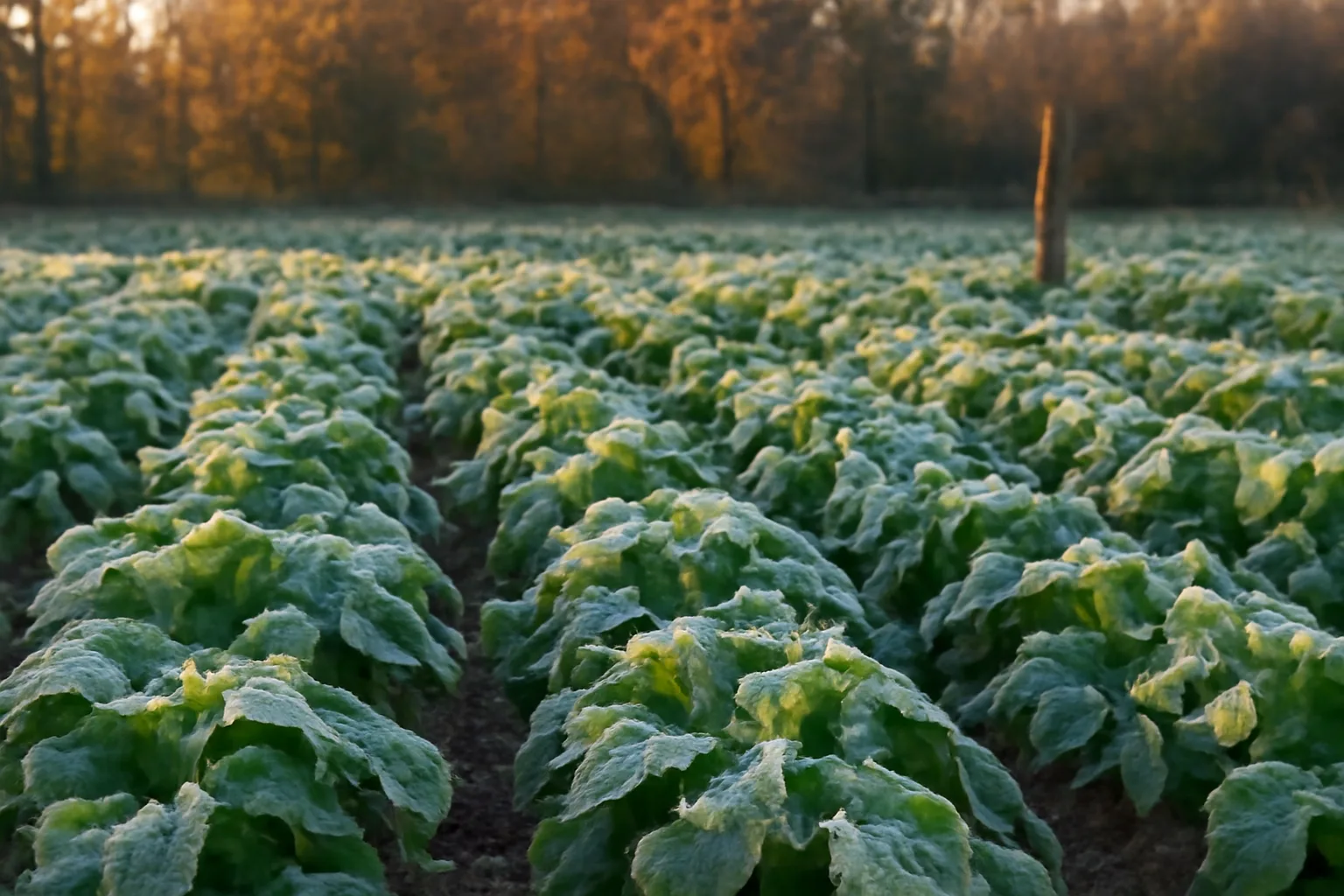
Count backward from your first fall frost date and plant 60 to 90 days ahead of it. Turnips and radishes are cool-season brassicas. They need a real stretch of warm growing weather to build leaf mass and bulb, then a frost or two to convert starches to sugars, which is what makes deer suddenly switch from ignoring the plot to camping in it. In the Upper Midwest and Northeast (zones with first frost around late September to early October), that puts planting in late July through mid-August. In the transition zone and mid-South, first frost often lands in mid-to-late October or even November, so you can wait until late August or early September. Deep South plots (parts of Texas, Louisiana, the Gulf Coast) sometimes push planting into late September because frost may not show up until December, if it shows up at all. The USDA Natural Resources Conservation Service publishes county-level frost/freeze data you can use to nail down your local average first frost date [1]. Cooperative extension offices in deer country almost always have a brassica planting chart built around that same frost data, and several state extensions (Penn State, Mississippi State, University of Tennessee) publish food plot calendars specifically for hunters [2]. One planting mistake shows up every year: guys plant brassicas too early in hot August weather in the South, and the plants bolt or get eaten by bugs before they ever bulb. Too late, and you get pretty leaves but no bulb development before frost locks growth down. The 60-90 day window is not a suggestion, it is close to the actual biology of the plant.
What is a food plot, exactly?
A food plot is a planted area, usually somewhere between a quarter acre and several acres, planted specifically to feed and hold deer or other game on a property. It is not a garden and it is not lawn seed thrown in a field edge. It is a managed planting, usually annual or perennial forage, designed around a hunting or land management goal. Food plots generally fall into two categories: annual plots (brassicas, cereal grains, clover blends that get replanted) and perennial plots (clover, chicory) that can produce for 3-5 years with maintenance. Most successful plot programs run both: a perennial clover field for spring/summer protein and a fall annual brassica or grain plot timed to peak during hunting season. The USDA's National Agroforestry Center and state wildlife agencies both treat food plots as a habitat management tool, not a replacement for natural browse. Agencies like the Pennsylvania Game Commission and Mississippi Department of Wildlife, Fisheries and Parks publish guidance treating plots as a supplement to, not a substitute for, natural forage diversity [3].
When to plant food plots for deer overall (more than brassicas)?
| Upper Midwest / Northeast | Late April - May | Late July - mid-August | |
|---|---|---|---|
| Transition zone (OH, KY, VA, MO) | Mid-April - May | Mid-August - early September | |
| Mid-South (TN, AR, NC) | Late March - April | Late August - mid-September | |
| Deep South (GA, AL, LA, TX) | March - April | Mid-September - early October | These windows are general. Always check your local extension office or state wildlife agency for county-specific frost dates before locking in a date [1]. |
Food plot timing splits into two seasons, spring and late summer/fall, and what you plant drives which window matters. Spring plots (clover, chicory, soybeans, alfalfa) go in after your last frost date, typically April through May in northern zones and March through April in the South. These are warm-season plantings meant to feed deer through summer lactation and antler growth. Fall plots (brassicas, cereal grains like oats and wheat, winter peas) go in 60-90 days before first frost, which lands anywhere from late July (far North) to late September (South), as covered above. Here's a rough planting window by region: | Region | Spring plot window | Fall plot window |
When to plant oats for deer?
Plant oats in late summer to early fall, same general 60-90 day window before frost that applies to brassicas, though oats are a little more forgiving on timing since they don't need to bulb. Oats germinate fast, often within 5-7 days in warm soil, and deer will hit young oat shoots almost immediately. Many food plot mixes pair oats with brassicas or winter wheat because oats give quick, early forage while the brassicas are still bulbing underground. Oats are not very cold-hardy compared to wheat or rye; a hard freeze in the teens will usually kill oats outright, while wheat and cereal rye keep producing into winter. If you want a plot that still has green forage in January in northern climates, oats alone won't do it. Blend with wheat or rye for season-long coverage. University of Tennessee Extension and Mississippi State Extension both list oats as one of the most reliably palatable cool-season annual grains for deer, especially in the first 6-8 weeks after emergence [2] [4].
Do deer like clover, and when do you plant it?
Yes, deer like clover a lot, and it's one of the most consistently used food plot species in the country. Clover is a perennial legume, high in protein (often 25-30% crude protein in vegetative stages according to forage testing summarized by university extension programs) [5], and it's available spring through fall once established. Plant clover in early spring (after last frost, roughly March-May depending on zone) or late summer/early fall (August-September) so it has time to establish a root system before winter dormancy or summer heat stress. Clover is slower to establish than brassicas or grains, often taking 60-90 days to get a full stand, but a well-maintained clover field can produce for 3 to 5 years with proper mowing, liming, and weed control. Do deer eat sorghum? Yes, deer will browse grain sorghum, particularly the leaves and later the grain heads, but it's mostly used as a summer annual for its drought tolerance and as a screening/cover crop rather than a primary attractant. It's more common in warm-season food plot blends in the South and in areas with sandy or drought-prone soil, and it's not typically the centerpiece planting the way clover, brassicas, or beans are.
When to plant turnips for deer specifically?
Turnips need roughly 60-90 days from seed to a mature, frost-sweetened bulb, so back that up from your first expected hard frost (temps in the mid-20s F, more than the first light frost) to get your planting date. Turnip seed is tiny. Broadcast at 4-6 lbs per acre if drilling, or up to 8-10 lbs per acre if broadcasting shallow, according to typical seed tag rates from major food plot seed suppliers and extension forage guides [2]. Seed depth matters more than people think: turnips want to be planted at about 1/4 to 1/2 inch deep. Too deep and germination rates drop hard. A soil test is worth doing before you plant anything, but it matters even more with brassicas because they're heavy nitrogen feeders. Extension guidance generally recommends 40-60 lbs of actual nitrogen per acre for brassica plots, split with some at planting and some as a topdress 3-4 weeks later, plus phosphorus and potash based on what your soil test calls for [2]. Your soil test lab is the real authority here, not a seed bag; send a sample and follow their specific lime and fertilizer recommendations rather than a generic rate. One thing deer hunters consistently underestimate: turnips often get ignored by deer for the first 6-8 weeks after planting, then get hit hard once a frost hits and sugar content spikes. If you're planting turnips expecting deer traffic in September, you'll probably be disappointed. Plan for turnips to peak in November through January in most whitetail range, which is exactly why the fall planting window matters so much.
What's the difference between planting turnips and radishes, timing-wise?
Radishes (especially forage/tillage types like Daikon or Groundhog varieties) grow faster than turnips and can be ready for deer browsing in as little as 45-60 days, though full taproot development still benefits from the same 60-90 day window. Radishes tend to get browsed earlier in the season than turnips because the tops are palatable right away and the root doesn't need frost-sweetening the way a turnip bulb does. That makes radish a good complement in a blend: radish gives you early-season attraction while turnips and other brassicas take over as the fall progresses and frosts arrive. Radish also does something turnips don't do as well: it breaks up compacted soil. The taproot on a forage radish can push 6-12 inches or more into hardpan, which is one reason a lot of no-till food plot blends include radish even on properties where deer attraction isn't the only goal. Both species are frost tolerant to a point, surviving temperatures into the low 20s F, but a hard, sustained freeze will eventually kill the tops even though the buried bulb or root often survives and stays edible for weeks longer.
What are deer's favorite foods, and where do brassicas rank?
There's no single universal favorite; it changes by season, region, and what's available naturally. That said, several patterns show up consistently in state wildlife agency forage studies and extension research. In spring and summer, deer lean heavily on forbs, clover, soybeans, and natural browse (young woody shoots, greenbrier, honeysuckle). In fall, acorns are often the dominant preferred food where oaks are present; multiple state agency and university studies note deer will bypass planted food plots almost entirely during a heavy acorn drop [6]. Once acorns are gone or in years with poor mast, planted brassicas, cereal grains, and standing beans become far more attractive. Turnips and radishes specifically tend to rank low in preference early in the season and rise sharply after frost, often becoming a preferred late-season food from December into February in the Midwest and Northeast, when little else is green. This is a documented pattern in extension brassica plot research, more than hunter folklore [2]. Do deer like honey? This one comes up a lot online and there's no real research or wildlife agency guidance supporting deer as attracted to honey specifically. Deer are not typically drawn to honey the way bears are; it's not part of any documented whitetail diet study, and using it as an attractant isn't something extension or wildlife agencies address because it isn't a standard practice.
How much seed do you need, and what should you plant turnips and radishes with?
For a straight turnip or radish planting, plan on 4-6 lbs per acre for turnips and 6-8 lbs per acre for radish if drilled, slightly higher if broadcasting. Blends (turnip + radish + rape + a cereal grain like oats or wheat) are more common in practice because they spread out the attraction window and reduce risk if one species underperforms in your soil. A common blend approach: 60-70% brassica mix (turnip, radish, rape) by weight combined with 30-40% oats or winter wheat, broadcast together or drilled at a combined rate around 10-15 lbs per acre depending on the specific mix ratio. Always check the specific product's seed tag, since rates vary by brand and blend. Before you buy seed, pull a soil sample. Brassicas are sensitive to low pH; most extension guidance targets a soil pH of 6.0 to 6.5 for brassica plots, and yields drop off hard below pH 5.5 without lime correction. If your test comes back needing lime, get it applied months ahead if you can, since lime takes time to move pH, sometimes 6 months or more depending on how fine it's ground and how it's incorporated. If you want a start point without doing all the math yourself, a food plot seed blend built for your zone and a deer food plot seed rate calculator can save a wasted bag. And if you'd rather have someone lay out your whole planting calendar, soil amendment targets, and species mix based on your specific property, that's what the $99 one-time Custom Food Plot Plan is built for: you get a plan, not a guess. Check it out at /plot-plan-builder.
Do deer eat sorghum, and should it replace turnips in your plan?
Deer do eat sorghum, browsing the leaves during the growing season and the grain heads once mature, but it's a poor substitute for turnips or radishes if your goal is late-season attraction. Sorghum is a warm-season crop planted in late spring, and it doesn't hold up as a frost-sweetened late-season food source the way brassicas do. Sorghum's real value in a plot program is as a screening crop (it grows tall, 5-8 feet in many varieties) or as part of a warm-season summer blend alongside cowpeas and soybeans. If your goal is a December-January food source, sorghum isn't the tool. Turnips, radishes, and other brassicas, or a standing bean field left unharvested, are the better fit.
How do turnips and radishes compare to other fall plot options?
| Species | Days to maturity | Peak attraction window | Frost tolerance | |
|---|---|---|---|---|
| Turnips | 60-90 days | Nov-Feb (after frost) | High, survives into 20s F | |
| Forage radish | 45-60 days | Oct-Dec | High, survives into 20s F | |
| Oats | 5-7 days germ, 40-50 days to maturity | Sept-Nov (dies at hard freeze) | Low, killed by mid-teens F | |
| Winter wheat | Similar germ, stays green all winter | Oct-March | Very high | |
| Clover (perennial) | 60-90 days to establish | Spring-fall, multi-year | Goes dormant, not killed | This is why a lot of experienced plot managers plant a blend rather than a monoculture. Oats give you early fall attraction and green-up fast. Wheat carries the plot through the coldest months. Brassicas peak late and hold nutrition after a freeze when almost nothing else in the woods is green. Clover, planted separately as a perennial field, covers spring and summer. None of these species does the whole job alone, and if you're planning around a single 2-3 acre field, splitting it between an annual fall blend and a perennial clover section usually beats planting the whole thing to one species. |
Frequently asked questions
When is the best time to plant turnips and radishes for deer?
Roughly 60-90 days before your area's average first hard frost. That's late July to mid-August in the northern Midwest and Northeast, mid-August to early September in the transition zone, and late August into September or even early October in the mid-South and Deep South, depending on your local frost date.
Do deer eat sorghum?
Yes, deer browse sorghum leaves during the growing season and will eat the grain heads once mature, but it's mainly used as a warm-season screening crop or summer blend component, not a dedicated attractant like turnips or standing beans.
Do deer like clover?
Yes, clover is one of the most consistently preferred food plot species for whitetails, offering high protein (often 25-30% crude protein) through spring, summer, and fall once established. Plant it in early spring or late summer, and expect it to produce for 3-5 years with mowing and lime maintenance.
When should you plant oats for deer?
Plant oats in the same 60-90 day pre-frost window used for brassicas, generally late summer to early fall depending on zone. Oats germinate fast, often in 5-7 days, giving quick early forage, but they're killed by hard freezes in the teens, so pair them with wheat or rye for winter-long coverage.
When should you plant food plots for deer in general?
Spring plots (clover, soybeans, chicory) go in after your last frost, typically March through May. Fall plots (brassicas, oats, wheat) go in 60-90 days before your first frost, ranging from late July in the North to late September or October in the South.
When should turnips specifically go in the ground?
Count back 60-90 days from your expected first hard frost (mid-20s F, more than a light frost). Turnips need that full window to bulb before deer start hitting them hard, which usually happens after the first freeze sweetens the sugars in the bulb.
What exactly is a food plot?
A food plot is a planted area, from a quarter acre up to several acres, seeded specifically to feed and hold deer or other wildlife on a property. It's a managed forage planting tied to a hunting or land management goal, not a lawn or garden planting.
What are deer's favorite foods?
It varies by season and region. Acorns often dominate fall preference where oaks are present, with deer sometimes ignoring food plots entirely during a heavy mast drop. Clover and soybeans are preferred in spring and summer; brassicas like turnips rise sharply in preference after the first hard frost.
Do deer like honey?
There's no wildlife agency or university research supporting deer as attracted to honey specifically. Unlike bears, honey isn't documented as part of whitetail diet or attractant studies, so it's not a standard practice recommended by any extension or state agency.
Do deer like clover more than turnips?
Preference depends on season. Deer generally prefer clover in spring and summer when it's actively growing and high in protein. In late fall and winter, after a frost sweetens brassica bulbs, turnips and radishes often become the more heavily used food source since clover growth slows or goes dormant.
How much turnip and radish seed do you need per acre?
For a straight planting, 4-6 lbs per acre for turnips and 6-8 lbs per acre for radish if drilled, more if broadcasting. Blends with oats or wheat typically run 10-15 lbs per acre combined. Always check the specific seed tag since rates vary by brand and mix ratio.
Can you plant turnips too early or too late?
Yes to both. Planted too early in hot late-summer weather, brassicas can bolt or get destroyed by insects before bulbing. Planted too late, the plant may grow leaves but won't have time to develop a mature bulb before the ground freezes, leaving little for deer once winter hits.
Sources
- USDA Natural Resources Conservation Service, Plant Materials Program frost/freeze data: County-level average first frost dates used to calculate the 60-90 day planting window
- Mississippi State University Extension, Establishing Wildlife Food Plots: Seeding rates, nitrogen recommendations, and brassica planting windows
- Pennsylvania Game Commission, Food Plots and Habitat Management guidance: Food plots are treated as a supplement to natural forage, not a replacement
- University of Tennessee Extension, Wildlife Food Plots publication: Oats palatability and typical use window in cool-season food plot blends
- University of Georgia Extension, Clover for Wildlife Food Plots: Clover crude protein levels in vegetative growth stages
- Mississippi Department of Wildlife, Fisheries, and Parks, deer forage and mast research summary: Deer often bypass food plots during heavy acorn mast drops