Last updated 2026-07-26
TL;DR
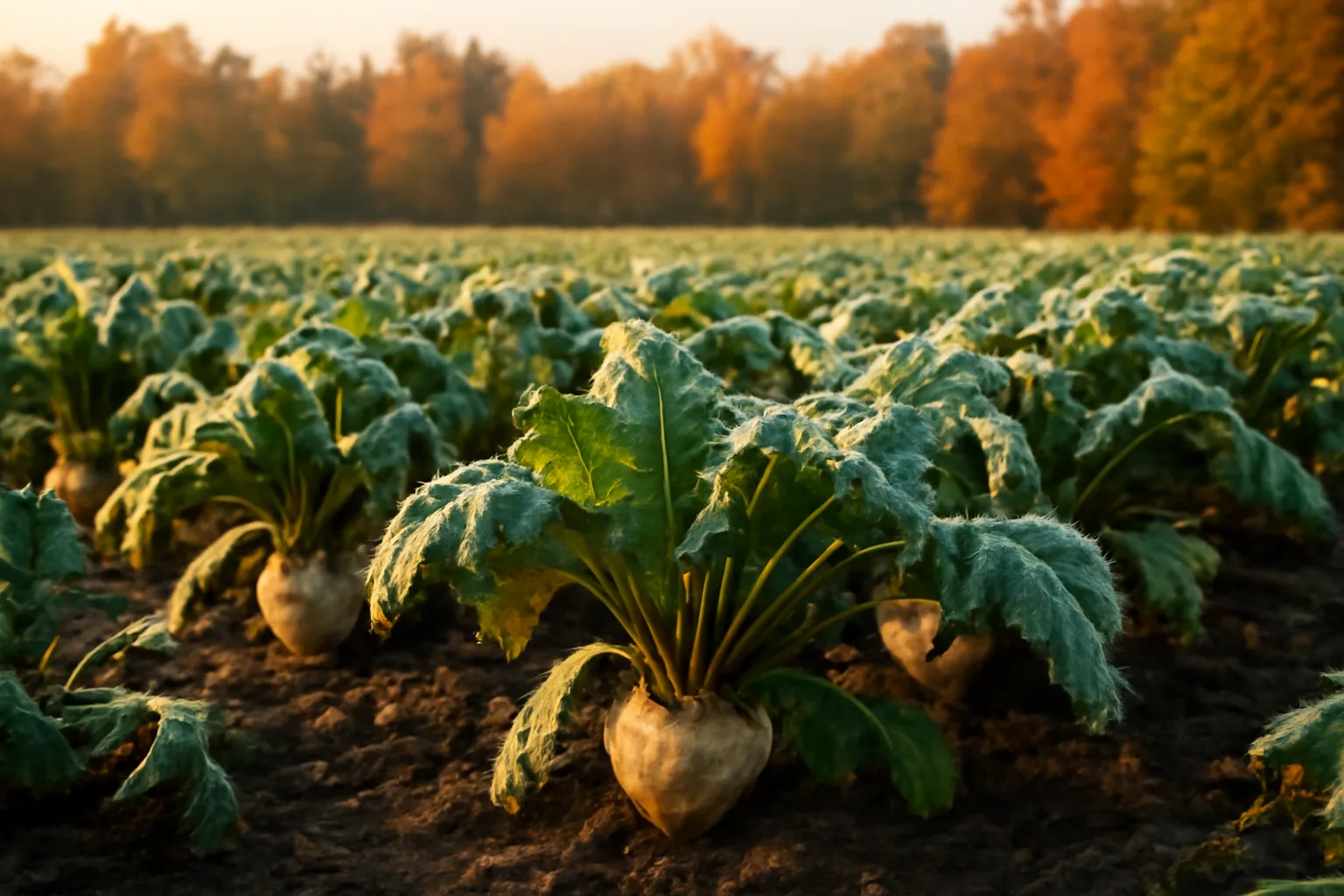
Plant sugar beets for deer 90 to 120 days before your first hard fall frost, since that's how long they need to bulb up and sweeten. That puts most northern plots in late May to June, and southern plots in April to early May. Soil temperature above 50°F and a clean, weed-free seedbed matter more than the calendar date.
When should you plant sugar beets for deer food plots?
Count backward from your first expected hard frost. Sugar beets need about 90 to 120 days of growing season to bulb properly, so if your area sees a killing frost around October 15, you want seed in the ground by mid to late June at the latest, and earlier is safer. In the Upper Midwest and Northeast (zones 3 to 5), that usually means planting late May through mid-June. In the transition zone and mid-South (zones 6 to 7), you have more room, late April through early June works. In the deep South, sugar beets struggle with heat and humidity during establishment, so April planting or even a fall planting timed for a mild winter is more common, though beets are a marginal crop below zone 7 in general. Soil temperature is the real trigger, not the date on a calendar. Sugar beet seed germinates once soil hits about 50°F, and germination speeds up a lot as soil warms toward 60 to 70°F [1]. If you plant into cold, wet ground, you'll get spotty stands and slow, uneven growth that never catches up. A lot of guys get impatient in early spring and drill too soon. Wait for the soil, not the weather forecast. One more practical note: sugar beets are slow out of the gate and get hammered by weed competition early. If you're not going to spray or till for weeds, a slightly later planting into a cleaner seedbed often beats an early planting into a weedy mess.
How many frost-free days do sugar beets actually need?
Most university variety trial data and seed company agronomy notes put full-season sugar beet maturity at 90 to 130 days depending on variety, with 100 to 120 days being the practical target for food plot mixes bred for deer forage rather than commercial sugar extraction [2]. That's longer than turnips (60 to 90 days) or brassica blends, which is why sugar beets get planted earlier in the season relative to your first frost, not later like a typical fall brassica plot. If you're used to throwing turnips down in late July or August, sugar beets need to go in the ground much sooner. Deer usually don't touch the bulbs hard until after a few frosts convert starches to sugars, similar to how turnips and radishes sweeten. So the crop needs enough time to grow a full bulb before the frosts start doing their job on palatability. Plant too late and you get small, woody bulbs that never develop and never draw deer the way a mature bulb will.
When should you plant food plots for deer in general?
Food plot timing splits into two buckets: spring/summer plots for warm-season annuals and perennials, and late-summer/fall plots for brassicas and cereal grains. Spring plots (clover, chicory, soybeans, sugar beets) typically go in April through June depending on your zone. Fall plots (brassicas, cereal grains, winter peas) typically go in late July through September, timed 60 to 90 days before your first frost. Your local NRCS plant hardiness zone and your state extension's planting calendar are the best starting points, since a June 1 planting date is fine in Wisconsin and way too late in south Georgia. Sugar beets fall into the spring-planted, fall-harvested category. They're planted with the warm-season crops but mature into a late-season, post-frost food source, which is part of what makes them useful. You get a plot that's growing all summer and then peaks in attractiveness right when hunting season gets serious.
When should you plant turnips for deer?
Turnips are planted much later than sugar beets, typically late July through early September, timed so they mature 60 to 90 days before your first hard frost. They're fast growers compared to sugar beets, and that's the whole point: you want lush tops and developing bulbs right as bow season opens, then a frost or two to sweeten everything up. If you're planting a mixed plot with both sugar beets and turnips (a combination a lot of hunters like because it staggers the food source), you'd typically need two planting windows, sugar beets in late spring and turnips seeded later in summer as a companion or a second plot. Trying to plant them on the same day defeats the purpose since their maturity windows don't match. A soil test matters here too. Brassicas including turnips like a soil pH between 6.0 and 6.5 and respond well to nitrogen, similar to sugar beets [3]. If your test comes back low on pH, lime takes months to fully react in the soil, so get it applied as early as possible relative to either planting date.
When should you plant oats for deer food plots?
Oats are typically planted in late summer to early fall, usually August through September in northern zones and September through October farther south, so they establish before frost and provide green forage into early winter [4]. Some hunters also plant oats in early spring as a quick cover crop or nurse crop, but the fall planting is what matters for hunting season attraction. Oats are a cereal grain, not a root crop, so the timing logic is different from sugar beets or turnips. You're not waiting for a sweetening frost, you're trying to get green, leafy growth up before the ground freezes, since deer hit oats hard in the early fall when they're still tender and again in early spring green-up if any survives the winter. Oats generally aren't as cold-hardy as winter wheat or cereal rye, and a hard winter can wipe out the stand, which is one reason a lot of plotters mix oats with wheat or rye for insurance.
What is a food plot, and why plant sugar beets in one?
A food plot is a planted area, usually somewhere between a quarter acre and a few acres, established specifically to provide a concentrated, attractive food source for deer and other wildlife on hunted or managed land. They're used both to supplement natural browse during stress periods and to draw and hold deer near stand locations during hunting season. Sugar beets earn a spot in a lot of plot rotations because of tonnage and late-season timing. University forage trials and extension bulletins commonly cite sugar beet yields in the 4 to 10+ tons per acre range of fresh forage under good conditions, which is a lot more standing biomass per acre than most brassica or legume options [2]. That tonnage matters in northern areas where deep snow buries turnips and brassica tops but beet bulbs sitting partly above ground stay accessible longer. The tradeoff is cost and difficulty. Sugar beet seed and the fertility program to support it cost more than throwing out a turnip or clover blend, and beets are less forgiving of a bad seedbed or weed pressure. They're a crop for hunters willing to do it right, not a set-it-and-forget-it option. If you're mapping out a full-season rotation and aren't sure where sugar beets fit against clover, brassicas, or grain plots, a food plot whitetail overview or a full deer food plot seed comparison is worth reading before you commit acreage and money to a beet plot.
Do deer eat sorghum?
Yes, deer eat grain sorghum, particularly the seed heads once they mature and dry down in late summer and fall, and sorghum is also used as a standing cover crop and screening plant in food plot systems. Whitetail management guidance from extension programs lists sorghum among summer annual options, often planted alongside or as an alternative to corn in warm-season plots [5]. Sorghum is more drought-tolerant than corn, which makes it a reasonable choice on sandy or marginal ground in the South and parts of the Midwest. It's not typically a deer's first-choice food the way a mature soybean field or a sweetened brassica bulb is, but it holds up as a late-season standing grain source and, honestly, does double duty as bedding cover and wind screening around a plot.
Do deer eat clover, and do deer like clover?
Yes, deer eat clover readily and it's one of the most consistently preferred food plot forages available, which is why perennial clover blends (white clover, red clover, ladino) show up in almost every food plot program in the country. Clover is high in protein, typically 25 to 30% crude protein in vegetative growth stages according to forage testing summarized by extension forage programs, and it's available spring through fall, unlike a single-season annual [6]. Deer preference studies and decades of practical plot observation both point the same direction: clover gets hit hard in spring and early summer when deer need protein for antler growth and lactation, and it stays in rotation through fall in many climates. It's also a lower-cost, lower-maintenance option than something like sugar beets since a good stand can produce for 3 to 5 years with proper mowing and fertility upkeep, versus a full replant every year for an annual like beets or turnips. If you're deciding between a clover-based perennial plot and an annual rotation with sugar beets or brassicas, that's really a question of labor and equipment on hand as much as deer preference. Clover needs less annual tillage and seed cost. Annuals like sugar beets need more work but can produce more tonnage and target a specific late-season window. A lot of the most productive properties run both, clover for spring/summer and annuals for fall.
What are deer's favorite foods, and do deer like honey?
There's no single scientifically ranked food deer prefer above all else, since preference shifts by season, region, and what's available on the landscape. That said, extension and wildlife agency guidance consistently names a shortlist that shows up across most regions: acorns (especially white oak group), soybeans, clover, and, in fall, sweetened brassicas and root crops like turnips and sugar beets [7]. Acorns in particular are hard to beat when they're available. White oak acorns are lower in tannins and more palatable than red oak acorns, and deer will often ignore other forage entirely during a good acorn drop. As for honey: deer aren't drawn to honey itself in any meaningful, documented way as a food plot or attractant strategy, and there's no extension or wildlife agency guidance recommending it. Some commercial deer attractant products use sweet scents or syrups as a lure component, but that's a different thing from a food plot planting, and use of any bait or feed product is governed by your state's baiting and feeding regulations, which vary a lot and sometimes ban it outright during hunting season. Check your state wildlife agency's current baiting rules before using any attractant, syrup, or mineral product, since a food plot itself is treated differently under most state laws than a pile of bait or a feeder .
How do you prep soil and fertility for a sugar beet plot?
Sugar beets are heavy feeders and picky about pH, more so than turnips or clover. Extension fertility guidance for beet crops generally targets a soil pH of 6.0 to 7.0, with yield dropping off notably below pH 6.0 due to reduced nutrient availability and increased disease pressure [3]. If your soil test comes back below that, lime needs to go down months ahead, ideally the prior fall, since lime reacts slowly. Nitrogen needs for sugar beets run higher than most food plot crops, commonly in the range of 100 to 150 lbs of actual nitrogen per acre for full-season beet production per land-grant agronomy guides, split between a pre-plant application and a sidedress once the crop is established [3]. That's a lot more nitrogen than a clover or brassica plot needs, and it's one of the real cost drivers of a beet plot. Your soil test lab is the actual authority here, not a blog post or a seed bag label, since your specific field's baseline nutrient levels, organic matter, and CEC change the math. A generic recommendation gets you in the ballpark. A real soil test gets you the right number. This is exactly the kind of decision where a Custom Food Plot Plan earns its keep: for $99 one time, you get a planting plan built around your zone, your acreage, and your soil test results rather than a one-size-fits-all seed bag rate. It's general planning guidance, not site-specific agronomy from an agronomist walking your field, but it beats guessing on nitrogen rates for a crop this fertility-sensitive.
What equipment do you need to plant sugar beets successfully?
Sugar beet seed is small and needs shallow, precise placement, generally 0.5 to 1 inch deep, into a firm, clean seedbed. A drill with a small-seed box or metering setting works better than broadcasting, since broadcast beet seed germinates unevenly and gets outcompeted by weeds fast. A firm seedbed matters more for beets than for a lot of other plot crops. If you can leave a clear boot print without sinking more than about half an inch, that's a reasonable field test for firmness before planting. Cultipacking before and after drilling helps a lot with seed-to-soil contact on beet plots specifically. Weed control is the other equipment consideration. Sugar beets don't compete well with grass and broadleaf weeds early on, so a lot of successful beet plots use a pre-plant burndown herbicide and sometimes a selective post-emergent product labeled for beet crops. If you're not set up to spray, sugar beets are a harder crop to run clean than turnips or brassicas, which tend to outcompete weeds better once established.
How does sugar beet timing compare to other fall food plot crops?
| Crop | Typical planting window (northern zones) | Days to maturity | Frost needed for peak palatability | |
|---|---|---|---|---|
| Sugar beets | Late May to mid-June | 90 to 120 days | Yes, several frosts | |
| Turnips | Late July to early September | 60 to 90 days | Yes, one to several frosts | |
| Oats | August to September | 45 to 60 days to grazing stage | No | |
| Winter wheat/rye | September to October | Establishes fall, regrows spring | No | |
| Clover (perennial) | Spring (April-May) or late summer | Established year one, produces years 2-5+ | No | Sources: extension planting calendars and crop maturity data [2] [4] [6]. The practical takeaway: sugar beets are the outlier that needs to go in the ground earliest relative to the fall food-plot season, because they need the most total growing days of any common plot crop. If you're building a multi-plot rotation across your property, that's often the first planting date on your calendar, well before turnips, oats, or brassicas. For a broader look at how sugar beets fit against turnips, brassicas, and cereal grains in a full-property plan, the deer food plots and food plot seed guides break down the full crop lineup by season. |
Frequently asked questions
What month should I plant sugar beets for deer?
In most northern and transition zones, late May through mid-June. In the deep South, April through early May, though sugar beets are a marginal crop below zone 7. Count back 90 to 120 days from your first expected hard frost to nail the exact window for your location.
Do deer eat sugar beet tops or just the bulbs?
Both. Deer browse the leafy tops through summer and fall, then hit the bulbs hard after a few frosts convert starches to sugars, similar to how turnips sweeten. In snow country, the exposed portion of the bulb often stays accessible longer than buried turnip bulbs.
Can I plant sugar beets and turnips in the same plot?
You can, but their planting windows don't match well, sugar beets need to go in 60 to 90 days earlier than turnips. Some hunters interplant anyway and accept uneven timing, while others run separate plots or split a field into two planting dates.
Do deer eat sorghum in food plots?
Yes, deer eat sorghum grain heads once mature and will browse the plant, and it's used in warm-season plot mixes as a drought-tolerant alternative to corn. It also works well as standing cover and a wind screen around a plot, more than as forage.
Do deer like clover more than sugar beets?
There's no single answer, preference shifts by season. Clover gets hit hardest spring through summer for its protein content (often 25 to 30% crude protein), while sugar beets peak in attractiveness after fall frosts sweeten the bulbs. Most well-planned properties use both rather than choosing one.
When should I plant oats for deer food plots?
Late summer to early fall, typically August through September in the north and September into October farther south, timed to establish before frost. Oats provide green forage into early winter and are often mixed with wheat or rye for winter survival insurance.
When is the best time to plant food plots overall?
It depends on the crop type. Spring/summer annuals and perennials (clover, beets, soybeans) go in April through June. Fall annuals (brassicas, cereal grains) go in late July through September, timed 60 to 90 days before your first hard frost. Check your state extension's local planting calendar for exact dates.
When should I plant turnips for deer?
Late July through early September in most zones, timed so the crop matures 60 to 90 days before your first hard frost. Turnips grow faster than sugar beets, which is why they're planted later in the season and still peak in attractiveness by hunting season.
What is a food plot exactly?
A food plot is a planted, managed area, usually a quarter acre to a few acres, established to give deer and other wildlife a concentrated food source. It's used to supplement natural browse and to draw and hold animals near hunting locations during specific seasons.
What is deer's favorite food?
There's no universal answer since preference changes by season and region, but acorns (especially white oak), soybeans, clover, and frost-sweetened brassicas or root crops consistently rank as the most preferred foods across most whitetail range according to extension and wildlife agency observations.
Do deer like honey or sweet attractants?
There's no solid evidence deer are drawn to honey specifically as a food source or attractant. Sweet scent-based attractants exist commercially, but that's different from food plot planting, and any bait or feed product use is subject to your state wildlife agency's baiting and feeding regulations, which vary widely.
How deep should sugar beet seed be planted?
About 0.5 to 1 inch deep into a firm, clean seedbed. Beet seed is small, so a calibrated drill with a small-seed setting gives much more even germination than broadcasting, which tends to leave seed too shallow or exposed.
What soil pH do sugar beets need for a food plot?
Most agronomy guidance targets pH 6.0 to 7.0 for sugar beets, with yield and stand quality dropping noticeably below pH 6.0. A current soil test from your local lab is the only reliable way to know your field's starting pH and lime needs.
Sources
- University of Minnesota Extension, sugarbeet emergence and stand establishment: Sugar beet seed germinates around 50°F soil temperature and germinates faster as soil warms
- North Dakota State University Extension, sugarbeet production guide: Sugar beet maturity and yield range of roughly 4 to 10+ tons per acre under good conditions
- University of Nebraska-Lincoln CropWatch, sugarbeet fertility management: Sugar beet nitrogen requirements of roughly 100-150 lbs N/acre and pH target of 6.0-7.0
- University of Wisconsin-Madison Extension, forage oat variety and management guidance: Oats for forage are typically planted in late summer to early fall for grazing into early winter
- University of Kentucky Cooperative Extension, AGR-52, White Clover: Clover crude protein levels commonly range 25-30% in vegetative growth
- National Deer Association, deer forage and habitat management resources: Acorns, soybeans, and clover consistently rank among the most preferred whitetail foods across regions
- Michigan Department of Natural Resources, deer baiting and feeding regulations: Baiting and feeding rules for deer vary by state and food plots are regulated differently than bait piles or feeders