Last updated 2026-07-26
TL;DR
Woods food plots work if you pick the right opening, test your soil, and choose shade-tolerant species like clover, oats, or brassicas. Most timber plots fail from too little sunlight, not bad seed. Aim for openings that get at least 4 hours of direct light, correct soil pH before anything else, and plant on a regional calendar tied to your first frost date.
What is a food plot, exactly?
A food plot is a planted opening, usually somewhere between a quarter acre and a few acres, seeded with forage or grain to give deer and other wildlife a consistent food source. That's it. No mystery to the definition, just a patch of dirt turned into something deer want to eat. Most people picture a food plot as a big square cut into a crop field. That works fine on farm ground. But a huge share of hunters lease or own timbered land with no ag fields at all, and that's where woods plots come in. A woods plot is the same idea, just squeezed into a logging trail, a natural opening, a clearcut, or a spot you carve out with a chainsaw. The USDA's National Agroforestry Center and state wildlife agencies both treat food plots as a wildlife habitat management tool, not a farming operation, and that distinction matters. You're not trying to maximize yield per acre like a row-crop farmer. You're trying to create a small, dependable food source in a place deer already want to bed and travel through [1]. That's the entire strategic edge of a woods plot: you're planting where deer live, not where deer visit.
Can you actually grow a food plot in the woods with shade?
Yes, but only if you're honest about the light. Most food plot species need direct sun for a real chunk of the day, and full-canopy hardwoods block almost all of it. University extension trial work on shade-tolerant forage blends generally points to a minimum of four hours of direct sunlight for decent production, with six or more being much safer [2]. The practical fix is picking your opening carefully or making one. Natural glades, old logging decks, powerline cuts, and clearcuts 2 to 8 years old all tend to have enough of a canopy gap to work. If you're creating a new plot, hinge-cutting or felling a cluster of low-value trees around a half-acre to one-acre opening can get you into workable light levels without a full timber harvest. Soil in the woods is usually a bigger problem than shade anyway. Forest floor dirt tends to run acidic, often in the 4.5 to 5.5 pH range depending on the tree species and years of leaf litter, versus the 6.0 to 7.0 range most food plot seed wants [3]. A soil test is not optional here. It's the only way to know if you need two tons of lime per acre or none at all. Your soil test lab is the real authority on your exact lime and fertilizer numbers, not a blanket internet recommendation. If you already have a soil report in hand and want it turned into an actual planting plan for your specific opening, that's the exact gap our $99 Custom Food Plot Plan is built to fill. It's not a substitute for your lab's chemistry, it's a plan that takes those numbers and turns them into what to plant, when, and how much.
What are deer's favorite foods, and does that change in the woods?
Deer are opportunistic browsers, and their preferences shift by season and by what's locally abundant. In spring and summer, they lean hard on forbs, clover, and soft browse. In fall, acorns often beat almost anything you can plant, when they're dropping heavy. In late fall and winter, they shift toward high-energy foods like brassicas, grain, and woody browse. Research out of Mississippi State and other land-grant deer programs consistently ranks clover, soybeans, and acorns near the top of preferred whitetail foods across seasons, with clover standing out because it's available and palatable for most of the growing year. In a woods setting, though, your plot is competing directly with a hard mast crop that deer evolved to prioritize. In a heavy acorn year, don't be surprised if your plot gets ignored in October and hammered in December once the acorns run out. That's actually an argument for planting brassicas or cereal grains in wooded plots. They peak in palatability after a frost, right around the time acorns are gone and deer need calories to get through winter.
Do deer eat clover?
Yes, and it's one of the most reliable food plot species there is. Clover (white clover, red clover, and ladino varieties) is a perennial legume that deer graze from spring green-up through fall, and it regrows after grazing pressure better than almost anything else you can plant [2]. Clover also fixes nitrogen in the soil, which is a real agronomic bonus in poor forest soils that are often nitrogen-starved to begin with. The tradeoff in the woods is sunlight again. Clover wants at least 4 to 6 hours of sun to stay productive, and it thins out fast in deep shade. If your opening only gets dappled light, clover will survive but won't produce the tonnage you'd get in full sun. Do deer like clover, specifically, more than other options? Most deer biologists would say it depends on what else is available, but clover's combination of season-long availability and high crude protein (often 25 to 30% in good stands) makes it a preferred food whenever nothing better is around. It's rarely the single most attractive thing in a given week, but it's attractive for more weeks of the year than almost anything else.
When to plant food plots for deer (by region)
| North (Zones 3-4) | Mid-May to early June | Late July to mid-August | |
|---|---|---|---|
| Upper Midwest / Northeast (Zone 5) | Late April to mid-May | Early August to early September | |
| Transition / Mid-South (Zone 6) | Mid-April to mid-May | Mid-August to mid-September | |
| Deep South (Zones 7-8) | March to April | Mid-September to mid-October | These windows come from combining USDA hardiness zone frost data with typical land-grant extension planting recommendations for forage brassicas and clovers [4]. Your local extension office will have a tighter window for your county, and it's worth a phone call, they answer these questions constantly. In the woods specifically, plant a little earlier than an open-field neighbor would in the same zone. Shaded soil warms slower in spring and holds moisture longer in fall, which shifts your ideal window by a few days to a week either direction depending on canopy density. |
Timing is tied to your last frost date in spring and first frost date in fall, not a calendar month. That's why food plot calendars get sorted by USDA plant hardiness zone instead of by date. Here's a rough regional framework based on typical frost windows and land-grant extension planting guides: | Region (USDA Zone) | Spring/Summer Plot Window | Fall Plot Window |
When to plant oats for deer
Oats are a fall-planted cereal grain, and the right window is 6 to 8 weeks before your area's first hard frost. That gives the plant enough time to establish leafy growth before cold weather triggers the sugar conversion that makes oats so attractive to deer in late fall. In the transition zone (much of Kentucky, Tennessee, southern Missouri), that generally lines up with mid-August through mid-September. Further north, growers are often planting oats in late July to early August. Further south, oats can go in as late as October . Oats are a strong choice for wooded plots because they tolerate partial shade better than clover and grow fast enough to get ahead of weed competition in a small opening. They won't survive a hard winter in the northern half of the country, which is fine, they're meant to be an annual fall attractant, not a perennial stand.
When to plant turnips for deer
Turnips go in 60 to 90 days before your first expected frost, which for most of the whitetail range lands somewhere between late July and early September. Turnips need that runway to bulb out and build the sugar content that makes them palatable after a frost hits. Here's the part people get wrong constantly: deer often ignore turnips early in the fall and hammer them in December and January. That's not a failed plot, that's turnips working exactly as designed. Cold weather converts starches to sugars in the bulb and leaves, and land-grant extension forage programs have documented that same shift in palatability in other brassica species [2]. In a woods opening, turnips do reasonably well with partial shade, though bulb size drops off in low light compared to full sun. If your clearing only gets 3 to 4 hours of direct sun, expect smaller bulbs but the leafy tops will still pull deer once the frost hits.
Do deer eat sorghum?
Yes, deer eat sorghum, both the grain heads and the young leafy growth, though it's more of a secondary or late-season food source compared to clover or brassicas. Grain sorghum is planted in late spring through early summer and matures into standing grain by fall, which makes it a decent option for a small woods opening that gets summer sun but goes shadier as leaves come in. Sorghum's real value in a wooded property is structure, more than food. Standing sorghum holds up through winter better than most grains and gives deer both a food source and screening cover in the same footprint, which matters a lot in a small clearing where security cover next to a food source changes how deer use it during daylight. It's not most hunters' first pick for a woods plot, honestly. Sorghum wants decent sun and reasonable soil fertility to yield well, and if you're choosing one grain crop for a marginal wooded opening, oats or winter wheat are usually the easier, more forgiving call.
Do deer like honey (honey locust, honeysuckle, and other 'honey' confusion)
This one needs untangling because it usually isn't about honey at all. Deer don't eat honey in any meaningful dietary sense, they're browsers and grazers, not foragers for insect byproducts, and there's no wildlife research suggesting honey itself factors into deer diets. What people usually mean is honey locust (Gleditsia triacanthos) or honeysuckle (Lonicera species), both of which deer do eat readily. Honey locust pods are a genuine fall and winter deer food, high in sugar content, and whitetails will stand under a mature honey locust tree cleaning up dropped pods the same way they work an oak dropping acorns . Japanese honeysuckle, meanwhile, is heavily browsed by deer to the point that in many eastern forests, deer browsing pressure is one of the reasons honeysuckle outcompetes native understory plants, since deer avoid it less than natives and let it spread. If you've got honey locust trees on your wooded property, that's a legitimate natural food source worth building a stand or plot near, not something to remove.
How much sunlight does a woods food plot actually need?
| Clover (white/ladino) | 4-6 hours | |
|---|---|---|
| Oats | 4 hours | |
| Winter wheat | 4 hours | |
| Brassicas (turnips, rape) | 4-6 hours | |
| Soybeans | 6+ hours | |
| Corn | 6-8 hours | If your best available opening only clears 3 hours of direct light, your realistic options are clover or oats, and even those will underperform compared to a full-sun plot. At that point, some hunters skip the seed altogether and just manage the natural browse and mast in that spot instead. That's a legitimate call. A woods opening doesn't have to be planted to be valuable; sometimes the better move is thinning competing trees to boost natural forage and let the light in for next year. |
Plan for a minimum of 4 hours of direct sunlight, with 6 or more being the safer target for anything beyond the most shade-tolerant species. Below 3 to 4 hours, most food plot seed struggles regardless of soil quality or fertilizer. Here's a rough species tolerance breakdown based on general extension forage guidance for shaded plantings [2] [4]: | Species | Minimum sun for decent yield |
What equipment do you need for a small woods plot?
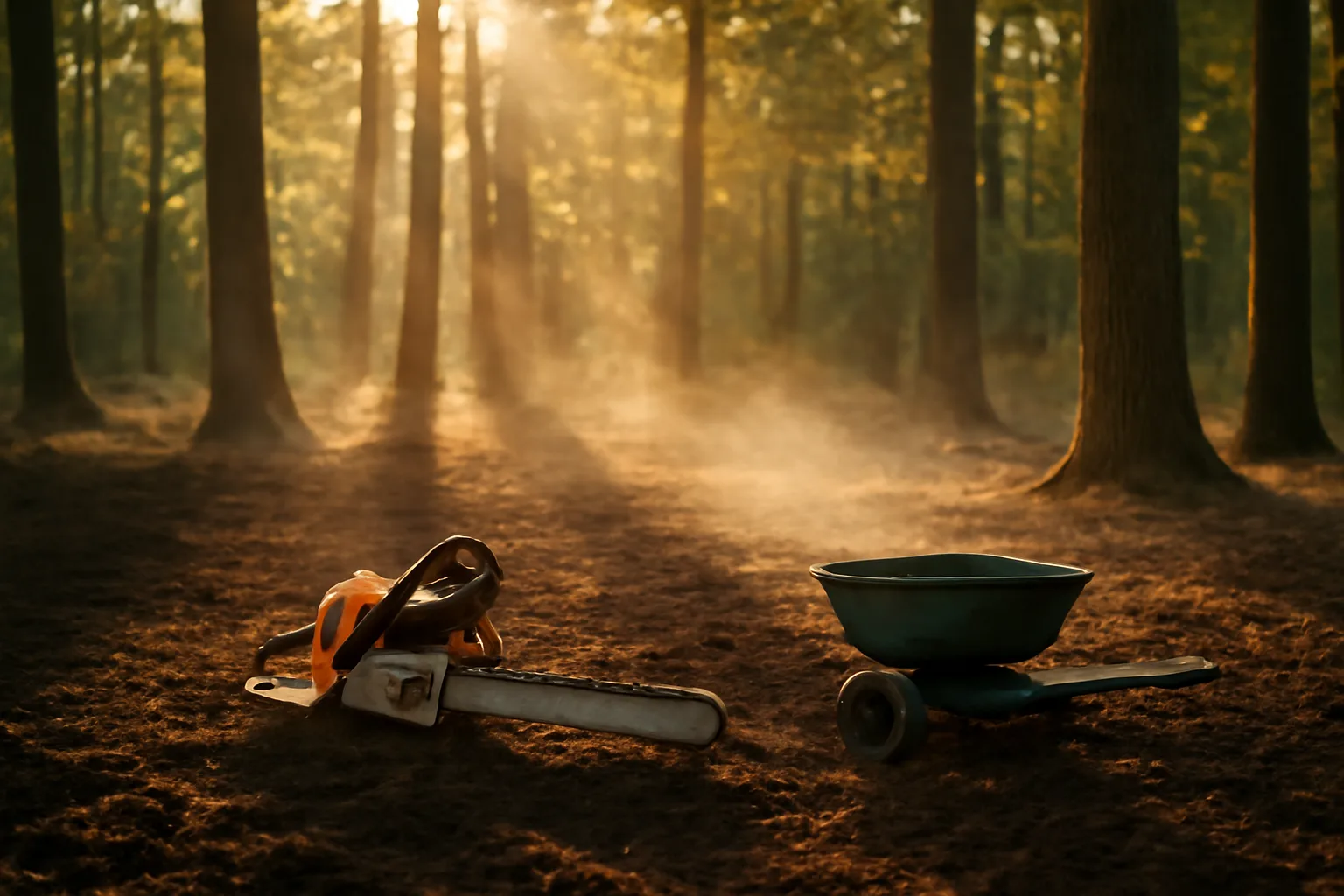
Small wooded openings usually don't justify a tractor. A lot of successful woods plots get built with a UTV, a chainsaw, a hand-push spreader, and a rented or borrowed disc or harrow. Here's a realistic minimum kit for a plot under an acre: - Chainsaw, for opening the canopy and clearing deadfall
- Backpack sprayer or ATV sprayer, for killing existing vegetation with glyphosate 2 to 3 weeks before planting
- Hand-crank or ATV-mounted broadcast spreader
- A disc, drag harrow, or even a section of chain-link fence dragged behind a UTV to work seed into the soil
- A soil test kit or mail-in sample, sent to your state land-grant extension lab before you spend a dollar on lime or fertilizer A lime spreader is worth renting if your soil test comes back needing more than a ton per acre, which is common in acidic forest soils. Hand-spreading pelletized lime across a half-acre plot is doable but slow and uneven. If you're deciding what to actually plant once the ground is worked, our guide on food plot seed breaks down species by soil and light conditions, and deer food plot seed covers blend options specifically built for mixed-condition plots like a woods opening.
Do you need to check baiting and feeding laws before planting a plot in the woods?
Yes, and this trips up more people than you'd think, especially when a plot is small and close to a stand. Food plots themselves are legal everywhere in the U.S. as an agricultural and habitat practice, but a lot of states draw a hard line between a planted, standing crop and a pile of bait (corn, minerals, apples dumped on the ground). The rules vary enormously by state. Michigan, for example, restricts both baiting and supplemental feeding of deer statewide under its Wildlife Conservation Order, with narrow exceptions, largely as a chronic wasting disease control measure . Others allow baiting with quantity limits, and some allow it freely. A standing food plot is almost universally treated differently than a bait pile because it's rooted, growing vegetation rather than concentrated feed, but a few states do have distance-from-stand rules or plot-size language buried in their regulations. Check your state wildlife agency's current regulations before you plant, not after. Rules shift year to year, especially in states actively managing CWD zones, and a plot that was legal two seasons ago in a given county isn't guaranteed to be legal today.
How big should a woods food plot be?
Somewhere between a quarter acre and one acre works for most wooded openings, and honestly, smaller is often better in timber than people assume. A tiny plot, even a few thousand square feet in the right pinch point, can outperform a large plot in the wrong spot. The logic is different from a farm-field plot. In big open ag country, a 3 to 5 acre plot might make sense because deer have huge home ranges and you want enough forage to matter across the property. In tight timber, deer are moving through defined trails and funnels, and a small plot tucked into one of those pinch points gets found and used constantly, often better than a bigger plot placed in the middle of an open field a quarter mile from cover. Size should also match what you can realistically maintain. A quarter-acre plot you can lime, spray, and reseed properly every year beats a two-acre plot that gets neglected because it's too much ground to manage with hand tools and a UTV.
Frequently asked questions
Do deer eat sorghum?
Yes. Deer eat both the leafy growth and mature grain heads of sorghum, though it's usually a secondary food source compared to clover or brassicas. Sorghum also provides standing winter cover, which adds screening value to a small woods plot beyond just the food it provides.
Do deer eat clover?
Yes, clover is one of the most consistently eaten food plot species available. It's a perennial legume, high in crude protein (often 25-30%), and available from spring through fall. Deer graze it repeatedly through the season because it regrows after grazing better than most other forage options.
When to plant deer food plots?
Timing depends on your region's frost dates, not the calendar month. Spring plots generally go in from March (Deep South) through early June (northern states), and fall plots go in anywhere from late July to mid-October depending on zone. Check your local land-grant extension office for exact county-level windows.
Do deer like clover more than other food plot options?
It depends on the season and what else is available. Clover isn't always the single most attractive food in a given week, but its season-long availability, palatability, and protein content make it a reliably preferred choice across more months of the year than most other plantings.
When to plant oats for deer?
Plant oats 6 to 8 weeks before your area's first hard frost. That's roughly late July to early August in northern states, mid-August to mid-September in the transition zone, and as late as October in the Deep South. Oats need that window to establish before cold weather boosts palatability.
When to plant food plots for deer in wooded ground specifically?
Plant a few days to a week earlier than an open-field neighbor in the same USDA zone. Shaded forest soil warms slower in spring and cools slower in fall, which shifts the ideal planting window slightly compared to full-sun ag fields nearby.
When to plant turnips for deer?
Plant turnips 60 to 90 days before your area's expected first frost, generally late July through early September across most of the whitetail range. Turnips need that time to build bulb size and the sugar content that makes them attractive after a frost.
What is a food plot?
A food plot is a planted opening, usually a quarter acre to a few acres, seeded with forage, grain, or brassica species to provide a consistent food source for deer and other wildlife. It's a wildlife habitat management tool, not a farming operation aimed at maximum yield.
What are deer's favorite foods?
It shifts by season. Acorns and other hard mast often top the list in fall when available, clover and soybeans are heavily used spring through fall, and brassicas and cereal grains become preferred once cold weather hits and hard mast runs out. Preference is really about what's locally abundant and high-energy at that moment.
Do deer like honey?
Not literally. Deer don't eat honey itself. People usually mean honey locust pods or honeysuckle leaves, both of which deer eat heavily. Honey locust pods are a real fall and winter food source, and Japanese honeysuckle gets browsed hard enough that it's a factor in some eastern forest understory studies.
Can you grow a food plot in a wooded area with a lot of shade?
Yes, but only with realistic expectations. Most food plot species need at least 4 hours of direct sunlight to produce decent forage, with 6-plus being safer. Below that, stick to the most shade-tolerant options like clover or oats, or consider thinning trees to open the canopy first.
How much sunlight does a food plot in the woods need?
Aim for a minimum of 4 hours of direct sunlight daily. Clover, oats, winter wheat, and brassicas can handle that minimum reasonably well. Soybeans and corn generally need 6 or more hours to yield anything worthwhile, which makes them poor choices for tight wooded openings.
Is it legal to plant a food plot near my deer stand?
Standing food plots are legal nationwide as a habitat practice, but baiting and feeding rules vary sharply by state, especially in areas managing chronic wasting disease. A planted, rooted crop is usually treated differently than dumped bait, but check your state wildlife agency's current regulations before planting, since rules change year to year.
Sources
- USDA National Agroforestry Center, Working Trees for Wildlife: Food plots and habitat plantings are a wildlife management tool integrated with existing land cover, not a standalone farming operation
- University of Tennessee Institute of Agriculture, PB1769 Wildlife Food Plots publication record: Forage species used in food plots generally need several hours of direct sunlight to establish and produce adequate yield
- Oklahoma State University Extension, Soil pH and Nutrient Availability (PSS-2226): Most food plot forage species perform best in soil pH ranges of roughly 6.0 to 7.0, while forest floor soils often run more acidic
- USDA Forest Service, Plant Fact Sheet: Honey Locust: Honey locust seed pods are a food source for wildlife including deer, particularly in fall and winter
- Missouri Department of Conservation: Offers regional recommendations on food plot planting times and species selection for deer in wooded and forested habitats.