Last updated 2026-07-24
TL;DR
A radish food plot uses brassica taproots (often daikon or tillage radish) planted 60 to 90 days before your first killing frost to draw deer in fall and winter. Radishes dig deep, break up compacted soil, and get sweeter after frost, but they work best in a mix with cereal grain or clover rather than planted alone.
What is a food plot, and where do radishes fit in?
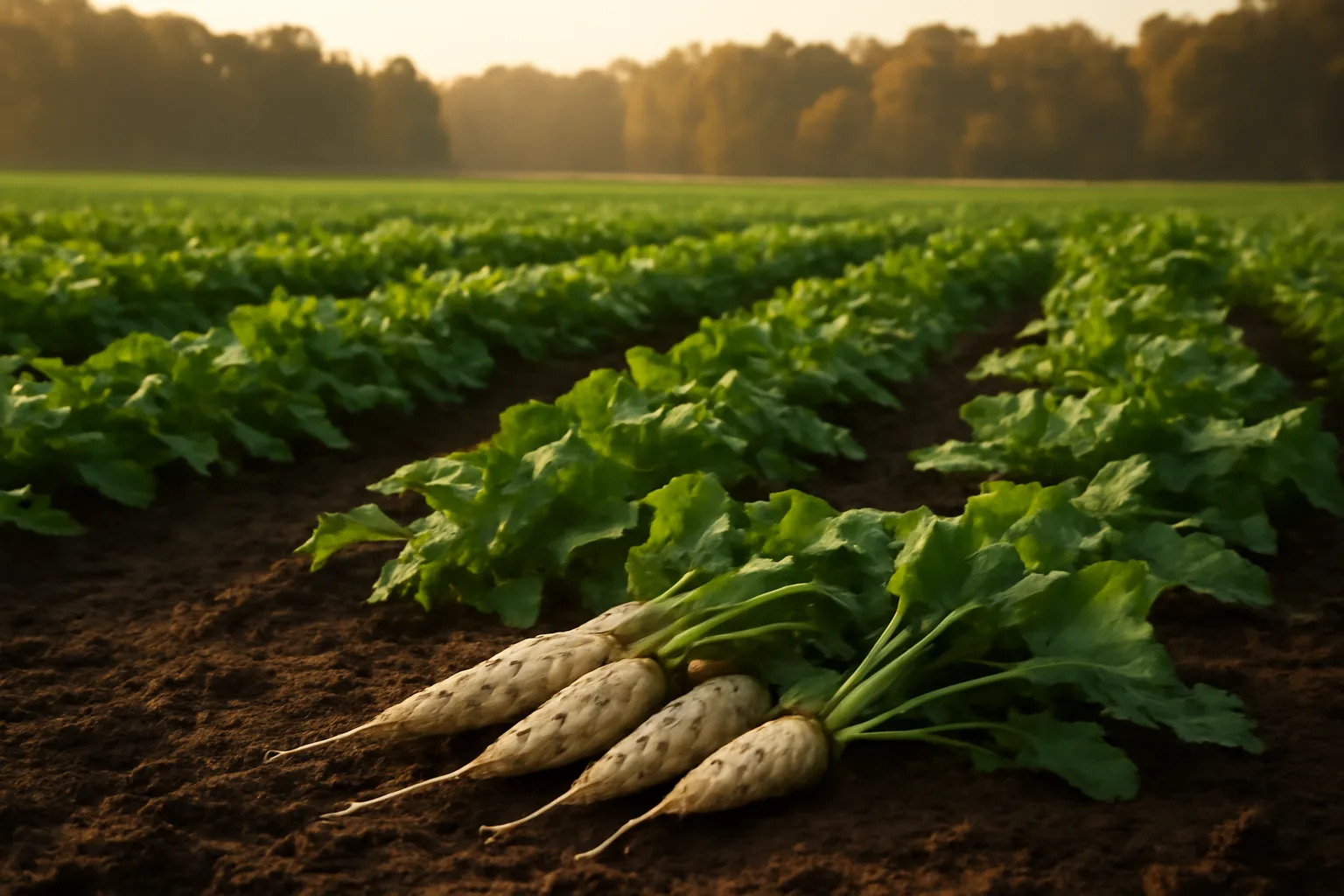
A food plot is a planted area on hunting or managed land meant to feed deer and other wildlife, and often to draw them into range for observation or harvest. Most plots run somewhere between a quarter acre and a few acres, though plenty of hunters work smaller kill plots tucked into a clearing or a field edge. Radishes fit into the brassica category of food plot plants, alongside turnips, rape, and kale. The variety most guys plant is a forage or tillage radish, sometimes sold as daikon radish, bred for a long white taproot that can push 12 to 18 inches into the ground and sometimes deeper in loose soil. What makes radish different from clover or a cereal grain is the root itself. Deer eat the leafy top growth in fall, then come back for the root once cold weather sweetens it up. The root also does double duty as a soil tool: as it decays over winter, it leaves a channel that breaks up compaction and lets water and air move into hard ground. Purdue Extension calls this kind of radish planting a way to "reduce soil compaction and improve water infiltration" when used as a cover crop [1]. If you're weighing radish against other plot types for your ground, our food plot whitetail guide breaks down how brassicas compare to clover and cereal grain plots overall.
When to plant food plots for deer, generally?
Timing depends more on frost dates and plant type than on the calendar month. Cool-season plots like clover, brassicas, and cereal grains go in either late summer through early fall (for fall and winter forage) or early spring (for spring and summer forage). Warm-season plots like soybeans, corn, and sorghum go in after your last spring frost. For a fall brassica or radish plot, the rule of thumb most extension agronomists give is to count backward from your area's average first killing frost. Radishes need real time to size up before that frost hits, and planting too late gives you skinny roots and thin tonnage. A simple way to think about it: cereal grains like oats and wheat can go in a little later than radish because they don't need the same root-development window. Clover has more flexibility too, since it's a perennial that will keep growing and thickening the following spring even if fall growth is modest. Check your local cooperative extension's frost date tables before you commit to a planting weekend. The USDA's plant hardiness zone map is a decent starting reference for figuring out roughly where your property sits, though frost dates within a zone can still swing by two or three weeks depending on elevation and local microclimate.
When to plant radishes for deer specifically?
Plant radish 60 to 90 days before your area's average first killing frost. That window gives the taproot enough time to bulk up before growth slows down for winter. In practical terms, that means: - Northern states (Zone 3-4, first frost late September): plant radish early July through early August.
- Mid-latitude states (Zone 5-6, first frost early-to-mid October): plant radish mid-July through late August.
- Southern states (Zone 7-8, first frost November or later): plant radish late August through late September. These are starting points, not gospel. Local university extension frost date charts and your own field notes from past seasons beat any national chart, because two properties 50 miles apart can have very different first-frost timing due to elevation, water bodies nearby, or low-lying frost pockets. Missouri Department of Conservation guidance on fall food plots recommends planting brassicas like radish and turnip from late July through August across most of the state, timed so the plants mature into the late fall hunting season when deer shift heavily toward browsing forbs and brassica tops [2]. Don't plant radish too early either. Radish planted in the heat of midsummer in warmer regions can bolt or get woody before frost, and weed pressure in bare July soil is brutal. Wait for your target window rather than rushing it just because you have a free weekend.
When to plant turnips for deer, and how are they different from radish?
Turnips follow almost the same calendar as radish: 60 to 90 days before your first fall killing frost, so most of the country is planting both crops side by side in July or August. The main difference between turnip and radish shows up in the root and in how deer use the plant through the season. Turnip bulbs sit closer to the soil surface and are rounder, while radish taproots drive straight down and taper. Deer often hit turnip leaves hard in early fall, then turnip bulbs later once a few frosts convert starches to sugars. Radish follows a similar sweetening pattern but the root is harder and stringier for deer to dig out compared to a softer turnip bulb, which is part of why a lot of plotters blend the two rather than picking one. A typical radish-turnip blend runs somewhere around 4 to 6 lbs per acre combined, adjusted depending on the seed company's blend ratio and germination rate on the bag tag. Broadcasting into a firm, prepared seedbed and covering lightly (radish and turnip seed is tiny and shouldn't be buried more than a quarter to half inch deep) gives the best stand. If you're deciding between a straight turnip plot, a straight radish plot, or a blend, our deer food plot seed article covers blend ratios and seed tag reading in more depth.
Do deer eat radishes, and how much do they actually use the roots?
Yes, deer eat both the leafy tops and the taproot of forage radish, though timing matters a lot. In early fall, deer usually browse the tops first and largely ignore the root, because the root is still starchy and bitter. After a few hard frosts convert starches into sugars, deer start digging up and eating the roots too, sometimes leaving noticeable craters in the plot where they've pawed roots out of the ground. How much of the crop actually gets eaten varies a ton by region, deer density, and what else is available nearby. In areas with high deer density and limited other forage, a radish plot can get hammered down to root nubs by late winter. In areas with more food competition (ag fields, natural browse, other food plots), radish tops might get grazed hard while a good chunk of root tonnage goes unused. One thing worth knowing: radish tonnage numbers thrown around online (some sources cite 3,000+ lbs of dry matter per acre for tillage radish as a cover crop) come from agronomic cover crop trials, not deer food plot studies, and total biomass produced isn't the same as biomass actually consumed by deer. Treat those tonnage claims as a measure of soil-building potential, not a guarantee of how much deer will eat. That distinction matters more than most plot marketing lets on.
What are deer's favorite food plot plants, and where does radish rank?
| Clover | Spring through fall | Moderate, needs lime/pH management | Perennial base plot | |
|---|---|---|---|---|
| Soybeans | Summer | High, needs acreage and fencing pressure tolerance | Summer nutrition, antler growth | |
| Radish/turnip (brassica) | Late fall through winter | Low to moderate | Late-season draw, soil conditioning | |
| Oats/wheat | Fall, early spring | Low | Fast cover, nurse crop, fall attraction | Radish specifically shines in the late-season slot. If your goal is a plot that still pulls deer in January when everything else is picked clean or dormant, radish (ideally blended with turnip and a cereal grain) is one of the more dependable choices. |
There's no single universal answer here, because deer preference shifts by region, season, and what's already available on the landscape. That said, several categories come up again and again in state wildlife agency and university guidance as reliable performers. Clover is probably the most commonly recommended perennial food plot plant across the whitetail range, because it's palatable through spring, summer, and fall, and it's relatively low maintenance once established. Soybeans and cowpeas are heavily preferred warm-season options, especially for antler growth and lactation support in summer, though they take real acreage and deer pressure to survive to maturity. Brassicas including radish and turnip are the standout cold-weather, late-season draw, since they hold nutrition and palatability right through winter when a lot of other plants have gone dormant or been grazed out. Cereal grains like oats and wheat round things out as fast-growing, frost-tolerant fall options that also work well as nurse crops in blends. Here's a rough comparison of how these categories stack up for different goals: | Plant type | Best season for deer use | Soil/establishment effort | Typical role in a plot plan |
Do deer eat clover, and how does it compare to radish?
Yes, deer eat clover readily, and it's one of the most consistently recommended food plot plants by state wildlife agencies and university extensions because of its season-long palatability and protein content. White clover and red clover are the two most common types planted, and both can persist for multiple years if managed with mowing and occasional herbicide for weed control. Where clover differs from radish is in its growing pattern and role in a plot rotation. Clover is a perennial that greens up in spring, holds through summer given adequate rainfall, and continues into fall, giving deer a long season of use from one planting. Radish is an annual, planted fresh each year, that peaks specifically in late fall and winter as a high-tonnage, high-sugar option once frost hits. A lot of experienced plotters run both: a clover plot for spring-through-fall use and a separate brassica/radish plot timed for late season, so the property has coverage across the whole year rather than one plot trying to do everything. If you're building a multi-plot rotation, check out deer food plots for how to lay out complementary plot types across a property. One caution on clover establishment: it needs decent soil pH (most extension guidance targets 6.0 to 6.5) to really thrive, so a soil test matters more for clover than it does for a quick brassica planting. Your soil test lab's specific lime and fertilizer recommendation should be the final word on rates for your ground, not a generic online number.
Do deer eat sorghum, and does it belong in a radish plot mix?
Deer do eat sorghum, particularly grain sorghum heads and, to a lesser extent, the leaves, but it's mainly used as a summer warm-season grain crop rather than a fall brassica partner. Grain sorghum is planted after the last spring frost, similar timing to corn, and matures over the growing season to produce seed heads that deer and other wildlife (including turkey and dove) will feed on into fall. Sorghum doesn't really belong in a radish mix, since the two have opposite planting seasons: sorghum is a warm-season summer crop and radish is a cool-season fall crop. Where sorghum does show up alongside brassica planning is in a two-season rotation on the same field: sorghum or another summer crop planted in spring, then radish or a brassica blend drilled in behind it in late summer once the sorghum is harvested or knocked down. Some plotters also use grain sorghum as a standing cover and food source through fall and winter specifically because the tall stalks give deer security cover while they feed, something a low-growing radish plot can't offer on its own. If security cover matters on your property, pairing a radish plot with a nearby standing sorghum or corn strip can cover both the food and cover angle better than either alone.
When to plant oats for deer, and should you mix them with radish?
Oats are typically planted late summer to early fall for deer food plots, generally 45 to 60 days before your first frost, which puts oats planting slightly later in the calendar than radish in most regions. Oats germinate fast, often showing green growth within a week under decent moisture, and deer will hit young oat shoots hard as soon as they emerge. Mixing oats with radish is a common and pretty effective combination. The oats come up fast and give deer something to eat while the radish is still establishing its root system underground, and the oats also act as a light nurse crop that helps outcompete some early weed pressure. By the time frost hits, the oats have usually been grazed down or winterkilled in colder zones, and the radish takes over as the primary draw through the rest of fall and winter. A rough seeding rate for an oats-radish blend runs about 50-60 lbs of oats per acre paired with 4-6 lbs of radish per acre, broadcast together into a prepared seedbed. Oats in northern climates typically winterkill once temperatures drop into the teens for an extended stretch, while in milder southern zones oats can persist and even head out the following spring if left unharvested and ungrazed. One practical note: oats are winter-hardy to a point but not indestructible, and getting them in the ground early enough to establish real growth before that first hard frost matters more than the exact calendar date you pick.
Do deer like honey, and does it matter for food plots?
Deer are not typically drawn to honey as a food source in a food plot context, and there's no meaningful agronomic or wildlife management use of honey in plot planning. Deer are herbivores that browse plants, forbs, mast, and crops, not sweet liquids or animal products in the way something like a bear might be drawn to a honey-scented bait. What sometimes causes confusion here is scent and mineral attractant products marketed with names or descriptions that reference sweetness (some commercial deer attractants use sugar-based or molasses-based ingredients to draw deer to a specific spot). Those are a different category entirely from food plot planting and worth treating separately, since many states regulate baiting and supplemental feeding differently from planted food plots. If you're researching baiting rules because you're considering anything beyond a straight planted crop, check your state wildlife agency's regulations directly, since baiting legality varies widely and some states draw a hard legal line between a planted food plot (generally legal) and a pile of feed, mineral, or attractant product (often restricted or banned depending on the state and even the specific county or disease management zone).
How do you prepare soil and plant a radish food plot step by step?
Start with a soil test. Radish is more soil-forgiving than clover, but it still performs a lot better with correct pH and nutrient levels than it does in raw, untested dirt. Most extension labs turn results around in a week or two and give you specific lime and fertilizer recommendations for your target crop. Here's the basic sequence most plot builders follow for a radish or radish-blend plot: 1. Test soil 2 to 3 months ahead if possible, so lime has time to start adjusting pH before planting. 2. Kill existing vegetation with herbicide or tillage 2 to 3 weeks before planting, giving weeds and grass time to die back fully. 3. Apply lime and fertilizer according to your soil test results, not a generic bag recommendation, since actual nutrient needs vary a lot by starting soil chemistry. 4. Prepare a firm seedbed, either through light tillage or by mowing/spraying down existing residue for a no-till drill pass. 5. Broadcast or drill seed at the correct rate for your blend (straight radish typically runs 4-6 lbs/acre if planted alone, less if blended with turnip or a cereal grain). 6. Cover lightly, no more than a quarter to half inch deep, since brassica seed is tiny and germinates poorly if buried too deep. 7. Cultipack or roll if you have the equipment, to improve seed-to-soil contact, especially on a broadcast planting into loose soil. For readers weighing hand-broadcast versus drill planting, and what kind of equipment actually pays for itself on smaller acreages, our food plot seed piece covers planting method tradeoffs in more detail. If you'd rather skip the guesswork on rates, blend ratios, and timing for your specific property and zone, PlotSeason's $99 one-time Custom Food Plot Plan builds a plan around your soil test and location; you can start one at /plot-plan-builder. That said, your soil test lab is still the final authority on lime and fertilizer amounts, since local lab recommendations account for your exact soil chemistry in ways a general plan can't.
What mistakes ruin most radish food plots?
Planting too early or too late is the number one mistake. Too early in hot weather and radish can bolt to seed or get overrun by weeds before it ever forms a good root. Too late and the plant never sizes up before frost stops growth, leaving you with skinny, low-tonnage roots that don't hold deer through winter the way a properly timed planting would. Skipping the soil test is the second big one. Radish tolerates a wider pH range than clover, generally still growing acceptably down toward pH 5.5, but nutrient deficiencies (particularly nitrogen, since brassicas are heavy nitrogen users) show up as stunted, pale plants and weak root development. A basic soil test costs somewhere in the $10-20 range through most university extension labs and pays for itself many times over in avoided wasted seed and fertilizer. Planting radish alone, in a monoculture, is a choice some plotters make but it comes with real downsides. A pure radish plot gives you a hard crash once deer eat through the tops, and it offers nothing early in the season before frost sweetens the roots. Blending radish with a cereal grain (oats or wheat) and sometimes a bit of clover gives you fast early cover, a mid-fall grain draw, and then the late-season radish/turnip punch, spreading attraction across more of the season instead of betting everything on one narrow window. Finally, planting too small an area relative to deer density is a common letdown. A quarter-acre radish plot in an area with heavy deer pressure can get grazed to nothing within a few weeks of frost, especially once deer key in on the roots. If you've got real deer numbers, plan for more acreage or split radish across multiple smaller plots so pressure spreads out rather than concentrating on one spot.
Frequently asked questions
Do deer eat sorghum?
Yes, deer eat grain sorghum heads and some leaf growth, mainly as a warm-season summer crop planted after the last spring frost. It's not typically part of a fall radish mix since sorghum and radish have opposite growing seasons, but sorghum can provide standing cover and food alongside a separate fall brassica plot.
Do deer eat clover?
Yes, clover is one of the most reliable food plot plants for deer, offering season-long palatability from spring through fall as a perennial. White and red clover are the most common types planted, and both need decent soil pH (generally 6.0 to 6.5) confirmed by a soil test to establish well.
When should you plant deer food plots?
Timing depends on the crop: cool-season plots like clover, brassicas, and cereal grains go in late summer to early fall or early spring, while warm-season plots like soybeans and sorghum go in after the last spring frost. Check your local cooperative extension's frost date charts for your specific area.
Do deer like clover?
Yes, clover is consistently ranked among the top food plot plants for deer preference because of its protein content and long growing season. It's palatable to deer from spring green-up through fall, and it regrows for multiple years once established, unlike annual crops that need replanting each season.
When should you plant oats for deer?
Plant oats roughly 45 to 60 days before your area's first killing frost, typically late summer to early fall in most regions. Oats germinate quickly, often within a week, and pair well in a blend with radish or turnip since the fast oat growth feeds deer while the brassica root system develops underground.
When should you plant food plots for deer overall?
Fall brassica and cereal grain plots go in roughly 60 to 90 days before your first frost date; spring and summer plots like clover, soybeans, and sorghum go in after your last spring frost. Local university extension frost date tables are more reliable than a national planting chart for your exact property.
When should you plant turnips for deer?
Plant turnips on nearly the same schedule as radish: 60 to 90 days before your area's average first killing frost, usually July or August depending on your zone. Turnip bulbs and radish taproots are often blended together in the same planting since they mature on similar timelines.
What is a food plot?
A food plot is a planted area, usually anywhere from a quarter acre up to several acres, established specifically to provide supplemental forage for deer or other wildlife on hunting or managed land. Plots use annual or perennial crops chosen for the season, soil type, and hunting goals of the property.
What are deer's favorite foods in a plot setting?
There's no single universal favorite, since preference shifts by region and season, but clover, soybeans, brassicas (radish and turnip), and cereal grains like oats consistently rank as top performers across state and university guidance. Radish and turnip specifically stand out for late-season and winter attraction after frost sweetens the roots.
Do deer like honey?
No, honey isn't a meaningful food source for deer and has no real role in food plot planning. Deer are herbivores focused on browse, forbs, and planted crops; any confusion usually comes from sugar or molasses-based commercial attractant products, which are a separate category from planted food plots and often regulated differently by state law.
How deep should radish seed be planted?
No more than a quarter to half inch deep. Radish and turnip seed is tiny, and burying it too deep is one of the most common reasons for a thin or failed stand. A light cultipacking or rolling pass after broadcasting helps seed-to-soil contact without burying it too deep.
Can you plant radish alone, or does it need a mix partner?
You can plant radish alone, but most experienced plotters blend it with a cereal grain like oats or wheat, and often turnip, to spread attraction across more of the season. A pure radish stand offers little draw before frost and can crash fast once deer key in on the roots after a few hard freezes.
How much does a radish food plot cost to plant per acre?
Seed alone for a straight radish planting runs roughly $15-30 per acre depending on seed source and blend, with total cost per acre (seed, lime, fertilizer, and any herbicide) commonly landing somewhere between $50 and $150 depending on how much soil amendment your specific soil test calls for.
Sources
- Purdue University Extension, Cover Crop Termination and Radish: Forage/tillage radish reduces soil compaction and improves water infiltration as a cover crop
- Missouri Department of Conservation, Food Plots for Deer: Brassicas like radish and turnip are recommended for planting late July through August in Missouri to mature into late fall hunting season
- USDA Natural Resources Conservation Service, Cover Crop Chart (Radish species profile): Brassica cover crops like radish increase in palatability to grazing animals and wildlife after hard frosts convert starches to sugars
- University of Georgia Extension, Cool-Season Forages for Wildlife (Circular 1153): Fall oat plantings for wildlife food plots should be timed to establish before hard frost stress sets in
- Noble Research Institute: Recommended planting windows and species mixes, including sorghum and oats, for deer food plots
- University of Georgia Extension: Clover establishment and management practices for wildlife food plots compared to other forages