Last updated 2026-07-26
TL;DR
There's no single best deer plot food. Clover works nearly everywhere as a perennial protein source, brassicas (turnips, radish) shine in fall/winter, oats draw deer hard in early fall, and grain sorghum adds late-season standing food in the South. The right mix depends on your soil, region, and whether you want spring/summer or fall/winter draw.
what is a food plot, exactly?
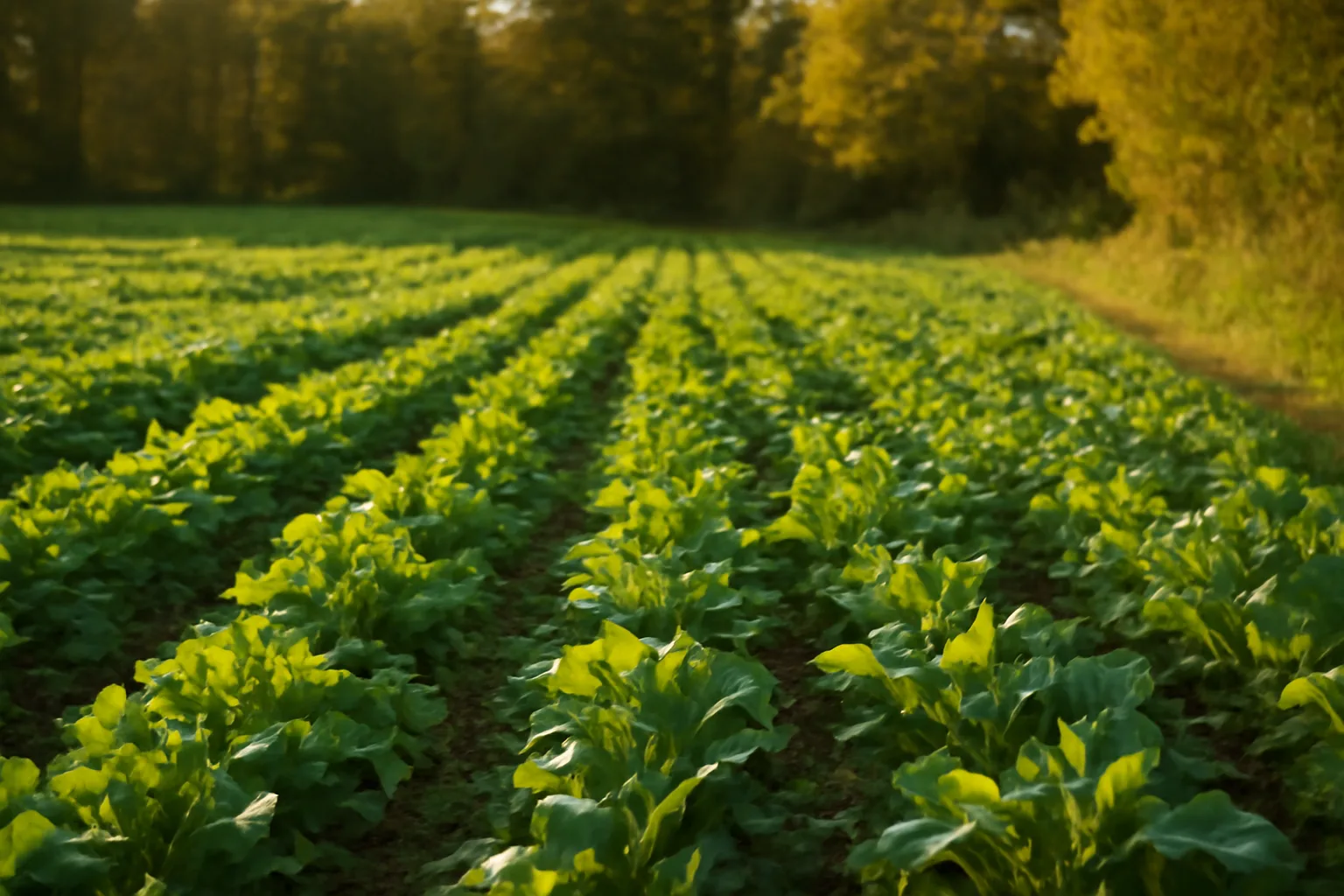
A food plot is a planted area, usually a half acre to a few acres, seeded with forage or grain to give deer supplemental nutrition and to give hunters a predictable place to see deer. It's not the same as baiting. Baiting means placing loose grain, minerals, or feed on the ground to attract animals directly, which is illegal in a lot of states during hunting season. A food plot is an agricultural planting, tilled and seeded like a small farm field, and most states treat it as a legal hunting practice separate from baiting rules [1]. That distinction matters because the rules genuinely vary. Michigan, for example, banned baiting statewide for deer in the Lower Peninsula in most years due to CWD and bovine TB concerns, but food plots remain legal there [1]. Other states like Texas allow baiting for deer hunting in most counties. Before you plant anything, check your state wildlife agency's current regulations, because "food plot" and "bait pile" get treated very differently and the lines can shift year to year. Practically, a food plot does two jobs. It feeds deer through nutritional stress points (late summer drought, post-rut recovery, deep winter) and it concentrates deer movement somewhere you can hunt it. The species you plant should match which job you're prioritizing. If you want more detail on plot styles and layouts, see food plot whitetail.
what are deer's favorite foods, really?
Deer are opportunistic browsers, and their preferences shift with season, region, and what's already available naturally. That said, decades of forage preference trials at university research stations point to a consistent short list: white clover, chicory, soybeans, and cool-season brassicas like forage turnips and radish rank at or near the top in most palatability studies. The Noble Research Institute's long-running food plot forage trials in Oklahoma found white clover varieties and annual clovers consistently among the highest-rated species for deer use and persistence in their region. Purdue University Extension notes that clover and soybeans provide the two highest crude protein forages commonly planted, often 20-30% crude protein in vegetative stages, which matters most during antler growth and lactation in late spring and summer [2]. But "favorite" isn't static. Deer will hammer a brand-new brassica plot in November because it's the only sugar-rich, digestible forage left standing after a frost converts starches to sugars. In August, that same brassica plot might sit untouched because deer prefer standing soybeans or natural browse. Match the species to the season you're trying to hit, more than a general reputation for being "deer candy."
do deer like clover, and is it worth planting?
Yes, and it's usually the single best default perennial to plant if you can only pick one species. White clover (Trifolium repens), especially improved varieties like Durana or Patriot, tolerates grazing pressure well and can persist 3-5 years with proper mowing and fertility maintenance [3]. Clover's advantage is season length. Once established, it produces palatable forage from spring green-up through fall, covering the exact stretch (antler growth, fawn lactation, pre-rut conditioning) when deer need the most protein. University of Tennessee Extension lists clover as one of the most cost-effective perennial forages for wildlife food plots because of its low reseeding cost relative to lifespan [3]. The catch: clover needs decent drainage and a pH close to 6.0-6.5 to really produce. If your soil test comes back at 5.2, clover will survive but won't perform, and you'll be pouring lime into thin returns for a year or two before it catches up. That's not a reason to skip clover, it's a reason to lime according to your soil test before you plant it. For seed blend options built around clover, check deer food plot seed.
do deer eat sorghum?
Yes, deer eat grain sorghum (milo), both the standing seed heads and the foliage, though it's more of a late-season and winter food than a spring/summer draw. Sorghum is planted mainly in the South and lower Midwest as a warm-season annual, similar in role to corn but more drought-tolerant and cheaper to establish on marginal ground [4]. The appeal of sorghum in a plot mix is standing winter tonnage. Once the seed heads mature and dry down, they hold through hard frosts and stay available into January and February in many regions, which corn and soybeans also do but sorghum tends to handle drought stress better during the growing season. Texas A&M AgriLife Extension recommends grain sorghum in wildlife plantings specifically for its drought tolerance on lighter, sandier soils common in parts of Texas and Oklahoma [4]. Sorghum isn't a top preference food relative to soybeans or acorns when high-quality alternatives exist nearby. Deer will eat it steadily, especially once other food sources thin out in late fall. Think of it as insurance tonnage for the toughest months, not a plot you plant to maximize summer nutrition.
when to plant turnips for deer
Plant forage turnips 60-90 days before your area's first hard frost, which for most of the whitetail range means late July through early September. Brassicas like turnips need that lead time to bulb out and build sugar reserves before cold weather hits [5]. The timing detail that trips people up: turnips (and other brassicas like radish and rape) aren't very palatable to deer immediately after planting. Deer often ignore a brand-new turnip plot for the first month or six weeks. Then a hard frost converts starches in the leaves and bulbs to sugars, and the same plot that deer walked past in October gets hit hard in November and December. If your season opens early and you're hoping for immediate draw, turnips alone won't do that job; pair them with something deer will eat on day one. Soil pH matters here too. Brassicas prefer 6.0-6.8 and respond strongly to nitrogen, so a soil test guiding your fertilizer plan pays off more with turnips than with almost anything else you'll plant. Extension guidance from Mississippi State University recommends 40-60 lbs of nitrogen per acre at planting for brassica-heavy plots depending on soil test results [5].
when to plant oats for deer
Plant oats in late summer to early fall, roughly 6-8 weeks before your first expected frost, so they're the classic September planting in the North and can stretch into October in the Deep South. Oats germinate fast and deer often find them within days, making them one of the quickest early-season draws you can plant [6]. Oats work differently than brassicas. There's no frost-sweetening delay. Deer eat the tender green shoots almost immediately, which is exactly why oats show up in so many early-fall food plot blends alongside winter wheat and rye. The downside is oats are less cold-hardy than wheat or cereal rye; a hard freeze can knock oats back for good in northern climates, while wheat and rye will often keep growing through winter and green up again in spring. If you're in the northern tier (roughly USDA zones 3-5) and want fall draw plus some spring regrowth, blend oats with winter wheat or cereal rye rather than planting oats alone. In the South, oats alone can carry a plot most of the winter since hard, plant-killing freezes are less frequent.
when to plant food plots for deer (by region)
| Northern (zones 3-4): MN, WI, upper MI, ND | mid-May to mid-June | early Aug to early Sept | |
|---|---|---|---|
| Mid-latitude (zones 5-6): IA, IL, OH, PA, southern MI | early May to mid-June | mid-Aug to mid-Sept | |
| Transition (zone 7): VA, NC, TN, KY, MO | late April to late May | late Aug to late Sept | |
| Southern (zones 8-9): GA, AL, MS, LA, FL, TX | April | Sept to early Oct | Spring plots (soybeans, cowpeas, clover establishment) are for summer nutrition and growing season stress. Fall plots (brassicas, cereal grains, clover if you missed spring) are for hunting season draw and winter carry-through. Most serious plotters run both, on different acreage or in a rotation. If you're mapping out a full-season strategy, deer food plots covers rotation planning in more depth. |
Plot timing splits into two windows almost everywhere: spring plots (April through June) for warm-season annuals and perennials, and late-summer plots (late July through September) for cool-season annuals like brassicas, oats, wheat, and clover establishment. The exact dates shift by 4-6 weeks depending on your USDA Plant Hardiness Zone and expected first frost date. Here's a general framework, though you should confirm dates against your local extension office or state agency's frost data, since a single state can span two or three zones. | Region (rough USDA zones) | Spring/summer plot window | Fall/winter plot window |
do deer like honey (or sweet attractants like it)?
There's no real research showing deer seek out honey specifically, and it's not a practical food plot input, but the question usually points at something real: deer are drawn to sugar-rich, highly digestible carbohydrates, which is exactly why frosted brassicas and ripening soft mast draw deer so hard in late fall. Commercial mineral and attractant products sometimes include molasses or sugar-based additives to increase palatability, and deer will lick mineral licks and sugar-treated attractant granules readily. But that's a mineral/attractant question, not a food plot question, and in a lot of states, mineral licks and sugar-based attractants are legally classified as bait during hunting season even if a planted crop isn't . Check your state agency's definition before using anything beyond a planted crop. If what you're really after is a plot that pulls deer hard in the late season, frost-sweetened brassicas and standing soybeans do that job legitimately, without wandering into bait territory.
what's the actual best food plot mix, more than single species?
| White clover | Spring or late summer | Spring through fall | 6.0-6.5 | 3-5 years | |
|---|---|---|---|---|---|
| Forage turnips/radish | Late summer (60-90 days pre-frost) | Post-frost, Nov-Jan | 6.0-6.8 | Annual | |
| Oats | Late summer/early fall | Immediate, weeks | 6.0-7.0 | Annual (winterkills) | |
| Grain sorghum | Late spring | Late fall/winter | 5.8-6.5 | Annual | |
| Soybeans | Late spring | Summer through frost | 6.0-6.8 | Annual | This is where soil testing earns its keep. A $99 Custom Food Plot Plan from PlotSeason takes your soil test results, region, and acreage and builds a species and fertility plan around them, but your soil test lab is still the authority on exact lime and fertilizer rates for your specific dirt. A generic plan is a starting point, not a substitute for what your own soil is telling you. |
In practice, the best-performing plots are blends, not monocultures, because no single species covers spring growth, summer drought, and winter cold equally well. A common, well-tested approach: clover as a perennial base on one plot, and a brassica/cereal grain blend (turnips, radish, oats or wheat) on a rotating annual plot nearby. Here's roughly how the major categories stack up on the things that matter for planning: | Species | Planting window | Draw timing | Soil pH target | Persists? |
how much lime and fertilizer does a new plot actually need?
It depends entirely on your soil test, and this is genuinely not a place to guess. Most food plot soils in the eastern and midwestern U.S. run acidic, often in the 5.0-5.8 pH range, and most food plot species want 6.0-6.8. Getting from 5.2 to 6.5 can take 1-2 tons of ag lime per acre, sometimes more on heavy clay, and lime takes months to fully react with soil, so fall applications for a spring plot (or vice versa) work better than last-minute liming. Nitrogen, phosphorus, and potassium needs vary by species. Brassicas and cereal grains are nitrogen-hungry; legumes like clover and soybeans fix their own nitrogen once established and need more phosphorus and potassium instead. Guessing at fertilizer without a soil test wastes money in both directions, either underfeeding a hungry crop or dumping nutrients a legume didn't need. A $15-20 soil test through your county extension office or a private ag lab pays for itself on the first bag of fertilizer you don't buy blind.
equipment basics: what do you actually need to plant a good plot?
For a small plot (under 2 acres), you can get by with a broadcast spreader, a disc or tiller for seedbed prep, and a cultipacker or drag to firm the seed in. ATV/UTV-mounted equipment handles most hunting-land plots fine; you don't need a tractor unless you're working several acres or breaking new ground from sod. Seed-to-soil contact matters more than almost anything else for germination. Broadcasting brassica or clover seed onto rough, cloddy dirt without a cultipacker pass afterward is one of the most common reasons plots fail to come up evenly. If your budget is tight, a cultipacker pass (even a homemade drag made from chain-link fence and cinder blocks) beats skipping that step entirely. For species and seed selection to match your equipment and acreage, food plot seed and domain food plot seed break down blend options by planting method.
Frequently asked questions
Do deer eat sorghum?
Yes. Deer eat both grain sorghum's seed heads and foliage, especially as a late-season and winter food source once other crops are gone. It's most common in southern and lower Midwest plots because of its drought tolerance on sandy or marginal soil, per Texas A&M AgriLife Extension guidance.
Do deer eat clover, and how much do they like it?
Deer readily eat white clover, and it ranks among the top-preference forages in university food plot trials, including work by the Noble Research Institute in Oklahoma. It provides high crude protein (often 20-30%) through spring and summer, making it one of the best perennial base species for a plot program.
When should I plant food plots for deer?
Most regions run two windows: spring/early summer (April to June) for warm-season annuals and perennial establishment, and late summer (late July to September) for brassicas, cereal grains, and clover. Exact dates shift 4-6 weeks by region, so check your local frost date and USDA hardiness zone.
When do you plant turnips for deer plots?
Plant forage turnips 60-90 days before your area's first hard frost, generally late July through early September. Turnips need that lead time to bulb and store sugars, and deer often won't eat them heavily until after the first frost converts starches to sugar.
When should I plant oats for a deer plot?
Plant oats 6-8 weeks before your expected first frost, typically September in the North and into October in the South. Oats germinate quickly and deer often start eating the shoots within days, making oats one of the fastest early-season draws you can plant.
What is a food plot in deer hunting?
A food plot is a planted area of forage or grain crops, usually a half acre to several acres, established to give deer supplemental nutrition and give hunters a predictable place to hunt. It differs legally from baiting, which involves placing loose feed on the ground and is restricted or banned in many states during hunting season.
What is a deer's favorite food overall?
There's no single universal favorite, but white clover, soybeans, chicory, and forage brassicas (turnips, radish) rank consistently high in university forage preference trials. Actual preference shifts by season and region, since deer favor whatever is most digestible and available at that moment, including natural browse and acorns.
Do deer like honey or sugar-based attractants?
There's no solid research showing deer specifically seek honey, but they are drawn to sugar-rich, digestible food, which is why frosted brassicas and ripening mast pull deer hard in fall. Sugar-based mineral or attractant products exist commercially, but many states legally classify them as bait during hunting season, so check local rules first.
How big should a food plot be?
There's no fixed rule, but many wildlife biologists suggest food plots make up roughly 1-5% of total property acreage for supplemental nutrition purposes, with individual plots ranging from a quarter acre (hunting-access plots) up to several acres (destination/nutrition plots). Bigger isn't always better; smaller plots tucked near cover often get hunted more effectively.
Can you plant a food plot without a soil test?
You can, but you're guessing at lime and fertilizer rates, which often means wasted money or underperforming plots. A basic soil test costs roughly $15-20 through most county extension offices and tells you exactly how much lime and which nutrients your specific plot needs before you spend on seed.
Is a food plot the same as baiting deer?
No. A food plot is a planted, growing crop, while baiting means placing loose feed, grain piles, or mineral blocks on the ground. Most states treat them very differently under law; some states ban baiting outright while allowing food plots. Rules vary significantly, so check your specific state wildlife agency's current regulations before hunting over either.
What's better for deer, brassicas or clover?
They serve different jobs. Clover is a perennial that feeds deer from spring through fall and needs less annual work. Brassicas are annuals planted for a strong late-season, post-frost draw. Most serious plot plans use both: clover as a season-long base, brassicas as a fall/winter-focused rotation crop.
Sources
- Michigan DNR, Baiting and Feeding Regulations: food plots are legal even where baiting is restricted or banned
- Purdue University Extension, Wildlife Food Plots: clover and soybeans provide crude protein often in the 20-30% range during vegetative growth
- University of Tennessee Extension, Food Plots for Wildlife: white clover varieties can persist 3-5 years with proper mowing and fertility management
- Texas A&M AgriLife Extension, Wildlife Food Plots: grain sorghum is recommended for drought tolerance on lighter, sandier soils
- USDA NRCS Plant Guide, Oats: oats germinate quickly and are commonly used as a fast-establishing forage annual
- Pennsylvania Game Commission, Feeding Wildlife Regulations: mineral and sugar-based attractants can be legally classified as bait during hunting season