Last updated 2026-07-25
TL;DR
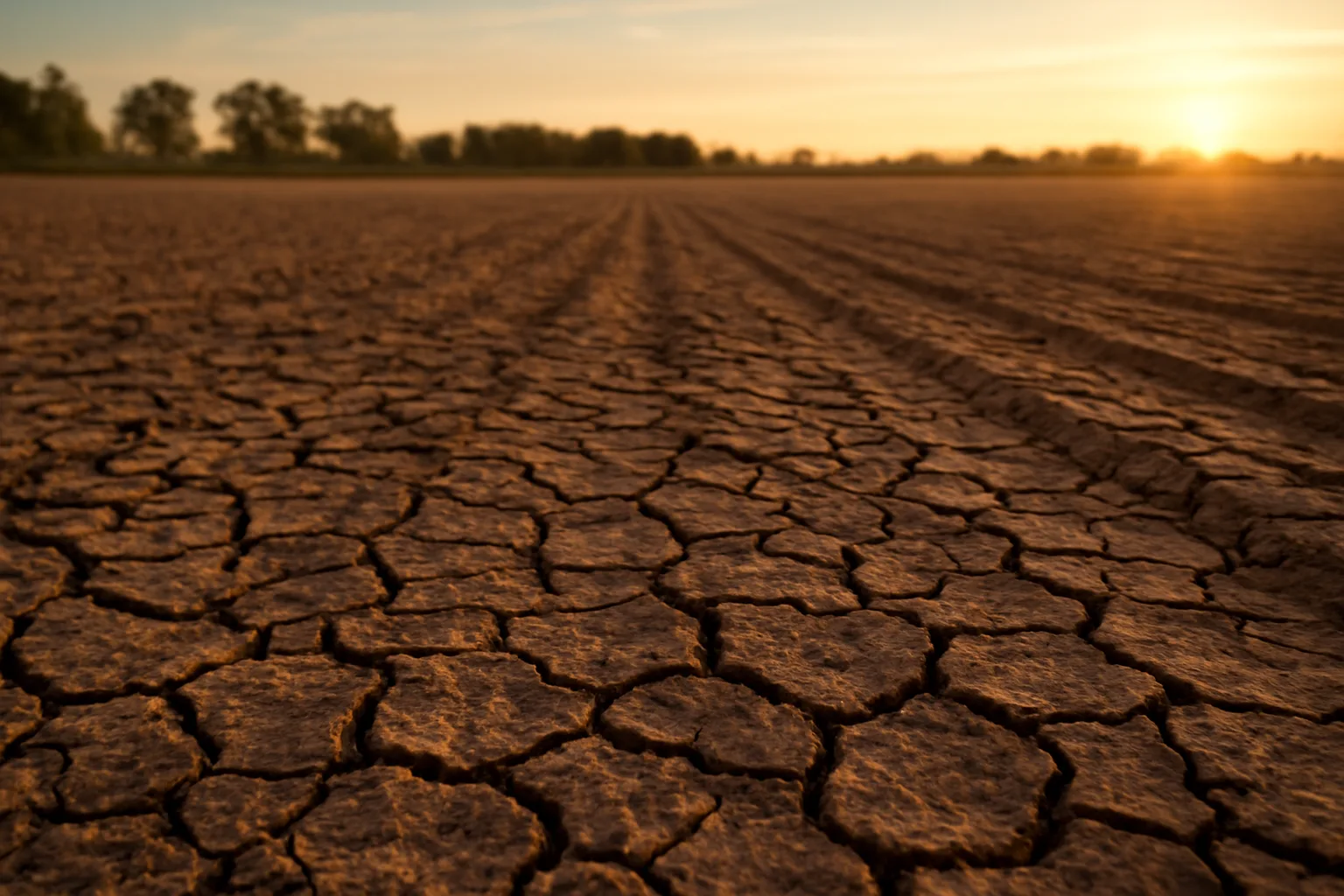
Food plot seed itself doesn't spoil quickly. Small seeds like clover or brassicas can sit viable in dry soil for 2-4 weeks, sometimes longer, waiting on rain. The bigger risk is poor seed-to-soil contact, birds and rodents eating exposed seed, or a hard crust forming once rain finally comes. Depth and firm contact matter more than timing luck.
How long will food plot seed last without rain?
Seed sitting in dry soil doesn't die on a clock. It's dormant, not decaying, as long as it stays dry and isn't rotting from excess moisture at the surface. Most food plot seed, whether it's clover, brassicas, cereal grains, or a blend, can realistically wait 2 to 4 weeks in dry ground before germination odds start dropping in a meaningful way [1]. Some guys have had seed sit dormant 6 weeks or more and still come up fine once a soaking rain hit. The real threats aren't time, they're exposure. Seed left on top of the soil (broadcast without a drag or cultipacker) is an easy meal for turkeys, doves, and rodents. Penn State Extension's guidance on no-till forage establishment notes that seed-to-soil contact is one of the most important factors in getting a stand to establish once conditions turn favorable. A seed pressed into firm soil and covered a quarter to half inch deep is protected from birds, insulated from temperature swings, and ready to swell the moment it gets wet. So the honest answer: don't panic if rain is two or three weeks out. Get the seed in the ground correctly, at the right depth, with good soil contact, and let it wait. What you shouldn't do is broadcast seed on bone-dry, cracked soil and walk away hoping for the best. That seed is far more likely to get eaten or blown off site before it ever gets a drink.
Does food plot seed go bad if it doesn't rain right away?
No, not in the way people assume. Seed doesn't spoil from lack of rain, it spoils from too much moisture at the wrong time (think rot in a low spot that floods) or from age and poor storage before you ever planted it. Dry dormancy is actually the seed's natural state. Cereal grains like wheat, oats, and rye have hard seed coats built to survive dry storage for months, let alone a few dry weeks in the ground. Small-seeded legumes and brassicas (clover, chicory, turnips, radish) are a bit more vulnerable to surface drying if they're sitting exposed, but again, that's an exposure problem, not a shelf-life problem. Cover them properly and they'll hold. What actually degrades seed viability over time is storage before planting: heat, humidity, and pests in a barn or garage. The Iowa State University Seed Science Center notes that seed viability declines faster under warm, humid storage conditions than in cool, dry conditions, and germination testing before planting is the only reliable way to know where old seed stands. If your seed sat in a hot truck bed all summer, that matters more than three dry weeks in the ground come planting time.
What is a food plot?
A food plot is a planted area of managed forage, usually somewhere between a quarter acre and several acres, designed to attract and hold deer or other wildlife by providing a concentrated, palatable food source. It's essentially a small, purpose-built farm field on hunting ground, planted with species like clover, brassicas, cereal grains, or soybeans instead of commercial row crops. Food plots serve two general purposes: attraction plots near a stand for hunting season, and nutrition or destination plots meant to support herd health through summer and winter. The Mississippi Department of Wildlife, Fisheries, and Parks and most land-grant extensions treat food plots as one wildlife habitat management tool among several, alongside prescribed burning and timber stand improvement, rather than agriculture in the commercial sense [2]. If you're building your first plot or reworking an existing one, our food plot whitetail guide covers the basics of layout and species choice, and deer food plots breaks down plot types by season and goal.
When to plant food plots for deer
Timing depends on species and region, but there are two broad windows most of the country works within: a spring/summer planting for warm-season plots (soybeans, cowpeas, corn) and a late summer/early fall planting for cool-season plots (clover, brassicas, cereal grains). As a rough national guide, cool-season fall plots go in anywhere from mid-August in the far north to early October in the Deep South, timed so plants establish before the first hard frost but germinate close enough to hunting season to be attractive [1]. Warm-season plots typically go in after your last frost date, which for much of the whitetail range falls between mid-April and late May according to USDA climate data [3]. Your local extension office or state wildlife agency almanac is the best source for exact frost dates and planting windows in your county, since a "fall plot" in Alabama and a "fall plot" in Minnesota can be a full two months apart. Check our zone-based planting calendars for more specific regional windows.
When to plant oats for deer
Oats are a cool-season cereal grain and go in during late summer to early fall for most of the whitetail range, generally 6 to 8 weeks before your area's first expected frost so plants have time to establish a leafy base before growth slows [1]. That usually lands between mid-August and mid-September in the North, and pushes into late September or early October in the South. Oats germinate fast, often in 5 to 10 days with adequate moisture, and they're one of the most attractive early-season options because deer hit tender oat shoots hard right out of the gate. They don't tolerate deep cold as well as wheat or rye though, so in far northern climates oats often get planted as part of a blend with a hardier grain to backstop winter survival. A light frost actually sweetens oats (the plant converts stored starches to sugars as a cold-stress response), which is part of why they're such a magnet in October and November.
When to plant turnips for deer
Turnips are a brassica and go in the ground in that same late-summer window as oats, typically 90 to 100 days before your first hard frost, since turnips need that long growing season to bulb properly [4]. For most of the whitetail range that's late July through mid-August. Plant too late and you'll get leafy top growth but small or nonexistent bulbs. Turnips are also one of those species where the frost timing actually matters for palatability. Deer often ignore turnip bulbs and tops until after a couple of hard frosts convert starches to sugars, which is why turnip plots sometimes look untouched in October and get hammered in December and January. Seed depth matters a lot here too since turnip seed is tiny, roughly a quarter inch deep or less, and needs firm soil contact to come up even. Broadcasting on a rough seedbed and cultipacking afterward works better than trying to drill it.
Do deer eat sorghum?
Yes, deer eat sorghum, particularly the grain heads once they mature, and sorghum is commonly planted as a warm-season food plot component or as a screening/cover crop that doubles as a food source. It's more drought-tolerant than corn, which makes it a reasonable substitute in areas with sandy soil or unreliable summer rain, a trait well documented in USDA-NRCS plant guides for grain sorghum [5]. That said, sorghum isn't usually a deer's first choice compared to soybeans or a fall brassica-cereal blend. It's more valuable as a late-season standing grain source, especially in regions where corn struggles, and as cover that also produces food. If your main goal is early attraction for bow season, sorghum isn't typically the top pick. If you want a hardy summer planting that survives a dry stretch and still gives you something in the field come winter, it's a solid, underused option.
Do deer like clover, and do deer eat clover?
Yes, deer readily eat clover, and it's one of the most consistently productive food plot species available. White clover and red clover both show up repeatedly in extension forage trials as high-preference, high-protein deer forage, with crude protein commonly reported in the 20 to 30 percent range during vegetative growth stages [6]. Clover's biggest advantage is that it's a perennial (or reseeding annual in some varieties), meaning a well-maintained clover plot can produce forage for 3 to 5 years before needing to be replanted, unlike annual brassicas or grains that go in every single season. That makes it one of the better returns on seed cost over time, provided you mow it a couple times a season to keep it from getting stemmy and out-competed by weeds. Clover does need decent soil fertility and a pH close to neutral (6.0 to 7.0 is the range most extensions recommend) to really perform, so a soil test before planting is worth the ten or fifteen dollars it costs through your county extension office [5]. If you're weighing clover against other perennial or annual options for your specific ground, a Custom Food Plot Plan from PlotSeason runs $99 one-time and factors in your soil test results, region, and goals to help you pick species that'll actually perform, though your soil-test lab remains the authority on your specific lime and fertilizer recommendations.
What are deer's favorite foods?
There's no single universal answer since preference shifts by season, region, and what's locally available, but extension research and forage preference studies consistently rank a handful of species at the top: soybeans and clover during the growing season, acorns (especially white oak family) in early fall, and brassicas like turnips and radishes in late fall and winter after a few frosts sweeten them [7]. Agricultural crops like soybeans and corn also rank extremely high when available, which is part of why food plots near ag country sometimes underperform compared to plots in more remote timber, deer already have easy access to high-value forage. Native browse (honeysuckle, greenbrier, various forbs) fills the gaps the rest of the year and matters more to overall deer nutrition than most hunters give it credit for. If you're picking species for a new plot, deer food plot seed walks through blend options by season, and domain food plot seed covers proprietary blends versus building your own mix from individual species.
Do deer like honey?
This one comes up a lot from people mixing up food plot topics with bait or attractant questions, and the honest answer is: there's no real evidence deer specifically seek out honey, and it isn't a practical food plot or attractant strategy. Deer are herbivores adapted to browse, forbs, mast, and agricultural crops, not sugary animal-derived products. What people are usually thinking of is sweet feed, molasses-based mineral licks, or commercial attractant products that use sugar or salt to draw deer in. Those products occupy a completely different category from food plots, and many states restrict or outright ban baiting and supplemental feeding, including sugar or mineral-based attractants, especially in areas managing chronic wasting disease. Michigan, for example, regulates deer baiting and feeding under its Wildlife Conservation Order, with restrictions that vary by region of the state [1]. Always check your state wildlife agency's current baiting and feeding regulations before using any attractant product, since rules vary significantly and change year to year.
What can you do if it's not raining after you plant?
Plant at the right depth and don't panic. The single biggest mistake hunters make in a dry stretch is broadcasting seed on top of dry, hard soil and walking away. That seed is exposed to birds, rodents, wind, and UV degradation, and it has almost no soil contact to pull moisture from once rain does show up. A firmer seedbed helps a lot. Running a cultipacker or even dragging a section of chain-link fence or a homemade drag over broadcast seed presses it into the soil and improves germination odds substantially, even in marginal moisture conditions. Drilling seed to the correct depth (a quarter inch for small seeds like clover and brassicas, an inch to an inch and a half for cereal grains and beans) does the same job even better . If you've got a legitimate irrigation option, even hauling a water tank to spot-water a small plot, that's obviously the fastest fix, but most hunters don't have that. In its absence, the best move is patience plus proper planting technique. A well-placed, well-covered seed will wait out a dry spell far better than people expect. What kills plots isn't the wait, it's seed sitting exposed on the surface losing the fight to birds and evaporation before the rain ever comes.
How do soil type and seedbed prep change how long seed can wait?
Soil texture matters more than most people think. Sandy soils dry out fast and hold almost no residual moisture, so seed sitting in sand during a dry spell is in a tougher spot than seed in clay or loam, which retain moisture longer even without rain. If you're planting in sandy ground, getting seed slightly deeper and firming the soil hard becomes even more important. A rough, cloddy seedbed also dries out faster than a firm, fine one because it has more surface area exposed to air and sun. That's part of why cultipacking before and after seeding is standard advice from extension agronomists, it closes air pockets, pulls seed into moisture-holding contact with soil, and slows surface drying. Residue cover helps too. A light mulch of cut vegetation or a no-till planting into standing residue can buffer soil temperature and slow moisture loss compared to bare, tilled dirt sitting exposed to full sun. If you already know your planting window is landing during a dry stretch, these seedbed prep choices matter more than the seed variety you pick.
Frequently asked questions
Do deer eat sorghum in food plots?
Yes. Deer eat sorghum grain heads and will browse the plant, especially later in the season. It's more drought-tolerant than corn, making it a decent warm-season option in sandy or dry ground, though it usually isn't as preferred as soybeans or fall brassica blends.
Do deer eat and like clover?
Yes, clover is one of the highest-preference food plot species, with crude protein commonly reported in the 20 to 30 percent range during active growth. It's also perennial, meaning a well-kept clover plot can produce forage for 3 to 5 years before replanting is needed, per extension forage research.
When should you plant food plots for deer?
It depends on species and region. Cool-season plots (clover, brassicas, cereal grains) generally go in mid-August through early October. Warm-season plots (soybeans, cowpeas) go in after your last spring frost, typically mid-April through late May in most of the whitetail range.
When is the best time to plant oats for deer?
Plant oats 6 to 8 weeks before your area's first expected frost, generally mid-August to mid-September in northern regions and late September to early October farther south. Oats germinate in about 5 to 10 days with adequate moisture and get sweeter after a light frost.
When do you plant turnips for deer plots?
Plant turnips 90 to 100 days before your first hard frost, typically late July through mid-August in most whitetail range. They need that full growing season to bulb properly, and deer often won't touch the bulbs heavily until after a couple of hard frosts sweeten them.
What exactly is a food plot?
A food plot is a planted area, usually a quarter acre to several acres, seeded with forage like clover, brassicas, or grains to attract and support deer or other wildlife. It functions as a small managed field built for wildlife nutrition and hunting attraction rather than commercial crop production.
What are deer's favorite foods overall?
Preference shifts by season and region, but soybeans, clover, acorns (especially white oak), and frost-sweetened brassicas like turnips consistently rank highest in extension forage studies. Native browse fills gaps the rest of the year and matters more to overall deer nutrition than most hunters assume.
Do deer like honey or sweet attractants?
There's no real evidence deer seek out honey specifically since they're herbivores adapted to browse and forage, not animal-derived sugars. People are usually thinking of molasses-based minerals or sugar attractants, and many states restrict or ban baiting and feeding, so check your state wildlife agency's current rules first.
How long can food plot seed sit dry before it won't germinate?
Most seed stays viable in dry soil for 2 to 4 weeks without major germination loss, sometimes longer. The bigger risk isn't time, it's exposure: seed left on the surface without soil contact gets eaten by birds and rodents or degraded by sun and wind before rain ever arrives.
Should I still plant if no rain is in the forecast?
Generally yes, as long as you plant at proper depth and firm the seedbed with a cultipacker or drag. Seed can wait out a dry spell fine if it's covered and has good soil contact. What you should avoid is broadcasting seed on hard, dry, uncovered soil and hoping for rain.
Does sandy soil make dry spells worse for food plot seed?
Yes. Sandy soil drains fast and holds very little residual moisture compared to clay or loam, so seed sitting in sand during a dry stretch is more vulnerable. Planting slightly deeper and firming the soil more aggressively helps offset that in sandy ground.
Can old or improperly stored seed fail even with good rain?
Yes. Heat, humidity, and pest exposure during storage degrade germination rates more than a few dry weeks in the ground ever would. Seed science research recommends storing seed in cool, dry conditions and testing germination on older lots before planting.
Sources
- Purdue University Cooperative Extension Service, "Forages: Seeding Rate, Depth, and Date" (AY-322): Seed-to-soil contact and moisture, not fixed timelines, determine germination success
- Mississippi Department of Wildlife, Fisheries, and Parks, "Deer Management": Food plots are one wildlife habitat management tool among several, distinct from commercial row-crop agriculture
- USDA National Agricultural Statistics Service, Climate Data: Last spring frost dates across the whitetail range generally fall mid-April to late May
- USDA Natural Resources Conservation Service, "Grain Sorghum Plant Guide": Sorghum is more drought-tolerant than corn and suited to sandy or dry-summer conditions
- Oklahoma State University Extension, "Forage Legume Species for Deer": White and red clover crude protein commonly falls in the 20-30 percent range during vegetative growth
- University of Tennessee Extension, "Soil Testing for Lawns, Gardens, and Wildlife Plots": Clover performs best at soil pH between 6.0 and 7.0 and benefits from a soil test before planting
- Michigan Department of Natural Resources, Wildlife Conservation Order, Deer Baiting and Feeding Regulations: States regulate baiting and supplemental feeding of deer, with rules varying by region and changing over time