Last updated 2026-07-25
TL;DR
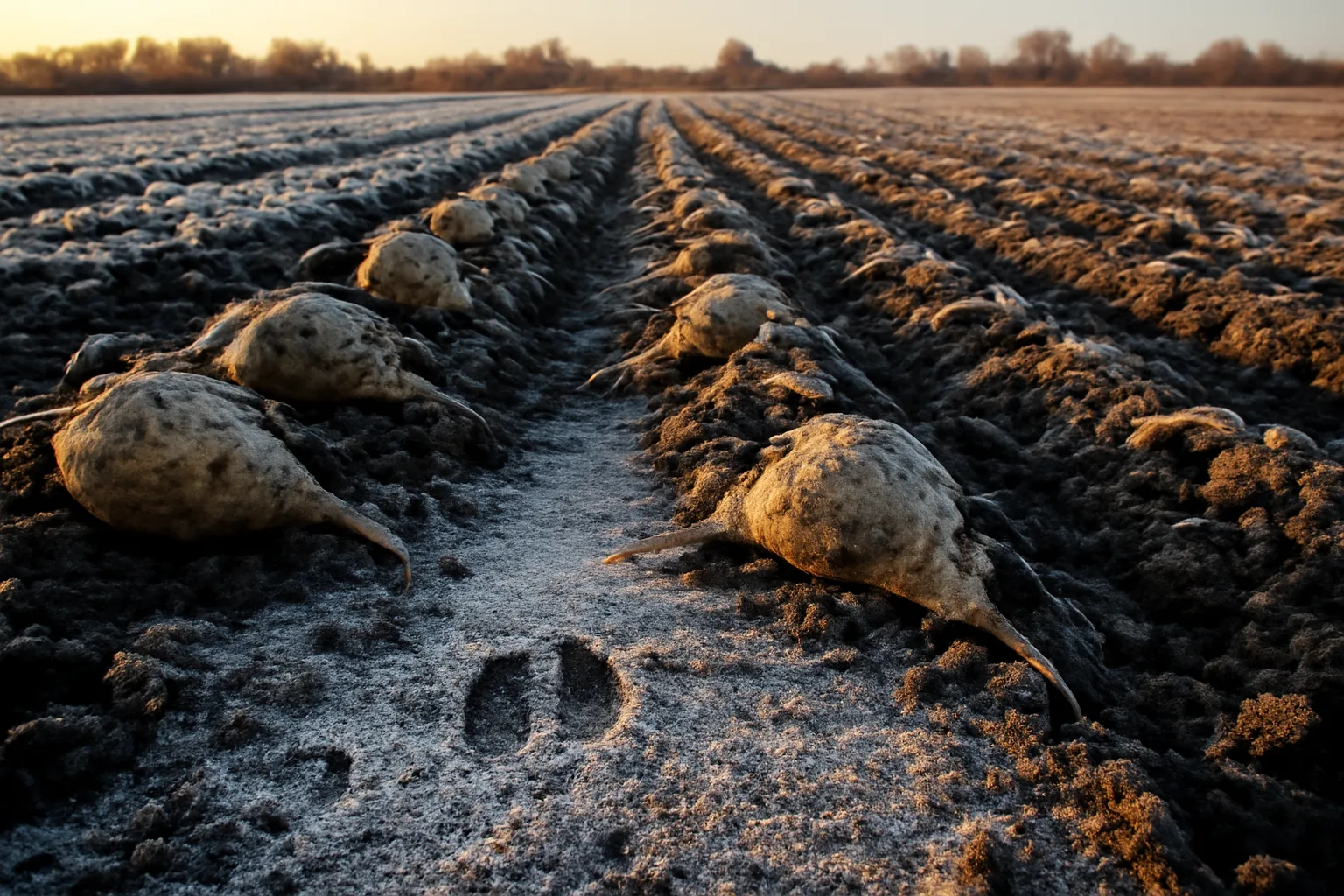
Sugar beets are a high-tonnage, high-sugar food plot option that deer often ignore until frost sweetens the bulbs, usually late fall. They need a long season (120+ frost-free days), pH near 6.5-7.0, and heavy fertility. In most whitetail country, brassicas or soybeans give more reliable results for less risk.
what is a food plot, and where do sugar beets fit in?
A food plot is a planted area on hunting land meant to feed and hold deer, usually somewhere between a quarter acre and a few acres, planted with forage the landowner picks on purpose instead of whatever grows wild. Most state wildlife agencies and land-grant extensions treat food plots as a habitat management tool, not a hunting gimmick. Purdue University Extension frames food plots as one piece of a larger habitat plan meant to supplement natural browse, alongside timber management and native forage work, not a replacement for either [1]. Sugar beets (Beta vulgaris) are a niche food plot crop. They're the same species as table beets and sugar-processing beets, bred for a big, sugar-dense root. In a plot they work as a fall/winter energy source, similar in concept to turnips or radishes but with a bigger, denser root and a longer season requirement. They're not a beginner crop. They ask for more fertility, more time, and more patience than clover or brassicas, and deer often won't touch the bulbs until a hard frost converts starches to sugar. If you're weighing sugar beets against other single-species options, it helps to look at the food plot seed basics first, then decide if the extra work is worth it for your ground.
do deer actually eat sugar beets?
Yes, but usually on their own schedule. Deer will eat the beet tops (the leafy green growth) throughout the season much like they eat brassica leaves. The bulbs themselves are usually ignored until after a hard freeze, when cold temperatures convert stored starches into sugars and make the root more palatable and more digestible. This is the same reason turnips and radishes get hammered in December but sit untouched in October. It's a predictable pattern, not a guess. Once deer key in on frozen beet bulbs, they'll dig through frozen ground and snow to get them, and a plot can get pounded down to bare dirt in a couple of weeks. The catch is getting deer to find and recognize sugar beets in the first place. In areas with no history of beet plots, deer may take a full season or two to start using them heavily.
do deer eat sorghum?
Yes. Grain sorghum (milo) is browsed by deer, and it's also a legitimate cover and screening crop in plots, planted for its height and its seed heads. Deer eat the grain heads, especially after they've dried down some, and sorghum is often used as a nurse crop or a tall privacy screen next to a lower-growing food source. It's less a primary attractant than corn or soybeans, but it's not ignored either. If you're layering a plot design around sugar beets, sorghum can work as a wind screen along one edge while the beets do the feeding work in the middle.
do deer eat clover, and do deer like clover?
Yes on both counts, and clover remains one of the most reliable food plot plantings in North America. White clover and red clover are perennial legumes that regrow after grazing, fix their own nitrogen, and provide protein-rich forage from spring through fall. The USDA Natural Resources Conservation Service Plant Guide for white clover (Trifolium repens) lists it as a widely used species in wildlife plantings because of its persistence under grazing and its nitrogen-fixing contribution to soil fertility [2]. Clover doesn't compete with sugar beets directly since one is a perennial spring-through-fall legume and the other is an annual fall/winter root crop. Plenty of plot plans run both: clover in one field for season-long browse, beets or brassicas in another for late-season tonnage. If you're building out a rotation, our guide on deer food plots covers how these pieces fit together across a property.
do deer like honey, and does it matter for food plots?
There's no real connection between honey and whitetail deer feeding behavior, and no credible wildlife research treats honey as a deer attractant or food source. Deer are herbivores that browse forbs, browse, mast, and agricultural crops; they don't seek out honey in the wild. Some commercial deer attractant products use sugar, molasses, or apple-based scents (not honey specifically) to add sweetness, but this is a mineral/attractant category, separate from actual food plot planting. If you're researching sugar beets because you've heard deer are drawn to sweetness, the more useful takeaway is that sugar content in a frost-sweetened beet bulb is the real driver, not any honey-based product.
when to plant food plots for deer, in general?
Timing splits into two windows almost everywhere in whitetail country: a spring/summer window for warm-season crops (soybeans, corn, sorghum, some clover establishment) and a late-summer window for cool-season crops (brassicas, cereal grains, clover overseed). Sugar beets fall into a third, narrower category: they need to go in early because of their long season, but they're harvested (by deer) in the cool-season window. Most state extension planting charts break the country into rough climate zones. As a general framework: Deep South and Gulf Coast plots often go in September through October for cool-season forage and March through May for warm-season. Mid-South and transition zones run April through June for warm-season and August through September for cool-season. Northern and upper Midwest zones compress everything earlier, often May through early June for warm-season and late July through August for cool-season, because the first frost date arrives sooner. Sugar beets need to be planted early enough to hit 120 to 160 frost-free days before your average first fall frost, per university variety guidance for beet root crops [3]. In much of the whitetail range that means a planting window of April through early June, depending on latitude and elevation. Check your local frost dates through your state's extension frost-date tables or the NOAA climate normals for your county before locking in a date [4].
when to plant turnips for deer?
Turnips are a cool-season brassica planted 60 to 90 days before your first expected fall frost, which in most of the whitetail range lands somewhere between late July and early September. Turnips grow fast, tolerate poor soil better than beets, and don't need nearly as long a season, which is why they're a far more common beginner brassica than sugar beets. Purdue University Extension recommends brassica plantings, including turnips, go in from mid-July through early September in the Midwest, timed so plants reach maturity right as cold weather sets in and sweetens the leaves and bulbs [1]. If your plot budget or time only allows for one root-crop planting this year, turnips are the lower-risk, faster-payoff choice compared to sugar beets.
when to plant oats for deer?
Oats are a cool-season cereal grain, planted in late summer to early fall in most regions, typically August through September, so they establish before the first hard frost and provide green forage into early winter. Oats are fast to germinate, cheap per acre, and heavily browsed by deer as soon as they emerge, which makes them a popular nurse crop mixed with clover or brassicas. In southern states, oats can also go in as a fall planting that persists through a mild winter, since oats tolerate some frost but die back in sustained hard freezes below roughly 20°F depending on variety and snow cover. Check your state extension's small grain planting guide for exact regional windows, since oat winter-hardiness varies a lot by variety.
what soil and fertility do sugar beets actually need?
Sugar beets are heavy feeders. University sugar beet production guides call for soil pH in the 6.0 to 7.5 range, with 6.5 to 7.0 considered close to ideal, and beets are notably sensitive to soil acidity, showing reduced stands and yield in soils below pH 6.0 [3]. They also need more boron than most food plot crops; boron deficiency in beets causes a root disorder growers call heart rot. Nitrogen needs run higher than turnips or clover, commercial sugar beet production often targets well over 100 pounds of actual nitrogen per acre depending on soil organic matter and yield goal, per land-grant nutrient management guides for sugar beet [3]. That's a lot more fertilizer than a typical half-acre clover plot, and it's not cheap. Your soil test is the real authority here, not a blanket number pulled from a row-crop guide built for irrigated Midwest ground. Pull a soil sample specific to your plot, send it to your state's soil testing lab (most land-grant universities run one), and follow their lime and fertilizer recommendations exactly. A soil test typically costs somewhere in the $10 to $20 range through most university labs, and it's the cheapest insurance you'll buy all season.
how does a sugar beet plot compare to turnips, brassicas, or soybeans?
| Sugar beets | 120-160 days | 6.0-7.5 | Tops browsed all season; bulbs ignored until hard frost | High | |
|---|---|---|---|---|---|
| Turnips | 60-90 days | 5.8-7.0 | Leaves browsed early; bulbs sweeten after frost | Low-Moderate | |
| Soybeans (forage type) | 100-140 days | 6.0-6.8 | Heavily browsed all summer, pods into fall | Moderate | |
| Winter wheat/oats | 60-90 days | 5.5-7.0 | Browsed at emergence and again in spring green-up | Low | Soil pH ranges above reflect general land-grant extension crop guidance and vary by variety and region [3] [1] [5]. Sugar beets earn their keep in one specific scenario: big-acreage plots where you want a huge amount of standing tonnage that holds through deep snow better than turnips (the bulbs sit partly above ground but are dense and don't rot down as fast once frozen). For most one-acre-and-under plots, turnips or a turnip/radish/clover blend get you 80 percent of the late-season benefit for a fraction of the establishment risk and cost. If tonnage and season-long structure across multiple plots is the goal, a food plot whitetail plan that blends root crops, legumes, and a cereal grain nurse crop usually outperforms a monoculture beet field. |
Here's how the common late-season food plot options stack up on the practical questions hunters actually ask. | Crop | Days to maturity | Soil pH target | Deer use pattern | Difficulty |
what mistakes do people make planting sugar beets for deer?
The most common mistake is planting too late. Because beets need 120+ frost-free days, a planting that goes in during a typical brassica window (late July, August) will get caught by frost before the roots ever bulk up. Beets have to go in during your region's warm-season planting window, months earlier than turnips. The second mistake is skipping the boron. Standard 10-10-10 or triple-19 blends don't carry boron, and beets grown without it can develop heart rot and stunted roots even with otherwise good fertility. Check with your soil test lab about a boron amendment specific to beet production; over-applying boron is also a real risk since the safe range is narrow. The third mistake is expecting deer to hit the plot early. If your local deer herd has never seen sugar beets, don't panic if the bulbs sit untouched through October. That's normal. The payoff usually comes after the first hard frost, often into December and January, which is exactly when a lot of hunters most want standing forage left in the field.
is a sugar beet plot worth the extra work?
For most hunters managing a handful of small plots, no, not as a primary strategy. The long season requirement, higher fertility demand, and slower deer adoption make sugar beets a specialty crop best suited to larger operations or hunters who already have a working plot program and want to add late-season tonnage. If you're just getting your plot rotation established, start with clover, a brassica blend, or beans, get a season or two of soil-building and deer pattern data, then experiment with a small beet strip once your fertility program and equipment are dialed in. We put together a $99 one-time Custom Food Plot Plan that walks through species selection and timing for your specific property and region, built off your soil test results if you have one, at plot-plan-builder. It's general guidance, not site-specific agronomy advice, and your soil test lab remains the final word on lime and fertilizer rates. Check your state wildlife agency's baiting and feeding regulations before you plant anything meant to concentrate deer near a stand, since rules on supplemental feeding and food plots vary significantly state to state.
Frequently asked questions
Do deer eat sorghum in food plots?
Yes. Deer browse grain sorghum (milo) heads, especially as they dry down in fall. It's more commonly used as a screening or nurse crop alongside a primary food source than as a standalone attractant, but deer do eat it.
Do deer eat clover, and is it better than sugar beets?
Deer eat clover heavily; it's one of the most reliable food plot forages available, per USDA NRCS plant guidance. Clover and sugar beets aren't really competitors: clover is a season-long perennial, beets are a fall/winter annual root crop. Many plot plans use both.
When should I plant food plots for deer?
Warm-season crops (soybeans, corn, sugar beets) generally go in April through June depending on latitude. Cool-season crops (brassicas, cereal grains, clover overseed) go in roughly 60-90 days before your first fall frost, often late July through September.
Do deer like clover more than other food plot crops?
Deer show strong, consistent preference for clover across most published forage-preference studies and extension guidance, largely because of its high protein content and season-long availability. It's rarely the top late-season attractant once frost sets in, but through spring and summer it's a top performer.
When do I plant oats for deer food plots?
Oats are typically planted in late summer, roughly August through September in most of the whitetail range, so they establish before the first hard frost. They're fast-germinating and often mixed with brassicas or clover as a nurse crop.
When should I plant turnips for deer?
Turnips go in 60 to 90 days before your area's average first fall frost date, generally late July through early September across most of the U.S. whitetail range. Purdue Extension recommends this window for Midwest brassica plantings.
What is a food plot, exactly?
A food plot is a deliberately planted area, usually a fraction of an acre to a few acres, meant to supplement natural deer forage and support habitat goals on hunting land. Extension programs treat plots as one habitat management tool among several, not a standalone strategy.
What are deer's favorite foods overall?
Deer preferences shift by season and region, but native browse, acorns and other mast, clover, soybeans, and agricultural grain crops rank consistently high in forage studies. Preference also depends heavily on local availability; deer eat what's abundant and nutritious in their specific habitat.
Do deer like honey or honey-based attractants?
There's no credible research showing deer seek out honey specifically. Some commercial attractant products use sugar or molasses-based scents, but this is a separate category from honey and isn't part of standard food plot planting.
How long does it take sugar beets to mature for a food plot?
Sugar beets need roughly 120 to 160 frost-free days to reach a usable root size, per university sugar beet production guidance. That's substantially longer than turnips (60-90 days), so beets must be planted in a spring warm-season window, not a late-summer brassica window.
Why won't deer touch my sugar beet bulbs until winter?
Cold temperatures convert starches in the beet root into sugars, which is what makes the bulb palatable to deer. Before a hard frost, the bulb is starchy and mostly ignored, even though deer will still browse the leafy tops throughout the growing season.
What pH do sugar beets need compared to turnips?
Sugar beets want pH 6.0-7.5, ideally near 6.5-7.0, and are notably sensitive to acidic soil. Turnips tolerate a slightly wider and lower range, roughly 5.8-7.0, making them more forgiving on marginal or unlimed food plot ground.
Sources
- Purdue University Extension, FNR-534-W, Food Plots for Deer and Other Wildlife: Food plots are a habitat management tool used to supplement natural deer nutrition alongside other habitat practices
- USDA NRCS Plant Guide, White Clover (Trifolium repens): White clover is widely used in wildlife plantings for its persistence and nitrogen-fixing contribution to soil fertility
- North Dakota State University Extension, Sugarbeet Production Guide: Sugar beet soil pH targets, nitrogen needs, boron requirement, and frost-free day requirements for root maturity
- University of Georgia Extension, soybean and forage soybean production: Forage soybean pH target and general maturity window for food plot use
- NOAA National Centers for Environmental Information, U.S. Climate Normals 1991-2020: County-level frost date and climate normal data used to time warm-season plantings like sugar beets