Last updated 2026-07-25
TL;DR
For sandy soil, pick drought-tolerant, low-fertility-tolerant species: cowpeas, buckwheat, sunn hemp, and cereal grains like oats and rye establish reliably. Clover works but needs more attention to lime and moisture than on loam. Turnips and brassicas can work if you irrigate germination or plant ahead of rain. Test your soil first; sandy ground often needs split fertilizer applications since nutrients leach fast.
Why is sandy soil so hard to grow a food plot on?
Sandy soil has big particles with huge gaps between them. Water runs through those gaps instead of clinging to them, and so does nitrogen and potassium. That's the whole problem in one sentence. A loam or clay soil holds water and nutrients in a sponge-like structure. Sand doesn't. USDA Natural Resources Conservation Service soil survey guidance on available water capacity classifies coarse sandy soils as holding well under half the plant-available water per inch of depth that a loam holds. That means your seedlings dry out faster after a rain, and a light spring shower that would carry a clover stand on clay loam might not do much on deep sand. Sandy soil also tends to run low on organic matter and cation exchange capacity (CEC), which is basically the soil's ability to hold onto positively charged nutrients like potassium, calcium, and magnesium so plant roots can use them later instead of losing them to leaching. Low CEC means fertilizer you spread today can wash below the root zone before a slow-growing plot species ever gets to use it. None of this means sandy ground is hopeless. It means you pick species built for drought and low fertility, and you manage fertilizer differently, smaller doses, more often, rather than one big application in spring. A soil test is the starting point, not an afterthought. Your local cooperative extension office or a private ag lab can run one for $10 to $20 and tell you actual pH and nutrient levels instead of guessing [1].
What is a food plot, exactly?
A food plot is a planted area, usually somewhere between a quarter acre and several acres, established specifically to grow forage or grain that attracts and feeds deer or other wildlife on a piece of hunting ground. It is farming, just with a different customer. Most plots fall into two categories: annual plots planted fresh each year (brassicas, cereal grains, cowpeas) and perennial plots that persist for two to five years with mowing and occasional overseeding (clover, alfalfa, chicory). Sandy ground changes which category makes more sense. Perennials need consistent moisture to survive their first summer, which is a tougher ask on sand than on loam. A lot of hunters treat food plots as a package deal: soil work, seed selection, and a planting calendar tuned to their region. If you want a structured plan built around your specific soil test and property instead of piecing it together from forum threads, that's the whole idea behind our $99 Custom Food Plot Plan, it takes your soil numbers and location and turns them into a species list and fertilizer schedule instead of a generic seed bag.
What are deer's favorite foods, and does that change on sandy soil?
Deer are opportunistic browsers, and their preferences shift by season and by what's locally available, but a few plants show up again and again in food habit studies: acorns, soybeans, clover, and native forbs rank high in most regional research [2]. In agricultural areas, soybeans and corn are often preferred over planted forages when both are available, simply because of the calorie and protein density. Sandy soil doesn't change what deer prefer. It changes what you can actually grow well enough to offer it. Soybeans, for instance, are a top deer food almost everywhere, but they're also nitrogen-hungry and moisture-sensitive during pod fill, which makes them a rougher bet on droughty sand unless you're willing to accept some years with a thin stand. Cowpeas (also called southern peas) are a strong substitute on sandy ground. They're in the same legume family as soybeans, deer eat them readily, and they tolerate heat and sandy, low-fertility soil noticeably better than soybeans do, which is part of why they show up as a standard warm-season legume recommendation for sandy Coastal Plain soils in university cover crop guidance [3].
Which food plot seeds actually work on sandy soil?
Here's the short list of species that hold up on sand, based on their known drought tolerance and fertility requirements. Cowpeas and iron-clay peas: legumes that fix their own nitrogen, tolerate heat and drought well, and deer hit them hard through summer. Plant after soil temps hit 65°F. Buckwheat: fast-germinating, matures in 70 to 90 days, tolerates poor soil, and works as a short-season summer filler or a nurse crop ahead of fall brassicas. Sunn hemp: a warm-season legume bred for poor, sandy soils, common in southeastern cover crop programs, builds organic matter while it grows. Cereal rye and oats: cool-season cereal grains with fibrous root systems that scavenge nutrients efficiently even in low-CEC soil. Rye is more cold and drought tolerant than oats; oats winterkill in colder zones but green up fast and deer prefer the tender growth. Arrowleaf and crimson clover: annual clovers that establish faster and need less standing moisture than perennial clovers like ladino, making them a better first move on sand. Chicory: deep taproot reaches moisture below the surface, pairs well in a clover blend on sandy sites. What struggles: ladino and white clover monocultures (shallow roots, need consistent moisture their first 60 days), alfalfa (wants well-drained but moisture-holding loam, not straight sand), and corn (heavy nitrogen and water demand, tough on sand without irrigation or a big fertilizer budget). For a broader rundown of species and how they stack up outside the sandy-soil question specifically, see food plot seed and deer food plot seed.
Do deer eat sorghum?
Yes, deer eat grain sorghum (milo), both the standing seed heads and the foliage, though it's usually a secondary food source rather than a first choice compared to soybeans, corn, or acorns. Sorghum has one big advantage on sandy ground: it's noticeably more drought tolerant than corn, largely due to a deeper, more efficient root system and waxy leaf coating that reduces water loss, which is why the Kansas State University Grain Sorghum Production Handbook describes sorghum as a standard dryland option across the sandier, drier soils of the Great Plains [4]. For a food plot, sorghum works best as part of a fall/winter blend or as standing grain left for late-season cover and food, rather than a monoculture. It also draws turkeys, quail, and other wildlife, which some landowners like and others see as competition for the deer forage. If you're on sandy soil and corn keeps disappointing you, grain sorghum is worth trying as a swap. It wants less water and less fertilizer to produce a decent yield.
Do deer eat clover, and do they actually like it?
Yes, and it's not close. Clover is one of the most consistently preferred food plot forages across whitetail range, showing up as a recommended high-preference forage in university food plot guidance for its palatability and protein content when it's actively growing and tender [5]. It's high in protein, typically 25 to 30 percent crude protein in vegetative growth, which matters most during spring green-up and antler growth, and again in late summer before fall. The catch on sandy soil isn't whether deer like clover. It's whether clover survives. Ladino and white clover have shallow, fibrous roots that need fairly consistent surface moisture, especially in the first 6 to 8 weeks after planting. On deep sand in a dry summer, that stand can thin out or die before it gets established. The workaround: plant clover in early spring or late summer when rain is more reliable in your area, don't skip the lime (clover wants pH 6.0 to 7.0 and performs poorly below 6.0), and consider arrowleaf clover or a clover-chicory blend instead of straight ladino. Chicory's taproot pulls moisture from deeper in the profile once established, which buffers the stand during dry stretches. Overseeding thin spots each fall is normal maintenance on sandy ground, not a sign you did something wrong.
When should you plant turnips for deer on sandy soil?
Plant turnips 60 to 90 days before your area's first hard frost, which lands most of the Midwest and Upper South somewhere between late July and mid-August, and the Deep South into early September . Turnips need that runway to bulb out and build sugar content before cold weather, since frost is actually what triggers the starch-to-sugar conversion that makes them palatable late in the season. On sandy soil specifically, timing gets less forgiving. Turnip seed is tiny and needs shallow planting (a quarter inch or less) plus consistent surface moisture to germinate, and sand dries out fast in August heat. Two practical fixes: plant right before a forecasted rain, or drag a cultipacker after seeding to firm the seed-to-soil contact and slow moisture loss. Turnips are heavy feeders too, they respond strongly to nitrogen and want a pH of 5.5 to 6.8, so a soil test matters more here than on almost any other plot species. Skimping on fertilizer on sandy ground usually shows up as small, woody bulbs deer walk past.
When should you plant oats for deer, and how do they perform on sand?
Plant oats 45 to 60 days before your first fall frost for a fall/winter plot, or in early spring (as soon as soil is workable) for a spring plot; fall planting is by far the more common use case for deer hunters . Oats germinate fast, often within 7 to 10 days in warm soil, and deer usually hit new oat growth harder than winter wheat or rye when all three are planted together, since oat foliage tends to be more tender. Oats have one real limitation everywhere, more than on sand: University of Missouri Extension guidance on food plots for wildlife notes oats winterkill at temperatures below roughly 5 to 10°F depending on snow cover and growth stage, so in the northern tier (much of Minnesota, Wisconsin, North Dakota, Montana) a straight oat plot may be gone by January . That's fine if you want it grazed hard through November and December and don't need it standing in February. If you want late-winter food, blend oats with cereal rye, which survives much colder temperatures and will still be green when the oats are done. On sandy soil, oats' fibrous root system is actually an advantage: it scavenges nitrogen efficiently from a shallow zone, so oats often out-yield more nutrient-demanding species per pound of fertilizer applied on poor ground.
When should you plant food plots for deer overall?
| Cowpeas/soybeans | 2-4 weeks after last frost, soil 65°F+ | 60-90 days | |
|---|---|---|---|
| Buckwheat | Late spring to early summer | 70-90 days | |
| Oats (fall) | 45-60 days before first frost | 30-45 days to grazeable growth | |
| Cereal rye | 30-60 days before first frost | 20-30 days, keeps growing into winter | |
| Turnips/brassicas | 60-90 days before first frost | 60-90 days to bulb | |
| Clover (spring) | Early spring, soil workable | 30-45 days to first graze | |
| Clover (late summer) | 6-8 weeks before first frost | 45-60 days | Sandy soil pushes you toward planting right ahead of a forecasted rain rather than sticking rigidly to a calendar date, since germination moisture matters more on sand than on soils with better water retention. If the extension-recommended window is dry, waiting one to two weeks for rain usually beats planting into dust. |
Timing splits into two windows almost everywhere in whitetail range: a spring/summer planting for warm-season annuals (roughly April through June depending on latitude and last frost date) and a late-summer planting for fall/winter annuals and perennials (roughly late July through early September) . Here's a general framework, but check your state extension's planting date guide for your specific zone, since a north Michigan date and a south Georgia date can be two months apart for the same species. | Species | Planting window | Days to maturity/usable growth |
How should you handle fertilizer and lime differently on sandy soil?
Split your nitrogen applications instead of putting it all down at planting. Sandy soil's low CEC means a big single dose of nitrogen can leach past the root zone before slow-growing seedlings use it, especially after a heavy rain. Applying half at planting and the rest 3 to 4 weeks later, once plants are established, generally gets better uptake on sandy ground, a principle reflected in university cover crop and nutrient guidance for sandy Coastal Plain soils [3]. Lime works slower on sand too, in the sense that low CEC soils need less total lime to shift pH than a clay soil at the same starting pH, but they can also swing back down faster if you don't retest every 2 to 3 years. Get the actual number from your soil test. Don't guess and don't skip it, since clover, alfalfa, and brassicas all perform poorly outside pH 6.0 to 7.0. Your soil test lab is the real authority here, not a blog post, since regional soil chemistry, existing nutrient levels, and crop history all change the recommendation. Treat any planting guide, including this one, as a starting framework and let the lab report drive your actual lime and fertilizer rates.
Do deer like honey, and does it belong in a food plot?
Deer don't eat honey in any meaningful, documented sense, and it has no real place in food plot planning. There's no wildlife research or extension guidance recommending honey as deer attractant, and it's not a plant, so it doesn't fit the food plot category at all. This question usually comes from confusion with mineral licks, molasses-based attractant products, or sweet feed mixes, none of which are the same thing as honey. If you're looking for an actual attractant boost on sandy soil where plot establishment is already a fight, put your energy into a mineral site instead (check your state's rules first, since many states restrict supplemental feeding or baiting for hunting purposes, and the regulations vary a lot state to state) or focus on getting a legume like cowpeas or clover established well, since protein-rich forage does far more for deer than any additive.
What equipment and site prep matter most on sandy soil?
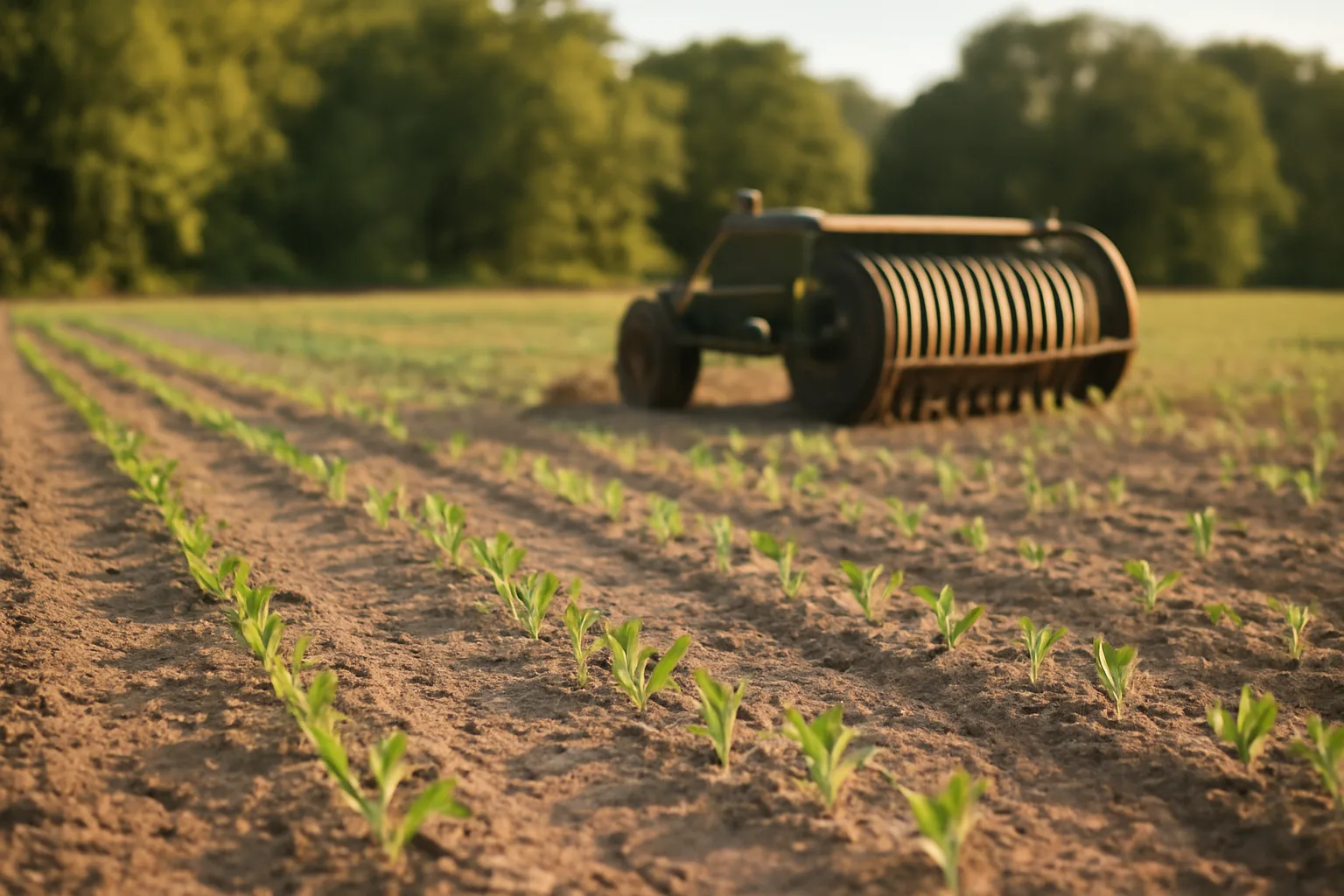
Seed-to-soil contact matters more on sand than almost anywhere else, because loose, dry sand doesn't hold seed in place the way a firmer loam does. A cultipacker, run both before and after broadcasting small seed like clover or turnips, makes a real difference in germination rates. No-till drills work well on sandy ground because they place seed at a controlled depth and firm the soil right over it, which conserves the moisture that's already there instead of exposing more soil surface to evaporation through tillage. If you're broadcasting instead of drilling, time it right before rain whenever you can, and consider a light drag or roller pass afterward. Avoid over-tilling sandy soil. Every pass with a disc or tiller dries the seedbed out further and breaks down what little organic matter and structure you have. A single pass to incorporate lime and fertilizer, then plant, usually beats repeated tillage passes on sand. For more on matching gear to your ground and plot size, see deer food plots and food plot whitetail.
How do you build a sandy-soil plot rotation across the season?
A simple two-season rotation covers most sandy-soil properties without overcomplicating it. Spring/summer: cowpeas or a cowpea-buckwheat mix, planted after last frost once soil hits 65°F. This feeds deer through summer, fixes nitrogen for the fall planting, and tolerates the heat and drought stress sandy soil amplifies. Late summer/fall: drill into the cowpea residue with an oat-cereal rye-clover blend, 60 to 90 days before frost depending on which species dominates the mix. The oats green up fast for early fall attraction, the rye carries through winter, and the clover starts establishing for next spring. This rotation also builds soil health over time. Legumes add nitrogen and organic matter, cereal grain roots add fibrous mass, and you're not leaving sandy soil bare and exposed to wind and water erosion between plantings, which matters since bare sandy soil erodes and loses topsoil faster than soil with cover or residue. If you want this mapped to your specific coordinates, frost dates, and soil test numbers instead of a general framework, that's exactly the gap our $99 Custom Food Plot Plan is built to close, you get a species list and fertilizer schedule sized to your actual property rather than a generic seed bag recommendation.
What mistakes cost hunters the most on sandy soil plots?
Skipping the soil test is the biggest one. Sandy soil pH and nutrient levels vary a lot even within the same field, and guessing at lime rates on low-CEC soil either wastes money or leaves pH too low for clover and brassicas to perform. Planting straight ladino clover as a first attempt on deep sand, without a nurse crop or moisture backup plan, is the second most common miss. It can work in a wet year and fail completely in a dry one. Dumping all your nitrogen at planting instead of splitting the application wastes fertilizer dollars on sand, since a chunk of it leaches before the plant uses it. Over-tilling dries out the seedbed right when you need moisture the most. And planting on the calendar date instead of the rain forecast is a sandy-soil-specific mistake, since germination moisture is the limiting factor more than air temperature in a lot of these plantings. For species comparisons across soil types more broadly, domain food plot seed and deer for food cover how these choices shift on heavier ground.
Frequently asked questions
Do deer eat sorghum in food plots?
Yes. Deer eat both the grain and foliage of grain sorghum, though it's usually a secondary preference behind soybeans, corn, and acorns. Sorghum's deep root system makes it noticeably more drought tolerant than corn, which makes it a solid swap on sandy or dry ground where corn tends to struggle without irrigation.
Do deer eat clover and do they actually prefer it?
Yes, clover ranks among the most consistently preferred food plot forages in whitetail research, especially as tender spring and late-summer growth with 25 to 30 percent crude protein. On sandy soil it still works, but shallow-rooted types like ladino need more consistent moisture, so arrowleaf clover or a clover-chicory blend often holds up better.
When should I plant food plots for deer?
Most regions split into two windows: spring/summer annuals planted roughly April through June after last frost, and fall/winter annuals and perennials planted late July through early September, 45 to 90 days before first frost depending on species. Check your state extension's frost date maps for your exact zone.
When should I plant oats for a deer food plot?
Plant oats 45 to 60 days before your area's first fall frost for the standard fall plot, or in early spring for a spring planting. Oats germinate in about 7 to 10 days but winterkill below roughly 5 to 10°F, so pair them with cereal rye if you want food standing into late winter.
When should I plant turnips for deer?
Plant turnips 60 to 90 days before your first hard frost, generally late July to mid-August in the Midwest and into early September in the Deep South. Frost triggers the starch-to-sugar shift that makes bulbs palatable, so timing that runway correctly matters more than exact calendar dates.
What is a food plot, in simple terms?
A food plot is a planted patch, usually a quarter acre to several acres, grown specifically to feed and attract deer or other wildlife on hunting ground. It can be an annual planting like brassicas or cereal grain, or a perennial stand like clover that persists for a few years with mowing and overseeding.
What are deer's favorite foods?
Acorns, soybeans, and clover consistently rank as top preferred foods in wildlife food-habit studies, along with various native forbs and browse depending on region and season. Preference shifts with availability and season, protein-rich legumes matter most in spring and late summer, and mast and grain matter most in fall.
Do deer like honey?
No, honey isn't a documented deer food or attractant, and it has no real role in food plot planning since it isn't a plant. This confusion usually comes from mixing up honey with molasses-based attractants or mineral supplements, which are a separate category and subject to your state's baiting and feeding rules.
What's the best food plot seed for sandy soil specifically?
Cowpeas, buckwheat, sunn hemp, oats, and cereal rye are the most reliable choices on sandy ground because they tolerate low fertility and drought stress well. Arrowleaf clover and chicory work better than straight ladino clover. Corn and alfalfa are the toughest species to establish on deep sand without irrigation.
Does sandy soil need more fertilizer than clay or loam?
Not necessarily more total fertilizer, but it needs it applied differently. Low cation exchange capacity means sandy soil holds nutrients poorly, so splitting nitrogen into two applications, roughly half at planting and the rest three to four weeks later, generally improves uptake compared to one large dose.
How often should I retest soil on a sandy food plot?
Every 2 to 3 years is standard extension guidance for most food plot soils, but sandy ground can swing pH back down faster after lime application because of its low buffering capacity. If you're pushing pH hard toward 6.5 for clover or brassicas, retesting yearly for the first two years isn't overkill.
Can perennial clover survive on sandy soil at all?
Yes, but it takes more management than on loam. Plant during your area's most reliable moisture window, keep pH between 6.0 and 7.0, choose arrowleaf clover or a clover-chicory blend over straight ladino, and expect to overseed thin spots most falls since sandy ground stresses shallow-rooted stands more in dry years.
Sources
- National Center for Biotechnology Information, PubMed record for Whitetail deer food habits research (Short and Segelquist), Journal of Wildlife Management: Acorns, soybeans, clover, and native forbs rank as consistently preferred whitetail foods
- Kansas State University Research and Extension, Grain Sorghum Production Handbook C-687: Grain sorghum has deeper roots and better drought tolerance than corn, making it suited to dryland and sandy soils
- University of Tennessee Extension SP731-A, Establishment and Management of Food Plots for White-Tailed Deer: Clover is among the most preferred forages for deer food plots
- University of Georgia Extension Circular B1568, Fall and Winter Food Plots for Wildlife: Fall food plot species like turnips and brassicas should be planted 60 to 90 days before first frost
- University of Missouri Extension G9421, Food Plots for Wildlife: Oats planted for fall food plots winterkill below roughly 5 to 10 degrees F depending on conditions