Last updated 2026-07-25
TL;DR
Finding food plot seed nearby is easy; picking the right species and planting it at the right time is the hard part. Clover, oats, and brassicas cover most whitetail plots in the US. Match seed choice to your USDA hardiness zone and soil test, more than what your local co-op has stocked on the shelf.
what is a food plot, exactly?
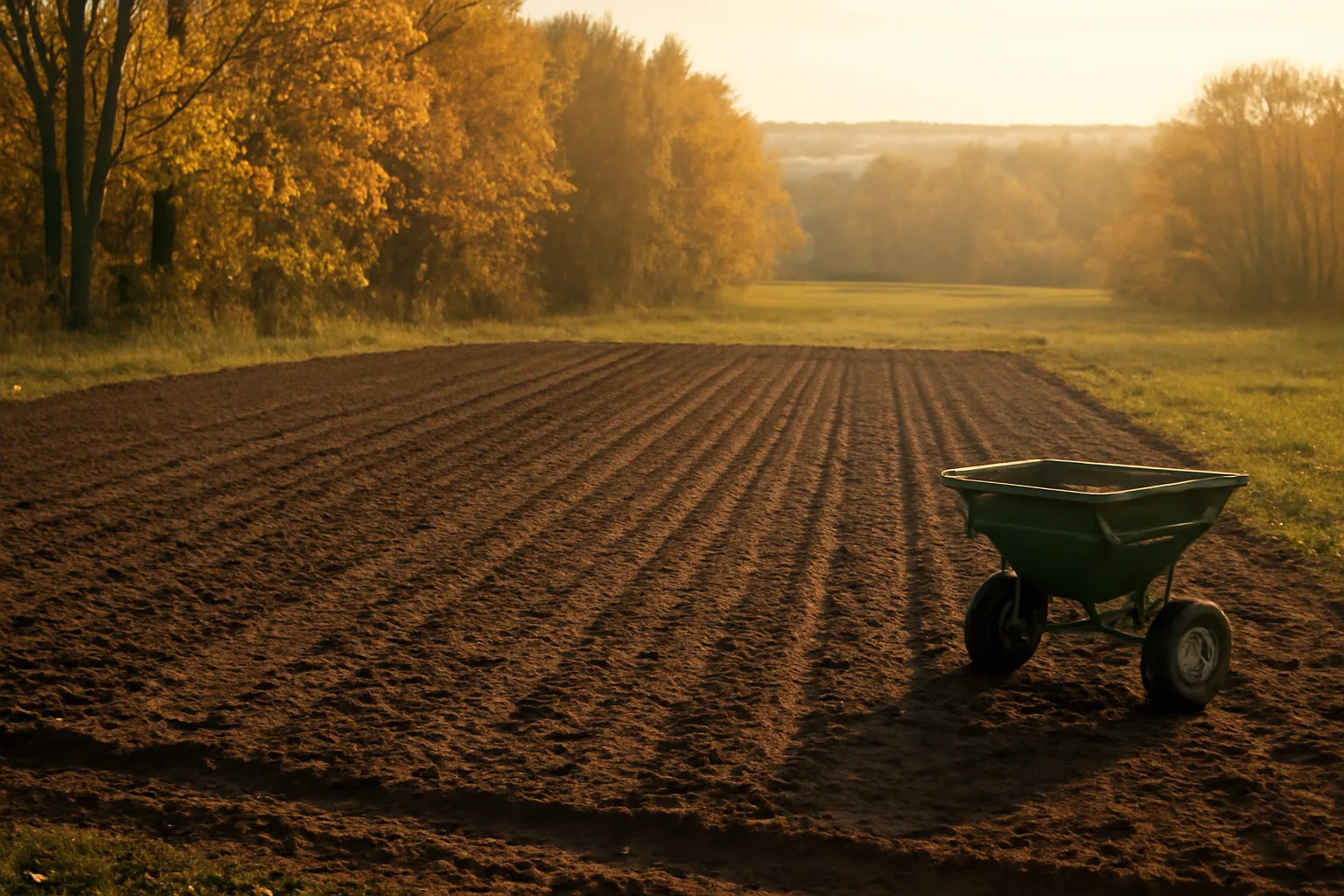
A food plot is a planted patch of forage on hunting land, usually somewhere between a quarter acre and a few acres, meant to feed and hold deer (or attract them for hunting) rather than to produce a cash crop. It's a wildlife management tool, not farming for profit. Most plots run anywhere from 1/4 acre up to 5 acres depending on property size and equipment. Food plots generally split into two categories: annuals (planted fresh every year, like brassicas, oats, and cereal grains) and perennials (planted once and mowed/managed for 3-5 years, like clover and alfalfa). Some hunters run both: a perennial clover plot for spring and summer, and an annual brassica or grain plot timed to peak right before gun season. State wildlife agencies regulate food plots differently than bait piles. Most states classify a planted, standing food plot as legal hunting over, but many restrict or ban hunting over piled corn, mineral, or processed feed. Rules vary a lot by state, so check your state wildlife agency's hunting regulations before you plant or hunt over anything that isn't standing vegetation [1]. Some states (Michigan, for one) have specific baiting bans tied to CWD zones, and those rules change year to year [1]. If you're just starting out, read up on the basics of a food plot whitetail setup before you buy seed. Knowing your acreage, soil type, and sunlight will save you money on the wrong bag.
when to plant food plots for deer
| Zone 3-4 (northern MN, ND, upper WI) | May 15 - June 15 | July 15 - Aug 15 | |
|---|---|---|---|
| Zone 5-6 (IA, southern WI, PA, OH) | April 15 - May 30 | Aug 1 - Sept 1 | |
| Zone 7 (VA, NC, TN, AR) | March 15 - April 30 | Aug 15 - Sept 15 | |
| Zone 8-9 (deep South, TX, FL) | Feb 15 - March 30 | Sept 1 - Oct 1 | These windows come from combining USDA plant hardiness zone data with typical first/last frost tables published by land-grant extension services [3]. Your actual dates might shift a week or two either direction depending on elevation and local microclimate, so a soil test and a local extension call beat any national chart. For a full breakdown by species, see deer food plot seed options broken down by planting date. |
Timing depends entirely on your species choice and your first/last frost dates, not a single calendar date that works nationwide. Spring plots (clover, chicory, alfalfa) go in after soil hits 50-55°F and danger of hard frost passes. Fall plots (brassicas, oats, cereal rye, winter wheat) get planted 60-90 days before your area's first hard frost so they mature into late season food right when hunting pressure and cold weather push deer to seek calories. As a rule of thumb used by extension agronomists: brassicas need roughly 80-90 days from planting to full maturity, and you want that maturity to land close to your first frost, since frost sweetens the leaves and bulbs through starch-to-sugar conversion [2]. Oats and cereal grains need less time, often 45-60 days to reach a grazeable stage. Here's a rough national planting window breakdown. Use it as a starting point, then check your local extension office's exact frost date tables, because a zone 5 pocket in the mountains plants very differently than zone 5 on flat ground three states over. | Region (USDA zone) | Spring plot window | Fall plot window |
when to plant oats for deer
Plant oats for deer 60-90 days before your first fall frost, or in early spring once soil temps hit about 45°F if you want a spring/summer grazing plot instead. Fall-planted oats are far more common for hunting plots because deer hit them hard in September and October, right as bow season opens in most states. Oats germinate fast, often in 7-10 days with adequate moisture, and they tolerate light frost better than most people expect, continuing to put out green growth down into the mid-20s°F before finally dying back. That makes them a strong early-season attractant that can carry a plot into November in most whitetail range. Seeding rate for oats in a food plot context runs 2-3 bushels per acre (roughly 64-96 lbs/acre) when drilled, a bit higher when broadcast, according to extension forage guides [4]. Oats pair well in a blend with brassicas or clover because the oats provide quick cover and early tonnage while the slower species catch up.
when to plant turnips for deer
Turnips go in the ground 80-90 days before your first expected fall frost, which for most of the whitetail belt lands somewhere between late July and early September. Plant too early in hot, dry August conditions and you risk poor germination; plant too late and the bulbs won't size up before frost. Turnips are part of the brassica family, along with radishes, rape, and kale, and they're one of the most reliable late-season deer foods because frost converts starches to sugars in the leaves and bulbs, which is exactly what makes deer switch from largely ignoring the plot in October to hammering it in December [2]. This isn't guesswork, it's basic plant physiology extension agronomists have documented in cold-tolerant brassica research for decades. Seeding rate for turnips alone runs about 4-6 lbs/acre broadcast, but most hunters blend turnips with radish and cereal grains rather than planting a monoculture, since a straight turnip plot can look barren most of the season before deer start using the bulbs. Purdue Extension and other land-grant programs recommend a firm, well-prepared seedbed and shallow planting depth (1/4 to 1/2 inch) since brassica seed is tiny and won't emerge from deep coverage [2].
do deer like clover, and do deer eat clover?
Yes, deer eat clover readily, and it's one of the most consistently used food plot species across the whitetail's range. Clover is a perennial legume, meaning one planting can produce forage for 3-5 years with proper mowing and fertility maintenance, which makes it a low-labor, high-return plot type once it's established. White clover (including Ladino types) and red clover are the two most common food plot clovers. White clover tolerates more shade and mowing, red clover grows taller and handles poorer drainage a bit better. Clover also fixes nitrogen from the air through root nodules, which is one reason extension programs often recommend it as part of a rotation with grain crops to cut fertilizer costs. Clover's protein content commonly runs 25-30% crude protein in vegetative growth stages, which is high enough to matter during antler growth and lactation in early summer. That's a big part of why clover plots get hit hard from spring through fall, then again in early fall before brassicas and grains take over as the frost-sweetened late-season draw. The tradeoff: clover needs a real soil test and lime correction to perform. It wants pH in the 6.0-7.0 range, and if your dirt is acidic (a lot of whitetail country runs 5.0-5.5 naturally), clover will sit there weak and thin no matter how much seed you throw down. Get the soil test done before you buy clover seed, not after.
do deer eat sorghum?
Yes, deer eat sorghum, particularly grain sorghum heads once they mature, and sorghum also works as a standing cover crop that holds deer through late season in colder climates where corn isn't practical to grow at food-plot scale. It's more common as a cover/screening plant and supplemental grain source than as a primary attractant crop compared to clover or brassicas. Grain sorghum matures in about 90-120 days depending on the variety, similar to a shorter-season corn, and it tolerates drought and poor soil noticeably better than corn does, which is why it shows up more often on marginal or sandy ground [5]. Some hunters plant sorghum specifically for its standing cover value in January and February, letting deer bed and feed in it after most other plots are picked clean. One real caution: sorghum and its relative, sudangrass, can produce prussic acid (cyanide compounds) in young shoots or after a frost stresses the plant, which is a documented livestock poisoning risk noted by university agronomy programs [5]. It's mostly a cattle-grazing concern rather than a deer food plot concern given the scale and timing involved, but it's worth knowing if you're mixing species or grazing livestock on the same ground.
do deer like honey (honey locust, honeysuckle, or actual honey)?
Deer don't eat honey itself in any meaningful dietary sense; it isn't part of their diet and isn't something you'd plant or bait with. This question usually comes from confusion with two very different plants: honey locust trees and honeysuckle. Honey locust pods (the long, twisted brown seed pods that drop in fall) are absolutely a preferred deer food where the trees grow, and whitetails will travel to hit a pod-dropping honey locust the same way they hit a white oak dropping acorns. The pods are high in sugar content, which is likely where some of the "honey" association comes from. Honeysuckle, particularly Japanese honeysuckle, is browsed by deer too, especially the leaves and new growth in winter when it's one of the few things still green. It's invasive in much of the eastern US though, and most state forestry and extension programs don't recommend planting it, even though deer use it. If you already have honey locust trees on your property, that's a natural food source worth protecting and hinge-cutting around, not something you need seed for.
what are deer's favorite foods overall?
There's no single universal answer because deer preference shifts by season, region, and what's available, but research and field data point to a consistent short list: acorns (especially white oak family acorns, which are lower in tannins and more palatable than red oak acorns), clover, soybeans, and agricultural crops like corn and alfalfa rank at or near the top almost everywhere whitetails live. A widely cited study from the Georgia Department of Natural Resources and multiple state deer research programs consistently show acorns as a dominant fall food source when available, sometimes making up over 25% of fall diet by volume in mast years. Soybeans and clover follow closely as preferred forage crops in agricultural and food-plot settings. Within food-plot-specific species, the general pecking order most extension wildlife programs and food plot researchers report goes: soybeans and clover for growing season protein, then brassicas and cereal grains for a late-season, cold-hardy, high-carb food source. Deer are also highly regional in preference; a forage that gets hammered in Georgia might get ignored in a Minnesota plot surrounded by standing corn, simply because of what else is on the landscape competing for their attention. If you want species matched to your specific region and soil, that's exactly the kind of decision a Custom Food Plot Plan is built to help with. It's a one-time $99 plan that takes your soil test and location and turns it into a straightforward seed and planting recommendation, not a subscription or a sales funnel for a specific seed brand.
how do I find food plot seed nearby without wasting money?
Start with your soil test, not the seed rack. Farm co-ops, rural hardware stores, and big box farm chains (Tractor Supply, Rural King, local co-ops) all carry food plot blends, but a lot of what's on the shelf is a generic regional mix that may or may not fit your actual soil pH and sunlight situation. Before buying anything nearby, get a soil test through your county cooperative extension office. Most run $10-20 and take 1-2 weeks to come back with your pH, phosphorus, potassium, and lime recommendation. Extension offices exist in every county in the country as part of the USDA's Cooperative Extension System, and they're the actual authority on what your specific dirt needs, not a seed bag label [6]. Once you know your pH and drainage, local sourcing gets a lot more useful. Ag co-ops usually carry straight species (clover, oats, wheat, sorghum) in bulk by the pound, which is cheaper per acre than pre-mixed bags from sporting goods stores. Sporting goods and hunting-specific retailers sell convenience, blended bags with instructions, at a real premium, sometimes 2-3x the cost per acre versus buying straight seed from a farm supply store and mixing it yourself. For species-specific buying guidance and seeding rates, check food plot seed and deer food plots for a breakdown of what to actually look for on a seed tag (germination rate, purity percentage, and "pure live seed" or PLS numbers matter more than the marketing on the front of the bag).
what should I check on a seed bag before I buy it locally?
Flip the bag over and look at the tag, not the front photo of a giant buck. Every seed bag sold legally in the US has to carry a seed label showing germination percentage, purity percentage, weed seed content, and the test date, regulated under each state's seed law modeled on the Federal Seed Act [7]. Germination rate matters most. A bag showing 85% germination and a recent test date (within the last 9-12 months) is worth buying. A bag with no visible test date, or one older than a year, means you might be planting seed that's lost significant viability sitting in a warm warehouse or truck bed. Purity percentage tells you how much of the bag is actually the seed you're paying for versus filler, inert matter, or weed seed. Cheap "food plot blends" sometimes pad weight with annual ryegrass or filler grasses that add tonnage but do little for deer nutrition. A straight bag of clover or brassica seed from a farm co-op, checked against its tag, is often a better value than a flashy blend bag from a sporting goods aisle. If you're buying in bulk from an ag co-op, ask if they have a PLS (pure live seed) calculation, which multiplies purity by germination rate; this tells you the real usable seed per pound, which matters when you're calculating seeding rate per acre.
do I need a permit or is there a baiting law I should check first?
Planted, standing food plots are legal to hunt over in every US state, but the line between a "food plot" and "baiting" gets blurry once you add mineral, supplemental feed, or piled grain, and that line is drawn differently state by state. Some states ban all supplemental feeding statewide due to Chronic Wasting Disease concerns, others only restrict feeding in specific CWD management zones, and a handful allow baiting outright with restrictions on distance from a hunter or road. Check your specific state wildlife agency's regulations before you set up anything beyond a standing planted plot, especially if you're also considering mineral licks or supplemental feeders alongside your food plot. Rules change from season to season, particularly in states actively managing CWD outbreaks, so the regulation you read two years ago might not be current [1]. This isn't a one-time check either. States like Wisconsin, Michigan, and Pennsylvania have adjusted baiting and feeding bans multiple times in the last decade as CWD detections expanded into new counties, so pulling up your state agency's current regulations each season before you plant or hunt is the safest move.
Frequently asked questions
Do deer eat sorghum?
Yes. Deer eat sorghum grain heads and will use standing sorghum as late-season cover and food, especially on sandy or drought-prone ground where corn struggles. It's more common as a supplemental or cover crop than a primary food plot species, and young shoots can carry prussic acid risk after frost, mostly a livestock grazing concern rather than a deer plot issue.
Do deer eat clover?
Yes, clover is one of the most consistently used food plot species nationwide. It's a perennial legume running 25-30% crude protein in vegetative growth, which makes it a strong draw from spring through fall. It needs soil pH in the 6.0-7.0 range to perform well, so a soil test before planting matters more with clover than almost any other species.
When should I plant food plots for deer?
Spring plots (clover, alfalfa, chicory) go in after soil hits 50-55°F and frost danger passes. Fall plots (brassicas, oats, cereal grains) get planted 60-90 days before your area's first hard frost. Exact dates shift by USDA hardiness zone, from mid-February in zone 8-9 to mid-June in zone 3-4, so check your local extension office's frost tables.
Do deer like clover more than other food plot options?
Deer show strong, consistent preference for clover, especially during spring and summer growth for its high protein content. But preference shifts seasonally; by late fall, frost-sweetened brassicas and grain crops often pull deer away from clover as the higher-carbohydrate option they need heading into winter.
When should I plant oats for deer?
Plant fall oats 60-90 days before your first expected frost, typically August in northern states and September in the South. Oats germinate in 7-10 days and tolerate light frost down into the mid-20s°F, making them a reliable early-to-mid season food plot option that's cheaper and faster-growing than most brassicas.
When should I plant turnips for deer?
Plant turnips 80-90 days before your first fall frost, generally late July through early September depending on your zone. Frost converts starches to sugars in the bulbs and leaves, which is why deer often ignore turnip plots in October then hit them hard once temperatures drop in November and December.
What is a food plot?
A food plot is a planted area of forage, usually 1/4 acre to a few acres, established on hunting land to feed deer and other wildlife and often to create a hunting opportunity over standing vegetation. It differs from bait piles, which many states restrict or ban entirely, especially in CWD management zones.
What are deer's favorite foods?
Acorns, especially white oak family acorns, rank at or near the top almost everywhere whitetails live, sometimes over 25% of fall diet by volume in mast years. Soybeans, clover, and standing agricultural crops like corn round out the preferred list, though exact preference shifts heavily by region and season.
Do deer like honey?
No, deer don't eat honey as food. The confusion usually comes from honey locust trees, whose sugary seed pods are a genuine preferred deer food in fall, and honeysuckle, whose leaves deer browse in winter. Neither involves actual honey, and honeysuckle is invasive in much of the eastern US and not recommended for planting.
Where can I find food plot seed nearby that's actually good quality?
Farm co-ops and ag supply stores typically sell straight species seed (clover, oats, brassicas) cheaper per acre than pre-mixed bags at sporting goods retailers. Check the seed tag for germination percentage and test date before buying anywhere; a bag over a year old or with no visible test date may have reduced viability.
How big should a food plot be?
Most hunting food plots run 1/4 acre to 5 acres depending on property size, equipment, and goals. Smaller kill plots (under 1 acre) tucked near bedding work well for bow hunting setups, while larger destination plots (2-5 acres) hold up better under heavy browse pressure and serve more as a season-long food source.
Is it legal to hunt over a food plot?
Yes, in every US state, a standing planted food plot is legal to hunt over. The legal issue arises with piled bait, mineral, or supplemental feed added alongside or instead of a planted crop, which many states restrict or ban, especially in CWD management zones. Check your state wildlife agency's current regulations before adding anything beyond standing plants.
Sources
- Michigan DNR, Baiting and Feeding Regulations: States restrict or ban baiting/feeding, with rules tied to CWD management zones that change year to year
- Purdue University Extension, Brassica Food Plots for Deer: Brassica seed should be planted 1/4 to 1/2 inch deep in a firm seedbed, and frost converts starches to sugars in leaves and bulbs
- NOAA National Centers for Environmental Information, Frost/Freeze Data: First and last frost date data used to establish regional food plot planting windows
- University of Kentucky Cooperative Extension, Forage Oats: Oat seeding rates for forage run roughly 2-3 bushels (64-96 lbs) per acre
- University of Nebraska-Lincoln Extension, Prussic Acid Poisoning: Sorghum and sudangrass can develop prussic acid (cyanide) risk in young growth or after frost stress
- USDA National Institute of Food and Agriculture, Cooperative Extension System: The Cooperative Extension System has offices in nearly every US county providing local agronomy guidance
- USDA Agricultural Marketing Service, Federal Seed Act: Seed sold in the US must carry a label showing germination percentage, purity, and test date under seed law based on the Federal Seed Act