Last updated 2026-07-25
TL;DR
There's no single best whitetail food plot everywhere. Perennial clover works nearly nationwide for spring/summer protein, brassicas like turnips shine for late-season energy after frost sweetens them, and oats or winter wheat fill fall gaps fast. The right answer depends on your zone, soil test, and whether you need early-season draw or late-season calories.
What is a food plot, exactly?
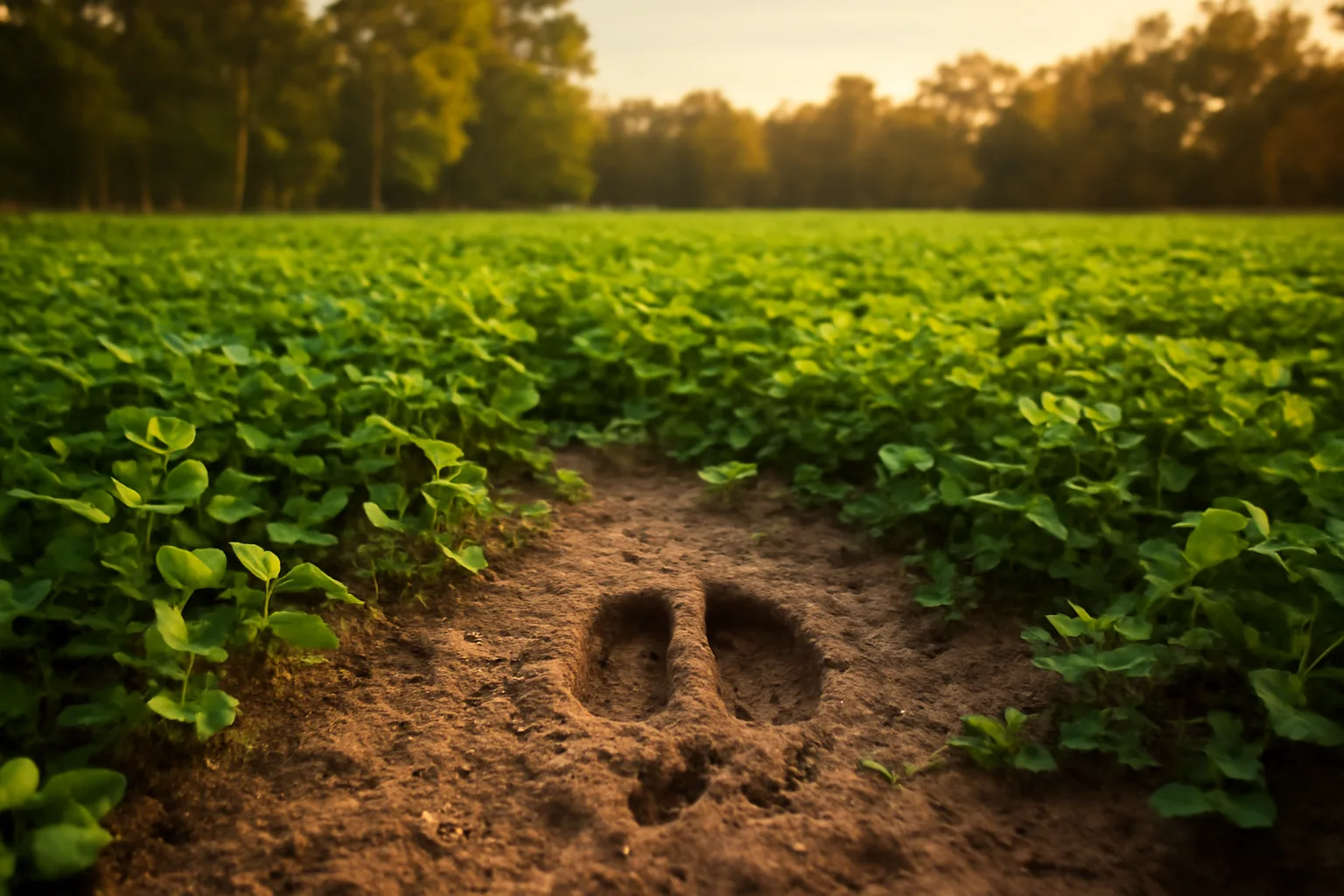
A food plot is a planted area of forage, usually a fraction of an acre to a few acres, established specifically to feed and attract deer or other wildlife. It's not a farm field in the commercial sense. Most hunting plots run somewhere between a quarter acre and two acres, though soil quality, sunlight, and equipment access matter more than raw size. State wildlife agencies and land-grant extension services treat food plots as a wildlife habitat management practice, distinct from row-crop agriculture, because the goal is nutrition and attraction rather than yield per acre for sale. A plot can be planted with a single species (a clover-only plot) or a blend (a cereal grain and brassica mix). Some plots are designed to hold deer through hunting season. Others exist purely to improve herd nutrition in spring and summer when natural browse is thin. Before you plant anything, check your state's baiting and supplemental feeding regulations. Food plots are generally legal everywhere, but the line between a food plot and illegal baiting gets blurry in some states if you're hunting directly over freshly disturbed grain piles or using certain attractant products. Rules vary a lot by state, so check your state wildlife agency's regulations before you plant near a stand [1].
What's the single best whitetail food plot species?
Honestly, there isn't one. If you forced a choice for the widest range of soils and climates, perennial white clover is the closest thing to a universal answer, because it's palatable most of the growing season, fixes its own nitrogen, and tolerates repeated grazing better than almost anything else you'd plant. But "best" changes with the season and your goal. For spring and summer nutrition (antler growth, fawn rearing), clover and alfalfa dominate. For fall attraction when deer want carbs and cover crops are still green, cereal grains like oats and winter wheat pull hard. For late season in northern climates, brassicas like turnips and rape become the best food in the woods once a hard frost converts their starches to sugars. So the real answer to "best whitetail food plot" is: match the species to the season you're trying to cover, then let your soil test and zone narrow the varieties. A one-acre clover plot near bedding and a half-acre brassica plot for late season often beats one big plot planted to a single thing.
Do deer eat clover, and do they actually like it?
Yes, deer eat clover heavily, and it's one of the most consistently preferred forages in food plot research. White clover and red clover both rank high in whitetail diet studies across the Midwest and Southeast, largely because they stay tender and high in crude protein (often 20-25%) through repeated mowing or grazing [2]. Clover plots get hit hard from green-up in spring straight through fall, which is why so many long-term plot programs are built around a clover base. It's a perennial, so a well-limed, well-fertilized clover stand can produce for three to five years before you need to reestablish it, cutting your annual seed cost compared to replanting brassicas or grains every year. The catch: clover needs decent soil pH (most extension guides recommend 6.0 to 6.5) and won't tolerate standing water or deep shade. If your soil test comes back at 5.2, don't expect a clover plot to perform until you've limed it, and lime takes months to fully react in the soil. Your soil test lab's lime and fertilizer recommendation is the final word here, not a generic online chart.
Do deer eat sorghum, and is it worth planting?
Deer will eat sorghum, particularly the grain heads once they mature, and it's more valuable as cover and a fall/winter energy source than as a preferred summer forage. Grain sorghum is drought tolerant and grows well on marginal soils where corn struggles, which is why it shows up in a lot of drier-region food plot mixes and wildlife plantings recommended by extension services in the southern Plains [3]. Deer use standing sorghum two ways: browsing young leaves early in the season, and hitting the grain heads hard after they mature and dry down in fall, especially once other food sources thin out. It's not usually a deer's first choice compared to soybeans or corn, but as a secondary planting or a drought-insurance crop in a mix, it earns its place. If you're in a dry region with sandy or clay soils that fight you every summer, sorghum (or a sorghum-sudangrass hybrid for cover) is a reasonable pick. In wetter, more fertile Midwest ground, you're usually better off with soybeans or corn for the same grain-based late-season strategy.
Do deer like clover more than other forages? A side-by-side look
| White clover | 20-25% [2] | Spring-fall | High (perennial, regrows fast) | |
|---|---|---|---|---|
| Soybeans (forage type) | 30-35% in leaf stage | Summer | Low early, destroyed by heavy browsing before pod set | |
| Brassicas (turnip/rape) | 15-20% leaf; sugars rise after frost | Late fall-winter | Moderate | |
| Oats | 13-20% depending on maturity | Fall | Moderate, regrows after light grazing | |
| Winter wheat | 12-15% | Fall-winter, green-up | High, very grazing tolerant | |
| Grain sorghum | Lower protein, high carbohydrate in grain | Fall-winter (grain drop) | High once established | The practical takeaway: clover wins on season-long consistency and low replanting cost. Soybeans win on raw protein but only if you can protect them from deer long enough to reach maturity, which usually means multiple acres or an exclusion cage while young. Brassicas and cereal grains win the late-season energy game when deer shift from protein-seeking to carb-seeking as temperatures drop. |
Preference studies and decades of plot-manager observation put clover near the top, but it's not the only thing deer key on hard. Here's a rough comparison based on typical crude protein content, season of peak use, and how forgiving each is of grazing pressure. | Forage | Crude protein (approx.) | Peak season | Grazing tolerance |
What are deer's favorite foods, plot or otherwise?
Across most whitetail range, acorns are usually the single most preferred natural food when they're dropping, because of their high fat content, and deer will bypass planted forage for a good acorn drop most falls. Among planted crops, soybeans, clover, and standing corn consistently rank as top preferences in state agency and university deer diet studies [2] [4]. In a planted-plot context specifically, deer favorites tend to be: clover and alfalfa in spring/summer, standing soybeans and corn in late summer/fall, and brassicas after frost in late season. Apples, chestnuts, and other mast-producing trees also draw heavily where they're established, though that's an orchard strategy, not a food plot in the annual-planting sense. Worth saying plainly: no food plot competes with a heavy natural acorn year. If your plot traffic drops off in October and you're seeing white oak acorns on the ground, that's not a failed plot, that's deer doing exactly what they always do.
Do deer like honey, and does it matter for plots?
This one comes up a lot in forums, and the honest answer is: there's no real evidence deer specifically seek out honey, and it's not a practical food plot or attractant strategy. Deer are occasionally reported investigating hive damage from bears, but honey itself isn't a documented part of natural whitetail diet in any USDA or extension wildlife nutrition literature. What deer respond to are sugar-rich plant foods, which is exactly why frost-sweetened brassicas and standing corn work so well late season, not because of anything resembling honey. If you're seeing "honey" marketed as a deer attractant additive, treat it like most liquid attractant products: it might pull a curious nose in for a sniff, but it's not a food plot substitute and won't move the needle on herd nutrition or antler growth the way an actual planted acre of clover or brassicas will. Save the money and put it toward lime or seed instead.
When to plant food plots for deer, by region
Timing is the single biggest variable people get wrong, more than species choice. Plant too early and heat kills tender brassica seedlings. Plant too late in the north and cereal grains never get established before frost locks the ground. General windows, cross-checked against land-grant extension planting guides [5]: - Spring/summer perennials (clover, chicory, alfalfa): plant after your last hard frost, typically April through May in the North, March through April in the transition zone, and as early as February-March in the Deep South.
- Warm-season annuals (soybeans, forage sorghum, cowpeas): plant after soil temps hit roughly 60°F, generally May through June across most of whitetail range.
- Fall annuals (brassicas, oats, winter wheat, cereal rye): this is the big one. Brassicas and oats generally go in 60 to 90 days before your first expected hard frost. In the upper Midwest and Northeast that's often late July through August. In the mid-South and transition zone, late August through September works. Deep South plots often go in September through October. Your local extension office or state wildlife agency's food plot guide will have a frost-date map specific to your county, and that's a better source than a national rule of thumb.
When to plant oats for deer specifically
Oats are a fall-planted cereal grain in almost every whitetail region, planted 60 to 90 days ahead of your area's first hard frost so they can establish a leafy stand before growth slows. In the upper Midwest and Northeast, that generally means late July into August. In the transition zone and mid-South, late August through mid-September is typical. In the Deep South, growers often wait until late September or October. Oats germinate fast, often within 7 to 10 days in warm soil, and put on a lot of leafy growth quickly, which is why they're such a common "draw" plant for early bow season. They're also winter-killed in colder zones once temperatures drop into the low teens or below, so in the far north they act as an annual fall/early-winter food source rather than something that survives to spring. In milder zones they can persist and offer some green-up forage into late winter. A lot of plot mixes pair oats with brassicas or winter wheat specifically because oats grow fast and get deer using the plot early, while the slower brassicas and wheat carry the plot through the late season after the oats are grazed down or winter-killed.
When to plant turnips for deer, and why frost timing matters so much
Turnips are planted for deer roughly 80 to 90 days before your first expected hard frost, because the entire point of a turnip plot is timing the bulb and leaf maturity to coincide with the frost event that converts stored starches into sugars, which is what triggers deer to suddenly start hammering a plot they mostly ignored all fall. In the northern half of whitetail range, that usually means planting in late July to mid-August. In the transition zone, late August into September. In the Deep South, growers often plant in September, sometimes into early October, since hard frosts arrive much later or not at all in the southernmost areas (where turnips may never get that frost-triggered sugar spike). This is the most commonly botched planting date in food plot planning. Plant turnips too early in a warm year and the bulbs bolt or rot before frost hits. Plant too late and you get a scraggly stand of small leaves with no bulb development at all. County-level frost date data from your state extension service is worth five minutes of searching before you buy seed [5].
How do you actually choose the best food plot for your ground?
Start with a soil test, not a seed bag. Every extension service and most seed companies will tell you the same thing: a $10 to $20 soil test tells you your pH and nutrient levels, and your lab's lime and fertilizer recommendation is the actual authority on what your ground needs, not a generic chart in an article like this one. From there, work backward from your goal. If you're trying to hold deer through late season in the North, brassicas and cereal grains matter more than clover. If you're trying to build herd health and give does what they need through lactation, clover and forage soybeans in a spring/summer rotation matter more. If you've got shaded, wet, or marginal ground, that rules out a lot of options before species preference even enters the conversation. Sun exposure, drainage, deer density (how much grazing pressure you can absorb), and your own equipment (do you have a disk and drill, or just an ATV and a hand spreader) all narrow the field faster than any "best plot" list can. If you want a plan built around your zone, soil test numbers, and acreage instead of a one-size answer, that's exactly what a Custom Food Plot Plan is for, a $99 one-time plan that turns your specifics into a planting calendar and species list. It's general guidance built from your inputs, not a substitute for your soil lab's specific lime and fertilizer numbers. For deeper reading on specific plot types and seed choices, see food plot whitetail, deer food plot seed, and deer food plots for broader planning frameworks.
What's the realistic cost and effort for a first food plot?
Seed costs vary a lot by species and blend, but rough per-acre seed costs commonly run somewhere in the $20 to $80 range depending on whether you're planting a straight clover stand or a premium blended brassica/grain mix, with soil amendments (lime and fertilizer) often costing more than the seed itself on acidic ground. A single ton of ag lime, which can cost roughly $30 to $60 delivered and spread depending on region, might be needed per acre on low-pH soil, and that's before fertilizer. Equipment scales from a hand spreader and ATV drag ($200-$500 total) up to a disk, cultipacker, and no-till drill setup that can run into the thousands. Plenty of good small plots get established with nothing more than a hand tool, a bag of lime, and a rented or borrowed disk. The honest expectation to set: your first plot probably won't look like the magazine photo. Weather, deer pressure, and soil chemistry all take a season or two to dial in. Extension services consistently note that soil testing and correct pH are the biggest single factor in plot success, more than species choice or even planting date [5].
What mistakes wreck otherwise good food plots?
Skipping the soil test is the top one. Planting clover or brassicas into soil at pH 5.0 without lime is close to wasted seed money, because nutrient uptake drops off hard in acidic soil regardless of how much fertilizer you add. Planting too small is second. A quarter-acre brassica plot in a high deer density area can get grazed to nothing within two weeks of germination, before the plants ever get a chance to bulb up. Extension and state agency guidance generally suggests scaling plot size to your local deer density and browsing pressure rather than a fixed number. Wrong timing is third, covered above with oats and turnips specifically. And overlooking legal boundaries is a real one too. Some states regulate how food plots interact with baiting rules, especially around minimum distances from stands or whether a plot counts as "natural" versus supplemental feeding. Check your specific state wildlife agency's current regulations before you finalize plans near a hunting setup [1].
Frequently asked questions
Do deer eat sorghum?
Yes. Deer browse young sorghum leaves and eat the mature grain heads, especially in fall and winter once other food sources decline. It's more valuable as a drought-tolerant, marginal-soil option than as a top preference food, and works best as part of a mix rather than a standalone plot in fertile Midwest ground.
Do deer eat clover?
Yes, heavily. White and red clover rank among the most preferred whitetail forages in university deer diet studies, largely due to high crude protein (often 20-25%) and tolerance for repeated grazing. Clover plots typically get used from spring green-up through fall in areas with adequate pH and sunlight.
When to plant deer food plots?
Perennials like clover go in after your last frost, generally March through May depending on region. Fall annuals like brassicas and oats go in 60 to 90 days before your area's first hard frost, often late July through September. Exact windows shift by 4-6 weeks between northern and southern whitetail range.
Do deer like clover?
Yes, clover is one of the most consistently preferred food plot forages across whitetail range. It's high in protein, regrows quickly after grazing, and stays palatable much of the growing season. Deer use clover heavily in spring and summer, and it remains a component of many fall plots too.
When to plant oats for deer?
Oats are planted 60 to 90 days before your area's first hard frost. That's typically late July to August in the northern Midwest and Northeast, late August to mid-September in the transition zone, and late September to October in the Deep South. Oats germinate fast and are often winter-killed in colder zones.
When to plant food plots for deer?
It depends on the species. Spring perennials (clover, alfalfa) go in after last frost. Warm-season annuals (soybeans, sorghum) go in once soil hits roughly 60°F. Fall plants (brassicas, oats, wheat) go in 60 to 90 days before first hard frost. Check your county's frost dates through your state extension service.
When to plant turnips for deer?
Turnips are planted 80 to 90 days before your area's first expected hard frost, so bulb and leaf development lines up with the frost event that sweetens the plant and triggers heavy deer use. That's roughly late July to August in the North and September in southern regions.
What is a food plot?
A food plot is a planted area, usually a quarter acre to a few acres, established specifically to feed and attract deer or other wildlife rather than for commercial harvest. It can be a single species like clover or a blend of grains and brassicas, planted seasonally to fill gaps in natural forage.
What are deer's favorite foods?
Acorns are usually the top preference when they're dropping, due to high fat content. Among planted crops, soybeans, standing corn, and clover consistently rank highest in university and state agency deer diet studies. Brassicas become a favorite specifically after a hard frost sweetens them in late season.
Do deer like honey?
There's no solid evidence deer specifically seek out honey as a food source, and it's not documented in USDA or extension wildlife nutrition research. Deer respond to sugar-rich plants like frost-sweetened brassicas, not honey itself. Honey-based attractant products aren't a substitute for an actual planted food plot.
How big should a food plot be?
There's no fixed ideal size; it depends on deer density and browsing pressure in your area. A quarter acre can work in low-pressure areas but may get grazed out fast where deer numbers are high. Many plot managers use a mix of smaller draw plots near bedding and larger acreage plots for late-season food.
Do I need a soil test before planting a food plot?
Yes, strongly recommended. Extension services consistently identify correct soil pH as the biggest factor in plot success, ahead of species choice or planting date. A soil test (roughly $10-$20) tells you exactly how much lime and fertilizer your specific plot needs, which a generic online guide can't.
Is baiting deer with a food plot illegal?
A properly planted, growing food plot is generally legal everywhere and is different from baiting, which typically involves piled grain or minerals. But rules on distance from stands, timing, and what counts as supplemental feeding vary significantly by state, so check your state wildlife agency's current regulations before hunting near a plot.
Sources
- Alabama Cooperative Extension System, ANR-2179, "Establishing and Managing Wildlife Food Plots": Food plots are treated as a wildlife habitat management practice distinct from commercial agriculture
- Pennsylvania Game Commission, Baiting and Feeding regulations: Baiting and supplemental feeding rules for deer vary significantly by state
- Mississippi State University Extension Publication 2111, "Understanding Food Plots for White-Tailed Deer" (PDF, MSU Extension): White and red clover rank high in whitetail preference studies with crude protein commonly 20-25%
- Oklahoma State University Extension, PSS-2264, "Grain Sorghum Production Guide": Grain sorghum is drought tolerant and used in wildlife plantings on marginal soils in drier regions
- USDA Forest Service, Southern Research Station, Research Note SE-002, "Fall Food Habits of White-Tailed Deer": Acorns are a preferred high-fat natural food for whitetail deer when available
- University of Georgia Extension, Circular 1088, "A Guide to Successful Wildlife Food Plots": Soil testing and correct pH are the largest factor in food plot success, ahead of species or timing