Last updated 2026-07-25
TL;DR
Glyphosate is a non-selective, systemic herbicide used to kill existing vegetation before planting a food plot, not to control weeds inside a growing crop unless you plant Roundup Ready seed. Apply 2 to 4 weeks before planting, on actively growing weeds, using 1 to 2 quarts per acre of a 41% concentrate mixed with water and a surfactant if needed.
what is glyphosate and what does it actually do in a food plot
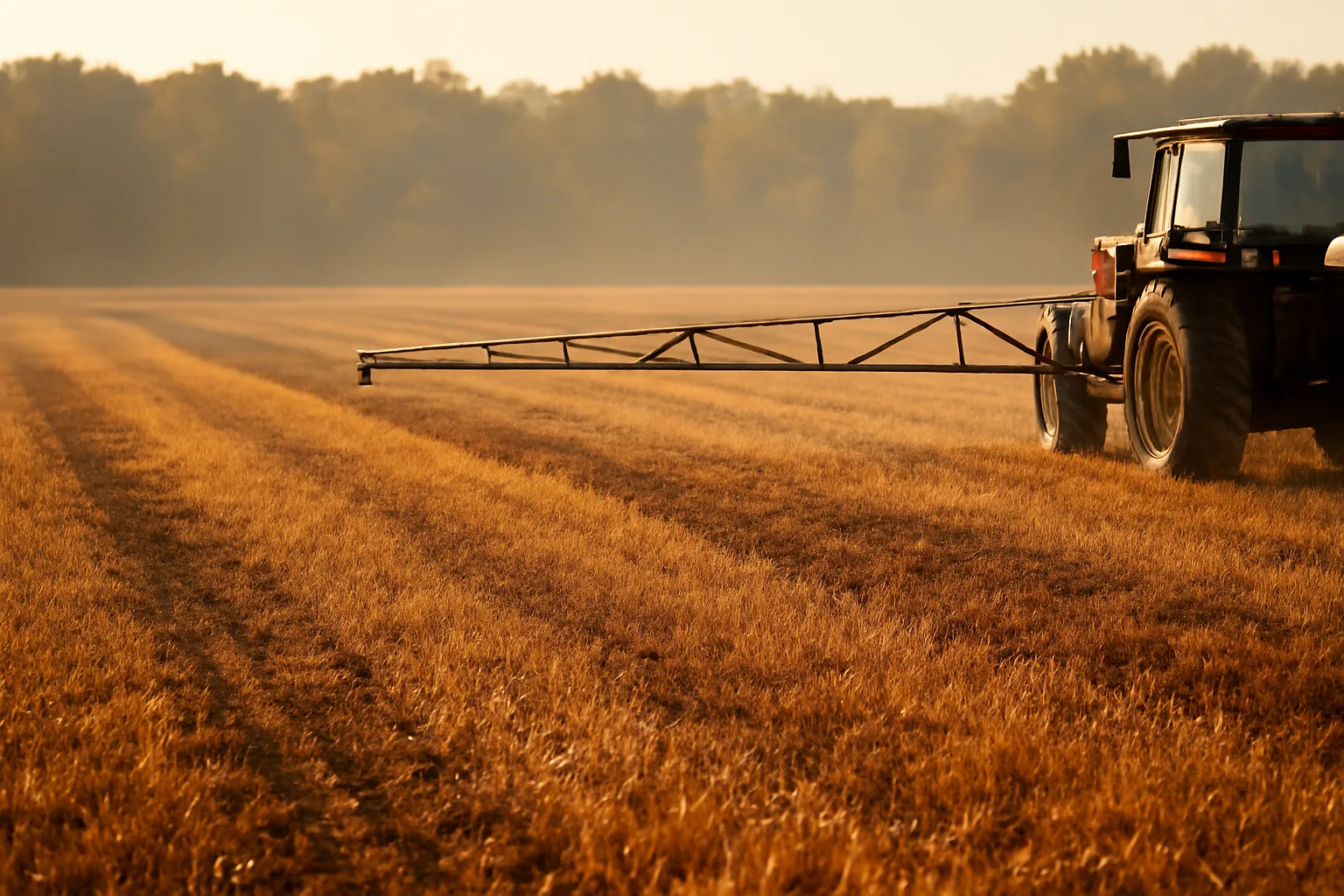
Glyphosate is a systemic, non-selective herbicide, meaning it moves through the whole plant and kills nearly everything green it touches, more than certain weed species. It's the active ingredient in Roundup and dozens of generic products sold at farm stores. In a food plot, its main job is to clear existing vegetation, sod, weeds, brush regrowth, before you plant, not to clean up weeds after your clover or brassicas are already up. The EPA's registration review describes glyphosate as absorbed through leaves and green stems, then translocated to the roots, which is why it kills perennial grasses and weeds down to the root system instead of just burning the top growth like a contact herbicide would [1]. That root kill matters for plot prep because a lot of the weeds competing with new seedlings, quackgrass, fescue, chickweed, are perennials that will just regrow from the crown if you only mow or till. Glyphosate is not selective. It doesn't know the difference between fescue and clover seedlings. So the timing window is everything: you spray it on the old vegetation before your new crop germinates, then you plant into dead residue. Spray it after your food plot crop emerges (unless that crop is Roundup Ready soybeans or corn) and you'll kill your plot, not the weeds. If you're mapping out a full planting strategy rather than just spray timing, the food plot whitetail guide covers how species selection and prep work together.
when should you spray glyphosate before planting a food plot
Spray glyphosate 2 to 4 weeks before your planting date, when weeds and grass are actively growing, not stressed by drought or cold. University extension weed science programs consistently note that glyphosate uptake and translocation drop off sharply in stressed plants, since the herbicide needs living, growing tissue to move through [2]. A good rule most experienced plotters use: spray, wait 7 to 14 days to confirm the kill (things should look brown and wilted, more than yellowed), then till or drill. If you're no-till drilling into dead sod, you can often plant sooner since you're not disturbing the soil and bringing up a new weed seed bank. Temperature matters too. Glyphosate works best when daytime temps are consistently above 50-55°F, since cooler soil and air slow plant metabolism and herbicide uptake. Spraying in early March on dormant, brown grass is mostly a waste of a chemical and a trip out to the field. For a full season-by-season breakdown of when to plant which species, see [when to plant food plots for deer](#when-to-plant-food-plots-for-deer) below, and check the deer food plots guide for regional calendars.
when to plant food plots for deer
Planting windows depend on your zone and the species, but the two big planting seasons are spring (May through June, after last frost) for warm-season plots like soybeans, corn, and sorghum, and late summer to early fall (mid-August through September in most of the whitetail range) for cool-season plots like clover, brassicas, and cereal grains. Southern states can push fall planting into October since frost comes later. Northern states (upper Midwest, New England) often need to plant brassicas and clover by early September to get enough growth before hard frost stops development. Your state's land-grant extension planting calendar is the most reliable source since it's calibrated to local frost dates, not a national average. The general logic is simple. Spring plots feed deer through summer stress and grow tonnage for fall hunting over standing beans or corn. Fall plots (clover, brassicas, cereal grains) provide the high-attraction, high-protein forage deer want as they head into the rut and winter. Most serious plot managers run both. For species-specific breakdowns and seed blends by region, the deer food plot seed and food plot seed pages go deeper on picking the right mix for your zone.
when to plant oats for deer
Plant oats in late summer to early fall, roughly 6 to 8 weeks before your first expected hard frost, so seedlings establish before winter dormancy. In most of the whitetail range that lands between mid-August and mid-September. Oats are a cool-season annual cereal grain. They germinate fast (often within a week in warm, moist soil) and put on rapid, tender green growth that whitetails hit hard in early fall, sometimes before brassicas or clover in the same plot even get touched. Oats can also be planted in early spring in northern climates as a quick cover crop, but fall planting for deer attraction is far more common. Oats aren't very frost-hardy compared to wheat or rye, so in cold climates they'll die back after a few hard freezes. Many blends mix oats with wheat, rye, or clover so you get fast fall attraction from the oats and longer-term winter and spring forage from the more cold-tolerant species.
when to plant turnips for deer
Plant turnips 60 to 90 days before your first killing frost, which in most of the whitetail range means late July through August. Turnips need that lead time to build a bulb and leaf mass before cold weather, and their sweetness (and deer attraction) actually improves after a hard frost converts starches to sugars. This is a big reason turnips and other brassicas are a fall food plot staple rather than a spring one. Plant them too early in hot summer soil and they can bolt or get hammered by insects before establishing; plant them too late and they won't bulb up before frost. Deer often ignore turnip plots for the first month or two after planting, then hit them hard in late fall and winter once frost sweetens the leaves and bulbs. That lag frustrates a lot of first-time planters who expect immediate action. It's normal, not a failure of the plot.
do deer eat sorghum
Yes, deer eat grain sorghum, both the standing plant and the seed heads, though it's generally considered a secondary food plot crop compared to corn or soybeans. Sorghum is more drought-tolerant than corn, which makes it a decent choice in dry regions or sandy soils where corn struggles. Whitetails will browse young sorghum leaves and later feed on the grain heads once they mature, and sorghum also holds up well as standing cover into winter, similar to standing corn. It's less commonly the centerpiece of a plot and more often planted as part of a mixed blend or as a drought-tolerant backup in marginal ground.
do deer eat clover, and do deer like clover
Yes, deer eat clover readily and it's one of the most consistently preferred food plot forages available. Clover offers roughly 20-25% crude protein in vegetative growth, which lines up well with a doe's lactation needs in late spring and a buck's antler growth window in summer, both periods of high protein demand [3]. Perennial clovers like white clover and red clover can produce forage for 3 to 5 years from a single planting if you maintain fertility and mow to control weed competition, which makes them one of the better cost-per-year food plot investments compared to annuals you replant every season. Clover does have downsides. It's slower to establish than oats or brassicas. It needs decent soil pH, most extension guides recommend 6.0 to 6.5 for clover. And it can get out-competed by grass and weeds if you don't mow or spray to keep it clean. That's actually where glyphosate re-enters the picture, more on that below.
can you use glyphosate on an established clover or brassica plot
No, not without killing the plot, since glyphosate is non-selective and clover, brassicas, and most food plot forages have no built-in tolerance to it. The only exception is if you specifically planted a glyphosate-tolerant (Roundup Ready) variety of corn or soybeans, in which case labeled over-the-top applications are allowed per that product's registered use. For a standard clover plot that's getting choked out by grass, the better tools are grass-selective herbicides like clethodim or sethoxydim, which kill grasses but leave broadleaf clover alone. Check your state extension weed control guide or the product label for rates and clover-specific restrictions, since not every grass herbicide is labeled for use on clover. The label is the law here. Glyphosate product labels registered with EPA specify exactly which crops and situations allow application, and using it off-label on a non-tolerant crop violates federal pesticide law under FIFRA [4].
what is a food plot, exactly
A food plot is a planted area of land, usually somewhere between a quarter acre and several acres, seeded with forage crops to attract and nutritionally support deer and other wildlife. Hunters and land managers plant them on owned or leased ground as a wildlife management tool and, often, as a hunting setup near a stand or blind. Food plots range from small "kill plots" tucked into timber near a stand, meant mainly to draw deer into range during shooting light, to large agricultural-scale fields of soybeans or corn meant to carry a deer herd through summer and winter nutritional stress. Species choice, size, and placement all depend on your goals: attraction for hunting versus year-round herd health versus both. A soil test is the starting point for any plot, since lime and fertilizer needs vary enormously by field and your local soil-test lab is the real authority on what your specific dirt needs.
what are deer's favorite foods
Deer preferences shift by season, but food plot species that consistently rank high in attraction studies and hunter experience include soybeans, clover, and brassicas like turnips and radishes in the fall. Acorns are often the single most preferred natural food when they're dropping, frequently pulling deer off planted plots entirely during a heavy mast year. In spring and summer, deer favor high-protein forages like clover and soybeans to support lactation and antler growth. In fall and winter, they shift toward high-carbohydrate, high-sugar foods, standing corn, brassicas post-frost, and acorns, to build fat reserves. There's no single "best" food plot species; the right answer depends on the season you're trying to feed through and what's hunting-legal and useful in your specific setup. One wrinkle worth knowing: deer preference also depends heavily on what else is available locally. A clover plot surrounded by soybean fields might get light pressure; the same plot in a hardwood-dominated area with little agriculture nearby could get hit hard. Local food availability changes everything about what counts as a deer's "favorite" in your woods.
do deer like honey
There's no real evidence that whitetail deer are specifically attracted to honey, and it isn't a standard food plot or supplemental feed ingredient recognized by any state wildlife agency or university extension program. Deer are herbivores built around browse, forbs, mast, and agricultural forage, not sweet liquids like honey. Some hunters have anecdotally used sweet feed or molasses-based attractants, and deer will sometimes investigate sugary scents out of curiosity, but this is different from a documented dietary preference. If you're looking to draw deer to a specific spot, a planted food plot or a legal mineral/supplemental feed site (where state law allows baiting and feeding) is a far more reliable, well-studied approach than honey.
how does glyphosate fit into a full food plot prep plan
| Glyphosate | Yes, systemic, root-level | No (unless Roundup Ready crop) | Low, roughly $15-30/acre at 1-2 qt/acre generic rates | Pre-plant burndown | |
|---|---|---|---|---|---|
| Tillage/disking | Yes, mechanical | N/A | Equipment cost, fuel | Seedbed prep, brings up new weed seed | |
| Grass-selective herbicide (clethodim, etc.) | Grasses only | Yes, safe on clover/broadleaf crops | Moderate | Cleaning grass out of an existing clover plot | |
| Mowing | Top growth only, no root kill | N/A | Low (fuel, time) | Weed suppression in established perennial plots | If you'd rather not guess at rates, timing, and species mix for your specific field, PlotSeason's $99 Custom Food Plot Plan gives you a general planting and prep plan built around your zone, soil test, and equipment, though your soil-test lab is still the final word on lime and fertilizer specifics for your ground. |
Glyphosate is one tool in a three-step prep sequence: kill existing vegetation, prepare the seedbed (till or no-till drill), then plant on schedule for your species and zone. Skipping the kill step is one of the most common reasons first-year food plots fail, since new seedlings can't compete with an established stand of fescue or ragweed. A typical rate for general food plot prep is 1 to 2 quarts per acre of a 41% glyphosate concentrate (roughly equivalent to a 1% to 2% spray solution), though actual rates depend on the product label, weed species present, and weed size. Always follow the specific product's label rate rather than a generic number, since formulations vary in concentration [1]. Here's a simplified comparison of glyphosate against other common food plot weed control methods: | Method | Kills existing sod/weeds | Selective (safe over growing crop) | Typical cost | Best use |
what safety and label rules apply to glyphosate use
Glyphosate is registered by the EPA and its use is governed by the Federal Insecticide, Fungicide, and Rodenticide Act (FIFRA), which makes the product label a legal document, more than a suggestion [4]. That means rates, pre-harvest intervals, protective equipment, and crop restrictions listed on the label are enforceable, and using the product in a way inconsistent with its labeling is a federal violation. EPA's most recent human health risk assessment for glyphosate concluded there are no risks of concern to human health from current labeled uses, though this finding remains debated in scientific and legal circles, including ongoing litigation over specific product claims [1]. For food plot purposes, the practical takeaway is simpler: read the label on the specific jug you bought, follow its rate and reentry interval, and wear the gloves and eye protection it recommends. Also check your state's baiting and feeding regulations before you plant anything meant to draw deer for hunting. Some states restrict what counts as a legal food plot versus bait, and rules vary by species planted, whether the crop is standing versus harvested and piled, and hunting method. Your state wildlife agency's hunting regulations guide is the authoritative source, not a general food plot article.
how do you build a full-season food plot plan around glyphosate timing
Start with your planting calendar, then work backward to your spray date, since glyphosate timing is dictated by when you need bare, dead ground ready to plant. If you're planting brassicas in early August in a northern zone, for example, you'd typically spray in mid to late July, weather and weed growth permitting. A simple sequence for a fall clover or brassica plot: soil test in spring, spray existing vegetation 3 to 4 weeks before your fall planting date, lime and fertilize per your soil test results once the old growth is dead, till or drill, then plant. For a no-till approach, you skip the tillage step and drill straight into the dead residue, which also helps with erosion control and moisture retention. For spring plots (soybeans, corn), the same logic applies: spray dormant or actively growing weeds in early spring once temperatures warm, then plant once soil temps hit the range your species needs (usually 55-60°F minimum for beans and corn). If you want a plan built around your specific zone, acreage, and soil test rather than a generic calendar, that's exactly what PlotSeason's $99 Custom Food Plot Plan is built to do. For general species and seed selection guidance, the domain food plot seed and deer for food pages are good next reads.
Frequently asked questions
Do deer eat sorghum?
Yes. Deer browse young sorghum leaves and feed on mature grain heads, and it's a reasonably drought-tolerant option compared to corn. It's usually a secondary or mixed-blend crop rather than a standalone centerpiece plot, best suited to dry or sandy ground where corn struggles.
Do deer eat clover, and do deer like clover?
Yes, clover is one of the most consistently preferred food plot forages. It runs roughly 20-25% crude protein in vegetative growth, supporting lactation and antler growth, and perennial varieties can produce forage for 3 to 5 years from one planting with proper mowing and fertility maintenance.
When to plant deer food plots?
Spring plots (soybeans, corn, sorghum) go in May through June after last frost. Fall plots (clover, brassicas, cereal grains) go in mid-August through September in most zones, earlier in the north, later in the south. Always check your state land-grant extension's local frost-date calendar.
When to plant oats for deer?
Plant oats 6 to 8 weeks before your first hard frost, typically mid-August to mid-September in most whitetail range. Oats germinate fast and green up quickly, making them a strong early-fall attraction crop, though they're not very frost-hardy compared to wheat or rye.
When to plant turnips for deer?
Plant turnips 60 to 90 days before your first killing frost, generally late July through August. They need that lead time to bulb up, and their flavor actually improves after frost converts starches to sugar, which is why deer often ignore turnip plots early and hit them hard in late fall and winter.
What is a food plot?
A food plot is a planted patch of forage crop, from a quarter-acre kill plot to a multi-acre field, seeded specifically to attract and nutritionally support deer and other wildlife on hunted or managed land. Size, species, and placement depend on whether the goal is hunting attraction, herd nutrition, or both.
What are deer's favorite foods?
Acorns are often the top preference when dropping in a mast year. Among planted crops, soybeans, clover, and post-frost brassicas like turnips consistently rank high. Preference shifts seasonally: protein-rich forage like clover in spring and summer, carb-rich foods like corn and sweetened brassicas in fall and winter.
Do deer like honey?
There's no real evidence deer are specifically drawn to honey, and it isn't a recognized food plot or supplemental feed ingredient in any university extension or state wildlife agency guidance. Deer are browsers built around forbs, mast, and forage crops, not sweet liquids.
Can you spray glyphosate over an established food plot without killing it?
No, unless you planted a Roundup Ready variety of corn or soybeans specifically bred for glyphosate tolerance. Glyphosate is non-selective and will kill clover, brassicas, and standard cereal grains along with the weeds. Use a grass-selective herbicide like clethodim instead if you need to clean grass out of an established clover plot.
How much glyphosate do you use per acre for food plot prep?
A common general rate is 1 to 2 quarts per acre of a 41% glyphosate concentrate, but the exact rate depends on the specific product label, weed species, and weed maturity. Always follow the labeled rate on the jug you bought rather than a generic number, since concentrations vary by formulation.
How long before planting should you spray glyphosate?
Spray 2 to 4 weeks before your planting date, on actively growing weeds in temperatures consistently above 50-55°F. Wait 7 to 14 days after spraying to confirm a full kill (brown, wilted vegetation, more than yellowing) before tilling or no-till drilling.
Is glyphosate safe to use around food plots hunters will eat deer from?
EPA's human health risk assessment found no risks of concern from labeled glyphosate uses, though the finding is debated in ongoing litigation. Following label rates, reentry intervals, and protective equipment guidance is the legal requirement under FIFRA and the practical safety standard for food plot applications.
Sources
- US EPA, Glyphosate Registration Review, Human Health Risk Assessment (2020): Glyphosate is systemic, absorbed through foliage, translocated to roots, and EPA's human health assessment found no risks of concern from labeled uses
- University of Missouri Extension, Herbicide Mode of Action and Weed Response, Publication G4877: Glyphosate uptake and effectiveness drop when target plants are drought-stressed or not actively growing
- USDA Natural Resources Conservation Service, Plant Guide: White Clover (Trifolium repens): Clover forage provides high crude protein content, supporting lactation and antler growth in deer
- US EPA, Summary of the Federal Insecticide, Fungicide, and Rodenticide Act, 7 U.S.C. §136 et seq.: Pesticide product labels are legally enforceable documents under FIFRA, and off-label use is a federal violation
- Mississippi State University Extension, Publication 2111, Establishing Wildlife Food Plots in Mississippi: Well-managed food plots supplement natural browse for private landowners managing deer habitat
- US EPA, Glyphosate Issue Paper: Evaluation of Carcinogenic Potential, Office of Pesticide Programs (2016): Glyphosate is absorbed through green plant tissue and translocated systemically, forming the basis of its use as a pre-plant burndown herbicide