Last updated 2026-07-26
TL;DR
For northern Wisconsin (roughly USDA zones 3b-4a), the best food plot seed choices are brassicas (turnips, radish) and oats planted late July through mid-August, plus perennial clover blends frost-seeded in spring. Short frost-free windows (100-140 days) and early hard frosts favor fast-growing annuals over long-season crops like soybeans or corn.
What actually grows well in northern Wisconsin food plots?
Northern Wisconsin counties like Bayfield, Ashland, Iron, and Vilas sit mostly in USDA Plant Hardiness Zones 3b and 4a, with some pockets dipping into 3a. That matters more than any seed bag marketing claim you'll read. Frost-free periods up there commonly run 100 to 140 days, and the first fall frost can land as early as late August in low spots [1]. Whatever you plant has to finish its job before the ground locks up or the deer lose interest in it. That rules out a lot of the crops that work great two states south. Full-season soybeans need 100 to 140 days just to reach maturity, and if you're on the short end of that window, a hard frost in early September can catch beans still in the pod stage. Corn is worse. Grain corn wants 90 to 120 relative maturity days and warm nights to fill kernels, something the Northwoods rarely offers consistently. What wins up here is anything fast and cold-tolerant: brassicas (turnips, radishes, kale), cereal grains (oats, winter rye, winter wheat), and perennial clovers bred for northern persistence. These aren't consolation prizes. Deer hammer brassicas and oats hard once frost sweetens them, and clover is the backbone forage almost every serious plot manager in the region leans on. If you want a plan built around your specific soil test and acreage instead of general zone advice, that's exactly what a food plot seed strategy should start with, not a bag off a shelf.
Do deer eat sorghum?
Yes, deer eat sorghum, but it's a minor player in northern food plots, not a headline crop. Grain sorghum and forage sorghum both get browsed, especially the leaves and later the grain heads once other food sources thin out in late fall and winter. It's more commonly used as a screening or standing-grain component in warmer regions than as a primary northern Wisconsin food plot. The issue up north is maturity time. Grain sorghum typically needs 100 to 120 days to mature, similar to corn, and it wants warm soil (above 60°F) to germinate well. In a zone 3b-4a growing season, you're cutting it close, and a wet, cool spring can push planting back far enough that sorghum never finishes. Some hunters use it in a blend for structure and cover more than nutrition. If you're set on it, plant it as early as soil temps allow and treat it as a cover/screen crop with food value as a bonus, not the other way around. For most northern Wisconsin acreage, sorghum is a specialty add-in at best. Oats, brassicas, and clover do the heavy lifting.
Do deer eat clover, and do they actually prefer it?
Deer eat clover heavily, and yes, most whitetail research and decades of plot-manager experience back up that they genuinely prefer it when it's actively growing. Clover is a legume, meaning it fixes nitrogen in the soil, and it typically runs 20 to 30 percent crude protein during the growing season, which is a big reason deer return to good stands repeatedly through spring, summer, and fall. In northern Wisconsin, perennial clovers like medium red clover and white clovers (Dutch white, ladino) are the more reliable long-term plots because they're winter-hardy through zone 3, coming back year after year once established. Alsike clover, in particular, tolerates wetter, colder ground better than most other clover species, which makes it a solid pick for the heavier, poorly-drained soils common in parts of the Northwoods. The catch with clover is establishment. It's slow out of the gate and needs decent soil pH (aim for 6.0 to 6.5) and phosphorus/potassium levels that most acidic northern Wisconsin forest soils don't naturally have. That's not a guess, it's what your soil test will tell you directly, and your soil test lab's recommendations should always override generic advice like this article's. Get lime down the fall before if your test calls for it. Clover planted into a pH of 5.2 will struggle and thin out no matter how good the seed is. Once it's established, clover is a 3 to 5 year plot in the right conditions, and it's the one seed type in this whole article that keeps feeding deer from spring green-up through fall, more than a single season.
When to plant food plots for deer in northern Wisconsin?
| Perennial clover / chicory | Mid-March (frost-seed) or mid-May to early June | Needs pH 6.0+, slow establishment | |
|---|---|---|---|
| Oats | Late July to mid-August | Fast grower, frost-tolerant, great early-fall draw | |
| Brassicas (turnip, radish) | Late July to mid-August | Sweetens after frost, needs 80-90 days | |
| Winter rye / winter wheat | Late August to mid-September | Survives winter, regrows in spring | |
| Soybeans / corn | Late May, only in warmer microsites | Risky; often won't finish before frost | If you're working from a soil test and trying to sequence a whole property, deer food plot seed selection really comes down to matching each crop's day count to your actual last-frost and first-frost dates, not a generic bag label written for zone 6. |
For northern Wisconsin, spring plots (clover, chicory) go in mid-May through early June once soil temps warm and frost risk passes, and fall plots (brassicas, oats, cereal grains) go in late July through mid-August, giving them 60 to 90 days to establish before hard frost and hunting season. The short frost-free window is the whole story here. If you plant fall brassicas in early September because that's when you finally got around to it, you may get some leafy growth but miss the bulb development that makes turnips and radishes such strong late-season deer magnets. Most extension guidance for northern-tier states recommends getting brassica and cereal grain fall plots in the ground by mid-August at the latest, and late July is safer if you can manage it [2]. Spring plots have more room to breathe. Clover, alfalfa, and chicory can be frost-seeded in very early spring (March into April, right as frost is coming out of the ground) or conventionally seeded May into early June. Frost-seeding works because the freeze-thaw cycle naturally works small seed into the soil surface, which is handy if you don't have great equipment. Here's a rough northern Wisconsin planting calendar: | Crop type | Plant window | Notes |
When to plant oats for deer?
Plant oats for deer in northern Wisconsin from late July through mid-August for a fall/early-winter plot, or in early spring (April into May) if you want a quick, short-lived spring green-up plot instead. Oats are one of the fastest, most forgiving cereal grains you can plant, and they're a favorite for a reason: deer eat oats voraciously, especially the tender new growth, and they get even more palatable after a light frost converts starches to sugars. Oats germinate in cool soil (as low as 45-50°F) and can put on usable growth in as little as 3 to 4 weeks, which makes them nearly ideal for the short northern Wisconsin window. The tradeoff is winter survival: standard oats are not reliably winter-hardy in zone 3b-4a and will die back with sustained hard freezes, unlike winter rye or winter wheat. That's fine if your goal is an early-fall through mid-winter draw, but don't expect an oat plot to green back up next spring the way winter rye will. A common, effective combo up here is oats plus brassicas plus a little winter rye in one plot: the oats and brassica tops feed early, the rye holds some green cover and regrows in spring, and you get a longer window of usefulness out of one planting.
When to plant turnips for deer, and do deer actually eat the bulbs?
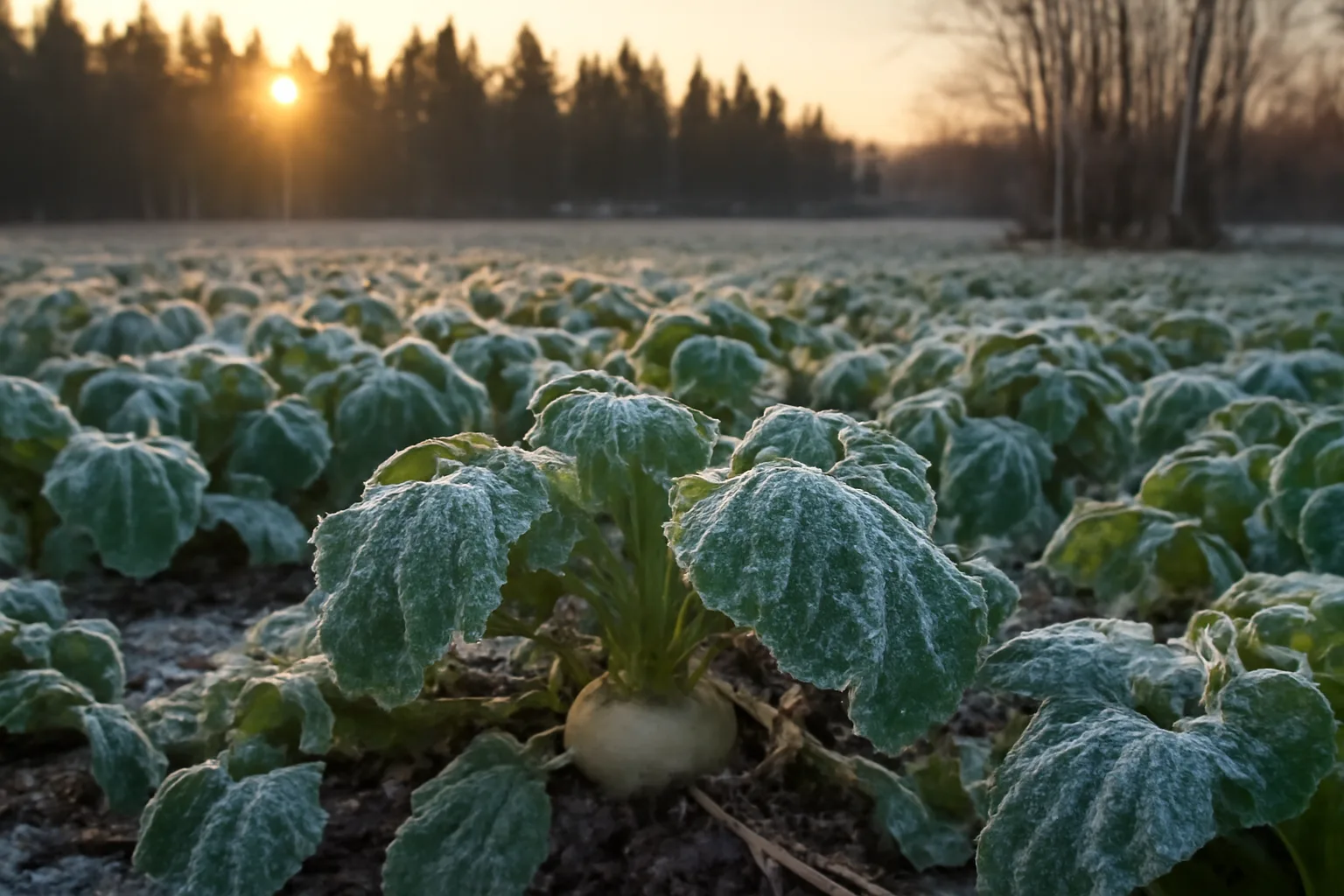
Plant turnips for deer in northern Wisconsin between late July and mid-August, giving them roughly 80 to 90 days before a hard, ground-freezing frost. Deer eat both the tops and the bulbs, but the order matters: they browse the leafy tops first through fall, and only start digging up and eating the bulbs after repeated hard frosts sweeten the starches into sugars, usually well into late fall or winter. This is the single most common mistake with brassica plots: planting too late. If turnips go in during September because that's when a hunter finally has time, the plant may never bulb out properly before the ground freezes, and you're left with sparse tops and no root reserve for the late-season draw everyone's after. University of Wisconsin-Extension forage guidance generally recommends brassica seeding by early to mid-August in northern parts of the state to allow full bulb development [2]. Turnips do best on well-drained soil with a pH around 6.0 to 6.5 and decent phosphorus and potash; a soil test is the only way to know if you need to add either. They're also genuinely cheap and low-effort seed, which is part of why they're a staple in northern food plot mixes rather than a novelty.
What is a food plot, exactly?
A food plot is a planted area, usually somewhere between a quarter-acre and several acres, established specifically to grow forage that attracts and feeds deer or other wildlife, typically to support hunting, herd health, or both. It's not a garden and it's not native habitat restoration; it's a managed planting, usually of agricultural crops or forage species, put in a spot chosen for access, visibility, and deer travel patterns. Food plots generally fall into two functional categories. Annual plots (brassicas, cereal grains, soybeans) are replanted every year and often timed to peak during hunting season. Perennial plots (clover, alfalfa, chicory) are established once and managed (mowed, limed, sometimes overseeded) for 3 to 5 years or longer before needing a full renovation. State wildlife agencies, including the Wisconsin DNR, generally treat food plots differently from baiting under hunting regulations, since the crop is rooted and growing rather than placed loose on the ground; but the specific legal line between a food plot and bait varies by state and can carry real restrictions during firearm season. Wisconsin's own rules on baiting and feeding, including seasonal and county-specific bans tied to chronic wasting disease management, are worth checking directly before you plant near a stand or set up any supplemental feeding alongside a plot.
What are deer's favorite foods, in a food plot context?
In food plot settings, deer generally show the strongest preference for clover, soybeans, and brassicas after a hard frost, with acorns and other natural browse often outcompeting all of them when mast crops are heavy in a given fall. Preference isn't fixed, though; it shifts by season, by what's naturally available, and by local deer density. Clover is close to a universal favorite through spring and summer because of its protein content and continuous regrowth after grazing. Soybeans, where they can be grown to maturity, are extremely high-preference forage in both the leaf stage and as dropped beans later, which is exactly why they're such a poor fit for short-season northern Wisconsin, deer will hit them hard and often graze them down before they ever get the chance to mature. Brassicas become a favorite specifically after frost sweetens them, so their appeal is very time-of-year dependent. One honest caveat: in years with a strong acorn crop, deer will often ignore a food plot almost entirely in favor of free mast on the ground. That's not a plot failure, that's deer being efficient. Don't judge a plot's success purely by trail camera activity in a heavy mast year.
Do deer like honey, and does it belong in a food plot conversation?
There's no real evidence deer specifically like honey, and it has no legitimate place in food plot planning. This question likely comes from confusion with 'honey hole' hunting slang, or with honeysuckle and clover (a plant deer genuinely favor, sometimes called by nicknames locals use). Deer are herbivores built to digest cellulose and plant sugars through fermentation in a four-chambered stomach; they're not drawn to honey the way, say, a bear is. If you're trying to sweeten a plot's appeal, the actual research-backed approach is picking forage with the right sugar and protein profile for the season, brassicas after frost, clover in growing season, not adding anything like honey or syrup, which also runs into most states' baiting and attractant regulations depending on how and where it's used. Check Wisconsin DNR's current baiting and feeding rules before using any supplemental attractant near a hunting setup.
Which seed blends make sense for a northern Wisconsin property?
For most northern Wisconsin properties, a two-plot system covers the bases well: one perennial clover plot for spring-through-fall forage, and one annual brassica/oat/cereal grain blend timed for a late July to mid-August planting that peaks right around archery and gun season. If you only have room or budget for one plot, lean toward the annual brassica-oat-rye mix. It's cheaper, faster to establish, more forgiving of a late start, and it's specifically timed to be at peak palatability during the fall hunting window, which is when most hunters actually want deer using the plot. Clover is the better long-term investment if you can commit to liming, maintaining pH, and mowing it through summer, but it's a slower payoff and needs real soil prep to hold up in acidic northern forest soils. Whatever you plant, none of this replaces an actual soil test. Extension services in Wisconsin, Minnesota, and Michigan all offer relatively cheap soil testing through county offices, and the University of Wisconsin-Madison Division of Extension runs a soil testing lab that will hand you a pH and nutrient report specific to your dirt, not a zone-wide guess . If you'd rather skip the guesswork on species mix and timing for your specific acreage, that's the exact gap PlotSeason's $99 one-time Custom Food Plot Plan is built to fill, though your soil test lab's lime and fertilizer numbers should always be the final word over any general plan.
How does northern Wisconsin compare to southern Wisconsin for plot planning?
| Frost-free days | ~100-140 | ~150-170+ | |
|---|---|---|---|
| First fall frost | Late Aug-early Sept | Late Sept-early Oct | |
| Soybean/corn viability | Risky, short-season varieties only | Reliable with standard varieties | |
| Best annual plot crop | Oats, brassicas | Soybeans, brassicas, corn | |
| Perennial clover | Works, slower establishment | Works, faster establishment | If you hunt ground in both halves of the state, don't copy a plan wholesale from one region to the other. A neighbor two counties south successfully running soybeans doesn't mean that same variety finishes on your ground; check your specific county's average frost dates before committing seed money to a long-season crop. |
Southern Wisconsin sits mostly in zones 5a-5b with frost-free periods often exceeding 150 days, which opens the door to full-season soybeans, grain corn, and a wider crop rotation than the north can reliably support [1]. The practical difference is about six to eight weeks of usable growing season, which is a lot when you're talking about a crop that needs 100+ days to finish. | Factor | Northern WI (zone 3b-4a) | Southern WI (zone 5a-5b) |
Frequently asked questions
Do deer eat sorghum in food plots?
Yes, deer browse sorghum leaves and later the grain heads, but it's a minor northern Wisconsin plot crop because it needs 100-120 warm days to mature, similar to corn. Most northern plot managers use it as a cover/screen add-in rather than a primary forage crop given the region's short growing season.
Do deer like clover more than other food plot options?
Clover is one of deer's most consistently preferred forages, running roughly 20-30% crude protein during active growth, and it regrows after grazing, unlike most annuals. Preference shifts seasonally though; deer will favor frosted brassicas or soybeans at certain times, and heavy acorn years can pull deer off any plot entirely.
When should I plant food plots for deer in northern Wisconsin?
Plant perennial clover and chicory in mid-March (frost-seeding) or mid-May to early June. Plant annual brassicas, oats, and cereal grains in late July through mid-August so they finish before hard frost. Missing the August window on brassicas is the most common planting mistake in the region.
When is the best time to plant oats for deer?
For a fall food source, plant oats late July through mid-August; they germinate fast in cool soil and can be usable within 3-4 weeks. For a quick spring plot, plant oats in April or May, but expect them to die back with hard frost since standard oats aren't reliably winter-hardy in zone 3b-4a.
When should I plant turnips for deer?
Plant turnips between late July and mid-August in northern Wisconsin, giving them 80-90 days to bulb out before a hard, ground-freezing frost. Deer eat the tops first through fall and dig up the sweetened bulbs after repeated frosts, usually late fall into winter.
What exactly is a food plot?
A food plot is a planted area, often a quarter-acre to several acres, established to grow forage that attracts and feeds deer, usually to support hunting or herd health. It's a managed agricultural planting, distinct from both a garden and native habitat, chosen for spot, access, and timing relative to hunting season.
What is a deer's favorite food in a food plot?
Clover, soybeans, and frost-sweetened brassicas rank among the top food plot preferences, though acorns and other natural mast often outcompete any planted crop in a heavy mast year. Preference shifts by season: clover shines spring through summer, brassicas peak after frost.
Do deer like honey?
There's no real evidence deer are specifically drawn to honey; this is likely confused with honeysuckle or clover nicknames, or with 'honey hole' hunting slang. Deer are herbivores adapted to plant cellulose and sugars, not the kind of food source honey represents, and it has no legitimate role in food plot planning.
What USDA hardiness zone is northern Wisconsin, and why does it matter for seed choice?
Northern Wisconsin sits mostly in USDA zones 3b to 4a, with some 3a pockets, according to the USDA Plant Hardiness Zone Map. That translates to roughly 100-140 frost-free days, which rules out most full-season soybean and corn varieties and favors fast, cold-tolerant crops like oats, brassicas, and hardy clovers.
Can I plant soybeans or corn for deer in northern Wisconsin?
You can, but it's risky. Standard soybean and grain corn varieties need 90-140 days to mature, and northern Wisconsin's frost-free window often falls short, especially in low-lying or northern counties. Short-season varieties planted immediately after last frost have a better shot, but oats and brassicas are the more reliable bet.
How do I know what my soil actually needs before planting a food plot?
Get a soil test through your county extension office or a university soil lab, like the University of Wisconsin-Madison's testing service. It'll tell you your exact pH and nutrient levels, and your test lab's lime and fertilizer recommendations should override any generic seed-bag or article advice, including this one.
Is a food plot considered baiting under Wisconsin hunting law?
Generally, a planted, rooted crop is treated differently from placed bait, but rules on baiting and feeding, including CWD-related restrictions, vary by county and season in Wisconsin. Check the Wisconsin DNR's current baiting and feeding regulations directly before hunting near a plot or using any supplemental feed.
Sources
- NOAA National Centers for Environmental Information, Wisconsin climate data: Frost-free growing season length and typical first fall frost timing in Wisconsin
- Wisconsin Administrative Code, NR 19.60, Wildlife baiting and feeding restrictions: Wisconsin baiting and feeding rules, including CWD-related restrictions that vary by county and season
- USDA PLANTS Database: Species profile for Brassica rapa (turnip), used to describe turnip growth characteristics and deer forage use
- USDA PLANTS Database: Species profile for red clover, supporting claims about clover's growth habit and use as deer forage
- Michigan State University Extension: Extension guidance on timing of food plot planting (oats, brassicas, clover) in northern climates comparable to northern Wisconsin
- Wisconsin Department of Agriculture, Trade and Consumer Protection: State guidance on soil health testing relevant to preparing food plots in Wisconsin