Last updated 2026-07-26
TL;DR
Fall food plots go in 60 to 90 days before your average first frost, which lands roughly late July through early September in the North and September into early October in the South. Brassicas need the longest lead time, cereal grains and clover can go later. Get a soil test first; it decides lime and fertilizer, not this article.
What is a food plot, exactly
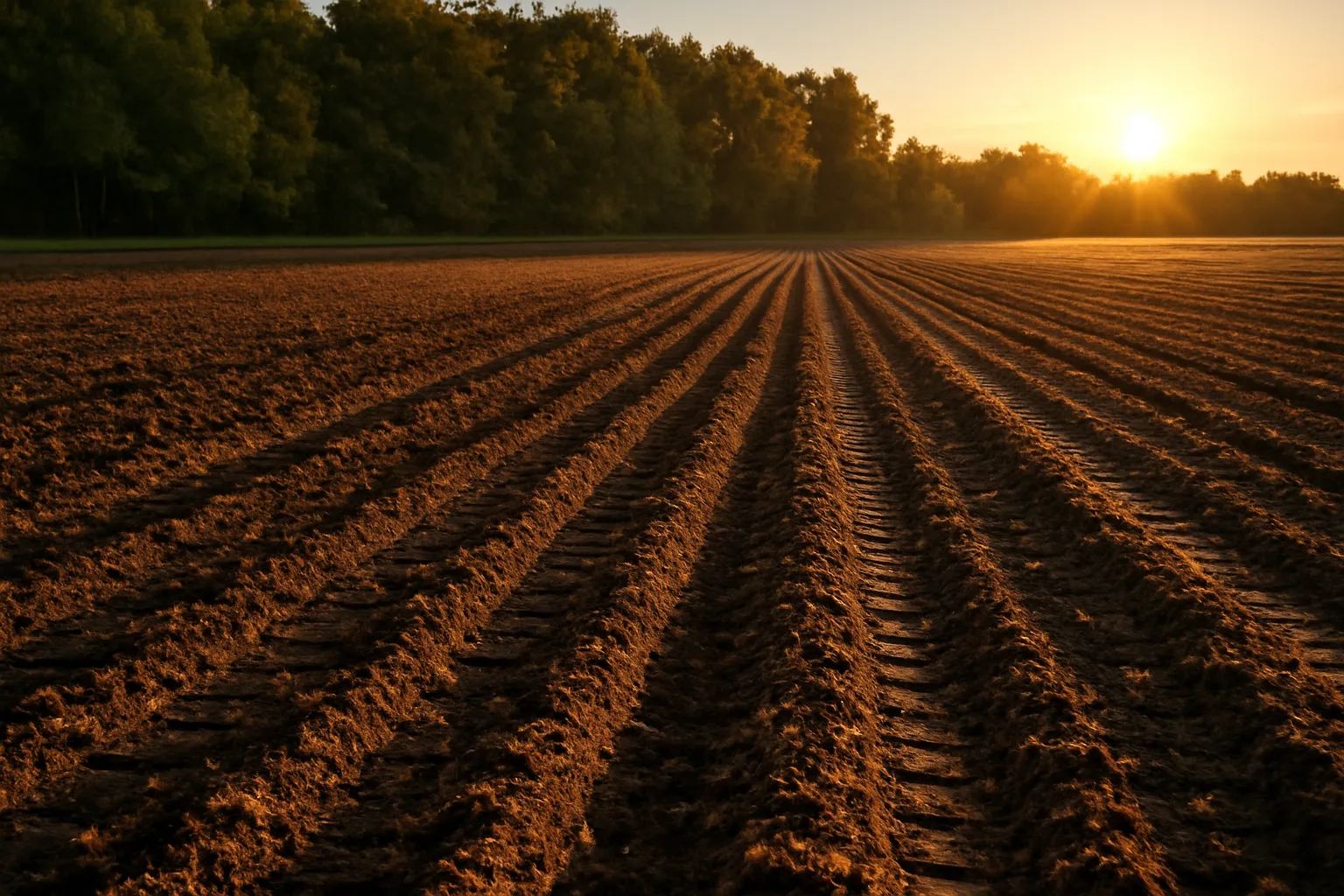
A food plot is a planted patch of forage, usually somewhere between a quarter acre and a few acres, put in specifically to feed and hold deer or other wildlife on a property. It's not landscaping and it's not a garden. Most hunters plant them in existing openings, old fields, log landings, or cleared lanes near stand sites, using annual or perennial forages chosen for the season they're meant to feed. Fall food plots specifically target the late summer through winter window, when natural browse quality drops and deer start keying in on high-carb, high-protein food sources ahead of the rut and winter. The goal shifts from summer growing-season nutrition (antler and lactation support) to fall attraction and winter fat reserves. That's why fall plot species skew toward brassicas, cereal grains, and clover rather than the soybeans and cowpeas you'd plant for a spring/summer plot. State wildlife agencies regulate what counts as a legal food plot versus illegal baiting or supplemental feeding, and the line varies a lot. Some states treat a planted, standing crop as fair game to hunt over even close to a stand; others restrict hunting near plots that were recently fertilized or manipulated in certain ways, and baiting rules (piles of corn, mineral licks, etc.) are usually separate and stricter than food plot rules. Check your state wildlife agency's regulations before you plant or hunt a plot, because this is one area where a generic article can get you a citation. [1] For a broader look at plot styles and how fall plots fit into a whole-property plan, see food plot whitetail and deer food plots.
When to plant deer food plots in the fall
| Upper Midwest / Northeast | Late July to mid-August | Mid-August to early Sept | Mid-Aug to mid-Sept | |
|---|---|---|---|---|
| Transition zone (mid-Atlantic, OH Valley) | Mid-Aug to early Sept | Late Aug to mid-Sept | Late Aug to late Sept | |
| Southern Plains / Mid-South | Late Aug to mid-Sept | Mid-Sept to early Oct | Mid-Sept to mid-Oct | |
| Deep South / Gulf Coast | Mid-Sept to early Oct | Late Sept to Nov | Late Sept to Nov | If you're planting a mix of brassicas and grains in the same plot (a common combo), plant on the brassica schedule and let the grain establish alongside it. Planting brassicas late into a shortened window is one of the most common fall plot mistakes; they simply don't get the growing degree days to bulb properly and you end up with leafy plants and no tuber. |
The short answer: 60 to 90 days before your area's average first killing frost, adjusted for the specific species. That puts most of the Upper Midwest and Northeast in a late July to late August window, the transition zone (mid-Atlantic, lower Midwest, Kansas/Nebraska) in August into early September, and the Deep South and Gulf Coast anywhere from mid-September through October. The reason for the 60-90 day rule isn't arbitrary. Brassicas like turnips and radishes need close to that full window to bulb out and reach peak sugar content, which happens after a few frosts convert starches to sugars. Cereal grains (oats, wheat, rye) and clover germinate faster and tolerate cooler soil, so they can go in later, sometimes as late as 30 to 45 days before frost in warmer zones. Soil temperature matters more than the calendar date. Most fall plot seed germinates reliably once soil temps are consistently in the 45 to 75°F range at planting depth, with brassicas and clover germinating well down into the mid-40s. Land-grant extension programs generally recommend using your local frost-free date data (available through NOAA/NWS climate normals or your state extension's planting guides) rather than a fixed national date, because a fall plot in northern Minnesota and one in south Georgia are not on the same clock. [2] Here's a rough regional planting window guide. Treat these as starting points, not gospel, because microclimates, elevation, and a wet or dry year can shift things two or three weeks either direction. | Region | Brassicas (turnips, radish) | Cereal grains (oats, wheat) | Clover |
When to plant oats for deer
Oats germinate fast and tolerate cooler soil better than most fall grains, so they generally go in 45 to 60 days before your first frost. That's roughly early August in the northern tier, late August into September in the transition zone, and September through mid-October in the South. Oats are a fall attraction workhorse because deer hit them hard as soon as they emerge, often within 2 to 3 weeks of planting, and they stay palatable through several frosts before winterkilling in most zones colder than about USDA zone 6. If you're in a harsher winter climate, oats are essentially an annual that dies with the first hard freeze, which is fine if your goal is fall and early winter attraction rather than a plot that carries deer through February. Seeding rate for oats broadcast alone typically runs 2 to 3 bushels per acre (roughly 64 to 96 lbs, since a bushel of oats weighs about 32 lbs), drilled rates can run lower, around 2 to 2.5 bushels. Extension guidance on small grains generally recommends drilling at a quarter to three-quarters of an inch deep when soil moisture allows. [3] Oats mixed with a brassica or with winter peas is a common combo because the oats come up fast and give deer something to eat while the slower species establish.
When to plant turnips for deer
Turnips need the longest lead time of any common fall plot species: 80 to 90 days before your first frost, because the plant needs that full window to grow leaf mass first, then divert energy into the bulb, then get hit by a frost or two that converts starches to sugars and makes the whole plant, tops and bulb, more palatable. In practice that means turnips go in late July to mid-August in the Upper Midwest and Northeast, August into early September in the transition zone, and anywhere from late August through September in the South. Planting turnips too late is the single most common fall brassica mistake; growers who plant a month late often get thin, woody bulbs that deer largely ignore. Seeding rate for turnips alone is small, about 4 to 6 lbs per acre broadcast, because turnip seed is tiny (roughly 175,000 seeds per pound) and easy to overseed into a thick, hard-to-thin stand. Planting depth should be shallow, a quarter inch or less, or even just broadcast and cultipacked, since seed buried too deep won't emerge. Purdue Extension and other land-grant programs note that brassica forage quality and tonnage both increase substantially after a few frost events, which is the whole reason fall planting timing matters so much for this group. [4] Most hunters blend turnips with other brassicas (radish, rape) and a cereal grain rather than planting a monoculture, both for insurance against a bad establishment year and because deer use patterns shift through fall: they'll often eat the leafy tops first, then switch to bulbs after a few hard frosts once other food sources thin out.
Do deer eat sorghum
Yes, deer eat sorghum, particularly grain sorghum heads and the leaves, though it's a secondary fall/winter food source rather than a top-tier attractant crop. Sorghum is more commonly planted as a summer standing crop that carries into fall and winter as a food and cover source, especially in the South and Midwest where it tolerates heat and drought better than corn. Whitetail research and extension wildlife programs generally rank grain sorghum below corn and soybeans in preference studies, but it holds value as a late winter emergency food source once softer, more preferred forages are gone, and standing sorghum also provides thermal and screening cover, which is part of why some food plot programs include it in a fall/winter blend rather than as a standalone plot. If you're trying to build a true fall-planted plot for attraction through hunting season, sorghum isn't usually the first pick; brassicas, cereal grains, and clover establish faster and pull deer sooner. Sorghum's real role is as a summer-planted crop that still stands and feeds deer into fall and winter.
Do deer eat clover, and do deer like it
Yes, deer eat clover readily, and most whitetail research and extension forage trials rank clover among the most consistently preferred food plot forages available, right alongside soybeans in many preference rankings. Clover is high in protein (often 20 to 25% crude protein in a well-maintained stand) and stays palatable across a long window, which is why it's a staple in both spring and fall plot programs. For a fall-planted clover establishment, the timing is more forgiving than brassicas: clover can go in 45 to 60 days before frost in most zones, since the plant just needs to get established enough to survive winter dormancy and come back strong the following spring. That's the real value of fall-seeded clover: you're not necessarily planting for fall attraction (though deer will use it), you're planting to have a mature, productive perennial stand ready to go the following spring without a spring planting window at all. White clover (Ladino types) and red clover are the two most common fall-seeded options. White clover tends to be more shade tolerant and persistent, red clover establishes a bit faster and tolerates poorer soil drainage. Extension forage guides commonly recommend a seeding rate around 6 to 8 lbs per acre for Ladino white clover broadcast, with a firm, well-prepared seedbed and shallow coverage (an eighth to a quarter inch), since clover seed is small and light-sensitive to some degree. A soil pH in the 6.0 to 6.5 range is typically cited as the target for clover establishment and nitrogen fixation efficiency, which is exactly why a current soil test matters before you plant. [5]
What are deer's favorite food plot species
There's no single universal answer, because preference studies show regional and seasonal variation, but a few species show up near the top of nearly every whitetail forage preference trial: soybeans, clover (white and red), and, for fall/winter specifically, brassicas after a few frosts. Acorns, where available, often outrank all planted forages during fall mast years, which is one reason fall food plot success varies year to year even with identical planting. A widely cited whitetail forage preference study out of Mississippi State University and similar work from other land-grant deer research programs generally found that legumes (soybeans, cowpeas, clover) rank at or near the top of preference during the growing season, while brassicas and cereal grains become more competitive in fall and winter, particularly after frost sweetens brassica bulbs and tops. Corn and other row crops rank well for raw tonnage and winter carbohydrate value but are lower in protein and often less preferred than legumes when both are available side by side. What this means practically: if you want a fall plot deer will use hard from September through the late season, a mix beats a monoculture almost every time. A common, well-tested combo is oats or winter wheat plus one or two brassicas (turnip and radish) plus a clover component that persists into next spring. That gives you fast fall attraction (grain), a frost-activated late season draw (brassica), and a perennial carryover (clover) all from one planting event. See deer for food and deer food plot seed for more on matching species to season and goal.
Do deer like honey (and does it belong in a food plot conversation)
Deer don't seek out honey in the wild in any meaningful, documented way, and it has no real place in food plot planning. This question shows up online mostly from confusion with mineral/attractant products that use sweet syrups (molasses, corn syrup, apple flavoring) as a carrier for scent or mineral licks, not because deer have a natural honey-seeking behavior. Deer are drawn to sugar and carbohydrates generally, which is part of why frost-sweetened brassicas and ripe soft mast (apples, persimmons) pull deer hard in fall. But a jar of honey poured on the ground isn't a food plot strategy, and in many states, using food attractants like this to draw deer to a hunting location crosses into baiting, which is regulated separately from planted food plots and often prohibited during hunting season. If your state defines baiting to include placing food, minerals, or attractants (as many states do), a honey pour would likely fall under that rule, not under food plot exemptions. Check your state wildlife agency's baiting and feeding regulations directly, because definitions and enforcement vary widely by state and even by land type (public vs. private). [1]
How do I pick species for my soil and climate
Start with a soil test, not a seed bag. Every fall plot species has a pH and fertility range it performs best in, and planting into soil that's off by a full point or two of pH can cut nutrient uptake dramatically regardless of how good the seed is. Clover and brassicas both generally want pH in the 6.0 to 6.5 range; cereal grains are a bit more forgiving down into the high 5s. Your soil test report from a land-grant university lab or a private ag lab is the actual authority here; it will tell you exact lime and fertilizer rates for your specific field, and that's not something a general article can responsibly replace. [5] Once you know your pH and fertility numbers, species selection comes down to three questions: how much lead time do you have before frost, what's your soil drainage and sunlight like, and do you want fall-only attraction or a stand that carries into next spring. Short lead time and heavy shade push you toward cereal grains. Long lead time and full sun open up brassicas. Wanting a perennial that survives into spring points you toward clover, possibly with chicory mixed in. Equipment matters too. A firm, well-prepared seedbed with a cultipacker before and after broadcasting small seed (clover, brassicas) makes a bigger difference in germination than almost any other single factor, more than exact seeding rate in a lot of cases. If you're drilling cereal grains, a quarter to three-quarter inch depth is standard; broadcast small seed should barely be covered, an eighth to a quarter inch at most. A $99 custom plan (like the Plot Plan Builder) can shortcut a lot of this by taking your zip code, soil test numbers, and plot size and giving you a species mix and planting window matched to your specific situation, but the soil test itself always comes from your own lab, not from any planning tool. For general species and seed selection background, see food plot seed and domain food plot seed.
What equipment do I actually need for a fall plot
At minimum: a way to kill existing vegetation (mower, herbicide, or disc), a way to break/prepare the seedbed (disc, tiller, or no-till drill), a way to spread seed (broadcast spreader for small seed, drill for grain), and a cultipacker or roller to firm the seedbed. You don't need all of this to be tractor-mounted; small ATV and UTV implements handle plots under 2 to 3 acres just fine, and plenty of successful small plots get planted with a hand-crank broadcast spreader and a lawn roller. For brassica and clover establishment specifically, seed-to-soil contact is the single biggest factor extension agronomists point to for germination failure. Broadcasting onto rough, cloddy ground and walking away is the most common reason a fall plot fails to come up evenly. A cultipack-before-and-after approach (firm the seedbed, broadcast, then firm again lightly) consistently outperforms broadcast-only in side-by-side extension trial writeups. [3] Don't over-invest in equipment before you've run a soil test and picked species. A lot of first-year plotters buy a drill before they know their pH is at 5.4 and needs 2 tons of lime per acre, which the drill won't fix.
What if I'm planting late
If you've missed your ideal window by two to three weeks, switch species rather than force the original plan. Cereal grains (oats, winter wheat, winter rye) are the most forgiving late-planted option because they germinate fast and tolerate cooler soil down into the 40s, and winter rye in particular will germinate in soil temps as low as the high 30s to low 40s Fahrenheit, later than almost anything else commonly planted. [2] Brassicas planted more than two to three weeks late rarely bulb out well; you'll get leafy growth but thin or absent tubers. If you're already past the ideal brassica window, cereal grain alone, or cereal grain plus a fast clover, is a better bet than pushing brassicas into a shortened season. A genuinely late plot (within 30 days of expected frost) is really only suited to winter rye or wheat in most regions. Both will germinate in cool soil and can even germinate very late and simply resume growth the following spring as a green-up plot, which still has value for late winter and early spring deer nutrition even if it never fed deer heavily the prior fall.
Frequently asked questions
What is a food plot for deer hunting?
A food plot is a planted area, usually a fraction of an acre up to a few acres, seeded with forage specifically to feed and attract deer or other wildlife. Fall food plots use species like brassicas, cereal grains, and clover timed to mature and become most palatable during the fall hunting season and into winter.
When should I plant food plots for deer in the fall?
Plant 60 to 90 days before your area's average first frost. That's roughly late July through August in the North, and September into October in the South. Brassicas need the full 80 to 90 days; cereal grains and clover can go in later, around 45 to 60 days before frost.
When is the best time to plant turnips for deer plots?
Turnips need 80 to 90 days before your first frost to grow leaf mass, bulb out, and get hit by frosts that sweeten them. That's late July to mid-August in northern zones and August into September in the transition zone and South. Planting later usually gives thin bulbs deer largely skip.
When should I plant oats for a deer food plot?
Oats go in 45 to 60 days before your expected first frost, since they germinate fast and tolerate cooler soil. That's early August in the North and September through mid-October farther south. Oats winterkill in colder zones, so they're mainly a fall and early-winter attraction crop rather than a spring carryover.
Do deer actually eat clover, and do they prefer it?
Yes. Clover ranks among the top preferred food plot forages in most whitetail research, often alongside soybeans, because of its high protein content (commonly 20 to 25% crude protein) and long season of palatability. Fall-seeded clover establishes before winter dormancy and comes back as a productive stand the following spring.
Do deer eat sorghum?
Yes, deer eat grain sorghum heads and leaves, but it ranks below corn and soybeans in most preference studies. It's more valuable as a standing summer-planted crop that provides food and thermal cover into fall and winter, rather than as a primary fall-planted attraction species.
Do deer like honey, and can I use it as an attractant?
Deer don't naturally seek out honey; this idea mostly confuses honey with sweet-flavored mineral or attractant products. Deer are drawn to sugar generally (which is why frosted brassicas pull deer hard), but pouring honey on the ground isn't a real strategy and may violate state baiting rules that restrict placing food or attractants to draw deer.
What are deer's favorite foods in a food plot?
Soybeans and clover rank at or near the top in most whitetail forage preference research during the growing season. In fall and winter, frost-sweetened brassicas (turnips, radishes) and acorns during mast years often become the preferred food, sometimes outcompeting planted forages entirely in a good acorn year.
How late is too late to plant a fall food plot?
More than two to three weeks past your area's ideal window, brassicas generally won't bulb properly. At that point, switch to winter rye or wheat, which germinate in cooler soil (down into the high 30s to low 40s Fahrenheit) and can still establish, even if they mainly function as a spring green-up plot instead.
Is it legal to hunt over a planted food plot?
Usually yes, planted food plots are treated differently than baiting, but rules vary significantly by state, including how recently the plot was planted or manipulated and whether it's public or private land. Always check your state wildlife agency's specific baiting and food plot regulations before planting or hunting a plot.
Do I need a soil test before planting a fall food plot?
Yes, strongly recommended. A soil test tells you exact pH and fertility numbers, which determine lime and fertilizer rates and directly affect whether your species choice will actually thrive. Your soil test lab is the authority on your specific field; general planting guides can't substitute for that data.
What's the difference between a fall food plot and a summer food plot?
Summer plots (soybeans, cowpeas, sunflowers) target antler growth and lactation nutrition during the growing season. Fall plots (brassicas, cereal grains, clover) target attraction through hunting season and winter fat reserves, using species timed to mature or become most palatable as temperatures drop and frosts hit.
Sources
- State wildlife agency baiting and feeding regulations (example: check your specific state): Baiting and feeding regulations vary by state and are separate from food plot rules
- NOAA National Weather Service Climate Normals: Average first frost dates vary by region and should guide fall planting windows rather than a fixed calendar date
- University of Kentucky Cooperative Extension, Small Grain Seeding Guide: Small grains like oats and wheat should be drilled at shallow depth and given proper seed-to-soil contact
- Purdue University Extension, Forage Brassicas for Deer: Brassica forage palatability and tonnage increase after frost events convert starches to sugars
- University of Missouri Extension, Soil pH and Nutrient Management for Forages: Target soil pH of 6.0 to 6.5 for clover establishment and nitrogen fixation efficiency