Last updated 2026-07-26
TL;DR
There's no single best food plot for deer. Clover gives you spring-through-fall protein and low upkeep. Brassicas and cereal grains dominate fall and winter attraction. Most good plotters plant both, a perennial clover field plus annual grains or brassicas, timed to their USDA hardiness zone and soil test results.
What is a food plot, exactly?
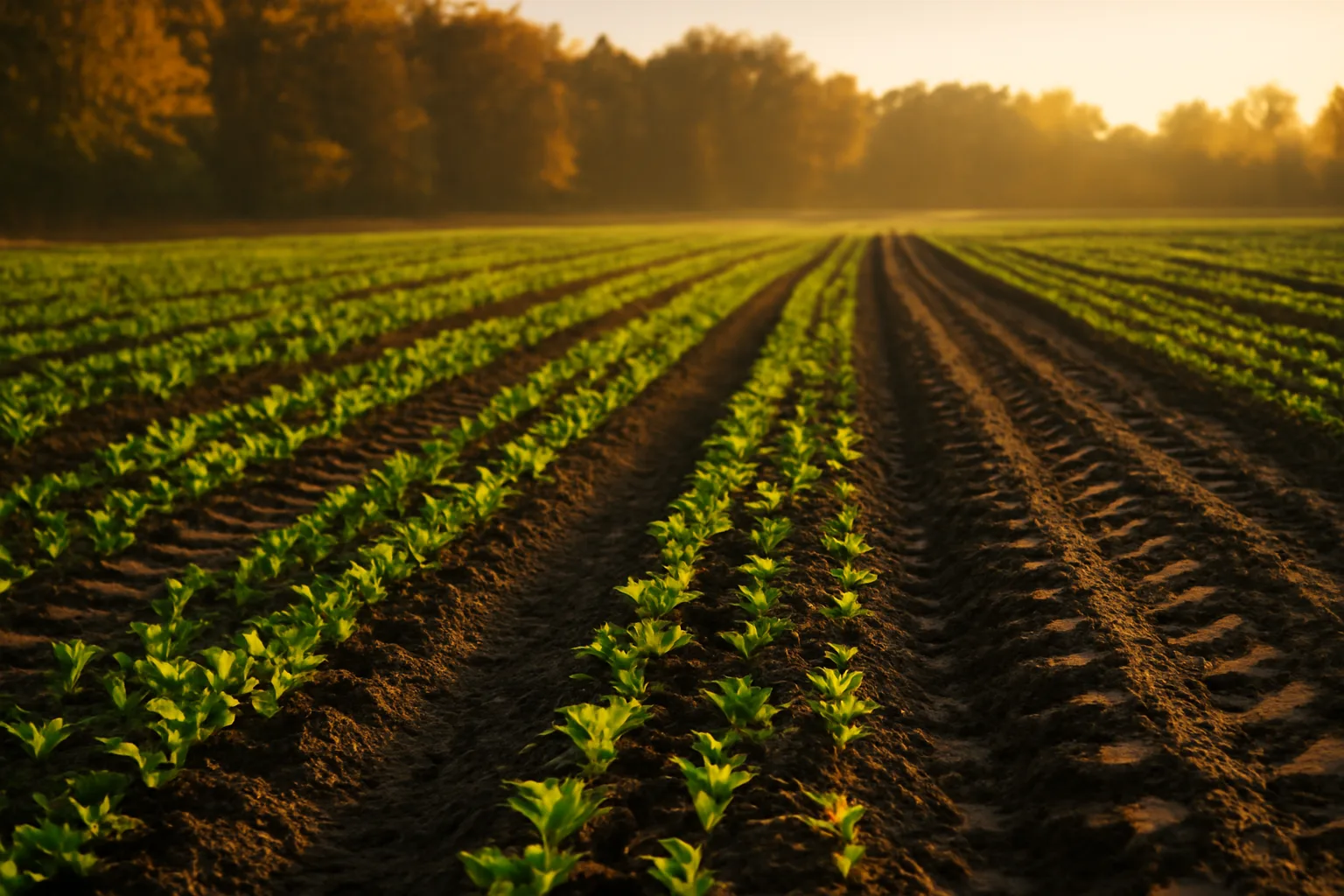
A food plot is a planted patch of forage on hunting land, meant to feed and attract deer while giving hunters a place to observe and hunt over natural food sources. It's not the same as baiting. A food plot is an agricultural planting, usually clover, brassicas, cereal grains, or a legume blend, that grows in place over weeks or months. Baiting typically means dumping corn, minerals, or other feed in a pile, which many states restrict or ban outright during hunting season. Food plots range from a quarter-acre kill plot tucked into a funnel to a 5-acre destination field designed to hold deer all winter. Size, shape, and location matter as much as species choice. A perfect clover plot in the wrong spot won't get hunted well, and a mediocre blend in a great pinch point can still produce. The USDA National Agroforestry Center and most state wildlife agencies treat food plots as wildlife habitat management, distinct from supplemental feeding programs [1]. Check your state's specific baiting and feeding regulations before combining plots with mineral sites or feeders, since rules vary widely and some states classify standing food plots differently than piled feed [2].
What's the best food plot for deer overall?
For most hunters on most soils, a clover and chicory perennial mix paired with a fall annual (brassica or cereal grain blend) beats any single-species plot. Clover covers spring green-up through summer lactation and antler growth. The fall annual covers the rut and late season when deer need carbs and energy, more than protein. If you can only plant one plot, choose based on your hunting season timing. Bowhunters who hunt October and November lean toward brassicas or a clover/cereal grain mix, since brassica sweetness peaks after a hard frost converts starches to sugars. Hunters focused on early season and summer scouting lean toward clover, since it's already established and drawing deer by August. Soil matters more than species pick. A University of Tennessee Extension guide on food plots notes that soil pH below 6.0 can cut nutrient availability and yield significantly regardless of what you plant, and that a soil test is the starting point for any plot decision [3]. Your soil test lab's lime and fertilizer recommendations are the real authority here; general planting guides (including this one) can only give you a starting framework.
Do deer like clover, and is it worth planting?
Yes, whitetail deer readily eat clover, and it's one of the most planted food plot forages in North America. Clover is a legume, meaning it fixes nitrogen in the soil, which cuts your fertilizer costs over time and builds soil health for whatever you rotate in later. White clover (Trifolium repens) and red clover (Trifolium pratense) are the two workhorses. White clover, especially improved varieties like Durana or Patriot, tolerates close grazing and lasts 3-5 years in a stand with proper mowing and weed control. Red clover grows taller, produces more tonnage per acre, but doesn't persist as long and tends to die out after 2-3 years in many regions. Clover forage typically runs 25-30% crude protein when actively growing, which rivals or beats soybeans and alfalfa on a protein basis. That protein matters most in late spring and summer, when does are lactating and bucks are growing antlers. The tradeoff: clover goes dormant or gets buried under snow in northern winters, so it can't carry a plot through late season in Zone 3 or 4 country. Clover plots need mowing 2-4 times a growing season to keep them from getting stemmy and to knock back weed competition. Skip the mowing and you'll watch a clean clover field turn into a weed patch within two seasons.
Do deer eat sorghum?
Yes, deer eat grain sorghum (milo), though it's more commonly planted as a cover crop, screening plant, or as a component in dove and game bird plots than as a primary deer attractant. Sorghum grows tall, thick stalks that provide excellent bedding cover and visual screening between a food plot and a road or property line. Deer will browse young sorghum shoots and will eat the grain heads once they mature and dry down, especially in late fall and winter when other food is scarce. But sorghum isn't a top-tier deer food plot choice on its own. It's lower in protein than clover or soybeans, and deer tend to prefer corn, soybeans, or brassicas when those options are available in the same field. Where sorghum earns its place is as a screening border around a destination plot, or mixed into a diverse planting for turkey and quail habitat that also benefits deer secondarily. If your main goal is maximizing deer nutrition or attraction, sorghum shouldn't be your headline crop.
What are deer's favorite foods?
| Soybeans (forage type) | Summer | High protein, but vulnerable to early browse pressure | |
|---|---|---|---|
| White oak acorns | Fall | Often preferred over any planted crop when available | |
| Clover | Spring-fall | Reliable, regrows after grazing | |
| Brassicas (turnips, radish) | Late fall-winter | Sweetens after frost | |
| Corn | Fall-winter | High energy, low protein | |
| Cereal grains (oats, wheat, rye) | Fall-spring | Good early attraction, winter green-up | Acorns are worth mentioning because no food plot beats a heavy mast year. If your property has mature white oaks, deer will often bypass a planted plot for acorns until the crop runs out, usually by mid to late fall. That's not a planting failure, it's just deer being efficient. |
Deer preference shifts by season, region, and what's locally available, but a few crops show up again and again at the top of preference studies and hunter experience. Soybeans and clover are consistently ranked among the most preferred planted forages during the growing season, while acorns (especially white oak acorns) often beat any planted food plot crop in fall when they're dropping heavily [4]. Here's a rough ranking hunters and wildlife biologists commonly reference, though local conditions can flip this order: | Food source | Peak season | Notes |
Do deer like honey, or is that a myth?
Deer don't have a documented preference for honey, and there's no real research or wildlife agency guidance suggesting honey as a deer attractant. This question likely comes from confusion with commercial deer attractant products that use sweet scents or molasses-based minerals, or from the fact that some food plot seed blends and attractant sprays are marketed with names like "Honey Hole" or similar branding. What deer actually respond to is sugar content in forage, which is real and measurable. Brassicas like turnips and radishes convert starches to sugars after a hard frost, which is why deer hit them hard in late November and December in many regions. That's a legitimate, well-documented phenomenon. Straight honey as bait isn't something wildlife agencies or extension programs recommend, and in states where baiting is restricted, pouring any sugar substance to attract deer could violate baiting statutes depending on how your state defines bait. Check your state agency's specific definition before trying it [2].
When should you plant food plots for deer?
Timing depends entirely on your USDA Plant Hardiness Zone, your last and first frost dates, and whether you're planting a spring/summer plot or a fall plot. There's no single calendar date that works nationwide. Spring plots (clover, soybeans, alfalfa) generally go in after your last frost date, once soil temperatures warm enough for germination, typically when soil hits 50-60°F. In the Midwest and Upper South (Zones 5-6), that's often late April through May. In the Deep South (Zones 8-9), spring plantings can start as early as March. Fall plots (brassicas, cereal grains, clover overseed) are timed backward from your first fall frost date, since brassicas need 60-90 days to mature and cereal grains need enough fall growing window to establish before dormancy. Mississippi State University Extension recommends planting brassica blends 60 to 90 days before the first expected fall frost in most of the Southeast and mid-South [5]. In northern states, that often means planting in late July through August. In the Deep South, growers can wait until September or even early October. The honest answer to "when do I plant" is: pull your first and last frost dates for your county from NOAA or your local extension office, then count backward from there for whatever species you're planting. A Custom Food Plot Plan can map specific planting windows to your zip code and soil test results if you want it done for you rather than working it out crop by crop.
When should you plant turnips for deer?
Plant turnips for deer 60 to 90 days before your area's first fall frost date. Turnips need that window to bulb out and reach peak sugar content, which develops after a hard frost converts starches into sugars. In most of the Midwest and Upper South, that lands turnip planting in late July through mid-August. In the Deep South, you can push planting into September. Planting too early in hot, dry conditions risks poor germination and flea beetle damage on young seedlings. Planting too late means the bulbs won't size up before the ground freezes or growth stops. Turnips are usually most attractive to deer in the tops (leaves) during early fall, then deer shift to digging up and eating the bulbs after a few hard frosts, often in December and January depending on region. That's why turnip and brassica blends are considered late-season food plot options rather than early bow season plots. If your hunting season closes before the first hard frost hits your area, a pure turnip plot may not peak in time to matter for your hunt.
When should you plant oats for deer?
Plant oats for deer in early fall, roughly 6 to 8 weeks before your first killing frost, so they establish enough leaf growth to be attractive before winter dormancy. Oats are a cool-season cereal grain that deer readily browse, especially in September and October when the tender green growth stands out against browning native vegetation. In northern states (Zone 4-5), that often means planting in late August to early September. In the transition zone and Upper South (Zone 6-7), you have more flexibility, often through mid-September to early October. Oats generally winterkill in hard northern winters, meaning they die back once temperatures drop into the teens or lower for sustained periods, so they work best as a fall attraction crop rather than a plant-it-and-forget-it perennial. Some hunters plant oats in spring too, as a nurse crop for clover establishment, since oats grow fast and can suppress weeds while slower clover seedlings take hold. That's a legitimate use, but it's a different goal than planting oats purely for fall deer attraction.
How do you actually pick between clover, brassicas, and grains?
Start with your hunting calendar, not the seed bag. If you hunt mostly October, brassicas and cereal grain blends make sense since they peak in attraction during that window. If you're managing land for herd health and hunt mostly November through January, clover for summer nutrition plus a brassica or standing corn plot for late season covers both bases. Second, look at your soil test. A soil pH under 6.0 will hurt clover and brassica establishment regardless of seed quality, and most extension soil labs will tell you exactly how much lime per acre you need to correct it [3]. Fertilizer needs vary by crop too. Clover needs less nitrogen since it fixes its own, but still needs phosphorus and potassium. Brassicas and cereal grains are nitrogen-hungry and will underperform badly without it. Third, be honest about equipment and time. Clover plots need mowing multiple times a season and won't tolerate being ignored. Brassica and grain plots are annual, meaning you're tilling and replanting every year, which costs more in seed and diesel but requires less mid-season maintenance. If you're planting a food plot for the first time, a food plot whitetail guide or a deer food plot seed breakdown can help you match a blend to your equipment and time budget before you commit.
How much does a food plot cost to plant?
Costs vary widely by seed type, plot size, and whether you're renting or owning equipment, but rough per-acre seed costs commonly run $30-$80 for cereal grains like oats or wheat, $50-$120 for clover blends, and $40-$100 for brassica blends, based on typical retail seed pricing reported by university extension budget guides [6]. Add lime and fertilizer, which can run another $30-$100+ per acre depending on your soil test recommendations, and equipment costs (rental disking, no-till drills, ATV implements) on top of that. A half-acre plot might run $150-$400 all-in for a first-year planting with lime correction. A perennial clover plot costs more upfront but spreads that cost over 3-5 years of stand life, while an annual brassica or grain plot means paying seed and prep costs every single year. The cheapest plot isn't always the best value. A $40 bag of clover seed planted on unlimed, pH 5.2 soil will likely underperform a $70 bag planted on properly limed ground. Get the soil test done first; it's usually $10-$20 through your state land-grant university extension office and it tells you exactly what the ground needs before you spend a dime on seed [3].
What food plot setup actually works for beginners?
Start small and start with your soil test. A half-acre to one-acre clover plot in a good location, with lime and fertilizer applied according to your soil test results, will outperform a large plot planted with the wrong species on unamended dirt. Most first-time planters make two mistakes: they skip the soil test and guess at lime and fertilizer, and they pick a plot location based on convenience (near the truck trail) rather than deer travel patterns. Fix both of those before worrying about which brand of seed to buy. If you want help matching species and timing to your specific property, a Custom Food Plot Plan is a $99 one-time option that takes your location, soil test results, and goals and builds a planting plan around them. It's general guidance built from your inputs, not a substitute for your soil lab's specific lime and fertilizer recommendations, which remain the final word on amendments for your ground. For seed selection itself, browsing options like deer food plots or a domain food plot seed comparison can help you see what blends exist before you commit acreage and budget.
Frequently asked questions
Do deer eat sorghum?
Yes, deer browse young sorghum shoots and eat mature grain heads, but sorghum is lower in protein than clover or soybeans and deer usually prefer those when available. Sorghum works better as a screening cover crop around a plot than as a primary deer attractant on its own.
Do deer like clover?
Yes, clover is one of the most reliably preferred food plot forages for whitetail deer, running 25-30% crude protein when actively growing. White clover varieties like Durana can persist 3-5 years with proper mowing, making it a low-maintenance perennial choice for spring through fall nutrition.
When should I plant food plots for deer?
Timing depends on your USDA hardiness zone and frost dates. Spring plots (clover, soybeans) go in after your last frost when soil hits 50-60°F. Fall plots (brassicas, cereal grains) plant 60-90 days before your first fall frost, so roughly late July through September depending on your region.
When should I plant oats for deer?
Plant oats 6 to 8 weeks before your first fall killing frost, typically late August through mid-September in most of the Midwest and Upper South. Oats give fast green growth that attracts deer through September and October before winterkilling in cold climates.
When should I plant turnips for deer?
Plant turnips 60 to 90 days before your area's first fall frost, usually late July through mid-August in the Midwest and Upper South, later into September in the Deep South. Turnip bulbs sweeten after a hard frost, so they peak in attraction during late fall and winter.
What is a food plot?
A food plot is a planted area of forage, like clover, brassicas, or cereal grains, established on hunting land to feed and attract deer over weeks or months. It differs from baiting, which is piling loose feed, and most states regulate the two differently under wildlife feeding and baiting statutes.
What are deer's favorite foods?
Preference shifts by season and region, but soybeans and clover rank high during the growing season, while acorns, especially white oak, often beat any planted crop during a heavy fall mast drop. Brassicas and corn become favorites in late fall and winter when energy needs rise.
Do deer like honey?
There's no real evidence or extension research showing deer prefer honey specifically. The confusion likely comes from sweet-branded attractant products and the real, documented fact that brassicas sweeten after frost. In states with baiting restrictions, pouring sugary substances to attract deer may violate bait definitions, so check your state agency's rules first.
What's the best all-around food plot for deer?
A perennial clover and chicory mix paired with a fall brassica or cereal grain planting covers the most ground. Clover handles spring through fall nutrition needs, while the fall annual carries attraction and energy through the rut and late season when deer need more carbohydrates.
How big should a food plot be?
Kill plots tucked into funnels or pinch points often run a quarter-acre to half-acre, meant for close bow range rather than holding deer long-term. Destination plots meant to hold deer through the season commonly run 1 to 5 acres or more, depending on herd density and property size.
Do I need a soil test before planting a food plot?
Yes. Soil pH below 6.0 can significantly cut nutrient availability regardless of species planted, according to University of Tennessee Extension guidance. A soil test through your state land-grant extension office usually costs $10-$20 and tells you exact lime and fertilizer needs before you spend money on seed.
Can I plant a food plot without tilling the soil?
Yes, no-till drills and broadcast-and-cultipack methods both work, especially for clover overseeds into existing stands or brassica plantings into killed cover crops. No-till reduces erosion and preserves soil structure but requires either a no-till drill or careful seed-to-soil contact via cultipacking after broadcasting.
Sources
- USDA National Agroforestry Center, Working Trees for Wildlife: Food plots are treated as wildlife habitat management distinct from supplemental feeding
- State wildlife agency baiting regulations vary by state: Baiting and feeding rules for deer vary significantly by state and must be checked locally
- University of Tennessee Extension, Establishing and Managing Wildlife Food Plots: Soil pH below 6.0 significantly reduces nutrient availability and yield in food plots
- Mississippi State University Extension, Deer Food Habits and Preferences: White oak acorns are often preferred by deer over planted forage crops during fall mast drops
- Mississippi State University Extension, Brassica Food Plots for Deer: Brassica blends should be planted 60-90 days before the first expected fall frost in the Southeast and mid-South
- University of Kentucky Cooperative Extension, Food Plot Establishment Costs: Per-acre seed costs vary by crop type, cereal grains generally cheaper than clover and brassica blends