Last updated 2026-07-26
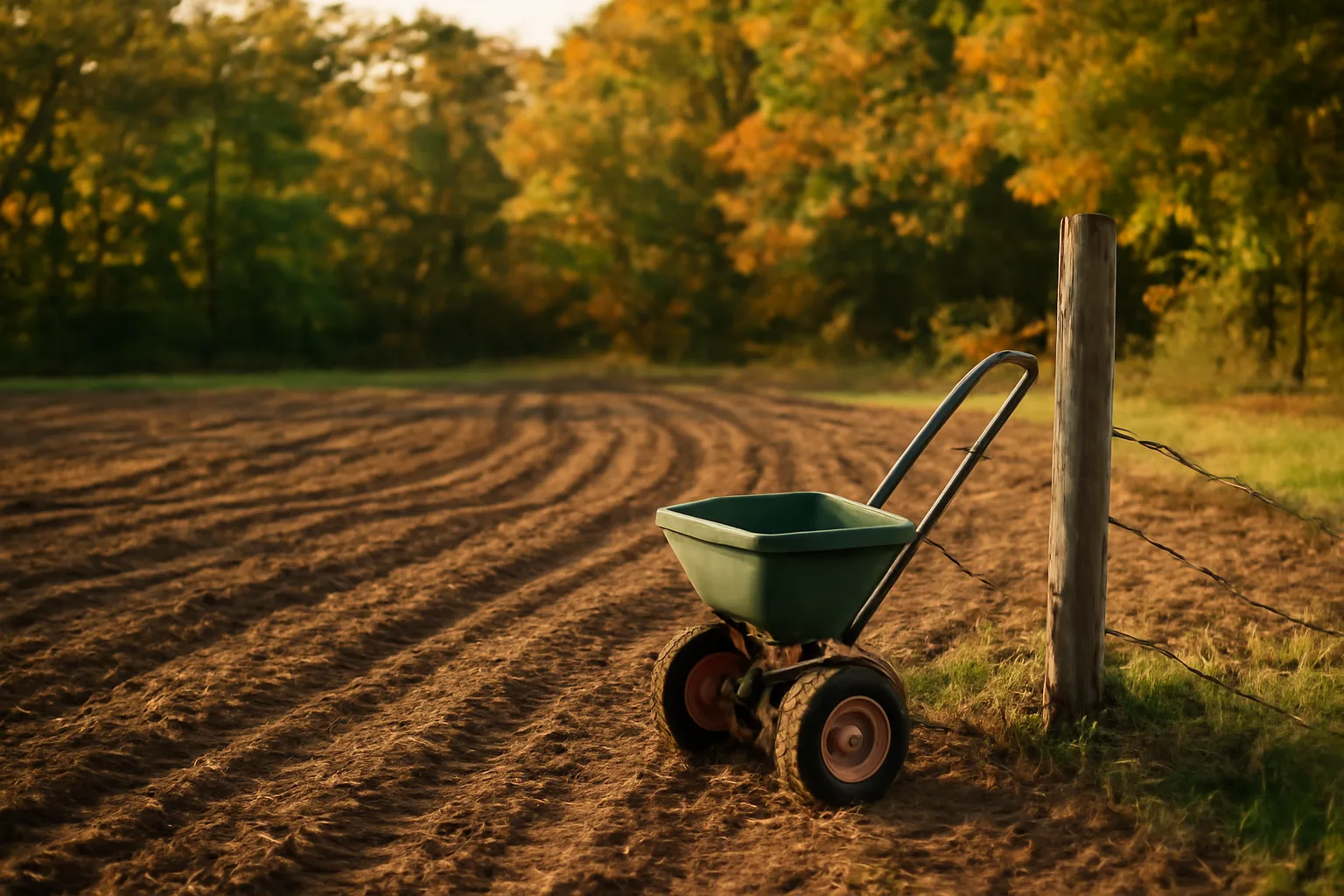
TL;DR
Plant fall food plots so brassicas and clover go in 6 to 8 weeks before your area's first killing frost, and cereal grains (oats, wheat, rye) go in 4 to 6 weeks before frost. That's roughly late July through early September in the North, and mid-August through mid-October in the South, depending on your local frost date from NOAA or your extension office.
When should you plant food plots for deer this fall?
The short answer: count backward from your first expected frost date, not forward from a calendar month. Brassicas like turnips and radishes need 6 to 8 weeks of growing time before a hard freeze to bulb up and get palatable. Cereal grains like oats, wheat, and winter rye need less, usually 4 to 6 weeks, because deer will hit young green shoots even before a hard freeze sweetens them. That means "when to plant" is really a local question. A hunter in northern Minnesota might be planting brassicas the last week of July, while someone in central Alabama can wait until mid-September and still have time. The USDA Plant Hardiness Zone Map is a decent starting reference for frost timing by region, though your county extension office will have a more precise average first-frost date for your exact location. Don't plant fall plots by the same date every year out of habit. Frost dates shift, some years by two or three weeks. Check the actual forecast trend for your area each August, more than what worked last year.
What is a food plot?
A food plot is a planted patch of forage, usually somewhere between a quarter acre and a few acres, put in specifically to feed and attract deer or other wildlife on hunting ground. It's not a garden and it's not a crop field in the farming sense, though the agronomy overlaps a lot. Most plots run annual forages (brassicas, cereal grains, clover, chicory) chosen for tonnage, palatability, and how they hold up to browsing pressure. Food plots serve two jobs that sometimes compete: nutrition (helping deer through winter stress or antler growth) and attraction (getting deer to show up in daylight where you can hunt them). A fall plot planted for hunting season usually leans toward attraction, brassicas and cereal grains that peak in palatability right when gun and bow seasons open. If you're new to the whole concept, food plot whitetail planning basics and deer food plots fundamentals are good starting points before you pick species.
When to plant oats for deer
Plant oats 4 to 6 weeks before your first fall frost. Oats germinate fast, often in 5 to 10 days under decent soil moisture, and they put on a lot of leafy growth quickly, which is exactly what makes them such a strong attraction plot in September and October. Oats are a cool-season annual that will keep growing until a hard freeze knocks them back, usually somewhere in the mid-20s Fahrenheit for a sustained period. In the Upper Midwest that's often late August to early September planting. In the mid-South, growers can wait until late September or even into October. One real tradeoff: oats winterkill in most of the northern half of the country. If you want plot forage that survives into late winter, blend oats with winter wheat or cereal rye, which are more cold-hardy. Oats alone give you a great early-season draw but nothing left by January in cold climates.
When to plant turnips for deer
Turnips need 60 to 90 days from planting to maturity, so back-calculate from your first frost and aim to be in the ground 8 to 9 weeks before that date at the latest, earlier if your soil is on the poor side or rainfall is unreliable. Here's the thing about turnips: deer often ignore the bulbs and leaves early in the season, then hammer the plot hard after the first couple of frosts convert starches to sugars. That's a real phenomenon, more than plot-lore, tied to the plant's cold-response physiology. So don't panic if your turnip plot looks untouched in October. It's doing its job for late season. Soil fertility matters more with brassicas than almost any other plot species. Turnips are heavy nitrogen feeders, and without adequate nitrogen and a soil pH close to 6.0-6.5, bulb development suffers badly, according to University of Tennessee Extension's soil fertility guidance [1]. This is exactly the kind of decision your soil test lab should settle, not a general rule of thumb. If your test comes back with a pH below 6.0, lime needs to go down weeks (ideally months) before planting, since lime takes time to react with soil.
When to plant food plots for deer, zone by zone
| Upper Midwest/Northeast (MN, WI, ME, northern NY) | Late Sept | Late July to mid-Aug | Mid-Aug to early Sept | |
|---|---|---|---|---|
| Mid-Atlantic/Corn Belt (PA, OH, IN, IL) | Mid-Oct | Mid-Aug to early Sept | Early Sept to mid-Sept | |
| Upper South (KY, TN, VA, NC piedmont) | Late Oct to early Nov | Late Aug to mid-Sept | Mid-Sept to early Oct | |
| Deep South (AL, MS, GA, LA) | Mid-Nov to early Dec | Mid-Sept to mid-Oct | Late Sept to mid-Oct | A hard rule worth remembering: soil temperature matters as much as calendar date for germination. Brassica and cereal grain seeds germinate poorly below about 45°F soil temp. So if an early cold snap hits before your planned date, wait for the next warm stretch rather than planting into cold, wet ground. For species selection guidance tailored to your specific dirt and region, a deer food plot seed comparison can help narrow the list before you buy. |
Frost dates vary enough across the whitetail's range that a single national planting date is useless. Here's a rough breakdown using average first-frost windows compiled from NOAA climate normal data [2]. Treat these as starting points, not gospel, and check your own county's average frost date before committing. | Region (example states) | Avg. first frost | Brassica/clover planting window | Cereal grain window |
Do deer eat sorghum?
Yes, deer eat grain sorghum, both the standing stalks and dropped grain heads, though it's more commonly planted as a screening or standing-corn-alternative crop than a primary attraction forage. Sorghum (milo) is drought-tolerant and cheaper per acre than corn in a lot of regions, which is why some plotters use it as a late-season grain source or visual screen along field edges. Deer will browse young sorghum shoots some, but the bigger draw comes once the grain heads mature and dry down in fall, similar to standing corn. It's not typically a September bow-season attraction plot. Think of it as a late-season food source, more useful in November and December when deer are keying on high-carb, high-energy foods heading into winter. If you're set on a grain-based fall/winter plot, plan sorghum plantings for late spring or early summer (it's a warm-season crop, planted after soil hits 65°F), not fall. It won't mature in time if you plant it alongside your brassicas in August.
Do deer eat clover, and do deer like clover?
Yes, deer eat clover readily, and most hunters who've run a perennial clover plot alongside annuals will tell you deer hit it hard in spring and early summer especially. Clover is a preferred forage because it's high in protein, often 20-25% crude protein in a well-managed stand, which matters most during antler growth and lactation in spring and summer. Fall clover plantings work differently than spring ones. If you're establishing a new perennial clover plot in fall, get seed down 6 to 8 weeks before frost so plants can establish a root system before winter dormancy. An established clover plot from a prior spring planting doesn't need fall replanting at all, just a mowing and maybe a light fertilizer application per your soil test recommendations. Clover's downside in a pure fall-hunting context: it's less of a draw once brassicas and cereal grains green up nearby, since deer often prefer the higher-sugar late-season options once frost hits. Clover shines more as a spring/summer nutrition plot and a stable, low-maintenance perennial than as your best bet for opening week of gun season.
What are deer's favorite foods?
There's no single universal answer, deer preference shifts by season, region, and what's available naturally, but research and field experience point to a consistent short list: acorns (especially white oak family acorns, which are lower in tannins and preferred over red oak group acorns), soybeans, clover, and standing corn rank as top picks across most of the whitetail's range. Acorns are often the single biggest natural food draw in fall where oaks are present, and deer will frequently abandon a food plot entirely during a heavy acorn drop year. That's not a plot failure, it's deer being deer. Soybeans are a heavily preferred plot and ag crop forage through summer and into early fall until pods dry down. Among planted forages, brassicas (turnips, radishes, rape) and clover consistently show up as preferred species in state wildlife agency food plot guides, alongside cereal grains like oats and wheat for fall attraction [3]. Preference is also just individual and local. Deer in a heavy ag region with corn and soybeans everywhere may barely touch your plot. Deer on a property with no other food source will eat almost anything green you put down.
Do deer like honey?
Deer aren't drawn to honey as a food source in any meaningful way, and it's not something wildlife biologists or extension agronomists recommend or study as a deer attractant. Deer are herbivores built to digest cellulose and plant matter through a four-chambered rumen system, not concentrated sugars like honey. That said, some commercial deer attractant sprays and mineral products use sugar-based or molasses-based ingredients to enhance palatability or scent-carry, and there's anecdotal hunter belief that sweet scents draw deer in. There's no solid peer-reviewed research confirming honey itself as an effective attractant, and it's a minor, unproven tactic at best compared to a well-timed, well-fertilized food plot. Worth noting: many states regulate or ban baiting, which can include placing food, minerals, or scent products to attract game for hunting purposes, separate from planted food plots. Rules vary a lot by state, so check your state wildlife agency's baiting and feeding regulations before using any attractant product, honey-based or otherwise [4].
How does soil testing change your fall planting timeline?
A soil test won't change your planting date much, but it will change whether your plot actually produces anything worth the deer's time. Lime, if your test calls for it, needs weeks to months to raise soil pH, since it has to react chemically with soil moisture. If you're planting brassicas in six weeks and your pH is at 5.4, you're not going to fix that in time this season, but you can still apply lime now for next year's benefit and add fertilizer to work with what you've got. Most land-grant extension offices, and companies like Whitetail Institute or independent ag labs, run soil tests for somewhere in the $15 to $30 range depending on the lab and how many nutrients you're testing for. Turnaround is usually 1 to 2 weeks. That's cheap insurance compared to the cost of seed, diesel, and a wasted planting window. Your soil test lab is the real authority here, not a blog article. A general fall planting guide can tell you when to plant; it can't tell you your exact lime and fertilizer rate, because that depends on your specific field's test results. If you want a planting plan built around your test numbers, region, and equipment, that's exactly the kind of thing a Custom Food Plot Plan (a $99 one-time report) is built to handle at /plot-plan-builder. It's not a substitute for your lab's recommendations, it's a way to turn those numbers into an actual planting calendar and species mix.
What equipment and seedbed prep does fall planting actually require?
At minimum, you need a way to kill or knock down existing vegetation, a way to work or expose soil, a way to broadcast or drill seed, and a way to pack the seed in. That can mean anything from a full tractor and no-till drill setup down to a hand seeder, a rake, and an ATV to lightly disc a small plot. Brassicas and clover both need shallow planting depth, often no more than a quarter to a half inch, and good seed-to-soil contact. Broadcasting onto a worked seedbed and cultipacking (or driving over it with an ATV tire) afterward works fine for small plots. Cereal grains like oats and wheat can go a bit deeper, around 1 to 1.5 inches, and drilling gives more consistent results than broadcasting if you have access to a drill. Don't overthink the equipment question before you've nailed the timing question. A well-timed plot planted with a hand spreader beats a poorly-timed plot planted with a $40,000 no-till drill. For more on matching species to your gear and acreage, see food plot seed and domain food plot seed selection guides.
What if you miss your ideal planting window?
You've got options, but they're not equal. If you're within a week or two of your target date, plant anyway, most forages have some slack built into the 6-8 week and 4-6 week rules of thumb. If you're three or four weeks late, switch to a faster-maturing option: drop the turnips and plant straight oats or winter rye instead, since cereal grains establish and green up faster than brassicas needing bulb development time. If you're genuinely too late for any fall annual to matter (say, you're six weeks out from frost with no plot in yet in a Northern climate), the honest move is to focus on seedbed prep and soil amendment for next year rather than rushing a plot that won't have time to produce. A late, thin, weed-choked plot can do more harm than good by training deer to ignore that field. One more real option: winter rye and wheat are forgiving enough that you can push planting later than brassicas and still get some fall growth plus spring green-up, per Purdue Extension's cover crop and small grain seeding guidance [5]. It's not going to be your prime October attraction plot, but it's not a wasted season either.
Frequently asked questions
When is the best time to plant fall food plots for deer?
Count backward from your area's average first frost date. Plant brassicas and clover 6 to 8 weeks before frost, and cereal grains like oats, wheat, or rye 4 to 6 weeks before frost. In practice that's late July through early September in northern states, and mid-August through mid-October across the South.
Do deer eat sorghum in food plots?
Yes, deer eat sorghum grain and will browse young shoots some, but it's mainly a late-season and screening crop, not a fall attraction plot. Sorghum is a warm-season crop planted in late spring, and it matures to a grain draw around November and December, similar to standing corn.
Do deer eat clover, and do they actually like it?
Yes, clover is one of the most consistently preferred forages for whitetails, often testing at 20-25% crude protein. Deer favor it heavily in spring and summer for growth and lactation. It's less of a fall attraction draw once brassicas and cereal grains green up nearby.
When should I plant oats for a deer food plot?
Plant oats 4 to 6 weeks before your first fall frost. Oats germinate in as little as 5 to 10 days and give fast, leafy growth, making them a strong September/October attraction plot, though they winterkill in most northern climates by mid-winter.
When should I plant turnips for deer?
Turnips need 60 to 90 days to mature, so plant 8 to 9 weeks before your expected first frost. Deer often ignore turnips early and hit them hard after a couple of frosts convert starches to sugar in the bulbs and leaves.
What exactly is a food plot?
A food plot is a planted area, usually a quarter acre to a few acres, seeded specifically with forage to feed and attract deer or other wildlife on hunting land. Common species include brassicas, cereal grains, clover, and chicory, chosen for tonnage, palatability, and browse tolerance.
What are deer's favorite foods overall?
Acorns, especially from white oak family trees, soybeans, clover, and standing corn consistently rank as top natural and agricultural food draws. Among planted forages, brassicas and clover show up most often in state wildlife agency food plot guidance as preferred species.
Do deer like honey or sweet attractant products?
No, honey isn't a meaningful deer attractant. Deer digest cellulose through a four-chambered rumen and aren't drawn to concentrated sugars the way some marketing suggests. Some commercial attractants use sugar or molasses for scent-carry, but there's no solid research proving honey itself draws deer.
How late can I plant a fall food plot and still get results?
You've usually got one to two weeks of slack past the ideal window. Beyond that, switch to faster-establishing cereal grains like oats or winter rye instead of brassicas. If you're more than a month past your frost-based deadline, focus on soil prep for next season instead of forcing a late planting.
Does soil pH really matter for fall food plot timing?
Yes, and it matters more than most people think. Lime takes weeks to months to react and raise soil pH, so if your soil test shows low pH close to planting time, you likely can't fix it this season. Apply lime as soon as you get results, even if it's for next year's benefit.
Should I plant brassicas or cereal grains first if I'm doing both?
Plant brassicas first since they need the longer 6-8 week runway before frost. Follow with cereal grains 2 to 4 weeks later, since oats and wheat only need 4 to 6 weeks. This staggered approach also spreads out your workload and equipment needs.
Is it legal to use food plots for hunting in every state?
Planted food plots are legal in every state, but rules about baiting, minerals, and supplemental feeding vary widely and are separate from food plot planting. Check your state wildlife agency's current baiting and feeding regulations before adding any attractant products near your plot.
Sources
- University of Tennessee Extension, Soil Fertility in Tennessee (PB1061): Nitrogen and pH requirements for brassica forage crops like turnips
- NOAA National Centers for Environmental Information, Climate Normals: Average first frost date data used for regional planting window estimates
- Mississippi State University Extension, Establishing and Managing Wildlife Food Plots (Publication 2111): Preferred food plot forage species for deer including brassicas, clover, and cereal grains
- Pennsylvania Game Commission, Baiting and Feeding of Wildlife: State-level baiting and feeding regulations that hunters must check before using attractants
- Purdue University Extension, Cover Crop Termination and Small Grain Seeding Guidance (AY-355): Planting timing recommendations for winter rye and wheat as late-planted cover/forage options