Last updated 2026-07-26
TL;DR
yes, august is one of the best months to plant food plots in most of the whitetail range. it's the right window for brassicas (turnips, radishes) and the early edge of cereal grain planting (oats, wheat). clover and perennials generally wait until early fall or next spring. your zone and rainfall matter more than the calendar date.
can you plant food plots in august?
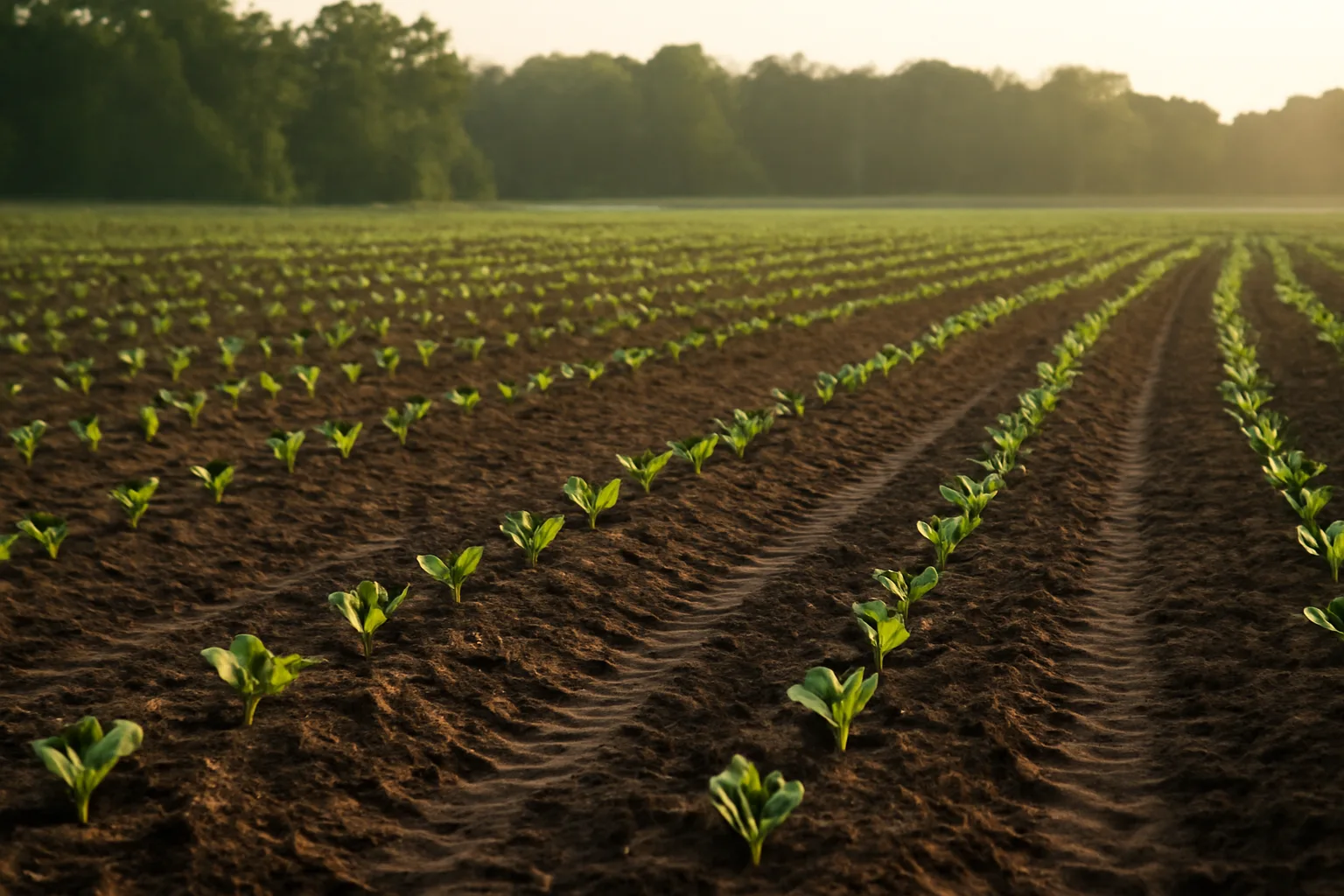
Yes. For a big chunk of the country, August is actually the best month on the calendar for one specific category: brassicas. Turnips, radishes, and other brassica blends want 60 to 90 days of growing time before a hard frost, and they get sweeter and more attractive after that first freeze converts starches to sugars. Plant them too early and they bolt or get eaten down before they matter. Plant them in August in zones 4 through 6 and you land right in the sweet spot. August is also the early edge of the cereal grain window. Oats and winter wheat can go in late August through September in northern and transition zones, and they'll be up and green before archery season opens in most states. What August is not great for: clover, chicory, and other perennials. Those want cooler soil, more reliable moisture, and enough of a runway that they don't get cooked by late-summer heat before they establish a root system. Spring planting or early fall (September into early October) works better for those. If you're not sure which category your plot falls into, the food plot whitetail overview breaks down the major plot types and when each one fits.
when to plant food plots for deer
| 3-4 (upper Midwest, northern New England) | mid-May to early June | early August to early September | |
|---|---|---|---|
| 5-6 (mid-Midwest, mid-Atlantic, Appalachians) | early May to mid-June | mid-August to late September | |
| 7-8 (deep South, lower Southeast) | April to May | September to October | Those fall windows are built backward from first frost date, since brassicas and cereal grains are frost-tolerant or frost-loving, while warm-season annuals like soybeans, sorghum, and cowpeas need to go in during the spring window instead. Your local extension office publishes frost date tables specific to your county, and that's a better source than any national chart. Penn State Extension, for example, publishes agronomy guidance broken out by crop and region for exactly this reason [1]. |
There's no single date. Planting windows depend on species, frost dates, and soil moisture, not a calendar month that works nationwide. The USDA's plant hardiness zone map is a reasonable proxy for figuring out your own timing, since it's built on 30-year average annual extreme minimum temperatures. A rough framework that holds up across most of the whitetail range: | Zone (USDA hardiness) | Spring plot window | Fall plot window |
when to plant turnips for deer
Plant turnips 80 to 90 days before your area's average first hard frost. For most of the whitetail range, that lands somewhere between late July and mid-August. Wait too long into September in a zone 5 or 6 location and the plants won't bulb out before the ground freezes. Turnips (and brassica blends generally) need that lead time because deer often ignore the tops early and switch hard to the plant, especially the bulbs, once a few frosts hit. Mississippi State University Extension notes that brassicas are cold-tolerant and that forage quality and palatability improve after frost converts starches to sugars, which is exactly the design intent: a plot that gets more attractive as the season goes cold, not less [2]. Soil prep matters as much as timing. Brassicas want a fine, firm seedbed and shallow planting depth, generally a quarter inch or less, since the seed is tiny. A soil test before you plant tells you whether you need lime to get pH up near 6.0 to 6.5, which brassicas want for decent nutrient uptake. Your soil test lab's recommendations are the real authority here, not a generic rule of thumb, since regional soil chemistry varies enough that a blanket lime rate can waste money or under-correct a genuinely acidic field.
when to plant oats for deer
Oats go in late summer to early fall, generally 6 to 8 weeks before your first expected frost. That usually means late August into September for most of the Midwest and mid-South, a little later (into October) in the Deep South. Oats germinate fast, sometimes in 4 to 7 days with decent soil moisture and temperature, and they green up quickly, which is why they're a popular early-season attraction plot. They're also cheap insurance: if a fall planting gets hit by drought or an early hard freeze, oats are one of the more forgiving cereal grains to replant. The tradeoff is they're not as winter-hardy as wheat or rye. In colder zones, oats will winterkill, so they function as an annual fall plot rather than something that carries green forage into late winter. If you want plot that holds up better after repeated hard freezes, winter wheat or cereal rye is the better call for the same planting window. Oats also work as a nurse crop mixed with clover, giving the clover some cover while it establishes without shading it out too aggressively, since oats grow fast but don't get tall enough to smother a slower perennial underneath.
do deer eat clover, and do they actually like it?
Yes, deer eat clover heavily, and it's one of the most consistently preferred forages across food plot research. Clover is a perennial legume, meaning it fixes its own nitrogen and can produce forage for 3 to 5 years (sometimes longer) off a single planting if it's maintained with mowing and periodic fertilization. The preference isn't just anecdotal. Extension forage research repeatedly shows clover ranking near the top of preferred food plot forages by crude protein content, often 20 to 30 percent crude protein in vegetative growth stages, which matters most during spring green-up and lactation in does, and during antler growth in bucks. The catch: clover is a spring or early fall planting, not an August one, in most zones. It needs cooler soil and consistent moisture to establish a root system before summer heat or winter cold stresses the seedling. If you plant clover in August in a hot, dry zone 6 or 7 summer, you're fighting the odds. Early September (once heat breaks) into early October is generally the better fall window, or wait for spring. The deer food plot seed guide covers clover varieties and blend options in more depth if you're picking a seed for next spring.
do deer eat sorghum?
Yes, deer eat sorghum, both the grain heads and, to a lesser degree, the foliage, though it's more of a fall and winter standing-grain food source than a primary forage plot. Grain sorghum (milo) is planted as a warm-season crop in late spring to early summer, not in August, since it needs a full growing season of heat to mature grain heads before frost. Sorghum shows up in food plot mixes mostly as a structure and cover component as much as a food source: it grows tall, holds up well standing through winter, and gives deer (and other wildlife) a grain source late in the season when other plots have been picked over. It's commonly planted alongside soybeans or as part of a wildlife blend rather than as a stand-alone plot. If you're in August looking at a bare field and considering sorghum, you've generally missed the window for this year unless you're in a long-season Southern zone. Note this one at the top of next year's spring planning list instead.
what is a food plot?
A food plot is a planted area, usually somewhere between a quarter acre and several acres, established specifically to provide forage or attraction for deer and other wildlife on hunting land. It's not the same as a farm field, even though the agronomy overlaps quite a bit; food plots are managed for wildlife nutrition and hunting access, not commodity yield. Food plots generally fall into two rough categories: annual plots (planted every year, examples include brassicas, cereal grains, soybeans) and perennial plots (clover, chicory, alfalfa, established once and maintained for multiple seasons). Some hunters also distinguish between attraction plots (small, high-visibility plots near stand sites, meant to draw deer into range during hunting season) and nutrition plots (larger acreage meant to support herd health year-round, often placed farther from hunting pressure). State wildlife agencies regulate food plots differently than they regulate baiting or supplemental feeding, and the line between the two varies a lot by state. Under Michigan's Wildlife Conservation Order, feeding and baiting rules are defined and restricted separately from standard agricultural crop production, and a planted, standing food plot is generally treated as a normal agricultural practice rather than bait [3]. Always check your own state agency's current rules before you plant or hunt over anything, since some states restrict hunting over food plots within a certain distance or under certain conditions, and rules change.
what are deer's favorite foods?
There's no single universal answer, since deer preference shifts by season, region, and what's available, but research and field data point to a consistent short list: acorns (especially white oak group), soybeans, clover, and, in late season, brassicas after a hard frost. Acorns are often the most preferred natural food where they're available in a given fall, and mast crop research shows deer will often bypass planted food plots entirely during a heavy acorn drop year. Soybeans rank extremely high during the growing season, both as forage (leaves) in summer and as a food source (dropped beans and pods) in fall and winter, which is part of why soybean plots are a mainstay of Midwest food plot programs. Clover, as covered above, is consistently near the top of preferred plot forages by crude protein and palatability. Brassicas jump in preference sharply after the first hard frost converts starches to sugars, which is exactly why the August planting window for turnips matters so much: timing the frost conversion to land during hunting season is the whole point of the plot. One honest caveat: deer preference studies are mostly regional (often single-state or single-farm), and results don't always generalize perfectly. If your local deer are hammering something that's not on this list, trust what you're actually seeing on your own ground over a general list.
do deer like honey?
There's no real research or wildlife agency guidance on deer and honey specifically, because it's not a natural forage or a food plot input, and it's not something deer would normally encounter in a field setting. Some hunters use sweetened attractant products, syrups, or mineral/molasses blocks, marketed on the idea that deer are drawn to sugar and salt. A more relevant caution here is legal, not nutritional: many states classify sweetened attractants, syrup, and other placed food substances as bait, which is regulated separately from a planted food plot. Under Wisconsin law, placing or using bait for deer is restricted statewide, and the specific definition and county-by-county exceptions are set out in Wisconsin Administrative Code NR 10.10 [4]. If you're considering any product beyond a straight planted crop, check your state agency's current baiting and feeding regulations first, since a syrup, mineral lick, or supplemental feed pile can trigger rules that a standing food plot does not.
what should you actually plant in august, by region?
Here's a practical breakdown by rough region, assuming you're planting in August specifically (not planning for spring): Upper Midwest and northern New England (zones 3-4): Brassica blends (turnip, radish, rape) are the strongest August play, planted early in the month to get a full 80-90 day runway before frost. Oats can go in late August if you want a fast green-up plot for early bow season. Mid-Midwest, mid-Atlantic, Appalachians (zones 5-6): You've got more flexibility. Brassicas mid-August, oats or winter wheat late August into September. This is also close to the window for fall clover establishment, though early-to-mid September (once heat breaks a bit) is usually a safer bet than August itself. Deep South and lower Southeast (zones 7-8): August is often still brutally hot and dry in these zones, and soil moisture is the limiting factor more than frost date. Brassicas can still go in, but many growers wait until early-to-mid September when a tropical system or seasonal rain pattern is more likely to give seedlings a fighting chance. Cereal grains (oats, wheat, rye) generally wait until September-October here too. Whatever your region, a soil test is the step that actually determines whether an August planting succeeds, more than the date does. Lime takes months to fully adjust pH, so if you're testing in August for an August planting, you're already behind on lime correction for this year's crop; the test still tells you what to fix for next year and whether your fertilizer plan makes sense right now. If you want a planting plan built around your zone, your soil test numbers, and your equipment, a $99 Custom Food Plot Plan puts together species and timing recommendations specific to your situation; treat it as a planning tool, though, not a replacement for what your soil test lab tells you about lime and fertilizer rates for your specific dirt.
what if you missed the spring window and it's already august?
You haven't missed much. August is genuinely one of the better months to plant, not a fallback. If you missed spring planting for soybeans or sorghum, you missed those species for the year, full stop, since they need a long warm-season runway. But brassicas and cereal grains are designed around a fall planting date, so August isn't a compromise for those, it's the plan. Where hunters actually get in trouble is planting too late, not too early. Waiting until mid-September to plant turnips in a zone 5 location can mean the plants never fully bulb out before a hard freeze locks up growth. If you're deciding between planting now (August) versus waiting a few weeks, err toward planting sooner for frost-seeded species like brassicas, and toward waiting a bit longer for species that want cooler, wetter soil, like clover. Check a soil test if you haven't in the last 2-3 years. A pH below 6.0 will blunt fertilizer efficiency regardless of what you plant, and an August planting on bad soil chemistry is still going to underperform an August planting on corrected soil. If lime hasn't had time to work this season, plant anyway. Get the correction started for next year rather than skipping the plot entirely.
Frequently asked questions
Can you plant food plots in August?
Yes. August is one of the best months for brassicas (turnips, radishes) in most zones, since they need 80-90 days before frost to mature and sweeten. It's also the early edge of the cereal grain window (oats, wheat). Clover and other perennials generally do better waiting for early fall or next spring.
Do deer eat sorghum?
Yes, deer eat both sorghum foliage and grain heads, though it functions more as a standing winter food source and cover crop than a primary forage plot. Grain sorghum is a warm-season crop planted in late spring to early summer, not in August, since it needs a full season of heat to mature.
Do deer eat clover, and do deer like clover?
Yes, clover is one of the most consistently preferred food plot forages, often 20-30% crude protein in vegetative growth. Deer favor it heavily during spring green-up and summer. It's a perennial though, best planted in spring or early fall (not August in most zones) since it needs cool soil and steady moisture to establish.
When should you plant deer food plots overall?
Timing depends on species and your USDA hardiness zone, not a single calendar date. Warm-season plots (soybeans, sorghum) go in during spring. Brassicas and cereal grains go in during a fall window timed backward from your first frost date, generally late July through September depending on zone.
When should you plant oats for deer?
Plant oats 6 to 8 weeks before your area's first expected frost, generally late August into September for most of the Midwest and mid-South, later into October in the Deep South. Oats germinate fast (4-7 days) but winterkill in cold zones, so treat them as a fall annual plot rather than a plot that survives deep winter.
When should you plant food plots for deer, generally speaking?
Most plots fall into two windows: spring (May-June depending on zone) for warm-season annuals like soybeans and sorghum, and late summer to early fall (August-September depending on zone) for brassicas, cereal grains, and clover establishment. Your local extension office's frost date data is more reliable than a national calendar.
When should you plant turnips for deer?
Plant turnips 80-90 days before your area's average first hard frost, which lands in late July to mid-August for most of the whitetail range. Planting too late means the bulbs won't mature before the ground freezes, and deer preference for brassicas actually increases after a frost sweetens the plant.
What is a food plot, exactly?
A food plot is a planted area, usually a quarter acre to several acres, established to provide forage or attraction for deer and wildlife on hunting land. Plots are generally either annual (replanted yearly, like brassicas or soybeans) or perennial (clover, chicory, maintained across multiple seasons).
What are deer's favorite foods?
Preference shifts by season and region, but acorns (especially white oak), soybeans, clover, and frost-sweetened brassicas consistently rank high across research and field observation. Acorns often get prioritized over planted plots entirely during a heavy mast year, which is worth knowing before you assume a plot failed.
Do deer like honey?
There's no wildlife research on deer and honey specifically, since it's not a natural forage. Sweetened attractants and mineral/molasses blocks exist commercially, but many states classify placed sweetened substances as bait, regulated separately from planted food plots. Check your state wildlife agency's current baiting rules before using any product beyond a standing crop.
Is it too late to plant a food plot in August?
No, for brassicas and cereal grains, August is often the intended window, not a late fallback. It is too late for warm-season crops like soybeans and grain sorghum, which need spring planting and a full season of heat to mature before frost.
What's the difference between planting a food plot and baiting?
A food plot is a planted, standing crop; baiting generally means placing loose feed, minerals, or attractants to draw animals. States regulate these differently. Michigan's Wildlife Conservation Order treats standard crop production separately from baiting and feeding restrictions, but rules vary by state and can change.
Should you plant clover in August?
Generally no, in most zones. Clover establishes best with cooler soil and consistent moisture, which usually means spring or early-to-mid September rather than August, when summer heat and dry soil stress young seedlings before they build a root system.
Sources
- Penn State Extension, Agronomy Guide: Local extension offices publish crop and region-specific planting date and soil fertility guidance
- Mississippi State University Extension, Brassicas for Deer Forage: Brassicas are cold-tolerant and forage palatability improves after frost converts plant starches to sugars
- Michigan Department of Natural Resources, Wildlife Conservation Order: Michigan's Wildlife Conservation Order defines and restricts baiting and feeding of deer separately from normal agricultural crop production
- Wisconsin Administrative Code, NR 10.10 (Taking of animals, general provisions; baiting): Wisconsin restricts baiting for deer statewide, with specific definitions and county-level exceptions set in administrative code
- Purdue University Extension, Forage Field Guide (clover management): Clover is a perennial legume that fixes nitrogen and can persist for multiple years with proper mowing and fertility management