Last updated 2026-07-25
TL;DR
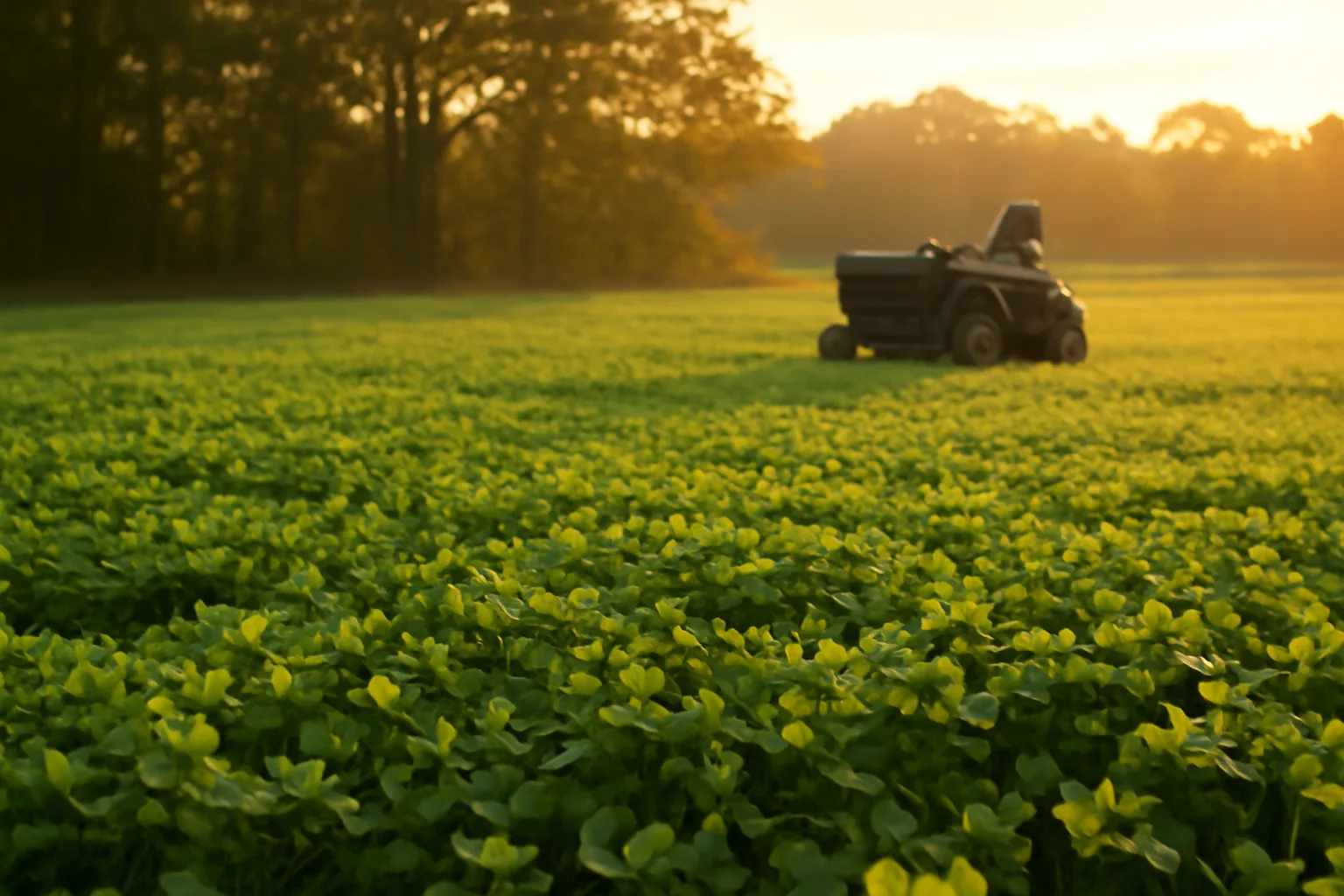
Maintaining a clover plot means mowing it 3-4 times a growing season to 4-6 inches, spraying grass herbicide before it gets thick, topdressing potash or a soil-test-recommended blend each fall, and frost-seeding thin spots. Done right, a clover stand lasts 3 to 5 years before you need to start over with a fresh planting.
What is a food plot, and why does clover need upkeep at all
A food plot is a planted patch of forage, on private or leased ground, meant to feed deer and other wildlife and give hunters a place to observe and hunt over natural food sources. It's not baiting in most states because it's a growing crop in the ground, not a pile of feed, though the legal line between the two varies and you should check your state wildlife agency's regulations before you plant anything near a stand [1]. Clover is a perennial, which is exactly why people love it and exactly why it needs work. Annual plots like brassicas or cereal grains, you plant, they grow, they get eaten or they die back, and you start over. Clover is different. A good stand of white clover (Trifolium repens) or red clover (Trifolium pratense) can produce forage for 3 to 5 years, sometimes longer, but only if you actively manage weed pressure, mowing, and fertility every single year. Skip a year of upkeep and grass and broadleaf weeds will choke it out fast, usually within one or two seasons. Think of a clover plot less like planting a garden and more like managing a small hayfield. The seeding is the easy part. The maintenance is where most food plots actually fail.
Do deer like clover, and is it really their favorite food
Yes, deer like clover a lot, and it's one of the most consistently preferred food plot forages across the whitetail's range. Clover is high in crude protein, often 25 to 30 percent in a well-fertilized, vegetative stand, which matters most in spring and summer when does are lactating and bucks are growing antlers [2]. There's no single scientifically ranked "favorite food" for deer because preference shifts by season, region, and what else is available. In spring and summer, deer key in on high-protein forage like clover, soybeans, and alfalfa. In fall, they shift hard toward carbohydrates and fat, which is why acorns, corn, and standing soybeans pull deer harder once temperatures drop and breeding season approaches [3]. Clover's real strength is that it's the one plot type deer will hit in April and still hit in October, it just won't out-draw a fresh brassica plot or standing beans once a hard frost sweetens things up. If you're weighing clover against other options for your acreage, the comparison articles on deer food plots and food plot whitetail walk through how clover stacks up against brassicas, cereal grains, and beans for different goals.
When to plant food plots for deer, and where does clover fit in the calendar
| North (MN, WI, MI, upper NY/NE) | Mid-April to late May | Mid-August to early September | |
|---|---|---|---|
| Mid-South (KY, TN, VA, MO) | Late March to early May | Late August to mid-September | |
| Deep South (AL, GA, MS, FL) | February to April | September to October | If you want a plan built around your actual zip code and soil test instead of a generic zone table, that's the whole point of the $99 Custom Food Plot Plan we build at PlotSeason. It's general guidance based on your inputs, not site-specific agronomy, but it beats guessing off a national chart. |
Clover is planted in either early spring or late summer/early fall, depending on your zone. Spring seeding works once soil temps hit the mid-40s and frost risk is mostly past, typically March through May in the North and February through April in the South. Late summer seeding, roughly 45 to 60 days before your average first frost, lets clover establish root systems before winter and often gives you a cleaner, less weedy stand because summer annual weeds are winding down. Most food plot planning in general follows a two-window structure: spring/early summer for warm-season annuals and perennials like clover, soybeans, and cowpeas, and late summer/early fall for cool-season annuals like brassicas, cereal grains, and winter peas. Your local university extension office publishes frost-date tables specific to your county, and that's the best free tool for nailing your window, better than any generic national calendar. Here's a rough planting window by zone. Treat these as starting points, not gospel, since elevation and microclimate shift things by two or three weeks in either direction. | Zone | Spring clover seeding | Fall clover seeding |
How often should you mow a clover food plot
Mow clover 3 to 4 times during the growing season, keeping it between 4 and 8 inches tall and never scalping it below 3 inches. The goal of mowing isn't cosmetic. It knocks back weeds before they seed out, and it forces the clover to stay in a vegetative, leafy growth stage instead of bolting toward flower and seed production, which is when protein content and palatability both drop. A rough schedule: first mow in late spring once weeds start to outpace the clover, second mow in early summer, third in mid to late summer, and a light fourth mow in early fall if you're getting rank growth before your hunting season starts. Some guys skip that last mow on purpose right before season, since 12 to 18 inches of clover next to a standing food source can hold deer and give you cover for a stand approach. That's a judgment call based on your setup, not a hard rule. Don't mow during a drought or in the heat of midsummer if the plot is already stressed. Mowing removes leaf area the plant needs for photosynthesis, and hitting a drought-stressed stand with a bushhog can set it back weeks.
When and how do you spray a clover plot for weeds
Spray for grass weeds using a grass-selective herbicide like clethodim (sold as Select Max and others) or sethoxydim, both of which kill grasses without harming the clover, since clover is a broadleaf legume and these products only affect grass physiology [4]. Timing matters more than product choice. Spray when grasses are young and actively growing, generally under 6 inches tall. Mature, seed-headed grass is much harder to kill and often needs a second pass. For broadleaf weeds in an established clover stand, options get thinner because most broadleaf herbicides will also kill the clover. Some 2,4-DB products are labeled for use in established clover and can be used sparingly, but read the label closely, rates and clover tolerance vary by product and clover species [4]. When in doubt, mowing on a tight schedule does more of the broadleaf weed control work than most people expect, and it's a lot cheaper than a bad herbicide call that sets your whole plot back. Always read the actual label for rate, clover species tolerance, and days-to-grazing restriction before spraying anything deer will be eating.
How do you fertilize an established clover plot
Established clover mostly needs potassium (K) and, depending on your soil, phosphorus (P), applied as a topdress once a year, usually in late summer or early fall. Clover fixes its own nitrogen through rhizobia bacteria in its root nodules, so unlike a corn or brassica plot, you generally don't need to add nitrogen fertilizer to a healthy clover stand [5]. A soil test is the only honest way to know your actual P and K needs, and your soil test lab's recommendation is the real authority here, more specific and more accurate for your dirt than any generic fertilizer rule. University extension guidance commonly points to soil test-based rates rather than a blanket number, because K removal from clover forage can vary widely by yield and cutting frequency [5]. Most labs also recommend keeping soil pH between 6.0 and 7.0 for clover, since clover's nitrogen-fixing bacteria work poorly in acidic soil below pH 6.0. If your test comes back low, lime is the fix, not more fertilizer, and lime takes months to fully react in the soil, so apply it as early as you can rather than waiting until planting week [6].
How do you fix thin, patchy spots in a clover plot
Frost-seed the thin spots. Broadcast fresh clover seed onto existing stands in late winter, while the ground is still doing freeze-thaw cycles, usually February to early March depending on your zone. The freezing and thawing action works the seed into the soil surface without any tillage, and clover's small seed size makes this method work well compared to larger-seeded species [7]. Before frost-seeding, mow or graze the existing stand down tight the prior fall so seed has good soil contact and isn't shaded out by old growth. A light drag with a chain harrow or ATV drag afterward helps seed-to-soil contact, though it's not strictly required for clover the way it is for grasses. If a section is more than 50 percent bare ground or overrun with perennial weeds like dock or thistle, frost-seeding won't fix it. At that point you're better off spraying it out with glyphosate the prior fall and reseeding it clean the following spring, treating that patch like a brand new plot rather than a patch job.
Do deer eat sorghum, and does it pair with clover
Yes, deer eat sorghum, particularly the grain heads once they mature and dry down in fall, and sorghum is also planted as a screening and thermal cover crop around plots because it grows tall and thick. Deer will browse young sorghum shoots some too, though it's not a preferred forage the way clover or soybeans are during the growing season . Sorghum doesn't really pair with clover in the same plot, since sorghum is a tall annual grass and would need a grass-selective herbicide pass that would also kill it if it were mixed with clover. Where sorghum earns its keep is as a standalone screening strip planted along a plot's edge, giving deer a covered travel corridor to and from the clover without walking across open ground in daylight. Some hunters plant a sorghum or grain sorghum/Egyptian wheat blend for exactly that purpose rather than as a food source itself.
When should you plant oats for deer, and can you overseed them into clover
Plant oats for deer in late summer to early fall, generally 6 to 8 weeks before your first killing frost, so August through mid-September across most of the whitetail range, giving them time to establish before cold weather slows growth [3]. Oats are a cool-season annual grain, cheap, fast-growing, and deer hit them hard in fall, especially after a light frost sweetens the plant's sugars. Overseeding oats into an existing clover stand is a common and pretty smart move. Broadcast oat seed at a light rate, around 30 to 50 pounds per acre, into the clover in late summer, right around a mow. The oats germinate fast and give you a flush of fall attraction and tonnage on top of the clover base, and they winterkill in most zones, leaving the clover to come back clean in spring without any extra work on your part. It's one of the better low-cost ways to boost fall drawing power on a plot you already have established.
When should you plant turnips for deer, and do they work with a clover rotation
Plant turnips for deer in late summer, roughly 60 to 90 days before your first expected frost, since turnips need that runway to bulb out before cold weather and deer pressure hit them hard. That puts most turnip plantings in the July to early September window depending on zone, similar timing to other brassicas. Turnips don't belong in a clover plot directly, brassicas need their own tilled seedbed and nitrogen fertility, and mixing them into a clover stand would mean tearing up the perennial clover to plant them. What works instead is rotation: some hunters run a portion of their clover acreage in a 3 to 4 year cycle, killing and replanting a section into brassicas like turnips for a year or two before reseeding clover, which can help reset soil fertility and break weed and disease cycles that build up in a long-standing clover stand. If you're deciding between a dedicated turnip plot and expanding clover acreage, deer food plot seed and food plot seed break down seed costs and blends for both.
Do deer like honey, and does it matter for food plots
There's no real evidence deer seek out honey as a food source, and it's not something that shows up in wildlife forage studies or extension food plot guidance. Deer are herbivores built to digest plant fiber through a four-chambered rumen, and honey isn't part of their natural diet or a product used in any legitimate food plot program [2]. If you've seen this question floating around hunting forums, it's mostly confusion with commercial deer attractant sprays that use sugar or molasses-based scents, which is a different thing entirely from honey and still won't replace a real forage plot. Also worth a flag: many states restrict or ban baiting with sugary attractants near stands the same way they regulate feed piles, so check your state wildlife agency's baiting rules before using any scent or mineral product in the field [1].
How long does a clover plot actually last before you need to replant
A well-maintained white clover stand typically lasts 3 to 5 years before thinning and weed pressure make replanting worth the cost, while red clover is shorter-lived, often needing replacement after 2 to 3 years since it's a true biennial/short-lived perennial compared to white clover's longer persistence. Ladino types (a large white clover variety) tend to sit on the longer end of that range when soil fertility and mowing are kept up. The honest signal to replant isn't a calendar date, it's stand density. Once a clover plot drops below roughly 50 percent clover coverage, with the rest filled in by grass and weeds you can't spray or mow your way out of, you're generally better off spraying the whole thing out with glyphosate in late summer and drilling a fresh stand rather than fighting a losing battle another season. Building that decision into a broader rotation plan, alongside brassicas, cereal grains, or beans on other acres, is exactly the kind of planning a soil test and a season-by-season calendar solves. If you want that calendar built around your specific ground rather than piecing it together from articles, that's what the Custom Food Plot Plan at PlotSeason is for.
Frequently asked questions
Do deer eat sorghum?
Yes, deer eat sorghum grain once it matures in fall, and they'll browse young shoots some too, though it's not a top preference like clover or soybeans. Sorghum is more commonly planted as a tall screening or thermal cover crop around food plots than as a primary forage source.
Do deer like clover?
Yes, clover is one of deer's most consistently preferred forages, largely because a well-fertilized stand runs 25 to 30 percent crude protein, according to university extension forage data. Deer hit clover hard from spring through fall, though standing beans or fresh brassicas can out-draw it once frost hits in late fall.
When should I plant clover for deer?
Plant clover in early spring (roughly February to May, depending on zone) or late summer/early fall, 45 to 60 days before your first frost. Fall seeding often gives a cleaner stand with less weed competition. Check your local extension office's frost date tables for exact windows in your county.
When do you plant oats for deer?
Plant oats 6 to 8 weeks before your area's first killing frost, generally August through mid-September across most whitetail range. Oats grow fast, deer hit them hard in fall, and they work well overseeded into an existing clover stand for a quick fall attraction boost.
When do you plant turnips for deer?
Plant turnips 60 to 90 days before your first expected frost, usually July through early September depending on your zone. That runway lets the bulb develop fully before cold weather and deer browsing pressure set in.
What is a food plot?
A food plot is a planted area of forage crops on private or leased land meant to feed deer and other wildlife and give hunters a place to hunt or observe over natural growing food. It's generally distinct from baiting, though rules vary by state, so check your state wildlife agency's regulations.
What is deer's favorite food?
There's no single favorite; preference shifts with season. In spring and summer, deer favor high-protein forage like clover, soybeans, and alfalfa. In fall, they shift toward carbs and fat like acorns, corn, and standing soybeans, especially heading into the rut and winter.
Do deer like honey?
There's no real evidence deer seek out honey; it's not part of their natural diet and doesn't appear in extension forage or wildlife feeding research. This question usually comes from confusion with sugar or molasses-based commercial deer attractant sprays, which are a different product entirely.
How often should I mow my clover plot?
Mow 3 to 4 times per growing season, keeping clover between 4 and 8 inches tall. Mowing knocks back weeds and keeps clover in a leafy, high-protein vegetative stage instead of letting it bolt to flower, which drops both palatability and protein content.
How do I kill grass in a clover food plot without killing the clover?
Use a grass-selective herbicide like clethodim (Select Max) or sethoxydim, which target grass physiology and leave broadleaf clover unharmed. Spray when grass is young, under about 6 inches, since mature seed-headed grass is much harder to control and often needs a second application.
How long does a clover food plot last?
White clover stands typically last 3 to 5 years with good mowing and fertility management. Red clover is shorter-lived, usually needing replacement after 2 to 3 years. Once stand density drops below roughly 50 percent clover, replanting usually beats trying to nurse it along.
Do I need to add nitrogen fertilizer to established clover?
No, established clover fixes its own nitrogen through rhizobia bacteria in its root nodules. What it does need is potassium and sometimes phosphorus, applied based on an actual soil test, plus lime if soil pH is below 6.0, since acidic soil weakens the nitrogen-fixing process.
Can I overseed oats or other grains into an existing clover plot?
Yes, broadcasting 30 to 50 pounds per acre of oats into established clover in late summer is a common, low-cost way to boost fall attraction. The oats winterkill in most zones, leaving the clover to recover cleanly in spring without extra reseeding work.
What's the best way to fix bare or thin spots in a clover plot?
Frost-seed in late winter (February to early March in most zones) by broadcasting fresh clover seed onto the existing stand during freeze-thaw cycles, which works seed into the soil naturally. For spots over 50 percent bare ground, spray and reseed clean instead.
Sources
- State wildlife agencies generally regulate baiting/feeding near hunting areas; check your specific state agency: Baiting and feeding rules near food plots and stands vary by state and should be checked with the state wildlife agency
- University of Tennessee Extension, 'Wildlife Food Plots': Deer forage preference shifts seasonally between high-protein plants and carbohydrate/fat-rich foods like acorns and grain
- University of Kentucky Cooperative Extension, 'Weed Control in Wildlife Food Plots': Grass-selective herbicides like clethodim and sethoxydim control grass weeds in established clover without harming the clover
- University of Missouri Extension, 'Soil Fertility for Establishing or Renovating Legume-Grass Hay and Pasture': Established clover requires little to no added nitrogen due to biological nitrogen fixation, with fertility programs focused on soil-test-based phosphorus and potassium
- Purdue University Extension, 'Alfalfa and Clover Soil Fertility': Clover nitrogen fixation is impaired in acidic soils and lime is recommended to maintain pH in the 6.0 to 7.0 range
- University of Wisconsin Extension, 'Frost Seeding Legumes into Pastures': Frost seeding uses freeze-thaw soil action in late winter to work small-seeded legumes like clover into the soil surface without tillage
- Mississippi State University Extension, 'Grain Sorghum for Wildlife': Deer consume sorghum grain in fall, and sorghum is commonly used as screening and cover in wildlife plantings