Last updated 2026-07-25
TL;DR
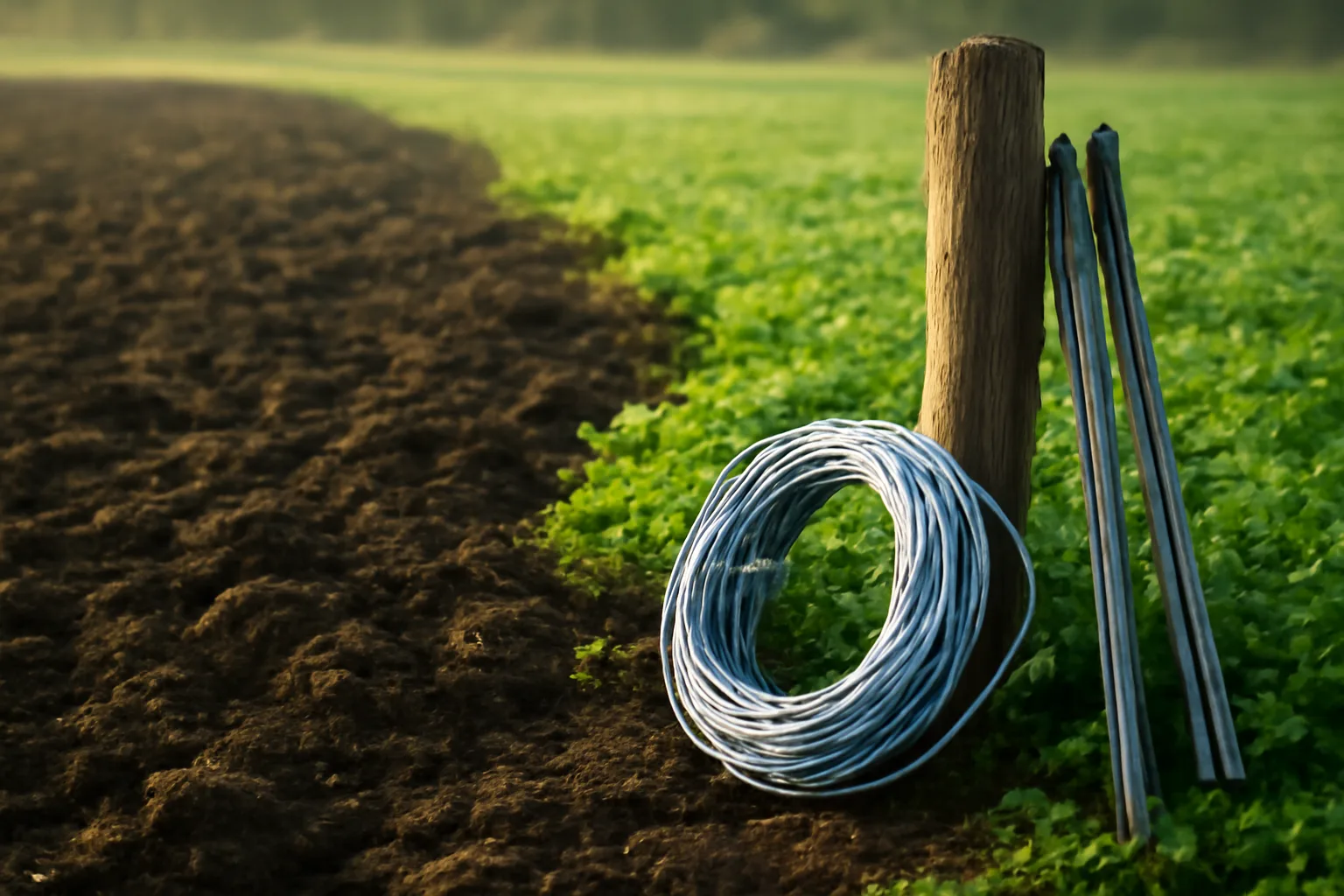
The most reliable fix is a single-strand electric wire baited with scent lures set 8-10 inches off the ground around the plot perimeter, backed by trapping to reduce the local population. Fencing alone slows hogs down; it rarely stops a determined sounder long-term, so most hunters combine a hot wire with corral traps and habitat changes near the plot edge.
how do I keep hogs out of a food plot
There's no single fix that works everywhere, but the combination that actually holds up is a low electric wire around the plot plus ongoing trapping pressure on the local sounder. Hogs root with their snouts low to the ground, so unlike deer fencing, hog fencing works best when the hot wire sits 8 to 10 inches off the ground, not 30. The University of Georgia's wildlife extension program, which has done more field work on hog exclusion fencing than almost anyone, found that a single-strand electric wire baited with a scent attractant along the wire (more than food inside the fence) trains hogs to avoid the whole perimeter after a shock or two [1]. Two wires, one at 8 inches and one at 16 inches, add insurance against smaller pigs squeezing under a single strand. Permanent woven-wire hog panels work too, but they cost real money over any meaningful acreage. For a half-acre plot you're looking at a few hundred dollars in electric fence charger, wire, and step-in posts versus well over a thousand for hog panel on the same footprint. Most food plot guys don't own enough hogs' worth of damage to justify permanent fencing unless the pressure is constant. Fencing buys you time. It doesn't solve the population problem. If hogs are tearing up multiple plots on your property, the honest answer is trapping and shooting pressure, not a better fence.
why do hogs destroy food plots in the first place
Hogs root for grubs, worms, and underground plant parts, and a freshly planted or established food plot with turned soil, tubers, or grain is an easy calorie source. Wild pigs are opportunistic omnivores, and their rooting behavior alone can flip several inches of topsoil in a single night, destroying germinating seed or mature plants in the process. The USDA's National Feral Swine Damage Management Program estimates feral hogs cause roughly $2.5 billion in agricultural damage annually across the country, and food plots get hit for the same reason row crops do: turned soil, seed, and tubers are calorie-dense and easy to access [2]. Turnips, soybeans, corn, and peanuts draw hogs harder than clover or grass-type plots, simply because there's more digestible energy underground or in the seed itself. Sounders (family groups of hogs) also return to productive sites repeatedly once they find them. That's why a single night of damage often turns into a season-long problem if you don't intervene early.
does electric fencing actually work on hogs
Yes, but only if it's built for hogs, not deer. A fence sized for whitetails (wire up around 30 inches) does nothing to stop an animal that's 18 inches tall at the shoulder and used to pushing through brush. Extension research out of the University of Georgia and Mississippi State's Extension Service both point to a single hot wire at 8 to 10 inches as the baseline effective height, with scent-baited wire (peanut butter, bacon grease, or a manufactured hog lure smeared directly on the wire) increasing effectiveness because it forces the hog's nose onto the wire on first contact [1] [3]. A second wire around 16 inches catches larger hogs that might try to step over the first one. Solar chargers in the 0.5 to 2 joule range handle most food plot perimeters under an acre. For anything approaching several acres, or for permanent problem areas, a plug-in charger with more output is worth the extra cost. One real limitation: electric fence needs maintenance. Grass and weeds grounding out the wire is the number one reason hog fences fail in the field, according to extension trapping guides, so plan on a string trimmer pass along the fence line every couple of weeks during the growing season [3].
do traps work better than fencing for hog control
For actually reducing hog numbers, yes. Fencing protects one plot. Trapping removes animals from the landscape. Corral traps with a saloon-door or rooter-door design, baited over several days to get the whole sounder comfortable feeding inside before the trap is set to catch, are the standard recommended by most state wildlife agencies and USDA Wildlife Services field guides. The goal is whole-sounder removal in one trigger event, because catching one or two hogs out of a group just trains the survivors to avoid traps going forward. Many states now allow or actively encourage year-round hog trapping and shooting because feral swine have no closed season protections the way game species do. Check your state wildlife agency's regulations directly, since rules on trapping, night shooting, and transport of live hogs vary a lot state to state and some states require permits or reporting. If you don't want to run a trap program yourself, some state agencies or agricultural extension offices offer cost-share trap loan programs. It's worth a call before you buy equipment.
what food plot crops attract hogs the most
Turnips, soybeans, corn, and peanuts are the biggest hog magnets in the food plot world, mostly because of underground tubers or high-starch seed. Clover and cereal grains draw less hog pressure, though nothing is truly hog-proof once a sounder is hungry and a plot is nearby. If hog damage is a known, recurring problem on a property, it's worth weighting plot design toward less attractive species for at least part of the rotation, while still planting what deer need. This is one of the areas where a written plan pays off, because balancing hog-resistance against deer preference across multiple plots takes some actual planning rather than guessing. A Custom Food Plot Plan from PlotSeason factors in known hog pressure alongside soil test results and regional planting windows when building out a seed rotation, though your soil test lab remains the final word on lime and fertilizer recommendations for your specific ground. Brassicas like turnips are a particular problem because the below-ground bulb is exactly the kind of food hogs root for.
what is a food plot and why does hog damage matter so much
A food plot is a planted area, usually somewhere between a quarter acre and several acres, seeded with forage or grain specifically to feed and attract deer and other wildlife on hunting land. Most food plots use annual or perennial mixes like clover, brassicas, cereal grains, or soybeans, chosen based on soil type, region, and season. Hog damage matters because a plot that took real money and labor to establish, lime, fertilize, and plant can get rooted into a moonscape in a single night. Extension agronomists routinely note that hog rooting doesn't just eat the crop, it disturbs soil structure and buries seed too deep to germinate, meaning replanting costs stack on top of the original investment [4]. For background on plot types and how to match species to your ground, see food plot whitetail and deer food plots.
do deer eat sorghum
Yes, deer will eat grain sorghum, especially the seed heads late in the season, but it's not a top preference forage compared to legumes or brassicas. Sorghum is more commonly planted as a screening or standing grain crop that also feeds deer and turkey through winter once the seed heads mature and drop. Cooperative extension guides on wildlife food plots generally rank sorghum below soybeans, clover, and brassicas for deer attraction, but it holds up well agronomically in drought-prone or sandy soils where other options struggle [5]. If you're planting sorghum mainly for cover and secondary food, that's a reasonable use. If you're expecting it to pull deer the way clover does in early fall, you'll be disappointed.
do deer eat clover and do deer like clover
Yes, deer eat clover readily, and it's one of the most consistently preferred food plot forages available. Clover is a perennial legume, meaning a well-established stand can produce forage for three to five years before needing to be replanted, and it holds up under repeated grazing better than most annuals. Whitetail research and extension forage trials consistently list clover among the top-tier preferred forages, competitive with or ahead of soybeans and alfalfa depending on the study and region [4]. Clover also has crude protein levels commonly in the 20 to 30 percent range depending on variety, soil fertility, and maturity, which matters for antler growth and lactation in does. For seed selection specifics, deer food plot seed and food plot seed both cover clover varieties in more depth.
when to plant deer food plots, oats, and turnips
| Spring/summer annuals (soybeans, cowpeas) | Late April through June | After last frost, soil temps above 60°F | |
|---|---|---|---|
| Perennial clover | Late summer or early spring | Fall planting often outcompetes weeds better | |
| Oats (fall plot) | Late August through September | Northern zones plant earlier than Southern | |
| Brassicas/turnips | Late July through August | Needs 90-100 days before first hard frost | Oats specifically are a fall annual in most whitetail regions, planted roughly 60 to 90 days before your area's average first frost so they establish enough leaf growth before cold slows them down. Turnips need a similar runway, generally 80 to 100 days from planting to the point where the bulb has matured and sweetened up after a frost, since cold temperatures convert starches to sugars and make the bulbs more palatable to deer. Your state's land-grant extension office publishes region-specific planting date charts, and those are more reliable than a national rule of thumb because frost dates alone can shift planting windows by four to six weeks between northern and southern whitetail range [5]. |
Timing depends heavily on region and whether you're planting a spring/summer plot or a fall plot, so there isn't one national planting date. As a general framework used across most cooperative extension guidance: | Crop/plot type | Typical planting window | Region note |
what are deer's favorite food and do deer like honey
There's no single universal favorite, but soybeans, clover, and acorns consistently rank at or near the top across regional deer forage studies, largely because of their protein and fat content relative to grasses and browse. Acorns in particular are heavily preferred in fall due to their fat content, which matters for deer building fat reserves before winter. Deer do not eat honey in any meaningful sense as part of natural foraging behavior. There's no established wildlife research supporting honey as a deer attractant, and it isn't a recognized food plot or bait product in extension literature. If you're seeing this searched, it's likely confusion with commercial deer attractant products that use sweet scents or molasses-based additives, which is a different thing from raw honey. Molasses and sugar-based liquid attractants do show up in scouting and mock scrape products, but that's marketing chemistry, not a documented dietary preference.
do hog exclusion methods hurt deer access to the plot
A properly built hog fence at 8 to 10 inches with a single or double wire generally does not stop deer, since deer step over low wire without much trouble and don't root at ground level the way hogs do. The bigger risk is over-fencing, meaning adding taller or denser fencing meant to keep everything out, which can start restricting deer entry points too. If you're fencing a plot specifically for hog exclusion, keep gaps or gate points wide enough that deer traffic patterns aren't funneled into predictable ambush points by predators, and be mindful that concentrated deer movement through narrow fence gaps can also increase disease transmission risk in areas with chronic wasting disease concerns. Check with your state wildlife agency on any regulations around fencing wildlife habitat, since some states regulate fencing height or type on certain land classifications.
are there state rules on baiting or trapping hogs I need to check first
Yes, and they vary a lot. Baiting rules that apply to deer hunting (many states restrict or ban baiting for deer) do not always apply the same way to feral hog control, but some states regulate hog trapping, transport of live hogs, and night hunting methods separately and specifically. Because feral hogs are classified differently than game species in most states (often as invasive or nuisance wildlife rather than protected game), the legal framework for trapping and removal is usually more permissive than deer regulations, but it is not universal. Some states require a permit to trap hogs, some prohibit relocating live-trapped hogs entirely due to disease spread concerns (feral hogs can carry pseudorabies and swine brucellosis), and states differ on whether night hunting or thermal optics are legal for hog control specifically. Call or check your state wildlife agency's feral swine page directly before setting traps or baiting sites. This is genuinely one of those situations where the rule in the next state over can be completely different.
what's the realistic cost and effort to protect a plot from hogs
For a half-acre to one-acre plot, a basic single-wire electric fence setup (solar charger, step-in posts, polywire, ground rods) typically runs a few hundred dollars in materials, plus your own labor to install and maintain it through the season. That's a real number, not a guess: solar chargers in the sub-1-joule range commonly retail in the $60 to $150 range, step-in posts run $1 to $3 each, and you'll need one every 15 to 20 feet around the perimeter. Trapping costs more in time than money if you build your own corral trap, but commercial hog trap systems with remote-triggered gates run anywhere from a few hundred dollars for a basic panel trap to well over a thousand for a full remote-camera trigger system. The honest tradeoff: fencing is a recurring seasonal cost and maintenance chore that protects one plot. Trapping is a bigger upfront time investment that actually reduces the number of hogs causing damage across your whole property. Most serious hog-pressure properties end up doing both.
Frequently asked questions
Do deer eat sorghum in food plots?
Yes, deer eat grain sorghum, particularly the seed heads once they mature in fall and winter, but it ranks below clover, soybeans, and brassicas as a preferred forage. It's more often planted for its drought tolerance and screening value, with deer feeding as a secondary benefit rather than the primary reason to plant it.
Do deer like clover more than other food plot options?
Clover consistently ranks among the top preferred forages in extension forage trials, often competitive with soybeans and alfalfa. It's also a perennial, so a well-maintained stand can produce forage for three to five years, making it one of the most cost-effective long-term plantings for a property.
When is the best time to plant food plots for deer?
It depends on whether you're planting spring/summer annuals (roughly late April through June, after your last frost) or fall plots like clover, oats, or brassicas (typically late July through September, timed 60 to 100 days before your area's first hard frost). Your state land-grant extension office publishes region-specific planting calendars that are more precise than a national rule.
When should I plant oats for deer food plots?
Oats are typically planted 60 to 90 days before your region's average first frost date, so roughly late August through September in most whitetail range, earlier in northern zones and later in the South. This gives the oats enough time to establish leaf growth before cold weather slows growth.
When should I plant turnips for deer?
Turnips need about 80 to 100 days from planting to bulb maturity, so most guides recommend planting in late July through August depending on your first frost date. Frost actually improves palatability, since cold converts starches in the bulb to sugars that deer prefer.
What is a food plot exactly?
A food plot is a planted area, usually a quarter acre to several acres, seeded with forage or grain crops specifically to feed and attract deer and other wildlife on hunting property. Common plantings include clover, brassicas, cereal grains, and soybeans, chosen based on soil, region, and season.
What are deer's favorite foods overall?
Soybeans, clover, and acorns consistently rank at or near the top in regional deer forage studies, largely due to protein and fat content. Acorns are especially preferred in fall because their fat content helps deer build reserves before winter.
Do deer like honey as a food or attractant?
No, there's no established wildlife research showing deer eat honey as part of natural foraging, and it isn't a recognized food plot ingredient. Confusion likely stems from commercial molasses or sugar-based liquid deer attractants, which are a different product entirely from raw honey.
What height should electric fence wire be to keep hogs out?
University of Georgia extension research points to a single hot wire at 8 to 10 inches off the ground as the baseline effective height for hog exclusion, since hogs root and move at ground level. A second wire around 16 inches adds protection against larger hogs stepping over a single strand.
Will a regular deer fence keep hogs out of a food plot?
No. Deer fencing is typically built tall (several feet) to stop jumping, but hogs go under or through low gaps rather than over fences. A fence sized for deer usually leaves plenty of ground-level access for a hog to push through or root beneath.
Is trapping or shooting more effective for controlling hog damage long-term?
Whole-sounder trapping with a corral trap is generally considered more effective long-term than shooting individual hogs, because shooting one or two animals out of a group often just scatters and educates the survivors. Most state wildlife agencies and USDA Wildlife Services materials recommend trapping the entire family group in one event when possible.
Do I need a permit to trap feral hogs on my land?
It depends entirely on your state. Some states allow trapping with no permit required, others require registration, reporting, or specific trap designs, and rules on transporting live-trapped hogs vary significantly due to disease concerns. Check your state wildlife agency's feral swine regulations directly before setting traps.
Sources
- University of Georgia Extension, wild pig exclusion fencing guidance: single-strand electric wire at 8-10 inches with scent bait is effective for hog exclusion
- USDA APHIS National Feral Swine Damage Management Program: feral hogs cause an estimated $2.5 billion in agricultural damage annually in the US
- Mississippi State University Extension, feral hog trapping and fencing guide: wire grounding out from grass and weeds is a leading cause of hog fence failure
- Mississippi State University Extension, forage and wildlife food plot guidance: clover is among the top-preferred deer forages and rooting damage disturbs soil structure
- University of Tennessee Extension, wildlife food plot planting guide: regional planting date windows for sorghum, oats, and brassica food plots vary by frost date