Last updated 2026-07-26
TL;DR
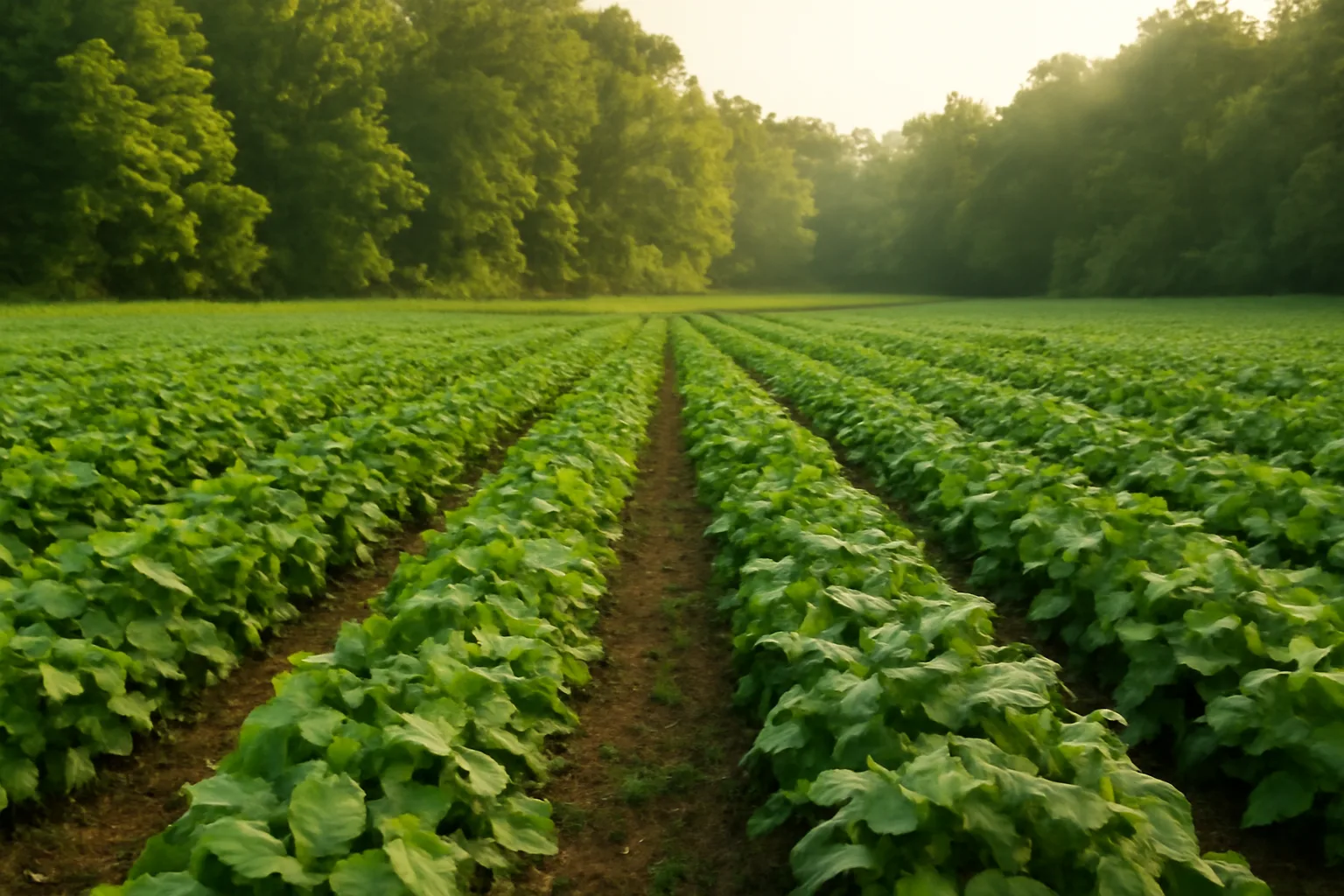
A good summer food plot for deer is a warm-season legume or annual planted after your last frost date, usually soybeans, cowpeas, lablab, or a sorghum/sunn hemp mix. These give deer high-protein forage through the stress months of summer when antlers and fawns need it most, roughly May through August depending on your zone.
What is a food plot, exactly?
A food plot is a planted patch of forage on hunting land meant to feed and hold deer, not a lawn and not a garden. Most run somewhere between a quarter acre and a few acres, though plenty of good ones are smaller. The idea is simple: give deer something better than what the surrounding woods or ag fields offer, at the time of year they need it most. Summer plots do a different job than fall plots. A fall plot (brassicas, cereal grains) is built to pull deer in during hunting season with high-carb, cold-tolerant forage. A summer plot is built for nutrition, not attraction, because in most states you can't hunt over it in July anyway. It's feeding does through lactation and bucks through antler growth, which is a protein-hungry process. Research on white-tailed deer nutrition has generally found that diets need to run in the 16 to 20 percent crude protein range for bucks to reach their genetic potential in antler growth, a figure widely cited in deer nutrition literature and extension guidance [1]. So when someone asks what a good summer plot is, the honest answer is: it's whatever legume or warm-season annual your soil and climate will grow well, that hits that protein window and holds up to grazing pressure without getting mowed to dirt by July 4th.
When to plant food plots for deer (by season)
| Summer annuals | After last frost, soil 60-65°F | soybeans, cowpeas, lablab, sunn hemp | |
|---|---|---|---|
| Fall brassicas | Late July to early August | turnips, radish, rape | |
| Fall cereal grains | August to mid-September | oats, wheat, rye | |
| Perennial clover | Spring OR late summer | white clover, red clover | For a full breakdown by region, our seasonal calendars hub has zone-specific windows, but the frost-date rule above covers 90 percent of the decision for summer plantings. |
Timing is the single most-missed variable in food plot success, more than seed choice or even soil fertility. Plant too early and a frost kills your beans. Plant too late and deer eat seedlings faster than they can grow. For summer plots specifically, the rule is: plant after your last expected frost date, once soil temps hit 60 to 65 degrees F consistently. In the Deep South that might be late March or April. In the upper Midwest and Northeast, it's often mid-May to early June. Your local NOAA climate normals or your state extension office's frost date tables are the most reliable source for this, since 'last frost' varies by 6 to 8 weeks across whitetail range [2]. Here's a rough seasonal cheat sheet: | Plot type | Planting window | Examples |
Do deer like clover, and is it good for summer?
Yes, deer like clover a lot, and it's arguably the best all-around forage in the food plot world. White clover and red clover are both palatable, high in protein, and deer hit them hard spring through fall. Extension forage testing on white clover typically shows crude protein in the 25 to 30 percent range in leaf tissue depending on growth stage and fertility, which is part of why clover shows up in nearly every wildlife plot recommendation list [3]. The catch: clover is a perennial that's best established in spring or late summer, not a true 'summer annual' you plant fresh every year. Once it's in the ground and mature, though, it keeps producing through summer heat better than most annuals, as long as it gets enough moisture and isn't shaded out by weeds. In droughty years clover can go dormant and brown out, which is where warm-season annuals like cowpeas earn their keep as a backup or companion plot. A lot of experienced plotters run clover as their perennial base plot and add a summer annual plot alongside it. That way if one struggles with weather or grazing pressure, the other picks up slack. Clover also handles some grazing pressure better than a thin stand of beans, since it's a low-growing forage that regenerates from the crown.
Do deer eat soybeans and cowpeas better than anything else?
Soybeans and cowpeas are the two most common 'best' answers you'll hear for summer plots, and for good reason. Both are legumes, meaning they fix nitrogen in the soil and don't need heavy nitrogen fertilizer, and both commonly test above 20 percent crude protein in the leaf and pod stage [4]. Soybeans need more acreage to survive browsing. A quarter-acre bean plot next to timber with a heavy deer herd can get grazed to nothing before it ever gets tall enough to canopy over. Extension guidance generally recommends larger plantings, often several acres, in areas with high deer density if you want pods to mature for fall use, though smaller plots work fine as pure summer forage if you accept they may get grazed hard and not produce grain [5]. Cowpeas (also called iron-clay peas) tolerate heat and poor soil better than beans and germinate faster, so they're often a smarter choice for small plots or first-time planters. Lablab is a third strong option. It's a vining legume that's more drought-tolerant and, in a lot of Southern trials, holds up to grazing pressure longer than soybeans because it keeps producing new leaves from the vine.
Do deer eat sorghum?
Yes, deer eat sorghum, both the forage leaves and, later in the season, the grain heads. Sorghum (grain sorghum or forage sorghum) isn't usually a standalone summer plot star on its own, but it earns a spot as a component of summer blends for a specific reason: it's drought-tolerant and grows tall fast, giving deer some cover within the plot itself while the legumes underneath it get established. A lot of commercial summer blends pair sorghum or sunn hemp with cowpeas and soybeans for exactly this reason. The sorghum acts as a nurse crop and structural component, while the legumes carry the protein load. On its own, sorghum runs lower protein than a legume, generally in the 8 to 12 percent range depending on growth stage and variety, so don't expect it to replace beans or peas as your main nutrition source. Forage quality tables from land-grant agronomy programs consistently place grain sorghum forage well below soybean or cowpea forage in crude protein content [6]. If you're in a hot, dry region with sandy or marginal soil where beans struggle, a sorghum-cowpea mix is a reasonable fallback plan.
When to plant oats for deer (and are oats a summer plot?)
Oats are not a summer plot crop. They're a cool-season cereal grain best planted in late summer to early fall, typically August through mid-September depending on your zone, so they mature into the cooler weeks of fall when deer are keying in on carbs ahead of winter. Oats germinate fast, often within a week, and deer hit young oat shoots hard, which makes them a popular annual for fall attraction plots, frequently mixed with brassicas or clover. Planting oats in June or July in most of the country is a waste of seed. Heat stresses them, and they'll bolt or die before doing any good. If you're planning a full-year rotation, think of it this way: summer plot goes in after last frost (beans, peas, lablab), then that same ground often gets flipped to oats, wheat, or a brassica blend in August for the fall season. That's a productive two-crop rotation a lot of plotters run on their better ground.
When to plant turnips for deer
Turnips, like oats, are a fall crop, not summer. The standard planting window is late July through mid-August in most of whitetail range, timed so the bulbs and leaves mature by the time frost sweetens them up in October and November [7]. Turnips need roughly 80 to 90 days to reach full bulb size, and a hard frost actually improves palatability by converting starches to sugars in the leaves and bulb. Deer often ignore turnip bulbs early in fall and then switch hard to digging them up once the ground cools, which is why turnip plots seem 'ignored' in September and get hammered in December. Planting turnips in June puts them on a collision course with summer heat and, more practically, with a maturity date that's way too early. They'll bolt to seed and get woody before the season you actually want them for. Stick to the late-July to mid-August window your regional extension office recommends for your zone.
What are deer's favorite foods overall?
There's no single universal answer since it shifts by season, region, and what's available naturally. But wildlife agencies and extension researchers generally point to a short list of consistent favorites: white clover, soybeans, acorns (especially white oak), and native forbs and browse rank near the top across most of whitetail range. Agricultural crops like corn and soybeans, where legally available and not planted as bait, get hit hard too, which is part of why ag-heavy areas often support higher deer densities. Seasonally, deer preference tracks nutrition needs. Spring and summer, they favor high-protein forbs, legumes, and new woody browse. Fall, they shift hard toward carbohydrate-dense foods like acorns and standing corn to build fat reserves. Winter, in the North especially, they'll browse woody stems and anything green they can find, since options narrow fast. If you're building a property plan and want the closest thing to a 'favorite food list' tailored to your specific woods, soil, and region, that's really a site-specific question rather than a national one. That's the exact gap a Custom Food Plot Plan is built to fill, a $99 one-time plan that maps species choice and timing to your actual property instead of a generic list.
Do deer like honey, or is that a myth?
Deer don't seek out honey the way people imagine, but they are drawn to sweet, high-sugar substances in general, which is likely where the honey question comes from. There's no research base showing deer actively forage for honey or honeycomb in the wild, since bees defend hives aggressively and it isn't a natural food source in their diet. What does have some truth to it: deer are drawn to molasses-based mineral licks and sweet feed mixes, which use sugar as an attractant the same way scent companies use sweet lures. If you've seen 'honey' marketed in a deer attractant product, it's almost always working through that same sugar-craving mechanism, not because deer specifically want honey. And a reminder here matters: many states restrict or ban baiting and feeding deer outright, including sweet attractants and mineral supplements in some cases, so check your state wildlife agency's regulations before using any attractant, mineral lick, or supplemental feed. Rules vary a lot state to state and even county to county in a few places .
What's the best summer food plot mix, if you had to pick one?
If someone put a gun to my head and said pick one summer plot for an average whitetail property, I'd go with a cowpea and soybean mix, maybe with a little sunn hemp or forage sorghum thrown in for structure. It's forgiving of mediocre soil, fixes its own nitrogen, hits the protein numbers that matter for antler growth and lactation, and tolerates grazing pressure better than beans alone. Lablab is my second pick, especially in the South, where its drought tolerance and vining regrowth habit shine in July and August heat. Straight soybeans are great but need real acreage to survive to maturity, so they're not the right call for a half-acre plot tucked in the timber. Whatever you land on, get a soil test before you plant anything. Your soil test lab's recommendations on lime and fertilizer are the real authority here, since pH and phosphorus levels vary wildly plot to plot and no article can tell you your exact lime rate. A basic soil test through your county extension office, often in the $10 to $20 range depending on your state lab, will save you more money in wasted fertilizer than it costs . For help translating a soil test and picking species for your specific ground, our plot plan builder walks through it for $99, one time, no subscription.
How much land do you need for a summer food plot?
There's no hard minimum, but there are practical thresholds tied to deer density and browsing pressure. A quarter-acre plot of pure soybeans in a high-density area can get eaten to stubble in two to three weeks, never reaching maturity. The same quarter acre of cowpeas or lablab, being more grazing-tolerant, often survives better at that size. General extension guidance for pure soybean or corn plots intended to reach maturity (grain production, more than summer forage) points toward several acres minimum in moderate-to-high deer density regions, specifically because smaller plots get overgrazed before they can produce seed [5]. If your goal is pure summer forage rather than a fall food source, smaller plots (a half acre to an acre) of a hardy legume blend work fine. You're just accepting some of it gets grazed hard rather than reaching full maturity. More useful than a blanket acreage number: watch your first plot closely. If deer are mowing new growth down to an inch within days of germination, that's your density signal telling you to go bigger, fence part of it to let some mature for seed, or switch to a tougher species like cowpeas or lablab.
Frequently asked questions
Do deer eat sorghum?
Yes. Deer eat sorghum leaves and grain heads, though it runs lower in protein (roughly 8-12%) than legumes like soybeans or cowpeas. It's most useful as a drought-tolerant nurse crop mixed with legumes in hot, dry regions rather than a standalone summer plot.
Do deer eat clover?
Yes, and clover is one of the most consistently preferred forages across whitetail range. White and red clover run 25-30% crude protein in leaf tissue and deer graze them spring through fall, making clover a strong perennial base plot alongside summer annuals.
When should I plant food plots for deer?
It depends on the plot type. Summer annuals (soybeans, cowpeas, lablab) go in after your last frost date, usually April in the South to early June in the North. Fall brassicas plant late July to mid-August, and cereal grains like oats or wheat go in August to mid-September.
Do deer like clover more than other food plot options?
Deer show strong, consistent preference for clover, but 'more than other options' depends on season and region. In summer heat, drought-tolerant legumes like cowpeas or lablab sometimes outperform clover if rainfall is inconsistent, since clover can go dormant in dry conditions.
When should I plant oats for deer?
Plant oats in late summer to early fall, typically August through mid-September, so they mature into cooler fall weather. Oats are a cool-season cereal grain, not a summer crop, and planting them in June or July usually fails due to heat stress.
When should I plant turnips for deer?
Turnips go in late July through mid-August in most of whitetail range. They need 80-90 days to bulb properly and taste better to deer after a frost converts starches to sugar, which is why turnip plots often get ignored in early fall and hammered in December.
What is a food plot, in simple terms?
A food plot is a planted patch of forage, usually a quarter acre to a few acres, meant to feed deer and sometimes hold them near a hunting stand. It's different from a garden or lawn; species and timing are chosen specifically around deer nutrition needs and hunting season timing.
What are deer's favorite foods?
White clover, soybeans, acorns (especially white oak), and native forbs and browse rank consistently high across most whitetail range, though actual preference shifts by season and region. In fall, deer favor carb-dense foods like acorns and corn; in summer, they favor high-protein legumes and forbs.
Do deer like honey?
Not specifically. Deer aren't documented seeking out honey in the wild, and bees defend hives too aggressively for it to be a real food source. Deer do respond to sugar-based attractants like molasses mixes, which is likely where the honey association comes from.
What is the best summer food plot for deer?
A cowpea and soybean mix, sometimes with lablab or sunn hemp added, is a strong all-around choice. It fixes its own nitrogen, hits the 16-20% protein range bucks need for antler growth, and tolerates grazing pressure better than soybeans planted alone in a small plot.
How big should a summer food plot be?
For pure soybeans meant to reach grain maturity, extension guidance points toward several acres minimum in moderate-to-high deer density areas. For hardier legumes like cowpeas or lablab used purely as summer forage, a half acre to an acre can work, though expect heavier grazing pressure on smaller plots.
Can I plant a summer plot and a fall plot on the same ground?
Yes, and a lot of plotters run exactly this rotation. Plant soybeans or cowpeas after last frost for summer, then in August terminate or till that plot and plant oats, wheat, or a brassica blend for fall. It's an efficient way to use one plot year-round.
Sources
- Jacobson, H.A., "Deer Nutrition and Antler Development," Mississippi State University research summary via National Deer Association archives: Bucks need diets in roughly the 16-20% crude protein range to reach full antler growth potential
- NOAA National Centers for Environmental Information, Climate Normals: Last frost dates vary by 6-8 weeks across whitetail range, determining summer plot planting windows
- USDA Natural Resources Conservation Service, Plant Guide: White Clover (Trifolium repens): White clover forage tests high in crude protein and is a preferred wildlife forage species
- Oklahoma State University Extension, Cowpea Production: Cowpeas and soybeans provide high crude protein forage for deer and livestock in summer
- Kansas State University Research and Extension, Forage Sorghum Quality and Management: Sorghum forage runs lower crude protein than legumes, generally in the single digits to low teens depending on growth stage
- Oklahoma State University Extension, Oat Production Guide: Oats are a cool-season cereal grain planted in late summer to early fall for fall food plots
- University of Missouri Extension, "Soil Testing for Lawns, Gardens, and Wildlife Food Plots" (Soil Testing Guide, G9110): Soil testing before planting helps determine accurate lime and fertilizer needs and avoid waste