Last updated 2026-07-26
TL;DR
A deer food plot is a small planted field, usually clover, brassicas, or grain, seeded specifically to feed and attract deer on hunting or wildlife land. Plots typically run from a quarter acre to several acres, get planted spring (clover, warm-season blends) or late summer (brassicas, cereal grains), and depend heavily on soil pH and fertility, which is why a soil test matters more than seed choice.
what is a food plot, exactly?
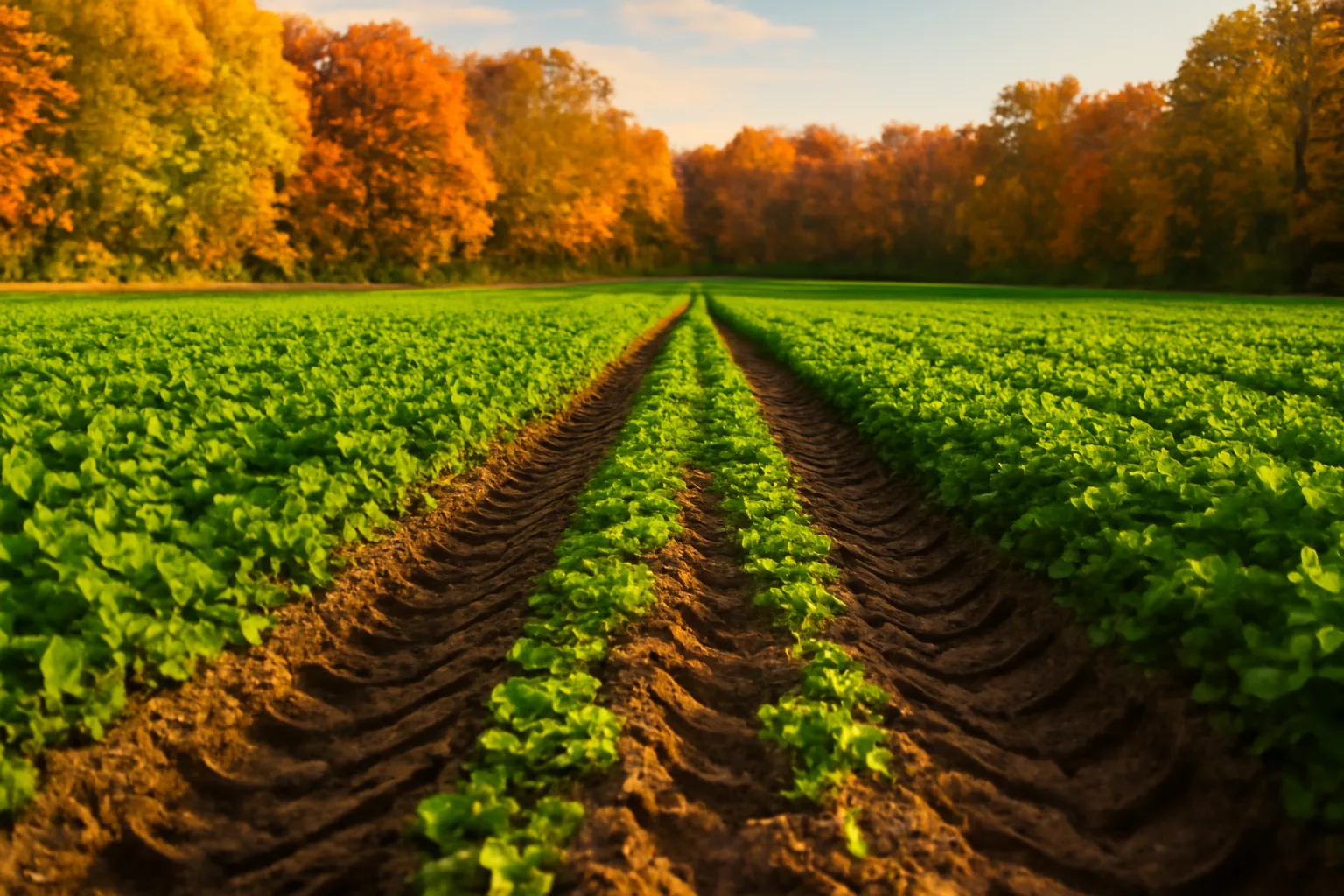
A food plot is a planted patch of ground, usually somewhere between a quarter acre and five acres, seeded with something deer want to eat. That's the whole concept. People plant them on farms, hunting leases, and back-forty parcels to supplement natural browse, hold deer on a property longer, and give hunters a predictable place to watch or hunt near. It's not complicated agronomy dressed up in hunting language. A food plot is functionally a small crop field, planted with a mower, a disc or no-till drill, some lime and fertilizer, and seed picked for deer instead of for market. The USDA's National Agroforestry Center notes that wildlife food plots are commonly used as a wildlife management tool to supplement natural forage availability, particularly in areas where agricultural row crops are scarce. Most plots fall into two rough categories: perennial plots (clover, alfalfa, chicory) that you plant once and maintain for two to four years, and annual plots (brassicas, cereal grains, soybeans) that get replanted every year, often on a spring/fall rotation. Neither is objectively better. They serve different jobs, and a lot of serious plotters run both on the same property.
do deer like clover, and why is it so popular?
Yes. Clover is probably the single most planted food plot forage in North America. It's high in protein (often 20-25% crude protein in good stands), it regrows after grazing, and it's available spring through fall in most zones. White clover varieties like Durana and Ladino are the backbone of countless perennial plots. Deer favor clover because it's tender, digestible, and consistently available when other browse is stemmy or gone. The USDA Natural Resources Conservation Service lists white clover as a preferred wildlife forage species with high palatability and protein value in its plant fact sheets, which matters most during spring green-up and lactation, and again in early fall before rut stress hits [1]. The catch: clover needs decent soil pH (extension guidance generally targets 6.0 to 6.5) and full or near-full sun, and it will not tolerate standing water or heavy shade. If your soil test comes back at 5.2, don't expect clover to perform. Get lime down first. This is the single most common failure point in plots: people skip the soil test, plant clover in acidic dirt, and wonder why it thins out by year two.
when should you plant food plots for deer?
| Deep South (zone 8-9) | March-April | Sept-Oct | |
|---|---|---|---|
| Mid-South / transition | April-May | Aug-Sept | |
| Upper Midwest / North | May-June | late July-mid Aug | This is a starting point, not gospel. Local frost dates, rainfall patterns, and soil moisture matter more than a calendar. Land-grant extension offices publish planting date guidance by county, and it's worth checking yours before you buy seed. For a broader breakdown by region, see the food plot whitetail planning guide. |
Timing depends on your zone and what you're planting, but there are two main windows almost everywhere in the whitetail's range: spring (April through June) for warm-season plots and clover establishment, and late summer (mid-July through early September) for fall annuals like brassicas and cereal grains. Southern states can plant fall brassicas and cereal grains later, sometimes into early October, because frost comes later. Northern and Upper Midwest states need to get brassicas in by early-to-mid August so the plants have enough growing season before a hard frost, since frost actually sweetens brassicas by converting starches to sugars. Here's a rough framework: | Region | Spring plot window | Fall plot window |
when to plant oats for deer
Oats go in as a fall annual, typically 60 to 90 days before your area's average first frost. For most of the whitetail's range, that lands somewhere between mid-August and mid-September. Oats germinate fast, often within 5 to 7 days in good moisture, and they green up quickly, which makes them a favorite for early-season attraction plots. Oats are cold-tolerant but not indestructible. They'll survive light frosts and keep growing into the 20s F, but a hard freeze in the teens will usually kill them off, unlike winter wheat or triticale, which push through much colder temps. That's why a lot of plotters mix oats with wheat or rye: oats give you fast, attractive early growth, and the wheat or rye carries the plot through winter after the oats die back. Soil-wise, oats aren't picky. They tolerate a pH down toward 5.5 to 6.0 reasonably well compared to clover or alfalfa, which is one reason they're a common first-year planting on ground that hasn't been limed yet.
when to plant turnips for deer
Turnips, like other brassicas, are planted in late summer, generally 80 to 100 days before your first expected hard frost. In practice that's late July through mid-August for northern states, and mid-August into early September for the transition zone and parts of the South. Turnips need that lead time because deer often ignore the tops early in the season and don't hit them hard until after a frost or two sweetens the leaves and bulbs. If you plant too late, you get small plants and no bulb development, which wastes the whole point of planting turnips in the first place. A seeding rate of roughly 4 to 6 lbs per acre for pure turnip stands is typical, and turnips are frequently blended with other brassicas like radish or rape, plus a cereal grain, to spread out the browse pressure and extend the plot's usefulness from October through February in many areas. Extension guidance from land-grant universities on brassica forage plantings generally recommends planting 80 to 100 days before the first killing frost to allow full bulb and leaf development [2].
do deer eat sorghum?
Yes, but it's more of a secondary or filler crop than a top-tier attractant. Grain sorghum produces a seed head deer will eat, especially in fall and winter when other food sources thin out, and it's also used as a screening or cover crop because it grows tall and dense. Sorghum's real value in a plot mix is often structural rather than nutritional: it gives you standing cover, breaks wind, and can be planted alongside soybeans or cowpeas to give those more palatable legumes something to climb and some protection from over-browsing while young. Deer will eat the leaves and grain, but sorghum doesn't rank with clover, soybeans, or brassicas as a primary draw in most feeding studies. If you're choosing between sorghum and a cereal grain like oats or wheat for a fall food plot, oats and wheat are generally the better standalone choice for deer attraction. Sorghum earns its spot as a mixed-in component, not the headline crop.
what are deer's favorite foods overall?
There's no single universal answer because it shifts by season and region, but research and field data point to a consistent short list: acorns, soybeans, clover, and agricultural crops like corn dominate deer diets where available. Acorns are frequently cited as the preferred fall food when available, because of their high fat content, which deer need heading into winter. Regional deer research programs at land-grant universities have documented deer diets shifting heavily toward acorns during fall mast years, sometimes making up a large share of stomach content when hard mast is abundant. In a planted-food-plot context specifically, soybeans (as a forage during summer), clover (spring through fall), and brassicas (late fall through winter) are the three most commonly recommended staples because they cover three different seasonal windows. State wildlife agencies frequently publish deer diet studies; check your own state fish and wildlife agency's deer management pages for regional specifics, since diet composition varies quite a bit between, say, the Southeast's mast-heavy forests and the Midwest's row-crop-dominated landscape.
do deer like honey?
This one comes up because of "honey hole" branded attractant products and mineral licks marketed with honey or molasses scent, but there's no real evidence deer seek out honey itself the way they seek out browse, mast, or forbs. Deer are not pollinator-adjacent foragers, and honey isn't part of any natural whitetail diet study we're aware of. What's actually going on with a lot of these products is sugar and scent attraction, similar to why molasses-based mineral licks work: deer, like most mammals, are drawn to sweet, calorie-dense substances, and molasses or sugar-based liquids poured on soil or added to mineral mixes can pull deer in for a lick session. That's a mineral/attractant strategy, not a food plot strategy, and it's worth checking your state's baiting and feeding regulations before using any liquid attractant, since many states classify sugar-based or scent products as bait under their hunting regulations, and rules vary widely by state. Bottom line: skip honey as a food plot ingredient. It's not a crop you plant, and there's no solid data suggesting deer prioritize it over standard browse.
how big should a food plot be?
Most hunting-property food plots run between a quarter acre and two acres for a hunting/kill plot (small, tucked into cover, designed to draw deer into bow range), and one to five acres or larger for a destination/feeding plot meant to hold deer and provide bulk forage through a season. There's no fixed rule tying acreage to deer density, but a commonly cited rough guideline from wildlife biologists is that food plots should make up somewhere around 1% to 5% of total property acreage to meaningfully supplement natural forage without over-investing in ground that won't get maintained. On a 100-acre property, that's roughly 1 to 5 acres split across multiple smaller plots rather than one giant field. Smaller plots near bedding cover tend to get hunted more effectively because deer feel secure entering them in daylight. Bigger plots out in the open are often better for summer nutrition and fall bulk feeding but get hit mostly after dark once hunting pressure builds.
what do you actually need to plant a food plot?
At minimum: a soil test, lime and fertilizer based on that test, seed suited to your region and sunlight/soil conditions, and some way to prep the seedbed (disc, tiller, or a no-till drill) plus a way to cover the seed (cultipacker, drag, or light disc pass). The soil test is the part people skip and shouldn't. A bag of clover seed costs $15 to $40 depending on size and blend, but planting it into soil at pH 5.0 without lime is close to wasted money since clover struggles below roughly pH 6.0. County extension offices and most land-grant university soil labs run tests for somewhere around $10 to $20 per sample. Land-grant agricultural analytical labs typically charge a standard soil fertility test fee in that range and return lime and fertilizer recommendations tailored to the crop you list on the submission form [3]. They'll tell you exactly how much lime and what fertilizer analysis (like 0-20-20 or a custom blend) your specific plot needs. Equipment scales with plot size. A quarter-acre plot can get planted with a hand seeder, a rake, and a lawn roller. A five-acre plot really wants a tractor, disc, and drill, or at minimum a UTV with a pull-behind seeder and cultipacker. If you're weighing options, the equipment-and-methods side of planning matters as much as seed choice. For seed selection across species, see deer food plot seed and food plot seed.
spring vs fall plots: what's the difference?
Spring plots (clover, chicory, soybeans, alfalfa) are built around summer nutrition: antler growth, lactation, and building fat reserves. Fall plots (brassicas, cereal grains, winter peas) are built around late-season energy and hunting-season attraction, timed to peak in palatability right as hunting season and winter stress hit. A lot of properties run both: a perennial clover field that stays productive spring through fall for three or four years, plus a rotating annual plot that gets brassicas or grain planted fresh each late summer. This two-plot approach spreads your labor and gives deer food across more of the calendar instead of one big push in one season. If you can only manage one plot type, your climate and goals should decide it. Cold Northern climates get more mileage out of fall brassica/grain plots because that's when deer need the calories most and natural browse is buried in snow. Milder Southern climates often lean harder into clover and warm-season plots because winter isn't as brutal and summer nutrition (fawning, antler growth) is the bigger limiting factor.
getting a plan built for your specific ground
General planting calendars and seed guides get you most of the way, but soil type, sun exposure, drainage, and local frost dates all shift the right answer for your specific acreage. If you've already got a soil test in hand and want it turned into an actual seed and fertilizer plan instead of guessing off a regional chart, PlotSeason's $99 one-time Custom Food Plot Plan takes your soil test results, location, and plot goals and turns them into a specific planting plan. To be clear: your soil test lab is still the authority on exact lime and fertilizer rates for your dirt. A plan builds on that data, it doesn't replace it, and nothing here promises deer will show up on a certain day or that you'll fill a tag. Deer behavior depends on weather, hunting pressure, and factors no plot plan controls. For readers still deciding what to plant where, browse deer food plots and domain food plot seed for species-specific breakdowns, or deer for food for a broader look at plot purpose and design.
Frequently asked questions
What is a food plot in simple terms?
A food plot is a small planted area, often a quarter acre to a few acres, seeded with forage like clover, brassicas, or cereal grain specifically to feed and attract deer on hunting or wildlife land. It's essentially a mini agricultural field managed for wildlife instead of market crops.
When is the best time to plant food plots for deer?
Spring (April-June) for clover and warm-season plots, and late summer (mid-July through early September) for fall brassicas and cereal grains, though exact dates shift by region and local first-frost timing. Check your county extension office's planting date guidance for precision.
Do deer eat clover?
Yes, clover is one of the top food plot forages for deer because it's high protein (often 20-25% crude protein) and stays available from spring through fall. It needs soil pH around 6.0-6.5 and full sun to thrive, so a soil test matters before planting.
Do deer eat sorghum?
Yes, deer will eat sorghum grain and leaves, but it's typically used as a secondary crop for cover and structure rather than a primary attractant. Soybeans, clover, and cereal grains generally outperform sorghum as a standalone food plot draw.
When should you plant oats for deer food plots?
Plant oats roughly 60 to 90 days before your area's average first frost, which lands between mid-August and mid-September for most whitetail range. Oats germinate fast (5-7 days) and tolerate moderately acidic soil, but a hard freeze in the teens will usually kill them off.
When should you plant turnips for deer?
Plant turnips 80 to 100 days before your first expected hard frost, generally late July through mid-August in northern areas and mid-August into early September further south. Deer often don't hit turnips hard until after a frost sweetens the leaves and bulbs.
Do deer like clover more than other plot forages?
Clover ranks among the most preferred food plot forages due to high protein content and season-long availability, but preference shifts seasonally; deer favor acorns heavily in fall mast years and soybeans during summer growing periods. No single forage wins in every season.
What are deer's favorite foods in the wild?
Acorns, soybeans, clover, and other agricultural crops top most deer diet studies, with acorns often preferred in fall due to high fat content when mast is available. Preferences shift regionally and seasonally, so check your state wildlife agency's local deer diet data.
Do deer like honey?
There's no solid evidence deer seek out honey as a natural food source. Sugar or molasses-scented attractant products work through sweetness and scent draw, similar to mineral licks, not because honey mimics anything in a deer's natural diet. It's not a food plot crop.
How big does a deer food plot need to be?
Hunting/kill plots typically run a quarter acre to two acres, while destination feeding plots run one to five acres or more. A common guideline suggests food plots total roughly 1% to 5% of total property acreage.
What equipment do you need to plant a food plot?
At minimum you need a soil test, lime/fertilizer, appropriate seed, and a way to prep the seedbed (disc, tiller, or no-till drill) and cover seed (cultipacker or light drag). Small plots can be done with hand tools; larger plots need a tractor and implements or a UTV setup.
Can you plant a food plot without a soil test?
You can, but it's a common way to waste seed money. Extension soil labs typically charge $10 to $20 per sample and tell you exactly how much lime and fertilizer your ground needs, which matters more to plot success than seed choice.
Is a food plot the same as baiting deer?
No, planting a food plot is generally legal everywhere and treated differently from baiting (piling loose feed like corn), but rules on hunting over food plots, mineral sites, and supplemental feeding vary by state. Check your state wildlife agency's regulations before hunting near any planted or supplemental food source.
Sources
- USDA Natural Resources Conservation Service, Plant Fact Sheet: White Clover: White clover is a preferred wildlife forage species with high palatability and protein value
- University of Florida IFAS Extension, Publication SS-AGR-79: Brassica Forages: Brassicas should be planted roughly 80 to 100 days before first killing frost for full bulb and leaf development
- University of Missouri Extension, Soil Testing Guide (Publication G9111): Standard soil fertility testing runs roughly $10-$20 per sample and includes lime/fertilizer recommendations
- PubMed: Diet composition of white-tailed deer during fall mast years: Deer diets shift heavily toward acorns during fall mast years
- USDA NRCS Plant Materials Program, Cover Crop Chart (PDF): Cereal grains and brassicas differ in frost tolerance and cold-season growth habit relevant to fall planting windows