Last updated 2026-07-25
TL;DR
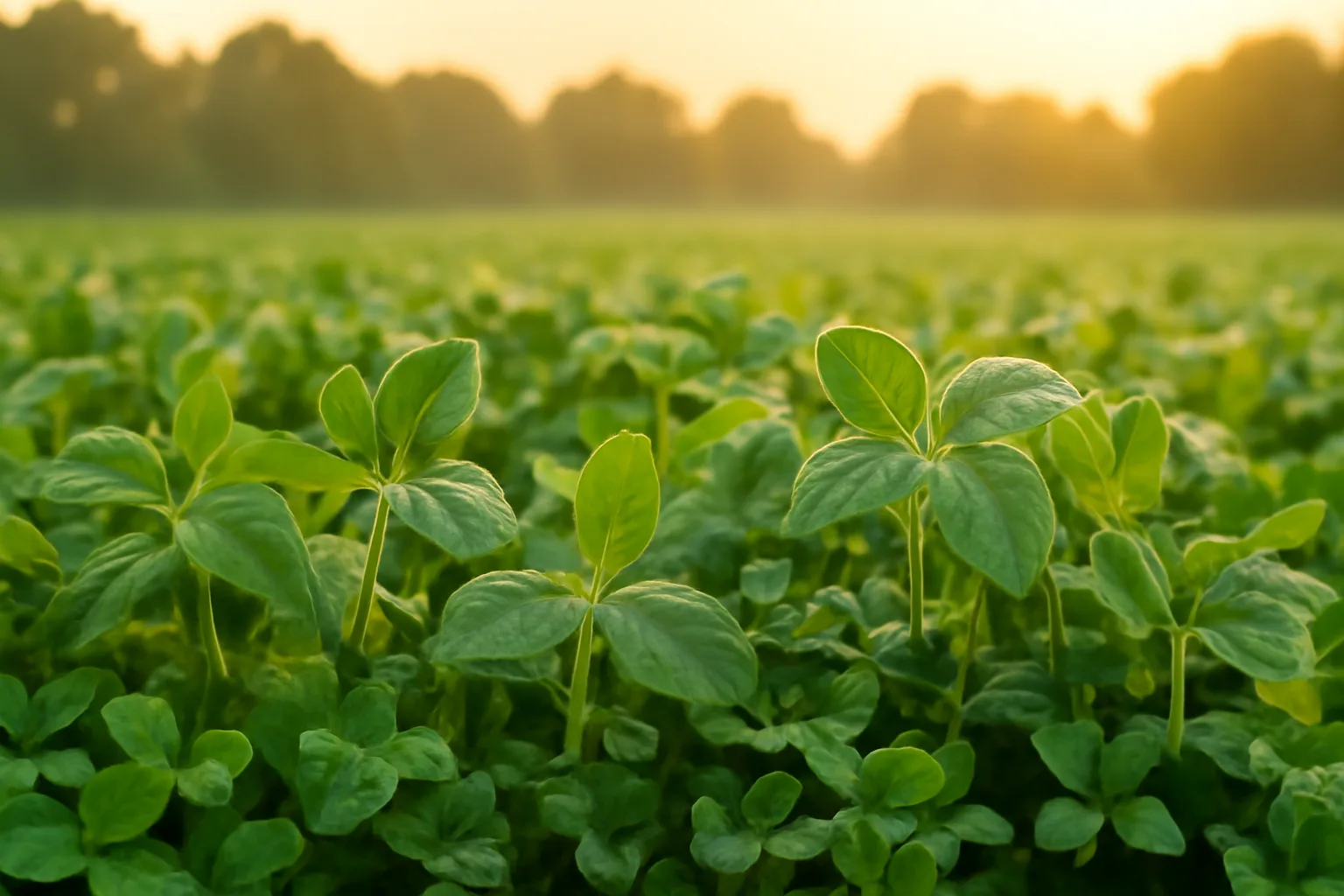
Summer food plots are planted after the last frost, generally May through early July depending on your zone, and focus on high-protein forages like soybeans, cowpeas, and clover to support antler growth and lactating does. They differ from fall plots, which lean on brassicas and cereal grains for late-season energy.
what is a food plot, exactly
A food plot is a planted patch of forage on hunting land, usually somewhere between a quarter acre and a few acres, meant to feed deer and other wildlife while also giving hunters a place to set up. That's the whole concept. It's agriculture, just scaled down and aimed at wildlife instead of a commodity market. Most plots fall into two seasonal camps: summer plots (soybeans, cowpeas, clover, some sorghum-type mixes) and fall plots (brassicas, cereal grains, winter peas). Summer plots are about growing season nutrition for antler development and lactation. Fall plots are about calories and attraction during hunting season. The distinction matters because a plot planted at the wrong time of year often fails outright or just underperforms. University extension programs treat food plots as a form of wildlife habitat management, and most of the agronomic guidance (soil pH, seeding rates, fertility) comes straight from row-crop science, just applied at a smaller scale [1]. If you've got a soil test in hand, you're already ahead of most people planting plots. For a broader look at plot categories and how they fit together across a season, see food plot whitetail and deer food plots.
when to plant food plots for deer
| Zone 3-4 (northern MN, ND, upper WI) | mid-late May | early-mid June | early-mid August | |
|---|---|---|---|---|
| Zone 5 (southern WI, IA, PA) | late April-early May | mid-late May | mid-late August | |
| Zone 6 (KY, VA, MO) | mid-late April | early-mid May | early-mid September | |
| Zone 7 (NC, TN, AR) | late March-early April | mid-late April | mid-late September | |
| Zone 8+ (Deep South, TX) | mid-late February | March | October | Frost dates come from NOAA climate normals and vary year to year, so check your county's data through your state extension office before you commit seed to the ground [3]. |
Timing splits into two windows: spring/summer plantings (roughly April through July depending on latitude) and late summer/fall plantings (August through October). Summer plots need soil temps consistently above 60 degrees F and no more frost risk, since soybeans, cowpeas, and most warm-season legumes will not tolerate a late freeze. The general rule taught by extension agronomists is to plant summer annuals like soybeans and cowpeas a couple weeks after your area's average last frost date, giving soil time to warm [2]. In the Deep South that might mean late March or April. In the Upper Midwest or Northeast, more like mid to late May. Fall plots (brassicas, cereal grains) get planted 6 to 10 weeks before your first hard frost, so those windows land in August or September in most whitetail range. Here's a rough breakdown by zone. Treat these as starting points, not gospel, since local extension frost data will always beat a national average. | Zone (USDA Hardiness) | Typical last spring frost | Summer plot window | Fall plot window |
what should i actually plant in summer, and does it work for antler growth
Summer plots are built around protein, more than tonnage. Soybeans (forage or grain type), cowpeas, lablab, and clover are the workhorses. Research out of deer nutrition programs, including long-running work at Mississippi State University, has repeatedly linked antler size and body condition to forage quality and availability during spring and summer, when bucks are growing antlers and does are nursing fawns [4]. Soybeans run 30 to 40% crude protein in the vegetative stage, which is why deer hammer young soybean plots hard enough to wipe out a small planting before it ever reaches maturity. That's a common complaint from first-time planters: 2 acres of beans, gone in three weeks. If you're in a high deer-density area, either plant more acreage than you think you need (some guys go 5+ acres just to outpace browsing pressure) or fence a portion until the plants get some height. Cowpeas and lablab tend to hold up a little better under grazing pressure than soybeans because they branch and regrow faster after being browsed. Clover, meanwhile, is a perennial (or biennial in the case of some varieties) that once established, keeps producing through summer with far less replanting labor. For year-over-year plots with low maintenance, clover is hard to beat. If you want ready seed blends built for these summer windows, check out food plot seed and deer food plot seed.
do deer like clover, and do they actually eat it
Yes. Clover is one of the most consistently preferred forages in whitetail diet studies, and it's also one of the easier plantings to keep alive through a full season. Ladino and red clover varieties are the most common food plot choices because they tolerate mowing, regrow after grazing, and fix nitrogen in the soil, cutting your fertilizer need over time [5]. Clover's crude protein content generally runs 15 to 25% depending on growth stage and variety, which puts it in a similar range to soybeans for nutritional value, though with less total biomass per acre [4]. The tradeoff is durability. A well-maintained clover plot can produce for 3 to 5 years before needing to be reseeded, versus an annual replant for soybeans or brassicas every year. The catch with clover is establishment. It needs a fine, firm seedbed, shallow planting depth (a quarter inch or less), and decent soil pH, ideally 6.0 to 6.5 according to most extension clover guides [5]. Broadcast clover into rough, cloddy ground and you'll get spotty germination. This is one of those cases where a $20 soil test saves you from wasting $150 in seed. For plot layout ideas built around clover and other perennials, see deer food plots.
do deer eat sorghum
Yes, deer will eat sorghum, particularly grain sorghum heads once they mature, but it's not a top-tier summer food plot choice on its own. Sorghum is more commonly used as a screening or cover crop component, or mixed into a blend with soybeans and cowpeas to add structure and some late-summer grain. Grain sorghum tends to be more drought-tolerant than corn, which makes it attractive in dry regions or on marginal soils, and it's sometimes planted specifically as a wildlife screen because it grows tall and dense. Deer will browse the young shoots and eat the grain heads once they mature, but it's rarely the primary attraction crop in a plot the way soybeans or clover are. Some hunters use forage sorghum or sorghum-sudangrass hybrids as a nurse crop, planted alongside clover to provide quick shade and erosion control while the clover establishes. That's a legitimate use. Just don't expect a pure sorghum plot to draw deer the way a lush clover or bean field will.
do deer like honey, and does it matter for food plots
This question comes up a lot, and the honest answer is: not really, and it's not something you plant. Deer are not documented to seek out honey as a natural food source the way they do browse, mast, or forbs. Some hunters use honey or sugar-based scent products as attractants poured on the ground or on a mock scrape, which is a different thing entirely from food plot planting. If you're thinking about attractant products (mineral licks, sugar-based sprays, syrup-soaked corn), check your state's baiting and feeding regulations before using them. Many states classify these as bait if left accessible to deer, and rules vary a lot: some states ban baiting outright for deer hunting, others allow it with restrictions on distance from a stand or timing before the season. Your state wildlife agency's hunting regulations page is the actual authority here, not a forum post [6]. Bottom line: honey isn't a food plot ingredient. If the question is really about attractants versus plots, know that a legal, well-grown clover or brassica plot works with zero legal ambiguity in every state, while bait piles and some attractant products do not.
when to plant oats for deer
Oats are a fall/cool-season planting, not a summer one. Most guidance puts oats in the ground 6 to 8 weeks before your area's first fall frost, so this typically lands in August through September depending on zone [2]. Oats germinate fast, often within 5 to 7 days in warm, moist soil, and they're one of the most palatable cereal grains for deer, especially in the first 6 to 8 weeks after emergence while they're still tender. Oats do not overwinter reliably in most of whitetail range. They'll get hammered by hard frosts and typically die back once temps drop into the teens for extended periods, unlike winter wheat or cereal rye which can survive and regrow in spring. That makes oats a great fall attraction crop but a poor choice if you want something to carry a plot through winter into next summer. A common combo is oats mixed with brassicas (like forage rape or turnips) or with a cereal rye/clover blend, so you get fast early attraction from the oats and longer-lasting forage from the other components once the oats fade.
when to plant turnips for deer
Turnips are a fall brassica, planted roughly 60 to 90 days before your first expected hard frost, which usually means late July through August in northern zones and into September further south [2]. Turnips need that runway because they're grown for both leaf browse (available almost immediately) and bulb development (which takes longer and becomes more attractive after a few hard frosts sweeten the starches into sugars). This frost-sweetening effect is well documented in brassica agronomy: cold temperatures trigger the plant to convert starches to sugars as a natural antifreeze response, and deer preference for turnip bulbs typically increases noticeably after the first couple of freezes [7]. That's why turnip plots often look ignored in October and then get hit hard in December. Turnips are not a summer plot crop. Planting them too early in warm weather just means bolting, bitterness, and disease pressure, with none of that late-season sweetness deer respond to.
what's the difference between summer and fall food plots
Summer plots are built for growth-season nutrition (protein for antler growth and lactation), planted in spring/early summer, using warm-season annuals or perennials like soybeans, cowpeas, and clover. Fall plots are built for late-season energy and attraction, planted in late summer, using cool-season annuals like brassicas, cereal grains, and winter peas. The nutritional target actually changes with the season because a deer's physiological needs change. Spring and summer are about protein for growth and milk production. Fall and winter are about carbohydrates and fat reserves heading into breeding season and cold weather [4]. A plot planted with the wrong crop for the season doesn't just underperform, it can miss the nutritional window entirely, like planting sugar-heavy turnips in June when deer need protein, or planting soybeans in September when there's not enough growing season left before frost. Many serious plotters run both: a perennial clover plot that works double duty most of the year, plus rotating summer annual and fall annual plots on different acreage. That diversification also spreads risk if one planting fails from drought, deer pressure, or a bad frost.
how much soil prep does a summer plot actually need
More than most first-timers think. A soil test is the starting point, and your test lab's specific lime and fertilizer recommendations are the real authority here, not a generic chart. Most food plot failures trace back to skipped soil prep, not bad seed. Extension soil test guidance for food plots generally recommends targeting a pH of 6.0 to 6.5 for most food plot species, since nutrient availability drops off sharply in more acidic soils [5]. If your test comes back at 5.0 or below, lime alone can take months to fully react in the soil, so timing that application well ahead of planting matters. Many extension offices recommend applying lime the fall before a spring/summer planting whenever possible. Beyond pH, a firm, weed-free seedbed matters more for small-seeded crops like clover than for larger-seeded soybeans or cowpeas, which can tolerate rougher ground. If you're working equipment-light (ATV disc, cultipacker, hand spreader), stick to more forgiving big-seed crops for your first plots, and save the finicky clover establishment for once you've got a feel for your ground. For equipment approaches across different budget levels, see domain food plot seed and deer for food.
what are deer's favorite food plot species overall
There's no single universal answer since preference shifts by region, season, and what's already growing wild nearby, but a few species show up consistently at the top of preference studies and hunter reports: soybeans, clover, and standing corn rank among the most consistently preferred cultivated forages across whitetail range, with acorns and other mast crops often outranking any planted forage in years of heavy mast production [4]. That last point trips people up. In a big acorn year, deer will often ignore a food plot entirely in favor of free-falling white oak acorns, which run higher in fat content than most planted forages. That's not a plot failure, it's just deer being efficient. Don't judge a plot's quality purely by trail cam activity during a heavy mast fall. Among planted options, soybeans and cowpeas dominate summer preference rankings, while brassicas (turnips, radishes) and cereal grains dominate fall/winter rankings once frost sweetens them up. Clover threads through both seasons as a steady mid-tier option that's rarely a deer's first choice when better stuff is available, but reliably gets eaten once the flashier options run out. If you want a plan built around your specific region, soil test, and acreage rather than guessing off a general list, that's exactly the kind of thing a $99 one-time Custom Food Plot Plan is built to sort out; you can start one at /plot-plan-builder. It won't promise a specific harvest outcome, but it takes the guesswork out of matching species to your ground and calendar.
how do i build a summer plot around my region's calendar
Start with your last frost date, work backward from your first fall frost date for planning fall plots, and treat everything in between as your summer growing window. Your state extension office publishes county-level frost data that beats any national chart [3]. From there, match species to the length of that window. A short summer window (northern zones) favors fast-maturing forage soybeans or cowpeas. A long window (southern zones) gives you room for slower stuff, plus a chance at a second summer planting if the first gets hammered by deer or drought. Realistically, budget at least 4 to 6 weeks from planting to a soybean or cowpea plot being tall enough to handle real grazing pressure without getting wiped out. If your deer density is high, oversize your acreage or fence a section early. A generous rule some plotters use: for every acre you want left standing by fall, plant 1.5 to 2 acres to account for browse pressure in the first month. For general seed selection across summer and fall windows, deer for food and food plot whitetail both cover species tradeoffs in more depth.
Frequently asked questions
Do deer eat sorghum?
Yes, deer eat sorghum, especially the grain once it matures, but it's usually a secondary crop, planted for cover, drought tolerance, or as a nurse crop alongside clover rather than a primary attraction plot on its own.
Do deer eat clover?
Yes, and clover is one of the most consistently preferred food plot forages in whitetail range. It runs 15 to 25% crude protein depending on growth stage, tolerates mowing and grazing, and can produce for 3 to 5 years before needing reseeding.
When should I plant food plots for deer?
Summer plots (soybeans, cowpeas, clover) go in a couple weeks after your area's last spring frost, roughly April in the Deep South to late May/June in northern zones. Fall plots (brassicas, cereal grains) go in 6 to 10 weeks before your first fall frost, generally August or September in most whitetail range.
Do deer like clover?
Yes. Clover ranks near the top of preferred food plot forages across most whitetail range studies, and it's a lower-maintenance perennial option compared to annual replanting crops like soybeans or brassicas.
When should I plant oats for deer?
Oats are a fall/cool-season crop, planted 6 to 8 weeks before your first fall frost, generally August through September. They germinate fast (5 to 7 days) and are highly palatable early, but they don't overwinter reliably in most whitetail range.
When should I plant turnips for deer?
Plant turnips 60 to 90 days before your first hard frost, usually late July through September depending on zone. Turnips need frost to sweeten their bulbs through a starch-to-sugar conversion, so deer preference typically jumps after the first couple of freezes.
What is a food plot?
A food plot is a small planted area, often a quarter acre to several acres, established specifically to feed deer and other wildlife while giving hunters a place to hunt over. It borrows standard row-crop agronomy (soil testing, fertility, seeding rates) scaled down for wildlife habitat use.
What are deer's favorite foods?
Preference shifts by season and region, but soybeans, clover, and standing corn rank consistently high among planted forages, while acorns and other mast crops often outrank any food plot species during heavy mast years due to their higher fat content.
Do deer like honey?
There's no real evidence deer seek out honey as a natural food source. Some hunters use honey or sugar-based scent products as attractants, which is a separate practice from food plot planting and is regulated as bait in many states.
What's the difference between a summer and fall food plot?
Summer plots use warm-season crops (soybeans, cowpeas, clover) planted after last frost to supply protein for antler growth and lactation. Fall plots use cool-season crops (brassicas, cereal grains) planted before first frost to supply energy and attraction during hunting season.
How big should a summer food plot be?
There's no fixed rule, but many plotters oversize summer plots by 1.5 to 2 times their target standing acreage to account for heavy browse pressure in the first month after planting, especially with fast-growing but attractive crops like soybeans.
Is a soil test really necessary before planting a summer plot?
Yes. Most plot failures trace back to wrong soil pH or missing nutrients rather than bad seed. A soil test tells you exactly how much lime and fertilizer your ground needs, and your test lab's recommendation is the real authority, not a generic chart.
Can I plant soybeans and clover in the same plot?
Yes, though they're usually planted as separate plots or in a rotation rather than mixed together, since soybeans are an annual that gets replanted yearly while clover is a perennial meant to persist for several seasons with less disturbance.
Sources
- USDA NRCS Conservation Practice Standard, Wildlife Habitat Planting, Code 420: Food plots are treated as a wildlife habitat management practice under standard agronomic principles
- Oklahoma State University Extension, Food Plots for Wildlife (PSS-2909): Planting windows for summer annuals and fall brassicas/cereal grains relative to frost dates
- NOAA National Centers for Environmental Information, Climate Normals: County and regional last/first frost date data used for planting timing
- Jacobson, H.A., "Deer Nutrition and Antler Development," Mississippi State University Extension: Antler growth and body condition track with forage protein availability during spring and summer
- University of Georgia Extension, Clover and Other Legumes for Wildlife (Circular 1145): Clover soil pH target of 6.0 to 6.5 and crude protein range of 15 to 25 percent
- Pennsylvania Code, Title 58, Section 141.24, Feeding of Big Game: Baiting and feeding rules for deer hunting vary by state and are set by the state wildlife agency
- Ball, D.M. et al., "Southern Forages," International Plant Nutrition Institute, Chapter on Brassicas and Cool-Season Annuals: Frost triggers a starch-to-sugar conversion in brassica bulbs that increases deer preference after freezing