Last updated 2026-07-25
TL;DR
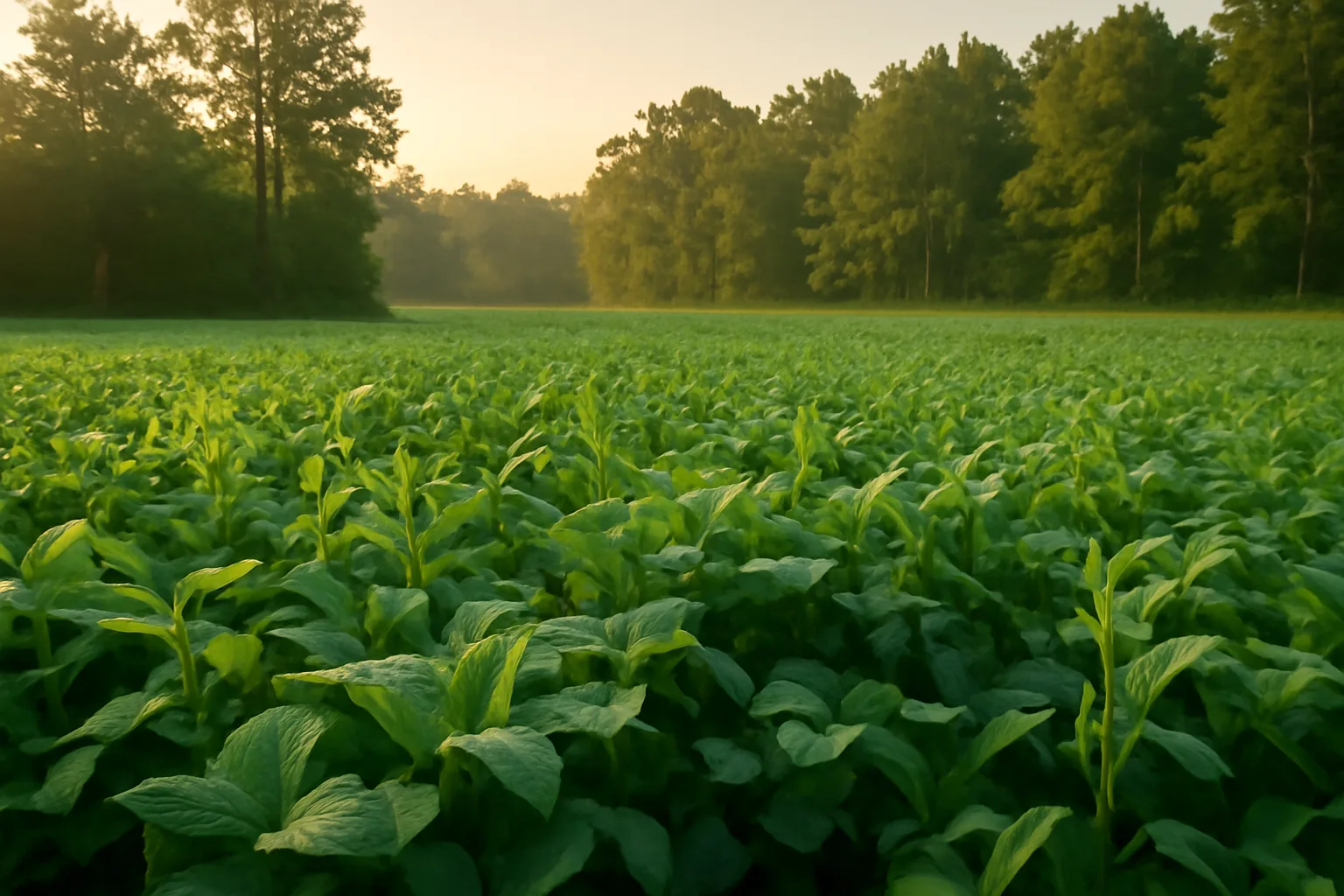
In the South, summer food plots go in from mid-April through early July once soil hits 65 degrees F. Good warm-season picks are iron clay cowpeas, soybeans, grain sorghum, and lablab. Clover and brassicas belong in fall plots, not summer. Test your soil first and match seed to your drainage and shade before you buy anything.
what is a food plot, exactly
A food plot is a planted patch of forage or grain, usually somewhere between a quarter acre and a few acres, put in the ground specifically to feed and hold deer on a property. It's not the same thing as a hayfield or a pasture, even though the equipment overlaps a lot. The intent is different: you're growing something deer prefer over the native browse around it, in a spot you picked for hunting access, cover, or herd health. Most plots fall into two broad categories. Annual plots get replanted every year, sometimes twice a year on a spring/fall rotation. Perennial plots (clover, chicory, alfalfa) get planted once and then mowed and fertilized for two to five years before they need to be torn up and started over. In the South, summer plots are almost always annuals, because the heat and drought stress that perennials like clover face from June through August in Georgia or Alabama makes them look rough no matter what you do. Food plots are widely treated by state wildlife agencies and university extension programs as a habitat management tool, not a farming operation, which matters for how you think about yield. You're not trying to maximize bushels per acre. You're trying to keep something green, palatable, and standing through the hardest stretch of the year for deer, which in the Southeast is usually late summer when native browse quality craters and does are still nursing fawns. If you want a plan built around your specific soil test and acreage instead of a general list, that's the whole point of a Custom Food Plot Plan, but the species information below will get most people most of the way there on their own.
when to plant food plots for deer in the south
| Upper South (Zone 7, e.g. TN, VA, NC piedmont) | Late April - mid June | Late Aug - early Oct | |
|---|---|---|---|
| Deep South (Zone 8, e.g. AL, GA, SC, LA) | Early May - early July | Mid Sept - late Oct | |
| Gulf Coast / Florida (Zone 9) | Mid May - late July | Early Oct - mid Nov | These windows aren't exact for every county. Mississippi State University Extension Publication 2400, "Establishing and Maintaining Wildlife Food Plots," recommends warm-season plantings for cowpeas, soybeans, and grain sorghum in the spring window for most of the state, with the caveat that a late, heavy planting can still work if rainfall cooperates [1]. The real trigger is soil moisture. Planting warm-season seed into bone-dry dirt just wastes the seed bag; wait for a rain event or irrigate if you can. A lot of hunters ask this backwards: they want to know when to plant food plots for deer as if there's one date. There isn't. There's a spring/summer planting for growing-season nutrition and a fall planting for hunting-season attraction, and in most of the South you need both if you want plots doing real work year-round. |
Timing splits into two seasons and the line between them is soil temperature, not the calendar. Warm-season plots go in once soil temps hold above 65 degrees F and the last frost risk has passed, which in most of the Deep South (Zones 8-9) is mid-April through early July. Cool-season plots go in six to ten weeks before the first fall frost, typically September through early November depending on latitude. Here's the practical breakdown most Southern hunters use: | Region (USDA Zone) | Summer plot window | Fall plot window |
why plant a summer food plot at all
Summer is the nutritional bottleneck in the Southeast, not winter. Native forage quality drops hard by July, protein content in browse falls, and does are lactating while bucks are trying to grow antlers, both of which demand a lot of protein and minerals. Research summarized by the Mississippi State University Deer Ecology and Management Lab points to lactating does needing diets in the range of 14-18% crude protein to fully meet demand, well above what most native summer browse provides in a hot, dry year. Summer plots fill that gap. Cowpeas and soybeans routinely test at 20-30% crude protein in the leaf, way above native browse in July and August. That's the whole argument for planting summer, even though these plots rarely get hunted directly (deer browsing a bean field in June isn't a August bow season strategy). You're playing a longer game: healthier does, better fawn survival, bigger antler potential by October. There's a secondary benefit too. Summer annuals like cowpeas and soybeans build organic matter and, if they're a legume, fix nitrogen in the soil, which sets up a cheaper, better fall planting behind them. A lot of experienced plotters run cowpeas all summer specifically to prep the seedbed for October brassicas or cereal grains.
do deer eat sorghum
Yes, deer eat grain sorghum, both the green forage early in the growing cycle and the mature grain heads later. It's a common Southern summer plot choice because it tolerates heat and drought far better than corn, which matters a lot in Alabama or Texas summers where corn without irrigation just burns up. Grain sorghum (milo) works best as a component of a blend rather than a monoculture. Deer will browse the young plants some but the bigger draw comes later when the seed heads mature and other food sources thin out, similar to how deer use standing corn. Texas A&M AgriLife's wildlife food plot guidance lists grain sorghum among drought-tolerant summer plot options for deer and turkey, noting it handles sandy, lower-fertility soils better than corn does [2]. One real caution: sorghum can develop dangerous levels of prussic acid (cyanide compounds) in young, stressed, or frost-damaged growth. This is mostly a livestock grazing issue rather than a deer food plot issue since deer browse selectively and don't consume the volume a cow does, but it's worth knowing if you're also running cattle on the same ground.
do deer eat clover, and do deer like clover
Yes, deer eat clover readily and in most preference studies it ranks near the top of what whitetails choose when given options. Ladino, white, and red clover are all commonly planted, and clover consistently tests at 25-30% crude protein when actively growing, which is why it's the backbone of so many perennial plot programs [3]. The catch for Southern hunters is timing. Clover is a cool-season perennial. It thrives in spring and fall and mostly goes dormant or gets choked out by heat, drought, and weed pressure through a Deep South summer. University extension guidance for the Southeast generally recommends planting clover in early fall, not summer, specifically because young clover can't establish well in July heat and gets outcompeted by crabgrass and other summer weeds. So the honest answer is: yes, deer like clover a lot, but don't plant it as your summer plot in Georgia, Alabama, Mississippi, or Florida. Plant it in September or October instead, let it establish through fall and winter, and it'll carry you into spring and early summer before heat stress sets in. If you already have an established clover stand, mow it periodically through summer to knock back weeds and stimulate new growth, but don't expect a new clover planting to survive a July establishment attempt in Zone 8 or 9.
when to plant turnips for deer
Turnips are a fall and winter plot, not a summer one. Plant them 60 to 90 days before your first expected hard frost, which for most of the South lands in late August through September. Turnips need cool weather to sweeten up (frost converts starches to sugars, which is why deer often ignore turnip plots until after the first freeze). Mississippi State University Extension Publication 2400 recommends brassica plantings, including turnips, in the late summer window for the region, timed so plants reach maturity right as hunting season and cold weather arrive [1]. Planting turnips in summer heat is a common beginner mistake; the seedlings get scorched, bolt early, or just get outcompeted by weeds before they ever bulb out. If you want turnips in your rotation, treat them as the back half of a two-season plan: summer cowpeas or soybeans first, terminated or grazed down by August, then turnips or a turnip/brassica blend drilled in behind them for fall and winter.
what are deer's favorite food plot crops
There's no single universal favorite, deer preference shifts by season, region, and what's already available naturally, but a few crops show up again and again at the top of preference trials and hunter reports. Soybeans and cowpeas usually win summer preference tests. Clover and brassicas (turnips, radishes, rape) win fall and winter tests once frost sweetens them. Chicory and alfalfa rank high where they can be sustained. A widely cited overview from the Noble Research Institute on food plots for deer generally ranks legumes (clover, cowpeas, soybeans, alfalfa) and brassicas near the top of forage preference, with cereal grains like oats and wheat used more as attraction and cover crops than as primary nutrition sources [4]. Corn and sorghum matter more as a late-season energy source (carbohydrates for winter fat reserves) than as a protein source. The honest caveat: 'favorite' depends heavily on what else is around. A deer on a property surrounded by agricultural soybeans is going to treat your food plot soybeans very differently than a deer in the middle of a hardwood-only tract with zero row-crop competition nearby. Local food availability changes preference more than any ranked list can capture.
when to plant oats for deer
Oats are a cool-season cereal grain, planted in fall, not summer, in almost every part of the South. The typical window is September through early November depending on your zone, with earlier planting (September) in the Upper South and later planting (October-November) workable in the Deep South and Gulf Coast where frost comes later. Oats are popular because they germinate fast, green up quickly, and deer hit them hard in the first few weeks after emergence, plus they're a cheap, forgiving nurse crop to mix with clover or brassicas. Mississippi State University Extension Publication 2400 lists oats among standard fall/winter forage plot components for deer in the region [1]. Oats aren't a summer crop option in the South. If you're looking at your calendar in May wondering whether to throw oats down, the answer is wait; you'll burn the seed and the money. Save oats for your fall planting alongside or ahead of clover and brassicas.
best summer food plot species for southern soil and heat
| Iron clay cowpeas | May - early July | High | 20-25% | Most forgiving, fixes nitrogen | |
|---|---|---|---|---|---|
| Forage soybeans | Late April - June | Moderate | 25-30% | Needs decent soil, grazing pressure risk | |
| Lablab | May - June | High | 18-22% | Slower establish, strong late summer | |
| Grain sorghum | May - June | High | Lower (grain crop) | Good structure/screen, grain draws fall | |
| Egyptian wheat | May - June | High | Low | Screening/cover, not primary forage | If you're deciding between a straight cowpea plot and a multi-species blend, more species usually wins for resilience. A single hot, dry June can wipe out a soybean-only plot while cowpeas in the same dirt hang on fine. |
For actual summer planting in the South, the short list that consistently performs is: iron clay cowpeas, forage soybeans, lablab (hyacinth bean), American joint vetch, and grain sorghum or Egyptian wheat as a structural/screening component. All of these tolerate heat and short dry spells better than clover, corn, or brassicas do. Iron clay cowpeas are probably the single most forgiving summer plot crop in the Southeast. They handle poor, acidic soil, fix their own nitrogen, and keep producing new leaf growth even under moderate grazing pressure, which matters because deer can hammer a small plot fast in June and July. Forage soybeans (different from grain soybeans, bred for leafier growth and grazing tolerance) are the higher-protein option but need a bit better soil and more grazing pressure management since deer can overgraze young soybean plots into the ground before they ever canopy over. Lablab is slower to establish but drought-tolerant once it's up, and it keeps producing into September in most of the South. Mixing two or three of these (a classic blend is cowpeas, soybeans, and a little grain sorghum for structure) spreads your risk against a bad rain year and gives deer variety. Here's a quick comparison for planning purposes: | Species | Planting window (Zone 8) | Drought tolerance | Crude protein (leaf) | Notes |
how do i choose the right summer plot species for my land
Start with your soil test, not the seed bag. Most Southern soils run acidic (pH 5.0-5.8 is common in the Piedmont and Coastal Plain regions), and legumes like cowpeas and soybeans need pH closer to 6.0-6.5 to actually fix nitrogen efficiently. Your county extension office or a private ag lab can run a soil test for $10-20 in most states, and the report will tell you exactly how much lime and what fertilizer blend your specific field needs [5]. Your soil test is the actual authority here, not a general article. Lime takes months to fully adjust pH, so testing in winter for a summer planting gives it time to work; testing the week before you plant is too late to fix a bad pH number. After soil chemistry, the next filter is drainage and light. Cowpeas and soybeans want full sun and decent drainage; they'll rot in a low, wet corner of a field. If part of your plot holds water, consider grain sorghum or a wetter-tolerant mix in that zone instead of forcing beans into mud. Last filter is deer density and plot size. On small plots (under an acre) with high deer density, fast-growing, grazing-tolerant cowpeas usually outperform soybeans because deer can eat soybean seedlings faster than they can regrow. On larger plots (3+ acres) or lower deer density, soybeans get a chance to canopy over and become a much higher-value summer food source. This is exactly the kind of site-specific decision a Custom Food Plot Plan is built to sort through for $99, using your soil test numbers, acreage, and region to hand you an actual seed and fertility plan instead of a generic list. But if you'd rather work it out yourself, the filters above (pH, drainage, deer pressure) will get you most of the way there.
do deer eat honey, and does bait or attractant matter here
Deer don't eat honey directly in any meaningful nutritional sense, but scented and sweetened attractants (some literally marketed with 'honey' or molasses-based scents) are a common product category separate from food plots. These are minerals, sprays, or granular attractants meant to pull deer to a specific spot for scouting or hunting, not to feed them the way a plot does. The more important issue is legal, not culinary. Baiting and supplemental feeding rules vary enormously by state and even by county in some cases. Some states allow baiting on private land year-round, some ban it entirely, and some allow feeding but not hunting over bait within a certain distance or timeframe. Before you put out any mineral lick, honey-scented attractant, or supplemental feed, check your state wildlife agency's current regulations directly, because a genuine food plot (a planted crop in the ground) is treated completely differently under most state laws than a poured pile of feed, corn, or scent attractant is. This distinction matters if you're bowhunting over a plot versus hunting near a feeder.
how big should a summer food plot be
Most wildlife extension guidance suggests summer plots run larger than you'd think, because deer browsing pressure on a small plot in June and July can outpace regrowth fast. A common rule of thumb from several state wildlife agencies and university programs is that food plots should total 1-5% of a property's total acreage, split across multiple smaller plots rather than one giant field, to spread pressure and cover more of the property's core area. On a 100-acre property, that's roughly 1 to 5 acres of plots total, maybe split into three or four locations of a quarter-acre to two acres each. Smaller plots (under a half acre) in high deer density areas often get grazed down to nothing by mid-July before they ever mature; if that's happened to you before, the fix is usually bigger plots or heavier seeding rates, not a different species.
Frequently asked questions
Do deer eat sorghum in food plots?
Yes. Deer browse young grain sorghum and eat the mature grain heads later in the season. It's popular in the South because it handles heat and drought better than corn. Texas A&M AgriLife's wildlife food plot guidance lists it as a solid drought-tolerant summer option for deer, especially on sandy or lower-fertility soil where corn struggles without irrigation.
Do deer eat clover, and do deer actually like it?
Yes, deer eat clover readily and it ranks among the top preferred forages in most studies, often testing at 25-30% crude protein. The catch in the South is timing: clover is a cool-season crop and struggles badly if planted in summer heat. Plant it in early fall instead, per standard Southeastern university extension guidance.
When should you plant food plots for deer in the South?
There are two windows. Summer/warm-season plots (cowpeas, soybeans, sorghum) go in mid-April through early July once soil hits 65 degrees F. Fall/cool-season plots (clover, oats, brassicas) go in six to ten weeks before first frost, typically September through early November depending on your zone.
When is the right time to plant turnips for deer?
Plant turnips 60 to 90 days before your area's first hard frost, which lands in late August through September across most of the South. Turnips need cool weather and frost exposure to sweeten from starch conversion. Planting them in summer heat leads to scorched seedlings and early bolting.
What is a food plot, in simple terms?
A food plot is a planted patch, usually a quarter acre to a few acres, grown specifically to feed and hold deer rather than for hay or commercial harvest. Plots are either annual (replanted each year, like cowpeas or brassicas) or perennial (planted once and maintained for two to five years, like clover).
What are deer's favorite food plot crops overall?
No single crop wins everywhere; preference shifts by season and local food availability. Soybeans and cowpeas usually top summer preference. Clover and brassicas top fall and winter tests after frost sweetens them. Corn and sorghum matter more as late-season energy sources than as top preference picks.
When should you plant oats for deer food plots?
Oats are a fall cereal grain, planted September through early November depending on your zone (earlier in the Upper South, later toward the Gulf Coast). They're not a summer crop. Oats germinate fast and work well mixed with clover or brassicas as a nurse crop for fall plantings.
Do deer like honey or honey-scented attractants?
Deer get no real nutrition from honey, but honey-scented and molasses-based attractants are common commercial products meant to draw deer to a spot for scouting or hunting, separate from actual food plots. Check your state wildlife agency's baiting rules before using any of these; regulations vary a lot by state.
How big should a summer food plot be for deer?
A common guideline is 1 to 5% of total property acreage in food plots, split across several smaller plots rather than one large field. On 100 acres, that's roughly 1-5 acres total. Plots under a half acre in high deer density areas often get grazed out before summer forage matures.
Can you plant clover as a summer food plot in the Deep South?
Not successfully in most cases. Clover is cool-season and struggles to establish in July heat in Zones 8-9, getting outcompeted by crabgrass and other summer weeds. Plant clover in early fall instead and let it carry through winter into spring, then mow through summer to manage weeds on an established stand.
What's the best summer food plot mix for Southern soil?
Iron clay cowpeas, forage soybeans, and lablab, often blended together with a little grain sorghum for structure, are the standard high-performing summer combination in the Southeast. Cowpeas are the most forgiving on poor or acidic soil. A soil test should guide the exact lime and fertilizer rate before planting.
Do I need a soil test before planting a summer food plot?
Yes, strongly recommended. Most Southern soils run acidic (pH 5.0-5.8 is common), while legumes like cowpeas and soybeans need closer to pH 6.0-6.5 to fix nitrogen well. A county extension or private ag lab soil test usually costs $10-20 and tells you exact lime and fertilizer needs.
Sources
- USDA Natural Resources Conservation Service, Wildlife Habitat Management Practices: Food plots function as a wildlife habitat management tool distinct from row-crop farming
- Texas A&M AgriLife Extension, Establishing Food Plots for Wildlife: Grain sorghum is a drought-tolerant summer food plot option that outperforms corn on sandy, lower-fertility soils
- USDA NRCS Plant Guide, White Clover (Trifolium repens L.): Clover forages test at high crude protein levels (25-30%) during active growth
- Noble Research Institute, Food Plots for Deer: Legumes and brassicas generally rank highest in deer forage preference compared to cereal grains
- Clemson University Agricultural Service Laboratory, Soil Testing: Standard soil test costs and turnaround for determining lime and fertilizer needs
- Georgia General Assembly, Official Code of Georgia Annotated, O.C.G.A. Section 27-3-1.1: Baiting rules for deer hunting on private land are set by state statute and vary by state