Last updated 2026-07-25
TL;DR
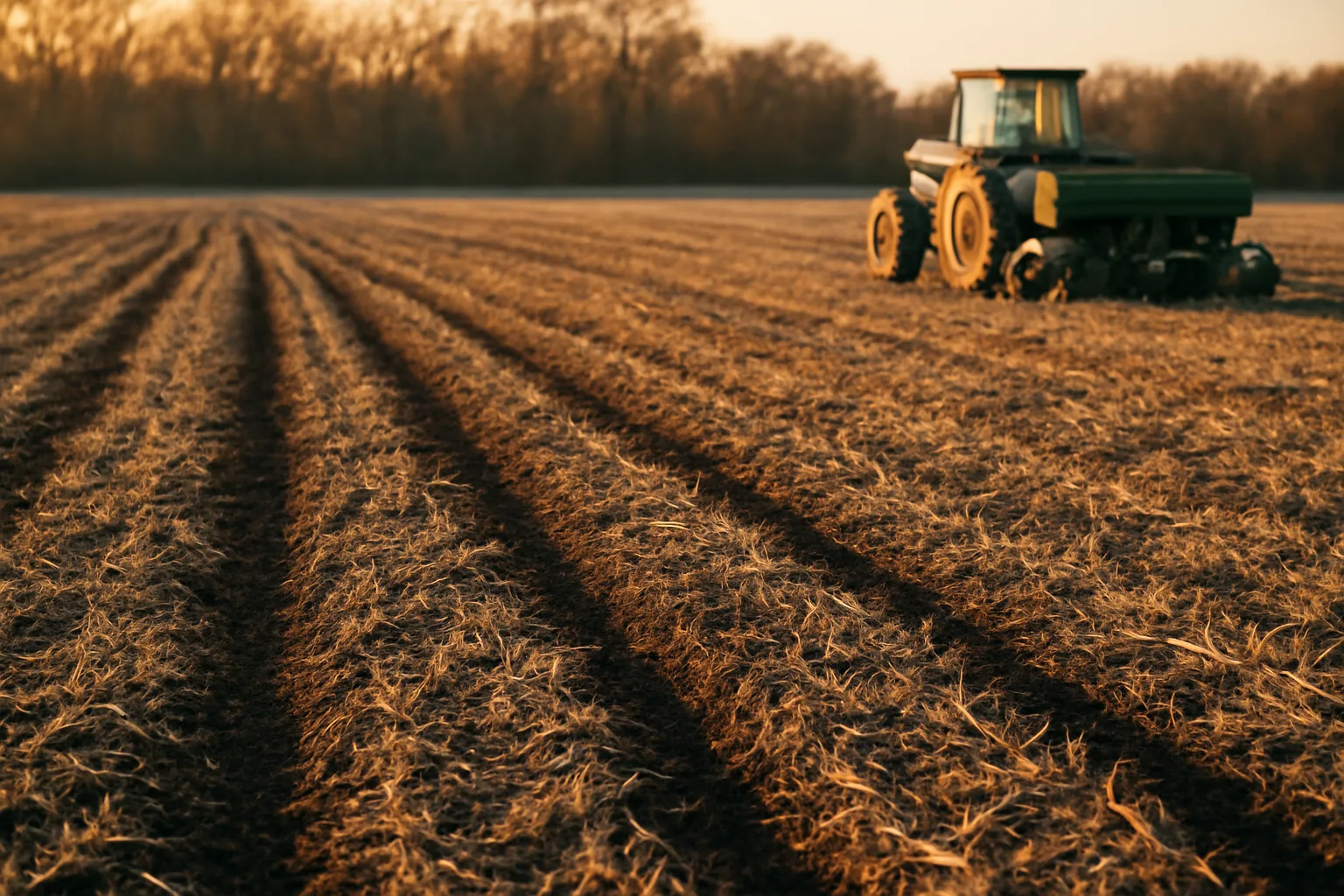
No-till food plot seed works if you kill existing vegetation first (usually with glyphosate), get good seed-to-soil contact with a drill or light disking, and match species to your calendar zone. Clover, brassicas, and cereal grains handle no-till best. It saves fuel and soil, but skipping the burndown step is the most common way it fails.
What is a food plot, and where does no-till fit in?
A food plot is a planted opening on hunting land meant to feed and hold deer, usually somewhere between a quarter acre and a few acres, planted in forage species deer prefer over what grows wild nearby. Landowners plant them for a mix of reasons: better nutrition for the herd, a predictable place to hunt, and a way to keep deer on the property longer during daylight. No-till is a planting method, not a species. Instead of plowing and disking soil into a fine seedbed, you kill the existing vegetation (usually with a herbicide burndown), then drop seed directly into the residue with a no-till drill, a light disk pass, or even a broadcast-and-cultipack approach on soft ground. The USDA Natural Resources Conservation Service describes no-till as a system that leaves crop residue on the surface and disturbs soil only enough to place seed, which cuts erosion and helps retain soil moisture compared to conventional tillage [1]. For food plotters, the appeal is practical. You skip a tractor pass or two. You protect topsoil on hillside plots. You can plant into standing residue without waiting for a perfect dry window to disk. The tradeoff is that no-till depends entirely on killing competition first. Skip that step and your "no-till clover" turns into a clover-and-ragweed jungle by August. If you're planning your first plot or reworking an old one, it helps to understand the broader category before picking a method. See our guide on food plot whitetail basics for how plot type, size, and location factor in.
When to plant food plots for deer?
Timing splits into two windows almost everywhere in whitetail country: a spring/summer planting for warm-season forages and clover, and a late-summer planting for fall annuals like brassicas, cereal grains, and clover seedings meant to hold through winter. Spring plantings (usually April through June depending on latitude) work for clover, chicory, soybeans, and warm-season annuals like sorghum or cowpeas. These need soil temps in the 50s to 60s F and no risk of hard frost. Late-summer plantings (typically mid-July through early September, again zone-dependent) cover brassicas, oats, winter wheat, and other fall/winter food sources meant to mature right as hunting season opens. Your local zone matters more than a national calendar. A plot in southern Georgia can go in brassicas in early September; the same seed in northern Minnesota needs to go in by mid-August or it won't size up before frost. The USDA Plant Hardiness Zone Map is the standard reference point extension programs build regional planting calendars around, since zones correlate with average minimum winter temperatures and, indirectly, first-frost timing. For a full breakdown by region, our deer food plots overview links out to zone-specific calendars, which is worth checking before you commit seed to the ground.
When to plant oats for deer?
Oats go in during late summer to early fall in most of the whitetail range, generally 60 to 90 days before your first hard frost, so the plants have time to establish before cold weather slows growth. That usually lands somewhere between mid-August (northern states) and early October (southern states). Oats are a fast, cheap, and reliably attractive fall annual. They germinate quickly, often within a week under good moisture, and provide green forage right when deer are shifting toward preferred fall food sources. Oats don't survive hard winters as well as winter wheat or rye in the coldest zones, so if you're north of about zone 4, expect them to winterkill and plan accordingly. In the South, a fall-planted oat plot can carry attraction well into winter.
When to plant turnips for deer?
Turnips, like other brassicas, need roughly 80 to 90 days before a killing frost to reach full size and palatability, which puts most planting windows from late July in the North to early September in the South. Plant too late and you get small, tough plants deer often ignore until a hard freeze converts starches to sugars. That frost-sweetening effect is a big part of why brassica plots "turn on" in December when everything else looks tired. Deer often ignore turnips at first, then hit the bulbs and tops hard after a few freezes convert starch to sugar. Soil pH matters more for brassicas than people expect. Most agronomic soil fertility guidance for brassica crops targets a pH near 6.0 to 6.5, and turnips are sensitive to compacted, poorly drained ground. This is one more reason a real soil test earns its keep before you plant, since guessing on lime and fertilizer wastes both money and a growing season.
Do deer eat sorghum?
Yes, deer eat grain sorghum and forage sorghum, though it's usually a secondary food source rather than a first-choice plot species. Sorghum works best as a screening or standing-grain option in warm-season plots, planted alongside or after soybeans and cowpeas. Sorghum's real value in a plot mix is often structural, not nutritional. It grows tall fast, giving cover and a wind break for other plants, and the grain heads provide late-season food once other annuals are gone. Deer will browse young sorghum shoots, but it's rarely their top pick when clover, beans, or brassicas are available nearby. If you're using sorghum, treat it as a component of a blend rather than a monoculture plot. It pairs well in a no-till drill pass with cowpeas or soybeans for a summer plot that also screens hunter movement.
Do deer eat clover, and do deer like clover?
Yes, deer eat clover readily, and it's one of the most consistently preferred food plot forages across whitetail range. Clover is high in protein (often 20 to 30 percent crude protein in good stands) and stays palatable through most of the growing season, unlike many annuals that mature and lose attractiveness. Deer will hit a healthy clover plot from spring green-up through fall, which is part of why it's the backbone of so many perennial plot plans. Clover also handles no-till planting well. It has a small seed that doesn't need deep coverage, so a light disk pass, a cultipacker, or even a no-till drill set shallow (1/4 inch or less) works fine. The bigger challenge with clover is weed competition in year one, which is exactly where a proper herbicide burndown before planting pays off. White clovers (Ladino types) tend to be more shade and moisture tolerant. Red clovers grow more upright and handle heavier soils better. Most forage extension guides recommend a blend of the two for durability across variable plot conditions.
What are deer's favorite food plot forages?
There's no single universal favorite; preference shifts by region, season, and what else is available on the landscape, but clover, soybeans, and brassicas consistently top browse preference surveys done by university wildlife programs. Acorns and other natural browse often outcompete any planted forage in a good mast year, which is a reality food plotters have to accept. Brassicas rank lower in early fall but climb sharply after frost. The honest answer is that "favorite" depends heavily on what's growing wild nearby. A clover plot in a landscape full of agriculture gets less attention than the same plot surrounded by hardwoods and thin browse. Preference data is a good starting point, not a guarantee of activity on your specific property. For species selection tailored to your soil and region, a deer food plot seed guide can help narrow choices before you buy bags.
Do deer like honey?
There's no meaningful nutritional or behavioral reason to think deer seek out honey specifically, and it's not a documented food plot or attractant category in any state wildlife agency guidance. Deer are herbivores built around browsing forbs, woody browse, mast, and agricultural crops; they don't forage for honey or honeycomb in the wild. Some commercial deer attractant products use sugar, molasses, or apple-flavored scents to appeal to a deer's strong preference for sugary, high-carbohydrate food sources, especially in late fall when deer crave energy-dense food. That's likely where the honey association comes from, but it's a marketing angle more than a documented feeding behavior. If you're trying to add attraction to a plot, a proven sugar source like a molasses-based mineral or a genuinely sweet forage (brassica tops post-frost, for example) has more research behind it than anything honey-flavored.
How do you plant no-till food plot seed step by step?
The process has four real steps, and skipping any one of them is the most common reason no-till plots fail: kill existing vegetation, plant into the residue, get seed-to-soil contact, and manage weeds afterward. 1. Burndown. Spray glyphosate (or a product suited to your target weeds) 2 to 3 weeks before planting, giving it time to fully kill grass and broadleaf competition. Always read and follow the label rate for your target species and soil conditions. 2. Planting into residue. Use a no-till drill if you have access to one; it cuts through thatch and places seed at a controlled depth, which matters a lot for small-seeded species like clover and brassicas. No drill? A light disk pass (just enough to expose soil, not a full seedbed) followed by broadcasting and a cultipacker pass works for many species. 3. Seed-to-soil contact. This is the step most DIY plotters shortcut. Broadcast seed sitting on top of dead thatch with no contact to bare soil has poor germination odds, especially for tiny seeds like clover and chicory. A cultipacker, ATV drag, or even driving over the plot with a UTV can press seed in enough to matter. 4. Post-plant weed management. No-till doesn't eliminate weed pressure forever; it resets it. Follow up with a selective herbicide appropriate to your planted species (grass-selective products in a broadleaf plot like clover, or vice versa) as new weeds emerge. Equipment-wise, you don't need a full no-till drill to get decent results on a small plot. A lot of hunters run a light disk, a cultipacker, and a sprayer and get workable results on plots under 2 acres. For larger acreage or rocky, root-filled ground, a real no-till drill earns its cost fast in time saved and stand establishment. See our equipment-and-methods notes on gear matched to plot size.
No-till vs. conventional tillage: which is actually better for a food plot?
| Soil erosion | Lower [1] | Higher on slopes | |
|---|---|---|---|
| Setup cost | Herbicide + drill/light equipment | Disk, plow, more fuel/time | |
| Best for | Clover, chicory, cereal grains, perennials | First-year rough ground, compacted soil | |
| Weed seed bank | Stays near surface, more visible pressure | Buried, can resurface later | |
| Equipment need | Sprayer, no-till drill or cultipacker | Disk, tractor, more horsepower | If you're deciding between the two for a specific plot, a soil test result and a look at existing vegetation tells you more than any general rule. Compacted clay choked with sod usually needs a first tillage pass; an existing thin clover stand you're overseeding almost never does. |
No-till saves soil, time, and fuel. Conventional tillage gives you a cleaner seedbed and can bury more weed seed, but at a real cost to soil structure over time. Neither is universally better, and most experienced plotters use both depending on the plot and the season. USDA NRCS guidance on no-till systems points to reduced soil erosion, better water infiltration, and lower fuel and labor costs as the core benefits over repeated tillage passes [1]. Those benefits compound over years, which is why no-till makes the most sense on perennial plots (clover, chicory) you're not planning to fully rework every season. Conventional tillage still has a place. A first-year plot on compacted, brush-choked ground often needs a disk pass or two just to break up the sod enough for any planting method to work. And broadcasting tiny brassica seed onto rough, cloddy no-till ground with poor contact can genuinely underperform a well-worked conventional seedbed. | Factor | No-till | Conventional tillage |
What soil and fertility prep does no-till still require?
No-till doesn't skip soil testing, and honestly it makes it more important, since you won't get a second chance to correct pH or nutrient deficiency by working in lime deep before planting. Surface-applied lime and fertilizer take longer to move into a no-till soil profile than in a tilled one. Most land-grant extension soil labs recommend testing several months ahead of planting so lime has time to adjust pH before seed goes in. In a no-till system, pelletized or finely ground ag lime applied on the surface can take a full season or more to fully react down into the root zone, compared to lime worked into a tilled seedbed. Your soil test results, not a general rule of thumb, should drive lime and fertilizer rates. Recommendations vary by soil type, current pH, and target crop, and your test lab knows your specific ground better than any national guide can. This is where a $99 Custom Food Plot Plan (built from your soil test and property details) can help translate lab numbers into an actual seed mix and planting schedule. Start at /plot-plan-builder if you want that step handled for you, though plenty of hunters work straight off their extension soil test report and do fine. Fertilizer timing matters too. In no-till systems, a starter fertilizer banded near the seed row (if your drill supports it) gets nutrients to new seedlings faster than a broadcast application sitting on undisturbed residue.
What are the biggest mistakes people make with no-till food plots?
The number one mistake is skipping or rushing the burndown. Spraying glyphosate three days before planting instead of two to three weeks doesn't give it time to fully kill established perennial weeds and grass, and you end up planting into a competitor that's already ahead of your seed. Second is poor seed-to-soil contact, especially with small-seeded species. Clover, chicory, and brassica seed broadcast onto thick thatch with no cultipacking step often has germination rates well below what the same seed would get with proper contact. Third is planting outside your zone's window. Oats planted too late in a northern zone won't size up before frost; brassicas planted too early in a hot southern August can burn up before fall rains arrive. Match your planting date to your local frost dates, not a bag's generic label instructions written for the whole country. Fourth, and this one is about legality, not agronomy: check your state's baiting and feeding regulations before adding any mineral, molasses, or attractant products near a plot. Rules vary widely by state. Some prohibit baiting for hunting purposes entirely, others allow it with restrictions, and your state wildlife agency's regulations are the only reliable source for your specific rules.
Frequently asked questions
Do deer eat sorghum in food plots?
Yes, though it's usually a secondary forage rather than a first choice. Deer browse young sorghum shoots and eat mature grain heads, but sorghum works best mixed with soybeans or cowpeas as a summer blend, providing cover and late-season grain rather than being the main attraction on its own.
Do deer like clover more than other food plot forages?
Clover ranks consistently high in university browse preference surveys and stays palatable longer than most annuals because of its high protein content, often 20 to 30 percent crude protein. It's not universally the single top choice everywhere, but it's one of the most reliable perennial plot forages across whitetail range.
When should I plant food plots for deer?
Most regions have two windows: spring through early summer for clover and warm-season annuals, and mid to late summer for fall brassicas and cereal grains. Exact dates depend on your USDA hardiness zone and local frost dates, so check a regional extension planting calendar rather than a generic national date.
When is the best time to plant oats for deer?
Plant oats 60 to 90 days before your area's first hard frost, which lands roughly mid-August in northern states and into September or early October in the South. Oats germinate fast and rank high in fall browse preference, but they winterkill easily in the coldest zones.
When should turnips go in the ground for deer plots?
Turnips need about 80 to 90 days before a killing frost to bulb up properly, so plant late July in northern zones and up to early September in the South. Deer often ignore turnips until after a few hard frosts convert starches to sugar, which is when attraction really picks up.
What exactly is a food plot?
A food plot is a planted area on hunting land, usually a quarter acre to a few acres, seeded in forage deer prefer over surrounding wild vegetation. Plots aim to improve herd nutrition, concentrate deer activity for observation or hunting, and supplement natural browse, especially in poor mast years.
What is a deer's favorite food, generally speaking?
There's no single universal favorite; it shifts by region and season. University trials repeatedly rank clover, soybeans, and cowpeas near the top of browse preference, with brassicas climbing after frost. Acorns and other natural mast often outcompete any planted forage in a heavy mast year.
Do deer actually like honey or sweet attractants?
There's no real evidence deer seek out honey specifically. They do have a strong preference for sugary, energy-dense food, especially in late fall, which is likely why some commercial attractants use honey or molasses flavoring. It's a marketing angle, not a documented natural feeding behavior.
Can I no-till plant into a field with heavy thatch or old crop residue?
Yes, that's exactly what no-till drills are built for, cutting through residue to place seed at a controlled depth. Without a drill, a light disk pass plus a cultipacker after broadcasting works reasonably well on moderate thatch, though very heavy residue benefits from an actual no-till drill.
Do I still need to spray herbicide before no-till planting?
Almost always, yes. No-till depends on killing existing vegetation before seed goes in, typically with glyphosate applied 2 to 3 weeks ahead of planting. Skipping this step is the most common reason no-till food plots fail, since new seedlings can't compete with established grass and weeds.
Is no-till food plot seed more expensive than conventional planting?
Herbicide adds a cost line conventional tillage doesn't have, but you save on fuel, tractor time, and equipment wear from repeated disking. Over several seasons on a perennial plot like clover, no-till often costs less, though a first-year plot on rough ground may still need some tillage.
What equipment do I actually need for no-till food plots?
A sprayer for burndown herbicide, a way to place seed (a no-till drill is ideal, but broadcasting plus a cultipacker works for many species), and something to firm the soil after planting. You don't need a full-size no-till drill for plots under a couple acres; a lot of hunters get by with a light disk and cultipacker.
Sources
- USDA Natural Resources Conservation Service, Soil Health Key Points: No-Till (PDF): No-till systems reduce soil erosion and improve water infiltration compared to conventional tillage
- University of Georgia Extension, Wildlife Food Plots (Bulletry 1309): Brassica food plots generally need soil pH in the 6.0 to 6.5 range for best growth
- University of Georgia Extension: Soil fertility and liming recommendations for establishing productive food plots
- USDA Forest Service: Step-by-step guidance on operating a no-till drill for seeding food plots
- University of Missouri Extension: Comparison of no-till versus conventional tillage benefits for soil health and forage establishment