Last updated 2026-07-25
TL;DR
No-plow food plot seed is bred or blended to establish without tillage, usually with small seed sizes (clover, brassicas, oats) that survive broadcast-and-cultipack or spray-and-drill methods. Success depends less on the seed bag and more on killing existing vegetation first, usually with glyphosate, and getting good seed-to-soil contact. Clover, oats, and brassicas all work well no-till; corn and beans generally don't without a real drill.
what is a food plot and how does no-till fit in
A food plot is a planted patch of forage, usually somewhere between a quarter acre and a few acres, put in specifically to feed and hold deer on a property. Most hunters plant them on farm ground, old pasture, logging landings, or cleared timber pockets. The goal ranges from pure nutrition (helping does raise fawns, helping bucks grow antler in summer) to pure hunting strategy (a small, hidden plot you can hunt on an evening wind). No-plow, sometimes called no-till, is a planting method rather than a species. Instead of running a disc or tiller to turn over soil, you kill existing vegetation with an herbicide, then plant directly into the dead residue using a broadcast spreader, a cultipacker, or a no-till drill. The residue mat actually helps: it holds moisture, blocks some weed germination, and cuts erosion on slopes where tillage would wash soil downhill. The term "no-plow food plot seed" on a seed bag usually just means the company picked species and seed sizes that establish well without a disc, things like clover, chicory, brassicas, and cereal grains. There's no seed that requires zero soil contact. You still need bare dirt or thin, dead residue for the seed to reach, and you still need lime and fertilizer if your soil test calls for it. For a broader look at plot styles and how no-till compares to conventional disking, see food plot whitetail.
does no-till food plot seed actually work without tilling
Yes, for the right species. University extension trial work on no-till forage establishment consistently shows that small-seeded legumes and brassicas germinate fine when drilled or broadcast into a well-killed sod, as long as seed depth stays shallow. Purdue University's forage and cover crop guidance notes that no-till seeding preserves soil structure and moisture better than tillage in many conditions, particularly on erosion-prone ground [1]. The catch is seed-to-soil contact. Clover and brassica seed is tiny, often under 1/8 inch in diameter, and it needs to sit in actual soil, not on top of a thatch mat, to germinate reliably. That's why a cultipacker (a roller that presses seed into loosened or thinned soil) matters so much for no-till plots. Broadcasting seed onto standing dead grass with zero soil contact is the single biggest reason no-till plots fail. Corn, soybeans, and other large-seeded row crops are a different story. They can be no-tilled, but it takes a real no-till drill capable of cutting through residue and placing seed at 1 to 2 inches. Most food plotters don't own that equipment. If you're working with a spreader and cultipacker instead of a drill, stick to small-seeded species.
when to plant food plots for deer
Timing splits into two windows: spring/summer plots and fall plots, and the right window depends on your growing season and what you're planting. Most of the Midwest and Northeast plant cool-season fall plots (clover, brassicas, cereal grains) from late July through September, timed so brassicas have 90 to 100 days before a hard frost sweetens them up. Spring plots (soybeans, cowpeas, corn, clover establishment) generally go in after the last frost date, which ranges from early April in the Deep South to early June in the northern tier, per USDA plant hardiness zone data. Your local NRCS field office or state extension office publishes exact frost dates and planting windows for your county, and that's a better source than a national seed company chart. As a rule of thumb: perennial clover establishes best planted 60 to 90 days before your first fall frost, or in early spring once soil temps hit the mid-40s. If you're planning multiple plots with different purposes, staggering plant dates by two to three weeks spreads out your workload and covers you if weather delays one planting. A deer food plot seed blend built for your zone usually has a planting window printed on the bag; treat that as a starting point, not gospel, and check it against your own frost data.
when to plant oats for deer
Oats go in as a fall cereal grain planting, typically 6 to 8 weeks before your first expected frost. In much of the whitetail range that lands between late August and mid-September. Oats germinate fast, often within 5 to 7 days in warm soil, and they tolerate no-till seeding into a sprayed-out field better than almost anything else you can plant. Oats won't survive a hard winter in most of the country. They're a fall annual, meaning deer hit them hard through October, November, and into early winter until deep cold kills the plant. In the Deep South, a spring oat planting is also an option since winters are mild enough that fall oats can actually overwinter and regrow. One practical note: oats seeded too early into hot, dry August soil in the transition zone can struggle to germinate. If you're in a drought-prone area, some hunters wait for a rain forecast before dropping oat seed rather than sticking to a rigid calendar date.
when to plant turnips for deer
Turnips, like other brassicas, need 80 to 90 days before a hard frost to bulb out and reach peak palatability, which usually means planting between late July and mid-August across most of the whitetail range. Plant too late and you get leafy growth but no time for the plant to build sugar reserves that make the bulbs and foliage attractive later in fall. Brassicas including turnips actually get sweeter after a frost. The plant converts starches to sugars as a cold-tolerance response, which is why deer often ignore a turnip plot in September and hammer it in December. That delayed-interest pattern surprises a lot of first-time planters who assume the plot failed. Turnip seed is small and no-till friendly. It broadcasts well onto a sprayed field and only needs to be pressed in with a cultipacker or light drag, not buried. Planting depth deeper than 1/4 inch is a common mistake that kills germination.
do deer eat clover and do deer like it
Yes, clover is one of the most consistently eaten food plot forages across the whitetail's range, and it's a strong choice for no-till planting because the seed is tiny and establishes well with just a cultipacker pass. Deer browse clover through spring, summer, and fall whenever it's actively growing, which makes it valuable for antler growth and lactating does, more than fall hunting. Field data on clover forage quality and university forage trials both point to clover's high crude protein content, often in the 25 to 30 percent range in vegetative growth stages, as the reason deer key in on it so heavily [2]. That's higher than most standing grain crops and close to alfalfa's protein level, without alfalfa's higher maintenance needs. The downside: clover takes a full growing season to establish well and needs mowing two or three times a year to stay ahead of weed competition. It's also one of the pickier plots on soil pH, generally wanting a pH of 6.0 to 7.0 per most extension soil guidance, so a soil test matters more here than with brassicas. For species comparisons across a whole plot plan, deer food plots breaks down how clover fits alongside grains and brassicas.
do deer eat sorghum
Deer eat sorghum grain heads and will browse young sorghum plants, but it's not a top-tier food plot choice for most hunters, and it's rarely marketed as a no-till option because of seeding depth requirements. Grain sorghum is more commonly planted as a wildlife cover crop or dove field crop than a dedicated deer attractant. Sorghum's real value in a plot mix is standing cover and a late-season grain source once other plots are picked clean, plus it holds up to drought better than corn in a lot of regions. USDA guidance on cover crop selection lists sorghum-sudangrass among species suited to hot, dry conditions and biomass production in conservation plantings [3]. But if your goal is maximum deer attraction from a small acreage, clover, brassicas, or soybeans generally outperform sorghum on preference. If you already have sorghum in a mix (common in wildlife blend bags sold at farm stores), it's not wasted, deer will hit the heads in fall and use the stalks for screening cover. Just don't expect it to be the reason deer show up to a plot.
do deer like honey (honey locust and honeysuckle confusion)
If you mean literal honey, no, deer don't eat honey, they're herbivores and it's not part of their diet in any meaningful way. This question usually comes from confusion with honey locust trees or honeysuckle, both of which deer genuinely do browse. Deer eat honey locust pods heavily in fall, and the pods are high in sugar, which might be where the "honey" association comes from. Japanese honeysuckle is browsed too, especially in winter when it stays semi-green longer than other browse, though it's also an invasive species that federal and state agencies list as a problem plant outside food plot contexts [4]. Neither honey locust nor honeysuckle is something you plant as a food plot seed. They're woody browse, not annual or perennial plot forage, so they don't fit into a no-till seeding discussion in any practical way.
what are deer's favorite foods overall
Deer preference shifts by season and region, but across most whitetail research, acorns, soybeans, and clover consistently rank as top-preference foods where available. Acorns matter more than most plot seed in years when oaks produce a heavy crop, because deer will bypass a plot to hit a hot acorn drop. That's not a food plot failure, it's just deer being efficient: acorns pack more fat and energy per bite than most forage, especially white oak acorns which are lower in tannins and more palatable than red oak acorns. Among plantable food plot species specifically, soybeans (in the growing season), clover (spring through fall), and brassicas (late fall through winter) round out the list extension wildlife programs most often recommend for whitetail attraction and nutrition. No single species is a year-round answer, which is the real argument for planting a mix of plot types rather than one field of one crop.
how to actually kill the sod before no-till planting
This step matters more than seed choice. Most no-till failures trace back to incomplete kill of existing grass and weeds, not bad seed. The standard approach is a glyphosate application (commonly sold as Roundup and generic equivalents) at labeled rates, applied to actively growing vegetation 7 to 14 days before planting, giving the herbicide time to translocate into root systems. Glyphosate label rates and application timing are set by the EPA-registered product label, and using a rate lower than labeled to save money is one of the most common mistakes food plotters make; it leaves the sod alive enough to out-compete new seedlings . Cool-season grasses like fescue can take a second application 3 to 4 weeks later if the first pass doesn't fully brown it out. After the kill, some hunters run a light disc pass or a drag harrow just to break up the thatch and expose soil, which technically isn't "no-till" in the strict sense but still avoids full tillage and inversion of the soil profile. True no-till means seed goes straight into the dead residue with a drill or a broadcast-and-cultipack combo, no soil disturbance beyond the seed slot.
what equipment do you actually need for a no-till plot
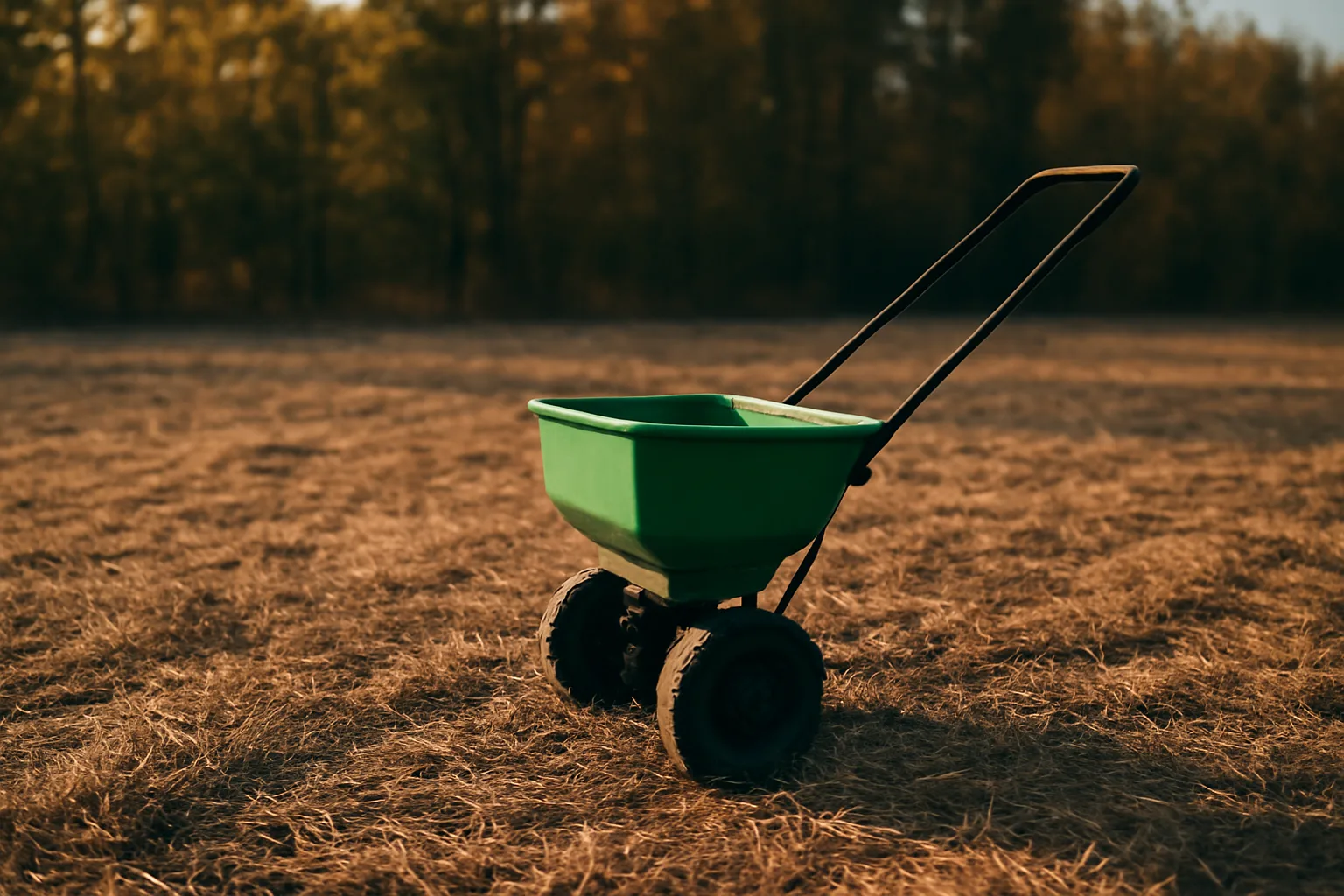
At minimum: a sprayer (a 4-wheeler boom sprayer or backpack sprayer for small plots), a broadcast spreader, and a cultipacker or drag. That's a real, working no-till setup for clover, brassicas, and cereal grains on plots under 2 or 3 acres. A no-till drill is the upgrade path if you want to plant soybeans, corn, or other large-seeded crops without tillage, but drills capable of cutting through heavy residue cost real money, often several thousand dollars new, which is why a lot of food plotters rent one from a farm co-op or a local NRCS equipment loan program rather than buying. Some counties run equipment-share programs through their conservation district specifically for small landowners. On small acreage (under an acre), a lot of hunters skip mechanical equipment almost entirely: spray, wait, broadcast seed by hand or with a handheld spreader, then drag a section of chain-link fence or a piece of carpet behind an ATV to press seed in. It's crude but it works for clover, brassica, and oat seed sizes. For gear-specific comparisons across plot sizes, see food plot seed.
soil testing still matters even without a plow
Skipping tillage doesn't mean skipping soil prep. A soil test tells you your current pH and nutrient levels, and no amount of good seed selection fixes a soil pH of 5.0 when your clover wants 6.0 to 7.0. Most state land-grant extension labs run soil tests for 10 to 20 dollars and return lime and fertilizer recommendations in about 1 to 2 weeks. Lime takes months to fully react with soil, so if your test calls for it, applying lime the fall before a spring planting (or vice versa) gives it time to adjust pH before your seed goes in the ground. Surface-applied lime on a no-till field reacts more slowly than lime worked into soil, since there's no tillage to mix it through the profile, which is one legitimate downside of the no-till approach worth knowing. Your soil test lab is the authority here, not a seed bag chart. Recommendations vary by region, crop, and existing nutrient levels in ways a generic national guide can't account for. If you want a planting plan built around your specific soil test results and property goals, that's exactly what a $99 Custom Food Plot Plan is built to do, it's general species and timing guidance based on your inputs, not a replacement for your lab's site-specific agronomy advice.
check your state's rules before you plant near a stand
Food plots themselves are legal everywhere as normal agricultural plantings, but baiting and supplemental feeding rules vary a lot by state, and some states draw a line between a "food plot" (a planted, standing crop) and "baiting" (piled feed, mineral, or processed attractants). A planted food plot is legal in every state; the confusion usually comes from separate feeding and baiting statutes that some hunters assume apply to plots too. Check your state wildlife agency's current regulations before hunting over any planted or supplemental food source, since rules on baiting, minerals, and even certain plot species change year to year in some states, particularly where chronic wasting disease management drives new restrictions on feeding and mineral use. This isn't a one-time check. States revise baiting and feeding regulations almost every season, so pull your current state's regulation guide before opening day rather than relying on last year's rule.
Frequently asked questions
Do deer eat sorghum?
Yes, deer eat sorghum grain heads and browse young plants, but it's a secondary food plot choice, not a top attractant. It's more commonly used as a drought-tolerant cover crop or dove field planting than a dedicated deer plot species. Clover, soybeans, and brassicas generally outperform sorghum for pulling deer to a plot.
Do deer eat clover?
Yes, clover is one of the most reliably eaten food plot forages, browsed through spring, summer, and fall. Its crude protein often runs 25 to 30 percent in vegetative growth, according to university forage trial data, which is why deer key in on it so heavily compared to grasses and many other plot species.
When should you plant food plots for deer?
It depends on species and region. Fall plots (clover, brassicas, cereal grains) generally go in late July through September, timed 80 to 100 days before your first hard frost. Spring plots (soybeans, cowpeas) go in after your last frost date, which ranges from early April in the South to early June up north per USDA hardiness zone data.
Do deer like clover more than other food plot crops?
Deer show strong, consistent preference for clover, especially compared to grasses, but acorns and soybeans often rank equally high or higher in regional preference studies when available. Clover's advantage is season-long availability from spring through fall, where soybeans and acorns are more seasonal. A mix of species usually outperforms any single one.
When should you plant oats for deer?
Plant oats 6 to 8 weeks before your first fall frost, typically late August to mid-September across most of the whitetail range. Oats germinate in 5 to 7 days in warm soil and no-till seed well into a sprayed-out field. In the Deep South, a spring oat planting is also viable since winters are mild.
When should you plant turnips for deer?
Plant turnips 80 to 90 days before your first hard frost, generally late July to mid-August in most of the whitetail range. Turnips get sweeter after frost as the plant converts starch to sugar, so deer often ignore the plot in early fall and hit it hard in December once cold weather sets in.
What exactly is a food plot?
A food plot is a planted area, usually a quarter acre to several acres, seeded with forage specifically to feed and attract deer or other wildlife on a property. Plots range from clover and brassica fields to standing corn or soybean patches, and serve both nutrition goals (fawn rearing, antler growth) and hunting strategy goals (small, huntable kill plots).
What are deer's favorite foods?
Acorns, soybeans, and clover consistently rank as top-preference whitetail foods across university deer research. White oak acorns are especially preferred over red oak acorns due to lower tannin content. Among plantable crops, soybeans, clover, and brassicas cover most of the growing season.
Do deer like honey?
No, deer don't eat honey; they're herbivores and it isn't part of their natural diet. This question usually stems from confusion with honey locust trees, whose sugary pods deer do eat heavily in fall, or honeysuckle, which deer browse as well. Neither is a plantable food plot seed.
Can you plant food plot seed without tilling the ground first?
Yes, for small-seeded species like clover, brassicas, and cereal grains. Spray to kill existing vegetation, then broadcast seed and press it in with a cultipacker or drag. Large-seeded crops like corn and soybeans need a true no-till drill to get proper seed depth, which most food plotters don't own without renting.
What's the biggest reason no-till food plots fail?
Incomplete kill of existing sod before planting, and poor seed-to-soil contact. Spraying at less than the labeled glyphosate rate leaves grass alive enough to out-compete seedlings, and broadcasting tiny seed onto thick dead thatch without pressing it into soil means most of it never germinates.
Do I need a soil test if I'm not tilling?
Yes. Tillage and soil chemistry are separate issues. Your soil's pH and nutrient levels affect germination and growth regardless of planting method, and no-till fields actually need lime applied earlier since surface lime reacts slower without tillage mixing it into the soil profile. A 10 to 20 dollar soil test from your state extension lab is worth doing every plot.
Sources
- Purdue University Extension, cover crop and no-till forage guidance: No-till seeding preserves soil structure and moisture and reduces erosion compared to tillage
- University of Georgia Extension, clover forage nutrition and management: Clover crude protein often runs 25 to 30 percent during vegetative growth stages
- USDA National Invasive Species Information Center, Japanese honeysuckle profile: Japanese honeysuckle is listed as an invasive species of concern by federal and state resource agencies
- US EPA, glyphosate herbicide label and registration information: Glyphosate application rates and timing are governed by EPA-registered product labels
- Iowa State University Extension and Outreach: Recommendations on planting oats as a forage crop and its optimal seeding dates