Last updated 2026-07-25
TL;DR
Alfalfa food plots need pH 6.5 to 7.0, well-drained soil, and a firm seedbed. Seed at 15-20 lbs/acre, 1/4 inch deep, in early spring or 6-8 weeks before your first fall frost. It's a perennial that can produce for 4-5 years if you soil test, inoculate the seed, and mow to keep weeds down.
What is a food plot and why plant alfalfa specifically
A food plot is a planted patch of forage or grain on hunting land meant to feed deer and hold them on your property longer than a natural browse line would. Most plots run anywhere from a quarter acre to several acres, planted with anything from clover to brassicas to corn. Alfalfa is a perennial legume, meaning it comes back year after year instead of needing replanting like oats or turnips. It's also one of the highest-protein forages you can grow, often testing 18-22% crude protein in good stands, which matters most in late spring and summer when does are lactating and bucks are growing antlers. The tradeoff is that alfalfa is fussier than clover. It hates wet feet, it needs higher soil pH than almost anything else you'll plant, and it takes a full growing season to really establish. If you've got well-drained, fertile ground and you're willing to soil test and manage it, alfalfa can be the best perennial plot on your property. If your ground is heavy clay or holds water, don't fight it. Plant clover instead. For a broader look at plot styles and which forage fits which piece of ground, see food plot whitetail and deer food plots.
When should you plant alfalfa food plots
Alfalfa goes in during early spring (as soon as soil can be worked, generally April in the Midwest) or in late summer, 6-8 weeks before your area's average first killing frost. Both windows work; the choice comes down to your weed pressure and your soil moisture. Spring seedings give the plant a full season to build a root system before winter, but you'll fight more weed competition. Late-summer seedings face less weed pressure but need enough soil moisture left to germinate, and you're racing the calendar before frost. University of Wisconsin-Madison Extension notes alfalfa "establishes best when seeded in early spring or in late summer," and that late summer seedings need to go in early enough for plants to reach at least the fourth trifoliate leaf stage before a hard freeze. As a rule of thumb: don't seed alfalfa after early September in northern states, and don't seed after early October in the transition zone. If you're already past that window, hold off until spring rather than rush a fall planting that won't establish. For timing across a whole plot rotation, more than alfalfa, the [seasonal-calendars hub] on the site breaks down what to plant month by month in your zone.
What soil pH and fertility does alfalfa need
Alfalfa is the pickiest common food plot species for soil chemistry. It wants a pH between 6.5 and 7.0, and yields drop hard below 6.0. Purdue University Extension states that "alfalfa requires a soil pH of 6.5 to 7.0 for optimum growth" and that acidic soils reduce both stand establishment and nodulation, the process that lets the plant fix its own nitrogen [1]. That nitrogen fixation is alfalfa's biggest fertility advantage. Once established with the right rhizobium bacteria (more on inoculation below), it needs little to no nitrogen fertilizer. But it's a heavy feeder on phosphorus and potassium, and it pulls a lot of both out of the soil every cutting. A soil test is not optional here; it's the only way to know how much lime you actually need, and lime takes months to move through soil and change pH. If your test comes back at 5.8, you're not planting alfalfa this year unless you limed last fall. Your soil test lab is the authority on exact lime and fertilizer rates for your dirt; treat any general number here as a starting point, not a prescription. As a rough guide, moving pH up one full point on a clay-loam soil can take 1-2 tons of ag lime per acre, according to Ohio State University Extension guidance on liming recommendations [2]. Sandy soils need less lime to move the same amount; heavy clay needs more. Make sure you spread lime and till it in months, not weeks, before seeding if you're starting from scratch.
How do you prepare the seedbed for alfalfa
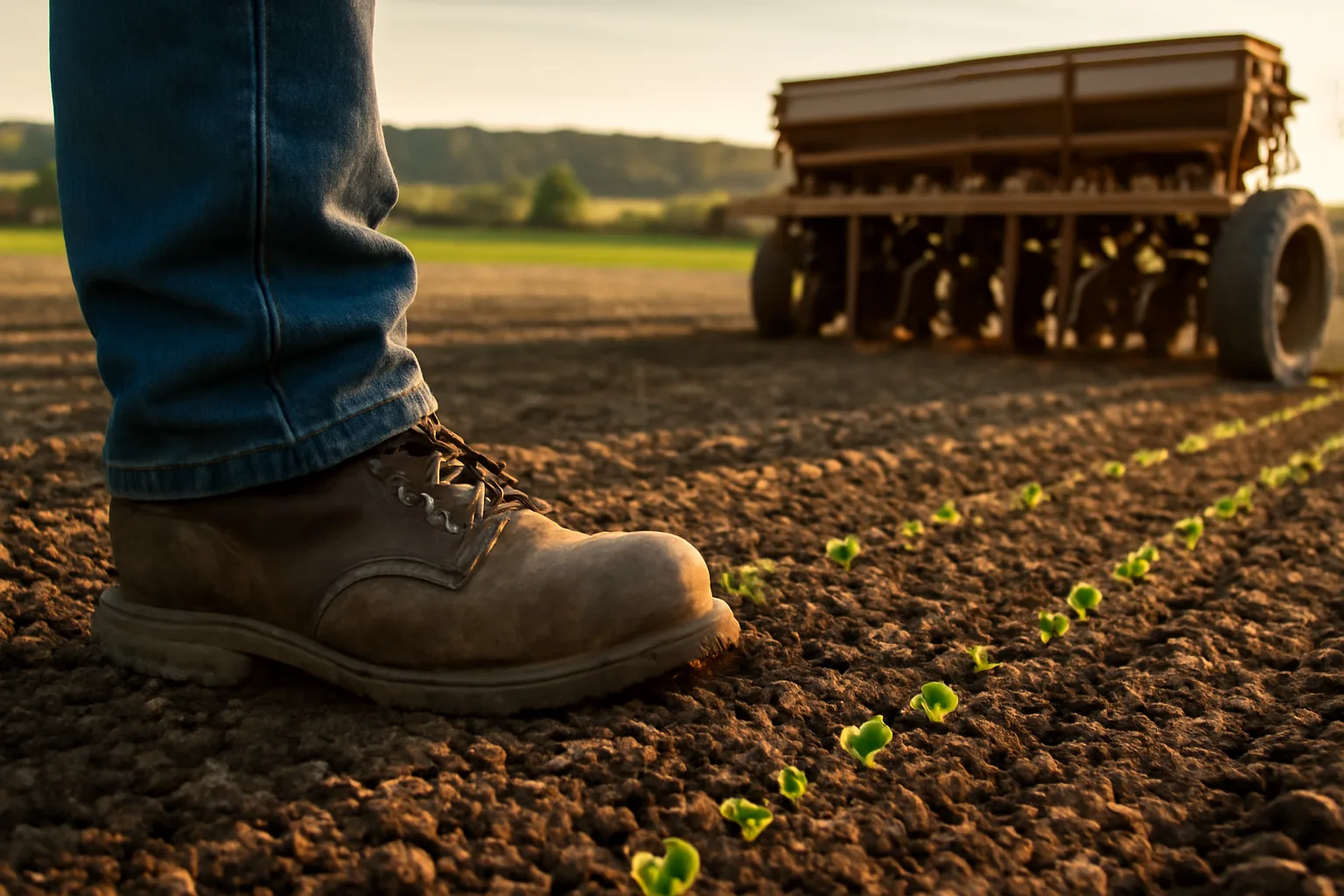
Alfalfa seed is tiny (about 200,000-250,000 seeds per pound) and it needs to hit a firm, fine seedbed at a shallow depth to have any chance. A rough, cloddy field kills more alfalfa stands than anything else short of bad pH. Start by killing existing sod or weeds, either with tillage or a burndown herbicide, several weeks ahead of planting. Then work the ground down to a fine, firm seedbed, something like the surface of a garden row. A good test: if your boot print sinks more than half an inch, the ground is too loose and you'll plant too deep. A cultipacker before and after seeding helps enormously here, pressing the seed into good soil contact without burying it. If you're broadcasting instead of drilling, cultipack after seeding no matter what; alfalfa seed sitting on top of loose soil with no contact will mostly just feed birds. Good equipment matters more for alfalfa than for almost any other food plot species because of that seed size and shallow depth requirement. If you're outfitting a plot program from scratch, the [equipment-and-methods hub] covers drills, cultipackers, and no-till options in more depth.
What seeding rate and depth work for alfalfa
| Alfalfa | 15-20 lbs/acre | 1/4-1/2 in | 4-5 years | |
|---|---|---|---|---|
| Red clover | 8-12 lbs/acre | 1/4-1/2 in | 2-3 years | |
| Oats | 2-3 bushels/acre | 1-1.5 in | annual | |
| Brassicas/turnips | 4-6 lbs/acre | 1/4-1/2 in | annual | For more on how alfalfa stacks up against clover and other legumes for your specific goals, deer food plot seed and food plot seed walk through species selection in more detail. |
Plant alfalfa at 15-20 lbs of seed per acre if drilling, or 20-25 lbs per acre if broadcasting (broadcast seeding always needs a bump in rate because germination and seed-to-soil contact are less reliable). Seeding depth should be 1/4 to 1/2 inch, no deeper. University of Minnesota Extension recommends a seeding depth of "1/4 to 1/2 inch on clay soils, up to 3/4 inch on lighter soils" precisely because alfalfa's tiny seed can't push through a thick soil cap [3]. Don't overseed thinking more is better. Overly thick stands compete with each other, weaken individual plant root systems, and actually reduce total forage yield and stand longevity. Here's a rough seeding comparison against other common perennial and annual plot species, useful if you're deciding what to put where: | Species | Seeding rate (drilled) | Seeding depth | Stand life |
Do you need to inoculate alfalfa seed
Yes, and this step gets skipped more than any other in food plot alfalfa planting. Alfalfa needs a specific rhizobium bacteria (Sinorhizobium meliloti) living in its root nodules to fix nitrogen from the air. If that bacteria isn't already present in your soil (and on land that's never grown alfalfa, it usually isn't), the plant will struggle and stay pale and stunted no matter how good your fertility is otherwise. Most commercial alfalfa seed comes pre-inoculated, but check the bag tag. If it's not inoculated, or if the inoculant is old, buy a fresh peat-based inoculant specific to alfalfa and coat the seed yourself right before planting. Iowa State University Extension notes that inoculant "should be applied close to the time of planting" because the live bacteria die off with heat and sun exposure [4]. Don't store inoculated seed in a hot truck cab for two weeks before planting. That's a common way to kill the bacteria and waste the whole point of inoculating.
How do you manage an alfalfa plot after it's established
Alfalfa needs mowing in its first year, mainly to control weeds while the young plants are still building root reserves. Clip weeds at 6-8 inches tall rather than letting them go to seed and shade out the alfalfa seedlings. Once established, most food plot managers mow or let deer graze alfalfa down periodically through summer to keep new, tender growth coming (deer strongly prefer fresh regrowth over stemmy, mature alfalfa). Avoid cutting or heavily grazing it within about 4-6 weeks of your first fall frost date; the plant needs that window to store root carbohydrates for winter survival, per standard extension forage management guidance. Re-test soil every 2-3 years. Alfalfa pulls potassium hard, and a stand that looked great in year one can decline fast in year three if potash isn't replenished. Watch for stand thinning after year 3 or 4; that's normal for alfalfa (this is why 4-5 years is considered a good run) and it's a sign to plan a rotation, often back to a grain or brassica plot for a year or two before returning to alfalfa or clover.
Do deer actually prefer alfalfa, and what else are they eating on your land
Deer readily eat alfalfa and it consistently ranks as one of their most preferred food plot forages, especially in spring and summer growth stages, alongside clover. But whitetail diets shift constantly with season and what's available, so it helps to know how alfalfa fits into the bigger picture. Do deer like clover? Yes, clover is arguably the most planted food plot legume in the country because it's cheaper to establish, more forgiving of average soil, and nearly as attractive as alfalfa. Where alfalfa needs pH 6.5+ and near-perfect drainage, clover tolerates pH down to about 6.0 and handles wetter ground better, per Penn State Extension forage guides. If you're not sure your soil can support alfalfa, clover is the safer bet. Do deer eat sorghum? Yes, deer will browse grain sorghum leaves and eat the seed heads, and sorghum is sometimes planted as a summer annual for its drought tolerance and as standing cover into fall and winter, though it's generally a secondary choice behind corn or soybeans for pure tonnage. Do deer like honey? This one shows up in search fairly often and it's worth a direct answer: deer are not meaningfully attracted to honey as bait or as a food plot additive, and there's no wildlife agency or extension guidance recommending it. It's not a real food plot practice; skip it. What are deer's favorite foods overall? Research and extension guidance consistently point to a short list: acorns (especially white oak family), soybeans, clover, alfalfa, and in late fall, brassicas like turnips and radishes once a frost sweetens the greens. Preference shifts by season, by regional food availability, and honestly by individual deer, so "favorite" is more of a moving target than a fixed answer.
When should you plant other common food plot species
Since alfalfa is often just one piece of a plot rotation, here's quick timing for the other species readers ask about most. When to plant oats for deer: oats are best as a fall planting, going in 60-90 days before your first frost, usually August through early September depending on latitude. They germinate fast, tolerate cool soil, and deer hit young oat shoots hard in September and October. Spring oat plantings work too but burn out fast in summer heat and are less common for deer plots. When to plant turnips for deer: turnips go in late summer, roughly 90-100 days before your average first frost (often late July through August in the North, into September in the South). Turnips need that frost to convert starches to sugars, which is exactly when deer switch from ignoring the greens to eating both tops and bulbs hard. When to plant food plots for deer generally: it splits into two windows almost everywhere in whitetail range: spring plantings (April-May) for warm-season annuals and perennials like alfalfa, clover, corn, and soybeans, and late-summer plantings (July-September, moving earlier the farther north you are) for cool-season annuals like oats, brassicas, and winter wheat. Your local NRCS or state extension planting date guide is the best source for exact windows in your county, since a September 1 planting date in Minnesota is very different from September 1 in Georgia. If you want the full month-by-month breakdown for your growing zone rather than piecing it together species by species, that's exactly what the [seasonal-calendars hub] is built for.
How much does an alfalfa food plot cost to establish
Alfalfa seed typically runs $3-6 per pound depending on variety and whether it's coated or inoculated, which puts seed cost alone at roughly $45-120 per acre at a 15-20 lb/acre rate. Add lime if your pH needs correcting (ag lime often runs $30-60 per ton delivered and spread, and you may need 1-2 tons/acre), plus phosphorus and potassium fertilizer based on your soil test, and a realistic first-year establishment cost lands somewhere between $150 and $400 per acre once you include seedbed prep. That sounds steep next to a $20 bag of clover seed for a half-acre plot, but remember alfalfa can produce for 4-5 years off that one establishment cost, versus replanting clover or annuals every year or two. Run the math over the life of the stand and the per-year cost often comes out close to clover. If you'd rather not guess at rates for your specific soil and region, a soil test result paired with a written plan takes the guesswork out. That's the whole idea behind the $99 one-time Custom Food Plot Plan, where you get species and rate recommendations built around your actual test numbers and your region instead of a generic bag rate.
What mistakes ruin most alfalfa food plots
The number one killer is planting alfalfa on ground that stays wet. Alfalfa has almost no tolerance for standing water or saturated soil; even a few days of wet feet in spring can wipe out a young stand. If a spot holds water after rain, don't plant alfalfa there no matter how good the rest of your soil test looks. The second most common mistake is skipping the soil test and guessing at lime. Planting alfalfa into pH 5.8 soil without correcting it first almost guarantees a thin, weak stand that gets outcompeted by weeds within a season. Third is seeding too deep. Because the seed is so small, even an inch of soil coverage can be fatal. If you're used to planting corn or beans at 1.5-2 inches, you have to recalibrate for alfalfa's 1/4-1/2 inch depth. Last, a lot of hunters mow too late in fall, right before frost, which robs the plant of the root reserves it needs to survive winter. Stop mowing 4-6 weeks before your expected first frost and let the plant harden off.
Frequently asked questions
Do deer eat sorghum in food plots?
Yes, deer browse grain sorghum leaves and will eat the seed heads, though it's usually planted more for drought tolerance and standing winter cover than as a top attractant. Corn and soybeans typically outperform sorghum where deer preference is the main goal.
Do deer like clover better than alfalfa?
Both rank among deer's most preferred forages, and preference tests generally show them close. Clover tolerates lower pH (down to about 6.0) and wetter soil than alfalfa, per Penn State Extension, making it the more forgiving choice on average food plot ground.
When should you plant deer food plots overall?
Most regions split into two windows: spring (April-May) for warm-season perennials and annuals like alfalfa, clover, corn, and soybeans, and late summer (July-September, earlier up north) for cool-season annuals like oats, brassicas, and wheat. Exact dates depend on your first frost date.
When is the best time to plant oats for deer?
Plant oats 60-90 days before your area's first fall frost, usually August into early September depending on latitude. They germinate quickly in cool soil and deer readily hit young oat shoots through September and October.
When should turnips go in for a deer food plot?
Seed turnips roughly 90-100 days before your average first frost, often late July through August in northern states and into September farther south. Frost converts starches to sugars in the leaves and bulbs, which is when deer use jumps sharply.
What exactly is a food plot?
A food plot is a planted area on hunting land, usually a quarter acre to several acres, seeded with forage, grain, or brassicas to supplement natural deer browse and hold deer on the property. Common species include clover, alfalfa, brassicas, corn, and soybeans.
What are deer's favorite foods according to research?
Extension and wildlife research points to acorns (white oak family especially), soybeans, clover, and alfalfa as consistently high-preference foods, with frost-sweetened brassicas like turnips added in late fall. Preference shifts by season and by what's locally available.
Do deer like honey as a food plot attractant?
No. There's no extension, university, or wildlife agency guidance supporting honey as a deer attractant, and it isn't a real food plot practice. Save the money and put it toward seed, lime, or fertilizer instead.
What soil pH does alfalfa need to grow well?
Alfalfa needs a soil pH of 6.5 to 7.0 for optimum growth, according to Purdue University Extension. Below pH 6.0, both stand establishment and the plant's nitrogen-fixing nodulation drop off sharply, which weakens the whole stand.
How deep should you plant alfalfa seed?
Seed alfalfa at 1/4 to 1/2 inch deep on clay soils, up to 3/4 inch on lighter, sandier soils, per University of Minnesota Extension. Alfalfa's tiny seed size means planting too deep is the most common cause of poor germination.
Do you need to inoculate alfalfa seed before planting?
Yes, unless the bag is already pre-inoculated and fresh. Alfalfa needs a specific rhizobium bacteria in the soil to fix nitrogen, and land that's never grown alfalfa usually lacks it. Apply inoculant close to planting time since the live bacteria die off with heat exposure.
How long does an alfalfa food plot last before replanting?
A well-managed alfalfa stand typically produces for 4-5 years before it thins out enough to need rotation or replanting. Regular soil testing and potassium fertilization every 2-3 years help extend that productive window.
Sources
- Purdue University Extension, Alfalfa Soil Fertility: Alfalfa requires a soil pH of 6.5 to 7.0 for optimum growth and nodulation
- Ohio State University Extension, Lime Recommendations: Moving soil pH by a full point on clay-loam soil can require 1-2 tons of ag lime per acre
- University of Minnesota Extension, Alfalfa Seeding Guide: Recommended alfalfa seeding depth is 1/4 to 1/2 inch on clay soils, up to 3/4 inch on lighter soils
- Iowa State University Extension, Alfalfa Inoculation: Alfalfa inoculant should be applied close to the time of planting because bacteria die off with exposure
- University of Missouri Extension: Proper seedbed preparation, including firm soil and elimination of weed competition, is critical for successful alfalfa establishment
- University of Georgia Extension: Deer show strong seasonal preference for alfalfa, particularly during spring green-up and summer months when protein demands are highest
- Purdue University Department of Agronomy: Soil testing before planting alfalfa helps determine lime and fertilizer needs to correct pH and nutrient deficiencies