Last updated 2026-07-26
TL;DR
Yes, you can plant a food plot without spraying. Skip herbicide by choosing a clean or newly disked site, using tillage or a heavy cover crop to smother weeds, and picking competitive species like oats, clover, or brassicas that establish fast. You'll work harder on site prep and may deal with more weed pressure, but it's a real, workable approach.
can you really plant a food plot without spraying herbicide?
Yes. People did it for decades before glyphosate and imazapic became standard tools, and plenty of hunters still do it today, either by choice (organic ground, chemical-sensitive neighbors, cost) or by necessity (no sprayer, no time to spray and wait). The tradeoff is real, though. Herbicide buys you a clean seedbed with almost no labor. Skip it, and you're replacing chemistry with tillage, timing, and species selection. The core idea is simple. Weeds win when they get a head start or when your planted crop germinates slow and weak. Beat them with mechanical kill (disking, tilling, mowing at the right time) and with species that come up fast and shade out competition. Clover, brassicas, and cereal grains all do this reasonably well if you time planting to when weed pressure is naturally lower, like late summer into a cereal grain planting, or right after a frost-killed cover crop. Extension agronomists are blunt about the alternative costs. The University of Wisconsin-Madison Extension notes that no-till and reduced-till systems for food plots generally rely on herbicide to control existing vegetation before planting, precisely because tillage alone often isn't enough to fully suppress perennial weeds and sod. That's an honest tradeoff to know going in: without spray, you're leaning harder on tillage, timing, and crop competition, and your plot probably won't look as clean as a sprayed one, especially in year one on rough ground.
what is a food plot, exactly?
A food plot is a planted patch, usually somewhere between a quarter acre and a few acres, put in specifically to grow forage that attracts and holds deer or other wildlife on a property. It's not a farm field grown for yield and profit. It's grown for palatability, tonnage per acre isn't the only goal, and timing (so it's green and attractive during hunting season or the stress period of late winter) matters as much as total production. State wildlife agencies generally treat food plots as a habitat management practice distinct from baiting, though the line matters legally. The Pennsylvania Game Commission, for example, defines a food plot as a planted area of at least one contiguous acre, disked into the soil, which is legal statewide, while distinguishing it from bait (grain, fruit, or other food placed on the ground), which is restricted in parts of the state [1]. Rules like this vary a lot state to state, so check your own state wildlife agency's baiting and feeding regulations before you plant, especially if you're in a CWD management zone where feeding and baiting bans are common. Most hunters build plots around one of two purposes: a fall/winter attraction plot (brassicas, cereal grains, clover) timed for hunting season, or a season-long or perennial forage source (clover, chicory, alfalfa) that also helps deer through summer lactation and antler growth. Good plots usually do a mix of both.
when to plant food plots for deer (by region and species)
| Clover | April-May or Aug 1-Sept 1 | Sept-Oct or Feb-Mar | |
|---|---|---|---|
| Oats | Aug 1-Sept 15 | Sept-Nov | |
| Brassicas/turnips | July 15-Aug 15 | Aug 15-Sept 30 | |
| Soybeans | May-June | May-June | |
| Sorghum/milo | Late May-June | May-June | These windows aren't precise to the week. Local frost dates and your own soil test results should adjust them. For a plan built around your specific coordinates and soil test, a food plot whitetail planning resource or a custom plan service can dial in exact dates instead of a regional guess. |
Timing is the single biggest lever you control when you're not spraying, because a well-timed planting beats weed pressure on its own. Broadly, food plot planting falls into two windows: spring/early summer for warm-season perennials and annuals, and late summer into early fall for cool-season annuals and perennials. Spring plantings (April through early June in most of the whitetail's range) work for clover, chicory, alfalfa, soybeans, and warm-season annuals like sorghum or milo. Fall plantings (mid-August through September in northern states, into October in the South) work for brassicas, cereal grains (oats, wheat, rye), and clover frost-seeding or dormant seeding. Mississippi State University's Deer Lab recommends late summer plantings of brassicas and cereal grains roughly 60 to 90 days before your typical first fall frost, timed so the plants mature into their most palatable, high-sugar stage right as hunting season opens [2]. Because frost dates vary widely by latitude, that translates to early to mid-August in the upper Midwest and Northeast, and into September in the mid-South. Here's a rough season-by-region planting window for the most common species: | Species | Northern zone (zones 3-5) | Southern zone (zones 6-8) |
how do you kill weeds and prep ground without chemicals?
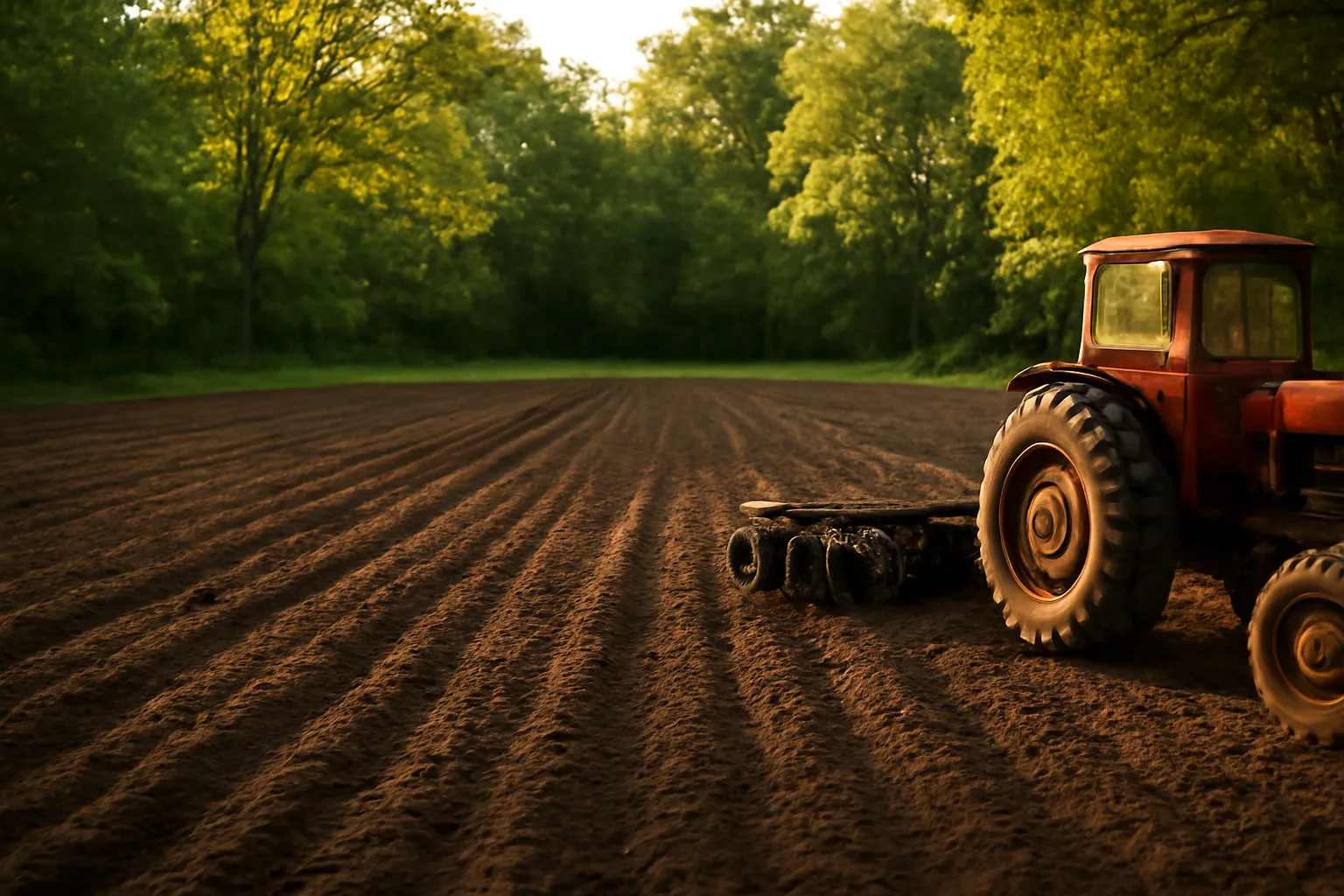
Tillage is your main tool. Disking or tilling 2 to 3 times over several weeks, letting weed seeds germinate and then killing the new growth with each pass, is the closest mechanical equivalent to a burndown spray. This is sometimes called the 'stale seedbed' technique: till once, wait 10 to 14 days for weeds to sprout, till again to kill them, and plant into the third pass. Mowing works too, especially on existing perennial weeds or a cover crop you're terminating. Mow at flowering or right before seed set to cut off the weed's ability to reproduce, then till or drill directly into the residue. This won't kill deep-rooted perennials like Canada thistle or johnsongrass outright, so if your ground has heavy perennial weed pressure, expect a rougher first year or two without herbicide. Crimping and no-till drilling into a terminated cover crop is a third option, more common on larger acreages with the right equipment. A roller-crimper flattens and kills an annual cover crop (cereal rye is the classic choice) at the right growth stage, and you drill your food plot species directly into the mat. Cereal rye is one of the most reliable cover crops for mechanical (crimp) termination because its stem lignifies and becomes easy to crimp-kill at anthesis, unlike many broadleaf covers, a point covered in USDA Natural Resources Conservation Service cover crop termination guidance [3]. Smothering with tarps or heavy mulch works on very small plots (garden-plot scale, under a quarter acre) but isn't practical at food-plot scale for most hunters. Whichever method you use, a current soil test still drives your lime and fertilizer decisions. Skipping herbicide doesn't change the chemistry of your dirt, and a plot planted into acidic, nutrient-poor soil will struggle to outcompete weeds regardless of tillage. Your soil test lab's recommendations are the real authority here, not a general rule of thumb.
which food plot species compete best against weeds without spray?
Fast germination and aggressive early growth are what you want. Species that sit in the ground slow to emerge lose the race to weeds every time. Cereal grains (oats, winter wheat, cereal rye) are probably the single best no-spray option. They germinate in 5 to 10 days, grow fast in cool weather when many competing weeds are dormant or slow, and cereal rye in particular releases allelopathic compounds that suppress some weed seed germination, an effect documented in USDA-ARS research on rye cover crop residue [3]. Brassicas (turnips, radishes, rape) also compete well when planted into a clean, tilled seedbed in later summer, since many summer annual weeds are past their peak germination window by then. The catch: brassica seed is tiny and needs good seed-to-soil contact and shallow planting depth (about 1/4 to 1/2 inch), so a rough, cloddy no-till seedbed can hurt germination more than it hurts a bigger-seeded crop like beans. Clover is a slower establisher and needs more weed-free ground to get started, which makes it harder to grow without some form of herbicide or very clean tillage. That said, frost-seeding clover into a short, mowed grass base (a technique where you broadcast clover seed onto frozen ground in late winter and let freeze-thaw cycles work it into the soil) is a low-input, no-spray method that works reasonably well, particularly for red and white clover overseeded into existing grass. Soybeans and sorghum need warm soil and decent spacing to fight through summer weed pressure. Without herbicide, plan on one or two mowing passes between rows during establishment if you're not drilling into a stale seedbed. For a rundown of species options and how they stack up on cost, tonnage, and deer preference, see deer food plot seed and food plot seed.
do deer eat sorghum?
Yes, deer eat sorghum, mainly the grain heads in fall and winter once they mature, and they'll browse the young leafy growth some in summer too. Sorghum (grain sorghum or milo) is more commonly planted as a summer annual for its drought tolerance and as a standing grain source into winter, similar to how corn is used, rather than as a primary summer forage. It's not usually a deer's first choice compared to soybeans or a mixed brassica blend, but it holds up well in dry years and works as a structural, cover-providing plot component alongside other species. Sorghum is genuinely useful for no-spray plots too, since it's a fast, aggressive summer grower once soil warms, and it competes reasonably well against summer weeds if planted into a clean, tilled bed.
do deer eat clover, and do they actually like it?
Yes, deer eat clover heavily, and most wildlife biologists rank it among the most consistently preferred forages available to a food plot manager. Clover stays palatable and high in protein (often 25-30% crude protein in vegetative growth, per numerous state extension forage tables) through spring and summer, which matters most during antler growth and lactation, more than hunting season. The Mississippi State University Deer Lab lists clover among the top perennial forage choices for whitetail food plots specifically because of its combination of high protein, long grazing window, and reliable regrowth after grazing pressure [2]. Deer will return to a healthy clover stand dozens of times across a season, unlike an annual that gets grazed out or matures past palatability. The downside without spray: clover competes poorly against weeds in its establishment year. If you're going no-spray, plant clover into the cleanest seedbed you can manage, mow aggressively in year one to keep weeds from shading it out, and consider frost-seeding into existing short grass instead of a full tillage establishment. For a broader look at clover's role in a plot rotation, see deer food plots.
when to plant oats for deer
Plant oats in late summer to early fall, roughly 60 to 90 days before your area's first killing frost, so they're in vigorous leafy growth right as hunting season opens. In the northern whitetail range (Minnesota, Wisconsin, Michigan, upper New England) that's typically early August to early September. In the mid-South and lower Midwest, oats go in from mid-September into October. Oats germinate fast (often within a week in warm, moist soil) and put on a lot of leaf tonnage quickly, which is exactly what you want for a no-spray plot, since fast canopy closure shades out a lot of the late-summer weed flush. They also winterkill in most of the northern U.S. once temperatures drop into the low teens or below for sustained periods, so oats work well as a single-season attraction crop without becoming a long-term maintenance headache. A spring planting of oats is possible too (as a nurse crop for spring clover establishment, for instance) but it's less common as a standalone deer plot use, since spring-planted oats mature and go to seed before fall hunting season arrives.
when to plant turnips for deer
Plant turnips in mid to late summer, generally 80 to 100 days before your first expected fall frost, since turnips (and brassicas generally) need that full window to bulb out and reach peak palatability. That puts most northern zones planting turnips from mid-July to mid-August, and southern zones from mid-August through September. Turnips have an odd palatability curve worth planning around: deer often ignore the leafy tops early in the season and focus on other food sources, then hit turnip plots hard after the first hard frosts convert starches in the bulb and leaves to sugars. This is well documented in state wildlife agency food plot guides, including Mississippi State's Deer Lab publications on brassica management, which note that deer use of brassica plots increases substantially after a killing frost, sometimes dramatically within days [2]. Because turnip seed is tiny, no-spray establishment depends heavily on a fine, firm, weed-free seedbed. A rough disked field with big clods will bury small brassica seed too deep or leave it exposed, both of which hurt germination badly. If you're skipping herbicide, this is one of the pickier species to get right; a stale seedbed (till, wait for weed flush, till again, then plant) matters more here than almost anywhere else in the rotation.
what's a deer's favorite food, and does that matter for plot planning?
There's no single universal favorite; deer preference shifts by season, region, and what's already available on the landscape. That said, across most published forage preference studies and state extension guides, a few patterns hold up consistently: deer strongly prefer high-protein legumes (clover, soybeans, alfalfa) during spring and summer, and they shift toward high-carbohydrate, high-sugar foods (acorns, corn, brassica bulbs after frost) in fall and winter as they build fat reserves. Mississippi State University's Deer Lab and multiple university extension forage-preference trials generally rank soybeans and clover among the most consistently preferred plantable forages, with acorns from white oak group species often out-competing any planted food plot when they're on the ground in a good mast year [2]. That's a hard truth for plot planners: no plot, sprayed or not, competes with a heavy white oak acorn drop happening 200 yards away. Practically, this means your plot's job isn't to be a deer's single favorite food nonstop. It's to fill gaps: providing protein in a summer when natural browse is thin, or standing forage in a winter when acorns are gone and native browse is buried in snow. Building a rotation across multiple species (not betting everything on one plot type) usually beats chasing a single "best" species.
do deer like honey, or is that a myth for food plots?
Deer don't eat honey and it has no place in food plot planning. This question usually comes up confused with 'honeysuckle,' which deer do browse heavily, particularly Japanese honeysuckle (Lonicera japonica) and native bush honeysuckles, both used as browse and sometimes intentionally left or planted as a supplemental woody forage component near plots. If you're seeing 'honey' attractant products marketed for deer, those are typically molasses or sugar-based mineral and attractant mixes, not honey itself, and they function as a scent/taste lure rather than a nutritional food source. They're not a food plot input and don't factor into planting decisions at all.
no-spray vs. sprayed food plots: what actually changes
| Labor/time | Higher (multiple tillage passes, more mowing) | Lower (spray, wait 7-14 days, plant) | |
|---|---|---|---|
| Equipment needed | Disk, tiller, or drill; mower | Sprayer (ATV or tractor-mounted), plus tillage/drill | |
| Weed control reliability | Moderate, weather-dependent | High, especially on perennial weeds/sod | |
| Best-fit species | Cereal grains, brassicas into stale seedbed, frost-seeded clover | Any species, including no-till drilled beans and clover | |
| Cost | Lower input cost, higher labor cost | Herbicide + surfactant cost (often $15-40/acre depending on product and rate), lower labor | |
| First-year results on rough ground | Often weedier, less uniform | Usually cleaner | The honest takeaway: no-spray works best on ground you can till properly, with species that establish fast, and with realistic expectations that year one won't look like a magazine cover photo. It gets easier every year as you deplete the weed seed bank through repeated tillage and competitive planting. |
Here's the real, honest comparison, not a sales pitch for either method. | Factor | No-spray approach | Herbicide-assisted approach |
putting together a no-spray planting plan
Start with a soil test, always. Lime takes months to fully adjust pH, so testing in spring for a fall planting (or fall for a spring planting) gives lime time to work before you need it. Your soil test lab's fertilizer and lime recommendations are the real authority on your specific dirt; nothing in this article substitutes for that report. Pick a site with a manageable weed history if you can. A field that was row-cropped or hayed recently has far less weed seed pressure than an old fallow field full of established perennial weeds and brush. If you're stuck with rough ground, budget for two seasons of stale-seedbed tillage before expecting a clean stand. Match species to your timing window and your tillage capability. Cereal grains and brassicas planted into a properly prepped, fine seedbed in the correct late-summer window are the most forgiving no-spray choices for most hunters. Clover is worth it long-term but needs more patience and cleaner ground to establish without chemical help. Check your state wildlife agency's baiting and supplemental feeding regulations before you plant anything, especially brassicas and grain plots in states with CWD zones, since some states regulate large-seeded grain plots differently from broadcast forage plots. Rules genuinely vary; what's legal in Georgia may not be legal in Michigan. If mapping out species, timing, and seedbed prep across your specific acreage feels like a lot to juggle without a spray program to fall back on, a $99 one-time Custom Food Plot Plan gives you a written plan tailored to your soil test, coordinates, and equipment, built through plotseason.com/plot-plan-builder. It's general planning guidance, not site-specific agronomy, and it won't promise you a certain level of deer activity, but it takes a lot of the guesswork out of picking species and dates.
Frequently asked questions
Can you plant a food plot without using any herbicide at all?
Yes. Rely on repeated tillage (a stale seedbed), mowing, and fast-establishing competitive species like oats, cereal rye, and brassicas timed for low weed pressure windows. It takes more labor and patience, and first-year results on weedy ground are usually less clean than a sprayed plot, but it's a proven, workable method.
Do deer eat sorghum in food plots?
Yes, deer eat sorghum grain heads in fall and winter and browse the young leafy growth some in summer. It's more often used as a drought-tolerant summer annual and standing winter grain source than as a primary summer forage, and it's not usually a deer's top preference compared to soybeans or clover.
Do deer eat clover, and is it worth planting?
Yes, clover is one of the most consistently preferred food plot forages, offering high protein (often 25-30% crude protein) through spring and summer during antler growth and lactation. It's worth planting, though it establishes slowly and competes poorly with weeds in year one, especially without herbicide.
When should you plant food plots for deer?
Cool-season annuals and perennials (oats, brassicas, clover) generally go in mid-August through September, roughly 60 to 100 days before your area's first frost. Warm-season options (clover, soybeans, sorghum) go in April through June. Exact dates shift by latitude, so check your local frost dates.
Do deer like clover more than other food plot species?
Clover ranks among the top preferred forages in most extension and wildlife agency guidance, alongside soybeans, largely because of its high protein content and long grazing window. That said, preference shifts seasonally; deer often favor high-sugar foods like frosted brassicas or acorns once fall arrives.
When should you plant oats for deer food plots?
Plant oats 60 to 90 days before your area's first killing frost, which is early August to early September in northern states and mid-September into October farther south. Oats germinate fast, grow leafy tonnage quickly, and typically winterkill in the northern U.S. once hard freezes set in.
When is the best time to plant food plots for deer overall?
Most hunters plant twice a year: spring (April-June) for warm-season perennials and annuals like clover and soybeans, and late summer (mid-August through September) for cool-season annuals like oats, wheat, and brassicas. Fall plantings are timed to mature right as hunting season opens.
When should you plant turnips for deer?
Plant turnips 80 to 100 days before your first fall frost, roughly mid-July to mid-August in northern zones and mid-August through September farther south. Deer often ignore turnip tops early and hit them hard after the first hard frost converts starches to sugars in the bulb and leaves.
What exactly is a food plot?
A food plot is a planted area, usually a quarter acre to a few acres, established specifically to grow forage that attracts and holds deer or other wildlife. Unlike a farm crop, it's grown for palatability and seasonal timing rather than yield, and many state agencies define minimum size and tillage requirements to distinguish it legally from baiting.
What are deer's favorite foods overall?
There's no single universal favorite; deer prefer high-protein legumes like clover and soybeans in spring and summer, and shift toward high-carb foods like acorns, corn, and frosted brassica bulbs in fall and winter. White oak acorns during a good mast year often out-compete any planted food plot nearby.
Do deer like honey or honey-based attractants?
Deer don't eat honey itself, and it has no real role in food plot planning. Products marketed with 'honey' as an attractant are usually molasses or sugar-based scent lures, not a nutritional food source, and the confusion often comes from honeysuckle, a plant deer do browse heavily.
Is it legal to plant a food plot without herbicide near feeders in my state?
Legality of food plots themselves generally doesn't depend on herbicide use, but baiting and supplemental feeding rules vary widely by state and sometimes by county or CWD zone. Check your state wildlife agency's current baiting and feeding regulations before combining a food plot with any other attractant.
How much harder is a no-spray food plot to maintain than a sprayed one?
Expect noticeably more labor: two to three extra tillage passes for a stale seedbed, more frequent mowing, and generally weedier results in year one, especially on ground with heavy perennial weed history. It gets easier each season as tillage depletes the weed seed bank.
Sources
- Pennsylvania Game Commission, food plot and baiting regulations: Definition of a food plot as a planted, disked area of at least one contiguous acre, distinct from bait
- USDA Natural Resources Conservation Service, "Cover Crop Termination Guidelines": Cereal rye stem lignifies and becomes easy to crimp-kill at anthesis, and rye residue releases compounds that suppress germination of some competing weed species
- USDA Agricultural Research Service, ARS study on cereal rye allelopathy (Journal of Chemical Ecology): Cereal rye residue releases allelopathic compounds documented to suppress germination of certain weed species
- University of Georgia Extension: Discusses recommended food plot forage species, including clovers and brassicas, and their planting windows by region
- University of Missouri Extension: Covers no-till and chemical-free ground preparation methods for establishing wildlife food plots
- USDA Forest Service: Discusses deer preference for clover and other forage species in food plot design