Last updated 2026-07-25
TL;DR
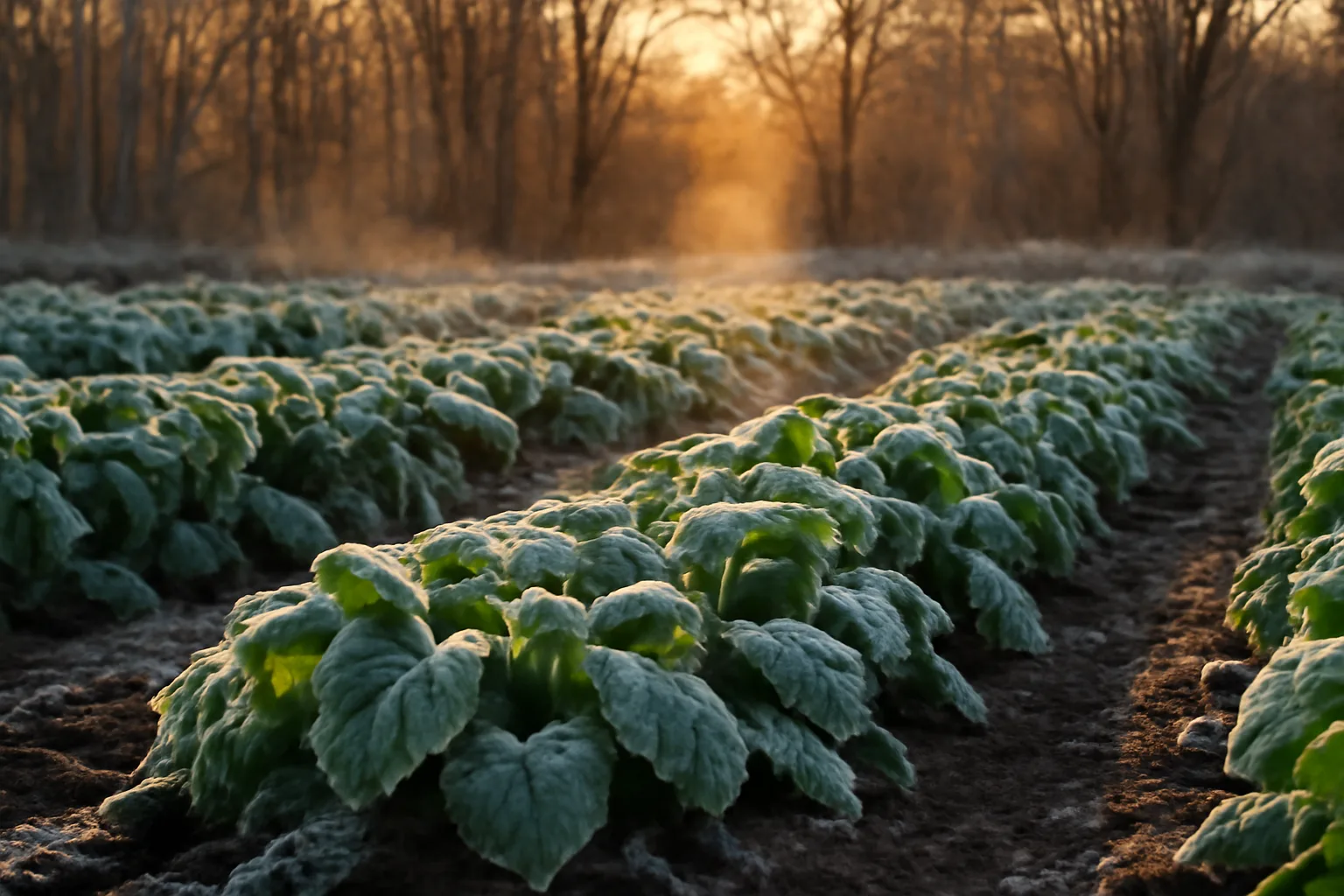
Late season food plots are brassica, cereal grain, or clover plots designed to feed deer through the post-rut into winter, when natural browse is scarce and deer need carbs and fiber. Plant turnips and brassicas 60 to 90 days before your first hard frost, usually late July through August depending on zone.
What is a food plot, exactly
A food plot is a planted patch of forage on land you own or lease, put there specifically to feed deer and other wildlife (and often to hold them in shooting range). It's not landscaping and it's not a garden. Most plots run anywhere from a quarter acre to several acres, planted with annuals like brassicas, cereal grains, or clover, or perennials like alfalfa and chicory. The USDA Natural Resources Conservation Service treats food plots as a wildlife habitat practice, and NRCS Conservation Practice Standard 645 (Upland Wildlife Habitat Management) covers planted forage plots as one tool for improving food availability for game species [1]. That's the technical framing. In practice, most hunters plant a plot because deer need calories, and a well-timed plot puts calories where the hunter wants deer to be. Late season food plots are a specific category. They're planted in mid to late summer, but timed to still be palatable and available in November, December, even into January in the North. The goal isn't just attraction. It's nutrition during the hardest stretch of the year, when acorns are gone, browse is picked over, and deer (especially bucks coming off the rut) are running a calorie deficit. If you're new to plots generally, it helps to understand the different food plot whitetail strategies before narrowing down to a late-season-specific plan, since your late plot should complement whatever you've got growing in spring and summer.
When should you plant food plots for deer
| Northern Midwest / Upper Great Lakes | mid-Sept | mid-July to early Aug | |
|---|---|---|---|
| Central Midwest / Mid-South | early-mid Oct | late July to mid-Aug | |
| Southeast / Lower South | early-mid Nov | mid-Aug to mid-Sept | Those are rough guides, not gospel. Check your county extension frost data before you buy seed. Planting brassicas too early means they bolt or get overgrazed before the cold snaps that sweeten them up. Too late and they don't bulk up before growth stops. |
Timing depends entirely on what you're planting and your frost dates, not a single calendar date that works nationwide. Spring/summer plots (clover, chicory, soybeans) go in after last frost, typically April through June. Late season plots (brassicas, cereal grains) go in 60 to 90 days before your area's first killing frost, which for most of the whitetail range falls between late July and early September. Your local cooperative extension office publishes frost date guidance for your county, and that's the number you actually need, not a generic zone map. The National Oceanic and Atmospheric Administration's National Centers for Environmental Information tracks probability-based freeze dates by station across the country [2]. If you're in central Wisconsin, first frost might hit by mid-September. If you're in southern Georgia, you've got until early November. That gap is the whole reason a national planting calendar doesn't work. Here's a rough planting window breakdown by region for late-season brassica/cereal blends: | Region | Approx. first frost | Plant brassicas/cereals |
When to plant turnips for deer
Plant turnips 80 to 90 days before your first expected hard frost, which for most of the whitetail range lands in late July through mid-August. Turnips need that full runway to develop bulbs and enough leaf mass to matter as a food source, and they actually get better after a couple of frosts convert starches to sugars. This is the single most common mistake with turnip plots: planting them in September because that's when hunters start thinking about deer season. By then it's often too late for the plant to bulb out properly in northern and central zones. Mississippi State University Extension's guide on brassica forages recommends planting turnips and other brassicas roughly 60 to 90 days before the first killing frost in the region [3]. Seeding rate for turnips alone runs about 4 to 6 lbs per acre broadcast, shallow-covered or cultipacked into a firm seedbed. Most hunters don't plant turnips alone though. They blend them with other brassicas (rape, kale) and sometimes a cereal grain like winter wheat or oats for structure and quicker early cover, since turnips are slow to bulk up top growth in the first few weeks. Deer often ignore turnip tops early in the season and hit them hard after the first hard frosts of November and December, once sugar content rises. That delayed-interest pattern trips up a lot of first-time plotters who think the plot "isn't working" in October, then watch it get hammered to the dirt by Christmas.
When to plant oats for deer
Plant oats 6 to 8 weeks before your first frost date, generally August in northern zones and into September in the South. Oats germinate fast, usually within a week under good moisture, and they're one of the most reliable cool-season cereal grains for a quick-growing late season attractant. Oats are winter-killed in most of the whitetail range, meaning they die back hard once temperatures drop into the teens and lower, unlike winter wheat or cereal rye which survive into spring. That's not necessarily a downside for a late season plot. Deer often prefer oats in the November-December window specifically because the leaf is still tender and hasn't gone through the tough, fibrous stage that older cereal rye can reach. Kansas State University's forage guidance lists oats among the fastest-establishing cool-season cereal grains, typically seeded at 2 to 3 bushels (roughly 64 to 96 lbs) per acre for forage stands [4]. A lot of late-season blends pair oats with turnips or winter peas for a mixed carb-and-fiber, high-and-low canopy plot. If you're in a zone with a longer fall (say, Zone 7 or warmer), cereal rye is often the better standalone choice for late season because it tolerates cold better and stays green further into winter than oats do.
Do deer eat sorghum
Yes, deer eat grain sorghum (milo), both the standing grain heads and the foliage, and it's a legitimate late season and winter food source, especially in the South and Midwest. Sorghum is more drought-tolerant than corn and often gets planted as a corn substitute in drier soils or in years with unreliable rainfall. Sorghum's real value in a late season plot comes from standing grain that holds through winter storms better than some other grains, plus it offers thick vertical cover that doubles as a bedding or screening component right next to a feeding area. It's not usually the top choice for pure attraction compared to brassicas or beans, but as a structural and supplemental grain crop it earns its acreage on a lot of properties. One caution: sorghum and sorghum-sudangrass hybrids can develop elevated prussic acid (cyanide compound) levels in young, frost-damaged, or drought-stressed growth. The Oklahoma State University Extension fact sheet on prussic acid poisoning describes this risk specifically for sorghum-family forages grazed by livestock [4]. This is mainly a livestock grazing concern rather than a whitetail food plot concern, since deer browse selectively and in small quantities. Still, it's worth knowing if you're also running cattle or goats on the same ground.
Do deer eat clover, and do deer like clover
Yes, deer eat clover readily and it's one of the most consistently preferred forages in food plot research, but clover's real strength is spring through fall, not deep winter. Clover keeps producing digestible, high-protein forage through the growing season, and it survives light frosts, but it goes dormant or gets buried under snow once real winter sets in across the northern and central whitetail range. That means clover plays a supporting role in a late season strategy rather than the lead. If you've got clover established from spring planting, it'll still get browsed in November and early December in many areas, especially in the South where it may stay green all winter. But for a true late-December-into-January food source in snow country, brassicas and standing grain outperform clover because clover simply isn't there once it's buried or gone dormant. White clover (Trifolium repens) and red clover (Trifolium pratense) are the two most commonly planted species. Clover and other legumes generally rank among the highest-preference forages in whitetail diet studies, alongside soybeans, based on long-standing wildlife forage research from land-grant universities [5]. If your property has good clover stands, don't rip them up to chase a brassica trend. Just add a late-season-specific plot alongside it rather than replacing it. For a broader look at where clover fits against other perennial options, see deer food plots for a species comparison.
What are deer's favorite foods, really
There's no single universal "favorite," because preference shifts by season, region, and what's available naturally, but acorns, soybeans, clover, and standing corn consistently rank at or near the top across multiple studies and regions. Deer are opportunistic browsers whose diet is driven heavily by what's calorie-dense and available at that moment. In fall, hard mast (acorns, especially white oak acorns which are lower in tannin and more palatable than red oak acorns) is often the top natural preference where it's available. This preference for white oak over red oak acorns, tied to lower tannin content, is a long-documented finding in wildlife forage research from land-grant universities [6]. When acorns run out, which usually happens by December in most years, deer shift hard toward whatever standing crop or planted forage is left: brassicas, cereal grains, or crop field leftovers like corn and soybeans. So "favorite food" is really a moving target tied to a nutritional need and a seasonal calendar. Early season, deer want protein for antler growth and lactation recovery. Rut season, they eat less overall and burn more. Late season, they want carbs and volume to survive cold and rebuild fat reserves. A smart plot plan matches the forage to that calendar rather than planting one thing and hoping it works year-round. For species-specific comparisons across a full season plan, deer food plot seed breaks down which seed types answer which seasonal need.
Do deer like honey (as in honeysuckle, or literal honey)
If the question is about honey the substance, no, deer don't seek out honey and it's not a food plot or feeding consideration at all. This one shows up in search because people are usually asking about Japanese honeysuckle (Lonicera japonica), a woody vine that deer do browse heavily, especially in the South. Japanese honeysuckle is a preferred deer browse in many parts of its range. The U.S. Forest Service's Fire Effects Information System notes that white-tailed deer browse Japanese honeysuckle and that it retains green leaves into late fall and winter in parts of its range [7], which is exactly why some managers tolerate it despite its invasive classification in many states. Honeysuckle isn't something you'd plant in a food plot in the conventional sense. It's a vine, not a plot crop, and it's regulated or restricted as invasive in a number of states. But if you've got established honeysuckle thickets on your property, they're doing real winter browse work already, and it's worth knowing that before you clear them out for plot expansion.
How do you build a late season food plot plan, step by step
Start with a soil test, then work backward from your local first frost date, then pick a species mix that matches your frost timing and deer density. Skipping the soil test is the single most common way hunters waste money on a late season plot, because brassicas in particular are heavy feeders and respond dramatically to correct pH and fertility. Clemson Cooperative Extension's guidance on brassica forage crops for deer recommends a soil pH between 6.0 and 7.0 for brassica plantings, with lime applied based on soil test results . Your soil test lab is the authority on exact lime and fertilizer rates for your specific field, not a blog post or a bag label, since soil chemistry varies field to field even on the same farm. Once you've got your test back, here's the general sequence: 1. Pull soil samples 6 to 8 inches deep, several cores per plot, mixed into one composite sample per field. 2. Apply lime according to the lab's recommendation, months ahead of planting if you can, since lime takes time to adjust pH. 3. Pick your species mix based on your frost date and your goals (pure attraction vs. tonnage vs. bedding-adjacent screening). 4. Plant into a firm, weed-suppressed seedbed, at the seeding rate for your species, timed to the frost window covered earlier in this article. 5. Fertilize according to soil test recommendations, typically split between a starter application at planting and sometimes a top-dress for brassicas that need extra nitrogen mid-season. If you'd rather skip the guesswork on species mix and rates for your specific property, that's exactly the gap a Custom Food Plot Plan is built to fill: a $99 one-time plan based on your zone, soil test, and equipment, though your soil lab remains the final word on lime and fertilizer amounts.
What equipment do you actually need for a late season plot
At minimum you need a way to break ground, a way to firm the seedbed, and a way to broadcast or drill seed, but the scale of equipment depends entirely on plot size and existing ground condition. A quarter-acre plot behind a four-wheeler is a totally different equipment conversation than a 5-acre field behind a 45-horsepower tractor. For small plots (under an acre), a lot of hunters get by with an ATV, a disc or tiller attachment, a cultipacker or drag, and a hand or ATV-mounted broadcast spreader. For larger plots, a compact tractor with a disc harrow, a cultipacker, and a seed drill (or at minimum a broadcast spreader and a drag) speeds things up and gets more consistent seed-to-soil contact, which matters more than people expect for small-seeded brassicas. Brassica seed is tiny, and shallow, even coverage (roughly a quarter inch deep) matters more than most first-time planters realize. Planting too deep is a common failure mode. A cultipacker before and after broadcasting solves most of that problem by pressing seed into firm contact with soil without burying it. For a full rundown of gear tiers matched to acreage, food plot seed and domain food plot seed both cover equipment-to-plot-size matching in more depth.
Is baiting or feeding legal where you hunt near a late season plot
Rules vary sharply by state, and a planted food plot is generally legal everywhere, but supplemental feeding and baiting (piling loose grain, minerals, or feed) are regulated very differently and sometimes banned outright, so check your state wildlife agency before you add anything beyond a planted crop. A food plot growing in the ground is not the same thing, legally, as a feeder or bait pile in most states' regulations. Michigan, for instance, restricts baiting and feeding of deer statewide as part of its Chronic Wasting Disease response; Michigan's baiting and feeding rule (part of the state's Wildlife Conservation Order) limits legal bait to no more than 2 gallons where allowed, with tighter restrictions in the Lower Peninsula . Wisconsin similarly restricts baiting and feeding, with year-round bans in counties designated under the state's CWD response rules, per Wisconsin's baiting and feeding regulations under NR 19 . Other states have looser rules or none at all outside CWD zones. The practical takeaway: a planted brassica or cereal grain plot is almost universally treated as legitimate agriculture or habitat work, not baiting. But if you're layering in a mineral station, corn pile, or supplemental feeder near that plot, pull up your specific state wildlife agency's current regulations first, because CWD-related feeding bans have expanded in a lot of states over the past decade and the rules shift year to year.
How big should a late season plot be, and where should you put it
Most late season plots run a half acre to 3 acres, sized to the number of deer on the property and how much tonnage the species mix produces, with smaller plots at higher risk of getting wiped out early by heavy browsing pressure. There's no fixed formula, but a good rule of thumb from experienced plotters is that brassica tonnage per acre is high enough that even a half-acre turnip plot can carry a modest deer herd through several weeks of hard winter, while a quarter-acre plot on a high-density property might get grazed to nothing by early December. Placement matters as much as size. Late season plots do their best work tucked near heavy cover, thermal bedding areas, or travel corridors, since deer minimize energy expenditure in cold weather and won't cross open ground to feed if it costs more calories than the food provides. A plot visible from a road or exposed on a hilltop gets less nocturnal-to-daylight use than one bordered by conifers, thick brush, or a terrain feature that breaks wind and sightlines. If you're hunting the plot rather than just feeding it, stand and blind placement relative to prevailing late-season wind direction matters more in December than in October, since thermals and wind patterns shift with the season and deer get considerably more wind-sensitive after weeks of hunting pressure.
Frequently asked questions
Do deer eat sorghum?
Yes. Deer browse both sorghum foliage and grain heads, and it's a legitimate late season and winter food source, particularly in the South and Midwest where it's more drought-tolerant than corn. It's usually a supporting crop rather than the primary attraction plant in a plot mix.
Do deer eat clover?
Yes, clover is one of the most consistently preferred whitetail forages, ranking near the top in preference studies. Its main limit is winter: clover goes dormant or gets buried under snow in northern climates, so it's a spring-through-fall workhorse rather than a deep-winter late season food source.
When should you plant food plots for deer?
It depends on the plot type. Spring/summer plots (clover, beans) go in after last frost, April through June. Late season plots (brassicas, cereal grains) go in 60 to 90 days before first frost, generally late July through September depending on your zone. Check your county extension office's frost date data.
Do deer like clover?
Yes, clover consistently ranks as a high-preference forage in whitetail diet research, alongside soybeans and other legumes. White clover and red clover are the two most commonly planted varieties in food plots, both offering high protein content through the growing season.
When should you plant oats for deer?
Plant oats 6 to 8 weeks before your first expected frost date, typically August in the North and into September in southern zones. Oats germinate quickly, often within a week, and are usually winter-killed once temperatures drop hard, but they're a reliable, fast-growing late season cereal grain.
When should you plant food plots overall for a full-season strategy?
Most properties benefit from at least two plantings: a spring/summer perennial or warm-season annual plot (April through June) and a late summer brassica/cereal planting (late July through September) timed to peak in November and December. The exact windows shift by region, so use local frost dates, not a national calendar.
When should you plant turnips for deer?
Plant turnips 80 to 90 days before your area's first hard frost, generally late July through mid-August for most of the whitetail range. Turnips need that time to bulb out, and they actually improve in palatability after a couple of frosts convert starches to sugars, so don't expect heavy use until November or December.
What is a food plot?
A food plot is a planted area of forage, usually annual or perennial crops like brassicas, clover, or cereal grains, established specifically to provide supplemental nutrition for deer and other wildlife on hunted or managed land. The USDA NRCS recognizes planted forage plots as a wildlife habitat improvement practice under its upland wildlife habitat standard.
What are deer's favorite foods?
There's no single favorite; it shifts by season. Acorns, especially white oak, are a top fall preference where available. Soybeans, clover, and standing corn rank consistently high across regions. In late season, once mast is gone, brassicas and cereal grains become the primary preferred available forage.
Do deer like honey?
Deer don't seek out honey the substance; this question usually means Japanese honeysuckle, a vine that deer do browse heavily, especially in southern states where it stays green through mild winters. It's not a plantable food plot crop and is classified as invasive in many states.
Is it too late to plant a food plot in September?
For brassicas and turnips, September planting is often too late in northern and central zones since they need 80 to 90 days before frost to bulb out fully. In southern zones with later frost dates, September planting can still work. Cereal grains like oats and winter wheat have more flexibility and can go in through September in most regions.
How much does a late season food plot cost per acre?
Costs vary widely by seed blend, fertilizer needs, and equipment access, generally ranging from roughly $50 to $150+ per acre for seed alone, with lime and fertilizer adding significantly more if your soil test calls for correction. A soil test first prevents wasted spend on fertilizer you don't actually need.
Can you plant a late season plot without a soil test?
You can, but it's a gamble, especially with brassicas, which are heavy nitrogen feeders and sensitive to low pH. A soil test, typically available through your county extension office for a small fee, tells you exactly how much lime and fertilizer your field needs rather than guessing off a bag label.
Sources
- NOAA National Centers for Environmental Information, Freeze/Frost Occurrence Data: Regional first and last frost probability dates are tracked by station through NOAA climate normals
- Kansas State University Research and Extension, Forage Oats: Standard seeding rates and quick establishment characteristics of oats as a cool-season forage
- Oklahoma State University Extension, Prussic Acid Poisoning in Livestock (PSS-2904): Sorghum and sorghum-sudangrass hybrids can develop toxic prussic acid levels under frost or drought stress
- University of Georgia Extension, Food Plots for Deer: Clover and legumes rank among the highest-preference forages for whitetail deer
- USDA Forest Service, Fire Effects Information System, Lonicera japonica: Japanese honeysuckle is heavily browsed by deer and stays green late into fall in southern climates
- Clemson Cooperative Extension, Brassica Forage Crops for Deer: Brassica food plots grow best in soil with pH between 6.0 and 7.0
- Wisconsin Administrative Code NR 19, Wild Animals: Wisconsin restricts baiting and feeding of deer in counties affected by Chronic Wasting Disease