Last updated 2026-07-25
TL;DR
Planting a deer food plot means testing soil, fixing pH with lime, choosing species suited to your season (clover or oats/brassicas in fall, soybeans or sorghum in summer), and drilling or broadcasting seed at the right depth and date for your zone. Most first-year failures trace back to skipped soil tests or wrong planting timing, not seed choice.
what is a food plot?
A food plot is a planted patch of forage, usually somewhere between a quarter acre and several acres, put in specifically to feed and hold deer on a property. It's not lawn seed and it's not a pasture mix grabbed off a farm store shelf without thought. Good plots are planned around soil type, sunlight, rainfall, and the time of year deer need the extra nutrition most. Most hunters run two kinds: annual plots (replanted every year, usually a warm-season blend like soybeans or a cool-season blend like brassicas and cereal grains) and perennial plots (clover or alfalfa that can produce for three to five years if maintained). Annual plots take more labor every season but let you rotate species and manage weeds easier. Perennials take one big establishment push and then mostly need mowing and spraying. The USDA Natural Resources Conservation Service and land-grant extension programs treat food plots as a form of wildlife habitat management, similar in principle to planting cover crops, just with a different end user. Purdue's Forestry and Natural Resources extension describes food plots as small plantings 'designed to supplement the natural food supply for wildlife' [1], which is the right way to think about them: supplemental, not a deer's whole diet. A half-acre plot isn't going to carry a deer herd through a hard winter on its own. It works alongside natural browse, ag fields nearby, and mast crops like acorns. Plan it as one piece of the food picture, not the entire picture.
when should you plant food plots for deer?
Timing splits into two windows: spring/summer planting for warm-season annuals (soybeans, sorghum, cowpeas) and late summer/fall planting for cool-season annuals and perennials (clover, brassicas, cereal grains). The right date depends heavily on your USDA Plant Hardiness Zone and expected first frost, not a single national calendar. As a rough national framework: warm-season plots go in after your last frost date, typically April through June depending on latitude. Cool-season plots go in 60 to 90 days before your average first fall frost, so most of the country is planting cool-season food plots sometime between late July and early September. The reason for that 60 to 90 day window on fall plots isn't arbitrary. Brassicas like turnips need roughly 80 to 90 days to bulb up, and clover needs enough warm soil left in the season to get root systems established before winter dormancy. Plant too late and you get thin, stunted forage that doesn't hold up to hunting pressure or frost. Check your specific zone against the USDA Plant Hardiness Zone Map and cross-reference with your state land-grant extension's fall planting date guidance, since local frost dates can shift those windows by two to four weeks even within the same USDA zone. If you want the whole season mapped out by month and region rather than piecing it together yourself, that's exactly what a food plot whitetail planning approach is built for.
when to plant oats for deer
Plant oats for deer 6 to 10 weeks before your first expected fall frost, which lands most of the country somewhere between mid-August and late September. Oats are a fast, cheap, cool-season cereal grain that deer hit hard in the first six to eight weeks after germination, then again in early spring if some survives winter. Oats germinate in 7 to 14 days in good soil moisture and cool (not cold) soil temperatures, generally 50 to 85°F. They don't tolerate hard freezes as well as winter wheat or rye, so in colder zones (Zone 5 and north) oats often get planted a few weeks earlier than brassicas to get more growth in before the first hard freeze. In the Southeast, oats can go in as late as October. Many hunters blend oats with a brassica or clover rather than planting them alone. Oats germinate fast and give deer something to eat early, while the slower brassicas and clover fill in later in fall and into winter. University of Tennessee Extension's wildlife food plot guidance recommends drilling small grains like oats at a quarter to half inch depth, noting seed placed too deep is a common cause of poor germination in cereal grain plots [2].
when to plant turnips for deer
Plant turnips for deer 70 to 90 days before your first killing frost, which for most of the whitetail range means late July through mid-August. Turnips need that runway to bulb properly, and deer often ignore the tops until a hard frost sweetens the plant by converting starches to sugars, so a plot that looks untouched in October can get hammered in December. That frost-triggered palatability shift is well documented in extension literature on brassica food plots. Mississippi State University Extension notes that brassica forages become more palatable to deer after frost converts starch to simple sugars, which is why brassica plots often see little use until temperatures drop [3]. Seeding rate matters more with turnips than most plots. Broadcast rate is typically 4 to 6 pounds per acre; go heavier and you get a dense mat of thin, small bulbs deer skip over. Turnip seed is tiny, so it should be broadcast on a firm, prepared seedbed and only lightly covered, no deeper than a quarter inch, or cultipacked in rather than drilled deep. If your fall plot is turnip-heavy, plan on that plot being a December and January draw more than an October draw. A lot of hunters get frustrated seeing no deer sign in a turnip plot during archery season, then watch it get browsed to the dirt by late season.
do deer eat sorghum?
Yes, deer eat sorghum, both the grain heads and the young green forage, and it's a solid warm-season option in food plots, particularly in the South and Midwest where summer heat and drought stress kill off less tolerant species. Grain sorghum (milo) also holds its seed head standing through much of fall and early winter, giving you a food source that persists after soybeans and other summer annuals have been grazed off or gone dormant. Sorghum's real strength is drought tolerance. It's a C4 grass, meaning it uses water more efficiently than broadleaf plants like soybeans, so it holds up in sandy or drought-prone ground where beans might fail. Extension agronomy guidance from Kansas State and other Great Plains land-grant programs points to sorghum's lower water requirement compared to corn as a reason it's a common dryland grain crop, and the same drought tolerance carries over into food plot use. One caution: sorghum planted alone in a small plot next to more preferred forage often gets used as a secondary or late-season food source rather than a primary draw during early fall. Deer generally prefer soft mast, forbs, and legumes when those are available, and turn more to grain sorghum as other food thins out later in the year. It works best blended into a larger plot rotation or as a standing grain component for late winter rather than the sole species in a small plot.
do deer eat clover, and do deer like clover?
Yes, deer eat clover, and it's one of the most consistently preferred food plot forages across the whitetail range. White clover and red clover both show up repeatedly in university deer diet and forage preference studies as high-use, high-protein plants that deer return to through spring, summer, and fall. Clover's appeal comes down to protein content and season-long availability. Well-managed clover plots run 20 to 30% crude protein during active growth, which rivals or beats most other food plot options, and unlike annual grains it regrows after grazing instead of getting wiped out. Mississippi State University Extension lists clover as one of the top perennial forage choices for whitetail food plots because of that combination of palatability and regrowth ability [3]. The tradeoff is establishment effort. Clover needs a properly limed, weed-free seedbed and can take a full growing season to hit its stride. Broadcasting clover into an unprepared, weedy field is the single most common way hunters waste a bag of seed. Get the soil pH into the 6.0 to 7.0 range first (more on that below), because clover is particularly sensitive to acidic soil and nitrogen-fixing rhizobia won't work well below pH 6.0. A well-maintained clover plot can produce for three to five years with annual mowing, spot spraying for weeds, and a maintenance fertilizer application based on soil test results. That makes it one of the better cost-per-year options once it's established, even though year one costs more in prep work than a simple annual planting.
what are deer's favorite foods, and do deer like honey?
Deer preference isn't fixed, it shifts by season, region, and what's locally available, but extension research and deer diet studies consistently point to a few standouts: soft mast (apples, persimmons, acorns), soybeans, clover, and other high-protein legumes and forbs. Acorns in particular are often the single biggest late-fall draw where oak trees are present, because of their high fat content, and deer will frequently abandon a food plot entirely during a heavy acorn drop. Among planted food plot species, soybeans and clover are the two most frequently cited as top preference in whitetail forage studies, largely because of their protein content during the growing season. Brassicas and grains rank as strong secondary and late-season options, particularly after frost sweetens brassica tops. On honey specifically: there's no credible wildlife research showing deer seek out or particularly favor honey as a food source, and it's not a recognized food plot or attractant additive in any land-grant extension literature. Deer are herbivores built to digest plant fiber through a four-chambered rumen; concentrated sugar sources like honey aren't part of their natural diet or foraging behavior in any documented way. If you've seen a claim that deer 'love' honey, treat it as folklore rather than anything backed by wildlife biology. One big legal note that trips people up: many states restrict or ban placing food, minerals, or attractants (which can include some liquid scent/bait products) for the purpose of hunting over them, separate from the food plot itself. A planted, growing food plot is generally legal everywhere and is not considered baiting under most state definitions, but piling loose grain, salt blocks, or syrupy attractants is a different legal category in a lot of states. Check your state wildlife agency's baiting and feeding regulation page before adding anything beyond a planted crop; Michigan, for example, defines baiting explicitly and separately from standing food plots under its Wildlife Conservation Order [4].
how do you actually plant a food plot, step by step?
Start with a soil test, not a seed bag. Pull samples 4 to 6 inches deep from multiple spots across the plot, mix them, and send a composite sample to a university or private ag lab. Your state land-grant extension almost always runs a soil testing program for a modest fee, often $10 to $20 per sample depending on the state; Penn State Extension's Agricultural Analytical Services Lab and similar university labs are common, trusted options [5]. The soil test tells you your pH and your baseline phosphorus, potassium, and organic matter. Your lab's recommendation is the actual authority here, not a general rule of thumb; follow what your specific test results say for lime and fertilizer rates, since soils vary enormously even within the same county. Here's the general sequence most extension guides and successful plotters follow: 1. Test soil 2 to 3 months before planting (lime takes time to adjust pH, sometimes 3 to 6 months to fully react). 2. Clear existing vegetation, either by mowing/tilling or spraying with glyphosate 2 to 3 weeks ahead of planting. 3. Apply lime according to your soil test if pH is below 6.0 to 6.5 for most species. 4. Work up a seedbed with a disc, tiller, or ATV-mounted implement; you want loose soil, not concrete-hard ground. 5. Broadcast or drill seed at the depth and rate specific to that species (small seeds like clover and brassicas go shallow, quarter inch or less; larger seeds like soybeans and sorghum go 1 to 1.5 inches). 6. Apply starter fertilizer per soil test recommendations, either broadcast before planting or banded at planting. 7. Cultipack or drag to ensure good seed-to-soil contact, especially critical for small-seeded species. 8. Control weeds post-emergence if needed, and mow perennials periodically through the season. Ohio State University Extension's food plot fact sheet reinforces that seedbed preparation and correct planting depth are two of the most common failure points for first-time plotters, more so than species choice itself [6]. Picking the trendiest seed blend doesn't matter much if it's broadcast on top of thatch with no soil contact.
how much does it cost to plant a food plot?
Costs vary a lot by plot size, whether you already own equipment, and species choice, but rough per-acre figures for a small hunting-property plot commonly run somewhere in the $100 to $300 per acre range for seed and fertilizer combined, before accounting for lime or equipment costs. Perennial clover plots tend to cost more upfront (seed plus more lime, often 1 to 2 tons per acre on acidic ground) but spread that cost over three to five years of production. Lime is often the biggest line-item surprise for new plotters. Agricultural lime commonly runs $30 to $60 per ton delivered and spread in many regions, and acidic food plot ground frequently needs 1 to 3 tons per acre to correct pH, according to typical land-grant extension lime recommendation charts based on soil test buffer pH results. That's real money, and it's exactly the kind of number your specific soil test will nail down instead of a guess. If you're planning multiple plots or a full-season rotation and don't want to piece together species, timing, and rates from scratch every year, that's the kind of planning problem a one-time $99 Custom Food Plot Plan is built to solve; you can start one at /plot-plan-builder. It's general seasonal and species guidance based on your zone and goals, not a substitute for your soil test lab's specific lime and fertilizer recommendations.
what equipment do you actually need?
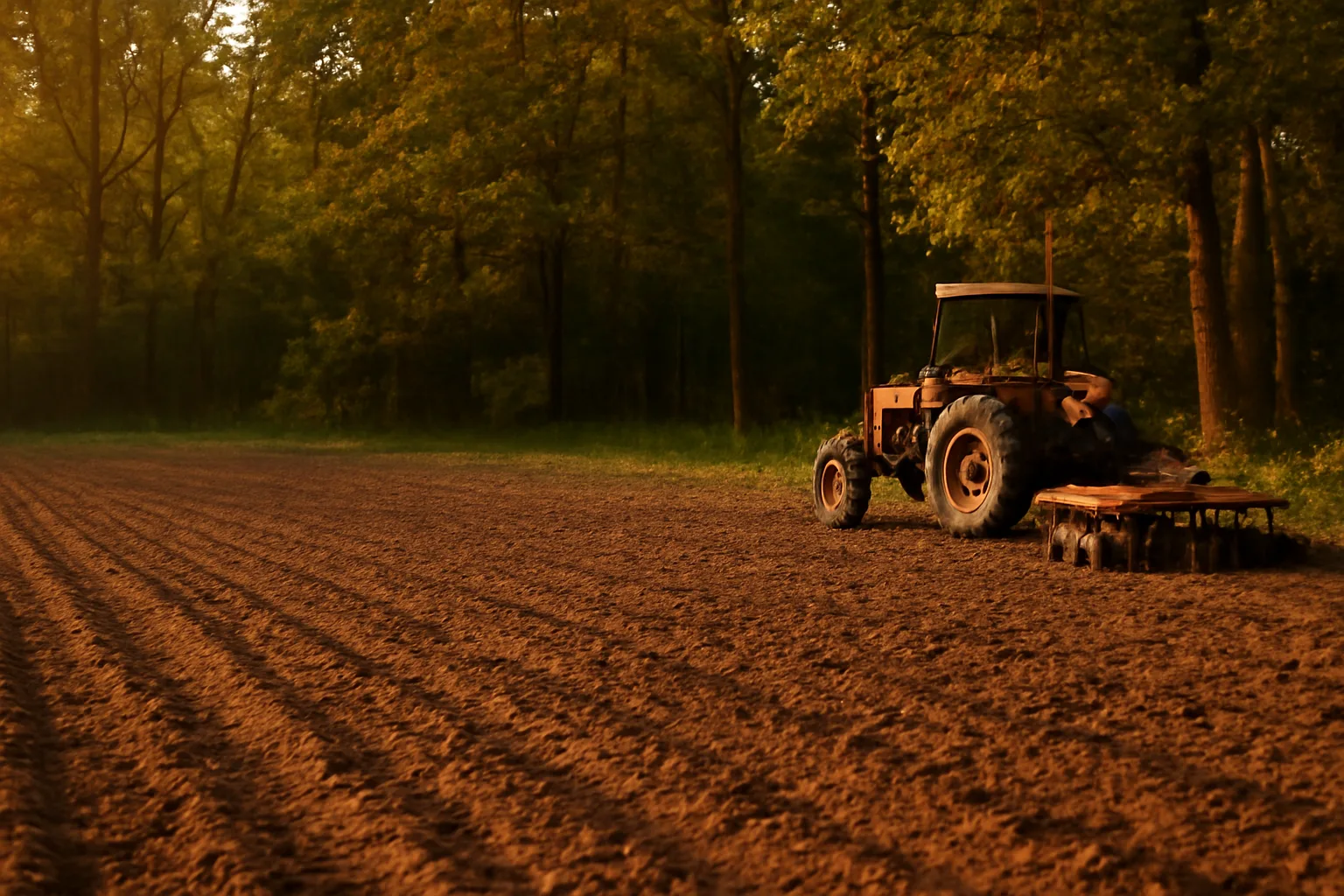
For a small plot (under an acre), a lot of hunters get by with an ATV or UTV, a pull-behind disc or cultipacker, a hand-crank or ATV-mounted broadcast spreader, and a sprayer for herbicide. That's a workable minimum setup and plenty of successful small food plots have been planted with exactly that. For larger plots or heavier ground, a tractor with a box blade, disc harrow, and a no-till or conventional drill speeds things up enormously and improves seed depth consistency, which matters a lot for small-seeded species like clover. A no-till drill in particular lets you plant into standing residue or a sprayed-down cover without full tillage, which cuts erosion and helps preserve soil moisture, something USDA NRCS promotes broadly in its soil health guidance for reduced tillage systems . Don't feel like you need the tractor setup to start. A quarter-acre clover plot worked up with a hand tiller, broadcast by hand, and cultipacked with a lawn roller can absolutely produce. Scale the equipment to the plot size and your budget, not the other way around.
what should you plant, and where can you learn more about specific species?
| White/red clover | Late summer or early spring | Spring through fall | 6.0-7.0 | Perennial, 3-5 year lifespan with maintenance | |
|---|---|---|---|---|---|
| Soybeans | Late spring, after frost | Summer, standing pods into fall | 6.0-6.8 | High protein, needs deer pressure management when young | |
| Grain sorghum | Late spring | Late fall/winter | 5.8-7.0 | Drought tolerant, good standing winter food | |
| Brassicas (turnips, radish) | 70-90 days before frost | Late fall/winter, post-frost | 6.0-7.5 | Palatability jumps after first hard frost | |
| Oats/cereal grains | 6-10 weeks before frost | Early fall, some spring regrowth | 6.0-7.0 | Fast germination, cheap, often blended | For a deeper look at matching species to your specific property and goals, the deer food plot seed and food plot seed guides break down blend options in more depth, and deer food plots covers plot design and placement on the landscape, which matters just as much as species choice for whether deer actually use the plot during daylight. |
Species choice comes down to your goals (early season draw vs. late season draw vs. year-round nutrition), your soil, and your region's growing season length. There's no single best seed for every property. Here's a quick comparison of common food plot species: | Species | Planting window | Season of peak use | Soil pH target | Notes |
Frequently asked questions
Do deer eat sorghum?
Yes. Deer eat both the grain and the green forage of sorghum, and grain sorghum (milo) is valued in food plots because its seed head stands through fall and into winter, giving deer a food source after other summer annuals are gone. It's especially useful in drought-prone soil where corn or soybeans struggle.
Do deer eat clover?
Yes, and clover is one of the most preferred food plot forages available. Well-managed white and red clover can run 20-30% crude protein during active growth, according to extension forage data, making it a strong spring-through-fall food source that regrows after grazing rather than getting wiped out like an annual.
When should you plant food plots for deer?
Warm-season annuals go in after your last spring frost, roughly April through June depending on latitude. Cool-season annuals and perennials like clover and brassicas go in 60-90 days before your first fall frost, generally late July through early September across most of the whitetail range. Check your USDA hardiness zone and local frost dates.
Do deer like clover?
Yes, clover ranks consistently high in deer forage preference studies and extension literature because of its protein content and season-long availability. It's a top pick for perennial food plots, though it needs properly limed soil (pH 6.0-7.0) and a weed-free seedbed to establish well.
When should you plant oats for deer?
Plant oats 6-10 weeks before your first expected fall frost, generally mid-August through late September across most of the whitetail range, a bit earlier in cold northern zones. Oats germinate in 7-14 days and give deer an early fall food source, often blended with slower brassicas or clover.
When should you plant food plots for deer overall?
It splits by type: warm-season plots after last spring frost (April-June), cool-season plots 60-90 days before first fall frost (late July-early September for most regions). There's no single national date; match planting windows to your USDA Plant Hardiness Zone and local average frost dates.
When should you plant turnips for deer?
Plant turnips 70-90 days before your first killing frost, typically late July to mid-August for most of the country. Turnips need that time to bulb, and their palatability jumps sharply after the first hard frost converts starches to sugar, so expect heaviest use in December and January, not October.
What is a food plot?
A food plot is a planted area, often a quarter acre to several acres, established specifically to supplement natural deer food with high-quality forage like clover, brassicas, or soybeans. Extension programs describe it as supplemental wildlife nutrition, not a replacement for natural browse, mast, and nearby agriculture.
What are deer's favorite foods?
Preference shifts by season and region, but soft mast like acorns and apples, soybeans, and clover consistently rank as top choices in deer diet studies. Acorns in particular can pull deer off a food plot entirely during a heavy fall drop because of their high fat content.
Do deer like honey?
There's no credible wildlife research showing deer seek out honey, and it's not used in any land-grant extension food plot or attractant guidance. Deer are herbivores adapted to digest plant fiber; concentrated sugar sources like honey aren't part of documented natural foraging behavior. Treat the idea as folklore, not biology.
How big should a food plot be?
There's no fixed rule, but many wildlife extension programs suggest smaller plots (quarter to half acre) tucked in timber for bedding-adjacent security plots, and larger plots (1-5 acres) in more open ag-style settings for volume production. Plot size should match your property's cover, predator/pressure situation, and equipment access.
Do I need to lime my food plot soil?
Almost always, if your soil test shows pH below 6.0 to 6.5, which is common on a lot of wooded or previously unfarmed hunting ground. Lime can take 3-6 months to fully adjust soil pH, which is why testing 2-3 months ahead of planting matters. Follow your specific soil test lab's lime rate recommendation.
Is planting a food plot considered baiting deer?
Generally no. A planted, growing crop is treated differently from baiting in most state wildlife regulations, which typically define baiting as placing loose grain, minerals, or feed for consumption. Rules vary by state though, so check your state wildlife agency's specific baiting and feeding regulations before adding any attractant beyond the planted crop itself.
Sources
- Purdue University Forestry and Natural Resources Extension: Food plots are described as plantings designed to supplement the natural food supply for wildlife
- University of Tennessee Extension: Cereal grains like oats should be drilled at shallow depth, around a quarter to half inch
- Michigan Department of Natural Resources, Wildlife Conservation Order: Michigan defines baiting separately from planted food plots under its Wildlife Conservation Order
- Penn State Extension, Agricultural Analytical Services Lab: University soil testing labs offer soil analysis services for a modest per-sample fee
- Ohio State University Extension: Seedbed preparation and planting depth are common failure points in food plot establishment
- USDA Natural Resources Conservation Service: Reduced tillage and no-till practices support soil health and moisture retention