Last updated 2026-07-24
TL;DR
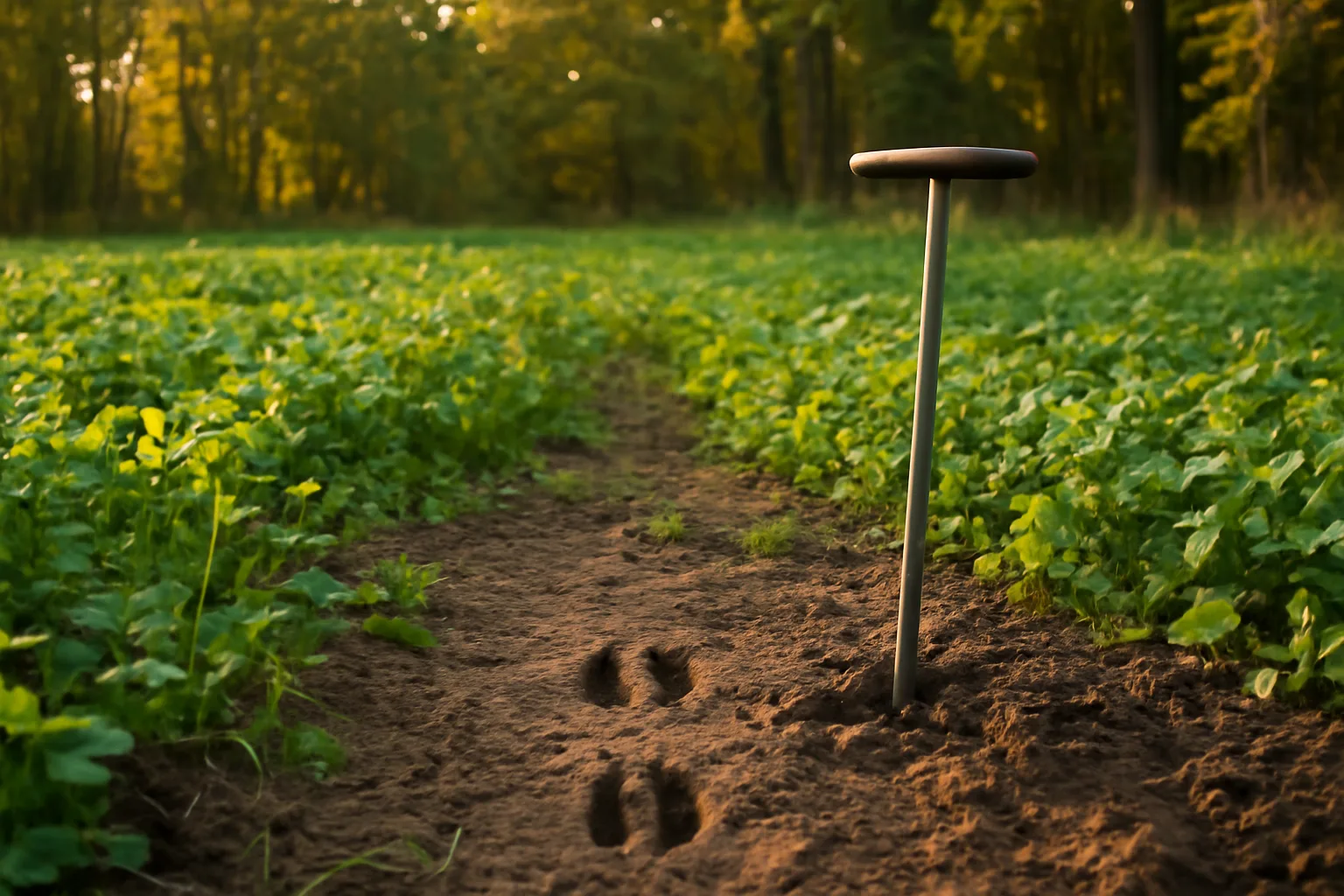
A food plot is planted acreage (often 0.25 to 5 acres) grown specifically to feed and hold deer, usually clover, brassicas, cereal grains, or beans. Deer eat clover and turnips readily and will hit sorghum and oats depending on season. Planting windows run late summer for fall annuals and early spring for perennial clover, timed to your USDA hardiness zone and first frost date.
what is a food plot, exactly?
A food plot is a planted patch of ground, usually somewhere between a quarter acre and a few acres, put in specifically to grow food that deer (and often turkey, quail, or rabbits) will actually eat. It's not a pasture and it's not a garden. It's a working piece of habitat management, planted with species chosen for nutrition, palatability, and timing. Most plots fall into one of two categories: annuals you replant every year (brassicas, cereal grains, sorghum, buckwheat) and perennials that persist for two to five years with maintenance (clover, chicory, alfalfa). A lot of serious plotters run both, a perennial clover plot for spring and summer protein, and an annual brassica or grain plot timed to peak right before and during gun season. State wildlife agencies and university extension programs frame food plots as one tool inside broader habitat management, alongside native browse, mast trees, and cover. A half-acre plot on 40 acres of mature timber isn't transforming your deer herd's nutrition. It's a supplement and a hunting tool, and treating it as anything more sets you up for disappointment. If you're brand new to this, start by reading up on food plot whitetail basics and deer food plots before you buy a bag of seed.
what are deer's favorite foods, really?
Deer are opportunistic browsers, and their favorite food changes by season, region, and what's available. Acorns are arguably the single most preferred natural food where oaks exist. Research on white-tailed deer diets, including foundational work published in the Journal of Wildlife Management, shows deer will shift heavily toward acorns during fall mast drop when it's available, sometimes to the point of ignoring planted plots nearby. Among planted forages, white clover and other legumes consistently rank at the top of preference studies because of high protein content (often 20-25% crude protein in good clover stands) and digestibility. Soybeans, when deer can access them before pods harden, get hit hard too, which is why soybean plots often get browsed to nothing in July in high-density areas. In practical terms, ranked roughly by what most plotters and biologists report as consistent draws: clover and alfalfa (spring through fall), soybeans and cowpeas (summer, if not overbrowsed), brassicas like turnips and radishes (after a frost sweetens them), acorns and other mast (fall, whenever available), and cereal grains like oats and winter wheat (late fall into winter as a carbohydrate source before green browse runs out). There's no single universal "favorite." A hungry deer in a food desert will eat things it would otherwise ignore. That's part of why plot diversity works better than one silver-bullet species.
do deer like clover?
Yes. Clover, especially white clover (Trifolium repens) and red clover (Trifolium pratense), is one of the most consistently preferred food plot forages across the whitetail's range. It's high in protein, it regrows after grazing, and it stays palatable through most of the growing season. University extension forage trials back this up. The University of Georgia Cooperative Extension lists white clover, especially ladino types, among the top perennial plot choices for both preference and persistence, noting that a well-limed stand can produce for three to five years [1]. The catch: clover needs decent soil pH (extension guidance generally targets 6.0 to 6.5) and won't tolerate standing water or deep shade. If your soil test comes back at 5.2, you're not getting a clover stand worth bragging about until you lime it. That's not a scare tactic, it's just how legumes work. Nitrogen-fixing rhizobia bacteria that clover depends on shut down in acidic soil. Clover also gets hammered hard in high deer-density areas. A half-acre clover plot surrounded by 200 deer per square mile can get grazed down to nothing by June. If you're seeing that, you probably need more acreage in perennials, not a different species.
do deer eat sorghum?
Deer will eat sorghum, but it's usually a secondary player in a plot, not the headline species. Grain sorghum (milo) and forage sorghums are more commonly planted as a screening/cover crop or a late-season carbohydrate source once the seed heads mature and dry down. Deer preference for sorghum tends to be lower than for soybeans, clover, or brassicas during the growing season, but it picks up in late fall and winter when the grain heads are the main standing food left in the field. It's also a popular choice in dove field mixes and as a nurse crop for establishing clover, because it grows fast and tall and can shade out weeds early. Some plotters use sorghum specifically for cover, since a thick stand can grow 6 to 10 feet tall and gives deer a place to bed or travel that's screened from roads and neighboring stands. If your goal is pure attraction, soybeans or brassicas usually outperform sorghum. If your goal is late-season standing grain plus cover, sorghum earns a spot in the mix.
do deer eat sorghum in a blend, or does it need to be planted alone?
Sorghum is commonly planted in blends rather than alone, often mixed with soybeans, cowpeas, or sunflowers, because a monoculture sorghum field doesn't offer much variety and can be more vulnerable to birds cleaning out the grain before deer season even starts. When planted as a standalone screen or as part of a wildlife blend, sorghum's main value is structure and late-season calories, not top-tier palatability. If you're deciding between sorghum and other summer annuals, check out the species comparisons on deer food plot seed to see how it stacks up against beans and cowpeas for your region.
when to plant food plots for deer (by zone)
| Zone 3-4 | Late May to mid-June | Mid-July to early August | |
|---|---|---|---|
| Zone 5-6 | Late April to late May | Late July to mid-August | |
| Zone 7 | Early April to early May | Mid-August to early September | |
| Zone 8-9 | March to early April | Early September to early October | For a plan built around your actual zip code and frost dates instead of a generic table, that's exactly the gap a Custom Food Plot Plan is meant to fill: a one-time $99 plan that maps species and dates to your property instead of a national average. |
Timing depends entirely on what you're planting and your USDA Plant Hardiness Zone, plus your average first and last frost dates. There's no single national planting date, despite what some bag labels imply. The USDA Plant Hardiness Zone Map, maintained by the USDA Agricultural Research Service, is the standard reference for matching plant timing to your climate. Spring/summer annuals and perennials (clover, alfalfa, chicory, soybeans, cowpeas) generally go in after your last spring frost, once soil temps are consistently above 50-55°F. In Zone 5-6 (much of the Midwest and mid-Atlantic), that's typically late April through May. In Zone 7-8 (Southeast, mid-South), it can be as early as March into April. Fall annuals (brassicas, cereal grains, clover overseed) get planted 6 to 10 weeks before your average first fall frost, so the plants have time to establish before cold shuts down growth. Extension brassica guidance generally recommends planting turnips and other brassicas roughly 80 to 100 days before the first killing frost for full root and forage development. Here's a rough planting window table by zone. Treat these as starting points, not gospel; always check your local extension office's frost date data for your specific county. | USDA Zone | Spring annuals/perennials | Fall brassicas/cereal grains |
when to plant oats for deer
Oats are a fall annual cereal grain, and they're best planted in late summer to early fall, timed so they've got 4 to 6 weeks of growth before your first hard frost. In most of the whitetail's range that lands somewhere between mid-August and mid-September. Oats are a fast-germinating, high-preference forage in the early fall, often outcompeting wheat or rye for deer attraction in September and October, according to multiple state extension food plot guides. The tradeoff is winter hardiness. Oats are less cold-tolerant than winter wheat, winter rye, or triticale, and a hard freeze (commonly cited around 10-15°F sustained) can kill the standing forage, leaving you with nothing green by January in northern zones. Because of that, oats work best as an early-to-mid season draw, especially blended with brassicas or winter peas, rather than as your only late-season food source in Zone 3-5. In milder Zone 7-8 areas, oats can persist much longer into winter and even survive to reseed in spring.
when to plant turnips for deer
Turnips, like other brassicas, go in the ground in mid-to-late summer, roughly 80 to 100 days before your first expected frost. Planting too early in hot, dry conditions can cause poor germination and flea beetle damage; planting too late means the bulbs won't size up before frost. The key thing about turnips: deer often ignore the leaves and bulbs until after a couple of hard frosts convert starches to sugars, making the plant much sweeter and more palatable. That's why a turnip plot can look completely untouched in October and get hammered to dirt in late November and December. If you're hunting turnips in early bow season expecting heavy use, you'll likely be disappointed. They're a late-season tool, not an early-October draw. Seeding rates for turnips alone typically run 4 to 6 lbs per acre when broadcast, per extension planting guides, and they're commonly blended with radish, rape, and clover for a longer window of attraction. Soil pH matters here too. Brassicas want a pH in roughly the 6.0 to 6.8 range for best growth, similar to clover.
when to plant food plots for deer, season by season
Zoom out and there are really two planting seasons that matter for whitetail plots: spring and late summer/early fall. Spring planting (roughly March through June depending on zone) covers perennial clover and alfalfa establishment, plus warm-season annuals like soybeans, cowpeas, and sunflowers. This window exists to build summer forage for lactating does and antler-growing bucks, when protein demand is highest. Late summer/early fall planting (roughly late July through September depending on zone) covers brassicas, cereal grains (oats, wheat, rye), and clover frost-seeding or overseeding. This window is built around hunting season timing, since the goal is peak palatability and standing forage during archery and gun seasons. A lot of plotters skip spring plots entirely and only plant in late summer, which is fine if your main goal is hunting attraction rather than herd nutrition. But if you're trying to actually support antler growth and fawn-rearing nutrition, spring clover and bean plots do more work than anything planted in September.
do deer like honey, and does it belong in a food plot?
Deer don't naturally forage on honey in the wild, and there's no wildlife agency or extension guidance treating honey as a food plot input or attractant with any real evidence behind it. It shows up occasionally in homemade mineral lick or attractant recipes online, mixed with things like corn or molasses, but that's an attractant/bait discussion, not a food plot species discussion. More importantly: using honey, molasses, or any concentrated attractant to draw deer crosses into baiting in most states' regulations, which is a completely separate legal category from planting a food plot. Baiting and supplemental feeding rules vary enormously by state. Some states ban it outright, some allow it with restrictions on distance from stands or timing, and some allow it only outside hunting season. Always check your state wildlife agency's current baiting and feeding regulations before doing anything beyond planting a standing crop, since even minerals and mineral blocks are regulated as feed in several states. Pennsylvania, for example, prohibits feeding of wild deer under 34 Pa. Code § 137.34, with limited exceptions [2]. If you're trying to add sweetness or palatability to a plot, that's what frost does to brassicas and what maturity does to soybeans. You don't need honey or molasses in the ground.
annual vs perennial: which food plot type should you actually plant?
| Replanting | Every year | Every 3-5 years with maintenance | |
|---|---|---|---|
| Best season of draw | Timed to hunting season | Spring through fall | |
| Soil work needed | New tillage/seedbed each planting | One good establishment, then upkeep | |
| Cost over 3 years | Higher (annual seed + labor) | Lower per-year after establishment | |
| Drought/deer pressure risk | Can fail in a bad year | More resilient once established | Most experienced plotters run both: a perennial clover base for season-long nutrition and low annual cost, plus a smaller annual plot rotated for hunting-season timing. If you've only got one plot to work with, and your main goal is filling the freezer during gun season, lean annual. If you're managing for herd health across multiple seasons, lean perennial, or split the acreage. For seed selection across both categories, the breakdowns at deer food plot seed and food plot seed go deeper on specific blends and rates. |
This is the decision most new plotters get wrong, usually by planting perennial clover in a spot that gets hammered flat by August, or by replanting annuals every single year on a property where a perennial stand would save money and labor. Here's a quick comparison to help decide. | Factor | Annuals (brassicas, oats, beans) | Perennials (clover, alfalfa, chicory) |
how soil testing changes your planting plan
None of the planting dates or species choices above matter much if your soil pH and fertility are wrong. A $10-15 soil test through your county extension office (most land-grant universities offer this) tells you exactly how much lime and fertilizer your specific field needs, and that's information no article or seed bag can give you. Your soil test lab's recommendations are the final word on lime and fertilizer rates for your dirt. A generic guide can tell you clover wants pH 6.0-6.5; only your test can tell you if you need 1 ton or 3 tons of lime per acre to get there, and lime takes months to fully react in soil, so timing that application ahead of planting matters as much as the planting date itself. If you've got a soil test in hand and want species and timing matched to your zone and results without doing the math yourself, that's the exact gap the Custom Food Plot Plan fills for $99, a one-time plan, not a subscription, built around your zip code, frost dates, and soil numbers. It's general guidance based on your inputs, not a replacement for your soil lab's site-specific agronomy recommendations.
Frequently asked questions
Do deer eat sorghum?
Yes, deer eat sorghum, especially the mature grain heads in late fall and winter, but it's usually a secondary plot species used for cover and late-season carbs rather than a top attraction crop. Soybeans, clover, and brassicas generally out-draw sorghum during the growing season.
Do deer eat clover?
Yes, clover is one of the most consistently preferred food plot forages for whitetail deer, valued for its high protein content (often 20-25% crude protein) and season-long regrowth. White clover and red clover are the most commonly planted types across the whitetail's range.
When should I plant food plots for deer?
Spring annuals and perennials like clover and soybeans go in after your last frost, typically March to June depending on zone. Fall brassicas and cereal grains go in 6 to 10 weeks before your first fall frost, typically late July through September, so plants establish before cold weather hits.
Do deer like clover more than other food plot plants?
Clover ranks among the top preferred plot forages in most extension and biologist surveys, alongside soybeans and cowpeas, but preference shifts by season. Deer often prefer acorns over any planted forage when mast is dropping, and brassicas surge in preference after frost sweetens the leaves and bulbs.
When should I plant oats for deer?
Plant oats in late summer to early fall, roughly mid-August through mid-September in most zones, giving them 4 to 6 weeks to establish before a hard frost. Oats are less winter-hardy than wheat or rye, so a severe freeze can kill the standing forage in northern climates.
When is the best time to plant food plots for deer overall?
There are two main windows: spring (March-June) for perennial clover and summer annuals like soybeans, and late summer/early fall (late July-September) for brassicas and cereal grains timed to hunting season. Exact dates depend on your USDA hardiness zone and local frost dates.
When should turnips be planted for deer food plots?
Plant turnips roughly 80 to 100 days before your area's first expected frost. That timing lets the bulbs size up before cold weather, and deer typically don't hit turnips hard until after a few frosts convert starches to sugars.
What exactly is a food plot?
A food plot is a planted area, often a quarter acre to several acres, grown specifically to provide deer (and other wildlife) with forage and to support hunting and habitat goals. It supplements natural browse and mast, it doesn't replace them.
What is a deer's favorite food?
There's no single favorite; acorns typically win when mast is available in fall, while among planted forages, clover, soybeans, and frost-sweetened brassicas consistently rank as top draws in extension and biologist observations. Preference shifts by season, region, and local food availability.
Do deer like honey?
Deer don't naturally forage on honey, and there's no credible wildlife agency or extension guidance treating it as a food plot input. Honey shows up in some homemade attractant mixes, but using concentrated attractants like this often crosses into baiting, which is regulated separately and varies by state.
Should I plant annual or perennial food plots?
Annuals (brassicas, oats, beans) offer better hunting-season timing but need replanting every year. Perennials (clover, alfalfa) cost less over 3-5 years and provide season-long nutrition but need a solid initial soil prep and periodic mowing or spraying. Many properties benefit from running both types.
Do I need a soil test before planting a food plot?
Yes, strongly recommended. A soil test (often $10-15 through your county extension office) tells you the exact lime and fertilizer needs for your specific field, which generic planting guides can't provide. Clover and brassicas both want pH in the 6.0-6.8 range for best growth.
Is it legal to bait deer with feed or attractants near a food plot?
It depends entirely on your state. Some states ban baiting and supplemental feeding outright, others allow it with distance or timing restrictions, and some treat mineral blocks as regulated feed. Always check your state wildlife agency's current baiting and feeding rules before adding anything beyond a planted crop.
Sources
- USDA Natural Resources Conservation Service, Wildlife Habitat Management Institute technical notes on food plots: Food plots function as a supplement within broader wildlife habitat management, not a replacement for natural forage
- Journal of Wildlife Management, white-tailed deer diet and mast use research: Deer shift heavily to acorns during fall mast drop when available
- University of Georgia Cooperative Extension, Clover for Wildlife Food Plots: White and ladino clover rank among top perennial plot forages for preference and persistence
- Pennsylvania Code, Title 34, Chapter 137.34, Feeding of Wildlife: Pennsylvania prohibits feeding of wild deer under state code, with limited exceptions
- University of Georgia Extension: Recommendations on selecting annual and perennial forage species for deer food plots