Last updated 2026-07-24
TL;DR
There's no single best food plot seed for deer, it depends on season and soil. Clover is the best all-around perennial for spring through fall. Brassicas (turnips, radishes) and oats win for fall/winter attraction after a frost. Match species to your soil test, your region's frost dates, and whether you want a spring or fall draw.
what is a food plot, exactly
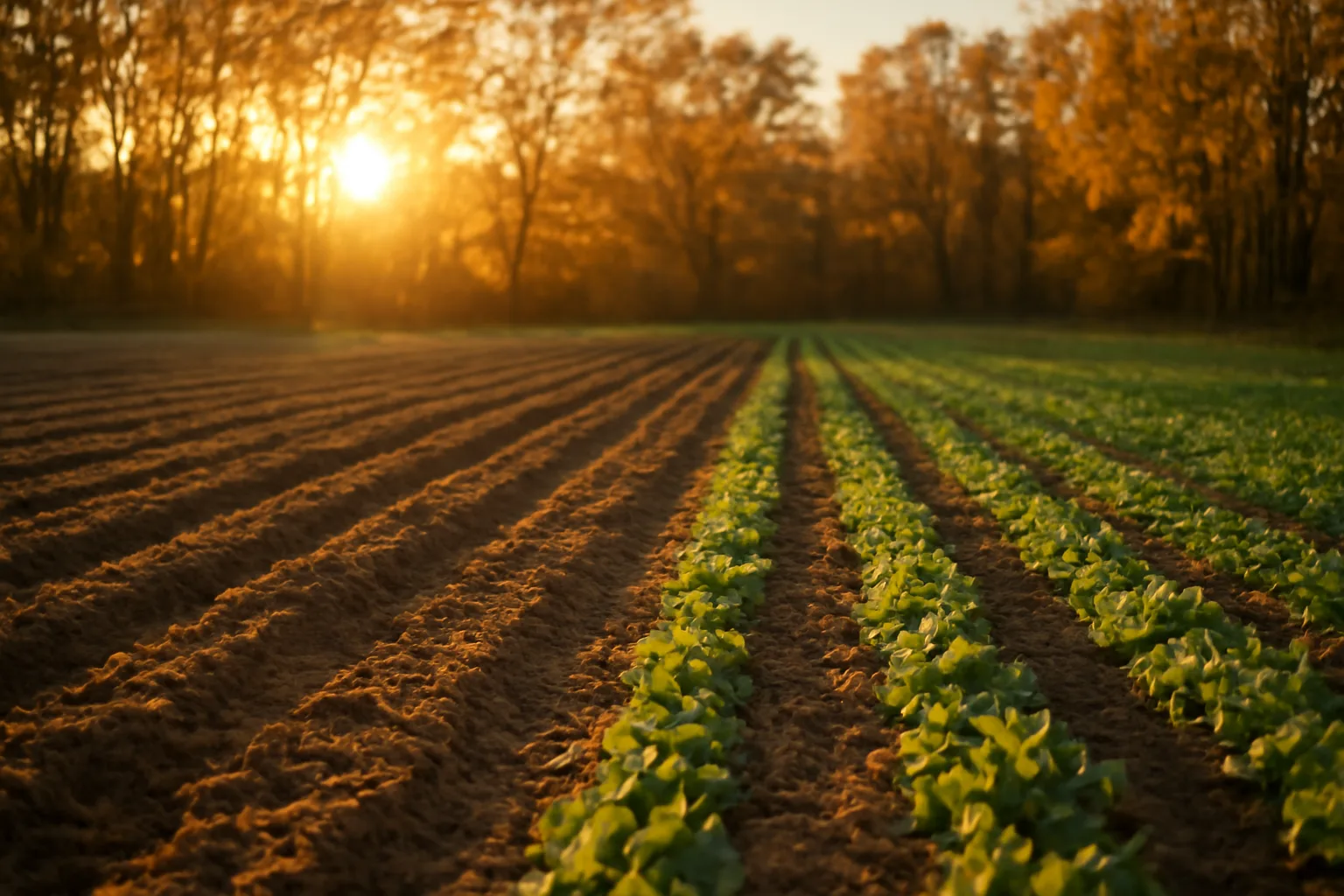
A food plot is a planted patch of forage, usually somewhere between a quarter acre and a few acres, put in specifically to feed deer and other wildlife and to give hunters a place to watch or hunt over. It's not the same as a crop field left standing for wildlife, though the two overlap in practice. Most plots on private or leased ground get planted with a single species or a simple blend: clover, brassicas, cereal grains, or a legume mix. State agencies generally treat food plots as habitat management, not baiting, as long as the seed is broadcast and grown in the ground rather than piled on top of it. That distinction matters a lot legally. Piling corn or minerals on the ground counts as baiting in many states and is illegal during hunting season in places like Michigan and Pennsylvania. A planted plot growing in place is legal nearly everywhere, but you still need to check your state wildlife agency's current baiting and feeding regulations before you plant or hunt over anything unusual, because rules on supplemental feeding vary and change [1]. The University of Tennessee Extension describes food plots as a tool that 'can improve the nutritional plane of a deer herd' when planted correctly and matched to soil and region [2]. The catch is the words 'planted correctly.' A poorly limed, poorly timed plot of the fanciest seed on the market will underperform a cheap oat plot done right.
what's the best food plot seed for deer overall
If you can only plant one thing, plant a good clover blend. It's perennial, it's cheap per pound compared to annual re-planting, and it produces from spring green-up through fall, which covers more of the calendar than almost anything else. White clovers like Ladino and red clover both work well in food plot mixes across most of the whitetail's range [3]. But 'best' really depends on what job you need the plot to do. For early season bow hunts you want something still green and leafy in September, which points toward clover or soybeans. For late season and post-rut hunts in cold climates, you want brassicas or cereal grains that get sweeter and more attractive after a hard frost. For a quick, cheap plot on rough or newly cleared ground, oats or a cereal grain blend germinates fast and tolerates poor soil better than clover does. Here's a rough comparison of the seven seeds hunters ask about most, based on typical extension guidance and general planting windows across the whitetail range.
clover vs brassicas vs cereal grains: which should you actually plant
| Seed type | Life cycle | Best season for attraction | Soil pH target | Rough seed cost per acre | |
|---|---|---|---|---|---|
| White/red clover | Perennial (3-5 yrs) | Spring through fall | 6.0-7.0 | $25-60 | |
| Brassicas (turnip, radish, rape) | Annual | Late fall/winter, after frost | 6.0-6.8 | $20-40 | |
| Oats/cereal rye/wheat | Annual (cool season) | Fall through early winter | 5.5-7.0 | $15-30 | |
| Grain sorghum | Annual (warm season) | Late summer/fall (also as standing cover/food) | 5.8-7.0 | $20-35 | |
| Soybeans (forage type) | Annual | Summer, early fall | 6.0-6.8 | $40-70 | |
| Chicory | Perennial (3+ yrs) | Summer, drought-tolerant filler in clover mixes | 6.0-7.0 | included in blends | Cost ranges above are rough per-acre seed costs and will swing with seed quality, coating, and regional pricing; they don't include lime, fertilizer, or herbicide. Your actual number could run higher on inoculated or coated seed. Clover and cereal grains are the two most forgiving choices for a first-time plotter. Brassicas need a longer growing window (usually 80-90 days before a killing frost) to bulb out and reach peak attraction, so timing matters more with them than with almost anything else on this list [4]. |
do deer like clover, and how much do they actually eat
Yes, deer like clover, and it's one of the most consistently used food plot forages in the whitetail's range. Clover is a legume, so it's high in protein (often 20-25% crude protein in good stands) which matters most in spring and summer when does are lactating and bucks are growing antlers [3]. Clover's advantage over annuals is that it keeps producing without replanting every year, as long as you mow it a few times a season to keep it vegetative and control weeds. Extension guidance generally recommends mowing clover to 4-6 inches whenever it gets much taller, both to reduce weed competition and to push new tender growth [3]. A well-maintained clover stand can last three to five years before you need to till it back in. The tradeoff: clover is slower to establish than cereal grains, it doesn't tolerate deep shade or standing water well, and rabbits and groundhogs can hammer a small new stand before deer ever get a bite. If you're planting a small plot (under an acre) surrounded by heavy browse pressure, expect some early frustration.
do deer eat sorghum
Yes. Deer eat grain sorghum, both the standing seed heads and the young green forage, though it's usually planted more as a summer/fall food source and screening cover than as the primary attraction crop. Grain sorghum (milo) tolerates heat and drought better than corn does, which makes it a reasonable substitute in the Southeast and parts of the Midwest where summer plots need to survive dry stretches [5]. Sorghum isn't typically anyone's top pick as a standalone deer plot because deer generally prefer softer, easier forage when it's available, and sorghum takes a full growing season to mature. It shows up most often in wildlife mixes as a companion to soybeans or cowpeas, or as a standing screen/late-season food source once the seed heads dry down. If you're choosing between corn and sorghum for a plot budget, sorghum usually costs less per acre and needs less nitrogen, but corn produces more total tonnage of grain per acre in most university variety trials [5].
do deer like honey (honey locust, honeysuckle, and other 'honey' confusion)
Deer don't eat honey itself; honey is a bee product, not a plant, and it isn't part of any food plot seed mix. This question usually comes from confusion with a few real plants: honey locust trees, whose pods deer readily eat in fall, and Japanese honeysuckle, a browse plant deer use heavily where it's available. Honey locust pods are high in sugar and deer will clean them up under a mature tree in October and November. Some hunters plant or preserve honey locust trees on field edges for exactly this reason, though it's a slow, multi-year tree project rather than a food plot seed you'd broadcast this spring. Japanese honeysuckle is considered an invasive species across much of the eastern United States. The USDA Forest Service's invasive plant profile for the species notes it was introduced from East Asia and now aggressively displaces native vegetation in forest understories, and it isn't something extension offices recommend planting even though deer browse it heavily [6]. If someone's telling you deer 'like honey' in a seed catalog context, they probably mean a honey locust or honeysuckle blend, not actual honey.
when to plant food plots for deer (by region and season)
Planting dates depend entirely on your frost dates and whether you're planting a warm-season summer plot or a cool-season fall plot. There is no single national planting date, and this is the single most common mistake new plotters make, they use a date they read online that was meant for a different growing zone. As a rough framework across the whitetail range: Spring/summer plots (soybeans, cowpeas, sorghum, sunn hemp): plant after your last frost date, generally April in the Deep South, May in the mid-South and lower Midwest, and late May to early June in the northern tier and Canada-adjacent states. Fall plots (clover, brassicas, cereal grains): plant 60-90 days before your first fall frost so brassicas have time to bulb and clover has time to establish a root system before winter. In much of the Midwest and Northeast that lands in August; in the Deep South it can run into September or even early October. Your state extension service or land-grant university publishes frost-date maps and regional planting calendars, and those are more reliable than a generic online chart because they're built from local weather station data [2] [4]. If you want species-specific timing worked out for your exact county and soil test, that's the kind of detail a Custom Food Plot Plan is built to handle; a $99 one-time plan runs your zip code and soil results against the right species and planting windows instead of guessing off a national chart.
when to plant oats for deer
Plant oats for deer 6 to 8 weeks before your first expected fall frost, which for most of the whitetail range means late August through mid-September. Oats germinate fast, often within 5-10 days in warm soil, and they produce leafy, attractive forage within a month, making them one of the best 'quick fix' fall plots if you're short on time before archery season opens. Oats aren't very cold-hardy compared to cereal rye or wheat; a hard freeze will usually kill oat plants back, though deer will keep hitting the residue and any regrowth through a mild early winter. Some hunters plant a small spring oat plot too, mainly as a nurse crop for clover establishment rather than as a standalone attractant, since spring oats mature and die off before summer heat, leaving the clover to take over. Cereal rye, by contrast, tolerates cold much better and stays green later into winter, so in northern zones a rye/oat blend often outperforms straight oats for late-season hunting [4].
when to plant turnips for deer
Plant turnips for deer 80 to 90 days before your first killing frost, which lands roughly late July through mid-August across most of the Midwest and Northeast, and can push into September in the Deep South. Turnips need that full window to bulb properly; planted too late, you'll get leafy tops but small, underdeveloped roots. The timing quirk with turnips and other brassicas is that deer often ignore the plant almost completely for the first two or three months, then hit it hard after the first hard frost converts starches in the plant to sugars, making it noticeably sweeter [4]. That's why brassica plots shine in late season, from November through January in most states, rather than during early bow season. If your goal is an early-October hunt, turnips alone are the wrong choice; pair them with clover or a cereal grain in the same field so you have something attractive before that first freeze happens.
what are deer's favorite foods overall
Deer are opportunistic browsers, and their actual favorite food changes by season, region, and what's locally abundant, but a few patterns hold up across most of the whitetail's range. Acorns are consistently one of the most preferred natural foods where available; wildlife agencies and extension research both note that deer will often bypass planted forage in favor of a good acorn drop in a heavy mast year [2]. Among planted food plot species, clover, soybeans, and brassicas after frost consistently rank as the most heavily used in university and state agency browse studies. Corn and soybeans provide the highest energy and protein among common ag crops, which is part of why they show up so often in food plot blends aimed at antler growth and lactation support. Native browse like greenbrier, honeysuckle, and young woody stems also make up a large share of a deer's actual diet, especially in spring and summer, which is a reminder that a food plot is a supplement to habitat, not a replacement for it. If you're picking a single "favorite food" species to plant, most state agencies and extension programs point to a mix rather than a monoculture, since deer diet studies consistently show variety, not a single dominant crop, driving the bulk of intake across a year [2] [3].
how do i pick seed based on my soil test
Your soil test is the single most useful piece of information you have before buying seed, more useful than any seed catalog description. It tells you your current pH and your phosphorus and potassium levels, and most state land-grant labs will give species-specific lime and fertilizer recommendations right on the report if you note 'food plot' or 'forage' as the intended use [2]. Clover and other legumes want pH in the 6.0 to 7.0 range and will struggle badly, or fail outright, below pH 5.5, because acidic soil locks up the phosphorus the plant needs and can interfere with the nitrogen-fixing bacteria clover depends on [3]. Brassicas and cereal grains are more forgiving of slightly acidic soil, generally tolerating pH down into the 5.5 to 6.0 range, though they still perform best closer to neutral. Your soil test lab is the authority on how much lime and fertilizer your specific field needs; a general article like this one can give you ranges, but it can't replace a report pulled from your actual dirt. If lime is needed, get it down 6 months ahead of planting where possible, since agricultural lime takes time to react and raise pH, it isn't instant [2].
single species or a blend: what actually works better
Blends generally outperform single species plantings for one simple reason: they hedge against weather, timing mistakes, and deer preference shifts through the season. A clover/chicory blend gives you drought tolerance from the chicory and steady production from the clover. A brassica/cereal grain blend gives you leafy attraction in October from the grain and a sugar spike in December from the frosted brassicas. The downside of blends is management complexity: different species in the same plot sometimes want different mowing schedules or have different herbicide tolerances, so a blend with a grass (like oats) and a broadleaf (like clover) limits your ability to spray for weeds without hurting one of the two crops. Single-species plots are easier to manage cleanly but leave you fully exposed if that one species has a bad year, gets hit hard by drought, or just isn't what deer want to eat that week. For a new plotter with one plot and limited time, a simple two-species blend (clover with a little chicory, or oats with a little brassica) is usually the sweet spot between simplicity and hedge. For more detail on matching species to specific plot shapes and hunting setups, see food plot whitetail and deer food plot seed.
common mistakes that waste good seed
The most expensive mistake in food plotting isn't the seed bag, it's skipping the soil test and planting on bad pH. Extension data consistently shows that lime and pH correction produce a bigger yield jump than any seed variety choice or fancy additive [2]. If your budget is tight, spend it on lime first and buy a plain, cheap seed second. The second most common mistake is planting too early or too late for the species. Brassicas planted in June bolt and go to seed before frost instead of bulbing. Clover planted in late fall in the North doesn't establish roots before winter and gets heaved out of the ground by freeze-thaw cycles. Match the seed to the calendar, not the calendar to the seed you happen to have on hand. Third: overseeding into sod or heavy thatch without any seed-to-soil contact. Broadcasting seed onto standing grass and walking away is one of the most common ways hunters waste an entire bag of clover. A light disking, drag, or cultipacking pass after broadcast dramatically improves germination rates in most university trial comparisons [3]. If equipment is the bottleneck, see food plot seed and deer food plots for setup options that don't require a full-size tractor. A $99 one-time Custom Food Plot Plan is built for exactly this stage: you hand over your soil test and rough dates, and get species and timing matched to your ground instead of guessing off a bag label written for a different state.
Frequently asked questions
Do deer eat sorghum?
Yes, deer eat both green grain sorghum forage and mature seed heads, though it's usually planted as a companion crop or standing cover rather than a primary attractant. It tolerates heat and drought better than corn, making it a reasonable choice in dry summer conditions, but most hunters pair it with soybeans or a legume rather than planting it alone.
Do deer like clover?
Yes, clover is one of the most consistently preferred food plot forages across the whitetail's range. It's high in protein (often 20-25% crude protein), stays productive from spring through fall, and as a perennial, it doesn't need replanting every year like brassicas or cereal grains do.
When should I plant food plots for deer?
Timing depends on species and region. Spring/summer plots like soybeans or sorghum go in after your last frost, roughly April in the South and late May in the North. Fall plots like clover, oats, and brassicas go in 60-90 days before your first fall frost, usually August in most of the Midwest and Northeast.
When should I plant oats for deer?
Plant oats 6 to 8 weeks before your first fall frost, which lands in late August to mid-September across most of the whitetail range. Oats germinate fast, often within 5-10 days, and give quick fall attraction, but they aren't very cold-hardy compared to cereal rye or wheat.
When should I plant turnips for deer?
Plant turnips 80 to 90 days before your first killing frost, generally late July through mid-August in most of the country. That window lets the bulb fully develop before deer really start using the plot heavily, which tends to peak after the first hard frost sweetens the plant.
What is a food plot, exactly?
A food plot is a planted area, usually a quarter acre to a few acres, seeded specifically to feed deer and other wildlife and to give hunters a place to observe or hunt. It's grown in the ground rather than piled feed, which keeps it legal as habitat management in nearly every state, unlike baiting.
What are deer's favorite foods?
Acorns rank among the most preferred natural foods where available, and deer will often favor a good mast drop over planted forage. Among food plot species, clover, soybeans, and frost-sweetened brassicas consistently show the heaviest use in extension and state agency browse studies, though native browse like greenbrier makes up a large share of actual diet too.
Do deer like honey?
No, honey is a bee product and isn't part of any deer diet or food plot mix. This question usually stems from confusion with honey locust trees, whose sugary pods deer eat heavily in fall, or Japanese honeysuckle, a browse plant deer use where available (though it's considered invasive in much of the East).
What's the best all-around food plot seed for a beginner?
A white or red clover blend is the most forgiving starting point. It's perennial so you're not replanting every year, it works across most soil types with correct pH, and it produces forage from spring through fall, covering more hunting seasons than a single annual crop would.
Can I plant a food plot without a soil test?
You can, but you're guessing. Extension research consistently shows correcting soil pH produces a bigger yield gain than any seed choice. A basic soil test through your county extension office usually costs $10-20 and tells you exactly how much lime and fertilizer your plot actually needs.
Is baiting deer with corn legal where I hunt?
It depends entirely on your state; some states ban baiting outright, some allow it with restrictions on distance or timing, and rules change year to year. Always check your state wildlife agency's current regulations before placing any supplemental feed, since a planted food plot and a bait pile are treated very differently under most state laws.
How big should a food plot be?
There's no fixed rule, but hunting-focused plots often run a quarter acre to 2 acres for bow setups, while nutrition-focused plots aimed at herd health run larger, sometimes 3-5 acres or more per 100 acres of habitat. Plot size should match your goal (a hunting kill plot vs. a herd nutrition field) more than any single number.
Sources
- Michigan Department of Natural Resources, Baiting and Feeding of Deer regulation summary: Baiting/feeding rules for deer vary by state and are enforced separately from planted food plots
- University of Tennessee Extension publication PB1774, "Wildlife Food Plots": Food plots improve herd nutrition when planted correctly, and soil test-based lime/fertilizer recommendations are central to plot success
- Mississippi State University Extension Publication 2111, "Guide to Planting Wildlife Food Plots": White and red clover are high-protein, widely used perennial food plot species requiring pH 6.0-7.0 and periodic mowing
- University of Georgia Extension Bulletin 1391, "Grain Sorghum Production Guide": Grain sorghum tolerates heat and drought better than corn and needs less nitrogen input
- USDA Forest Service Fire Effects Information System, species profile for Lonicera japonica (Japanese honeysuckle): Japanese honeysuckle is classified as an invasive species in much of the eastern United States
- USDA Natural Resources Conservation Service, Plant Guide for Ladino white clover (Trifolium repens): White clover establishment and management guidance including pH tolerance and use in wildlife plantings